Table of Contents
Escape room board games have exploded in popularity, transforming living rooms into mysterious laboratories, ancient temples, and spy headquarters. For kids aged 10 and up, these games offer the perfect blend of challenge and excitement—complex enough to feel rewarding but accessible enough to prevent frustration-fueled table flips. Unlike passive screen time, escape room games demand active participation, creative thinking, and collaboration, making them an ideal choice for families seeking meaningful entertainment that doesn’t feel like homework disguised as fun.
As your child enters the tween years, their cognitive abilities leap forward dramatically. They begin to understand abstract concepts, think several steps ahead, and appreciate nuanced storytelling—all skills that escape room games naturally cultivate. This guide walks you through everything you need to know about selecting the perfect escape room experience for your family, from understanding different game mechanics to setting up an immersive environment that rivals professional escape rooms. Whether you’re shopping for a birthday gift or planning weekend family activities, you’ll discover how to choose games that grow with your child and create lasting memories.
Top 10 Escape Room Board Games for Kids
Detailed Product Reviews
1. EXIT: The Game - Family - 2 Escape Adventures, at-Home Escape Room, Co-Operative Game, Family Activity, Brainteasers, 2-4 Players

Overview: This at-home escape room kit delivers two complete adventures where families collaboratively solve mysteries by physically manipulating components. The box contains “The Mystery at Meanstone Manor” and “The Caper at Candy Castle,” designed as a bridge between EXIT Kids and adult versions for 2-4 players who must rip, fold, and discover clues to progress through lighthearted narratives.
What Makes It Stand Out: Two full games in one package provides exceptional variety, essentially doubling entertainment value. The family-specific calibration ensures puzzles engage multiple age groups simultaneously, while tactile “rip and fold” mechanics create immersive moments that digital alternatives cannot replicate. Silly themes integrate seamlessly with gameplay.
Value for Money: Comparable to purchasing two separate EXIT titles at $15-20 each, this bundle delivers solid savings. Though single-use, extended gameplay across two adventures provides multiple family game nights, making it cost-effective compared to cinema outings or commercial escape rooms that charge per person.
Strengths and Weaknesses: Strengths include age-appropriate scaling, genuine cooperation requirements, and high-quality thematic integration. Weaknesses involve mandatory component destruction limiting resale, occasional simplicity for veteran puzzlers, and potential frustration if younger players cannot contribute equally to solutions.
Bottom Line: An ideal introductory experience for families with children aged 8-12 seeking cooperative screen-free entertainment. Delivers twice the content with thoughtful difficulty balancing, though experienced escape room enthusiasts should opt for more challenging titles in the series.
2. Escape Room The Game, Escape Your House: Spy Team Fun Strategy Family Board Game, for Kids Aged 8 and up

Overview: This spy-themed escape room transforms your house into a mission site where 3-6 players collaborate to solve puzzles within 15 minutes. Six distinct missions challenge families to find keys, decode riddles, and beat the clock, making it ideal for quick, energetic game nights with kids aged eight and up who enjoy active problem-solving.
What Makes It Stand Out: The 15-minute format delivers intense, adrenaline-fueled sessions perfect for short attention spans. Using your actual home as the game board creates unparalleled immersion, while six included missions provide substantial replayability. The physical door lock and timer components enhance the authentic escape room atmosphere significantly.
Value for Money: Six missions for approximately $25-30 offers excellent per-session value, rivaling the cost of digital escape rooms. Reusable components and variable mission structure extend longevity far beyond single-play alternatives, though brief runtime may feel fleeting for groups preferring longer, more involved gaming experiences.
Strengths and Weaknesses: Strengths include active physical gameplay, adjustable difficulty across missions, and quick reset between sessions. Weaknesses involve necessary pre-game setup time, potential household disruption, and time pressure that may overwhelm younger or anxiety-prone players who need more contemplative pacing.
Bottom Line: Perfect for families seeking dynamic, movement-based entertainment that gets everyone off the couch. The six-mission structure and quick-play format make it a versatile addition to any game collection, particularly for households with energetic children who thrive on active, timed challenges.
3. Professor Puzzle: Escape from The Aquarium - Escape Room Game, 11 Logic-Number-Observational Puzzles, Co-Op Underwater Adventure, Kids 8+, 1-6 Players

Overview: This underwater adventure casts 1-6 players as children magically transformed into fish who must solve 11 diverse puzzles to break a spell and escape the aquarium. Designed for ages eight and up, the 60-minute experience combines logic, number, and observational challenges with colorful illustrations to create an educational yet entertaining cooperative journey.
What Makes It Stand Out: Educational integration is seamlessly woven into engaging gameplay, making learning feel organic rather than forced. Offering both solo and team play modes provides rare flexibility, while the fish-transformation narrative appeals strongly to younger imaginations. Variety across 11 puzzles ensures different cognitive skills are exercised throughout the experience.
Value for Money: At roughly $15-20, the 60-minute runtime and educational content deliver strong value for parents prioritizing developmental benefits. Replay potential with different player configurations extends utility, though puzzle memorization limits true repeatability after multiple plays with the same group.
Strengths and Weaknesses: Strengths include genuine educational value, accessible difficulty curve, and inclusive player range. Weaknesses involve a niche theme that may not engage all children, occasional puzzle ambiguity requiring adult intervention, and component quality that could be more robust for frequent classroom or library use.
Bottom Line: An outstanding choice for families and educators seeking purposeful play that develops critical thinking. The solo mode and educational focus distinguish it from purely entertainment-driven alternatives, making it ideal for children who enjoy structured problem-solving in a fantastical, underwater setting.
4. Clue Escape: The World’s Fair Board Game | Escape Room 1-Time Solve Mystery Games | Ages 10+ | 1 to 6 Players | 90 - 120 Mins.| Family Games

Overview: This innovative fusion of classic Clue and escape room mechanics tasks 1-6 players with solving a scientist’s murder at the World’s Fair within 90-120 minutes. Players decode puzzles to unlock dynamic board sections, collect evidence using a secret tool, and deduce the killer, location, and weapon in a cinematic, single-play cooperative experience for ages ten and up.
What Makes It Stand Out: Extended runtime allows deeper narrative immersion and more complex puzzle chains than typical family escape games. The evolving board design creates tangible progression, while Clue brand integration offers familiar deduction mechanics elevated by escape room innovation. Solo play functionality is robustly implemented for individual detectives.
Value for Money: At $20-25 for a 2-hour experience, it compares favorably to single-session entertainment options. However, the one-time-use design and moderate component quality mean value hinges entirely on the initial playthrough’s impact, making it a premium choice for dedicated mystery fans rather than casual players seeking repeated use.
Strengths and Weaknesses: Strengths include sophisticated storytelling, challenging puzzles appropriate for teens and adults, and the satisfying secret tool mechanism. Weaknesses involve the single-use limitation, complexity that may alienate younger players, and a substantial time investment requiring committed participants without interruption.
Bottom Line: Best suited for families with older children, teens, and adult Clue enthusiasts seeking a substantial, narrative-driven challenge. The extended playtime and murder mystery theme make it inappropriate for young children but ideal for those ready for a more serious, immersive detective experience.
5. EXIT: The Game - Kids - Midnight Spooktacular, Fun Puzzle Mystery, Cooperative, 1-4 Players

Overview: This spooky-themed escape room invites 1-4 players to attend a costume party at Castle Shudderstone, solving riddles to save the day in a Halloween-appropriate adventure. Designed specifically for younger players, it features language-independent cards and multiple puzzle types that allow for repeated playthroughs, making it accessible to both readers and non-readers alike.
What Makes It Stand Out: Rare replayability in the EXIT series sets this apart, with varied puzzle configurations maintaining freshness across multiple sessions. The language-independent design is genuinely inclusive, enabling pre-literate children to participate fully. Flexible player count accommodates solo play or small groups without sacrificing experience quality.
Value for Money: Replayability fundamentally transforms the value proposition, effectively providing unlimited sessions for the $15-18 price point. This contrasts sharply with single-use alternatives, making it one of the most economical long-term investments in the escape room category for families with young children seeking repeated engagement.
Strengths and Weaknesses: Strengths include genuine replay value, accessibility for non-readers, and appropriately spooky but not frightening content. Weaknesses involve simpler puzzles that may not challenge older children, limited player capacity, and less narrative depth compared to story-driven alternatives in the EXIT line.
Bottom Line: An exceptional choice for families with children aged 5-9 seeking repeatable entertainment that grows with developing skills. The replayability and accessibility features make it a standout value, though groups with mixed ages should supplement with more challenging titles for older participants.
6. EXIT: The Game - Adventures on Catan | Interactive Escape Room Experience| Cooperative | 1-4 Players | 10+ | Kosmos | Game for Kids and Adults

Overview: EXIT: The Game - Adventures on Catan merges the beloved board game universe with escape room puzzle mechanics. This cooperative experience casts 1-4 players as settlers exploring mysterious Catan, solving interconnected challenges over 1-2 hours. The integration of resource trading and island-building elements creates a unique hybrid that distinguishes it from standard escape room games.
What Makes It Stand Out: The Catan theme isn’t mere window dressing—trading mechanics and settlement building are woven into puzzles, creating authentic franchise integration. The game includes physical artifacts that serve as tactile puzzle components, enhancing immersion beyond typical card-based escape games. With extended playtime, it offers deeper narrative development.
Value for Money: Positioned similarly to other EXIT titles, the Catan license adds premium value for franchise fans. While single-use like most escape rooms, the 1-2 hour runtime and layered puzzles justify the investment compared to shorter alternatives. The physical components feel substantial.
Strengths and Weaknesses: Strengths include clever Catan-themed puzzles, strong thematic coherence, and excellent 1-4 player scaling. The cooperative nature fosters genuine teamwork. Weaknesses involve mandatory destruction of components (typical for EXIT games), potentially steep difficulty for younger players despite the 10+ rating, and limited appeal for those unfamiliar with Catan.
Bottom Line: Ideal for Catan enthusiasts and seasoned puzzle solvers seeking a thematic, extended escape room experience. The integration is thoughtful enough to satisfy both board gamers and escape room fans, making it a worthy addition to game night.
7. Identity Games [www.identity games.com] Escape Room The Game, New Family Edition - with 2 New Exciting Escape Rooms | Solve The Mystery Board Game for Family, Kids & Teens (English Version)
![Identity Games [www.identity games.com] Escape Room The Game, New Family Edition - with 2 New Exciting Escape Rooms | Solve The Mystery Board Game for Family, Kids & Teens (English Version)](https://m.media-amazon.com/images/I/61ACHnIffvL._SL160_.jpg)
Overview: Identity Games’ Family Edition delivers an authentic escape room atmosphere with its electronic Chrono Decoder counting down from 60 minutes. This set includes two distinct adventures—Candy Factory and Super Heroes—designed for collaborative solving. Players work together to decipher puzzles, insert keys into the decoder, and race against time in a truly cooperative format.
What Makes It Stand Out: The electronic Chrono Decoder is the star, creating genuine urgency with audible countdown and red-light indicators. The integrated hint system, accessed through the decoder, provides structured help without spoiling solutions. Two adventures offer variety: Candy Factory’s whimsical puzzles contrast with Super Heroes’ action-themed challenges, extending the product’s lifespan.
Value for Money: The electronic component elevates this above paper-only escape rooms, justifying a moderate price premium. With two full scenarios included, it compares favorably to single-experience alternatives. The decoder’s reusability with other sets in the series enhances long-term value, though initial investment is higher than basic card games.
Strengths and Weaknesses: Strengths include atmospheric timer, logical hint progression, and puzzles that genuinely require teamwork. The variety suits different age preferences. Weaknesses involve potential electronic malfunction risks, some puzzles feeling slightly easy for adults, and mandatory component destruction limiting resale. The 60-minute constraint may frustrate deliberate thinkers.
Bottom Line: An excellent entry point for families new to escape rooms. The electronic timer transforms the experience, making it feel premium and immersive despite single-play limitations.
8. Escape Room The Game, Family Edition - with 3 Exciting Time Travel Games | Solve The Mystery Board Game for Family, Kids & Teens (English Version)

Overview: This Family Edition variant offers three time-travel adventures—The Present, Past, and Future—using the same electronic Chrono Decoder mechanism. Players collaborate to solve puzzles within 60 minutes, journeying through different eras. The progressive narrative structure connects three scenarios, providing extended gameplay value.
What Makes It Stand Out: The time-travel theme creates natural variety across three distinct settings, each with unique puzzle aesthetics and logical approaches. This edition includes the same atmospheric decoder as its two-game counterpart, but the triple-scenario package delivers superior content depth. The interconnected temporal narrative encourages playing all three sequentially.
Value for Money: Representing the best value in the series, three adventures for a modest price increase over the two-game version makes this economically sensible. Each scenario delivers a complete 60-minute experience, tripling the entertainment hours. The decoder’s compatibility with expansion packs further extends utility, though core content remains the primary draw.
Strengths and Weaknesses: Strengths include exceptional variety, family-friendly difficulty scaling, and strong thematic cohesion across scenarios. The decoder adds immersive pressure. Weaknesses mirror other versions: single-use puzzles, potential electronic issues, and adults may find challenges too straightforward. Some temporal logic puzzles may confuse younger players despite family branding.
Bottom Line: The definitive choice for families wanting multiple escape room nights. Three distinct adventures provide excellent variety and value, making it the smartest purchase in the Identity Games lineup.
9. Talking Tables Enchanted Castle Escape Room Game for Kids, Rescue The Dragon, Puzzles, Clues, QR Codes., Music, Family Games, Adults, Brain Teaser Puzzles Ages 9+, 1-6 Players
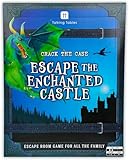
Overview: Talking Tables’ Enchanted Castle targets younger audiences with a dragon-rescue narrative designed for ages 9+. This escape room eschews electronic components for QR codes and integrated music, supporting 1-6 players through 18 challenges using tracing paper and traditional puzzle mechanics. The experience emphasizes imagination and collaborative problem-solving over complex logic.
What Makes It Stand Out: The QR code integration allows digital hints and atmospheric audio without expensive hardware, accessible via smartphones. The tracing paper puzzles provide tactile engagement suitable for developing minds. The pure fantasy theme—rescuing a dragon—resonates strongly with the target demographic, avoiding mature horror elements common in escape rooms.
Value for Money: Priced significantly below electronic competitors, this offers strong value for families with children in the 9-12 range. The lack of disposable components means puzzles can be reset (though challenge is diminished after solving), and the six-player capacity accommodates larger families or small parties without additional purchases.
Strengths and Weaknesses: Strengths include age-appropriate difficulty, tech-savvy QR implementation, strong thematic appeal for kids, and excellent player count flexibility. Weaknesses involve being too simple for adults, limited replay value once solved, and dependence on smartphone access. The 18 challenges feel brief compared to hour-long competitors.
Bottom Line: Perfect for families with children aged 9-12 seeking an accessible, affordable escape room experience. The tech integration is clever, though seasoned puzzlers should look elsewhere.
10. Hasbro Gaming Clue Board Game Robbery at The Museum, Escape Room Game, Murder Mystery Games, 1-6 Players, 10+ (Amazon Exclusive)

Overview: Hasbro’s Clue Robbery at the Museum reimagines the classic deduction franchise as a cooperative escape room. This one-time solve game has 1-6 players investigating a museum heist, with a dynamic board that physically changes as puzzles unlock new rooms. The traitor twist adds narrative depth beyond simple puzzle-solving.
What Makes It Stand Out: The evolving gameboard is genuinely innovative—tiles flip and new areas emerge, creating physical discovery. Integrating the Clue brand’s “who, where, what” structure provides familiar framework for new players. The cooperative traitor hunt after escaping adds a second gameplay phase, extending value. As an Amazon Exclusive, availability is limited but quality is consistent with Hasbro standards.
Value for Money: As a premium branded single-play experience, pricing reflects Hasbro’s quality components and licensed IP. The dual-phase gameplay (escape then accusation) effectively provides two games in one session. Compared to independent escape rooms, it offers comparable entertainment at lower cost, though replayability is nil.
Strengths and Weaknesses: Strengths include innovative board mechanics, strong brand recognition, excellent 1-6 player scaling, and the two-part structure. Components are durable and visually appealing. Weaknesses involve single-use nature, potential deviation from expected Clue gameplay, and puzzles that may feel straightforward for escape room veterans. The traitor mechanism might confuse younger players.
Bottom Line: An excellent choice for Clue fans seeking cooperative gameplay and families wanting a narrative-driven puzzle experience. The dynamic board justifies the premium price for a memorable game night.
Why Escape Room Games Are Perfect for Tweens and Teens
The transition from childhood to adolescence brings a hunger for independence and mastery that escape room games satisfy beautifully. At this age, kids crave challenges that validate their growing intellectual capabilities while still providing the safety net of family support. Escape room games strike this delicate balance by offering structured problem-solving within a narrative framework that captures their imagination.
These games also address the social development needs of this age group. Ten-year-olds through teenagers are navigating complex friendship dynamics and learning to work effectively in teams. Escape room scenarios require clear communication, role delegation, and collective celebration of victories—skills that translate directly to real-world group projects and social situations. The shared experience of cracking a particularly tricky code creates bonds stronger than any passive movie night ever could.
Key Features to Look For
Age Appropriateness and Complexity
When evaluating games for the 10+ age range, look for complexity indicators beyond the minimum age recommendation. Check if puzzles require multi-step reasoning, pattern recognition across different game components, or connecting seemingly unrelated clues. Games designed for this age bracket should challenge kids without requiring adult-level knowledge or life experience. The best options include graduated difficulty scales or hint systems that prevent players from hitting dead ends.
Theme and Storyline Appeal
Tweens have strong opinions about what feels “babyish” versus “cool.” Mystery, adventure, and mild supernatural themes typically resonate well, while overly cartoonish or simplistic narratives may cause eye-rolls. Look for games with rich backstories that unfold as puzzles are solved, creating narrative momentum that keeps everyone invested. The story should feel like a natural framework for the puzzles rather than a thin veneer slapped onto random challenges.
Game Duration and Replayability
Attention spans vary, but most kids in this age group can handle 60-90 minutes of focused gameplay. Anything longer risks fatigue and disengagement. Consider whether a game offers replay value through multiple scenarios, randomized elements, or the ability to reset components for another attempt. Some games function as one-time experiences—like a storybook you can only read once—while others become staples in your game night rotation.
Player Count Flexibility
Family size varies, and so do social gatherings. The ideal escape room game scales gracefully from solo play to 4-6 players without feeling too easy or impossibly crowded. Check whether the game mechanics accommodate different group sizes by offering parallel puzzle tracks or adjustable difficulty. This flexibility ensures the game remains useful as your child grows and their social circle expands.
Physical vs. Digital Components
Modern escape room games exist on a spectrum from entirely physical card-and-component based to app-integrated hybrid experiences. Physical games offer tactile satisfaction and work without screen dependency, while digital integrations can provide atmospheric soundtracks, countdown timers, and progressive hint systems. Consider your family’s screen-time philosophy and whether you want a tech-free experience or appreciate the enhanced immersion technology provides.
Understanding Different Game Formats
Linear vs. Non-Linear Puzzle Paths
Linear games present puzzles in a strict sequence—solve puzzle A to unlock puzzle B, and so on. This structure works well for beginners and ensures everyone focuses on the same challenge at the same time. Non-linear formats offer multiple puzzles simultaneously, allowing players to divide and conquer. This approach suits larger groups and confident problem-solvers who enjoy autonomy. For mixed-age play, non-linear games let advanced players tackle complex puzzles while younger participants contribute to more accessible tasks.
One-Time Use vs. Replayable Games
Many premium escape room games involve destroying components—cutting cards, folding papers, writing on materials—making them single-play experiences. These often deliver cinematic, story-driven adventures with surprising plot twists. Replayable games use erasable markers, resettable locks, or modular components that allow multiple playthroughs, sometimes with different outcomes. Your choice depends on budget, storage space, and whether you prefer a memorable one-time event or a game library you can return to monthly.
App-Integrated Experiences
Games that sync with smartphone or tablet apps offer dynamic features impossible with physical components alone. These might include atmospheric audio that changes based on your progress, input validation that prevents guesswork, or branching storylines that adapt to your decisions. The trade-off is screen dependency and potential technical glitches. Evaluate whether the app enhances the experience or feels like a gimmicky add-on that distracts from the core gameplay.
Card-Based vs. 3D Component Games
Card-based games prioritize portability and affordability, packing dozens of puzzles into a compact box. They rely heavily on clever design and mental gymnastics. Three-dimensional games incorporate physical locks, boxes, strange devices, and interactive mechanisms that provide satisfying tactile feedback. While bulkier and more expensive, these create a more immersive environment that feels closer to a real escape room. For kids who learn by doing, the hands-on nature of 3D components can be especially engaging.
Educational Benefits
Critical Thinking Development
Every puzzle in an escape room game acts as a mini-exercise in logic, deduction, and analytical reasoning. Kids learn to question assumptions, test hypotheses, and recognize when a strategy isn’t working. Unlike worksheets that present isolated problems, escape room puzzles interconnect, teaching children to synthesize information across multiple sources and contexts. This systems-thinking approach mirrors real-world problem-solving where solutions rarely come from a single data point.
Teamwork and Communication Skills
Success demands that players articulate observations, listen to alternative interpretations, and build on each other’s ideas. Kids practice concise, clear communication under time pressure—a skill that serves them in classroom discussions and future workplace collaboration. The natural hierarchy that emerges—someone tracks clues, another manages the timer, a third physically manipulates components—mirrors effective project team structures, giving children low-stakes practice in role specialization.
Problem-Solving Under Pressure
The countdown timer introduces manageable stress that teaches emotional regulation. Kids learn to recognize rising frustration, take deep breaths, and return to a puzzle with fresh eyes. They experience how panic leads to sloppy thinking, while calm focus reveals solutions that seemed invisible before. This resilience—the ability to persist through difficulty—transfers directly to academic challenges and personal setbacks.
Reading Comprehension and Attention to Detail
Escape room games reward careful reading and observation. A single overlooked word or tiny symbol often holds the key to progress. Kids develop the habit of reading instructions thoroughly rather than skimming, and they learn to cross-reference information across different game materials. This meticulous attention to detail strengthens study skills and reduces careless errors in schoolwork.
Setting Up for Success
Creating the Right Atmosphere
Transform your dining table into an immersive environment with simple touches. Dim the lights and use battery-powered candles or fairy lights for ambiance. Play thematic background music at low volume—many games suggest soundtracks, or you can find appropriate instrumental music online. Consider simple props like hats or scarves that match the game’s theme, allowing kids to get into character. These environmental cues signal that this experience is special and different from ordinary board game night.
Managing Hints and Nudges
Establish hint rules before starting. Will you use a formal hint system built into the game, or will you act as the hint-giver? Decide how many hints are allowed without feeling like “cheating.” For family play, frame hints as collaboration rather than failure: “Let’s think about this together” instead of “You need help.” Pay attention to body language—crossed arms, sighing, or wandering attention often signal it’s time for a gentle nudge to prevent complete disengagement.
When to Step In as a Parent
Resist the urge to solve puzzles for your kids, even when you see the solution immediately. Instead, ask guiding questions: “What patterns do you notice?” or “Have you tried looking at it from a different angle?” Step in only when frustration threatens to derail the entire experience. Remember that the goal isn’t just escaping—it’s the process of working through challenges. Your patience and restraint model effective mentoring over micromanaging.
Organizing Game Components
Escape room games generate chaos—cards everywhere, loose papers, small tokens. Use small bowls or trays to corral components by puzzle or type. Designate one player as the “banker” who manages solved items and prevents accidental mixing. Keep a notepad handy for jotting down theories and partial solutions. This organization prevents the frustration of lost pieces and teaches project management skills that help in school group assignments.
Common Challenges and Solutions
When Puzzles Feel Too Difficult
Hitting a wall is inevitable and actually beneficial for learning. Teach kids to take structured breaks—step away for two minutes, get water, stretch. Encourage them to verbalize what they know and what they’re stuck on; often the act of explaining reveals the solution. Have them review all materials systematically, checking for unused items or overlooked details. This meta-cognitive strategy—thinking about their thinking—builds problem-solving flexibility.
Keeping Everyone Engaged
In larger groups, some players may dominate while others withdraw. Implement a “pass the baton” rule where each player leads the effort on one puzzle. For non-linear games, explicitly assign different puzzle tracks to different people, ensuring everyone has ownership. Celebrate small victories loudly and specifically: “Great catch on that color pattern, Maya!” This positive reinforcement encourages continued participation from quieter team members.
Handling Game Malfunctions
Components sometimes don’t work as intended—a lock sticks, a card tears, an app crashes. Model calm problem-solving: “Okay, the lock won’t open. Let’s double-check the code and try gentle wiggling. If it still doesn’t work, we’ll use the app workaround.” Keep contact information for the publisher handy in case you need replacement parts. Having a backup plan prevents a small technical issue from ruining the entire experience.
Dealing with Competitive Personalities
Some kids fixate on being the “solver” rather than collaborating. Reframe success as a team metric: “We escaped together” rather than “I solved the most puzzles.” If competition between siblings becomes toxic, create cooperative challenges where they must physically work together—one reading clues while another manipulates components. Emphasize that different puzzles play to different strengths, and everyone contributes uniquely to the team’s success.
Making the Most of Your Investment
Storage and Preservation Tips
Single-use games require careful component management if you plan to pass them along. Store all materials in resealable bags, keeping used and unused items separate. Photograph or scan any materials you mark up so the next player can enjoy the same experience. For replayable games, invest in quality storage solutions like small plastic organizers that keep tokens and cards sorted, reducing setup time for future plays.
Resetting Games for Multiple Plays
Replayable games often include reset instructions—follow them meticulously. Use erasable markers specifically designed for the game components; regular dry-erase markers may stain. Photograph the initial setup before playing to ensure accurate reconstruction. Check that all locks return to their default codes and that no cards are stuck together. A proper reset ensures the next playthrough feels as fresh as the first.
Trading and Sharing with Other Families
Escape room games make excellent trade currency within parent networks. Since many are one-time experiences, families can pass them along like beloved novels. Establish a borrowing system where each family adds a small personal touch—a note about their favorite puzzle, a photo of their victory moment. This creates community and makes the games more affordable. Just ensure all components are accounted for before passing the game along.
Documenting Your Family’s Adventures
Create a simple escape room journal where you record which games you played, how long they took, and memorable moments. Kids can write reviews or draw pictures of their favorite puzzles. Take a group photo after each successful escape. Over time, this becomes a treasured family scrapbook that captures not just the games, but your children’s evolving problem-solving abilities and teamwork dynamics.
Frequently Asked Questions
What makes an escape room board game different from regular puzzle games?
Escape room games create an immersive narrative experience where puzzles connect to a larger story and goal, typically “escaping” a scenario. Unlike standalone puzzles, they feature interconnected challenges, time pressure, and thematic components that work together to create a cohesive adventure rather than isolated brain teasers.
How do I know if my 10-year-old is ready for escape room games?
If your child enjoys mystery novels, logic puzzles, or video games with problem-solving elements, they’re likely ready. Look for games with a minimum age of 10+ and read reviews focusing on difficulty. Start with shorter, 30-45 minute games before tackling longer experiences. Their enthusiasm for collaboration is a better indicator than pure puzzle aptitude.
Are escape room games worth the money if you can only play them once?
Many families find the experience comparable to going to a movie or mini-golf—it’s about the shared adventure, not perpetual utility. A $15-20 single-use game that provides 90 minutes of engaged family interaction costs less than most family outings. Plus, you can often pass them along to friends, extending their value.
What should we do if we get completely stuck?
First, take a five-minute break. Then systematically review all unused components and clues. Check if you’ve misread any instructions. Use the hint system if available—there’s no shame in getting nudges. If all else fails, search online for spoiler-free hint guides that offer gradual assistance without revealing entire solutions.
Can younger siblings participate in games rated 10+?
Yes, with modifications. Assign them simple observation tasks: “Look for anything red” or “Count how many times this symbol appears.” Let them physically manipulate components while older kids solve the logic. Choose games with non-linear structures where they can contribute to parallel puzzles. Their participation builds confidence and keeps the family together.
How many players is ideal for escape room board games?
Most games work best with 3-4 players. This size allows diverse perspectives without overwhelming decision-making. Two players can succeed but may struggle with puzzles requiring simultaneous actions. Groups of 5-6 risk some members feeling left out unless the game specifically supports non-linear play with multiple puzzle tracks.
Do we need to play in complete silence like real escape rooms?
Absolutely not! Family play should be lively and conversational. Discussion is how kids process ideas and learn from each other. The only rule should be respecting when someone is focused—don’t shout over a person studying a clue. Background music adds ambiance, but silence isn’t required or even desirable for home play.
What’s the best way to store escape room games after playing?
For replayable games, photograph the setup, then store components in labeled bags or small containers. Keep instructions and solution booklets separate to avoid accidental spoilers. For single-use games you plan to gift, scan any marked materials and store all pieces together. Use the original box with a note indicating which components were used.
Can escape room games be played solo?
Many games offer solo variants, but the experience fundamentally changes. Solo play eliminates the collaborative learning and communication practice that makes these games valuable for kids. Consider solo mode for a child who wants to replay a favorite game, but prioritize group play for the full developmental benefits and family bonding.
How do we choose between different themes and difficulty levels?
Match themes to your child’s interests—adventure, mystery, science fiction, or historical settings. For difficulty, start one level below what you think they can handle to build confidence. Read parent reviews that mention actual playtime with kids, not just the manufacturer’s age rating. When in doubt, choose a game with an excellent hint system that can smooth over difficulty spikes.
See Also
- 10 Best Escape Room Board Games for Beginners This Year
- The 10 Best Escape Room Board Games Every Party Host Needs This Year
- The 10 Best Escape Room Board Games Every New Player Needs This Year
- Top 10 Best Escape Room Board Games for Family Game Night in 2026
- 10 Must-Have Themed Board Games for Escape Room Lovers in 2026