Table of Contents
Imagine watching a group of children huddled around a table, faces lit with concentration and bursts of shared laughter as they work together to solve a puzzle or overcome an imaginary challenge. In today’s world, where solo screen time often dominates play, cooperative board games offer a powerful antidote – fostering genuine connection, communication, and collective triumph. These aren’t just games; they’re dynamic social laboratories where kids learn that winning isn’t about beating others, but about lifting each other up. As we navigate 2026, with its unique blend of digital saturation and heightened awareness of social-emotional learning needs, the value of cooperative play has never been more critical for developing resilient, empathetic young minds.
Gone are the days when board games meant fierce competition and potential tears over lost matches. The cooperative game revolution has fundamentally reshaped family game nights, replacing “you vs. me” with “us vs. the challenge.” For parents and educators, this shift is a gift, providing structured, screen-free opportunities to nurture essential life skills in a joyful, pressure-free environment. Choosing the right cooperative game, however, requires understanding the subtle nuances of child development, group dynamics, and the specific mechanics that transform simple play into profound learning experiences. This guide cuts through the noise, focusing not on fleeting trends or specific titles, but on the timeless principles and practical considerations that help you select and maximize the impact of cooperative games for children in the current landscape.
Top 10 Cooperative Games for Kids
Detailed Product Reviews
1. Peaceable Kingdom Race to the Treasure! Cooperative Path Building Game for 2 to 4 Kids Ages 5+

Overview: This award-winning cooperative game challenges 2-4 players (ages 5+) to work together, racing against an Ogre to build a path from start to finish and reach the treasure. Success means everyone wins, fostering teamwork from the outset with no reading required. What Makes It Stand Out: Its pure cooperative design eliminates player competition, focusing instead on shared strategy and communication. The simple path-building mechanic is brilliantly accessible for young children, while the “race against the Ogre” element adds thrilling urgency. Winning multiple prestigious awards (like Oppenheim Platinum) underscores its exceptional design for early social development. Value for Money: Priced competitively within the children’s board game market, it offers significant educational value. The frustration-free packaging and durable components ensure longevity, making it a smarter investment than many fleeting electronic toys or purely competitive games that may cause sibling rivalry. Strengths and Weaknesses: Strengths: Builds essential cooperation, strategic thinking, and social skills; easy to learn; high replayability with variable paths; genuinely inclusive win condition. Weaknesses: Very young 5-year-olds might need initial guidance; path mechanics, while simple, could occasionally frustrate absolute beginners. Bottom Line: An outstanding introduction to cooperative play that excels in teaching teamwork and strategy without pressure. Highly recommended for preschool and early elementary families seeking meaningful, screen-free interaction that everyone genuinely enjoys together.
2. Peaceable Kingdom Gnomes at Night A Cooperative Maze Game for 2 to 4 Kids Ages 6+
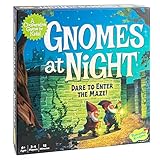
Overview: Players (ages 6+, 2-4) become gnomes racing against time to recover twelve stolen treasures within a magnetic maze before morning. This fast-paced cooperative game requires clear communication as teammates manipulate magnetic movers on opposite sides of a dual-layered board. What Makes It Stand Out: The innovative dual-sided maze is the star. Players can only move their gnome along paths visible on their side, forcing reliance on teammates to navigate “through walls” by describing positions (“left,” “up,” etc.). The sand timer adds genuine tension, making communication skills critical under pressure in a uniquely engaging way. Value for Money: Offers exceptional value through its clever physical design (magnetic movers, reversible boards) and high replayability across four difficulty levels. It transforms abstract communication practice into a tangible, exciting rescue mission, justifying its cost compared to simpler memory or roll-and-move games. Strengths and Weaknesses: Strengths: Uniquely develops descriptive language and spatial reasoning; thrilling time pressure; scalable difficulty; strong team cohesion focus. Weaknesses: The communication demand can initially overwhelm shy children; setup requires careful board alignment; sand timer may cause anxiety for sensitive players. Bottom Line: A brilliantly designed, dynamic cooperative experience that makes communication practice feel like an adventure. Essential for families wanting to build kids’ teamwork and clear expression skills in a genuinely fun, award-worthy package.
3. Peaceable Kingdom Dinosaur Escape Cooperative Memory Game of Logic and Luck for 2 to 4 Kids Ages 4+

Overview: Designed for the youngest players (ages 4+, 2-4), this cooperative game tasks children with rescuing dinosaurs before a volcano erupts. Players work together using memory and light strategy to match fern tokens, moving dinos to safety in a race against the erupting volcano puzzle. What Makes It Stand Out: It masterfully simplifies cooperative play for preschoolers. The combination of memory matching (flipping reversible fern tokens), simple movement, and the tangible, suspenseful volcano puzzle (built as the game progresses) creates accessible engagement. The theme resonates strongly with young children, masking skill development in pure fun. Value for Money: An excellent investment for early learners. The durable components (dino movers, chunky puzzle pieces) withstand rough handling, and the cooperative nature encourages repeated plays without frustration. It delivers significant cognitive (memory, matching) and social-emotional benefits at a fair price point for its educational depth. Strengths and Weaknesses: Strengths: Perfectly pitched for ages 4-6; gentle introduction to memory and strategy; zero reading required; fosters patience and shared problem-solving; highly thematic appeal. Weaknesses: Very simple mechanics may bore older kids quickly; luck plays a larger role than strategy; limited long-term replayability beyond early childhood. Bottom Line: The ideal first cooperative game for preschoolers, blending memory challenges with a captivating theme to build foundational social and cognitive skills. A must-have for parents seeking positive, non-competitive play experiences for young children.
4. Peaceable Kingdom Hoot Owl Hoot - Cooperative Matching Game For Kids

Overview: A foundational cooperative matching game where players (ages not specified, typical Peaceable Kingdom range 4-8) work as a team against a shared challenge. Players collaborate, likely using color or symbol matching, to achieve a common goal before an obstacle (like the sun rising) ends the game, ensuring all win or lose together. What Makes It Stand Out: Its pure cooperative core is exceptionally rare and valuable for young children, eliminating early exposure to cut-throat competition. Peaceable Kingdom’s signature focus on emotional development shines here, promoting patience, shared decision-making, and celebrating collective success through straightforward matching mechanics ideal for pre-readers. Value for Money: Represents strong value as an entry-point cooperative game. The focus on essential social skill development (empathy, teamwork) offers long-term benefits far exceeding the cost, especially compared to games fostering negative competitive dynamics. Durable construction typical of the brand ensures years of use. Strengths and Weaknesses: Strengths: Teaches crucial cooperation fundamentals; simple, accessible rules; fosters positive self-esteem through shared wins; excellent for emotional learning; durable build. Weaknesses: Limited strategic depth; specific mechanics are unclear from provided info (potentially less engaging than themed siblings); may feel too simple for some 6+ year olds. Bottom Line: A vital, gentle introduction to cooperative play for very young children. While less detailed in features, its core mission of nurturing teamwork makes it a highly recommended cornerstone for any preschool game collection focused on social growth.
5. OUTFOXED, A CLASSIC WHO DUNNIT GAME FOR PRESCHOOLERS, 4 players
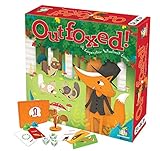
Overview: This cooperative whodunit game (ages 4+, 2-4 players) challenges preschoolers to work together as detectives to solve the mystery of who stole Mrs. Plumpert’s pot pie. Using a unique evidence scanner, players gather clues to identify the culprit’s attire and eliminate innocent fox suspects before the thief escapes. What Makes It Stand Out: The ingenious evidence scanner (a physical device players slide cards into) transforms clue-gathering into a magical, tactile experience perfect for little hands. The “process of elimination” mechanic, adapted for young children using visual clues (hats, scarves), brilliantly introduces logical deduction in a non-intimidating, story-driven format with charming fox characters. Value for Money: The evidence scanner component significantly enhances play value, offering a novel interactive element rarely found at this price point for preschool games. It provides hours of engaging deductive play, making it a superior investment over simpler matching games and fostering critical early logic skills effectively. Strengths and Weaknesses: Strengths: Evidence scanner is a standout, engaging tool; perfect introduction to logic/deduction; strong cooperative narrative; adorable theme; easy setup and rules. Weaknesses: Scanner mechanism could potentially break with rough use; limited replayability once deduction pattern is mastered; some clue cards might be visually similar for young eyes. Bottom Line: A clever and captivating gateway into logic games for preschoolers. Outfoxed successfully makes deduction fun and accessible, earning its place as a top recommendation for families wanting to develop early critical thinking skills through joyful cooperative play.
6. Peaceable Kingdom Mermaid Island Award Winning Cooperative Board Game for 2 to 6 Kids Ages 5+

Overview:
Peaceable Kingdom’s Mermaid Island is a cooperative board game where 2-6 children (ages 5+) work together to guide three mermaids to safety before the Sea Witch reaches Mermaid Island. Players spin a spinner, move mermaid tokens, and collect wand tokens to thwart the Witch. Designed for quick 15-minute sessions with no reading required, it’s ideal for preschoolers and early elementary kids seeking playful teamwork.
What Makes It Stand Out:
Its pure cooperative design eliminates player competition, fostering shared problem-solving and emotional development. The spinning mechanic and simple wand-collection strategy make it accessible for young children, while the non-stressful, narrative-driven theme (winning against the Sea Witch) cultivates creativity and community. Winning Good Housekeeping’s Best Toy Award underscores its appeal.
Value for Money:
Priced competitively for its durable components (board, tokens, spinner), it offers exceptional educational value. Unlike competitive games that frustrate young kids, this encourages repeated play without conflict, making it more cost-effective than alternatives targeting similar age groups.
Strengths and Weaknesses:
Strengths: Builds cooperation and emotional intelligence; quick, engaging gameplay; zero reading needed; inclusive for mixed groups. Weaknesses: Limited strategic depth for older kids; Sea Witch movement can feel luck-dependent; spinner may wear over time.
Bottom Line:
An outstanding first cooperative game for ages 5+, Mermaid Island excels in teaching teamwork through enchanting, stress-free play. Highly recommended for parents seeking to nurture social skills in early childhood.
7. Peaceable Kingdom Count Your Chickens Award Winning Cooperative Counting Game for Kids

Overview:
Count Your Chickens is a cooperative counting game where 2-4 players (ages 3+) help Mother Hen gather her 10 chicks into the coop before the henhouse door closes. With no reading required, children take turns spinning to collect chicks, developing early math and social skills in a supportive, shared-win environment lasting 10–15 minutes.
What Makes It Stand Out:
It uniquely replaces competition with collective achievement, making it perfect for toddlers. The counting mechanic reinforces number recognition organically, while the “frustration-free” packaging ensures easy setup. Winning five awards, including Oppenheim’s Platinum, highlights its effectiveness in nurturing empathy and basic numeracy.
Value for Money:
An affordable investment for foundational learning, it outperforms flashcards or apps by combining physical interaction with emotional growth. The durable components justify its price, especially compared to single-skill toys that lack its social-development benefits.
Strengths and Weaknesses:
Strengths: Ideal for preschoolers; effortless to learn; promotes counting and patience; zero conflict; eco-friendly packaging. Weaknesses: Very short gameplay; limited replayability for ages 5+; spinner can feel repetitive after extended use.
Bottom Line:
A must-have for ages 3–5, Count Your Chickens transforms foundational math into joyful cooperation. Its award-winning design makes it a top choice for early childhood development.
8. Ravensburger Minecraft Heroes of The Village | Cooperative Board Game | Exciting & Unpredictable | Perfect for Families and Minecraft Enthusiasts | Suitable for Kids & Adults
Overview:
Ravensburger’s Minecraft: Heroes of The Village is a cooperative board game (ages 7+, 2–4 players) where teams defend a village from mobs by building structures, gathering resources, and strategizing. Featuring a modular map, it translates Minecraft’s creativity into physical gameplay with high-quality wooden components and immersive, ever-changing challenges.
What Makes It Stand Out:
The dynamic, reconfigurable map ensures no two games are alike, offering exceptional replayability. Authentic Minecraft elements—like crafting buildings from wooden blocks—resonate with fans, while Ravensburger’s 130-year reputation guarantees durability. It masterfully blends strategy with familiar IP appeal.
Value for Money:
Priced mid-range for its premium components (25 wooden blocks, detailed tiles), it surpasses cheaper, flimsy alternatives. The depth of gameplay justifies the cost, especially for families seeking screen-free Minecraft engagement that grows with players’ skills.
Strengths and Weaknesses:
Strengths: High replay value; authentic Minecraft immersion; sturdy, tactile components; encourages collaborative planning. Weaknesses: Setup time can be lengthy; complexity may overwhelm younger kids; rulebook requires careful initial study.
Bottom Line:
A stellar fusion of Minecraft’s spirit and physical gameplay, Heroes of The Village delivers rich cooperative fun for families. Highly recommended for Minecraft fans aged 7+ seeking strategic, screen-free adventures.
9. Pandasaurus Cooperative Strategy Card Game - Fun Interactive Family Game for Ages 8+, 1-5 Players, 20 Minute Playtime
Overview:
Pandasaurus’ The Game is a cooperative card game (ages 8+, 1–5 players) where teams race to play all cards from two sequential decks (1–100) without breaking strict communication rules. With 20-minute sessions and global acclaim (1.3M+ copies sold), it challenges players to strategize silently against time itself.
What Makes It Stand Out:
Its ingenious “no talking” mechanic forces players to interpret subtle cues, creating intense, brain-teasing collaboration. Winning Spiel des Jahres (Game of the Year) validates its addictive, minimalist design. The 1–5 player flexibility and rapid playtime make it uniquely accessible for diverse groups.
Value for Money:
At a modest price, it offers extraordinary replayability through near-infinite card combinations. Unlike expensive board games, its compact size and depth provide endless strategic puzzles, outperforming many pricier alternatives in pure engagement.
Strengths and Weaknesses:
Strengths: Brilliant communication challenge; highly replayable; portable; scales perfectly for 1–5 players; award-winning simplicity. Weaknesses: Communication restrictions can frustrate new players; lacks thematic immersion; limited physical components.
Bottom Line:
The Game is a masterpiece of cooperative design, perfect for families and strategy fans craving quick, mentally stimulating sessions. An essential buy for game nights.
10. Gamewright - Forbidden Island - Cooperative Strategy Survival Board Game, 2-4 Players
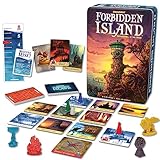
Overview:
Gamewright’s Forbidden Island, designed by Matt Leacock (Pandemic), is a cooperative strategy game (ages 10+, 2–4 players) where teams race to retrieve sacred treasures from a sinking island. Players assume unique roles with special abilities, navigating tiled terrain that floods progressively, demanding urgent teamwork to escape before the island vanishes.
What Makes It Stand Out:
Its innovative “sinking island” mechanic creates palpable tension, while distinct player roles encourage strategic specialization. Stunning artwork immerses players in a perilous adventure, and Leacock’s pedigree ensures polished, intuitive gameplay that balances luck and planning.
Value for Money:
Priced accessibly, it delivers premium components (durable tiles, tokens) and deep strategic replayability. Surpasses simpler family games in complexity without overwhelming newcomers, offering better long-term value than disposable party games.
Strengths and Weaknesses:
Strengths: Tense, thematic gameplay; promotes critical thinking; beautiful visuals; role diversity enhances replayability; excellent for teaching strategic foresight. Weaknesses: Can feel too challenging for younger players; tile setup randomness occasionally frustrates; limited player count (max 4).
Bottom Line:
Forbidden Island remains a gold standard in cooperative gaming, blending suspense, strategy, and teamwork flawlessly. A top-tier recommendation for families and strategy enthusiasts ages 10+.
Why Cooperative Play Matters More Than Ever in 2026
Building Essential Social-Emotional Skills Through Shared Goals
Cooperative games are unparalleled tools for developing core social-emotional competencies. When children work together towards a common objective, they naturally practice active listening as they hear and process peers’ ideas. Negotiation becomes essential when deciding the next move, teaching compromise and respectful disagreement. Crucially, these games provide safe spaces to experience shared frustration when the group faces a setback and, more importantly, the powerful, unifying joy of collective success. This repeated cycle builds emotional resilience and a deep understanding that challenges are more manageable together.
Reducing Anxiety and Fostering Inclusivity for Diverse Learners
The pressure of direct competition can be paralyzing for many children, particularly those who are shy, neurodiverse, or still developing confidence. Cooperative play eliminates the fear of “losing to a friend,” creating a significantly lower-stress environment. This inclusivity is vital; children who might disengage in competitive settings often become highly engaged contributors in cooperative scenarios. The focus shifts from individual performance to group problem-solving, allowing children with varying strengths – the spatial thinker, the verbal planner, the detail-oriented checker – to find meaningful roles and feel valued for their unique contributions.
Strengthening Family Bonds and Creating Positive Traditions
In an era of fragmented attention spans, cooperative games demand genuine presence and interaction. They transform game night from a passive activity into an active bonding ritual where parents and children are teammates, not opponents. Working side-by-side to outsmart the “game villain” or solve a cooperative puzzle fosters authentic connection, shared storytelling, and creates lasting positive memories. This collaborative dynamic builds trust and open communication channels that extend far beyond the game board, strengthening the family unit through repeated, joyful cooperation.
Understanding Age Appropriateness and Developmental Stages
Navigating the Toddler and Preschool Years (Ages 3-5)
For the youngest players, cooperative games must prioritize simplicity, tactile engagement, and very short playtimes (10-15 minutes). Mechanics should rely heavily on visual cues, physical dexterity (like moving pieces), and simple cause-and-effect rather than complex rules. Themes should be concrete and familiar (animals, colors, basic emotions). Crucially, the game must be winnable almost every time at this stage; the focus is entirely on the process of playing together and experiencing shared success, not on overcoming significant difficulty. Adult facilitation is usually essential.
Engaging Early Elementary Players (Ages 6-8)
Children in this stage can handle slightly more complex rules, longer play sessions (20-30 minutes), and genuine problem-solving challenges. Games can introduce simple strategy, turn-taking variations, and light memory components. The cooperative element becomes more meaningful as they grasp the concept of shared responsibility. Themes can expand to include more imaginative scenarios (adventures, mysteries). It’s important that the challenge level provides a reasonable chance of losing (maybe 30-40% of the time), teaching graceful handling of group setbacks while still ensuring frequent wins to maintain motivation.
Challenging Older Children and Pre-Teens (Ages 9-12)
This group craves meaningful strategy, deeper narrative immersion, and a significant challenge where losing feels possible but surmountable through clever teamwork. Playtimes can extend to 45 minutes or more. Games can incorporate resource management, multi-step planning, conditional actions (“if this, then that”), and more nuanced communication requirements. The cooperative mechanic should demand real discussion and consensus-building, pushing their ability to articulate reasoning and consider multiple perspectives. The satisfaction of overcoming a tough challenge together is a major draw.
Considering Mixed-Age Groups and Individual Variability
One of the beauties of cooperative play is its adaptability for siblings or groups with varying ages and abilities. Look for games with built-in difficulty sliders or variant rules that allow you to adjust complexity on the fly. Sometimes, an older child can take on a “helper” role within the team structure without dominating. Always prioritize the comfort and engagement level of the youngest or least experienced player in the group. Remember, developmental stages vary widely; a game’s suggested age is a guideline, not a rule – observe your child’s actual readiness.
Key Features to Evaluate When Choosing a Game
Simplicity and Clarity of Core Rules
The most critical factor for any children’s game, cooperative or not, is how quickly and easily the rules can be grasped. For younger kids, the core mechanic should be explainable in one or two simple sentences. For older children, while rules can be more layered, the fundamental cooperative objective and turn structure must remain crystal clear. Avoid games where understanding the rules takes longer than playing the first round. Look for games that teach through the first few moves, not dense instruction manuals.
The “Sweet Spot” of Challenge Level
A game that’s too easy becomes boring quickly; one that’s perpetually too hard leads to frustration and disengagement. The ideal cooperative game for kids offers a challenge that feels attainable through teamwork but requires genuine effort and smart decisions. It should provide small, incremental successes within the game (e.g., completing a step, overcoming a minor obstacle) to maintain momentum, even if the overall game is lost. Games with adjustable difficulty settings are particularly valuable for growing with your child.
Theme Integration and Immersive Appeal
The theme isn’t just decoration; it’s the engine of engagement. Does the theme resonate with the child’s current interests (dinosaurs, space, undersea adventures, helping animals)? Crucially, the game mechanics should feel connected to the theme. Moving colored tokens feels disconnected for a “rescue mission,” but working together to build a path across a ravine to save a character feels inherently thematic and immersive. Strong theme integration makes the cooperative goal feel meaningful and exciting.
Visual Design and Component Quality
Bright, clear, non-distracting artwork is essential for young players to quickly understand the board, cards, and pieces. Icons should be intuitive. Components need to be durable enough to withstand enthusiastic (and sometimes clumsy) young hands – think thick cardboard, chunky wooden pieces, or sturdy plastic. Avoid games with tiny, easily lost components for younger children. The physical feel of the pieces contributes significantly to the sensory engagement and overall enjoyment.
Required Communication Style and Team Dynamics
Different cooperative games demand different levels of interaction. Some are “multiplayer solitaire” where players act mostly independently towards the common goal with minimal discussion. Others require constant verbal planning, debate, and consensus. Consider the group’s dynamics: Do they need structure to encourage talking? Or do they need a game that channels their natural chatter into productive strategy? The best games for skill development actively encourage and necessitate meaningful communication between players.
Replayability Through Variable Setup or Scenarios
Monotony kills engagement. Look for games that change significantly each time you play. This could be through different map layouts, shuffled challenge decks, variable starting conditions, or distinct scenario objectives. High replayability ensures the game remains fresh and exciting, allowing children to deepen their strategic understanding and communication skills over multiple plays without boredom setting in. Randomness should feel fun, not frustratingly arbitrary.
Time Commitment and Pacing
Honor the child’s attention span. A game promising 60 minutes of play is unrealistic for most under 8. Check the actual playtime (not just the box estimate) for the target age group. The game should have a clear, logical flow without long downtime between turns. For younger kids, “rounds” should be very short. Games that allow for natural stopping points (e.g., “let’s finish this level”) are also helpful for real-world family scheduling.
Physical Space and Setup Requirements
Be realistic about your play environment. Does the game require a huge table space? Is setup incredibly complex with dozens of pieces? For regular family play, especially with younger children, quick setup (under 2 minutes) and a compact footprint are major advantages. Games that store easily with minimal components to lose are also a significant practical plus for busy households.
Maximizing the Learning and Fun: Implementation Tips
Facilitating, Not Directing: The Adult’s Role
Your job isn’t to solve the puzzle for them, but to guide the process. Ask open-ended questions: “What do you think our team should try next?” “How can we help each other remember the rules?” “What happened last time we tried that?” Gently remind them of the cooperative spirit if frustration arises: “Remember, we’re all on the same team against the game!” Model good communication and graceful handling of setbacks.
Processing the Experience: Turning Play into Learning
Don’t skip the debrief! After the game (win or lose), take 2-3 minutes to talk about it. “What was the hardest part for our team?” “How did we figure out that tricky spot?” “What’s one way we helped each other today?” This simple reflection cements the social-emotional lessons and strategic thinking, moving it from fun activity to conscious learning.
Embracing “Losing” as a Valuable Team Experience
When the group doesn’t win (and it should happen sometimes!), frame it positively. “Wow, that was tough! What did we learn that might help us next time?” Focus on the effort and teamwork: “I loved how we stayed calm and kept trying together.” Avoid blaming (“If you had just…”) and instead discuss collective adjustments. Understanding that setbacks are part of the process and can be overcome through persistence is a crucial life lesson reinforced beautifully by cooperative play.
Frequently Asked Questions
Frequently Asked Questions
What’s the absolute youngest age to start cooperative games? Can cooperative games really help a shy child participate more? How do I handle it when one child tries to dominate all decisions? Are cooperative games only for very young children? What if my child gets frustrated and wants to give up during a tough game? How can I tell if a game’s challenge level is right for my child? Do these games work well in classroom or group settings like daycare? Is it okay to modify the rules to make a game easier or shorter? How long should a typical cooperative game session last for kids? Can cooperative games replace competitive games entirely for healthy development?
See Also
- 10 Best Cooperative Board Games for Kids That Encourage Teamwork in 2026
- The Complete Guide to the 10 Best Cooperative Board Games for Kids
- We Tested 50 Cooperative Board Games - Here are the 10 Best for Kids in 2026
- 10 Expert-Recommended Cooperative Board Games for Kids in 2026
- 10 Best Value Cooperative Board Games for Kids in 2026