Table of Contents
Imagine the scene: it’s a rainy Saturday afternoon, and your living room is buzzing with energy. Instead of the usual bickering over whose turn it is or accusations of “cheating,” you hear giggles, hushed whispers of strategy, and a chorus of “We did it!” erupting as a group of kids high-fives over a shared victory. This isn’t just playtime—it’s a subtle masterclass in teamwork, empathy, and resilience, all wrapped up in the colorful, tactile world of cooperative board games. For parents and educators, these games are more than just entertainment; they’re powerful tools that transform play into meaningful learning without anyone realizing they’re “practicing” essential life skills.
Cooperative board games for children stand apart from traditional competitive play by replacing “me versus you” with “us versus the challenge.” This shift isn’t just about avoiding tears over lost matches—it’s about fostering a mindset where success is collective, failures become group problem-solving opportunities, and every player, regardless of age or ability, has a vital role. In a world where kids often face high-pressure environments, these games offer a safe space to collaborate, communicate, and build confidence together. Let’s explore how to harness this magic by understanding what makes these games work, how to choose the right ones for different ages, and the subtle features that turn a simple board game into a cornerstone of childhood development.
Top 10 Cooperative Board Games for Kids
Detailed Product Reviews
1. Peaceable Kingdom Race to the Treasure! Cooperative Path Building Game for 2 to 4 Kids Ages 5+

Overview:
This award-winning cooperative game challenges children aged 5+ to work together, building a path from start to finish to beat the Ogre to hidden treasure. Designed for 2–4 players, it requires zero reading skills, making it accessible for early learners while fostering teamwork and strategic thinking in a pressure-free environment.
What Makes It Stand Out:
Its pure cooperative design stands out—players win or lose as a team, eliminating competitive stress. The path-building mechanic encourages spatial reasoning and planning, while the “frustration-free” packaging ensures quick setup. Winning four prestigious awards, including the Oppenheim Platinum, underscores its educational value in social development.
Value for Money:
Priced competitively for its educational impact, it offers exceptional value compared to single-player or competitive alternatives. The durable components and replayability (thanks to variable path configurations) justify the cost, especially for parents seeking screen-free activities that build foundational skills.
Strengths and Weaknesses:
Strengths: Promotes teamwork, strategic planning, and communication; no reading required; inclusive for mixed-skill groups; high-quality, eco-friendly components. Weaknesses: Limited challenge for children over 7; path options can feel repetitive after extended play; treasure tokens are small and easily lost.
Bottom Line:
An outstanding introductory cooperative game that successfully blends fun with critical social and cognitive development. Highly recommended for preschoolers and early elementary kids seeking collaborative play without winner-takes-all pressure.
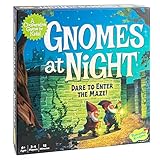
2. Peaceable Kingdom Gnomes at Night A Cooperative Maze Game for 2 to 4 Kids Ages 6+
Overview:
Gnomes at Night is a timed cooperative maze game where players (ages 6+) work in pairs to guide magnetic gnome movers through dual-sided castle mazes. Teams race against a sand timer to recover 12 stolen treasures for the Queen, emphasizing communication and spatial reasoning under mild pressure.
What Makes It Stand Out:
The innovative dual-board system is unique—players control movers on opposite sides of the board, requiring precise directional communication (e.g., “move left through the wall”) to navigate. The magnetic movers glide smoothly, and the four difficulty levels (A–D) ensure longevity. It transforms abstract communication into tangible, engaging teamwork.
Value for Money:
With robust components (12 treasures, 4 boards, sand timer) and adjustable difficulty, it surpasses cheaper memory games in replay value. While slightly pricier than basic card games, its focus on verbal coordination skills justifies the investment for developing essential social tools.
Strengths and Weaknesses:
Strengths: Exceptional for teaching descriptive language and teamwork; scalable challenge; magnetic mechanics prevent piece frustration; sand timer adds gentle urgency. Weaknesses: Requires adult setup guidance for younger kids; maze walls can obscure visibility; sand timer may feel rushed for new players.
Bottom Line:
A masterfully crafted game that turns communication into an adventure. Ideal for families prioritizing collaborative problem-solving—it’s worth every penny for building lifelong interpersonal skills.
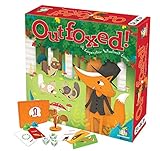
3. OUTFOXED, A CLASSIC WHO DUNNIT GAME FOR PRESCHOOLERS, 4 players
Overview:
Outfoxed! invites preschoolers (ages 4+) into a cooperative whodunit where players work together to identify which of six adorable foxes stole Mrs. Plumpert’s pot pie. Using an evidence scanner and clue cards, kids gather information to eliminate suspects before the culprit escapes.
What Makes It Stand Out:
The evidence scanner—a translucent decoder wheel—adds tactile, tech-free “magic” that captivates young children. Unlike competitive deduction games, its cooperative structure ensures no child feels singled out, while the “who-what-where” clues gently introduce logical reasoning without reading.
Value for Money:
Mid-priced for a preschool board game, it delivers strong value through high engagement and repeated play. The scanner may wear over time, but the game’s ability to hold short attention spans and replace screen time makes it a cost-effective educational tool compared to apps or flashcards.
Strengths and Weaknesses:
Strengths: Perfect for early logic development; scanner gimmick excites kids; quick setup and playtime (15 mins); inclusive for mixed-age groups. Weaknesses: Scanner durability concerns; limited strategic depth for ages 6+; fox suspects lack distinct personalities.
Bottom Line:
A charming, accessible gateway into deduction games. Despite minor durability trade-offs, it’s a top pick for fostering collaborative critical thinking in preschoolers during family game nights.
4. Peaceable Kingdom Dinosaur Escape Cooperative Memory Game of Logic and Luck for 2 to 4 Kids Ages 4+

Overview:
In Dinosaur Escape, players (ages 4+) cooperate to rescue lost dinosaurs from an erupting volcano by flipping fern tokens to find matching pairs. The game blends memory, simple strategy, and luck, requiring teams to move all dinosaurs to safety before the volcano puzzle completes.
What Makes It Stand Out:
Its fusion of memory matching with cooperative urgency is distinctive. The reversible fern tokens (showing different dinos on each side) add replayability, while the physical volcano countdown—built by adding puzzle pieces—creates tangible, non-competitive tension that young children grasp intuitively.
Value for Money:
Excellent value for the component count (12 tokens, 5 volcano pieces, 3 movers) and educational depth. It outshines traditional memory games by promoting shared decision-making and emotional resilience, costing only marginally more than competitive alternatives with lesser developmental benefits.
Strengths and Weaknesses:
Strengths: Builds memory and collaborative problem-solving; low frustration due to shared goals; volcano mechanic visually tracks progress; durable tokens resist wear. Weaknesses: Luck-heavy outcomes may frustrate strategy-minded kids; limited challenge beyond age 6; small tokens pose a choking hazard for toddlers.
Bottom Line:
A joyful, stress-free memory game that transforms matching skills into a shared mission. Highly recommended for preschool classrooms or families seeking cooperative play that grows with early learners.
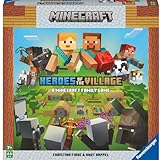
5. Ravensburger Minecraft Heroes of The Village | Cooperative Board Game | Exciting & Unpredictable | Perfect for Families and Minecraft Enthusiasts | Suitable for Kids & Adults
Overview:
Ravensburger’s Minecraft: Heroes of The Village tasks players (ages 7+) with cooperatively defending a village from mobs using Minecraft’s iconic block-building mechanics. With 2–4 players strategizing together, the game emphasizes resource management and adaptive planning on a modular map.
What Makes It Stand Out:
The ever-changing modular board—using 18 world tiles—ensures no two games play alike, mirroring Minecraft’s procedural generation. High-quality wooden blocks and mob tokens translate digital charm into tangible play, while the cooperative focus encourages joint tactics over individual wins.
Value for Money:
Priced higher than entry-level kids’ games, it justifies cost through exceptional components (25 wooden blocks, 9 buildings) and near-limitless replayability. For Minecraft fans, it offers deeper strategic engagement than cheaper licensed games, making it a sound investment for family collections.
Strengths and Weaknesses:
Strengths: Outstanding component quality; high replay value; authentically captures Minecraft’s spirit; scales well for mixed-age groups. Weaknesses: Setup time (10+ mins) may deter young kids; rule complexity can overwhelm absolute beginners; limited solo-play options.
Bottom Line:
A must-have for Minecraft devotees seeking meaningful cooperative play. Despite a steeper learning curve, its craftsmanship and dynamic gameplay deliver exceptional family entertainment worth the premium price.
6. Peaceable Kingdom Hoot Owl Hoot - Cooperative Matching Game For Kids

Overview: This 2-4 player game for ages 3+ challenges children to work together, not against each other. Players match colored owls to flight paths, aiming to guide all owls home before the sun sets. Its simple matching mechanic and cooperative nature make it ideal for preschoolers. What Makes It Stand Out: The pure cooperative design eliminates competitive stress, fostering teamwork from an early age. The bright, engaging owl theme and intuitive color-matching gameplay require no reading, making it accessible for young children. Its focus on shared success over individual winning is its core differentiator. Value for Money: Priced modestly for a durable, well-illustrated children’s game, it offers excellent value. The compact box (1.15 lbs) and simple components provide long-lasting play without complex setup. It outperforms many similarly priced competitive games by building foundational social skills. Strengths and Weaknesses: Strengths: Encourages collaboration, develops color recognition and planning, very easy to learn, inclusive for young ages. Weaknesses: Limited replay depth for older children (5+), component durability might not withstand extremely rough handling long-term, strategy is very basic. Bottom Line: An outstanding first cooperative game that successfully teaches teamwork and basic matching. Highly recommended for parents seeking screen-free, stress-free play for preschoolers to build social skills gently.
7. Peaceable Kingdom Count Your Chickens Award Winning Cooperative Counting Game for Kids

Overview: Designed for 2-4 players aged 3+, this award-winning game has children cooperatively helping Mother Hen gather her scattered chicks. Players spin a spinner and move, collecting chicks based on the number landed on, aiming to bring all chicks home before the hen reaches the end of the path. What Makes It Stand Out: Its seamless integration of basic counting practice within a genuinely cooperative framework is exceptional. Requiring zero reading, it builds early math skills organically. The multiple prestigious awards (including Oppenheim Platinum) validate its effectiveness and appeal in teaching counting and social development. Value for Money: Justifying its price through educational value and durability, it surpasses simple counting toys. The frustration-free packaging and focus on shared victory offer more meaningful developmental play per dollar than many competitive games targeting the same age group. Strengths and Weaknesses: Strengths: Perfectly blends counting practice with cooperation, zero reading required, strong social skill development, high replayability for toddlers/preschoolers, award-winning design. Weaknesses: Spinner mechanism can occasionally be fiddly for very small hands, limited challenge for children already proficient in counting beyond 10. Bottom Line: An essential, award-winning cooperative game that makes learning counting engaging and stress-free. Highly recommended for parents and educators seeking to develop early math and teamwork skills in preschoolers.
8. Asmodee Ticket to Ride First Journey Board Game - Fun and Easy for Young Explorers! Train Strategy Game, Family Game for Kids & Adults, Ages 6+, 2-4 Players, 15-30 Min Playtime

Overview: Asmodee’s streamlined introduction to the beloved Ticket to Ride series, First Journey simplifies cross-country train travel for ages 6+. Players collect colored train cards to claim routes connecting US cities, racing to complete six destination tickets and win the Golden Ticket before others. What Makes It Stand Out: It masterfully distills the strategic essence of the classic Ticket to Ride into a faster (15-30 min), more accessible experience perfect for young children. The simplified map, shorter routes, and clear Golden Ticket victory condition make complex route-planning approachable for new, young players. Value for Money: While slightly pricier than basic kids’ games, its exceptional quality, durability, and the proven Ticket to Ride legacy offer strong value. It serves as the perfect, affordable gateway into strategic family gaming, potentially replacing multiple simpler games as skills develop. Strengths and Weaknesses: Strengths: Excellent entry point to strategy gaming, retains core Ticket to Ride fun, very quick setup and playtime, high-quality components, genuinely enjoyable for mixed-age families. Weaknesses: Less strategic depth than main Ticket to Ride games (expected for age target), map is quite small limiting replay complexity for older kids/adults. Bottom Line: The ideal, well-crafted introduction to strategic board gaming for children aged 6+. Highly recommended for families wanting to build foundational planning skills in a fun, accessible train adventure.
9. Peaceable Kingdom Space Escape – Cooperative Strategy Space Adventure Game by The Inventor of Pandemic – Use Teamwork to Win! – Great for Families with Kids Ages 7 & up

Overview: Created by Matt Leacock (designer of Pandemic), this cooperative game for ages 7+ challenges 2-4 players to help mole rats escape a space station infested with snakes. Players draw cards dictating actions for both mole rats and snakes, requiring strategic teamwork to reach the escape pod first. What Makes It Stand Out: Leacock’s pedigree brings genuine strategic depth to a kids’ cooperative game. The dual-action card mechanic (one action for players, one for the threat) creates constant, engaging tension and meaningful shared decisions, significantly elevating it above simpler preschool co-ops. Value for Money: Priced competitively, its strategic complexity and replayability offer excellent value for families seeking more challenging cooperative play. It bridges the gap between basic kids’ games and complex adult co-ops like Pandemic, providing years of developmental gameplay. Strengths and Weaknesses: Strengths: Meaningful strategy and planning, excellent teamwork communication practice, high theme integration, strong replayability with variable setup, builds critical thinking. Weaknesses: Slightly steeper learning curve than Peaceable Kingdom’s preschool games, snake movement can feel punishing if luck goes bad. Bottom Line: A standout cooperative game that successfully introduces genuine strategic decision-making to children aged 7+. Highly recommended for families ready to move beyond simple matching/counting into thoughtful, team-based problem-solving.
10. Peaceable Kingdom Mermaid Island Award Winning Cooperative Board Game for 2 to 6 Kids Ages 5+

Overview: This award-winning game for 2-6 players (ages 5+) tasks children with cooperatively guiding three mermaids to Mermaid Island before the Sea Witch arrives. Using a spinner, players move mermaids, collect wand tokens to defeat the witch, and work together to ensure all reach safety. What Makes It Stand Out: Its high player count (up to 6) and simple spin-and-move mechanic make it exceptionally inclusive for large groups or classrooms. The magical theme, wand power-ups, and clear win/loss condition (beat the Sea Witch!) create an engaging, non-competitive adventure focused purely on collective success. Value for Money: The ability to accommodate up to six young players in a cooperative setting offers significant value, especially for classrooms or large families. Winning Good Housekeeping’s Best Toy Award underscores its quality and appeal as a durable, educational group activity. Strengths and Weaknesses: Strengths: Accommodates large player groups easily, promotes shared decision-making and strategy, beautiful theme, no reading required, strong emotional/social development focus, quick playtime (~15 mins). Weaknesses: Spinner reliance reduces strategic depth, Sea Witch movement can feel random, components may be small for very young players. Bottom Line: An excellent, award-winning cooperative game perfect for groups of children aged 5+, fostering teamwork and strategic thinking in a magical underwater adventure. Highly recommended for playdates, classrooms, or families with multiple young kids.
Why Cooperative Play Matters More Than You Think
Building Emotional Resilience Through Shared Challenges
Cooperative games teach children that setbacks aren’t personal failures but collective hurdles to overcome. When a shared objective isn’t met—like stopping a dragon from waking or rescuing animals before time runs out—kids learn to analyze what went wrong as a team. This normalizes mistakes as part of the process, reducing frustration and building grit. Instead of blaming others, players ask, “How can we adjust our strategy next time?” This mindset shift is crucial for developing emotional intelligence and handling real-world obstacles with a solutions-oriented attitude.
Turning Frustration Into Team Problem-Solving
Young children often struggle with impulse control when things don’t go their way. Cooperative mechanics redirect that energy by making every player a stakeholder in the solution. For instance, a game might require players to combine resources or take turns activating special abilities to achieve a common goal. This structure teaches patience and active listening, as shouting or rushing won’t work—you need input from quieter teammates. Over time, kids internalize that collaboration isn’t just nice; it’s necessary for success.
The Magic of Celebrating Together
There’s something uniquely powerful about a group victory. When everyone crosses the finish line together, the joy is multiplied. This shared triumph reinforces social bonds and creates positive associations with helping others. Unlike competitive games where only one “winner” feels validated, cooperative play ensures every child experiences the confidence boost of contributing meaningfully. These moments lay the groundwork for inclusive behavior and genuine empathy in everyday interactions.
Age-by-Age Guide to Picking Perfect Games
Toddlers and Preschoolers: Keep It Super Simple
For ages 3–5, prioritize games with minimal rules, large durable components, and immediate visual feedback. Think matching colors, moving tokens along a path, or flipping cards to “rescue” friendly creatures. The focus should be on taking turns, recognizing symbols, and following basic instructions. Avoid complex strategies—success here is measured by whether kids can stay engaged for 10–15 minutes while practicing gentle sharing and verbal cues like “Your turn!”
Early Elementary: Introducing Basic Strategy
Ages 6–8 are ready for light planning and role-based mechanics. Look for games where players assign simple tasks (“You handle the bridge, I’ll move the boat”) or make group decisions under mild time pressure. Components should still be chunky and intuitive, but rules can include 2–3-step choices. The sweet spot is balancing luck (like dice rolls) with actionable decisions so kids feel their input matters without overwhelming cognitive load.
Upper Elementary: Complex Team Dynamics
Children aged 9–11 thrive with deeper strategy, hidden information, and variable roles. Games at this level might involve resource management, multi-phase objectives, or adaptive challenges that change based on player actions. Communication becomes key—can the team discuss tactics without revealing secret clues? This stage builds critical thinking as kids weigh risks, delegate responsibilities, and learn that sometimes, the “best” move requires sacrificing personal advantage for the team.
Tweens: Deepening Critical Thinking
For ages 12+, seek out games with layered narratives, intricate strategy, and meaningful trade-offs. Tweens appreciate themes that feel mature (like environmental conservation or historical quests) and mechanics that reward long-term planning. The focus shifts to nuanced communication—negotiating priorities, interpreting ambiguous clues, and reflecting on group dynamics post-game. These experiences mirror real-world collaboration, preparing them for team projects in school and beyond.
Key Features That Make or Break the Experience
Visual Clarity: Why Artwork Matters More Than Rules
Kid-friendly games rely heavily on intuitive iconography and vibrant, uncluttered art. Symbols should be instantly recognizable (a clock for time, a heart for healing), and board layouts must guide players naturally. If a child can grasp the objective by glancing at the board—without rereading dense instructions—you’ve found a winner. Avoid text-heavy components; visual storytelling keeps engagement high and reduces reading barriers.
Time Constraints: The 15-Minute Sweet Spot
Attention spans vary, but most children under 10 max out at 20 minutes of focused play. Ideal games have built-in pacing: sand timers, countdown decks, or escalating threats that create urgency without stress. For younger kids, “short rounds” (5–10 minutes) work best, while tweens can handle 30–45 minute sessions. Crucially, the timer should feel exciting, not punishing—like a race against a friendly monster, not a looming deadline.
Physical Components: Durability vs Dexterity
Tiny pieces = frustration and lost parts. Prioritize thick cardboard tokens, oversized cards, and wooden components that withstand enthusiastic handling. For preschoolers, consider games with chunky, easy-to-grip items. As kids age, introduce slightly more complex manipulatives (like miniatures or resource cubes) to build fine motor skills, but always ensure pieces are large enough to avoid choking hazards and easy to organize.
Narrative Hooks: Stories That Captivate Young Minds
A compelling theme transforms abstract mechanics into meaningful play. Whether it’s saving a forest from pollution or navigating a spaceship, the story should resonate emotionally with the target age group. The best games integrate narrative into every action—drawing a “storm” card doesn’t just advance a tracker; it means players must huddle their characters under a bridge. This context makes rules stick and fuels imaginative replay.
Adjustable Difficulty: Growing With Your Child
Top-tier games include “scaling” features, like adding/removing challenge cards or modifying win conditions. This lets you start simple for a first playthrough, then gradually increase complexity as skills develop. For example, a game might begin with all clues visible, then later introduce hidden information. This adaptability extends the game’s lifespan significantly, offering years of evolving play.
Replay Value: Avoiding the “Bored Already” Phase
Randomized elements are non-negotiable for longevity. Games that shuffle objective cards, use modular boards, or feature variable player powers ensure no two sessions feel identical. Look for mechanics where player choices directly alter outcomes—like choosing different paths in a maze—so kids feel their decisions create unique stories. High replay value means the game stays in rotation, not gathering dust on a shelf.
Social Interaction Requirements
The game should force communication. Avoid titles where players can “play silently” while others dominate decisions. Instead, seek mechanics requiring verbal negotiation (“Should we use the fire extinguisher now or save it?”) or physical cooperation (stacking blocks together). The goal is to ensure every child speaks up, listens, and feels heard—a subtle but vital social workout.
Handling Loss Without Tears
A well-designed cooperative game makes “losing” feel like a setup for the next attempt, not a dead end. This is achieved through narrative reframing (e.g., “The dragon slept through your noise—let’s try quieter next time!”) or partial-win conditions (saving some animals even if time runs out). Crucially, the game should end with a group reflection: “What’s one thing we’ll do differently?” Turning loss into a learning ritual builds resilience organically.
Balancing Luck and Skill
Too much randomness (like constant dice rolls) can make kids feel powerless; too much strategy overwhelms beginners. The ideal blend uses luck as a catalyst for teamwork—e.g., a bad card draw becomes “Okay team, how do we work around this?"—while ensuring skilled play gradually tips the odds. For younger ages, lean heavier on luck; for tweens, emphasize tactical depth.
Inclusivity for Diverse Abilities
The best games accommodate varied skill levels within one group. This might mean asymmetric roles (where a less experienced player handles simpler tasks) or mechanics allowing non-readers to participate fully through symbols and verbal cues. Always check for colorblind-friendly design and sensory considerations, like avoiding loud sound components for noise-sensitive children.
Storage and Setup Simplicity
If assembling the game feels like solving a puzzle, it won’t get played often. Opt for boxes with dedicated compartments, color-coded bags, or trays that hold pieces securely. Setup should take under 2 minutes—kids lose interest during lengthy preparations. Bonus points for games where components double as storage (e.g., a central board that holds cards when folded).
Theme vs. Mechanics Harmony
Avoid games where the story feels tacked onto generic mechanics. When theme and gameplay align—like using “wind” cards to literally move tokens across a stormy sea map—kids grasp rules faster and stay immersed. Dissonant themes (e.g., a space adventure with farming mechanics) confuse players and dilute the experience.
Solo Play Viability
While cooperative by design, some games allow solo variants where one child manages all roles. This is invaluable for practicing skills independently or including kids who lack playmates. Look for clear solo rules that maintain the collaborative spirit—like “you’re the team captain making decisions for everyone.”
Real-World Skill Translation
The most valuable games subtly reinforce skills applicable beyond the table. Does it require spatial reasoning (arranging path tiles)? Resource allocation (sharing limited tools)? Pattern recognition (matching weather icons)? Prioritize titles where post-game discussions flow naturally: “Remember how we shared the flashlight? That’s like taking turns on the playground!”
Cost vs. Longevity Considerations
Invest in games with high “play-per-dollar” ratios. A $30 game played weekly for two years offers far more value than a $50 one abandoned after three plays. Assess durability, scalability, and replay features before purchasing—thin cardboard or single-use scenarios rarely justify the cost, no matter how cute the theme.
Frequently Asked Questions
How young can kids start with cooperative games?
Most children as young as 3 can engage with ultra-simple cooperative play involving color matching or group movement. Look for games with large pieces, no reading required, and very short rounds (5–10 minutes). The key is keeping rules minimal so frustration stays low.
What if my child is very competitive and hates “losing”?
Reframe “losing” as iterative problem-solving: “The game isn’t over—we get to try again with what we learned!” Start with games that have partial-win conditions (e.g., saving some characters even if time runs out) or adjustable difficulty to ensure early successes build confidence.
Can cooperative games work for just two players?
Absolutely. Many scale down smoothly, though the dynamic shifts. With two players, emphasize verbalizing strategies (“What do you think we should do next?”) to maintain the collaborative spirit. Some games even include dedicated two-player variants.
How do I handle a child who dominates decision-making?
Assign specific, rotating roles (“You’re the Timekeeper this round—flip the timer!”) to distribute authority. Use mechanics that require consensus, like requiring majority votes for key actions, and gently remind players, “We need to hear from everyone before deciding.”
Are these games educational, or just fun?
They’re both—without feeling like “homework.” Cooperative games organically build executive function (planning, focus), social-emotional skills (empathy, communication), and cognitive abilities (pattern recognition, spatial reasoning) through immersive play.
How long should a game session last for different ages?
Preschoolers: 10–15 minutes. Early elementary: 15–25 minutes. Upper elementary: 20–35 minutes. Tweens: 30–45 minutes. Always follow the child’s energy—if engagement dips, pause and resume later.
What if we keep “losing”? Isn’t that discouraging?
Loss becomes discouraging only if framed as failure. Treat each loss as data collection: “Last time, we ran out of rope. Let’s try saving rope for the cave next round!” Games with adjustable difficulty let you ease tension by removing one challenge layer temporarily.
Can these replace competitive games entirely?
Not necessarily—and they don’t need to. A balanced mix is ideal. Cooperative games teach teamwork, while competitive ones build resilience in individual challenges. Use cooperative play when fostering inclusion or reducing conflict is the priority.
How do I store all the tiny pieces?
Choose games with integrated storage solutions (compartments, bags, or trays). Repurpose small containers like mint tins for loose tokens, and establish a “cleanup ritual” where kids help sort pieces—a subtle way to reinforce categorization skills.
Do cooperative games work for neurodiverse children?
Many excel with these mechanics, as they reduce social pressure from competition. Prioritize games with clear visual cues, predictable turn structures, and sensory-friendly components (avoiding loud noises or flickering lights). Always match the game’s demands to the child’s specific needs.
See Also
- Solving Frustration in Family Game Night with Cooperative Board Games for Kids
- The Complete Guide to the 10 Best Cooperative Games for Kids in 2026
- The Complete Guide to the 10 Best Cooperative Board Games for Couples
- 10 Best Cooperative Board Games for Kids That Encourage Teamwork in 2026
- We Tested 50 Cooperative Board Games - Here are the 10 Best for Kids in 2026