Table of Contents
Picture this: it’s a rainy Saturday afternoon, and you’ve pulled out a board game to keep the kids occupied. Within minutes, tears are flowing because someone lost a turn, accusations of cheating fly, and the game box ends up shoved under the couch in frustration. Sound familiar? For many families, traditional competitive games often create more conflict than connection, especially with young children still mastering emotional regulation and social skills. The pressure to “win” can overshadow the simple joy of playing together, leaving everyone feeling defeated before the game even ends.
This is where a powerful shift happens – when the goal isn’t beating each other, but working together. Cooperative board games offer a refreshingly different experience for kids aged 6-10, transforming playtime into a shared mission where everyone wins (or learns together when they don’t). These games eliminate the sting of individual loss, fostering teamwork, communication, and problem-solving in a way that feels like an adventure, not a competition. They provide a safe space for young minds to collaborate, build confidence, and discover that achieving something as a team is often the most rewarding victory of all.
Top 10 Cooperative Games for Kids
Detailed Product Reviews
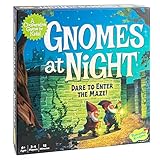
1. Peaceable Kingdom Gnomes at Night A Cooperative Maze Game for 2 to 4 Kids Ages 6+
Overview:
Gnomes at Night is a cooperative maze-navigation game where 2-4 players work as a team to recover the Queen’s stolen treasures before dawn. Using magnetic movers on dual-sided boards, players communicate to guide each other through shifting paths, emphasizing teamwork over competition for children aged 6+.
What Makes It Stand Out:
The game’s standout feature is its innovative dual-layer maze design: players control movers on opposite board sides, requiring precise directional communication (e.g., “move left through the wall”) to navigate obstacles collaboratively. The adjustable difficulty (four board levels) and sand timer add urgency, transforming spatial reasoning into a dynamic, screen-free challenge that actively builds communication skills.
Value for Money:
Priced competitively for a strategy-focused family game, it includes 12 treasure cards, multiple boards, and durable components for extensive replayability. Compared to similar cooperative games, its unique magnetic mechanic and skill-building focus offer superior educational value, justifying the cost for parents seeking developmental play.
Strengths and Weaknesses:
Strengths: Exceptional teamwork development; adaptable difficulty; high-quality magnetic pieces; no reading required. Weaknesses: Younger children may struggle with spatial concepts; board setup can be fiddly; limited replay value once mazes are memorized.
Bottom Line:
An outstanding cooperative game that transforms communication into tangible fun. Ideal for families prioritizing social skill development, it earns strong recommendation despite minor setup complexities—perfect for budding problem-solvers aged 6+.
2. Peaceable Kingdom Race to the Treasure! Cooperative Path Building Game for 2 to 4 Kids Ages 5+

Overview:
Race to the Treasure! challenges 2-4 players (ages 5+) to collaboratively build a path from start to finish before the Ogre claims the treasure. This award-winning game focuses on strategy and shared decision-making, requiring zero reading skills for accessible family fun.
What Makes It Stand Out:
Its path-building mechanic shines: players draw and place tiles to extend the route while strategically blocking the Ogre’s advance. The absence of reading requirements and quick 15-minute playtime make it exceptionally approachable for young children, fostering early strategic thinking through tangible tile-placement choices.
Value for Money:
As a frustration-free packaged game with multiple prestigious awards (including Oppenheim Platinum), it delivers remarkable value. The durable tiles and simple rules offer endless replayability at a mid-range price point, outperforming many competitive games in educational ROI for early childhood development.
Strengths and Weaknesses:
Strengths: Effortless setup; promotes planning and cooperation; inclusive for non-readers; compact storage. Weaknesses: Limited strategic depth for older kids; Ogre movement can feel predictable; tile art may appeal more to younger audiences.
Bottom Line:
A superb introductory strategy game that makes cooperation exciting. Highly recommended for parents seeking to nurture teamwork and foresight in preschoolers—it’s affordable, award-winning, and consistently engaging for its target age group.
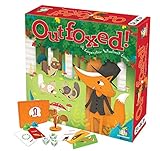
3. OUTFOXED, A CLASSIC WHO DUNNIT GAME FOR PRESCHOOLERS, 4 players
Overview:
Outfoxed! is a cooperative whodunit game for 4 players (ages 4+) where kids work together to identify which fox stole Mrs. Plumpert’s pot pie. Using an evidence scanner and clue cards, players eliminate suspects before the culprit escapes—blending deduction with preschool-friendly mechanics.
What Makes It Stand Out:
The physical evidence scanner—a translucent wheel that reveals hidden clues—is genius. It transforms abstract deduction into tactile, visual fun, while the “what/where/wear” clue system simplifies logic puzzles. Adorable fox characters and a race-against-time element keep young detectives fully immersed.
Value for Money:
Priced moderately for its innovative componentry, Outfoxed! offers exceptional replayability through randomized clues and multiple solutions. Compared to other deduction games, its scanner gadget and cooperative twist provide unique value, making it a worthwhile investment for foundational critical thinking.
Strengths and Weaknesses:
Strengths: Evidence scanner enhances engagement; zero reading needed; perfect for group play; builds logical reasoning. Weaknesses: Scanner mechanism can jam; limited player count; shorter playtime may not satisfy older kids.
Bottom Line:
A delightful gateway into logic games that makes deduction accessible and thrilling for preschoolers. Despite minor gadget quirks, its clever design earns a strong recommendation for families wanting screen-free problem-solving fun.
4. Peaceable Kingdom Mermaid Island Award Winning Cooperative Board Game for 2 to 6 Kids Ages 5+

Overview:
In Mermaid Island, 2-6 players (ages 5+) cooperate to guide three mermaids to safety before the Sea Witch reaches the island. This spin-and-move game combines luck-based movement with strategic wand collection, emphasizing collective victory in a magical underwater setting.
What Makes It Stand Out:
Its high player capacity (up to 6) is rare for cooperative games, making it ideal for classrooms or large families. The wand-collection mechanic introduces light strategy, while the non-competitive structure—bolstered by Good Housekeeping’s Best Toy Award—cultivates emotional resilience and shared triumph without pressure.
Value for Money:
With components supporting up to six players and a 15-minute runtime, it maximizes group engagement per dollar. The durable spinner and tokens justify its price against shorter-lived alternatives, especially for educators needing inclusive, no-reading-required activities.
Strengths and Weaknesses:
Strengths: Accommodates large groups; promotes emotional development; simple rules; vibrant theme. Weaknesses: Heavy reliance on luck; Sea Witch movement feels arbitrary; limited strategic depth for older players.
Bottom Line:
An excellent choice for group settings seeking stress-free cooperation. Recommended for educators and families with young children, though its luck-driven mechanics may disappoint strategy-focused players.
5. Peaceable Kingdom Dinosaur Escape Cooperative Memory Game of Logic and Luck for 2 to 4 Kids Ages 4+

Overview:
Dinosaur Escape challenges 2-4 players (ages 4+) to rescue lost dinosaurs from a rumbling volcano using memory and teamwork. Players flip fern tokens to match dinosaurs, racing to collect all species before the volcano erupts—a blend of memory skills and cooperative urgency.
What Makes It Stand Out:
The reversible fern tokens (showing different dinosaurs on each side) add clever replayability, while the 5-piece eruption tracker creates tangible tension. Its focus on shared memory recall—instead of competition—makes it a standout for nurturing patience and collaborative problem-solving in preschoolers.
Value for Money:
Priced accessibly for its educational scope, it includes 12 tokens, movers, and volcano pieces that withstand repeated play. Compared to memory-only games, its cooperative twist and volcanic countdown offer superior developmental value, justifying cost for early childhood learning.
Strengths and Weaknesses:
Strengths: Memory mechanics boost cognitive skills; volcano assembly engages kids; inclusive for non-readers; strong replay value. Weaknesses: Small tokens pose choking hazards; eruption tracker feels fragile; limited challenge for ages 6+.
Bottom Line:
A charming, purposeful memory game that turns teamwork into a thrilling rescue mission. Highly recommended for parents seeking foundational cognitive development in a cooperative, age-appropriate package.
6. Ravensburger Minecraft Heroes of The Village | Cooperative Board Game | Exciting & Unpredictable | Perfect for Families and Minecraft Enthusiasts | Suitable for Kids & Adults
Overview:
Ravensburger’s Minecraft Heroes of The Village brings the beloved sandbox world to the tabletop in a cooperative adventure for 2-4 players aged 7+. Players team up as villagers defending against nightly mob invasions, building structures and gathering resources before darkness falls. The game leverages Minecraft’s core themes of creativity and survival within a structured, family-friendly framework.
What Makes It Stand Out:
Its standout feature is the dynamic, modular map built from 18 world tiles, ensuring no two games play identically. High-quality wooden blocks and detailed mob tokens enhance immersion, while the cooperative mechanic—where victory or defeat is shared—fosters teamwork over competition. Ravensburger’s century-long reputation for durable, thoughtful components adds significant trust.
Value for Money:
Priced mid-range for family board games, it delivers exceptional replayability through its changing board and straightforward yet strategic gameplay. Compared to digital Minecraft experiences or simpler children’s games, it offers tangible, screen-free engagement that justifies its cost for families seeking shared, creative play.
Strengths and Weaknesses:
Strengths: Excellent component quality; seamless integration of Minecraft aesthetics; accessible rules for young players; strong replay value. Weaknesses: Strategy depth may feel limited for experienced board gamers; younger children might need guidance with resource management.
Bottom Line:
An ideal gateway cooperative game for Minecraft fans and families, blending familiar themes with thoughtful design. Highly recommended for亲子 game nights seeking inclusive, non-competitive fun with lasting appeal.
7. Pandasaurus Cooperative Strategy Card Game - Fun Interactive Family Game for Ages 8+, 1-5 Players, 20 Minute Playtime
Overview:
Pandasaurus’ The Game is a minimalist yet intensely strategic cooperative card game where 1-5 players race against time to empty two central decks by playing cards in ascending or descending sequences. Despite its simplicity, it creates profound tension as communication restrictions force clever teamwork under pressure.
What Makes It Stand Out:
Its genius lies in near-zero setup and pure, addictive gameplay. The “no talking” rule (except during limited planning phases) forces players to interpret subtle cues, fostering deep engagement in just 20 minutes. With 1.3 million copies sold and a Spiel Des Jahres award, its global acclaim underscores its unique blend of accessibility and strategic depth.
Value for Money:
Exceptional for its compact size and replayability. Priced affordably, it outperforms many bulkier games by delivering endless variability through card combinations. For under $15, it’s a must-have for travelers or families wanting quick, brain-teasing fun without complex rules.
Strengths and Weaknesses:
Strengths: Incredibly portable; lightning-fast setup; masterful balance of simplicity and challenge; universally appealing. Weaknesses: Communication limits can frustrate some players; limited physical components beyond cards.
Bottom Line:
A near-perfect pocket-sized gem that proves profound fun needs no flashy parts. Unreservedly recommended for all ages seeking a quick, cooperative mental workout that stays fresh after hundreds of plays.
8. Peaceable Kingdom Space Escape – Cooperative Strategy Space Adventure Game by The Inventor of Pandemic – Use Teamwork to Win! – Great for Families with Kids Ages 7 & up

Overview:
Designed by Pandemic’s creator Matt Leacock, Space Escape tasks 2-4 players with helping mole rats evade space snakes to reach an escape pod. Draw action cards dictating both mole rat movements and snake threats, then collaborate to outmaneuver dangers before time runs out—a clever introduction to cooperative strategy for young players.
What Makes It Stand Out:
Leacock’s pedigree shines in its elegant mechanics: dual-action cards create constant tension between advancing your team and avoiding snakes. The thematic “snakes in space” narrative engages kids, while adjustable difficulty (via challenge variants) ensures longevity. Plastic mole rat movers and vibrant art enhance kid appeal.
Value for Money:
Priced accessibly, it punches above its weight with thoughtful design that grows with players. Unlike purely luck-based children’s games, it cultivates genuine strategic discussion, making it a smarter long-term investment than many entry-level titles.
Strengths and Weaknesses:
Strengths: Brilliantly simple yet strategic; excellent emotional learning focus; scalable difficulty; durable components. Weaknesses: Limited replayability compared to complex adult co-ops; theme might not resonate with all kids.
Bottom Line:
An outstanding first “serious” cooperative game for families, masterfully blending education and entertainment. Highly recommended for parents wanting to nurture teamwork and critical thinking in children aged 7+.
9. Peaceable Kingdom Hoot Owl Hoot - Cooperative Matching Game For Kids

Overview:
Hoot Owl Hoot! is a gentle cooperative matching game where 2-4 young players help owls fly back to their nest before sunrise. By matching colored cards to move owls along a rainbow path, children work together against a shared timer—making it ideal for preschoolers learning colors and collaboration.
What Makes It Stand Out:
Its pure cooperative nature eliminates competitive stress, letting kids focus on shared goals. Simple color-matching mechanics are perfect for ages 4+, while the bright, calming artwork and intuitive rules ensure immediate engagement. As a Peaceable Kingdom staple, it emphasizes emotional development over winning.
Value for Money:
Budget-friendly and durable, it offers exceptional value for early learners. Though less complex than older-kid co-ops, its focus on foundational skills (color recognition, turn-taking) justifies the price for households with toddlers.
Strengths and Weaknesses:
Strengths: Zero reading required; promotes patience and teamwork; sturdy board/cards; calming theme. Weaknesses: Very short playtime; minimal strategic depth; may bore children over age 6.
Bottom Line:
A charming, stress-free introduction to board gaming for preschoolers. Highly recommended for parents seeking a cooperative first game that builds social skills without frustration.
10. Spin Master Games, Jumanji Stampede, 3D Adventure Cooperative Board Game, for Fans of The Jumanji Movies, Face Off Against Jungle Emergencies, 2-4 Players, for Ages 8 & Up

Overview:
Jumanji Stampede plunges 2-4 players into a 3D jungle adventure where teams race to collect five crystals while dodging animated hazards like a boulder or leaping leopard. Built around a towering Rhino Mountain centerpiece, it reimagines movie magic into tactile, cooperative gameplay for ages 8+.
What Makes It Stand Out:
The impressive 7-inch Rhino Mountain and interactive 3D obstacles (e.g., a spinning snake trap) create immersive, cinematic moments. Cooperative crystal-collecting mechanics blend urgency with strategy, while movie-accurate emergencies inject thrilling unpredictability absent in many family games.
Value for Money:
Priced higher due to its elaborate components, it delivers standout visual spectacle and theme integration. Compared to generic adventure games, the Jumanji branding and physicality offer superior engagement, justifying the cost for fans seeking movie immersion.
Strengths and Weaknesses:
Strengths: Stunning 3D board; authentic Jumanji excitement; strong cooperative tension; high replayability via variable emergencies. Weaknesses: Setup is time-consuming; delicate parts may break with rough handling; theme might not suit non-fans.
Bottom Line:
A thrilling, visually spectacular experience that captures Jumanji’s spirit. Recommended for movie enthusiasts wanting dramatic, cooperative play—though casual gamers may prefer simpler alternatives.
Why Cooperative Play is Essential for Young Children
Building Foundational Social Skills Through Shared Goals
Cooperative games are uniquely positioned to nurture critical social-emotional development during these formative years. Instead of focusing on individual triumph, children learn to listen actively to their teammates, articulate their own ideas clearly, and negotiate solutions. They practice patience as they wait for others’ turns and develop empathy by understanding different perspectives within the shared challenge. This constant interaction builds the bedrock of healthy relationships, teaching kids that communication is a tool for connection, not just conflict resolution.
Reducing Anxiety and Fostering Inclusion for All Players
For children who find competitive settings overwhelming or intimidating, the pressure to win can trigger anxiety and lead to disengagement. Cooperative play removes this barrier, creating a psychologically safer environment where every participant feels valued for their contribution, regardless of skill level. Shy children often find their voice when working towards a common objective, while those who might dominate competitive games learn the satisfaction of supporting others. This inclusive atmosphere ensures that playtime remains positive and accessible for siblings, friends with varying abilities, or mixed-age groups.
Cultivating Problem-Solving Mindsets as a Team
Facing a challenge together shifts the focus from “me vs. you” to “us vs. the problem.” Children learn to brainstorm strategies collectively, test different approaches, and adapt when plans don’t work – mirroring real-world collaborative problem-solving. They experience firsthand how diverse ideas strengthen the team’s ability to overcome obstacles. This process builds resilience; when the group “loses” a cooperative game, it’s framed as a learning opportunity to try new tactics next time, rather than a personal failure, fostering a growth mindset crucial for future academic and social success.
Key Features to Prioritize When Choosing Cooperative Games
Age-Appropriate Complexity and Rules Clarity
The sweet spot for this age group lies in games with simple, intuitive core mechanics that can be explained in under five minutes. Look for rule sets that avoid excessive jargon or convoluted exceptions. Visual aids like clear iconography, color-coded elements, or illustrated rulebooks are invaluable. The cognitive load should be on solving the game’s shared puzzle, not deciphering how to play. Games that offer streamlined “family” or “junior” variants are particularly useful as they allow the challenge to scale with your child’s growing abilities.
Engaging Themes That Spark Imagination
A compelling narrative or theme is vital for holding the attention of 6-10 year olds. Whether it’s rescuing animals from a forest fire, exploring a magical kingdom, or solving a gentle mystery, the story should feel relevant and exciting to young players. Themes rooted in adventure, fantasy, nature, or everyday problem-solving scenarios (like helping neighbors) tend to resonate strongly. Avoid themes that are overly abstract or might feel too babyish for a 10-year-old; the best games strike a balance that engages the younger end of the range while still feeling cool to the older kids.
Physical Components Designed for Small Hands and Big Ideas
Durability is non-negotiable with younger players. Sturdy, chunky pieces that are easy to grasp and manipulate prevent frustration and withstand enthusiastic handling. Vibrant, high-contrast artwork helps maintain visual interest and aids in quick recognition of game elements. Consider storage solutions too – games with trays, compartments, or easy-to-manage bags minimize setup and cleanup time, making it more likely the game gets played repeatedly. Tactile elements, like unique tokens or character movers, can significantly enhance the immersive experience.
Balanced Challenge with Adjustable Difficulty
The ideal game presents a “just-right” challenge: difficult enough to require teamwork and critical thinking, but not so hard it leads to constant frustration. Look for built-in mechanisms to tweak the difficulty level. This could be as simple as adding or removing obstacles, adjusting time limits, or modifying rule strictness for younger players. Games that offer multiple scenarios or progressive challenges keep the experience fresh over time, growing with your child’s developing skills and preventing the game from being abandoned after a few plays.
Understanding Your Child’s Developmental Stage
Cognitive Abilities of 6-7 Year Olds
Children at the younger end of this spectrum are developing concrete operational thinking. They grasp basic cause-and-effect relationships but may struggle with complex multi-step planning or abstract strategies. Games should emphasize immediate, visible actions and consequences. Turn-taking structures need to be very clear, and rules should rely heavily on visual cues rather than lengthy verbal explanations. Patience is still developing, so games with shorter playtimes (15-25 minutes) and minimal downtime between turns are ideal to maintain engagement.
Evolving Skills for 8-10 Year Olds
Older children in this range can handle more strategic depth, including simple resource management, predicting future moves, and understanding longer-term consequences of decisions. They enjoy games with slightly more complex narratives and mechanics, such as light deduction elements or managing multiple objectives. Their ability to collaborate strategically improves significantly; they can debate tactics and weigh pros and cons more effectively. Games can reasonably extend to 30-45 minutes for this age group, provided the action remains engaging throughout.
Recognizing Individual Differences Within the Age Range
It’s crucial to remember that chronological age is just one factor. Consider your child’s specific attention span, fine motor skills, tolerance for frustration, and social maturity. A highly imaginative 6-year-old might thrive with a slightly more complex theme, while a sensitive 9-year-old might prefer a game with lower perceived stakes. Observe how they interact in other group settings – do they naturally take leadership, prefer supporting roles, or need encouragement to participate? Choose games whose cooperative mechanics align with their individual social profile to maximize positive experiences.
Creating the Optimal Play Environment
Setting Realistic Expectations for Success and “Failure”
Before starting, frame the game’s objective clearly: “We’re all on the same team trying to help the animals get home before the bridge washes away. We win together, or we figure out how to do better next time together.” Emphasize that making mistakes is part of learning and that the group’s effort matters more than the immediate outcome. Avoid phrases like “We lost,” opting instead for “The river was too fast this time; what could we try differently next game?” This mindset shift is fundamental to the cooperative experience.
Facilitating Play Without Taking Over
Your role as an adult is often that of a gentle guide, not a player (unless the group is small). Help explain rules initially, but resist the urge to solve puzzles for them. Ask open-ended questions: “Hmm, the fire is spreading towards the bear’s den. What paths could we take to get there fastest?” or “You all have different tools; how can we use them together?” Model patience and positive communication. If frustration arises, pause the game briefly to reset emotions before continuing. The goal is for the children to feel ownership of the solution.
Managing Group Dynamics for Smooth Collaboration
With multiple young players, dynamics can get tricky. Establish simple ground rules upfront: one speaker at a time, listening respectfully, and valuing all suggestions. For groups prone to dominant personalities, assign specific, rotating roles (e.g., “Map Reader,” “Tool Manager”) to distribute influence. If disagreements occur, guide the group to discuss options calmly and vote if needed. Keep the focus on the shared goal: “Remember, we all want to save the castle. How can we combine your ideas to make that happen?”
Beyond the Game: Extending the Learning
Connecting Gameplay to Real-World Scenarios
After playing, have a brief, natural conversation linking the game’s challenges to everyday life. “Remember how we had to listen to each other to decide which path to take in the jungle? That’s like when we plan what game to play at recess.” Or, “When we ran out of rope tokens, we had to figure out a new way – just like when our bike chain broke and we fixed it together.” These connections help children internalize the cooperative skills they’re practicing, making them more likely to apply them outside of game time.
Encouraging Reflection and Strategy Discussion
Dedicate a few minutes after the game (win or lose) to reflect. Ask questions like: “What was the hardest part for our team?” “Whose idea really helped us move forward?” “If we played again, what’s one thing we’d try differently?” This metacognition helps solidify problem-solving strategies and highlights the value of each child’s contribution. It turns a fun activity into a conscious learning experience about teamwork and critical thinking.
Fostering Leadership and Role Rotation
As children become familiar with a game, encourage them to take turns being the “rule reminder” or the one who reads scenario cards. This builds confidence and leadership skills in a low-pressure setting. Rotate who sets up the game or who chooses the first action on a turn. Seeing peers successfully lead reinforces that everyone has valuable skills to contribute to the team effort, strengthening group cohesion and individual self-esteem.
Navigating Common Challenges in Cooperative Play
Handling Frustration When the Group “Loses”
It’s inevitable that the team won’t succeed every time. Normalize this! Say, “Sometimes the game wins, and that’s okay – it just means we have a fun challenge to beat next time!” Focus on effort and specific positive actions: “I loved how calmly you suggested that plan when the volcano started erupting!” Avoid downplaying their disappointment (“It’s just a game!”), but gently redirect energy towards analyzing what happened and planning for next time. Keeping a “strategy notebook” for the group can turn losses into productive learning sessions.
Preventing One Child from Dominating Decisions
Gentle intervention is key. If one child is consistently making all the choices, you might say, “Wow, you have great ideas! Let’s make sure everyone has a chance to share one idea before we decide. Who hasn’t told us their thought yet?” Use structured turn-taking for suggestions: “First, Maya shares an idea, then Leo, then Sam.” For very dominant players, assign them a specific supportive role like “Encourager” whose job is to affirm others’ ideas. Praise inclusive behavior immediately: “Great job, Alex, for asking if Sam wanted to move the piece!”
Maintaining Engagement for Players with Shorter Attention Spans
Choose games with high tactile engagement – moving pieces, drawing cards, flipping tokens – to keep restless hands busy. Break longer games into natural segments (“Let’s play until we rescue the first three animals, then take a quick snack break”). Incorporate physical movement if possible, like acting out a character’s move. For particularly wiggly kids, let them be the “timer” or the one who physically sets up each new challenge phase. The key is minimizing passive waiting time; every player should feel constantly involved in the action.
Frequently Asked Questions
Frequently Asked Questions
What’s the main benefit of cooperative games over competitive ones for this age group? Cooperative games reduce anxiety and conflict by removing the pressure to beat others, fostering teamwork, communication, and shared problem-solving, which builds stronger social skills and makes playtime more consistently positive.
How can I tell if a cooperative game is too hard or too easy for my child? If the group succeeds effortlessly every time, it’s likely too easy; if frustration is high and they give up frequently, it’s probably too hard. Look for games with adjustable difficulty settings, and observe whether your child is actively engaged in strategizing or just going through the motions.
Can cooperative games work well with mixed-age groups, like a 6-year-old and a 10-year-old? Absolutely. Choose games with scalable rules or roles that allow older kids to handle slightly more complex tasks while younger ones focus on concrete actions. The shared goal unites them, and older children often enjoy mentoring younger players.
My child gets upset when the team doesn’t win. How can I help them handle this? Reframe “losing” as the game providing a challenge to solve next time. Focus praise on effort and specific teamwork: “I saw how you kept suggesting new ideas when we were stuck – that’s great teamwork!” Keep initial game sessions short to build confidence with smaller successes.
How long should a cooperative game session last for kids aged 6-10? Aim for 15-30 minutes for younger children (6-7) and 25-45 minutes for older ones (8-10). Watch for waning attention spans; it’s better to end on a high note and play again later than to push through to frustration.
Do cooperative games still teach good sportsmanship? Yes, profoundly. They teach graciousness in shared success, resilience in shared setbacks, active listening, respecting others’ ideas, and constructive communication – all core components of true sportsmanship, without the sting of individual loss.
What if one child isn’t participating or seems disengaged? Assign them a specific, manageable role with clear responsibilities (e.g., “You’re in charge of the blue tokens!”). Connect the role to their interests (“You love animals, can you be the one to move the rescue boat?”). Sometimes, briefly stepping back as a non-playing observer before rejoining can reset engagement.
Are cooperative games good for developing reading skills? Many incorporate light reading through scenario cards or rule prompts, but the team context reduces pressure. Children often help each other sound out words, making it a collaborative literacy experience rather than a solo test, which builds confidence.
How do I transition from highly competitive games to cooperative play? Start with hybrid games that have light competitive elements within a cooperative framework, or play very short cooperative rounds as a “cool down” after a competitive game. Emphasize the fun of the shared story and adventure first, before focusing on the win/loss aspect.
Can cooperative board games help shy children become more involved? Definitely. The shared goal reduces the spotlight on any single player. Assigning specific, non-verbal roles (like moving pieces) gives shy children a way to contribute meaningfully. As they experience the positive reinforcement of teamwork, they often gain confidence to share ideas verbally over time.
See Also
- 10 Best Cooperative Board Games for Kids That Encourage Teamwork in 2026
- We Tested 50 Cooperative Board Games - Here are the 10 Best for Kids in 2026
- 10 Expert-Recommended Cooperative Board Games for Kids in 2026
- 10 Best Value Cooperative Board Games for Kids in 2026
- 10 Most Durable Cooperative Board Games Based on Real User Reviews in 2026