Table of Contents
Watching siblings transform from competitive rivals into enthusiastic teammates is pure magic. There’s something profoundly heartwarming about seeing young children huddle together, whispering strategies, sharing excitement over a shared victory, or collectively groaning at a playful setback—all without a single “you cheated!” or “it’s not fair!” echoing through the room. Cooperative board games unlock this unique social alchemy, turning playtime into a powerful laboratory for building empathy, communication, and problem-solving skills long before kids even realize they’re learning. Forget the solo screen time or the all-too-familiar tug-of-war over toys; these shared adventures create memories woven with laughter and mutual support.
Beyond the immediate joy, the developmental benefits of cooperative play are backed by compelling research in child psychology. When children work with each other towards a common goal, rather than against each other, they naturally practice perspective-taking, learn to manage frustration constructively, and develop crucial conflict-resolution skills in a safe, low-stakes environment. It’s not just about winning a game; it’s about nurturing emotional intelligence, fostering resilience when plans go awry, and building the foundational teamwork muscles they’ll need in school, friendships, and eventually, the workplace. Choosing the right cooperative game is less about finding the “hottest” title and more about understanding what truly resonates with your child’s current stage and needs.
Top 10 Cooperative Board Games for Kids
Detailed Product Reviews
1. Peaceable Kingdom Race to the Treasure! Cooperative Path Building Game for 2 to 4 Kids Ages 5+

Overview:
This award-winning cooperative board game challenges 2-4 players (ages 5+) to work together, building a path from start to finish to beat the Ogre to the treasure. Designed for early learners, it requires no reading, focusing instead on shared strategy and teamwork to achieve a collective win.
What Makes It Stand Out:
Its pure cooperative structure eliminates player competition, fostering positive social development. The simple path-building mechanic—using tile placement to navigate obstacles—teaches planning and communication. Winning the Oppenheim Platinum Award and PAL Seal underscores its educational value in nurturing empathy and joint problem-solving.
Value for Money:
Priced accessibly for its quality, it outperforms many competitive children’s games by promoting emotional intelligence over rivalry. The frustration-free packaging and durable components ensure longevity, making it a cost-effective tool for classrooms or homes focused on collaborative play.
Strengths and Weaknesses:
Strengths: Encourages teamwork without elimination; easy rules for young kids; builds spatial reasoning. Weaknesses: Limited replayability due to fixed goal; path options can feel repetitive after multiple plays; minimal strategic depth for older siblings.
Bottom Line:
An excellent introductory cooperative game that successfully teaches collaboration and basic strategy. Highly recommended for preschoolers and early elementary kids seeking a positive, screen-free group experience.
2. Peaceable Kingdom Gnomes at Night A Cooperative Maze Game for 2 to 4 Kids Ages 6+
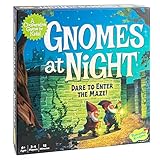
Overview:
In this timed cooperative challenge, 2-4 players (ages 6+) guide magnetic gnome movers through a dual-layer maze to recover treasures stolen from the Queen. Communication is critical as teammates navigate separate board sides, requiring clear directional cues to locate items before dawn.
What Makes It Stand Out:
The innovative 3D maze design—where players control movers on opposite board halves—demands precise verbal coordination (e.g., “move left through the wall”). This unique spatial puzzle develops descriptive language skills and active listening, distinguishing it from flat-board competitors.
Value for Money:
With four adjustable difficulty levels and high-quality magnetic components, it offers exceptional replay value. Though slightly pricier than basic memory games, its focus on advanced communication justifies the cost for developing essential social-cognitive skills in early elementary children.
Strengths and Weaknesses:
Strengths: Brilliant teamwork mechanic; sand timer adds gentle urgency; scales well with skill growth. Weaknesses: Younger players may struggle with spatial instructions; magnetic movers occasionally stick; setup requires careful board alignment.
Bottom Line:
A standout cooperative game that transforms communication into an engaging adventure. Ideal for families prioritizing collaborative skill-building over competitive play, despite minor setup nuances.
3. OUTFOXED, A CLASSIC WHO DUNNIT GAME FOR PRESCHOOLERS, 4 players
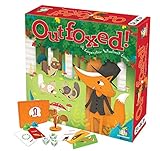
Overview:
This cooperative whodunit invites 2-4 preschoolers (ages 4+) to solve the mystery of Mrs. Plumpert’s missing pot pie. Using a fun “evidence scanner” tool, players gather clues to identify the guilty fox suspect before they escape, blending deduction with adorable theme integration.
What Makes It Stand Out:
The evidence scanner—a magnifying device revealing hidden suspect details—makes abstract deduction tangible for young children. Simple clue mechanics (matching clothing items) introduce logical elimination without reading, while the charming fox characters sustain engagement.
Value for Money:
Positioned mid-range for preschool games, it delivers strong value through reusable components and replayable mystery scenarios. It’s a more accessible, cooperative alternative to complex deduction games, perfect for introducing critical thinking at an early age.
Strengths and Weaknesses:
Strengths: Intuitive clue system; evidence scanner adds tactile fun; non-competitive stress relief. Weaknesses: Limited suspect variety reduces long-term replay; scanner mechanism can feel gimmicky; best suited for ages 4-6 only.
Bottom Line:
A delightful entry-point into cooperative deduction that’s perfect for preschool playdates. Recommended for families seeking gentle problem-solving without frustration, though older kids may outgrow it quickly.
4. Peaceable Kingdom Dinosaur Escape Cooperative Memory Game of Logic and Luck for 2 to 4 Kids Ages 4+

Overview:
Players (ages 4+, 2-4) cooperate to rescue dinosaurs from an erupting volcano by matching fern tokens on the board. Combining memory recall with luck-based dice rolls, the game emphasizes collective success as players race to save all dinos before the volcano erupts.
What Makes It Stand Out:
It uniquely merges memory matching with cooperative urgency. The reversible fern tokens and modular volcano puzzle create variable setups, while the shared goal (“everyone wins or loses”) reduces anxiety. Its focus on emotional development through teamwork is exceptional for preschoolers.
Value for Money:
Affordably priced with durable, chunky components ideal for small hands. It outperforms many memory games by adding strategic depth (e.g., planning rescue routes), offering better educational ROI than purely luck-based alternatives for early learners.
Strengths and Weaknesses:
Strengths: Builds memory and emotional regulation; simple yet engaging; high-quality dinosaur tokens. Weaknesses: Luck-heavy with dice rolls; memory aspect may frustrate very young players; volcano timer feels arbitrary.
Bottom Line:
A heartwarming cooperative game that transforms memory practice into a meaningful group mission. Highly recommended for classrooms or families wanting to nurture patience and shared problem-solving in preschoolers.
5. Ravensburger Minecraft Heroes of The Village | Cooperative Board Game | Exciting & Unpredictable | Perfect for Families and Minecraft Enthusiasts | Suitable for Kids & Adults
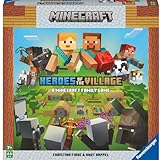
Overview:
Designed for 2-4 players (ages 7+), this cooperative game plunges Minecraft fans into a village-defense adventure. Players strategize together using wooden blocks and mob tokens to complete objectives on a dynamically built map, surviving waves of threats before time runs out.
What Makes It Stand Out:
The modular map tiles ensure every game unfolds differently, while authentic Minecraft elements (mobs, crafting) delight fans. Ravensburger’s premium components—like sturdy wooden blocks—and deep strategic cooperation set it apart from simpler family games.
Value for Money:
Priced higher than entry-level games, it justifies cost through exceptional replayability and heirloom-quality parts. For Minecraft enthusiasts, it surpasses digital play with tangible teamwork, though non-fans might prefer cheaper alternatives.
Strengths and Weaknesses:
Strengths: High replay value; immersive theme; robust components; scales well for mixed ages. Weaknesses: Steeper learning curve for non-gamers; setup time lengthy; requires Minecraft familiarity for full engagement.
Bottom Line:
A masterful cooperative experience for Minecraft devotees seeking meaningful family gameplay. Recommended for ages 7+ despite the price, though casual players should confirm theme interest first.
6. Peaceable Kingdom Hoot Owl Hoot - Cooperative Matching Game For Kids

Overview: Peaceable Kingdom’s Hoot Owl Hoot is a color-matching cooperative board game designed for children aged 4+. Players work together as owls racing to fly home before the sun rises, fostering early strategy and teamwork without competition.
What Makes It Stand Out: Its pure cooperative structure eliminates winner/loser dynamics, teaching preschoolers shared problem-solving. The simple color-matching mechanic is accessible for non-readers, while the day-night countdown mechanic introduces gentle time pressure.
Value for Money: Priced affordably for a durable, wooden-piece game, it outperforms many single-player puzzles by building critical social skills. Its replayability and focus on emotional development justify the cost compared to competitive alternatives.
Strengths and Weaknesses: Strengths: Excellent for teaching turn-taking, color recognition, and collaborative thinking; minimal setup; inclusive play. Weaknesses: Very short playtime per round; limited complexity as children age past 5; sun-rising mechanic can feel abrupt to younger players.
Bottom Line: An essential first board game for preschoolers, Hoot Owl Hoot brilliantly introduces cooperation over competition. Highly recommended for parents seeking screen-free social skill development in a compact, engaging package.
7. Peaceable Kingdom Count Your Chickens Award Winning Cooperative Counting Game for Kids

Overview: Count Your Chickens is an award-winning cooperative counting game where players help Mother Hen gather her 40 chicks back to the coop before the henhouse door closes. Designed for ages 3+, it requires no reading and emphasizes early math skills.
What Makes It Stand Out: Five major awards validate its effectiveness in teaching counting, number recognition, and one-to-one correspondence through tactile chick tokens. The rotating spinner board adds physical engagement, while the shared goal reduces frustration common in competitive children’s games.
Value for Money: Exceptional value given its educational depth, durable components, and frustration-free packaging. It’s significantly more skill-focused than generic counting games at a similar price point, offering long-term developmental benefits.
Strengths and Weaknesses: Strengths: Builds foundational math and social skills seamlessly; high replayability; inclusive for varying skill levels; quick 10-15 minute playtime holds attention. Weaknesses: Spinner mechanism can occasionally jam; coop visuals may feel simplistic to older preschoolers; limited strategic depth beyond counting practice.
Bottom Line: A near-perfect early math introduction, Count Your Chickens delivers award-winning educational value through joyful cooperation. Essential for homes or preschools seeking a stress-free, skill-building game for 3-5 year olds.
8. Peaceable Kingdom Space Escape – Cooperative Strategy Space Adventure Game by The Inventor of Pandemic – Use Teamwork to Win! – Great for Families with Kids Ages 7 & up

Overview: Created by Pandemic’s designer, Space Escape challenges 2-4 players (ages 7+) to cooperatively guide Mole Rats through a snake-infested space station to an escape pod before time runs out, blending strategy and communication.
What Makes It Stand Out: Leverages the expertise of Matt Leacock (Pandemic) to deliver age-appropriate cooperative strategy. The dual-action card system—choosing between moving Mole Rats or snakes—creates meaningful team decisions, fostering advanced problem-solving rarely found in kids’ games.
Value for Money: Priced competitively for a strategy game with deep mechanics and quality components (plastic movers, tokens). It bridges the gap between preschool co-ops and complex adult games, offering superior longevity compared to simpler children’s titles.
Strengths and Weaknesses: Strengths: Develops critical communication, planning, and risk-assessment skills; scalable difficulty via challenge rules; genuinely engaging for families; high component quality. Weaknesses: Rule complexity may overwhelm younger 7-year-olds; snake movement can feel punishing; limited visual appeal compared to cartoonish alternatives.
Bottom Line: A standout strategic leap for young cooperative gamers, Space Escape is a must-buy for families ready to graduate from basic matching games. Highly recommended for developing real teamwork under pressure.
9. Asmodee Ticket to Ride First Journey Board Game - Fun and Easy for Young Explorers! Train Strategy Game, Family Game for Kids & Adults, Ages 6+, 2-4 Players, 15-30 Min Playtime

Overview: Ticket to Ride: First Journey simplifies the acclaimed strategy franchise for ages 6+, challenging players to connect North American cities via train routes. Collect matching cards to claim tracks and complete six destination tickets to win the Golden Ticket.
What Makes It Stand Out: It masterfully distills the depth of the original Ticket to Ride into a 15-30 minute experience ideal for young children. The streamlined rules, colorful map, and tactile train pieces maintain the franchise’s strategic core while removing complex scoring.
Value for Money: Excellent entry point into strategy gaming at a mid-range price. It offers more replayability and meaningful decisions than most kids’ games, serving as a perfect “gateway” title before advancing to the standard Ticket to Ride.
Strengths and Weaknesses: Strengths: Introduces route-building strategy accessibly; quick setup/playtime; visually engaging map; fosters color matching and planning; truly multi-generational appeal. Weaknesses: Shorter routes reduce strategic tension versus mainline games; limited player count (max 4); destination tickets can feel restrictive for very young players.
Bottom Line: The ideal first strategy game for children, First Journey successfully scales down a classic. Highly recommended for families seeking an engaging, educational bridge between preschool games and complex board gaming.
10. Peaceable Kingdom Mermaid Island Award Winning Cooperative Board Game for 2 to 6 Kids Ages 5+

Overview: Mermaid Island is an award-winning cooperative game where 2-6 players (ages 5+) help three mermaids race to Mermaid Island before the Sea Witch arrives. Using a spinner and magic wands, children work together to collect tokens and defeat the antagonist.
What Makes It Stand Out: Its standout feature is accommodating up to 6 players—a rarity in cooperative kids’ games—making it perfect for classrooms or large families. The spin-and-move mechanic is simple for non-readers, while wand collection adds light strategy and a satisfying victory condition against the Sea Witch.
Value for Money: Exceptional for group settings due to high player capacity and durable components (spinner, plastic tokens). Winning multiple awards, it delivers more social interaction per dollar than most 2-4 player alternatives, especially in educational contexts.
Strengths and Weaknesses: Strengths: Supports large groups seamlessly; builds teamwork and strategic planning; quick 15-minute sessions; zero reading required; strong emotional engagement with theme. Weaknesses: Spinner can be less precise than dice; Sea Witch movement feels random; limited replay depth beyond age 7.
Bottom Line: Mermaid Island is a top-tier choice for group play, offering magical cooperative fun with impressive scalability. Highly recommended for educators and parents of multiple children seeking inclusive, screen-free interaction.
Understanding Cooperative Gameplay for Children
What Truly Defines a Cooperative Game
At its core, a cooperative game is one where players work as a unified team against the game system itself, not against each other. Success or failure is shared by all participants. There are no individual winners or losers; the entire group wins together or learns together from a collective setback. This fundamental shift in dynamic is what creates the unique social and emotional learning opportunities, encouraging collaboration over competition from the very first turn.
Why Cooperation Beats Competition for Young Players
For children, especially in the early and middle school years, cooperative structures reduce anxiety and fear of embarrassment that can stifle participation in competitive settings. It lowers the emotional stakes, making it safer for shy children to contribute ideas and for all players to take creative risks without worrying about “letting the team down” in a punitive way. This environment fosters intrinsic motivation—the joy comes from the shared effort and problem-solving process, not just the end result.
Recognizing Superficial vs. Meaningful Cooperation
Not all games labeled “cooperative” offer deep collaborative experiences. Be wary of games where one dominant player dictates all moves (often called “alpha gamer” syndrome), rendering others passive. Truly meaningful cooperative games require genuine input, discussion, and shared decision-making from every participant appropriate to their age and ability. Look for mechanics that necessitate pooling information, debating strategies, and relying on each other’s unique roles or actions.
Key Developmental Considerations
Matching Complexity to Cognitive Stages
A game’s complexity must align with a child’s current cognitive abilities. Preschoolers thrive on simple cause-and-effect mechanics and immediate visual feedback, while early elementary players can handle basic planning and multi-step choices. Upper elementary children often enjoy deeper strategy, resource management, and more nuanced problem-solving. Overly complex rules frustrate younger kids, while oversimplified games bore older ones, breaking the cooperative flow.
Emotional Readiness for Shared Outcomes
Consider a child’s ability to handle shared loss. Some young children struggle intensely with any form of losing, even collectively. Games with high randomness or frequent setbacks might be overwhelming initially. Starting with games featuring guaranteed small successes along the way, or where “failure” simply means trying a different approach immediately, can build emotional resilience before tackling more challenging cooperative scenarios.
Attention Span and Game Duration
Respect the natural limits of a child’s focus. A game promising 45 minutes of play is destined for frustration with a 5-year-old whose attention span is closer to 15-20 minutes. Look for games with clear, distinct phases, quick turns, and built-in stopping points. Shorter, more frequent successful play sessions build confidence and positive associations far better than one long, stressful slog to the finish.
Essential Gameplay Mechanics to Evaluate
The Role of Shared Decision-Making
The heart of a good cooperative game lies in how it facilitates group discussion and consensus. Does the game present dilemmas where players must talk through options? Are there mechanics that force players to weigh different perspectives or combine unique abilities? Games that simply have players take turns performing individual actions with minimal group input miss the core cooperative opportunity.
Managing Game Difficulty and Pacing
Effective cooperative games often include adjustable difficulty settings or scaling mechanisms. This allows the challenge to grow with the players’ skills, preventing early frustration or later boredom. Look for how the game introduces tension—through a timer, a progressing threat, or limited resources—and whether this pacing feels exciting and engaging rather than rushed or tedious for the target age group.
Visual Clarity and Intuitive Components
Bright, uncluttered boards, large, durable tokens, and clear iconography are non-negotiable for young players. Children should be able to quickly grasp what components represent and how they interact without constant adult translation. Artwork that tells a story or clearly depicts actions (like a dragon icon for danger) supports comprehension and immersion far better than abstract symbols.
Age-Appropriate Design Factors
Preschool Pioneers (3-5 Years)
Focus on games with heavy physical interaction (placing large pieces, spinning simple spinners), strong visual storytelling, minimal reading, and very short playtimes (under 15 minutes). Cooperative success should be frequent and easily achievable, often involving simple matching, sorting, or path-following with a shared goal. Durability is paramount—components must withstand enthusiastic, sometimes clumsy, handling.
Early Elementary Explorers (6-8 Years)
This group can handle basic rulebooks (with adult help initially), simple strategy, and slightly longer play sessions (20-30 minutes). Games introducing light resource management (collecting specific items), simple deduction, or collaborative storytelling elements shine here. Clear role differentiation (e.g., “you’re the map reader, I’m the treasure hunter”) enhances engagement without overwhelming complexity.
Upper Elementary Strategists (9-12 Years)
Older kids relish deeper strategy, meaningful choices with consequences, and more complex narrative arcs. Games with variable setups, legacy elements (where the game evolves over multiple sessions), or intricate puzzle-solving mechanics become highly engaging. They can manage moderate reading loads (on cards or reference sheets) and appreciate nuanced themes. The challenge level should feel substantial but surmountable through teamwork.
Educational Value Beyond Fun
Building Communication Skills
Cooperative play is a natural communication bootcamp. Children practice articulating ideas clearly (“We should move the firefighter here because the fire is spreading left”), active listening (“So you think we need more water tokens first?”), asking clarifying questions, and respectfully disagreeing (“I see why you want to go that way, but what if the dragon blocks us?”). These are foundational social skills.
Fostering Critical Thinking and Problem Solving
Players constantly analyze the game state, predict outcomes, weigh risks and benefits, and adapt strategies when plans fail. “If we use the bridge now, we can reach the treasure faster, but we might not have it later for the chasm.” This iterative process of hypothesizing, testing, and refining solutions is pure applied critical thinking in a tangible, engaging context.
Cultivating Emotional Intelligence
Navigating the shared highs and lows of cooperative play teaches emotional regulation. Children learn to manage disappointment constructively (“Okay, the volcano erupted, but we know what to do differently next time”), celebrate others’ contributions genuinely, recognize frustration in teammates, and offer encouragement. This builds empathy and resilience in a way competitive games often cannot.
Practical Buying Guide Essentials
Assessing Component Quality and Safety
For young children, prioritize games with chunky, washable components made from non-toxic materials. Check for small parts warnings if toddlers are nearby, even if the game targets older kids. Boards should be thick and resistant to bending, cards should be laminated or on sturdy stock, and tokens should feel substantial. Poor quality components break immersion and lead to quick disinterest.
Evaluating Replayability Through Variation
A game that plays exactly the same way every time loses its luster fast. Look for elements that create variability: modular boards that change layout, different scenario cards, multiple win conditions, or adjustable challenges. Games offering “new” experiences through different strategies or emergent storytelling within the same framework provide significantly more long-term value.
Considering Setup Time and Storage
A game buried under 20 minutes of setup won’t get played often. Opt for titles with intuitive organization, minimal initial assembly, and components that are easy to sort and store. Games that come with custom inserts or trays that fit neatly back into the box are a huge plus for busy families. Quick setup lowers the barrier to spontaneous family game time.
Balancing Theme Appeal with Play Mechanics
While a captivating theme (dragons, space explorers, underwater adventures) draws kids in, the underlying mechanics must deliver a satisfying cooperative experience. A weak theme can be overlooked if the gameplay is stellar, but a fantastic theme paired with clunky or non-cooperative mechanics will disappoint. Ensure the theme enhances, rather than distracts from, the core collaborative action.
Inclusivity and Family Dynamics
Accommodating Mixed Age Groups
Many families need games that work for a 5-year-old and an 8-year-old simultaneously. Look for games with built-in scaling—perhaps simpler roles for younger players or optional advanced rules for older ones. Games where success relies on diverse contributions (speed, memory, spatial reasoning) allow children with different strengths to feel equally valuable to the team effort.
Supporting Diverse Learning Styles
Consider how a game engages different learners. Kinesthetic learners benefit from moving pieces or physical actions; visual learners need clear boards and icons; auditory learners thrive on discussion and storytelling elements; reading/writing learners might enjoy games with light narrative choices. The best cooperative games incorporate multiple sensory inputs to keep all players engaged.
Navigating Family Game Night Dynamics
Think about your family’s specific energy. Some groups enjoy lively, fast-paced cooperation with sound effects and movement; others prefer calmer, more thoughtful puzzle-solving. Choose games that match your typical interaction style to maximize enjoyment. Also, consider if the game requires significant adult facilitation or if kids can largely lead the play once rules are learned.
Frequently Asked Questions
Frequently Asked Questions
What’s the biggest red flag indicating a cooperative game might not be truly collaborative? How can I tell if a game is too complex for my child before buying it? Do cooperative games still help children learn to handle losing? Can cooperative games work well for just two players, including one adult and one child? What are the most common mistakes parents make when introducing cooperative games? How do I encourage a very competitive child to embrace cooperative play? Are there cooperative games suitable for children with limited attention spans or sensory sensitivities? How important is theme compared to mechanics when choosing for kids? What signs show a cooperative game is successfully building teamwork skills? How long should a cooperative game session ideally last for different age groups?
See Also
- We Tested 50 Cooperative Board Games - Here are the 10 Best for Two Players in 2026
- We Tested 50 Cooperative Board Games - Here are the 10 Best for Party Play in 2026
- We Tested 50 Cooperative Board Games - Here are the 10 Best for Shared Wins
- We Tested 50 Cooperative Board Games - Here are the 10 Best for Team Building
- We Tested 50 Cooperative Card Games - Here are the 10 Best for Quick Setup in 2026