Table of Contents
Imagine the scene: your game club is buzzing with energy, but the budget spreadsheet tells a different story. Shelf space is tight, member turnover is constant, and that expensive strategy game with the fragile miniatures? It’s gathering dust while the group gravitates toward the same three reliable titles. You know cooperative board games could be the solution—fostering teamwork, reducing player elimination frustration, and building community—but how do you choose ones that deliver genuine, long-term value without breaking the bank or overwhelming your storage closet? The pressure to select games that withstand repeated plays, engage diverse skill levels, and actually get used is real, and the wrong purchase can feel like a sunk cost in a space where every dollar and square foot matters.
Cooperative games promise shared victories and collective problem-solving, but not all are created equal for the unique demands of a public or semi-public club environment. Value here transcends the initial price tag; it’s about durability against constant handling, ease of teaching to rotating members, scalability for fluctuating group sizes, and that magical replayability factor that keeps groups coming back week after week. Investing wisely means selecting titles that minimize setup/teardown time for volunteers, resist component wear-and-tear, and create memorable experiences that turn casual visitors into dedicated members. Forget fleeting trends—true value lies in the game that seamlessly integrates into your club’s rhythm, becoming a trusted workhorse that consistently delivers connection and fun, making every penny spent feel justified through sheer utility and joy.
Top 10 Cooperative Board Games
Detailed Product Reviews
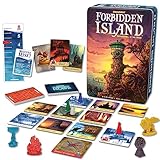
1. Gamewright - Forbidden Island - Cooperative Strategy Survival Board Game, 2-4 Players
Overview:
Forbidden Island, designed by Matt Leacock, is a cooperative board game where 2-4 players race against sinking terrain to retrieve sacred treasures. Aimed at ages 10+, it transforms family game night into a shared survival challenge, emphasizing teamwork over competition.
What Makes It Stand Out:
Its innovative “sinking island” mechanic creates escalating tension as players strategize to collect artifacts before tiles disappear. Rich illustrations immerse players in a perilous paradise, while the non-competitive structure uniquely fosters communication and collective problem-solving, making victories deeply satisfying.
Value for Money:
Priced accessibly for a strategy game, it delivers exceptional replayability through variable island layouts and difficulty adjustments. Compared to similar-priced competitive games, its focus on cooperation offers distinct educational value for developing critical thinking—ideal for families seeking meaningful screen-free engagement.
Strengths and Weaknesses:
Strengths: Intuitive rules for beginners; visually stunning components; excellent for teaching strategic planning and empathy. Weaknesses: Limited player count (max 4); replay depth slightly less than Leacock’s Pandemic; younger children (10+) may need guidance with complex strategies.
Bottom Line:
A cornerstone of cooperative gaming that balances fun and intellect. Highly recommended for families and casual gamers wanting immersive, team-based adventures without excessive complexity.
2. Scorpion Masqué Sky Team | Voted Game of The Year 2024 | Best 2 Player Game | Work Together to Land The Plane | Ages 14+ | 20 Minutes

Overview:
Sky Team distills high-stakes aviation into a 20-minute cooperative dice game where two players act as pilot and co-pilot landing a plane. With 20 global airport scenarios and immersive cockpit components, it transforms tense real-time decisions into an unforgettable duet.
What Makes It Stand Out:
The genius lies in asymmetric roles: one player manages descent speed while the other handles altitude, forcing trust and split-second coordination. Optional modules (like ice or fuel leaks) add layers, while physical coffee cups and scenario cards create unparalleled thematic immersion unique to 2-player games.
Value for Money:
As a premium 2-player experience, its $30 price tag is justified by exceptional component quality and near-infinite replayability via scenarios. Outperforms similarly priced competitive games by delivering intense, narrative-driven collaboration rarely seen in compact designs.
Strengths and Weaknesses:
Strengths: Unmatched tension and role synergy; quick setup/teardown; rich thematic integration. Weaknesses: Steep learning curve for non-gamers; limited to two players; dice reliance may frustrate strategy purists seeking pure skill.
Bottom Line:
A revolutionary 2-player masterpiece that earns its “Game of the Year” title. Essential for couples or partners craving a deeply engaging, cooperative challenge that’s both accessible and thrillingly intense.
3. Pandasaurus Cooperative Strategy Card Game - Fun Interactive Family Game for Ages 8+, 1-5 Players, 20 Minute Playtime
Overview:
“The Game” is a minimalist cooperative card game where 1-5 players race to empty two shared decks by playing ascending/descending sequences. Despite simple rules, its deceptive difficulty and focus on silent teamwork have made it a global phenomenon since winning Spiel des Jahres.
What Makes It Stand Out:
Its brilliance is in enforced communication limits: players can only state card numbers, not suits, demanding creative non-verbal strategy. With 1.3 million copies sold, it excels as a quick, portable brain-teaser that scales perfectly from families to hardcore gamers, all within a tiny box.
Value for Money:
At under $20, it offers extraordinary replayability through near-infinite combinations and rule variants. Far outshines pricier games with comparable playtime by delivering profound strategic depth and social deduction in a wallet-friendly package.
Strengths and Weaknesses:
Strengths: Lightning-fast setup; inclusive for all ages; brilliant balance of simplicity and challenge; highly portable. Weaknesses: Minimal theme may deter narrative-focused players; luck-dependent card draws can frustrate; no solo mode without house rules.
Bottom Line:
A must-have for any game collection—a deceptively deep, award-winning gem that proves profound fun fits in your pocket. Ideal for families seeking quick, thought-provoking team play.
4. Happy Camper - The Four Doors | Cooperative Game by Pandemic and Forbidden Island Creator | Perfect for Solo Play, Two Players, and Small Groups | Portable Adventure Game
Overview:
From Forbidden Island’s creator Matt Leacock, Happy Camper: The Four Doors tasks 1-5 players with retrieving treasures from a mystical tower before shadows seal its doors. Designed for ages 10+, this 30-minute game blends exploration and urgency in a travel-friendly format.
What Makes It Stand Out:
Its standout feature is seamless solo adaptability without rule changes—rare among party games. The “light tower” theme uses elegant mechanics like rotating doors and shadow tracking to create palpable tension. Compact size and durable components make it perfect for on-the-go play.
Value for Money:
Priced competitively, it delivers exceptional versatility: equally compelling solo, in pairs, or with groups. Outperforms niche solo games by offering full cooperative depth, while its portability justifies cost for travelers seeking substantial gameplay in minimal space.
Strengths and Weaknesses:
Strengths: Flawless solo mode; highly portable; intuitive yet strategic; strong replayability via variable setups. Weaknesses: Lighter theme than Leacock’s Pandemic; treasure mechanics may feel repetitive after many plays; limited player interaction in solo mode.
Bottom Line:
A brilliantly portable cooperative experience that excels in solo play. Highly recommended for travelers and casual gamers wanting accessible, engaging teamwork without bulk or complexity.
5. Flow: The Official Cooperative Board Game | Strategy Game for 1–4 Players Ages 8+ | Based on The Award-Winning Animated Film | Family & Solo Play | Survive The Flood, Rescue Allies
Overview:
Flow adapts the beloved animated film into a real-time cooperative game where 1-6 players navigate a rising flood to rescue allies and survive. With a dynamic modular board, it captures the film’s emotional depth while challenging teams to adapt strategies under pressure.
What Makes It Stand Out:
The innovative “rising water” mechanic physically reshapes the board, creating emergent challenges as tiles flood. Real-time decision-making (using sand timers) injects intense urgency, while scenario cards and modular maps ensure no two games play alike—blending narrative immersion with strategic depth.
Value for Money:
Its $40 price reflects premium components and extensive content: 11 scenarios, unique character abilities, and solo-mode compatibility. Surpasses comparable games by offering cinematic storytelling alongside robust mechanics, making it a standout for film fans and strategists alike.
Strengths and Weaknesses:
Strengths: Thrilling real-time tension; beautiful art faithful to the film; exceptional replayability; scales perfectly from solo to groups. Weaknesses: Timer pressure may overwhelm younger players; setup is slightly complex; requires significant table space.
Bottom Line:
A visually stunning, emotionally resonant cooperative experience that masterfully translates film magic into gameplay. Essential for families seeking a challenging, story-driven adventure with lasting appeal.
6. The Night Cage by Smirk and Dagger | Cooperative Candlelit Horror Strategy Game | Tile Laying Labyrinth Escape Adventure | for 1 to 5 Players | Ages 14+

Overview: The Night Cage plunges players into a tense, cooperative escape from a shifting labyrinth illuminated only by a single, burning candle. Players must navigate dynamically revealed paths while evading lurking Wax Eaters, all under the constant pressure of encroaching darkness as the candle consumes itself. It’s a unique blend of horror atmosphere and strategic tile-laying. What Makes It Stand Out: The innovative candle mechanic is revolutionary, directly linking the physical burning of the included candle to gameplay progression and tension. As the flame diminishes, so does your light and time, forcing urgent, collaborative decisions. The award-winning tile system creates an unpredictable, ever-changing maze, while the limited vision heightens fear and emphasizes teamwork in a way few games achieve. Value for Money: Priced as a premium experience, it justifies its cost through exceptional atmosphere, high-quality components, and significant replayability via adjustable difficulty and advanced modes. While niche, it offers far more unique engagement than similarly priced abstract strategy games, providing intense, memorable sessions that standard board games can’t replicate. Strengths and Weaknesses: Strengths: Unparalleled atmospheric tension; brilliantly innovative candle mechanic; deep strategic cooperation; high replayability with scaling difficulty; award-winning design. Weaknesses: Candle component requires careful handling (fire hazard); limited player count range (1-5 feels stretched at extremes); setup can be fiddly; not suitable for younger or less patient players. Bottom Line: An exceptional, award-winning horror experience that masterfully uses physical components to create unmatched tension. Highly recommended for mature strategy and horror fans seeking a deeply immersive, cooperative challenge, despite minor logistical quirks.
7. The Crew - Mission Deep Sea | Card Game | Cooperative | 2 to 5 Players | Ages 10+ | Trick-Taking | 32 Levels of Difficulty | Endless Replayability
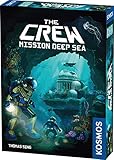
Overview: Mission Deep Sea builds on its award-winning predecessor, offering a cooperative twist on classic trick-taking within an engaging underwater adventure. Players work together across 32 increasingly complex missions, using limited communication to ensure specific players win designated tricks – all while navigating an evolving oceanic narrative. What Makes It Stand Out: Its genius lies in transforming traditional competitive trick-taking into a purely cooperative puzzle. The strict communication limits (mimicking underwater constraints) force creative, non-verbal signaling and deep strategic planning. The 32 distinct missions provide a compelling campaign-like progression, with difficulty scaling perfectly to challenge both novices and veterans. Value for Money: Excellent value for its compact size and depth. The 32 missions offer dozens of hours of unique gameplay, far exceeding the replayability of most standalone card games. It’s significantly more affordable than complex board games while delivering comparable strategic satisfaction and longevity, especially for trick-taking enthusiasts. Strengths and Weaknesses: Strengths: Brilliant cooperative trick-taking innovation; superb mission progression and difficulty curve; highly portable; exceptional replayability; accessible rules with deep strategy. Weaknesses: Initial trick-taking knowledge is helpful (though not mandatory); communication restrictions can frustrate absolute beginners; minimal components beyond cards; narrative is light. Bottom Line: A near-perfect evolution of cooperative card play. Highly recommended for gamers seeking clever, portable, and endlessly replayable strategic challenges, offering immense depth and satisfaction at a very fair price point.
8. Ravensburger Minecraft Heroes of The Village | Cooperative Board Game | Exciting & Unpredictable | Perfect for Families and Minecraft Enthusiasts | Suitable for Kids & Adults
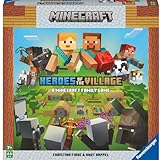
Overview: This cooperative game translates the beloved Minecraft universe into a family-friendly board game where players team up to defend a village against nightly mob invasions. Using wooden blocks and variable tiles, players build defenses, gather resources, and work together to survive, capturing the creative spirit of the digital original. What Makes It Stand Out: It successfully distills Minecraft’s core loop of building and resource management into an accessible, tangible board game experience. The modular board ensures high replayability, while the cooperative nature fosters teamwork. Ravensburger’s renowned component quality, especially the sturdy wooden blocks, significantly enhances the tactile fun and immersion for younger players. Value for Money: Strong value for families. The robust components (25 wooden blocks, quality tiles) feel durable and justify the price, especially compared to flimsier kids’ games. It offers substantial play value for repeated family game nights, effectively bridging the digital-physical gap for Minecraft fans without exploitative licensing costs. Strengths and Weaknesses: Strengths: Faithful Minecraft theme execution; high-quality, durable components; excellent replayability via modular setup; genuinely cooperative and accessible for ages 7+; fosters strategic thinking and teamwork. Weaknesses: Strategy depth is relatively light for adult gamers; luck elements (dice) can dominate; theme might not resonate with non-Minecraft fans. Bottom Line: A superb, high-quality cooperative entry for families and young Minecraft fans. Highly recommended for its build-and-defend mechanics, replayability, and Ravensburger’s trusted craftsmanship, though seasoned gamers may desire more complexity.
9. Peaceable Kingdom Race to the Treasure! Cooperative Path Building Game for 2 to 4 Kids Ages 5+

Overview: Race to the Treasure! is a delightfully simple cooperative game where players work together to build a path from start to finish before the Ogre reaches the treasure. Using colorful tiles, kids lay paths, collect keys, and strategize as a team, ensuring everyone wins or loses together in this award-winning introduction to board gaming. What Makes It Stand Out: Its pure, accessible cooperation is perfect for preschoolers and early elementary kids. There’s no reading required, and the rules are graspable in minutes. The shared goal eliminates early competitive frustration, while the path-building mechanic subtly introduces spatial reasoning and planning. The frustration-free packaging is a thoughtful touch for young hands. Value for Money: Outstanding value for its target age group. Priced accessibly, it delivers durable components, genuine educational value (social skills, basic strategy), and countless play sessions. It outperforms many similarly priced games in fostering positive group dynamics and provides exceptional longevity as a child’s first “real” board game. Strengths and Weaknesses: Strengths: Perfectly age-appropriate cooperative mechanics; zero reading required; teaches teamwork and basic strategy; quick setup and play; high durability; multiple award-winning design. Weaknesses: Very simple strategy (not for older kids/adults); limited long-term depth; luck plays a significant role; theme is basic. Bottom Line: An essential, award-winning first cooperative game for ages 5+. Highly recommended for parents and educators seeking to teach teamwork, basic planning, and positive social interaction in a fun, accessible, and genuinely shared experience.
10. The Lord of The Rings: Adventure to Mount Doom | Family Game | Cooperative Game | Strategy Game

Overview: Adventure to Mount Doom casts players as Fellowship members guiding Frodo toward Mount Doom in a cooperative race against the Ringwraiths. Using dice rolls and card draws, players navigate Middle-earth, manage resources, and strategize to overcome obstacles before Sauron’s forces claim the Ring, aiming to destroy it and save the realm. What Makes It Stand Out: It effectively captures the epic tension and thematic essence of Tolkien’s quest within a streamlined family game. The cooperative dice-and-card mechanics translate key story beats (like resisting the Ring’s pull) into engaging decisions. The dual focus on route planning and threat management creates meaningful player interaction within its accessible framework. Value for Money: Solid value for Tolkien fans and families seeking a thematic cooperative experience. The production quality is good for the price, and the 50-minute playtime offers a substantial yet manageable session. While not as deep as complex strategy games, it delivers a satisfying narrative journey that justifies its cost for its niche. Strengths and Weaknesses: Strengths: Strong thematic immersion in Tolkien’s world; accessible cooperative rules; suitable for solo or small groups; appropriate playtime; clear win/loss stakes. Weaknesses: Strategy can feel light/repetitive; luck (dice/cards) heavily influences outcomes; character asymmetry is minimal; may disappoint hardcore Tolkien lore enthusiasts seeking depth. Bottom Line: A commendable, accessible cooperative journey through Middle-earth. Recommended for families and Tolkien fans wanting a thematic, moderately strategic game, though its simplicity and reliance on luck may not satisfy hardcore strategy gamers.
Understanding True Value in Cooperative Games for Clubs
Beyond the Price Tag: Defining Long-Term Investment
True value for a game club isn’t just about the lowest upfront cost. It’s the cost-per-play over the game’s lifespan within your specific environment. Consider how often it will realistically be played, how many members it serves simultaneously, and how long it withstands heavy use. A slightly more expensive game that’s played weekly by large groups for years offers far better value than a cheap game that breaks after two sessions or sits unused due to complexity. Factor in storage footprint, teaching time efficiency, and resistance to component loss – these hidden costs significantly impact the real investment.
Durability and Component Resilience
Games destined for club use face relentless handling. Prioritize components built to last: thick, laminated cards that resist bending and spills; sturdy miniatures or tokens unlikely to snap; and boards that won’t warp or crease easily. Avoid games relying heavily on small, easily lost pieces or delicate inserts. Look for designs where critical components are oversized or uniquely shaped to prevent mix-ups between sets. Sleeving cards is often essential, so consider how easily the cards accommodate standard sleeves without becoming unwieldy. Component quality directly impacts longevity and reduces replacement headaches.
Player Count Flexibility and Scalability
Game clubs rarely have the exact “ideal” player count listed on the box. Seek games offering genuine flexibility – not just a range, but one where the experience remains balanced and engaging whether played with 2, 4, or 6 people. Does the game scale mechanically (adjusting difficulty based on player count) or merely numerically (adding more roles without changing the challenge)? True scalability ensures the game is viable for small drop-in sessions or larger club meetups without feeling broken or tedious at either extreme, maximizing its usable opportunities.
Setup and Reset Efficiency
Time is precious in a game club. Games requiring intricate, time-consuming setups or complex resets between plays become logistical nightmares, especially with volunteers managing multiple tables. Value is found in games with streamlined setup: intuitive board layouts, clearly organized component trays, and minimal shuffling or randomization steps. Similarly, a quick reset – where components can be gathered and prepped for the next group in under 5 minutes – is crucial for high turnover. Efficient games keep the session flow smooth and reduce volunteer burnout.
Essential Features to Evaluate Before Purchase
Rule Clarity and Teachability
The barrier to entry is critical. Can a new player grasp the core mechanics within 10-15 minutes? Prioritize games with intuitive, well-structured rulebooks that use clear examples and visuals. Look for “teachability” – does the game have a logical flow where concepts build upon each other? Avoid games relying on dense text or obscure icons. A game that new members can learn quickly and confidently teach to others fosters independence and reduces the burden on experienced players or organizers, making it far more likely to be played frequently.
Replayability Through Variable Setup
Avoid games that play identically every time. High replayability is non-negotiable for club value. Seek strong variable setup elements: modular boards that change the map, diverse scenario cards that alter objectives or threats, asymmetric player roles with unique abilities, or robust randomization systems that create distinct challenges. The goal is for each session to feel fresh, encouraging members to return to conquer new configurations rather than experiencing predictable outcomes that lead to boredom.
Balanced Challenge and Pacing
The game shouldn’t be a cakewalk nor an exercise in guaranteed frustration. Look for cooperative games with adjustable difficulty levels tied to meaningful mechanics, not just arbitrary point changes. The pacing should maintain tension – a steady escalation of threat without long periods of downtime or overwhelming chaos. Does the game have clear “oh no!” moments followed by opportunities for clever teamwork? A well-balanced challenge keeps players engaged, fosters strategic discussion, and makes victories feel earned, which is vital for sustained club interest.
Thematic Integration and Immersion
While mechanics are king, a strong, well-integrated theme significantly boosts engagement and memorability. Does the theme enhance the mechanics, making actions feel meaningful within the narrative (e.g., sealing a breach feels urgent because the infection is spreading visibly)? Avoid games where the theme feels pasted on top of abstract mechanics. Immersive themes help players connect emotionally, making sessions more enjoyable and memorable, which directly contributes to the game’s perceived value and repeat play.
Minimal Table Space Requirements
Club tables are often crowded. Evaluate the physical footprint realistically. Does the game sprawl excessively, requiring a huge table that limits where it can be played? Look for efficient board designs, component trays that double as storage, or games that use cards as the primary play area. Games that play well on standard 3’x3’ tables are vastly more practical than those demanding expansive setups, increasing the number of locations within your space where the game can be hosted.
Optimizing for the Game Club Environment
Managing Component Loss and Damage
Loss is inevitable. Designate easily replaceable or generic components where possible (e.g., standard cubes instead of unique tokens). Implement clear club policies: use component checklists during reset, provide secure storage bins, and consider discreetly marking club-owned pieces. Choose games where missing a single card or token doesn’t completely break the game – robust design includes redundancy or simple workarounds. Factor in the cost and ease of replacing lost parts when assessing long-term value.
Streamlining the Teaching Process
Develop standardized teaching aids before the game hits the floor. Create concise, visual quick-reference sheets focusing on core actions and win/loss conditions, not edge cases. Identify “anchor players” within your regular membership who master the game and can reliably teach it. Structure the first playthrough with a dedicated “rules master” (not playing) solely focused on guiding the group. Efficient teaching reduces initial frustration and accelerates the point where the game can run independently, boosting its utilization rate.
Storage and Organization Solutions
Factor storage into your value assessment. Does the game come with a functional insert, or will you need to invest in third-party organizers? Consider the bin size required and how it fits into your existing shelving system. Games with all components fitting neatly into their original box (or a single standard bin) are vastly preferable. Poor organization leads to lost pieces and extended setup times. Prioritize games whose physical design naturally lends itself to tidy, club-friendly storage from day one.
Handling Player Turnover and Attendance Swings
Game clubs deal with no-shows and last-minute additions. Does the game handle mid-session player changes gracefully? Some cooperative games allow observers to jump in, others have mechanisms for temporary absences. Avoid games where one missing player completely stalls progress or cripples the team. Value is found in resilience – the ability to adapt to the reality of fluctuating attendance without ruining the session, making the game a reliable option even on unpredictable nights.
Fostering Inclusive Play Dynamics
True cooperative games minimize “alpha player” syndrome, where one dominant person dictates all moves. Look for mechanics that encourage discussion: simultaneous action selection, hidden information requiring sharing, or phases where each player has dedicated decision-making moments. Games that naturally distribute agency and require genuine input from all participants create a more welcoming and engaging environment for diverse players, reducing frustration and increasing the likelihood of positive experiences for newcomers.
Implementing and Maximizing Your Cooperative Game Library
Strategic Introduction and Promotion
Don’t just add a new game to the shelf and hope. Host dedicated “demo nights” with experienced players running sessions. Feature the game prominently on your schedule or social media with clear descriptors of player count, complexity, and theme. Pair it with similar, popular titles (“If you like X, try Y!”). Actively encourage members to give it a go during less busy times. A thoughtful rollout strategy significantly increases the chances of a new cooperative game gaining traction and proving its value quickly.
Tracking Usage and Gathering Feedback
Implement a simple system to track how often games are played (e.g., check-out logs, sign-up sheets). Pair this with informal feedback: ask groups immediately after play what they enjoyed or found confusing. This data is gold. It reveals which cooperative games are true workhorses and which are underperforming duds. Use feedback to adjust teaching methods, identify necessary component repairs/replacements, and inform future purchasing decisions, ensuring your collection evolves based on real club usage.
Frequently Asked Questions
Frequently Asked Questions
How do I assess if a cooperative game’s difficulty scaling is truly effective for varying player counts? Look for games where scaling adjustments directly impact core mechanics (e.g., adding threat tokens per player, modifying action limits) rather than just changing victory point thresholds. Test it yourself with minimum and maximum players if possible – the challenge should feel appropriately tense, not trivial or impossible.
Can cooperative games work well with very large groups, like 8+ players, in a club setting? It’s challenging. Games designed specifically for high player counts often suffer from downtime. Look for titles with strong parallel play elements (players acting simultaneously) or modular team structures. Often, splitting into two smaller groups is more effective than forcing one massive game.
What’s the biggest hidden cost to watch for with cooperative games in clubs? The time investment for teaching and resetting. A game requiring 30 minutes to teach and 15 minutes to reset drastically reduces its viable play sessions per night compared to a “teach-in-10, reset-in-5” game, even if the initial purchase price is lower.
How important is theme versus mechanics for long-term club appeal? Mechanics are foundational for replayability, but a strong, immersive theme significantly boosts initial engagement and memorability. The best club games marry solid, variable mechanics with a theme that makes the decisions feel meaningful and exciting, encouraging repeat plays.
Should game clubs prioritize games with expansions when assessing value? Only if the base game offers exceptional standalone value. Expansions add cost and complexity. A base game that remains deeply engaging for months without expansions is stronger club value than one that feels incomplete or repetitive without them. Evaluate the core experience first.
How can we prevent “analysis paralysis” from slowing down cooperative games with new players? Choose games with clear turn structures and time pressure mechanics (e.g., a shared timer track). Encourage groups to set soft time limits for discussions. The rules master should gently guide towards consensus without taking over, fostering confidence in decision-making.
What’s a good strategy for managing games where one player tends to dominate decision-making? Select games with mechanics that inherently distribute agency (e.g., each player has a unique role with specific responsibilities). The group facilitator can gently remind players to solicit input (“What do you think we should do next?”). Sometimes, grouping dominant players together can also help.
How do we handle it when a cooperative game is consistently too easy or too hard for our club’s average skill level? First, ensure difficulty settings are being used correctly. If the base game lacks adjustability, look for community-created variants or house rules. Sometimes, the issue is player inexperience – playing the same game 2-3 times often naturally increases skill. If it’s fundamentally unbalanced, it might not be the right fit.
Is sleeving cards absolutely necessary for cooperative games in clubs? It’s highly recommended for longevity. Sleeving protects cards from spills, bending, and general wear, drastically extending their life. Factor the cost of quality sleeves into your initial purchase assessment; it’s a small investment for significant durability gains.
How often should a cooperative game be played to be considered “good value” for a club? This depends on your club’s size and activity level. As a rough benchmark, a game played consistently at least once every 1-2 weeks by groups of 3-5 players demonstrates solid value. The key is consistent utilization over time, proving it’s a reliable tool for generating engagement, not just a one-off novelty.
See Also
- 10 Best Value Cooperative Board Games for Game Libraries in 2026
- 10 Essential Cooperative Strategy Games Every Board Game Group Needs in 2026
- How to Solve Game Night Conflicts with the 10 Best Cooperative Board Games in 2026
- 10 Expert-Recommended Cooperative Board Games for Game Night Success in 2026
- How to Choose the 10 Best Strategy Cooperative Board Games for Game Nights in 2026