Table of Contents
Transforming classroom engagement in 2026 means thinking beyond traditional worksheets and lectures. Escape room board games have emerged as powerful educational tools that turn learning into an immersive, collaborative adventure. These games challenge students to think critically, communicate effectively, and apply academic concepts in pressure-free scenarios that feel more like play than work. Teachers across grade levels are discovering how these narrative-driven puzzles can reinforce curriculum standards while building the soft skills students need for future success.
What makes this trend particularly exciting for educators is the sheer variety of options now available. Whether you’re teaching elementary problem-solving or high-level critical thinking, there’s an escape room game format that aligns with your instructional goals. This guide explores the essential features to evaluate, implementation strategies that work in real classrooms, and how to match different game types to specific learning objectives. You’ll learn what separates a mediocre classroom game from one that becomes a requested staple in your yearly rotation.
Top 10 Escape Room Board Games for Classroom
Detailed Product Reviews
1. Professor Puzzle: Escape from The Aquarium - Escape Room Game, 11 Logic-Number-Observational Puzzles, Co-Op Underwater Adventure, Kids 8+, 1-6 Players

Overview: Professor Puzzle’s Escape from the Aquarium transforms family game night into an underwater adventure where players aged 8+ become magically enchanted fish racing to break a spell. This cooperative experience packs 11 diverse puzzles spanning logic, numbers, and observation into a 60-minute immersive session for 1-6 participants. The kid-friendly design prioritizes educational engagement over complexity, making it an ideal introduction to escape room mechanics. Colorful illustrations guide young sleuths through an aquarium setting, with each solved puzzle revealing ingredients for a secret potion.
What Makes It Stand Out: The aquatic theme resonates perfectly with younger audiences, while the transformation narrative adds imaginative depth. Unlike adult-oriented escape rooms, puzzles integrate colorful illustrations and scaffolded difficulty that builds confidence. The variety ensures different thinking styles shine—logical sequencers, visual observers, and numeric pattern-seekers all contribute meaningfully. The team-based flexibility allows solo play or full group collaboration.
Value for Money: Positioned competitively against other educational board games, this offers dual value: entertainment and cognitive development. The reusable components and multiple puzzle paths provide several playthroughs before memorization sets in, outperforming single-use escape kits. For under $20, it delivers comparable value to puzzle books with added social interaction.
Strengths and Weaknesses: Strengths include age-appropriate challenge, teamwork promotion, and high-quality components that withstand repeated use. Weaknesses involve limited replayability once solved and potential ease for advanced 8-year-olds. The 60-minute timer may pressure younger players, though it adds excitement.
Bottom Line: An excellent gateway escape room for families with elementary-aged children, balancing fun and learning effectively while building critical thinking skills through collaborative play.
2. Creative Escape Rooms Made in USA - Wood Braille Alphabet Board with Raised Dots - Great Montessori Educational Tool for All Ages - for Visually Impaired and Sighted

Overview: The Creative Escape Rooms Braille Alphabet Board is a tactile learning tool laser-engraved on Baltic birch wood, designed to teach Braille letter recognition through touch. Measuring 7.2" x 4.4", this durable board features raised dots corresponding to each letter of the alphabet, serving both visually impaired and sighted learners in Montessori-style education. Each letter is clearly marked with its printed equivalent, enabling collaborative learning between those who read visually and those who read tactually.
What Makes It Stand Out: Unlike plastic alternatives, the wooden construction provides authentic texture and durability. The dual-purpose design—raised dots with engraved sighted letters—creates an inclusive learning environment where families or classrooms learn together. Its portable size enables learning anywhere from kitchen tables to classroom centers. The laser-engraving ensures precise dot placement critical for accurate Braille reading.
Value for Money: Handcrafted in the USA, the quality justifies the premium over mass-produced plastic versions. The 1/4" thickness prevents warping, ensuring years of use. For homeschooling families or special education programs, it’s a one-time investment that outlasts disposable workbooks and flimsy card-based systems. Comparable educational tools often cost more with inferior materials.
Strengths and Weaknesses: Strengths include exceptional build quality, inclusive design, and alignment with Montessori principles. The tactile feedback surpasses synthetic materials. However, as a single-purpose alphabet board, it covers only letters (no numbers or punctuation). It’s also misclassified as an “escape room” product, which may confuse buyers expecting a game.
Bottom Line: An outstanding educational resource for Braille literacy, though purchasers should recognize it’s a teaching tool, not a game. Ideal for educators and families committed to inclusive learning and sensory education.
3. Escape Room The Game, Version 2 - with 4 Thrilling Escape Rooms | Solve The Mystery Board Game for Adults and Teens
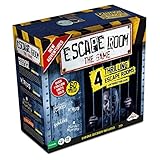
Overview: Escape Room The Game Version 2 delivers a premium at-home experience for teens and adults seeking authentic escape room thrills. Designed for 3-5 players aged 16+, this set includes four distinct scenarios, each with three parts, controlled by the electronic Chrono Decoder that provides a 60-minute countdown with audio feedback. The companion app adds atmospheric soundtracks tailored to each adventure. Players must physically insert keys into the decoder to verify solutions, bridging digital and physical gameplay.
What Makes It Stand Out: The Chrono Decoder transforms gameplay from static puzzles to a tech-enhanced event. Its key-insertion mechanism provides satisfying tactile feedback, while the app integration creates immersive soundscapes. Progressive difficulty across four adventures builds skills, and expansion packs extend longevity indefinitely. The decoder’s sound effects—success chimes and error buzzers—heighten tension authentically.
Value for Money: Though pricier than basic escape games, the included electronic component and four full scenarios justify the cost. One real escape room visit costs 3-4 times more for a single hour. The reusable decoder and expansion ecosystem make this a sustainable hobby investment rather than disposable entertainment. Quality components withstand repeated use.
Strengths and Weaknesses: Strengths include high production values, authentic atmosphere, and scalable difficulty. The decoder’s batteries are included, and the app is free. Weaknesses include the 16+ age requirement (too complex for younger teens), mandatory app download, and potential for lost decoder keys. Some puzzles require careful component handling to avoid damage.
Bottom Line: The gold standard for serious escape room enthusiasts wanting professional-grade home entertainment with genuine replay value through its expansion system.
4. Escape From the Museum Escape Room Game

Overview: Professor Puzzle’s Escape From the Museum condenses escape room excitement into a compact, accessible package for 1-4 players. Trapped after hours in a museum, participants must decipher clues and solve brain-busting puzzles to secure freedom. This mini escape room delivers the tension of real-life challenges without complex setup or electronic components. The game focuses on traditional paper-and-component puzzles that test pure deductive reasoning.
What Makes It Stand Out: Its streamlined design focuses purely on puzzle-solving without electronic components or apps. The museum theme provides rich narrative potential through artifact-based clues and historical references. The portable size makes it ideal for travel, small gatherings, or classroom activities. As part of Professor Puzzle’s established Escape Room Collection, it maintains consistent quality standards and puzzle design philosophy.
Value for Money: Positioned as an affordable entry-level option, it offers solid value for casual gamers. While it lacks the tech features of premium versions, the puzzle quality rivals more expensive options. It’s perfect for testing the escape room genre without significant investment. The reusable components allow sharing with friends after completion.
Strengths and Weaknesses: Strengths include quick setup, clear instructions, and puzzles that genuinely challenge deductive reasoning across multiple difficulty levels. The compact box stores easily on shelves. Weaknesses include limited replayability once solved and fewer puzzles than larger sets. The 1-4 player range may feel cramped at maximum capacity, and some clues require careful reading.
Bottom Line: A worthy choice for puzzle enthusiasts seeking a no-frills, narrative-driven escape experience that prioritizes mental challenge over gimmicks and technology.
5. Clue Escape: The Midnight Hotel Board Game, Clue Escape Room Game, 1-Time Solve Mystery Games, Family Games for Ages 10+, 1-6 Players, 90 Mins. Avg.

Overview: Clue Escape: The Midnight Hotel reimagines the classic murder mystery as a cooperative escape room experience for 1-6 players aged 10+. Continuing the Clue narrative after Mr. Boddy’s murder, players must decode puzzles to identify who stole blackmail files while escaping a hotel. The innovative 3D board literally builds up as clues are solved, with gameplay averaging 90 minutes. Players collect evidence to make a final accusation, blending traditional Clue deduction with escape mechanics.
What Makes It Stand Out: The dynamic board construction creates visual progression unmatched in static escape games, revealing new rooms and clues physically. Integrating Clue’s beloved characters and deduction mechanics with escape room puzzles bridges two genres seamlessly. The cooperative one-time-solve design emphasizes shared discovery over competition. The 3D elements create a tabletop presence that evolves throughout the session.
Value for Money: As a single-use experience, the value hinges on the 90-minute playtime and narrative depth. Comparable to a movie ticket plus snack, but with active engagement. The 3D components and Clue brand justify the moderate premium over generic escape rooms. For groups, the per-player cost is quite reasonable.
Strengths and Weaknesses: Strengths include innovative board mechanics, strong thematic integration, and scalable player count including solid solo mode. The mystery element adds narrative motivation beyond simple escape. Weaknesses include the one-time-play limitation and longer time commitment that may not suit all groups. Some puzzle components are consumable and cannot be reset.
Bottom Line: Perfect for Clue fans and mystery lovers wanting a narrative-rich, visually engaging escape experience that evolves as you play, offering memorable cooperative storytelling.
6. SMARTpath Education Deluxe Escape Room Game Kit for K-12 Education, Escape Room Boxes, Team Building, Medical & Library Activities - Create Engaging Puzzles

Overview: The SMARTpath Education Deluxe Escape Room Game Kit reimagines escape room entertainment for institutional settings. Designed specifically for K-12 classrooms, libraries, medical facilities, and corporate training, this reusable system uses vinyl bags that flatten for compact storage and wipe clean effortlessly. Unlike consumer-grade escape games, this kit prioritizes durability, repeatability, and educational value over theatrical presentation, making it a practical investment for group facilitators who need reliable, multi-use activities.
What Makes It Stand Out: The “hacker-proof” puzzle design ensures students can’t easily find solutions online, maintaining challenge integrity across multiple uses. Its teacher-approved, student-tested pedigree speaks to genuine classroom viability. The vinyl bag construction is brilliant for high-traffic environments—easy to sanitize between groups, a crucial feature for schools and medical settings. The system’s modularity allows educators to create custom puzzles tailored to curriculum standards, transforming escape room mechanics into active learning tools for any subject.
Value for Money: This kit’s low-cost positioning is its killer feature for budget-strapped educators. While commercial escape room games cost $15-30 per single play, this reusable system delivers unlimited sessions for a fraction of that long-term cost. The trade-off is setup time and less immersive theming, but for institutions needing repeatable activities, nothing beats its ROI. Corporate trainers will similarly appreciate avoiding per-session licensing fees.
Strengths and Weaknesses: Pros: Reusable and durable; easy to clean and store; curriculum-integratable; cost-effective for high-volume use; hacker-proof puzzles maintain integrity. Cons: Requires facilitator preparation and creativity; lacks the polished narrative immersion of boxed games; not suitable for casual home users seeking ready-to-play experiences; initial learning curve for puzzle creation.
Bottom Line: This is the definitive choice for educators and institutional facilitators needing a sustainable, repeatable escape room solution. For home entertainment, look elsewhere, but for classrooms and team building, its practicality is unmatched.
7. Exit: The Abandoned Cabin - Kennerspiel Des Jahres Winner, Card-Based Family Escape Room Game for 1-4 Players, Ages 12+, Blue

Overview: Exit: The Abandoned Cabin represents the gold standard of at-home escape room games, earning the prestigious Kennerspiel Des Jahres award for its innovative design. This card-driven puzzle experience immerses 1-4 players in a tense scenario where you must solve riddles to escape a mysterious cabin. The game demands creative thinking as you’ll markup, fold, and tear components—transforming the materials themselves into puzzle elements in ways that feel genuinely innovative rather than merely destructive.
What Makes It Stand Out: Winning Germany’s coveted game design award signals exceptional quality. The Abandoned Cabin excels at creating “aha!” moments through its clever integration of physical manipulation with logical deduction. Unlike digital escape rooms, the tactile nature of altering cards and discovering hidden mechanisms delivers visceral satisfaction. The difficulty curve is masterfully calibrated, providing challenging but fair puzzles that rarely feel obtuse, making it accessible to newcomers while satisfying veterans.
Value for Money: At typical EXIT pricing ($15-20), you’re paying for a premium single-use experience. While some balk at destroying components, the award-winning design justifies the cost compared to cheaper alternatives that lack this level of creative puzzle integration. Think of it as a movie ticket plus dinner—an entertainment expense rather than a durable asset. The 1-2 hour playtime delivers concentrated, high-quality engagement.
Strengths and Weaknesses: Pros: Award-winning puzzle design; excellent difficulty balance; highly immersive; creative use of destructible components; strong narrative tension. Cons: Single-use only—no replay value; must destroy materials; not suitable for collectors; some puzzles require precise cutting/folding that can’t be undone.
Bottom Line: For puzzle enthusiasts seeking the highest-quality at-home escape room experience, this is essential. Accept the single-use nature and enjoy one of the best-designed deduction games available.
8. EXIT: The Game - Family - 2 Escape Adventures, at-Home Escape Room, Co-Operative Game, Family Activity, Brainteasers, 2-4 Players

Overview: This family-oriented EXIT box delivers two complete adventures—The Mystery at Meanstone Manor and The Caper at Candy Castle—specifically designed to bridge the gap between children’s games and adult escape rooms. Tailored for 2-4 players, these cooperative experiences emphasize teamwork over complex logic, making them ideal for families with kids aged 8-12. The silly, lighthearted themes maintain engagement without dark or scary elements, while still providing genuine puzzle-solving satisfaction.
What Makes It Stand Out: Getting two distinct adventures in one package is exceptional value. The family-focused design thoughtfully scales difficulty downward while preserving EXIT’s signature “destroy components to solve” mechanics. The thematic integration—searching for missing animals or investigating candy mysteries—resonates perfectly with younger players. This serves as an ideal gateway product, teaching escape room conventions before graduating to more challenging titles in the series.
Value for Money: Two games for roughly the price of one standard EXIT title makes this a smart purchase for families. Each adventure provides 45-60 minutes of gameplay, delivering 1.5-2 hours total entertainment. Compared to taking a family of four to an actual escape room ($100+), this is an economical way to test interest in the hobby. The destructible nature remains a downside, but the dual content softens that limitation.
Strengths and Weaknesses: Pros: Two adventures included; age-appropriate difficulty; family-friendly themes; excellent introduction to escape rooms; encourages cooperation. Cons: Still single-use per adventure; experienced puzzlers will find it too easy; silly themes may not appeal to teens; shorter playtime than adult EXIT games.
Bottom Line: Perfect for families with children aged 8-12 looking to explore escape rooms together. The dual-pack format and kid-friendly design make it an unbeatable starting point for young puzzlers.
9. Identity Games [www.identity games.com] Escape Room The Game, New Family Edition - with 2 New Exciting Escape Rooms | Solve The Mystery Board Game for Family, Kids & Teens (English Version)
![Identity Games [www.identity games.com] Escape Room The Game, New Family Edition - with 2 New Exciting Escape Rooms | Solve The Mystery Board Game for Family, Kids & Teens (English Version)](https://m.media-amazon.com/images/I/61ACHnIffvL._SL160_.jpg)
Overview: Identity Games’ Family Edition elevates the at-home escape room experience with an electronic Chrono Decoder that counts down from 60 minutes while providing integrated hint functionality. This set includes two adventures—Candy Factory and Super Heroes—designed for families, kids, and teens. The electronic component creates genuine urgency and atmosphere, while the hint system prevents frustration. Supporting 3-5 players, it emphasizes teamwork where each participant must contribute to solve riddles and find hidden clues before time expires.
What Makes It Stand Out: The Chrono Decoder is the star here, transforming a card-based game into an event. The audible countdown and visual pressure heighten tension in ways static timers cannot. The hint decoder is elegantly designed, allowing teams to request help without breaking immersion. The two included adventures offer varied themes that appeal to different age ranges within families, and the “win together or lose together” philosophy fosters genuine collaboration rather than competitive one-upmanship.
Value for Money: Priced higher than standard EXIT games due to the electronic component, but still reasonable for the package. The decoder is reusable across other Identity Games expansions, making it a long-term investment. Two adventures provide decent initial content, though you’ll need expansion packs for continued play. For families wanting a more atmospheric experience than pure card games, the premium is justified.
Strengths and Weaknesses: Pros: Electronic timer creates atmosphere; excellent hint system; reusable decoder; strong teamwork emphasis; varied family-friendly themes. Cons: Adventures are single-use; electronic component adds cost; requires battery; hint system may be too tempting for puzzle purists; limited to 3-5 players.
Bottom Line: Ideal for families seeking a more immersive, atmospheric escape room experience. The electronic decoder justifies the extra cost and transforms gameplay into a memorable event.
10. EXIT: The Professor’s Last Riddle | Escape Room| Brainteasers | Mystery Solving | Treasure Hunt | Kosmos Game | at-Home Escape Room

Overview: EXIT: The Professor’s Last Riddle takes players on a globetrotting adventure to unravel an archaeology professor’s mysterious legacy. Designed for 1 or more players, this installment emphasizes exploration across famous cities like Paris and New York, blending escape room puzzles with treasure hunt mechanics. The 1-2 hour experience maintains EXIT’s signature requirement to rip, tear, and destroy components, but frames it within a compelling narrative of academic intrigue and worldwide discovery that feels more expansive than single-location scenarios.
What Makes It Stand Out: The travel-themed structure provides refreshing variety, with each city offering distinct puzzle flavors that prevent monotony. This design particularly shines for solo players, as the narrative progression feels like a personal journey rather than a team exercise. The treasure hunt element adds a satisfying layer of collection and discovery beyond mere escape. The multi-city framework allows for natural puzzle variety, incorporating cultural and historical elements that enrich the solving experience beyond standard logic puzzles.
Value for Money: Standard EXIT pricing delivers a premium single-session experience. While the one-time-use limitation remains, the globetrotting theme and treasure hunt framing provide richer narrative value than simpler EXIT titles. For solo players, it’s an economical alternative to group activities, offering the same content regardless of player count. The 1-2 hour playtime is packed with varied challenges, maximizing entertainment per dollar.
Strengths and Weaknesses: Pros: Engaging travel theme; excellent for solo play; varied puzzle types across cities; treasure hunt adds narrative depth; high replayability within single session. Cons: Single-use only; destroying components limits sharing; may feel structurally similar to other EXIT games; travel theme could be more visually integrated.
Bottom Line: Best suited for solo puzzlers or travel enthusiasts wanting a narrative-rich escape experience. The global adventure theme and solo-friendly design make it a standout in the EXIT lineup.
Understanding Escape Room Board Games in Educational Settings
What Makes Them Effective Learning Tools
Escape room board games distill the thrill of real-world escape rooms into tabletop experiences perfect for classroom use. Unlike digital alternatives, these physical games encourage face-to-face interaction and eliminate screen-time concerns. Students work together to decipher codes, connect seemingly unrelated clues, and progress through a storyline. The cooperative nature removes competitive pressure, making them ideal for inclusive classrooms where different skill sets shine at different moments. The built-in progress tracking helps students visualize their advancement, providing motivation that traditional assignments often lack.
Cognitive Skills Development Through Gameplay
Every puzzle in an escape room board game targets specific mental processes. Pattern recognition strengthens mathematical reasoning, while linguistic puzzles enhance vocabulary and reading comprehension. Sequential logic problems mirror scientific method thinking, and spatial reasoning challenges support geometry concepts. Perhaps most valuable is the way these games teach productive struggle – students learn that initial failure is simply information gathering, not a final judgment on their abilities. This mindset shift carries over into other academic areas, building resilience that standardized tests rarely foster.
Key Features to Evaluate for Classroom Use
Age Appropriateness and Reading Levels
The best classroom games clearly indicate their target age range, but savvy educators look deeper. Check the reading level of text-based clues against your students’ abilities. Games designed for families often work better than those marketed strictly to adults, as they typically avoid mature themes and complex vocabulary. Consider visual literacy too – younger learners benefit from icon-driven puzzles and illustrated components rather than text-heavy instructions. Always preview a game’s content for cultural sensitivity and alignment with your community’s values before introducing it to students.
Group Size Flexibility
Classroom dynamics change daily based on attendance and behavioral factors. Ideal educational escape room games accommodate variable group sizes without compromising the experience. Look for titles that work with 2-6 players but can scale up through parallel play setups. Some games offer “duel” modes where two groups race through identical scenarios, perfect for fostering healthy competition between table groups. The ability to combine multiple copies of the same game for whole-class activities dramatically increases a game’s utility and justifies its cost in tight budget situations.
Replayability and Content Variety
Budget-conscious educators need games that deliver multiple uses throughout the school year. Single-use “escape kits” with disposable components might create memorable moments but offer poor long-term value. Instead, prioritize games with modular puzzle structures that allow for different solution paths on subsequent plays. Some designs include randomized elements or multiple scenarios within one box, essentially providing several games for one price. Consider whether the game could be reset and passed between different class periods, maximizing its reach across your entire teaching load.
Time Requirements and Session Length
Realistic classroom time blocks rarely exceed 45-50 minutes. The most practical games offer clear stopping points or can be paused and resumed without losing momentum. Investigate average playtimes and whether the game includes “hint” systems that prevent groups from getting stuck and wasting precious instructional minutes. Games with tiered difficulty settings allow you to adjust session length based on available time – a quick 20-minute brain break versus a full-period immersive experience. This flexibility helps justify pulling out the game during unexpected schedule changes or reward days.
Subject Matter Integration
While general problem-solving games build transferable skills, subject-specific titles directly reinforce curriculum standards. Science-themed games might incorporate periodic table puzzles or physics principles, while history-based adventures embed primary source analysis. Math-focused escape rooms use algebraic thinking or geometric concepts as core mechanics. Language arts games emphasize inference, theme identification, and character motivation. The strongest educational value comes when the puzzles feel naturally integrated into the narrative rather than tacked-on academic exercises that break immersion.
Subject-Specific Applications
STEM-Focused Game Elements
Exceptional STEM escape room games embed scientific concepts directly into their puzzle DNA. Chemistry games might require balancing equations to unlock combinations, while physics-themed challenges use trajectory calculations or force diagrams as clue mechanisms. Biology adventures could involve DNA sequencing puzzles or ecosystem interdependence scenarios. The best examples include supplementary materials that explain the real-world science behind the gameplay, allowing teachers to bridge the game experience back to formal lessons. Look for components that can be used as manipulatives in follow-up activities, extending the learning beyond the initial escape.
Language Arts and Storytelling Components
Narrative-driven games offer rich opportunities for literary analysis. Students might identify unreliable narrators, track character development across puzzle sequences, or recognize foreshadowing embedded in clue text. Games with multiple endings based on player choices provide perfect springboards for creative writing assignments – students can defend their decisions or rewrite alternative conclusions. Vocabulary acquisition happens naturally when words appear in context rather than isolated lists. The most effective games include story elements complex enough for analysis but accessible enough that struggling readers can contribute through non-text-based puzzles.
Social Studies and Historical Context
History-themed escape rooms transport students to pivotal moments, making past events visceral rather than abstract. Effective games incorporate primary documents, period-appropriate maps, and cultural artifacts that serve as both puzzles and teaching tools. The narrative should reflect diverse perspectives and avoid oversimplifying complex historical situations. Geography games that use actual cartographic skills or require understanding of regional characteristics provide authentic social studies practice. The best historical games spark curiosity that leads students to independently research the era long after the final puzzle is solved.
Critical Thinking and Logic Puzzles
Pure logic games build the foundational reasoning skills that underpin all academic disciplines. These titles feature puzzles that require deductive reasoning, syllogistic thinking, and pattern recognition without subject-specific content. They’re perfect for homeroom activities, after-school clubs, or interdisciplinary team-building. The most valuable examples include puzzle types that mirror standardized test formats, providing low-stakes practice for reasoning sections. Teachers can use these games to identify students who excel at logical thinking but struggle in traditional academic settings, uncovering hidden talents and boosting confidence.
Implementation Strategies for Teachers
Classroom Management During Gameplay
Successful implementation requires clear structure. Establish noise-level expectations and assign rotating roles within groups – clue keeper, time tracker, spokesperson – to ensure participation and prevent dominant personalities from monopolizing the experience. Create a “hint” protocol where groups must discuss for a set time before requesting teacher assistance, building autonomy. Designate a specific area for discarded or used components to avoid confusion. Consider filming gameplay (with permission) to review problem-solving processes later, turning the experience into data for formative assessment.
Differentiation for Diverse Learners
Escape room games naturally differentiate when designed thoughtfully. Kinesthetic learners engage with physical components, visual learners decode maps and diagrams, and auditory learners thrive during group discussions. For students with processing challenges, provide enlarged clue copies or allow extra time. English language learners benefit from visual puzzles that reduce language dependency. Gifted students can tackle “expert” side challenges or serve as peer tutors. The collaborative structure means students with different strengths all contribute meaningfully, creating truly inclusive learning experiences that build on individual capabilities rather than highlighting deficits.
Assessment and Debriefing Techniques
The learning doesn’t end when the final lock opens. Structured debriefing sessions where students articulate their reasoning processes cement cognitive gains. Use exit tickets asking students to connect specific puzzles to curriculum concepts. Have groups create “strategy guides” that document their problem-solving approaches, revealing their metacognitive growth. Video recordings of gameplay become artifacts for student self-assessment. Some teachers design rubrics that evaluate collaboration, persistence, and creative thinking alongside content mastery. The debrief transforms the game from entertainment into legitimate educational experience worthy of instructional time.
Storage and Organization Solutions
Classroom durability matters more than home-game elegance. Invest in plastic baggies for small pieces, label everything clearly, and laminate frequently handled cards. Create a “reset checklist” that students can follow to prepare the game for the next group, building responsibility. Store games in stackable plastic bins rather than original boxes that wear out quickly. Photograph properly organized setups to include in the box as reset guides. Some teachers create digital inventories using QR codes that link to video tutorials for resetting complex puzzles, making student helpers more effective and reducing teacher prep time.
Budget Considerations and Value
Cost-Effectiveness for School Budgets
Single-use escape room kits might cost less upfront but drain resources over time. Durable, replayable games with higher initial price tags often prove more economical across multiple school years. Calculate cost-per-student-use by estimating how many times you’ll deploy the game and how many students will experience it. Games that work across grade levels offer better value for school-wide purchases. Consider coordinating with other departments to share a game library, spreading costs while increasing variety. Some publishers offer educator discounts or school licensing that permits copying components for classroom use – always check for these options before purchasing.
Expansion Packs and Supplementary Materials
The best educational game investments include expansion options that refresh content without requiring entirely new purchases. These might add new scenarios, increase difficulty, or introduce different subjects using the same core components. Some companies provide free downloadable puzzles that extend the base game, perfect for teachers who want to customize content. Check whether the publisher offers educator resources like lesson plans or alignment documents that connect puzzles to standards. The existence of a robust expansion ecosystem suggests publisher commitment to educational markets and increases the likelihood of long-term support.
Frequently Asked Questions
How do I justify using games during instructional time to administrators?
Frame escape room games as formative assessment tools that develop critical thinking and collaboration skills explicitly mentioned in most state standards. Document specific curriculum connections and create brief lesson plans showing how the activity supports learning objectives. Many administrators appreciate that these games build the “21st-century skills” that colleges and employers value. Offer to conduct a demonstration session during a staff meeting so decision-makers can experience the educational value firsthand.
Can these games be used for test review?
Absolutely. The narrative context makes repetitive review content feel fresh. Create custom puzzles using vocabulary terms, historical dates, or science concepts that align with upcoming assessments. The collaborative pressure of “escaping” motivates students to engage with material they’d typically tune out during traditional review. The immediate feedback inherent in puzzle-solving helps identify knowledge gaps in real-time, allowing you to address misconceptions before test day.
What if my students get frustrated and give up?
Build resilience by establishing a growth-mindset framework before playing. Emphasize that struggle is expected and valuable. Implement a three-tier hint system that provides increasingly direct assistance, preventing complete shutdown. Allow groups to “escape” partially by completing most puzzles, celebrating progress over perfection. Some teachers let struggling groups watch a successful team finish, then attempt the same puzzles with peer coaching, turning frustration into a teachable moment about persistence.
Are these games suitable for students with special needs?
Many escape room games adapt beautifully for diverse learners. Choose games with minimal reading requirements or provide text-to-speech support. The hands-on nature engages students who struggle with sedentary learning. Some students with autism excel at pattern recognition puzzles, becoming valued team members. Partner with special education staff to identify which puzzle types match individual students’ processing strengths. The predictable structure of “solve puzzle, get reward” can be comforting for students who thrive on routine.
How do I prevent the same students from dominating gameplay?
Assign rotating roles that give every student a specific responsibility. Implement a “talking stick” or token system where each player must contribute an idea before the group can request a hint. Some teachers use digital timers that force role switches mid-game. Create reflection prompts that ask students to identify contributions from quieter teammates, building awareness of inclusive participation. The best games naturally require diverse skill sets, making it obvious when certain voices are missing from the problem-solving process.
Can I create my own escape room games for my specific curriculum?
Definitely. Start by identifying 3-4 key concepts you want to reinforce, then design simple puzzles around them. Use combination locks with answers that require solving math problems or sequencing historical events. Create cipher wheels using vocabulary words. The initial time investment pays dividends as you reuse and refine your designs. Many teachers share their creations in online educator communities, providing templates you can adapt. Student-created puzzles for their peers offer even deeper learning through the design process itself.
How do I handle lost or damaged game components?
Contact publishers – many offer replacement part services at reasonable costs. For classroom use, immediately scan or photograph all clue cards and print backups on cardstock. Store small pieces in labeled zip-top bags within the main box. Some teachers create digital versions of paper components using Google Slides, allowing students to manipulate clues without risking the originals. Establish a “game caretaker” student role responsible for inventory after each use, building ownership and reducing loss.
What’s the ideal group size for classroom escape room games?
Most games function best with 3-5 students, allowing diverse input without chaos. For larger classes, run multiple copies simultaneously or create stations where groups tackle different puzzle sets before sharing solutions. Some teachers use a “jigsaw” approach where each group masters one puzzle type, then teaches it to others. For whole-class play, project clues and facilitate collective problem-solving, though this reduces individual participation. Consider your classroom’s specific dynamics – some groups thrive with four, while others need the focus that trios provide.
How often should I use escape room games in my curriculum?
Frequency depends on your objectives. As a weekly “brain break” that secretly builds reasoning skills, shorter games work well. For unit culmination activities, schedule them every 4-6 weeks to maintain novelty and special-event status. Overuse can diminish their impact and make them feel like just another routine. Some teachers save them for particularly challenging topics where motivation needs boosting. Track student engagement levels – if excitement wanes, it’s time to vary your approach or introduce new game mechanics.
Do escape room games work for virtual or hybrid classrooms?
Many publishers now offer digital adaptations with web-based interfaces for remote play. Teachers can host games via video conferencing, sharing puzzles on screen while students collaborate in breakout rooms. Some games have app companions that enable asynchronous play, perfect for flipped classrooms. Hybrid setups work well when in-person students handle physical components while remote learners contribute through digital clue access. The key is maintaining communication channels and ensuring all students can see and manipulate information equitably, regardless of location.
See Also
- Top 10 Best Escape Room Board Games for Family Game Night in 2026
- 10 Must-Have Themed Board Games for Escape Room Lovers in 2026
- 10 Expert-Recommended Escape Room Board Games for Teens in 2026
- 10 Best Value Escape Room Board Games for Replayability in 2026
- 10 Expert-Recommended Mystery Board Games for Escape Room Fans in 2026