Table of Contents
Imagine a room filled with focused energy: children huddled around a table, not arguing over whose turn it is, but leaning in together, pointing at a shared map, whispering strategies, and celebrating a hard-won victory as a team. Or picture coworkers, usually siloed in their digital workflows, genuinely connecting over a shared challenge that demands their combined intellect and communication. This isn’t just play; it’s the powerful, often overlooked, classroom of cooperative board gaming. In a world increasingly complex and interconnected, the ability to solve problems collaboratively isn’t a luxury—it’s an essential life skill. Cooperative board games provide a uniquely engaging and low-stakes environment where these critical abilities aren’t just taught, but lived through immersive, hands-on experience.
Forget the cutthroat competition of traditional games. Cooperative board games flip the script entirely: players work together against the game system itself. The shared goal—whether it’s curing diseases, escaping a sinking ship, or deciphering ancient codes—creates a powerful psychological shift. Instead of guarding information, success hinges on open communication. Instead of individual glory, the win is collective. This structure naturally cultivates the very problem-solving muscles we need most: creative thinking under pressure, strategic planning, empathetic listening, and the resilience to learn from shared setbacks. It’s experiential learning at its most effective, transforming abstract concepts into tangible, memorable victories (and sometimes, instructive defeats).
Top 10 Cooperative Board Games
Detailed Product Reviews
1. Gamewright - Forbidden Island - Cooperative Strategy Survival Board Game, 2-4 Players
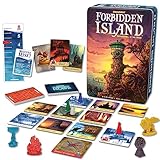
Overview: Forbidden Island, designed by Matt Leacock, is a foundational cooperative board game where 2-4 players race against time to recover four sacred treasures from a sinking island before it vanishes. Aimed at ages 10+, it emphasizes teamwork over competition, making it ideal for family game nights focused on shared problem-solving.
What Makes It Stand Out: Its innovative “sinking island” mechanic, where tiles are removed as the water level rises, creates constant, tangible tension. The richly illustrated board and distinct character roles with unique abilities foster meaningful collaboration and strategic depth, turning each play into a dynamic adventure that genuinely requires group coordination to succeed.
Value for Money: Priced accessibly, it offers exceptional replayability through variable island layouts and adjustable difficulty. Compared to similar strategy games, its durable components, compact size, and focus on pure cooperative fun provide outstanding value, especially for families seeking screen-free engagement.
Strengths and Weaknesses: Strengths: Highly accessible rules, strong replay value, excellent teamwork promotion, durable components, perfect for beginners to coop games. Weaknesses: Luck can heavily influence outcomes; limited strategic depth for hardcore gamers; water level tracker can feel punishing on higher difficulties.
Bottom Line: Forbidden Island remains a near-perfect entry point into cooperative gaming. Its engaging theme, manageable playtime, and emphasis on collective victory make it a must-have for families and casual gamers, justifying its enduring popularity and status as a modern classic.
2. Scorpion Masqué Sky Team | Voted Game of The Year 2024 | Best 2 Player Game | Work Together to Land The Plane | Ages 14+ | 20 Minutes

Overview: Sky Team, the 2024 Game of the Year, is an intensely focused two-player cooperative game where partners take on the roles of pilot and co-pilot racing to land a plane safely within 20 minutes. Designed for ages 14+, it simulates high-stakes cockpit coordination with remarkable tension.
What Makes It Stand Out: The brilliant dice-assignment mechanic forces players to plan silently during brief strategy phases, then execute critical actions under time pressure. Immersive components like the cockpit board and coffee cup token heighten the theme, while 20 unique airport scenarios and optional modules (like kerosene leaks) ensure immense variety and escalating challenge.
Value for Money: While premium-priced, Sky Team delivers exceptional value through its unparalleled two-player focus, incredible depth within a short runtime, and vast replayability via scenarios and modules. It justifies its cost as a niche masterpiece compared to broader but less intense coop games.
Strengths and Weaknesses: Strengths: Unmatched two-player synergy, brilliant tension and theme integration, high replayability, innovative mechanics, physically immersive components. Weaknesses: Very limited player count (only 2); steep learning curve for absolute beginners; high pressure may frustrate some; lacks solo mode.
Bottom Line: Sky Team is a groundbreaking, award-deserving experience for two. Its unique demand for silent trust and thrilling execution makes it an essential, premium purchase for couples or dedicated duos seeking the pinnacle of focused cooperative play.
3. Pandasaurus Cooperative Strategy Card Game - Fun Interactive Family Game for Ages 8+, 1-5 Players, 20 Minute Playtime
Overview: Pandasaurus’s “The Game” is a minimalist yet deeply strategic cooperative card game where 1-5 players work together to play all cards from two decks in ascending and descending sequences. Despite simple rules, it creates intense, brain-burning puzzles suitable for ages 8+.
What Makes It Stand Out: Its genius lies in severe restrictions: players can’t discuss specific cards and must play multiple cards per turn. This creates profound tension and forces non-verbal communication and deduction. With over 1.3 million copies sold and Spiel des Jahres recognition, its addictive, accessible-yet-challenging loop is globally proven.
Value for Money: Offering incredible depth for its low price point and tiny footprint, it provides staggering replayability through its core challenge and optional advanced rules. Compared to larger box games, it delivers exceptional strategic value and portability per dollar spent.
Strengths and Weaknesses: Strengths: Extremely portable, highly addictive gameplay, brilliant simplicity masking deep strategy, superb family/group interaction, award-winning design, excellent solo suitability. Weaknesses: Can induce frustration due to communication limits; limited physical components; replayability relies heavily on player skill growth.
Bottom Line: “The Game” is a near-flawless pocket-sized strategic gem. Its minimalist design, profound cooperative challenge, and universal appeal make it an outstanding value and a must-own for anyone seeking quick, deeply engaging mental puzzles.
4. Happy Camper - The Four Doors | Cooperative Game by Pandemic and Forbidden Island Creator | Perfect for Solo Play, Two Players, and Small Groups | Portable Adventure Game
Overview: Created by Matt Leacock (Pandemic, Forbidden Island) with Matthew Riddle and Ben Pinchback, Happy Camper: The Four Doors is a portable cooperative adventure for 1-5 players (ages 10+). Players explore a mystical light tower, seeking four treasures behind shifting doors before shadows seal them forever.
What Makes It Stand Out: It masterfully blends Leacock’s signature coop tension with a fresh exploration theme. The modular door system and shadow threat create dynamic, narrative-driven challenges within a remarkably compact travel box. Its robust solo mode is a standout feature, offering a complete, satisfying experience for one player.
Value for Money: Priced competitively for its niche, the game delivers excellent value through high portability, strong solo/coop versatility, and Leacock’s proven design pedigree. While smaller in scope than Forbidden Island, its focus on concise (30 min), replayable adventures justifies the cost for travel or quick sessions.
Strengths and Weaknesses: Strengths: Exceptional portability, top-tier solo mode, engaging thematic exploration, Leacock’s reliable coop mechanics, quick setup/play. Weaknesses: Lighter strategic depth than Pandemic/Forbidden Island; component quality slightly less premium; limited player interaction depth in larger groups.
Bottom Line: Happy Camper: The Four Doors is a superb, travel-ready cooperative puzzle. Its portability, strong solo play, and accessible adventure make it a highly recommended addition for fans of Leacock’s work or anyone needing a compact, satisfying coop experience on the go.
5. Flow: The Official Cooperative Board Game | Strategy Game for 1–4 Players Ages 8+ | Based on The Award-Winning Animated Film | Family & Solo Play | Survive The Flood, Rescue Allies
Overview: Flow translates the emotional animated film into a real-time cooperative strategy game for 1-4 players (ages 8+). Players navigate a dynamic, flooding world, rescuing allies and overcoming obstacles before rising waters cut off escape routes. It captures the film’s spirit while delivering tense, interactive gameplay.
What Makes It Stand Out: The standout “rising water” mechanic uses a modular board where water spreads each turn, forcing constant adaptation. Real-time decision pressure and the film’s poignant theme create a uniquely immersive, emotionally resonant experience. Eleven scenario cards and variable tiles ensure high replayability within its compact runtime.
Value for Money: Offering a rich thematic experience and strong solo/coop versatility at a mid-range price, Flow provides good value. Its unique real-time tension and emotional depth differentiate it from more abstract coop games, justifying the cost for families and film fans seeking narrative-driven play.
Strengths and Weaknesses: Strengths: Beautiful theme integration, dynamic and tense gameplay, excellent replayability via scenarios, accessible rules, strong emotional engagement, good solo suitability. Weaknesses: Real-time pressure may overwhelm younger players; component quality inconsistent; scenario variety less pronounced after multiple plays.
Bottom Line: Flow successfully bridges film and board game, delivering a visually appealing, emotionally charged cooperative adventure. Its innovative mechanics and strong replayability make it a worthwhile, engaging choice for families and fans seeking a thematic, strategy-lite cooperative challenge.
6. The Night Cage by Smirk and Dagger | Cooperative Candlelit Horror Strategy Game | Tile Laying Labyrinth Escape Adventure | for 1 to 5 Players | Ages 14+

Overview:
The Night Cage delivers a uniquely tense cooperative experience where players navigate a dynamically shifting labyrinth illuminated solely by a real candle. As the candle burns, light recedes behind you, swallowed by darkness while Wax Eaters stalk the unlit paths. The goal is to collect keys, find the gate, and escape before the maze collapses, demanding constant teamwork and adaptation.
What Makes It Stand Out:
Its groundbreaking candlelit mechanic creates unparalleled atmospheric tension—every flicker directly impacts visibility and strategy. The award-winning tile-laying system ensures no two games feel alike, while adjustable difficulty and an advanced mode with new threats significantly boost longevity. This isn’t just a game; it’s an immersive, sensory horror event.
Value for Money:
Priced competitively for its niche, it justifies cost through exceptional replayability (thanks to variable setups and difficulty tiers) and premium thematic execution. While pricier than standard board games, the included candle, high-quality tiles, and emotional depth offer far more engagement than comparable horror-themed alternatives.
Strengths and Weaknesses:
Strengths: Unmatched atmosphere; innovative light/dark mechanic; seamless teamwork emphasis; scalable challenge; award-winning design. Weaknesses: Candle setup adds time; dim lighting can frustrate readability; intense theme may not suit all groups; limited player count flexibility.
Bottom Line:
A must-try for horror and strategy enthusiasts seeking immersive, cooperative play. Its unique candle-driven tension and clever design make it worth the investment for memorable, high-stakes game nights.
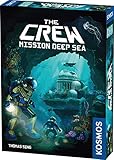
7. The Crew - Mission Deep Sea | Card Game | Cooperative | 2 to 5 Players | Ages 10+ | Trick-Taking | 32 Levels of Difficulty | Endless Replayability
Overview:
Mission Deep Sea refines the acclaimed trick-taking formula of its predecessor with an underwater adventure theme. Players collaborate across 32 escalating missions, aiming to win specific tricks under strict communication constraints—mimicking the challenges of deep-sea exploration. Limited signals force creative, strategic planning to succeed as a team.
What Makes It Stand Out:
It brilliantly reinvents classic card play with cooperative tension: players must deduce partners’ intentions through minimal cues while navigating mission-specific objectives. The 32 progressive levels expertly balance accessibility for beginners with deep strategic puzzles for veterans, all wrapped in a cohesive, thematic narrative.
Value for Money:
Exceptional value given its compact size and near-limitless replayability. The mission-based structure provides hours of evolving challenges without expansions, outperforming traditional trick-taking games that rely on static rules. Ideal for players seeking depth without complexity bloat.
Strengths and Weaknesses:
Strengths: Innovative cooperative twist on trick-taking; perfect difficulty curve; highly portable; strong thematic integration; superb replayability. Weaknesses: Communication limits may frustrate new players; mission progression requires completing earlier levels; less engaging as a standalone “party” game.
Bottom Line:
An essential addition for card game fans, offering ingenious cooperative strategy and remarkable depth. Its clever design and progressive challenges make it a standout value for both casual and serious gamers.
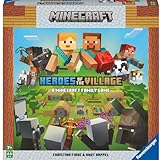
8. Ravensburger Minecraft Heroes of The Village | Cooperative Board Game | Exciting & Unpredictable | Perfect for Families and Minecraft Enthusiasts | Suitable for Kids & Adults
Overview:
This family-friendly cooperative game adapts Minecraft’s block-building charm into a tangible board experience. Players work together to defend a village from mobs by constructing walls and completing objectives using modular tiles and wooden blocks. Designed for ages 7+, it emphasizes teamwork over competition in a vibrant, ever-changing landscape.
What Makes It Stand Out:
Ravensburger’s signature quality shines through durable wooden components and authentically Minecraft-inspired art. The modular map ensures unpredictable gameplay each session, while the cooperative “build-to-protect” mechanic cleverly mirrors the video game’s core loop, fostering shared problem-solving.
Value for Money:
Excellent for its target audience. The robust components (25 wooden blocks, detailed tiles) justify the price point, offering far greater longevity than typical kids’ games. Families get a screen-free Minecraft fix that grows with players, outperforming cheaper, less durable alternatives.
Strengths and Weaknesses:
Strengths: High-quality, kid-safe components; faithful Minecraft aesthetic; strong replayability via modular setup; accessible rules; ideal for family bonding. Weaknesses: Strategy depth limited for older teens/adults; mob mechanics feel simplistic; setup can be time-consuming with young children.
Bottom Line:
A superb, stress-free family game that captures Minecraft’s spirit perfectly. Highly recommended for parents seeking cooperative, imaginative play for children aged 7+.
9. Peaceable Kingdom Race to the Treasure! Cooperative Path Building Game for 2 to 4 Kids Ages 5+

Overview:
Race to the Treasure! challenges young players (5+) to cooperatively build a path from start to finish before the Ogre reaches the treasure. Using colorful tiles, kids lay routes, collect keys, and strategize together—ensuring everyone wins or loses as a team in this award-winning introductory cooperative game.
What Makes It Stand Out:
Its pure, accessible cooperation eliminates competitive pressure for early learners. The no-reading-required design uses intuitive symbols, while the ever-present “Ogre timer” creates gentle urgency. Frustration-free packaging and quick playtime (15 mins) make it ideal for short attention spans.
Value for Money:
Outstanding for preschoolers. The compact box delivers durable components and immense replayability through random tile setups. At its price point, it surpasses同类 games in educational value (teaching planning and social skills) and award-winning reliability.
Strengths and Weaknesses:
Strengths: Perfect first cooperative game; builds critical thinking without stress; inclusive win/lose condition; durable parts; extremely easy to learn. Weaknesses: Limited challenge for ages 8+; path-building can feel luck-dependent; Ogre mechanic may scare very sensitive children.
Bottom Line:
An essential, award-winning starter game for young children. Its seamless blend of fun, learning, and true cooperation makes it a must-have for early family game nights.
10. The Lord of The Rings: Adventure to Mount Doom | Family Game | Cooperative Game | Strategy Game

Overview:
Players unite as Fellowship members in this cooperative journey to destroy the One Ring. Rolling dice and drawing event cards, teams navigate Middle-earth’s perils—evading Ringwraiths and overcoming obstacles—to reach Mount Doom within 50 minutes. Designed for 1-4 players, it distills Tolkien’s epic into a streamlined family strategy experience.
What Makes It Stand Out:
Strong thematic immersion through iconic locations, characters, and threats like Ringwraiths. The dice-and-card-driven mechanics balance simplicity with meaningful choices, while the shared objective fosters genuine fellowship. Solo playability adds versatility rare in licensed family games.
Value for Money:
Solid for Tolkien fans, though component quality is modest. It delivers focused, narrative-driven play lacking in many family strategy games, justifying cost through authentic atmosphere and replayability via variable setups. Less compelling for non-fans seeking deep mechanics.
Strengths and Weaknesses:
Strengths: Strong LOTR atmosphere; accessible rules for ages 8+; effective solo/co-op hybrid; tight 50-minute runtime; faithful to source material. Weaknesses: Card/dice reliance introduces luck; limited strategic depth; components lack premium feel; minimal replay incentive after mastering.
Bottom Line:
A charming, accessible gateway into Tolkien’s world for families and casual fans. Best recommended for LOTR enthusiasts seeking light cooperative play, but less essential for hardcore strategy gamers.
Why Cooperative Play Fosters Exceptional Problem-Solvers
The Psychology of Shared Objectives
When players unite against a common challenge presented by the game mechanics, a fundamental shift occurs. The “us vs. them” mentality replaces “me vs. you.” This reduces defensiveness and encourages vulnerability—players feel safer sharing incomplete ideas or admitting confusion, knowing the group’s success depends on collective input. This psychological safety is the bedrock of innovative problem-solving, allowing teams to explore unconventional solutions without fear of individual blame.
Moving Beyond Solo Brainpower
Real-world problems are rarely solved in isolation. Cooperative games mirror this reality by forcing players to integrate diverse perspectives. One person might spot a spatial pattern, another excels at resource management, while a third connects seemingly unrelated clues. The game demands that these individual strengths be synthesized into a cohesive strategy, teaching players that the best solutions often emerge from the intersection of different viewpoints, not just the loudest voice.
Embracing Productive Failure as a Learning Tool
In cooperative settings, failure isn’t a personal indictment; it’s valuable group data. When the team loses, the post-game analysis becomes crucial: “Where did our communication break down?” “Did we misallocate resources?” “What clue did we overlook?” This reframing turns setbacks into structured learning opportunities, fostering a growth mindset where analyzing why something didn’t work is as important as the solution itself. It builds resilience and iterative thinking.
Essential Mechanics That Build Critical Thinking Skills
Dynamic Information Sharing Requirements
Games that require players to hold unique, partial information—like only seeing certain cards or having restricted movement—force active communication protocols. Players must learn to articulate what they know clearly, ask precise questions to fill knowledge gaps, and synthesize fragmented data. This directly translates to real-world scenarios where team members possess specialized knowledge that must be effectively pooled to solve complex issues.
Resource Management Under Constraints
Scarcity is a powerful teacher. Many cooperative games impose strict limits on time, actions, tokens, or other resources. Players must constantly evaluate trade-offs: “Do we spend this action now to prevent an immediate threat, or save it for a larger objective later?” This hones prioritization skills, cost-benefit analysis, and the ability to make difficult decisions with incomplete information—core components of effective problem-solving in any field.
Evolving Challenges and Adaptive Strategy
Static problems are rare. The best cooperative games feature systems that dynamically respond to player actions (e.g., escalating threats, changing board states, or hidden variables). Players cannot rely on a single, pre-determined plan. They must continuously monitor the shifting landscape, anticipate consequences, and pivot strategies on the fly. This builds cognitive flexibility and the crucial ability to adapt thinking when initial approaches prove ineffective.
Balancing Short-Term Tactics and Long-Term Vision
Success often hinges on recognizing when to address an urgent, looming crisis versus investing in building towards a distant goal. Games that layer immediate threats with longer-term objectives train players to assess risk versus reward in real-time. This develops strategic foresight and the discipline to sometimes delay gratification for a more significant collective payoff, a vital skill in project management and complex problem-solving.
The Crucial Role of Time Pressure
Many cooperative experiences incorporate time limits—whether literal sand timers or game mechanics that escalate threats each round. This simulates the real-world pressure of deadlines and urgent situations. Players learn to make sound decisions efficiently, filter out noise, focus on high-impact actions, and communicate concisely under stress, all essential for effective problem-solving in dynamic environments.
Selecting the Right Game for Your Group’s Development
Matching Complexity to Cognitive Readiness
Choosing a game significantly beyond a group’s current capacity leads to frustration, not growth. Consider the cognitive load: How many rules must be mastered? How abstract are the concepts? Start with mechanics that challenge but don’t overwhelm, allowing foundational skills like clear communication and basic planning to solidify before introducing layers of complexity like hidden traitors or intricate resource chains. Gradual progression is key to sustained engagement and skill building.
Considering Group Size and Dynamics
Not all cooperative games scale equally well. A game designed for 3-4 players might become unwieldy or encourage “alpha player” syndrome with 6 participants, where one person dominates decision-making. Conversely, a game needing 5+ players loses its collaborative intensity with only two. Assess your typical group size and dynamics—do you need mechanics that ensure equal participation, or can your group self-regulate effectively? The right fit prevents disengagement.
Aligning Themes with Engagement and Relevance
While mechanics drive skill development, theme is the hook. A group fascinated by scientific discovery will engage more deeply with a game involving lab experiments than one set in medieval politics. Relevance matters too; educators might choose themes subtly reflecting classroom subjects. High engagement driven by a compelling narrative or relatable scenario makes players more willing to persist through challenging problem-solving phases.
Maximizing the Educational Impact During Gameplay
Facilitating, Not Directing: The Role of the Guide
Whether a teacher, parent, or experienced player, the facilitator’s role is pivotal. Instead of providing answers, ask open-ended questions: “What do you think the consequence of that action might be?” “How could we use this resource differently?” “What’s our biggest risk right now?” This Socratic approach guides the group to discover solutions themselves, deepening understanding and ownership of the problem-solving process.
Structuring Effective Debriefs After Play
The real learning often crystallizes after the game ends. Dedicate time for a structured reflection: “What strategy worked best?” “Where did communication break down?” “If we played again, what’s one thing we’d do differently?” Encourage specific examples from the game session. This metacognition—thinking about how they thought—cements the transfer of skills from the game board to real-world applications.
Identifying and Addressing “Alpha Player” Tendencies
It’s common for one dominant personality to take over. Counter this by implementing game rules that mandate轮流 decision-making (e.g., “The youngest player decides this round’s first action”) or by using physical tools like a “talking stick” for discussion phases. Explicitly praise instances where quieter members contributed key ideas. Ensuring equitable participation is non-negotiable for developing truly collaborative problem-solving.
Connecting Game Lessons to Real-World Scenarios
Bridge the gap between the game and life. After escaping a virtual island, discuss: “How is figuring out the water pump like troubleshooting a problem in our science lab?” or “When have we faced a team challenge at work that needed this kind of step-by-step planning?” Making these explicit connections helps players recognize and apply the developed skills beyond the play session.
Integrating Games into Broader Learning Frameworks
Don’t treat cooperative gaming as a standalone activity. Weave it into curricula or team development programs. Use a game focused on resource allocation to precede a lesson on budgeting. Follow a communication-heavy game with training on active listening techniques. This integration reinforces concepts and demonstrates the practical utility of the skills being honed through play.
Sustaining Long-Term Skill Development Through Play
Planning for Progressive Challenge
Just as athletes increase weights, problem-solving skills need graduated challenges. Once a group masters a game’s core mechanics, introduce variants, increase difficulty settings, or move to more complex systems. This continuous “stretch zone” prevents plateauing and ensures skills like strategic depth and handling ambiguity keep developing over time.
Encouraging Player-Led Analysis and Rule Innovation
As groups gain experience, empower them to analyze why certain strategies succeed or fail within the game’s framework. Challenge them to propose balanced rule modifications for greater difficulty or to address perceived flaws. This meta-level engagement deepens systems thinking and understanding of game design principles, which are directly analogous to understanding complex real-world systems.
Fostering a Culture of Reflective Practice
Make reflection a habitual part of the gaming ritual. Use quick, consistent prompts: “One thing I learned about our teamwork today…” or “My biggest contribution to solving the problem was…”. Over time, this cultivates a group norm where analyzing processes and seeking improvement becomes second nature, extending the problem-solving mindset far beyond the game table.
Frequently Asked Questions
How young is too young for cooperative board games?
Most entry-level cooperative games are designed for ages 5-7 and up. Look for games with simple rules, physical components (like placing tiles), and short playtimes (10-15 minutes). The key is shared decision-making without complex reading or abstract strategy. Younger children can participate meaningfully with adult guidance focusing on taking turns and discussing simple choices.
Can cooperative games work effectively with large groups, like a whole classroom?
Yes, but careful selection is crucial. Games specifically designed for 6+ players or those using team-based structures work best. Avoid games prone to “analysis paralysis” with many players. Consider splitting very large groups (e.g., 30 students) into smaller teams, each playing the same game, then facilitating a larger discussion comparing strategies and challenges faced by each team.
How do I prevent one person from dominating all the decisions?
Implement structured discussion rules: use a timer for individual input, require unanimous agreement on major actions, or assign rotating “speaker” roles. Choose games with mechanics that inherently distribute agency, like each player having unique abilities essential for victory. Explicitly praise contributions from quieter members to encourage broader participation.
Are there cooperative games suitable for professional team building?
Absolutely. Many modern cooperative games feature themes and mechanics relevant to workplace challenges: resource allocation, crisis management, communication under pressure, and strategic planning. Look for games with moderate complexity (30-60 minute playtime) that avoid childish themes. The shared challenge and structured debrief are powerful tools for improving real team dynamics.
How much time should we dedicate to playing and debriefing?
Aim for 45-90 minutes total per session, depending on the game’s length. Crucially, allocate 10-20% of the total time specifically for structured debriefing. Rushing this reflection phase significantly reduces the learning transfer. Even a 5-minute focused discussion (“What’s one communication tactic we used well?”) is valuable.
What if the group keeps losing? Won’t that be discouraging?
Frequent losses can be motivating if framed correctly! Focus the debrief on what was learned from the loss, not the loss itself. Start with easier difficulty levels or games with adjustable challenge. Celebrate small successes within the loss (“Great job communicating that threat!”). Persistence after setbacks is a critical problem-solving skill being practiced.
How do cooperative games differ from competitive games for teaching problem-solving?
Competitive games primarily teach individual strategic thinking and opponent analysis. Cooperative games uniquely emphasize collaborative strategy, shared information synthesis, managing group dynamics, and collective decision-making under pressure—skills vital for most real-world problem-solving scenarios which involve teamwork.
Can these games help children with social or communication challenges?
Many therapists and educators use cooperative games effectively. The shared goal reduces social pressure compared to competitive settings. Structured turns and clear objectives provide a safe framework for practicing communication, turn-taking, and emotional regulation. Choose games with lower sensory demands and clear, concrete goals initially.
How do I explain the value of “just playing a game” to skeptical parents or administrators?
Focus on the specific, transferable skills: “This game requires them to analyze limited information, communicate plans clearly under time pressure, and adapt strategies when things change—directly building critical thinking and teamwork skills measured in [relevant standard/curriculum goal].” Share brief observations of skill application during play.
Are digital cooperative games as effective as physical board games?
While digital co-ops offer convenience, physical board games generally provide superior tactile engagement and shared spatial awareness, fostering richer non-verbal communication (pointing, leaning in) and reducing distractions. The physical act of manipulating components together enhances the collaborative, embodied learning experience crucial for deep skill development.
See Also
- 10 Best Cooperative Board Games for Teaching Teamwork in 2026
- 10 Best Cooperative Board Games for Building Teamwork Skills in 2026
- 10 Best Cooperative Board Games for Building Communication Skills in 2026
- 10 Most Durable Cooperative Board Games Based on Real User Reviews in 2026
- 10 Best Cooperative Board Games for Team-Building with the Whole Family in 2026