Table of Contents
Watching kids struggle with math worksheets can feel like trying to fill a leaky bucket—frustrating and endlessly repetitive. Many parents and educators have seen the glazed-over eyes and heard the dreaded “I hate math!” sighs that turn learning into a battle. But what if math practice could spark genuine excitement instead of resistance? The secret lies in transforming abstract numbers into tangible, playful experiences where mistakes feel like part of the adventure, not failures. Board games offer this magic by wrapping core math concepts in laughter, strategy, and shared moments, making the learning almost invisible.
Imagine a living room where counting, adding, or even early algebra feels like cracking a secret code within a captivating story—not another chore on the homework list. Modern math board games do precisely this, leveraging competition, cooperation, and clever design to build numerical confidence without flashcards or drills. As we move into 2026, the focus has shifted even more toward adaptable, screen-free tools that grow with a child’s evolving skills while nurturing critical thinking beyond mere calculation. Choosing the right game isn’t about finding a “best” title; it’s about matching mechanics to your child’s unique learning style, age, and the specific math hurdles they face. Let’s explore how to find that perfect fit.
Top 10 Math Board Games for Kids
Detailed Product Reviews
1. Number Hunter Math Board Game – Addition & Subtraction Games for Kids Ages 4-8 – Fun Educational STEM Game for Kindergarten, 1st-3rd Grade, Homeschool & Family Game Night

Overview: Number Hunter transforms foundational math into an engaging board game adventure for children aged 4-8. Designed for kindergarten through 3rd grade, it replaces worksheets with interactive play, focusing on addition, subtraction, and number recognition during family game nights or classroom use. Its screen-free approach aims to build math confidence through hands-on problem-solving. What Makes It Stand Out: The game’s standout feature is its seamless blend of simple mechanics—rolling dice, solving problems, and moving tokens—with genuine educational value. It excels in making repetitive math practice feel like a race, keeping young learners motivated. The durable, non-toxic components ensure safety and longevity, while its broad age range (4-8) accommodates varying skill levels, making it ideal for mixed-age play. Value for Money: Priced competitively for a complete, high-quality STEM game, it offers excellent value by serving multiple purposes: homeschooling tool, classroom supplement, and family entertainment. Compared to digital apps or flashcards, its physical engagement provides deeper retention without screen time, justifying the investment for parents seeking sustainable learning aids. Strengths and Weaknesses: Strengths: Intuitive rules, strong durability, inclusive for early learners, and effectively masks learning within fun. Weaknesses: Limited challenge for advanced 3rd graders; replay value may wane once core skills are mastered. Artwork is functional but not exceptionally vibrant. Bottom Line: Highly recommended for parents and teachers introducing math concepts to K-2 students. It’s a joyful, screen-free tool that builds foundational skills—ideal for gifting or enriching home learning, though older kids might outgrow it quickly.
2. Learning Resources Math Island Addition & Subtraction Game - Math Manipulatives, Educational Board Toys, Classroom Flash Cards , Volcano Toy, STEM Kids, Gifts for Boys And Girls , Montessori
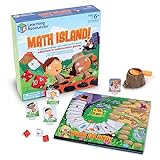
Overview: Math Island immerses children in a volcanic adventure where solving addition and subtraction problems propels players across the board. Targeted at ages 6+, it uses dynamic components like a volcano popper to turn math drills into an exhilarating group activity for 2–4 players, perfect for classrooms or family game nights. What Makes It Stand Out: The innovative volcano popper—launching dice when triggered—is a game-changer, injecting surprise and physical engagement that sustains attention far beyond static board games. Coupled with dual 10-sided dice and an operation die, it generates diverse equations, fostering adaptable mental math skills through unpredictable challenges. Value for Money: As a classroom-ready kit with robust, colorful components (game board, character pieces, popper mechanism), it outperforms cheaper paper-based alternatives in longevity and engagement. Its multi-player design makes it cost-effective for educators, while the thrilling mechanics ensure repeated use, justifying a mid-range price point. Strengths and Weaknesses: Strengths: Exceptional replay value via the popper mechanic, builds math fluency organically, and suits mixed-age groups. Weaknesses: The popper mechanism can occasionally jam; younger players (under 6) may struggle with complexity. Setup requires more space than compact alternatives. Bottom Line: A top-tier choice for educators and families seeking an adrenaline-fueled math experience. Its unique volcano feature elevates it above standard board games, making it a worthwhile investment for building confidence in 1st–3rd graders.
3. SkilLify Math Board Games for Kids with Dice Poppers, Math Manipulatives Kindergarten Preschool Math Games Counters Toys, Addition and Subtraction Dice Games Homeschool Supplies Classroom Must Haves
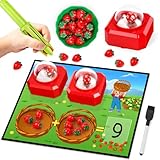
Overview: SkilLify offers a tactile math station focused on addition via dice poppers and strawberry counters. Children create equations, place physical counters on a dry-erase board, and solve problems through hands-on manipulation. Tailored for preschool to 3rd grade, it bridges concrete learning with abstract thinking in a reusable format. What Makes It Stand Out: The integration of fine motor skill development—using tongs to place strawberries—sets it apart, adding sensory engagement rarely seen in math games. The dry-erase board enables infinite problem variations, while the strawberry theme makes counting visually appealing and relatable for young learners. Value for Money: At a moderate price, it delivers exceptional versatility as a standalone learning center. Unlike single-use worksheets or digital apps, its reusable design supports endless practice sessions. For homeschoolers or teachers needing durable manipulatives, it’s more economical long-term than disposable resources. Strengths and Weaknesses: Strengths: Builds fine motor skills, highly adaptable for different abilities, and encourages independent play. Weaknesses: Subtraction practice is less emphasized; strawberries may clutter the board during complex problems. Storage isn’t included, risking lost pieces. Bottom Line: Ideal for kinesthetic learners and classrooms prioritizing hands-on exploration. While narrow in scope (primarily addition), its multi-sensory approach makes it a practical, engaging tool for foundational math—best paired with complementary subtraction resources.
4. Nicecho Shut The Box Dice Game,2-4 Player Family Wooden Board Table Math Games for Adults and Kids, 8 Dices Classics Games for Classroom,Home,Party or Pub

Overview: Nicecho’s Shut the Box reimagines the classic pub game as a multi-generational math challenge. Players flip numbered tiles by matching dice sums, blending strategy with arithmetic for ages 8+. Its wooden board and quiet felt surface suit homes, classrooms, or social gatherings, emphasizing mental math across addition, subtraction, and probability. What Makes It Stand Out: Unlike kids-only competitors, this game uniquely bridges age gaps—equally compelling for children mastering basic operations and adults sharpening mental agility. The premium solid pinewood construction and acrylic dice ensure durability, while portable size (8.74”) enables play anywhere, from picnics to pubs. Value for Money: As a timeless, screen-free game with heirloom-quality materials, it offers unmatched longevity per dollar. While pricier than paper-based kits, its cross-generational appeal means one purchase serves the whole family for years—outperforming single-demographic math games in versatility and replayability. Strengths and Weaknesses: Strengths: Elegant design, silent play surface, fosters advanced strategic thinking, and suitable for 2–4 players of all ages. Weaknesses: Rules may overwhelm very young children (under 8); limited explicit subtraction/multiplication practice beyond basic sums. Bottom Line: A superb investment for families seeking a sophisticated yet accessible math game. Its seamless blend of education and entertainment makes it a standout for game nights, though preschoolers will need simplified rules to participate fully.
5. Kasfalci Math Board Games for Kids with Dice Poppers,Math Manipulatives,Dice Games,Addition Subtraction Games,Math Counters,Counting Toys,Fine Motor Toys,Kindergarten Classroom Homeschool Supplies

Overview: Kasfalci’s kit mirrors SkilLify’s concept (Product 3) but refines it for focused addition practice up to 24. Using dice poppers, strawberries, and a dry-erase board, it guides children through creating problems, counting manipulatives, and recording answers—ideal for preschool to 2nd grade homeschool or classroom use. What Makes It Stand Out: The emphasis on sums ≤24 provides clearer scaffolding for early learners than open-ended alternatives, reducing frustration. The tongs and bowl specifically target fine motor development alongside math, creating dual-skill reinforcement. Its streamlined instructions make it beginner-friendly for both kids and parents. Value for Money: Competitively priced as a complete, ready-to-play set, it eliminates the need for supplemental materials. For teachers needing individual math stations, its reusability and low storage footprint offer better classroom ROI than disposable worksheets or digital subscriptions requiring devices. Strengths and Weaknesses: Strengths: Perfectly paced for beginners, strong fine motor integration, and effortless cleanup. Weaknesses: Near-identical to SkilLify (Product 3) with no significant innovation; subtraction is underdeveloped. Strawberries lack variety for advanced counting. Bottom Line: A reliable, user-friendly option for foundational addition—but nearly redundant if owning Product 3. Recommended only for those prioritizing its slightly clearer structure for absolute beginners; otherwise, choose SkilLify for marginally broader utility.
6. University Games, Scholastic Math Match Travel Dice Game, Mathematics Reinforcement Game for Kids, for 2 or More Players Ages 5 and Up

Overview: This compact dice and card game leverages Scholastic’s educational expertise to reinforce foundational math skills through quick, portable gameplay. Designed for children aged 5–12, it transforms mental arithmetic practice into an accessible travel-friendly activity that fits seamlessly into daily routines.
What Makes It Stand Out: Scholastic’s endorsement guarantees curriculum-aligned learning, while the unique solo/competitive dual-mode flexibility caters to varied settings—ideal for homeschooling, classrooms, or on-the-go practice. Its beginner-friendly approach simplifies addition, subtraction, multiplication, and division without overwhelming young learners.
Value for Money: Priced modestly for its educational value, it outperforms generic flashcards by adding gameplay excitement. Though simpler than advanced math tools, its durability and Scholastic-backed quality justify the cost for early learners seeking engaging reinforcement.
Strengths and Weaknesses: Strengths: Exceptional age-range inclusivity (5–12), solo-play option for shy learners, travel-ready design, and trusted educational alignment. Weaknesses: Limited depth for older children; multiplication/division practice feels underdeveloped compared to core addition/subtraction focus.
Bottom Line: A superb introductory math tool for building confidence in young learners. Highly recommended for parents and educators seeking a versatile, no-fuss game to make foundational math practice enjoyable anywhere.
7. Learning Resources Sum Swamp Game Addition & Subtraction Board Game - Educational Homeschool, Elementary Math Classroom Must Haves, Kindergarten, Gifts for Kids, Numbers for Boys and Girls
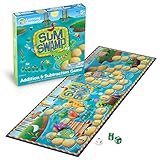
Overview: Sum Swamp immerses K–1 students in a vibrant swamp-themed board game where players navigate critter-filled paths by solving addition and subtraction problems. It turns abstract math concepts into tangible, joyful learning through playful exploration.
What Makes It Stand Out: The seamless blend of curriculum-aligned math practice with high-engagement gameplay stands out—children master even/odd numbers, addition, and subtraction without realizing they’re learning. Its durable, visually rich board and chunky game pieces withstand repeated classroom or family use.
Value for Money: Excellent for its price point, replacing monotonous worksheets with 15–20 minute sessions that foster genuine enthusiasm. While lacking advanced operations, it’s a classroom staple that delivers superior ROI compared to cheaper, less durable alternatives.
Strengths and Weaknesses: Strengths: Perfect pacing for young learners, exceptional build quality, effective reinforcement of core K–1 math skills, and strong family bonding potential. Weaknesses: Narrow age focus (best for ages 5–7); limited replayability for older or advanced students.
Bottom Line: An essential, award-worthy investment for kindergarten educators and parents. It transforms early math practice into pure fun, making it a top-tier choice for foundational skill development.
8. Mathemagical World - Addition & Subtraction Math Board Game for Kids, 2-4 players, Ages 5+ and Perfect for Homeschool, Kindergarten, Pre-k, and Gifted & Talented Prep
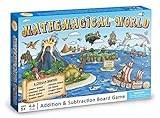
Overview: This imaginative game transports players across eight themed “magic islands” (like Unicorn Island and Dinosaur Island) where math challenges unlock adventures. Tailored for ages 5+, it reinforces addition, subtraction, doubling, and halving through dynamic, theme-driven play.
What Makes It Stand Out: The eight distinct worlds and dual difficulty levels create unmatched variety, while its explicit OLSAT/COGAT test-prep focus caters to gifted learners—a rare niche. Thematic diversity sustains engagement far longer than generic math games.
Value for Money: Justified by its specialized test-prep utility and exceptional replay value from multiple islands. Though pricier than basic board games, it’s cost-effective for parents targeting advanced cognitive development in pre-K/K.
Strengths and Weaknesses: Strengths: Outstanding theme variety, gifted-program preparation, adaptive difficulty for mixed-skill groups, and strong inclusivity. Weaknesses: Setup complexity may frustrate young solo players; weaker instruction clarity for parents unfamiliar with gifted assessments.
Bottom Line: A standout for parents seeking to challenge advanced learners or prepare for gifted programs. Prioritize this if thematic depth and cognitive stretching outweigh ultra-simplicity needs.
9. Number Park - Addition & Subtraction Math Games for Kids Ages 5-8 - Fun Educational Learning Game - Board Games for Kindergarten & Up - Gift

Overview: Children “skate” through a colorful amusement park board solving math problems via flash cards, blending physical movement with core arithmetic practice. Designed by an elementary teacher, it targets ages 5–8 with bilingual (English/Spanish) support.
What Makes It Stand Out: The amusement park theme and skateboard pieces create instant relatability, while the teacher-crafted design ensures pedagogical soundness. Its inclusivity shines—adaptable rules accommodate diverse skill levels, and bilingual instructions broaden accessibility.
Value for Money: Highly competitive given the 78-card deck, bilingual manual, and durable components. It outperforms flashcards by fostering confidence through play, though overlap with similar games requires assessing your child’s specific engagement preferences.
Strengths and Weaknesses: Strengths: Exceptional inclusivity for varying math levels, strong confidence-building focus, bilingual utility, and vibrant theme. Weaknesses: Park theme may feel less novel than fantasy alternatives; card storage isn’t optimized for travel.
Bottom Line: A joyful, confidence-boosting choice for homeschoolers and classrooms. Ideal for nurturing a love of math in reluctant learners through imaginative, skill-adaptive play.
10. Proof! Math Game - The Fast Paced Game of Mental Math Magic - Teachers’ Choice Award Winning Educational Fun, Ages 9+
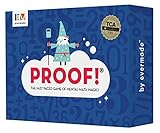
Overview: Proof! challenges players to spot hidden equations in a 9-card grid, racing to shout answers using addition, subtraction, multiplication, division, and square roots. This Teachers’ Choice Gold Award winner sharpens mental math agility for ages 9–109 in intense 15-minute rounds.
What Makes It Stand Out: Its lightning-fast pace and multi-operation depth (including roots) set it apart, while the 100-card deck—optimized for playability—ensures smooth gameplay. Solo and adaptive rules extend its lifespan across skill levels.
Value for Money: Premium quality justifies the price for serious math practice. Unlike age-limited competitors, its scalability (9–109) offers lifelong replayability, outperforming single-grade-focused alternatives.
Strengths and Weaknesses: Strengths: Unmatched mental math intensity, exceptional adaptability, award-winning credibility, and quick session times. Weaknesses: Exclusion of prime/large numbers limits advanced algebra prep; younger players (9–10) may need rule simplification.
Bottom Line: The definitive mental math trainer for families and classrooms seeking fast, challenging fun. A must-buy for fostering quick-thinking math proficiency beyond basic arithmetic.
Understanding Developmental Stages and Math Readiness
Matching Games to Cognitive Milestones
Children absorb mathematical concepts differently at each stage. Preschoolers thrive on tactile counting and pattern recognition through simple matching or sorting mechanics, while early elementary learners benefit from games incorporating addition, subtraction, and basic money management. Older kids (8+) are ready for strategic layers involving multiplication, division, probability, or spatial reasoning. Choosing a game significantly below or above their current cognitive level leads to disengagement—either boredom from oversimplification or frustration from overwhelming complexity.
Recognizing Early Numeracy Signs
Before diving into structured gameplay, observe your child’s natural numeracy cues. Do they count objects spontaneously? Show interest in comparing sizes (“more cookies!”)? Notice symmetrical patterns? Games introducing one-step operations suit kids who reliably count to 20, while those still grasping one-to-one correspondence need physical manipulatives like tokens or dice they can touch and move. Ignoring these subtle readiness signals often turns promising game sessions into power struggles.
Core Math Skills Translated Through Gameplay
Building Number Sense and Fluency
Effective games move beyond rote memorization, helping kids develop an intuitive “feel” for numbers. Look for mechanics where players estimate quantities, compare values rapidly, or decompose numbers (e.g., realizing 8 can be 5+3 or 4+4). Tile-placement or resource-management games excel here, as they require constant mental adjustment of quantities without relying on written equations, building flexible thinking crucial for advanced math.
Mastering Operations Through Application
Abstract symbols (+, -, ×, ÷) become meaningful when tied to concrete actions. Games embedding operations within a purpose—like calculating resources to build a structure or determining movement spaces—help kids see math as a tool, not just an exercise. Avoid games where operations feel tacked on (e.g., “solve this card to move”); instead, prioritize those where calculating is inherently strategic to winning or progressing.
Developing Spatial Reasoning and Geometry
Many foundational math concepts rely on spatial understanding. Games involving area control, grid movement, shape manipulation, or 3D construction strengthen skills like visualization, symmetry recognition, and coordinate mapping. These aren’t just “geometry games”—they build the spatial intelligence underpinning everything from algebra to engineering, often through intuitive play rather than explicit instruction.
Essential Game Design Elements for Math Learning
Physical Components That Teach
High-quality components aren’t just about durability—they’re learning tools. Chunky, easy-to-handle tokens aid fine motor skills and counting accuracy for young children. Transparent overlays for grids, fraction circles, or customizable boards allow experimentation without permanent errors. Avoid games with tiny, confusing pieces or excessive text; the math should be accessible through manipulation, not reading dense rules mid-calculation.
Clear Visual Scaffolding
Strong visual design guides mathematical thinking. Color-coding sets, number lines built into boards, or graduated token sizes provide immediate feedback, helping kids self-correct. For example, a game using differently sized bars to represent fractions lets players see that 1/2 equals 2/4 without abstract symbols. Prioritize games where the visual layout reinforces the concept, reducing reliance on adult explanation.
Meaningful Decision-Making
The best math games embed calculations within genuine choices. Instead of “roll and move,” seek mechanics where players weigh options: “Should I take 3 small tokens now or wait for 5 larger ones?” This builds strategic thinking alongside arithmetic. Avoid games reducing math to a gatekeeper (solve correctly to proceed); math should be the path to strategy, not just a hurdle.
Evaluating Play Experience and Longevity
Replayability Through Variable Setup
A game played once loses its value. Look for randomized elements—shuffled cards, modular boards, or adjustable objectives—that create fresh challenges each time. This variability reinforces math skills through repeated, contextualized practice without monotony. Games with fixed paths quickly become predictable, shifting focus from learning to memorization.
Cooperative vs. Competitive Dynamics
Consider your child’s temperament. Highly competitive games can motivate some kids but induce anxiety in others, especially those struggling with math. Cooperative games—where players work together against the game itself—reduce pressure, encourage discussion of strategies, and normalize “wrong” guesses as learning opportunities. Some games offer both modes, providing flexibility as skills grow.
Scalable Difficulty for Growing Skills
The ideal game evolves with your child. Check for built-in adjustment levers: alternative rule sets for different ages, optional advanced challenges, or component upgrades (like switching from counting to multiplication cards). Games requiring completely different purchases as skills advance offer poor long-term value. True scalability means one box serves multiple developmental stages.
Practical Considerations for Busy Families
Time Commitment Per Session
Realistically assess your family’s schedule. Games requiring 45+ minutes of intense focus rarely get played consistently with younger kids. For ages 3-6, aim for 10-15 minute sessions; 7-10 year olds handle 20-30 minutes. Longer games work best as weekend activities. If setup takes longer than playtime, it won’t become a regular tool—prioritize “out-of-box” readiness.
Storage and Component Management
Clutter kills engagement. Games with trays for sorting pieces, magnetic boards, or compact storage solutions see more play. For large families or classrooms, consider durability: thick cardboard resists chew marks, and non-removable parts prevent lost pieces. A brilliant game abandoned in a drawer because tokens scatter everywhere fails its educational purpose.
Budget-Friendly Value Assessment
Math games range widely in price. Evaluate cost per use: a $40 game played weekly for two years offers better value than a $20 game played once. Avoid gimmicky “math” branding that inflates prices without deeper mechanics. Sometimes simpler, classic strategy games (adapted with math-focused house rules) deliver equivalent learning at lower cost.
Maximizing Educational Impact During Play
Strategic Questioning Techniques
Your role isn’t to correct answers but to guide thinking. Ask open-ended questions: “How did you figure that out?” or “What would happen if you tried X?” instead of “That’s wrong.” This shifts focus from right/wrong to process, building metacognition. Resist solving problems for them—pause the game if needed to let thinking unfold.
Connecting Gameplay to Real-World Math
Bridge the gap between board and life. After a game involving resource trading, discuss grocery budgets. If spatial reasoning features, point out similar concepts in building blocks or room arrangement. These connections solidify abstract concepts by showing math’s relevance beyond the game board, answering the silent “Why do I need this?”
Frequently Asked Questions
Frequently Asked Questions
What’s the earliest age to introduce math board games?
Preschoolers (ages 3-5) can start with simple matching, counting, or sorting games using large, durable pieces. Focus on verbalizing numbers and comparisons during play (“You have more blue tokens than me!”) rather than formal rules.
Are math board games better than digital apps for learning?
They offer distinct benefits: tactile manipulation strengthens neural pathways differently than screens, and face-to-face interaction builds communication skills. Games also avoid screen-time concerns while providing shared family engagement that apps can’t replicate.
How long should a math game session last for a 6-year-old?
Aim for 15-20 minutes. Young children’s attention spans are short; stopping while they’re still engaged prevents burnout and builds anticipation for next time. You can gradually extend play as focus improves.
Can I modify game rules to suit my child’s math level?
Absolutely—and this is highly encouraged. Simplify operations, remove complex rules, or add custom challenges. The goal is meaningful practice, not rigid adherence to instructions. Many games include official variant rules for this purpose.
What if my child gets frustrated and gives up during gameplay?
Pause immediately. Normalize struggle: “Math can be tricky! Let’s figure this step together.” Offer choices (“Do you want to try again or switch roles?”) and avoid pushing through tears. Resilience builds slowly through supported challenges.
How many players work best for math skill development?
Smaller groups (2-4 players) maximize individual thinking time. In large groups, children disengage during long waits. Cooperative games handle larger groups better by keeping all players involved in collective problem-solving.
Are there math games suitable for children with learning differences?
Yes. Look for games emphasizing visual or tactile learning over verbal rules, with adjustable pacing. Many modern games include neurodiversity-friendly features like colorblind modes, reduced sensory overload, and clear turn structures.
Should math games replace traditional homework practice?
No—they complement it. Games build conceptual understanding and positive associations, while worksheets may reinforce procedural fluency. Use games for engagement and foundational work, not as sole practice for standardized test formats.
What’s a reasonable budget for a quality math board game?
Expect $20-$40 for well-designed, durable games offering significant replay value. Avoid extremely cheap sets with flimsy components, but also skip overpriced “educational” branding—strong mechanics matter more than labels.
Why choose offline board games over math-focused video games?
Board games foster social interaction, reduce passive screen exposure, and engage physical manipulation skills critical for young brains. They also allow organic discussion and adult scaffolding impossible in solitary digital play, building deeper conceptual understanding.
See Also
- Top 10 Math Board Games That Make Learning Fun for Kids in 2026
- 10 Essential Math Board Games for Kids Every Parent Needs in 2026
- The Ultimate Guide to Educational Board Games That Make Learning Fun for Kids
- 10 Game-Changing Math Board Games for Kids in 2026
- The 10 Most Revolutionary Math Board Games for Kids of 2026