Table of Contents
If you’ve ever felt the rush of cracking a cipher seconds before the clock runs out or the satisfaction of watching a complex puzzle finally click into place, you know escape rooms offer a unique blend of tension and teamwork. That same adrenaline-fueled collaboration is exactly what makes cooperative board games so compelling for puzzle enthusiasts. Rather than competing against each other, players unite against the game itself, pooling their mental resources to unravel mysteries, decode patterns, and overcome seemingly impossible challenges.
The landscape of cooperative tabletop gaming has evolved dramatically, with designers creating increasingly sophisticated experiences that capture the essence of escape rooms while offering something fresh. These games deliver narrative depth, mechanical ingenuity, and that crucial sense of shared victory—all from the comfort of your dining room table. Whether you’re looking to recreate that escape room magic between visits or seeking to build a permanent collection of brain-burning adventures, understanding what to look for will transform your game nights into unforgettable collaborative journeys.
Top 10 Cooperative Board Games for Escape Room
Detailed Product Reviews
1. Clue Board Game Treachery at Tudor Mansion, Escape Room Game, Cooperative Family Murder Mystery Games, Ages 10 and up, 1-6 Players
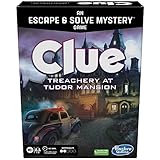
Overview: Clue Treachery at Tudor Mansion reimagines the classic whodunit as a cinematic escape room experience. Designed for 1-6 players ages ten and up, this cooperative game transforms the familiar mansion investigation into a race against time. Players must escape before police arrive, then solve the murder through collaborative deduction. The game maintains Clue’s iconic character roster while introducing puzzle-driven gameplay that unfolds across a single 90-minute session.
What Makes It Stand Out: The dynamic gameboard physically evolves as you play, with rooms and clues revealing themselves through clever puzzle-solving. This tactile progression creates genuine suspense absent in traditional Clue. The one-time solve format means every component can be used destructively, allowing for innovative puzzle designs like hidden messages and layered components. The cooperative structure eliminates player elimination, keeping everyone engaged until the final revelation.
Value for Money: At approximately $30-35, it delivers a premium group activity comparable to an actual escape room visit. While single-use nature limits replayability, the experience justifies the cost for a memorable game night. Split among six players, the per-person entertainment value exceeds most board game purchases. However, collectors may balk at the disposable design.
Strengths and Weaknesses: Strengths include immersive storytelling, clever integration of classic Clue elements, and accessible difficulty scaling. The physical puzzle components feel substantial and satisfying. Weaknesses stem from its one-and-done nature—you’ll need to gift or recycle it afterward. Some puzzles rely heavily on visual perception, potentially frustrating players with different cognitive styles.
Bottom Line: An excellent evolution of Clue that sacrifices replayability for narrative impact. Perfect for families and friend groups seeking a memorable, cooperative mystery experience without committing to a campaign. Just don’t get attached to keeping it on your shelf.
2. EXIT: The Game - Family - 2 Escape Adventures, at-Home Escape Room, Co-Operative Game, Family Activity, Brainteasers, 2-4 Players

Overview: EXIT: The Game Family Edition packages two distinct escape room adventures into one compact box, offering exceptional variety for at-home puzzle solving. Designed for 2-4 players, this entry targets families with children, bridging the gap between kids’ versions and complex adult EXIT titles. Each story—Meanstone Manor and Candy Castle—provides a self-contained, 45-60 minute experience where players physically manipulate components to progress.
What Makes It Stand Out: The family-friendly focus shines through clever puzzle design that encourages teamwork without overwhelming younger participants. The requirement to rip, fold, and alter components creates a uniquely tactile experience that digital alternatives can’t replicate. Two complete adventures double the entertainment value while maintaining quality. The silly, lighthearted themes avoid dark tones, making it accessible for ages eight and up.
Value for Money: With two full games for roughly $25, this represents the best value in the EXIT lineup. The dual adventures effectively halve the cost per play, making the single-use format easier to accept. Compared to physical escape rooms costing $25+ per person, this delivers comparable mental stimulation for a fraction of the price. The replay limitation still applies, but you get twice the content.
Strengths and Weaknesses: Strengths include age-appropriate challenges, creative component interactions, and genuine moments of discovery. The hint system prevents frustrating dead-ends. Weaknesses include lower difficulty for seasoned puzzlers and the permanent alteration of materials, which prevents passing completed games to friends. Some puzzles feel derivative of other EXIT titles.
Bottom Line: The ideal gateway drug for family puzzle nights. While experienced escapists may find it too gentle, it nails the sweet spot for mixed-age groups. The two-in-one format makes this the smartest EXIT purchase for households with kids.
3. EXIT: The Game - Adventures on Catan | Interactive Escape Room Experience| Cooperative | 1-4 Players | 10+ | Kosmos | Game for Kids and Adults

Overview: EXIT: Adventures on Catan merges the beloved settlement-building franchise with escape room mechanics, creating a hybrid experience for 1-4 players. Set in the iconic Catan universe, players explore the island, trade resources, and solve puzzles to build a new life. This single-play adventure lasts 1-2 hours, appealing to both Catan devotees and puzzle enthusiasts seeking thematic depth beyond typical EXIT titles.
What Makes It Stand Out: The integration of actual Catan components—resource cards, hexagonal tiles, and trading mechanics—adds strategic layers absent in standard escape rooms. Puzzles cleverly incorporate settlement placement and resource management, making the experience feel uniquely Catan rather than a generic puzzle skin. The cooperative trading system encourages constant communication, reinforcing the social aspect both franchises champion.
Value for Money: At $35-40, it commands a premium over standard EXIT games. For Catan fans, the thematic authenticity justifies the cost, essentially offering a narrative campaign for a game you already own. For non-fans, the price feels steep compared to other EXIT titles with similar puzzle complexity. The single-use limitation stings more at this price point.
Strengths and Weaknesses: Strengths include brilliant thematic integration, satisfying puzzle variety, and high-quality components that feel like genuine Catan expansions. The narrative adds welcome context to abstract mechanics. Weaknesses include niche appeal—non-Catan players miss half the charm. Setup is fiddly, requiring careful component sorting. Some puzzles assume familiarity with Catan iconography.
Bottom Line: A must-own for Catan enthusiasts seeking narrative depth, but skippable for general puzzlers. It successfully honors both franchises, though familiarity with Catan dramatically enhances enjoyment. Consider it a premium expansion rather than a standalone escape room.
4. Hasbro Gaming Dungeons & Dragons: Bedlam in Neverwinter Board Game, Escape Room, Cooperative Strategy Games for Ages 12+, 2-6 Players, 3 Acts Approx. 90 Mins Each (Amazon Exclusive)

Overview: Dungeons & Dragons: Bedlam in Neverwinter translates the iconic RPG into a three-act escape room board game for 2-6 players. Each 90-minute act functions as a standalone mystery while building toward an epic conclusion. Players create characters by selecting race, class, and weapons, then battle monsters and solve puzzles to thwart an evil cult. This Amazon exclusive targets ages twelve and up with authentic D&D mechanics.
What Makes It Stand Out: The three-in-one structure provides unprecedented value in the escape room genre, offering a genuine campaign experience. Character creation and loot collection create progression typically absent in one-shot puzzle games. The puzzles themselves embrace D&D’s fantasy vocabulary—riddles, runes, and spatial reasoning challenges feel plucked from a dungeon master’s notebook. The dynamic board reveals Neverwinter locations with cinematic flair.
Value for Money: At $45-50, it’s the priciest option here, but three full adventures make it cost-effective. That’s roughly $15 per 90-minute session—cheaper than most entertainment options. High production values, detailed miniatures, and durable components suggest lasting quality. For D&D fans, it delivers a contained experience without needing a dedicated DM.
Strengths and Weaknesses: Strengths include epic scope, authentic D&D atmosphere, and satisfying character development. The three-act structure creates anticipation and replayability across sessions. Weaknesses include complex rules requiring careful study and lengthy playtime that may exceed attention spans. Some puzzles feel obtuse without D&D knowledge. The higher price excludes casual buyers.
Bottom Line: The definitive choice for D&D fans wanting a contained, cooperative adventure. While overkill for casual gamers, it successfully captures RPG magic without the commitment. The three-act structure makes it the most substantial escape room board game available.
5. Clue Escape: The Midnight Hotel Board Game, Clue Escape Room Game, 1-Time Solve Mystery Games, Family Games for Ages 10+, 1-6 Players, 90 Mins. Avg.

Overview: Clue Escape: The Midnight Hotel continues the reimagined Clue escape room series, shifting the action to a mysterious hotel where players must recover stolen blackmail files. This one-time solve mystery supports 1-6 players ages ten and up, with a 90-minute runtime. The game introduces 3D board elements that physically elevate as puzzles are solved, creating a vertical dimension to the escape room experience that its predecessor lacked.
What Makes It Stand Out: The innovative 3D board construction adds genuine spectacle—rooms literally rise from the flat surface, enhancing the “escape” sensation. The story directly follows the Tudor Mansion murder, creating continuity rare in board games. Solo mode is robustly implemented, making it the best single-player escape room experience in the Clue lineup. Puzzle variety improves significantly, with fewer visual-scanning challenges and more logical deduction.
Value for Money: Priced similarly to Tudor Mansion at $30-35, the 3D components add perceived value without increasing cost. For those who enjoyed the first game, this feels like a natural, refined sequel. The single-use limitation remains, but the improved production quality and puzzle design justify the investment for a premium game night. Split cost among players makes it easily justifiable.
Strengths and Weaknesses: Strengths include the impressive 3D board, stronger narrative hooks, and balanced puzzle difficulty. The solo mode works seamlessly. Weaknesses include requiring substantial table space for the vertical board and still suffering from single-use constraints. Some 3D elements feel fragile during assembly. The story assumes knowledge of Tudor Mansion, slightly alienating newcomers.
Bottom Line: A superior sequel that refines every aspect of the original. The 3D board creates memorable moments worth the price of admission. Ideal for mystery fans and Clue devotees, though newcomers should start with Tudor Mansion for chronological story flow.
6. Clue Escape: The Illusionist’s Club Board Game | Escape Room Family Game | 1-Time Solve Mystery | Ages 10+ | 1-6 Players | Difficulty 4 | 90-120 Mins. (Amazon Exclusive)

Overview: Clue Escape: The Illusionist’s Club reimagines the classic murder mystery as a cooperative escape room experience. Designed for 1-6 players ages 10+, this single-play adventure tasks your team with solving a magician’s sabotage within 90-120 minutes. The game merges traditional Clue deduction with immersive puzzle-solving, set within a mysterious magic club where nothing is as it seems.
What Makes It Stand Out: The dynamic gameboard physically transforms as you progress, revealing hidden rooms and secrets that mirror the theatrical nature of magic. A secret “magical” tool adds tangible immersion, requiring players to interact with physical components beyond cards and tokens. The magic-themed puzzles cleverly integrate classic illusions and mentalism concepts, creating a narrative that feels authentically tied to its setting rather than generic brain teasers.
Value for Money: At approximately $30-35, it’s priced competitively against other premium escape room games. While the single-use nature limits replayability, the 2-hour experience delivers comparable entertainment value to visiting a physical escape room at a fraction of the cost. The quality components justify the price for a memorable game night.
Strengths and Weaknesses: Strengths include high production values, clever magic-based puzzles, and scalable difficulty for mixed-age groups. The dynamic board creates genuine discovery moments. Weaknesses center on its one-time design—once solved, it cannot be replayed or reset. Some puzzles may frustrate younger players, and the 90-120 minute runtime can feel lengthy.
Bottom Line: Perfect for families and Clue enthusiasts seeking an immersive at-home escape room. The magic theme and innovative board mechanics make it worth the single-play investment, though puzzle veterans may find it moderately challenging.
7. Clue Escape: The World’s Fair Board Game | Escape Room 1-Time Solve Mystery Games | Ages 10+ | 1 to 6 Players | 90 - 120 Mins.| Family Games

Overview: Clue Escape: The World’s Fair transports players to a 90-120 minute murder mystery set at a historic exhibition. This sixth installment in the Clue Escape series tasks 1-6 detectives with solving a scientist’s murder while navigating the fairgrounds. Ages 10+ can enjoy this cooperative, single-play experience that blends classic Clue deduction with escape room mechanics.
What Makes It Stand Out: The World’s Fair setting provides a rich, historically-flavored backdrop with exhibit halls that evolve through gameplay. Its dynamic board builds progressively, rewarding puzzle success with new areas and revelations. The included secret tool for evidence collection adds a tactile dimension, while the fair brochure serves as an integrated puzzle component. As part of an established series, it benefits from refined design principles.
Value for Money: Priced around $30-35, it matches its series counterparts. While single-use, the two-hour narrative experience offers solid value compared to commercial escape rooms. For collectors of the series, it provides fresh content with familiar mechanics.
Strengths and Weaknesses: Strengths include strong thematic integration, quality components, and puzzles that balance logic with creative thinking. The cooperative nature scales well for different group sizes. Weaknesses include inherent single-play limitations and similarity to other Clue Escape titles, which may feel repetitive for series veterans. Some puzzle clues require careful attention to subtle details.
Bottom Line: A worthy addition to the Clue Escape lineup that shines brightest for newcomers to the series. Murder mystery fans will appreciate the fairground atmosphere and methodical deduction, though owners of multiple games may notice formulaic elements.
8. UNLOCK! Escape Adventures Card Game - Escape Room-Inspired Cooperative Adventure, Fun Family Game for Kids and Adults, Ages 10+, 1-6 Players, 1 Hour Playtime, Made by Space Cowboys

Overview: UNLOCK! Escape Adventures delivers three distinct escape room scenarios through a card-based system for 1-6 players ages 10+. With about 60 minutes per adventure, this kit includes “The Formula,” “Squeek & Sausage,” and “The Island of Doctor Goorse.” The companion app provides hints, timers, and code verification, creating an accessible entry point to escape room gaming without destroying components.
What Makes It Stand Out: The app integration elegantly handles timing and puzzle verification while allowing unlimited replays of each scenario. Three vastly different narratives—ranging from cartoonish capers to mysterious islands—offer variety. The included ten-card tutorial teaches mechanics quickly, eliminating rulebook fatigue. The system is expandable through numerous separately-sold scenarios, making the initial investment a gateway to a larger library.
Value for Money: At roughly $30 for three scenarios, it provides excellent value at $10 per adventure. Unlike single-use games, the system remains playable, and expansion packs extend longevity without requiring new base components. This modular approach beats disposable alternatives.
Strengths and Weaknesses: Strengths include app-enhanced gameplay, non-destructive design, scenario variety, and strong replay potential for sharing with different groups. Weaknesses involve occasional app dependency issues and puzzles that sometimes feel abstract. Card quality could be better, and experienced players may find early scenarios too easy.
Bottom Line: The ideal starter kit for escape room enthusiasts. UNLOCK! balances affordability, variety, and replayability better than most competitors, making it a smart long-term investment for regular game nights.
9. Escape Mail Episode 1 [2nd Edition]: Family Secrets Cooperative Escape Room Game for Families | Envelope | Immersive Storyline | Age 10+
![Escape Mail Episode 1 [2nd Edition]: Family Secrets Cooperative Escape Room Game for Families | Envelope | Immersive Storyline | Age 10+](https://m.media-amazon.com/images/I/512fRDJD8tL._SL160_.jpg)
Overview: Escape Mail Episode 1: Family Secrets launches a 12-episode episodic adventure through a single envelope packed with paper puzzles and narrative depth. Designed for ages 10+, this cooperative game supports solo or group play without time pressure. Players unravel a suspenseful mystery at their own pace, with each episode building toward a season-long arc.
What Makes It Stand Out: The episodic TV-show format creates anticipation between installments, while the absence of a timer allows thoughtful, relaxed puzzle-solving. Purely tactile paper components deliver an old-school detective feel, enhanced by optional digital interactions. The cliffhanger ending naturally motivates purchasing subsequent episodes. No setup or printing required—just open and play.
Value for Money: Individual episodes typically cost $15-20, making the full season a significant investment. However, the production quality and narrative continuity justify the premium. For a one-time experience, it offers decent value, though the true worth emerges across the complete season.
Strengths and Weaknesses: Strengths include exceptional storytelling, high-quality printed materials, flexible player count, and stress-free pacing perfect for families. The DIY escape room feel is authentic. Weaknesses include short playtime per episode (45-60 minutes), mandatory commitment to multiple purchases for resolution, and potential simplicity for veteran puzzlers.
Bottom Line: Best suited for narrative-driven players who value story over challenge. Families will love the accessible, pressure-free design, but commitment-phobes should consider the full season cost before diving into this serialized mystery.
10. Escape Room The Game, Version 2 - with 4 Thrilling Escape Rooms | Solve The Mystery Board Game for Adults and Teens
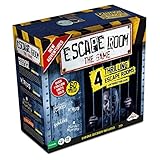
Overview: Escape Room The Game, Version 2 delivers four distinct 60-minute adventures for 3-5 players ages 16+. The centerpiece Chrono Decoder device creates authentic tension with its digital countdown and sound effects, while the companion app provides thematic soundtracks. Each adventure contains three parts with escalating difficulty, simulating a professional escape room’s intensity.
What Makes It Stand Out: The electronic decoder transforms the experience from board game to immersive event, providing real-time feedback and pressure. Four included scenarios progress from beginner to expert, offering a clear learning curve. The system supports expansion packs, extending longevity. Sound design through both device and app creates genuine urgency that card-only games cannot replicate.
Value for Money: At approximately $40-50, it’s pricier than card-based alternatives, but the electronic component and four adventures provide reasonable value. The reusable decoder and expansion potential improve long-term investment compared to single-use games.
Strengths and Weaknesses: Strengths include unparalleled immersion through technology, well-calibrated difficulty progression, and professional-quality puzzles. The 60-minute format maintains engagement. Weaknesses include the 16+ age restriction limiting family play, 3-5 player requirement excluding solo/small groups, and occasional decoder sensitivity issues. Some puzzles require precise component manipulation.
Bottom Line: The closest home experience to a real escape room, ideal for teens and adults seeking adrenaline-fueled challenge. The technology justifies the premium, though families with younger children should consider more accessible alternatives.
Why Escape Room Fans Love Cooperative Board Games
The Thrill of Collaborative Puzzle-Solving
Escape rooms succeed because they force people to communicate, delegate tasks, and think laterally under pressure. The best cooperative board games replicate this dynamic through integrated puzzle systems that require multiple minds working in sync. You’ll find games where one player deciphers a symbolic language while another manipulates physical components, and neither can succeed without constant information sharing. This creates those magical moments where someone’s random observation becomes the key that unlocks the entire mystery for the group.
Narrative Immersion Without the Timer
While traditional escape rooms race against a countdown, tabletop adaptations often trade frantic pacing for deeper storytelling. Many cooperative games feature branching narratives where your decisions genuinely matter, creating a personalized mystery that unfolds based on your team’s choices. This narrative investment adds emotional weight to every puzzle solved, making victories feel earned rather than accidental. The absence of a mandatory timer also allows groups to fully digest complex clues and appreciate the thematic world-building.
Building Your Home Escape Room Collection
For dedicated enthusiasts, these games represent more than entertainment—they’re a hobby unto themselves. Curating a selection of cooperative titles with varying mechanics, themes, and difficulty levels means you can host escape room nights whenever inspiration strikes. Unlike physical escape rooms that reset the same experience, a well-chosen board game collection offers infinite replayability through modular setups, randomization, and expansion content that keeps the challenges fresh.
Essential Features That Capture the Escape Room Spirit
Complex Puzzle Integration
Look for games where puzzles aren’t isolated mini-games but woven into the fabric of gameplay. The most satisfying experiences feature multi-layered problems where solving one clue reveals three more questions, creating a cascade of discoveries. These might involve pattern recognition across multiple components, decoding ciphers that require cross-referencing different game elements, or physical manipulation puzzles that demand spatial reasoning. The hallmark of excellent design is when the solution feels obvious in hindsight but remains tantalizingly out of reach until that breakthrough moment.
Thematic Depth and Storytelling
The strongest cooperative games for puzzle fans embed their challenges within compelling narratives. Rather than abstract logic problems, you’re investigating a mysterious disappearance, preventing a cosmic ritual, or uncovering a conspiracy. This contextual framing transforms mechanical puzzles into meaningful story beats. Pay attention to how games handle narrative progression—do they use scenario books, app integration, or legacy-style permanent changes? Each approach offers different advantages for immersion and replay value.
Progressive Hint Systems
A well-designed hint system mirrors the best escape room practices: subtle nudges that preserve the “aha!” moment rather than giving away solutions. Many modern cooperative games include tiered hint mechanisms, offering gentle direction first, then more explicit guidance if needed. This prevents frustration while respecting your intelligence. Some even incorporate in-character hint delivery, where a fictional mentor provides clues that feel natural to the story rather than breaking immersion with out-of-game assistance.
Time Pressure Mechanics (Optional but Engaging)
While not every game needs a timer, optional time pressure can recreate that classic escape room tension. Some titles include hourglass components or app-based countdowns for specific sequences, while others use advancing threat tracks that create urgency without arbitrary limits. The key is flexibility—being able to toggle pressure on or off depending on your group’s mood and experience level makes a game more versatile for different occasions.
Types of Cooperative Games That Appeal to Escape Room Enthusiasts
Campaign-Based Mystery Games
These epic adventures span multiple sessions, with each scenario building on previous discoveries. You’ll develop theories over weeks, track clues between games, and watch the mystery evolve based on your successes and failures. The long-form narrative creates deeper investment, and the continuity means early puzzles often gain new significance later. For escape room fans who crave complexity, these offer the satisfaction of watching a massive puzzle come together piece by piece.
One-Shot Escape Experiences
Designed to be completed in a single sitting, these games prioritize immediate gratification and often feature destructible components or sealed envelopes that create genuine surprise. They’re perfect for recreating that “first room” excitement, with fresh puzzles and narratives every time you open a new box. While traditionally offering limited replayability, many modern versions include resettable components or alternative scenarios to extend their lifespan.
Deduction and Logic Puzzle Games
These titles emphasize pure brain-teasing over narrative, presenting players with increasingly complex logic problems. You might be eliminating possibilities from a vast solution space, reconstructing events from fragmentary evidence, or identifying patterns in seemingly random data. For purists who love the mental workout of escape rooms, these games deliver concentrated puzzle density without narrative fluff.
Tile-Laying and Map-Building Adventures
Spatial puzzles translate beautifully to board games through tile-laying mechanics. These games often involve exploring unknown territories, revealing clues as the map expands, and using geographical relationships to solve mysteries. The tactile nature of building the game board as you play creates a satisfying sense of discovery, while spatial reasoning challenges feel distinct from typical logic puzzles.
Matching Games to Your Group’s Preferences
Choosing Based on Player Count
Escape rooms typically accommodate 4-8 players, but board games vary widely. Some excel with intimate 2-3 player experiences, offering tighter communication and shared focus. Others scale elegantly to 5-6 players through parallel puzzle tracks or specialized roles. Consider your regular group size and look for games that maintain engagement across all player counts—nothing kills the mood like someone feeling sidelined because the puzzles don’t require their input.
Difficulty Levels and Experience
Assess your group’s puzzle tolerance honestly. Are they casual fans who enjoy occasional riddles, or hardcore enthusiasts who dissect cryptograms for fun? Many cooperative games offer adjustable difficulty through modular rule sets, optional challenges, or scenario ratings. Starting with accessible introductions builds confidence, while advanced modes provide longevity as your team’s skills improve. The sweet spot is a game that feels challenging but never impossible.
Session Length Considerations
Escape rooms standardize at 60 minutes, but board games range from 30-minute quick hits to 4-hour marathons. Match the game length to your available time and attention span. Shorter games work better for weeknight sessions, while longer epics suit dedicated weekend gatherings. Many titles now include “save” mechanics or natural break points, letting you pause and resume without losing momentum—a crucial feature for busy groups.
Practical Considerations for Your Collection
Replayability and Legacy Elements
The best value comes from games that remain engaging after multiple plays. Look for randomized setups, variable puzzle configurations, or community-driven content that generates fresh challenges. Legacy games—where permanent, campaign-long changes occur—offer unique experiences but sacrifice replayability for narrative impact. Consider whether you prefer one unforgettable journey or a game you can revisit monthly with new groups.
Component Quality and Table Presence
Escape rooms impress with their tangible, hands-on puzzles, and board games can replicate this through high-quality components. Thick cardstock, custom dice, metal coins, and elaborate 3D structures enhance immersion and make puzzle-solving physically satisfying. However, premium components often mean higher prices and more storage requirements. Balance tactile appeal against practical concerns like table space and budget.
Storage and Organization Solutions
Complex cooperative games generate numerous cards, tokens, and puzzle pieces that can quickly become overwhelming. Built-in storage solutions or third-party organizers keep components sorted and setup time reasonable. Consider how much effort you’re willing to invest in organization—some games require extensive pre-sorting, while others use clever design to minimize fuss. Quick setup means more time for actual puzzle-solving.
Frequently Asked Questions
What makes a cooperative board game feel like an escape room?
The key elements are integrated puzzles requiring teamwork, narrative immersion, and that shared “aha!” moment when solutions click. Look for games where communication is essential, challenges build on each other, and success depends on collective brainpower rather than individual strategy.
How many players work best for these types of games?
Most excel with 3-4 players, offering enough diverse perspectives without communication chaos. However, many scale well from 2-6 players through clever role assignments or parallel puzzle tracks that keep everyone engaged regardless of group size.
Are these games replayable after solving the puzzles?
It varies dramatically. Some feature randomized setups or modular puzzles offering fresh challenges each play. Others, especially narrative-heavy one-shots, lose surprise value but can be enjoyed anew with different groups witnessing their first experience.
What’s the typical price range for quality cooperative puzzle games?
Expect to invest between $40-$80 for standalone titles, with campaign games or those featuring premium components ranging from $60-$120. Consider cost-per-play rather than sticker price—a $100 game you play 20 times delivers better value than a $30 game you play twice.
How long do these games usually take to play?
Session lengths range from 45 minutes for quick escape experiences to 3+ hours for complex campaign scenarios. Always check estimated playtimes, but remember that puzzle-solving speed varies hugely by group—add 30-50% buffer time for your first session.
Can I play these games solo?
Many cooperative games include official solo variants where you control multiple characters or face adjusted challenges. While you lose the collaborative dynamic, solo play offers intense focus and works well for learning rules before introducing the game to your group.
What if my group gets stuck on a puzzle?
Quality games provide structured hint systems—often tiered from gentle nudges to explicit solutions. Don’t hesitate to use them; the goal is enjoyment, not frustration. Some groups even appoint a designated “hint master” who monitors frustration levels and offers clues proactively.
Do these games require a game master or facilitator?
Most modern cooperative games are fully automated, with the system itself acting as the opponent. A few use a “one vs. many” structure where one player runs the challenges, but these are increasingly rare. Check the player count and roles before purchasing if you prefer equal participation.
How much table space do these games typically need?
Puzzle-heavy games often require substantial space for spreading out cards, components, and reference materials. Plan for at least a 3x3 foot area for most titles, with campaign games potentially needing more. Vertical space for card holders can help maximize limited tables.
Are digital apps required for these games?
Some incorporate companion apps for soundtrack, timers, or hidden information delivery, but few are strictly mandatory. Apps can enhance atmosphere and reduce setup but may become unsupported over time. Look for games with optional app integration rather than app-dependent gameplay for longevity.
See Also
- 10 Best Cooperative Board Games for Escape Room Enthusiasts in 2026
- Top 10 Best Escape Room Board Games for Family Game Night in 2026
- 10 Must-Have Themed Board Games for Escape Room Lovers in 2026
- 10 Premium Escape Room Board Games for True Enthusiasts (Worth the Investment)
- 10 Expert-Recommended Escape Room Board Games for Teens in 2026