Table of Contents
Board games have evolved far beyond the competitive roll-and-move classics many of us grew up with. Cooperative games, where players work together against the game itself rather than battling each other, offer a uniquely refreshing and inclusive experience. They foster teamwork, shared problem-solving, and collective triumph, making them incredibly accessible for newcomers who might feel intimidated by cutthroat competition or complex head-to-head strategies. There’s a special magic in gathering around a table, pooling your brains, and celebrating a hard-won victory as a unified team – or laughing together at a spectacular, shared defeat. It transforms game night from a test of individual skill into a collaborative adventure, perfect for building connections and creating memorable moments without the sting of losing to a friend.
For new players dipping their toes into the hobby, navigating the vast world of board games can feel overwhelming, especially when budget is a concern. Spending significant money on a game that might not resonate with your group or match your experience level is a real risk. Focusing on cooperative titles under $30 isn’t just about saving cash; it’s a smart strategy for exploration. This price point opens the door to trying multiple styles without a major financial commitment, allowing you to discover what mechanics and themes truly click for you and your friends or family. The good news? The market is rich with thoughtfully designed, high-quality cooperative experiences that deliver immense fun and strategic depth without demanding a premium price tag. Let’s dive into how to find the perfect affordable cooperative game to kickstart your journey.
Top 10 Cooperative Board Games for Beginners
Detailed Product Reviews
1. Gamewright - Forbidden Island - Cooperative Strategy Survival Board Game, 2-4 Players
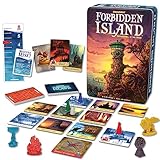
Overview: Forbidden Island, designed by Matt Leacock, is a cooperative adventure where players race to retrieve ancient treasures from a sinking island before it vanishes. Aimed at ages 10+, it blends strategy, teamwork, and escalating tension in a compact package.
What Makes It Stand Out: Its innovative “sinking tile” mechanic creates dynamic tension as the board physically shrinks, forcing adaptive strategies. The rich thematic artwork and seamless cooperative design—where players must collaborate to win or lose together—distinguish it from competitive family games.
Value for Money: Priced accessibly for its component quality and replayability, it outshines many similarly priced strategy games. The inclusion of multiple difficulty levels and scenarios extends play value far beyond initial sessions, making it a cost-effective staple for family game nights.
Strengths and Weaknesses:
Strengths: Intuitive rules, high engagement, promotes critical thinking, and scales well for 2-4 players. Visually captivating board enhances immersion.
Weaknesses: Limited player count ceiling; advanced players may master it quickly, reducing long-term challenge without expansions.
Bottom Line: An essential, brilliantly designed cooperative game that teaches teamwork and strategy. Highly recommended for families and casual gamers seeking accessible, tense, and repeatable fun.
2. Wildcraft! Board Game – Cooperative Educational Board Game for Kids 4–6 & Families – Nature & Herb Learning Game – Family Board Games for Kids – Herbal Adventure Cooperative Game

Overview: Wildcraft! is an eco-focused cooperative board game designed for children as young as 4, where players journey through a forest to harvest 25 edible/medicinal herbs. It emphasizes nature education without requiring reading skills.
What Makes It Stand Out: The game uniquely integrates deep herbal knowledge with child-friendly mechanics, using visual cues instead of text. Bonus printables (storybook, pocket guide, coloring book) and sustainable materials—recycled boards, non-toxic inks—elevate its educational and ethical appeal.
Value for Money: Exceptional for early learners, given its durable, eco-conscious components and extensive supplemental resources. It costs slightly more than basic kids’ games but justifies the premium through holistic learning value and longevity.
Strengths and Weaknesses:
Strengths: Perfect for preschoolers, fosters nature connection, strong teamwork focus, and eco-friendly production. Printables extend play beyond the board.
Weaknesses: Limited strategic depth for older kids; herb identification may feel repetitive after many plays.
Bottom Line: A standout educational tool that makes nature learning joyful and accessible. Ideal for eco-conscious families with young children—it’s both a game and a meaningful teaching resource.
3. Slay The Spire: The Board Game - Cooperative Fantasy Board Game

Overview: Adapted from the hit video game, this cooperative deckbuilder pits 1-4 players against a treacherous spire. Each character builds a unique deck to battle monsters, collect relics, and conquer escalating challenges in a rich fantasy setting.
What Makes It Stand Out: The staggering depth of its card system—over 650 cards across 112 small and 26 large cards—enables near-infinite customization. High-quality miniatures, dual player boards, and faithful translation of the digital game’s strategic nuance create an immersive tabletop experience.
Value for Money: Priced higher than entry-level games, but the sheer volume of components (4 miniatures, 2 main boards) and replayability justify the cost for strategy enthusiasts. It outperforms many deckbuilders in scope and production value.
Strengths and Weaknesses:
Strengths: Deep strategic customization, excellent component quality, accessible rules for experienced gamers, strong solo/co-op flexibility.
Weaknesses: Steeper learning curve for beginners; setup time can exceed 45 minutes despite claims.
Bottom Line: A masterful adaptation that captures the video game’s magic. Highly recommended for deckbuilding fans seeking complex, replayable cooperative gameplay—worth the investment for serious board gamers.
4. Flow: The Official Cooperative Board Game | Strategy Game for 1–4 Players Ages 8+ | Based on The Award-Winning Animated Film | Family & Solo Play | Survive The Flood, Rescue Allies
Overview: Based on the award-winning animated film, Flow is a real-time cooperative game where players navigate a shifting, flooding world to rescue allies. Its modular board and urgent mechanics create a race-against-time survival experience for ages 8+.
What Makes It Stand Out: The dynamic “rising water” mechanic forces constant adaptation as the board physically floods, while real-time decision-making injects palpable tension. Eleven scenario cards and solo compatibility ensure no two games play alike, enhancing narrative immersion.
Value for Money: Offers remarkable versatility (1-6 players) and replayability at a mid-range price. The emotional storytelling and modular design provide more value than many static cooperative games in its category.
Strengths and Weaknesses:
Strengths: Thrilling real-time pressure, strong film tie-in appeal, high replayability via scenarios, works perfectly solo.
Weaknesses: Real-time element may overwhelm young players; component storage isn’t optimized.
Bottom Line: A beautifully thematic, adrenaline-pumping cooperative gem. Perfect for families and film fans—it’s accessible yet strategically deep, making it a must-have for versatile game nights.
5. Asmodee Pandemic Board Game (Base Game) - A Cooperative Battle to Save Humanity, Strategy Game for Kids and Adults, Ages 8+, 2-4 Players, 45 Minute Playtime

Overview: Pandemic is the seminal cooperative strategy game where 2-4 players become disease-fighting specialists racing to cure four global outbreaks before humanity succumbs. Its tense, 45-minute play sessions demand seamless teamwork.
What Makes It Stand Out: The “lose together” mechanic pioneered modern cooperative gaming, with interconnected roles requiring genuine collaboration. The infection rate system creates relentless pressure, while streamlined rules make complex strategy accessible to ages 8+.
Value for Money: A genre-defining classic priced competitively against newer titles. Its timeless design, high replayability (thanks to variable player roles and outbreak randomness), and durability offer unmatched longevity per dollar spent.
Strengths and Weaknesses:
Strengths: Perfect teamwork emphasis, intuitive yet deep strategy, compact and portable, ideal for families or casual gamers.
Weaknesses: Can suffer from “alpha player” syndrome; base game lacks variability compared to expansions.
Bottom Line: An essential cornerstone of any board game collection. Pandemic remains the gold standard for cooperative play—highly recommended for its flawless blend of tension, strategy, and shared triumph.
6. Happy Camper - The Four Doors | Cooperative Game by Pandemic and Forbidden Island Creator | Perfect for Solo Play, Two Players, and Small Groups | Portable Adventure Game
Overview:
Happy Camper: The Four Doors is a compact cooperative adventure game designed by Matt Leacock (creator of Pandemic), alongside Matthew Riddle and Ben Pinchback. Players collaborate to retrieve four sacred treasures from a mystical light tower before sinister shadows seal the doors forever. Tailored for 1–5 players aged 10+, it delivers a 30-minute portable experience ideal for travel or quick gaming sessions.
What Makes It Stand Out:
Leacock’s signature co-op design shines with intuitive mechanics that scale seamlessly from solo to group play. The “light tower” theme creates immersive urgency, while the compact box belies strategic depth—players must balance treasure retrieval against shadow threats. Its portability and refined rule set make it a standout travel-friendly co-op.
Value for Money:
Priced competitively for a Leacock-designed game, it offers exceptional replayability through variable setups and solo compatibility. Unlike bulkier co-ops, its minimalist components (cards, tokens) maximize value without inflating cost, outperforming similarly priced titles in accessibility and depth.
Strengths and Weaknesses:
Strengths: Brilliant solo mode; effortless portability; elegant rules for quick learning; high replay value with modular challenges.
Weaknesses: Limited thematic depth for narrative-driven players; component durability may not withstand heavy travel use; shadow mechanics can feel punishing at higher difficulties.
Bottom Line:
A masterclass in portable cooperative design, Happy Camper delivers tense, strategic fun for all player counts. Highly recommended for travelers and co-op enthusiasts seeking a lean, polished experience—just ensure your group enjoys puzzle-like challenges over narrative immersion.
7. Castle Panic 2nd Edition | Cooperative Board Game for Adults and Family | Ages 8+ | for 1 to 6 Players | Average Playtime 45 Minutes | Made by Fireside Games

Overview:
Castle Panic 2nd Edition tasks 1–6 players with defending Castle Bravehold from relentless monster sieges. This updated classic blends tower defense with cooperative strategy, requiring teams to strategically place cards to fend off ogres, goblins, and boss monsters across a vibrant illustrated board with 3D towers. Play spans 45 minutes for ages 8+.
What Makes It Stand Out:
Its dynamic “edge-of-your-seat” tension stems from escalating threats like plague cards and boulder attacks, forcing tough group decisions. Four distinct modes—including competitive Master Slayer and solo play—cater to diverse preferences. The tactile 3D towers and intuitive combat system create immediate engagement.
Value for Money:
The robust component upgrade (sturdier towers, vivid tokens) justifies its price point, especially given unparalleled player count flexibility. It outshines niche co-ops by serving both families and adult gamers, offering more strategic depth than entry-level alternatives like Forbidden Island.
Strengths and Weaknesses:
Strengths: Exceptional player count range; multiple game modes boost replayability; easy to learn but rich in tactics; high-quality 3D components.
Weaknesses: Boss monsters can overwhelm new players; competitive modes disrupt pure co-op appeal; setup time slightly lengthy for casual sessions.
Bottom Line:
Castle Panic 2nd Edition is a near-perfect gateway co-op game, balancing accessibility with strategic depth. Essential for family game nights and group play—prioritize the 2nd Edition for its superior components and expanded modes.
8. Peaceable Kingdom Race to the Treasure! Cooperative Path Building Game for 2 to 4 Kids Ages 5+

Overview:
Race to the Treasure! is an award-winning cooperative game where 2–4 children (ages 5+) race to build a path from start to finish before the Ogre claims the treasure. Players work together using colorful path tiles, fostering early strategy skills without reading requirements. It’s designed for frustration-free family play.
What Makes It Stand Out:
Its pure cooperative model eliminates player elimination, ensuring all win or lose together—a rarity for young kids. The path-building mechanic subtly teaches spatial reasoning and planning, while the Ogre’s predictable movement eases anxiety. Frustration-free packaging and intuitive tile placement make it instantly accessible.
Value for Money:
As an entry-level co-op, it delivers remarkable educational value at a modest price. Outperforms similarly priced competitive kids’ games by building social skills and reducing sibling rivalry. The included awards (Oppenheim Platinum, PAL Seal) validate its developmental benefits.
Strengths and Weaknesses:
Strengths: Zero reading required; promotes teamwork and problem-solving; quick setup/teardown; durable components for young hands.
Weaknesses: Limited replayability after mastering the path logic; Ogre mechanics lack variability; best for ages 4–6 (older kids may outgrow it fast).
Bottom Line:
An ideal first cooperative game for preschoolers, Race to the Treasure! successfully blends fun with foundational cognitive skills. Highly recommended for parents seeking stress-free, educational play—just manage expectations for long-term engagement.
9. Peaceable Kingdom Count Your Chickens Award Winning Cooperative Counting Game for Kids

Overview:
Count Your Chickens! is a cooperative counting game where 2–4 players (ages 3+) help Mother Hen gather her 40 scattered chicks. Players spin a spinner to collect chicks from fields, working together to return all to the coop before the hen reaches the gate. It requires no reading and emphasizes early numeracy.
What Makes It Stand Out:
The game uniquely turns counting into collaborative storytelling, with chicks represented by charming illustrated tokens. Its zero-reading design ensures inclusivity for pre-readers, while the communal goal (“everyone wins!”) fosters emotional development. The spinner mechanic adds gentle unpredictability perfect for toddlers.
Value for Money:
Priced affordably for its educational impact, it surpasses flashcards or apps by promoting hands-on learning and social interaction. Five major awards (including Oppenheim Platinum) reflect its effectiveness—offering more developmental value than comparable counting toys.
Strengths and Weaknesses:
Strengths: Builds counting and sharing skills organically; exceptionally simple rules; sturdy, child-safe components; inclusive win condition.
Weaknesses: Minimal strategic depth; replay value hinges on child’s counting stage; spinner results may frustrate perfectionists.
Bottom Line:
A must-have for preschoolers learning numbers, Count Your Chickens! transforms foundational math into joyful teamwork. Perfect for classrooms or homes—just ideal for ages 3–5 before advancing to more complex games.
10. Peaceable Kingdom Space Escape – Cooperative Strategy Space Adventure Game by The Inventor of Pandemic – Use Teamwork to Win! – Great for Families with Kids Ages 7 & up

Overview:
Space Escape pits 2–4 players (ages 7+) as mole rats racing to collect equipment and reach an escape pod before snakes sabotage their space station. Designed with input from Pandemic’s creator, this cooperative game emphasizes communication and shared decision-making through card-driven actions affecting both players and adversaries.
What Makes It Stand Out:
Its dual-action card system—where each draw impacts mole rats and snakes—creates constant strategic tension. The “snakes in space” theme delights kids, while adjustable difficulty (via challenge rules) accommodates skill growth. Plastic mole rat movers and vibrant tokens enhance tactile engagement.
Value for Money:
At a mid-range price, it offers exceptional developmental ROI: kids practice spatial reasoning, risk assessment, and collaborative problem-solving. It bridges the gap between preschool co-ops (like Count Your Chickens) and complex adult games like Pandemic, justifying its cost through longevity.
Strengths and Weaknesses:
Strengths: Clever dual-action mechanics deepen strategy; scalable challenge rules; promotes advanced teamwork; durable components.
Weaknesses: Snake movement can feel arbitrary to young players; setup slightly complex for age 7; limited replayability compared to adult-tier co-ops.
Bottom Line:
Space Escape is a superb “next step” cooperative game for emerging strategists, blending fun with critical thinking. Highly recommended for families ready to graduate from basic co-ops—prioritize it if your kids enjoy Pandemic-lite challenges.
Understanding Cooperative Gameplay Mechanics
Defining True Cooperation vs. Multiplayer Solitaire
True cooperative games require genuine interaction and shared decision-making. Players must constantly discuss strategies, pool information, and make joint choices that impact the entire team’s success. Be wary of “multiplayer solitaire” disguised as coop; in these, players act mostly independently with minimal meaningful interaction, defeating the core purpose of teamwork. Look for mechanics where individual actions directly influence the group’s resources, progress, or challenges.
The Role of the Game System as the Antagonist
In a well-designed cooperative experience, the game system itself acts as the opponent. This is often managed through a structured deck of cards, a timer, an app, or programmed event sequences that introduce escalating challenges. The system shouldn’t feel arbitrary; its “moves” should follow logical rules, creating tension and requiring adaptive group strategy. Understanding how the system opposes you is key to planning effective counter-strategies as a team.
Communication Rules and Hand Management
Many cooperative games impose specific communication restrictions to heighten challenge and simulate real-world constraints. Some limit what you can say about your hidden information (like hand limits in certain card games), while others restrict when or how much players can discuss. Hand management is frequently crucial, forcing players to decide when to use valuable cards for immediate team benefit versus saving them for critical future moments, requiring clear, strategic communication within any imposed limits.
Why Budget Matters for New Players
Minimizing Financial Risk in Exploration
The board game landscape is incredibly diverse. Investing heavily in a single, complex title as a newcomer carries the risk of buyer’s remorse if the theme or mechanics don’t resonate. A sub-$30 price point significantly lowers the barrier to entry, allowing you to sample different types of cooperative play – from light and family-friendly to more strategic – without the pressure of justifying a large expenditure for a potentially unused game gathering dust.
Focus on Core Gameplay Over Extravagant Components
While premium components are nice, they aren’t essential for a fantastic cooperative experience, especially for beginners. Many outstanding budget-friendly games prioritize clever mechanics and engaging gameplay over heavy miniatures or elaborate boards. This focus ensures your money goes directly into the quality of the interactive experience and replayability, rather than static, non-functional pieces. A well-designed card-and-tile game can be just as immersive as one with costly miniatures.
Building a Foundation Before Splurging
Starting with accessible, affordable cooperative games helps new players grasp fundamental concepts like action economy, resource management, and shared objective tracking. This foundational understanding makes it much easier to appreciate and successfully tackle more complex (and expensive) cooperative titles down the line. Think of budget games as essential training grounds that build confidence and strategic thinking without breaking the bank.
Key Features to Prioritize for Beginners
Streamlined Rulebooks and Intuitive Setup
The first hurdle for any new player is learning the game. Prioritize cooperative titles known for exceptionally clear, concise rulebooks with strong examples of play. Look for games where setup is quick and visual – components should have logical placements that make the initial state easy to understand. Avoid games requiring extensive “teach” sessions; the rules should facilitate getting to the fun part rapidly, often within 10-15 minutes of opening the box.
Manageable Playtime (30-60 Minutes Ideal)
New players, especially those unfamiliar with the hobby, often have limited attention spans for complex new activities. Games designed to be completed in 30 to 60 minutes are ideal. This duration provides a satisfying arc – setup, rising challenge, climax, resolution – without causing fatigue or frustration. Shorter playtimes also make it easier to fit a game into a casual gathering and encourage immediate replayability to solidify understanding.
Clear Visual Cues and Player Aids
Strong visual design is non-negotiable for accessibility. Look for games where the board, cards, and tokens use intuitive icons, color-coding, and spatial organization to convey information at a glance. Quality player aids (reference cards summarizing key rules and actions) are invaluable, especially during the first few plays. These elements reduce constant rulebook referencing, keeping the group focused on collaboration and strategy rather than deciphering mechanics.
Assessing Complexity and Learning Curve
Identifying the Approachability Sweet Spot
Cooperative games span a vast complexity spectrum. For absolute beginners, seek titles falling into the “light” or “medium-light” complexity range. These games typically feature 1-3 core actions per turn, straightforward win/loss conditions, and minimal player-specific asymmetry initially. The goal is immediate engagement; players should grasp what they can do on their turn within the first round, even if mastering optimal strategy takes a few plays.
Avoiding Overwhelming Asymmetry Too Soon
While unique player roles can add depth, excessive asymmetry (where each player has vastly different, complex abilities) is often a stumbling block for newcomers. It fragments the learning experience and can lead to one player dominating decisions. Early cooperative games for beginners benefit from more homogeneous roles or very simple, distinct roles where the differences are easy to grasp and communicate (“You fix things, I gather supplies”). Save highly asymmetric games for after core mechanics are comfortable.
Scalability: How Player Count Affects the Experience
Consider how the game scales with different numbers of players. Some cooperative games are significantly easier or harder with 2 players versus 4 or 5. For new groups, look for titles that explicitly state they work well across a range (e.g., 2-4 players) or have clear, simple adjustments for different counts. A game that becomes trivially easy with 2 or impossibly hard with 5 can frustrate beginners; consistent challenge across typical group sizes is ideal.
Evaluating Replayability on a Budget
Variable Setup for Fresh Challenges
Replayability is crucial when you’re investing in fewer games. Prioritize titles that use variable setup elements – different map layouts, shuffled challenge decks, randomized objectives, or modular boards. This ensures that no two games play out identically, maintaining freshness and encouraging repeated plays to master different scenarios, even with the same core box. Avoid games with a single, fixed setup path.
Legacy Mechanics? Probably Not for Your First Pick
While legacy games (which change permanently over multiple sessions) offer incredible narrative depth, they are generally poor first choices for beginners on a budget. They require a significant time and financial commitment upfront, often exceeding the $30 threshold, and lock you into a single, evolving campaign. Start with standalone, non-legacy cooperative games that offer replayability through variability, not permanent alteration, for maximum flexibility and value at this stage.
The Power of Modular Expansions (Future-Proofing)
Some excellent budget cooperative games are designed with affordable, modular expansions in mind. While you shouldn’t buy expansions upfront, knowing a game has well-regarded, reasonably priced add-ons (like new scenarios or roles) provides a pathway to extend its life later. Check community feedback (without seeking specific recommendations) to see if a game’s core system is known for supporting meaningful, budget-friendly expansions down the track.
Practical Buying Considerations Under $30
Where to Shop Smartly for Value
Look beyond just the sticker price. Factor in potential shipping costs from online retailers and compare prices across major hobby stores and reputable online marketplaces. Consider local game stores – they might have slightly higher prices but offer the chance to see the components firsthand and support your community. Watch for sales events, especially around holidays, where deeper discounts on last year’s titles can bring quality games firmly into the sub-$30 range.
Assessing Component Quality Within Budget Constraints
Don’t expect厚 cardboard or wooden miniatures at this price point, but avoid flimsy, easily damaged materials. Focus on the essentials: a sturdy box for storage, cards with a decent linen finish that shuffle well, and a board/thick cardstock that lies flat. Thin cardboard tokens are common and acceptable, but ensure critical information is clearly printed and won’t rub off. Prioritize functional durability over aesthetic luxury.
Reading Between the Lines of Product Descriptions
Be critical of marketing buzzwords like “strategic” or “deep” – these can be subjective. Look for concrete descriptions of mechanics: “players work together to defuse bombs using limited communication,” “manage a shared resource pool to overcome environmental disasters.” Mentions of playtime, player count, and specific complexity indicators (like “easy to learn”) are more valuable clues for beginners than vague promises of “epic adventures.”
Making the Most of Your First Cooperative Games
Facilitating Inclusive Decision-Making
A common pitfall in new cooperative groups is “alpha gaming,” where one dominant player takes over decisions. Actively encourage quieter members by asking for their input: “What do you think we should do with this resource?” or “How should we handle the next event?” Frame decisions as group puzzles: “Okay, we have three problems; how do we tackle them together?” This ensures everyone feels involved and the true cooperative spirit shines.
Embracing the Learning Curve and Shared Losses
Your first few games will likely end in defeat – and that’s perfectly okay, even encouraged! Losing together is a fantastic learning tool. After a loss, briefly discuss why it happened (“We didn’t manage the threat deck fast enough,” “We hoarded resources too long”) without blame. Focus on what the group can try differently next time. Celebrate small victories within the loss (“Great job coordinating that last turn!”). This builds resilience and a positive group dynamic.
Knowing When to Adjust Difficulty
Most quality cooperative games include built-in difficulty sliders, often through optional rules or varying setup parameters. If your group is consistently losing within the first few plays, don’t get discouraged – simply lower the difficulty setting for the next game. Conversely, if wins come too easily, ramp it up. The goal is a challenging but achievable experience that keeps everyone engaged and motivated to improve as a team.
Frequently Asked Questions
Frequently Asked Questions
What exactly makes a board game “cooperative” instead of competitive? How can I tell if a cooperative game is truly good for absolute beginners? Will a game under $30 feel “cheap” or fall apart quickly? Can cooperative games realistically work well with just two players? What are “traitor mechanics” and should beginners avoid them? How important is theme compared to mechanics in a cooperative game? Are app-assisted cooperative games worth considering on a budget? What’s the biggest mistake new cooperative game groups make? How can I find out if a game has good replayability before buying? Is it better to start with a very simple game or jump into something moderately complex?
See Also
- 10 Best Cooperative Board Games for New Players in 2026
- 10 Cooperative Board Games Recommendations for New Players in 2026
- 10 Best Budget Cooperative Board Games Under $30 for Casual Players
- We Tested 50 Cooperative Board Games - Here are the 10 Best for Two Players in 2026
- 10 Best Budget Escape Room Board Games Under $30 for Casual Play in 2026