Table of Contents
Gathering the family around the table for a board game session isn’t just about passing the time; it’s where laughter bubbles up over shared silliness, tiny hands learn the gentle art of taking turns, and big emotions get practiced in a safe, colorful world of cardboard and tokens. For parents navigating the vibrant chaos of young children, finding that perfect game feels like striking gold – something that captivates short attention spans, avoids frustrating tears, and actually gets played more than once. In 2026, with so many options shouting for attention, cutting through the noise to discover games that truly resonate with preschoolers and early elementary kids is more important than ever. Forget fleeting trends; the magic lies in understanding the timeless elements that turn game night from a chore into a cherished ritual.
The best family games for this age group are rarely the complex strategy epics. Instead, they’re vibrant, tactile experiences designed with little minds and hands in mind. They transform foundational learning – recognizing colors, counting, sharing, expressing feelings – into playful adventures. As you look for your next family favorite this year, shift your focus away from flashy components or complicated rules. Prioritize games that foster connection, spark imagination, and grow with your child. This guide cuts through the marketing hype, focusing squarely on the universal features and considerations that make a board game genuinely successful, enjoyable, and developmentally supportive for families building those precious early memories together. Let’s uncover what truly matters when choosing play.
Top 10 Board Games for Families with Young Children
Detailed Product Reviews
1. Hasbro Gaming Candy Land Kingdom of Sweet Adventures Board Game for Kids, Ages 3 & Up (Amazon Exclusive)

Overview: Candy Land remains a timeless introduction to board gaming for preschoolers, inviting young players on a colorful journey through a sugary kingdom using simple color-matching mechanics.
What Makes It Stand Out: Its brilliance lies in requiring zero reading skills, making it perfectly accessible for ages 3+. Vibrant illustrations of sweet landmarks and the charming gingerbread pawn engage toddlers, while the straightforward “draw a color, move to the next space” rule ensures frustration-free play.
Value for Money: Priced modestly, it delivers exceptional longevity as a first board game. Unlike complex alternatives, its durability and instant replayability justify the cost for parents seeking screen-free, inclusive family interaction without setup hassles.
Strengths and Weaknesses: Strengths include effortless rules, strong visual appeal for little ones, and promoting color recognition. Weaknesses involve pure luck-based gameplay (no strategy) and potential repetitiveness for older children beyond age 5.
Bottom Line: An essential, affordable starter game that successfully introduces toddlers to turn-taking and board game concepts, making it a worthwhile investment for early childhood play.
2. Hasbro Gaming Trouble Board Game for Kids Ages 5 and Up 2-4 Players

Overview: Trouble revives nostalgic family fun with its iconic Pop-o-Matic die roller, challenging 2-4 players to race tokens around the board in a simple race-to-finish format.
What Makes It Stand Out: The legendary Pop-o-Matic bubble is the star—kids adore pressing it to roll the die, eliminating lost dice and adding tactile excitement. Power Up Spaces offer optional strategic depth, extending replay value beyond the classic rules.
Value for Money: Its robust construction and enduring appeal provide solid value. While similarly priced to basic roll-and-move games, the bubble mechanism and dual-rule options make it a superior choice for sustained engagement over cheaper alternatives.
Strengths and Weaknesses: Strengths are the universally loved bubble, quick setup, and adaptable rules for varying ages. Weaknesses include limited strategy (relying heavily on luck) and potential player elimination for younger kids if tokens get sent home.
Bottom Line: A reliably fun, durable family game that bridges generations, highly recommended for game nights seeking lighthearted competition and sensory interaction.
3. Sorry! Board Game for Kids Ages 6 and Up; Classic Hasbro Board Game; Each Player Gets 4 Pawns; Family Game
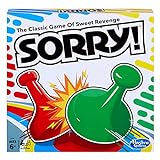
Overview: Sorry! delivers thrilling, interactive gameplay where players race four pawns home while strategically bumping opponents back to start using card-drawn moves.
What Makes It Stand Out: The “sweet revenge” mechanic—sending rivals’ pawns backward—creates memorable, high-energy moments. Slide spaces and card-based movement (draw 1-12, Sorry!) introduce clever strategy absent in simpler race games, keeping older kids engaged.
Value for Money: Priced competitively for its complexity and durability, it outperforms basic roll-and-move games. The strategic depth justifies the cost as a long-term family staple that grows with children through elementary school.
Strengths and Weaknesses: Strengths include engaging player interaction, strategic card choices, and vibrant design. Weaknesses involve potential frustration from frequent pawn bumping for sensitive players and a steeper learning curve than Candy Land or Trouble.
Bottom Line: An excellent choice for fostering strategic thinking and lively competition, ideal for families with children aged 6+ seeking a dynamic alternative to luck-based games.
4. Hasbro Gaming Hungry Hungry Hippos Game for Preschoolers | Instant Marble Relaunch, Easy Set-Up & Storage| Ages 4 and Up | 2 to 4 Players | Kids Games

Overview: Hungry Hungry Hippos offers fast-paced, motor-skill-building action where players frantically “chomp” marbles with plastic hippos to score points.
What Makes It Stand Out: The instant marble reload system is revolutionary—chomped marbles flow directly back to the trough, eliminating downtime. Combined with the iconic Pop-o-Matic-like chomping action and integrated storage, it maximizes playtime efficiency.
Value for Money: Despite a premium price, the innovative reload feature, durable construction, and seamless storage justify the cost. It surpasses vintage versions and cheaper knockoffs in functionality, offering nonstop action that withstands years of play.
Strengths and Weaknesses: Strengths are the brilliant reload system, superb fine-motor development, and frustration-free storage. Weaknesses include limited strategic depth and potential overstimulation for very young preschoolers during high-speed matches.
Bottom Line: A must-have update to a classic, delivering unparalleled replayability and convenience—perfect for active kids and parents valuing quick setup/cleanup during busy playdates.
5. Chuckle & Roar Family Bingo – 4-in-1 Educational Bingo Game for Kids Ages 3–6+ | Animal, Alphabet, Sight Word & Number Bingo | 1–6 Players

Overview: This versatile Bingo set combines four educational themes—Animals, Alphabet, Sight Words, and Numbers—into one adaptable game for early learners.
What Makes It Stand Out: Its genius lies in scaffolding learning: Animal Bingo requires no reading, while progressively challenging themes build literacy and numeracy. Themed storage bags ensure effortless organization, a rarity in educational games.
Value for Money: Exceptional value given the four distinct games in one box. At under $20, it outperforms single-concept alternatives, growing with children from age 3 through early elementary school without feeling repetitive.
Strengths and Weaknesses: Strengths include seamless educational progression, sturdy components, and stress-free storage. Weaknesses involve slightly smaller tokens than competitors and Sight Word Bingo potentially overwhelming absolute beginners without guidance.
Bottom Line: An outstanding, classroom-quality educational tool disguised as fun—highly recommended for parents and teachers seeking adaptable, screen-free learning across multiple developmental stages.
6. Hasbro Gaming Connect 4 Classic Grid,4 in a Row Game,Strategy Board Games for Kids,2 Player .for Family and Kids,Ages 6 and Up
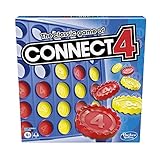
Overview:
Hasbro’s Connect 4 Classic Grid revitalizes the iconic strategy game with a sleek, modern aesthetic. Designed for two players aged 6+, it challenges participants to be the first to align four colored discs vertically, horizontally, or diagonally on a vertical grid. Its straightforward rules make it instantly accessible for family game nights.
What Makes It Stand Out:
The game shines with three distinct play modes: classic “4 in a row,” the chaotic “Connect 4 Frenzy,” and the strategic “Pop-Out” variant where players can eject discs from the bottom. The vibrant, cool-colored discs and contemporary grid design enhance visual appeal, while the fast-paced, head-to-head competition fosters critical thinking and tactical blocking.
Value for Money:
Priced competitively against similar strategy games, it offers exceptional longevity through multiple gameplay variations. Unlike single-mode alternatives, the inclusion of three rulesets doubles its replay value, making it a smarter investment than basic plastic sets that lack versatility.
Strengths and Weaknesses:
Strengths: Engaging strategy for young minds; durable construction; quick setup; promotes spatial reasoning.
Weaknesses: Strictly limited to two players; the grid can wobble if discs aren’t inserted carefully; no storage for discs.
Bottom Line:
A must-have for families seeking an affordable, brain-boosting classic. Its modern twist and triple-play format justify the price, delivering hours of screen-free fun that grows with kids’ strategic skills—ideal for regular game rotation.
7. Pressman Charades for Kids - The ‘No Reading Required’ Family Game, 5"
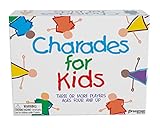
Overview:
Pressman’s Charades for Kids reimagines the timeless acting game for young children, eliminating reading barriers. Geared toward ages 4+ and 3+ players, it uses picture-based clue cards across three difficulty tiers, enabling toddlers to teens to participate equally in this energetic, interactive experience.
What Makes It Stand Out:
The genius lies in its picture-centric cards, allowing non-readers to play confidently while subtly building early literacy. With three adjustable difficulty levels, it scales seamlessly as kids grow—simple icons for preschoolers, nuanced scenarios for older children—keeping the game relevant for years. The physical comedy also burns energy creatively.
Value for Money:
At its modest price point, it outperforms generic charades sets by focusing exclusively on child-friendly content. The reusable cards and inclusive design eliminate the need for expensive expansions, offering better longevity than single-level games that quickly outgrow younger players.
Strengths and Weaknesses:
Strengths: Truly inclusive for all ages; sparks imagination and movement; reinforces vocabulary visually; compact and travel-ready.
Weaknesses: Limited card count may require reuse; older kids might crave more complex prompts; small parts pose a choking hazard for under-3s.
Bottom Line:
An unbeatable entry point into family charades. Its thoughtful accessibility features and adaptability make it a high-value staple for fostering laughter, creativity, and family bonding—worth every penny for households with mixed-age kids.
8. Regal Games Card Games for Kids - Go Fish, Crazy 8’s, Old Maid, Slap Jack, Garbage Monster, War - Simple & Fun Classic Family Table Games - Games May Vary (6 Set)

Overview:
This 6-in-1 card set delivers timeless fun with Go Fish, Crazy 8’s, Old Maid, Slap Jack, War, and Silly Monster Memory Match. Tailored for 2–6 players aged 4+, it replaces standard decks with child-optimized cards featuring bright colors, clear symbols, and beginner-friendly themes.
What Makes It Stand Out:
Each deck’s oversized cards (4.5"x3") are easy for small hands to grip, while vibrant, engaging artwork holds attention. Beyond entertainment, it stealthily builds cognitive skills: matching games boost memory, number/color recognition aids early math, and Slap Jack hones reflexes—turning playtime into foundational learning.
Value for Money:
Priced lower than buying six individual games, this set is a budget-savvy powerhouse. The durable, laminated cards withstand rough handling, and the variety ensures relevance across developmental stages—from toddlers learning shapes to school-age kids mastering rules—maximizing years of use.
Strengths and Weaknesses:
Strengths: Exceptional portability for travel; skill-focused gameplay; diverse game types prevent boredom; sturdy, large-format cards.
Weaknesses: “Garbage Monster” rules may confuse beginners; minimal instructions per game; artwork varies slightly between decks.
Bottom Line:
A near-perfect starter kit for young card gamers. Its educational depth, durability, and sheer replay value make it an outstanding investment for parents prioritizing both fun and developmental growth in compact, go-anywhere packaging.
9. zeyce Tic Tac Toe Board Game,Tic Tac Toe Family Game, Classic Board Game, Classical Family Board Game,Children’s Tic Tac Toe Game, Plastic tic tac Toe Game, Board Size 15 X 15 cm

Overview:
zeyce’s Tic Tac Toe offers a pocket-sized take on the legendary grid game. Crafted from lightweight, eco-friendly resin plastic (15x15cm), this portable set includes X and O pieces in multiple colors, targeting young children for quick, on-the-go matches during car rides or gatherings.
What Makes It Stand Out:
Its minimalist, waterproof design prioritizes convenience—slip it into a diaper bag or pocket without worry. The colorful pieces double as shape/color recognition tools for toddlers, while the compact size makes it an ideal stocking stuffer or party favor, encouraging impromptu play anywhere.
Value for Money:
Extremely affordable, it’s a no-brainer for casual use. Though simpler than strategic games like Connect 4, it excels as a fleeting distraction for preschoolers. For the price, the durability and portability outweigh its lack of depth, especially compared to pricier wooden sets with similar functionality.
Strengths and Weaknesses:
Strengths: Ultra-portable and lightweight; non-toxic materials; sparks early pattern recognition; effortless setup.
Weaknesses: Lacks strategic complexity for ages 7+; plastic feels flimsy; no storage compartment for pieces; quick gameplay limits replay.
Bottom Line:
A practical, budget-friendly choice for introducing toddlers to turn-based play. While not a long-term strategy solution, its convenience and educational tweaks make it worthwhile for quick, screen-free moments with very young children.
10. Do You Really Know Your Family? A Fun Family Game Filled with Conversation Starters and Challenges - Great for Kids, Teens and Adults
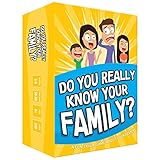
Overview:
This card game transforms family time into a laughter-filled exploration of shared memories and personalities. With 200+ prompts and dares, it challenges players aged 8+ to answer quirky questions (“What’s Mom’s most embarrassing habit?”) or complete silly tasks (“Do your best dance move”), deepening bonds through playful vulnerability.
What Makes It Stand Out:
Unlike trivia-heavy games, it prioritizes authentic connection via open-ended questions that reveal hidden quirks and shared history. The “challenge” cards inject physical comedy, while the inclusive design ensures kids, teens, and adults contribute equally—no reading required beyond simple prompts.
Value for Money:
Priced moderately, it delivers exceptional relational ROI. The high card count and broad age appeal (8–adult) mean one purchase serves growing families for years, outperforming niche party games that exclude younger members or lack emotional depth.
Strengths and Weaknesses:
Strengths: Masterful icebreaker for shy families; creates lasting inside jokes; zero setup; adaptable for virtual play.
Weaknesses: Some prompts feel repetitive; deeper conversations may fizzle with non-participatory teens; limited replay if family dynamics don’t evolve.
Bottom Line:
An essential tool for modern families craving genuine connection. Its ability to spark joy and insight—without complex rules—makes it a uniquely valuable game night hero for households seeking meaningful, laughter-filled interaction.
Understanding Your Child’s Developmental Stage
Before even glancing at a game box, tuning into your child’s current abilities and interests is the most crucial step. What captivates a three-year-old often baffles a six-year-old, and vice versa. Matching the game’s demands to their developmental sweet spot is the key to engagement and avoiding frustration.
Age Appropriateness Beyond the Box Label
While manufacturers provide age ranges, these are often broad estimates. Look deeper than the number. A game labeled “4+” might involve fine motor skills your specific four-year-old hasn’t quite mastered, or complex cooperative decisions they find overwhelming. Observe your child: Can they handle small pieces safely? Do they grasp basic turn-taking? Are they starting to recognize simple patterns or numbers? Choose games targeting skills they are just beginning to develop, offering a gentle challenge, not a steep cliff.
Recognizing Evolving Attention Spans
The mythical “perfect game length” for young children is short and sweet. Preschoolers typically engage deeply for 10-15 minutes, while early elementary might stretch to 20-25 minutes. Games promising “quick play” are essential. Watch for signs of restlessness – fidgeting, ignoring rules, making up new “rules” – as your cue that it’s time to wrap up, even if the game isn’t “finished.” Ending on a positive note ensures they’ll want to play again.
Interests as Your Guiding Light
A game about dinosaurs will hold the attention of a dino-obsessed four-year-old far longer than the most beautifully illustrated game about gardening. Tap into their current passions, whether it’s favorite animals, vehicles, fairy tales, or simple silly actions. When the theme resonates, the learning and social interaction happen almost invisibly within the context of their existing joy.
Essential Game Mechanics for Young Players
The way a game works is paramount for this age group. Complex rules or excessive luck can derail even the most promising theme. Prioritize mechanics that are intuitive, physically engaging, and foster positive interaction.
Simplicity in Rules and Setup
If explaining the rules takes longer than the actual playtime, it’s too complicated. Ideal games for young children have core mechanics that can be demonstrated in under a minute: “Roll the big die, move that many spaces, do what the space says!” Setup should be equally fast – unfolding a board, placing a few tokens. Avoid games requiring intricate assembly, multiple rulebooks, or lengthy preparation that kills the initial excitement.
High Player Interaction and Engagement
Games where players are constantly involved, even on others’ turns, prevent boredom. Look for mechanics like simultaneous play (everyone doing something at once), direct helping (“pass this token to the player who needs it”), or simple shared goals. Avoid long stretches where a child sits idle waiting for their next move; this is a prime setup for disengagement or rule-breaking.
Physical Components and Tactile Appeal
Young children learn through touch. Games incorporating chunky, easy-to-grasp pieces, spinners instead of small dice, textured tokens, or even simple movement (like acting out what a card says) are inherently more engaging. Consider the sensory experience: are the pieces satisfying to hold? Do they encourage physical interaction beyond just moving a meeple? Safety is non-negotiable – ensure all pieces are too large to be a choking hazard.
Fostering Key Skills Through Play
The most valuable family games subtly weave in opportunities for growth. These aren’t drills disguised as fun, but natural integrations where learning happens because it’s necessary to play and succeed within the game’s joyful context.
Building Foundational Cognitive Abilities
Simple matching games strengthen visual discrimination and memory. Counting spaces moved or tokens collected reinforces early numeracy. Following a sequence of steps on a card develops logical thinking. Games requiring players to identify a color or shape on the board support early categorization skills. The key is that these skills are the means to play and win, not the isolated focus, making practice feel like discovery.
Nurturing Social-Emotional Development
Game night is a microcosm of social interaction. Taking turns teaches patience and respect. Winning and losing (even in cooperative games where the group succeeds or fails together) provides safe, low-stakes practice for managing big emotions. Cooperative games, where players work together against the game itself, are particularly powerful for reducing competitiveness, fostering teamwork, communication (“You go here!”), and shared problem-solving without the sting of one child “beating” another.
Encouraging Communication and Language
Games are fantastic language catalysts. Naming colors, shapes, animals, or actions on cards builds vocabulary. Explaining why they chose a certain move (“I put the red one here because…”) develops reasoning and verbal expression. Cooperative games especially require players to discuss strategies and make joint decisions, prompting natural conversation. Look for games that provide open-ended prompts or require descriptive language.
Practical Considerations for Real Family Life
Beyond developmental fit and learning potential, the realities of family life dictate what games actually get played. Durability, storage, and sheer convenience are make-or-break factors for busy households.
Durability: Surviving the Tumbles and Tears
Young children are not known for their gentle handling. Boards need to be thick and resistant to bending. Cardboard tokens should be sturdy, not flimsy. Artwork should be laminated or coated to withstand sticky fingers and the occasional spill. Avoid games with tiny, fragile pieces or intricate 3D structures that will inevitably break. Test the components – bend a card, see if the board holds up to being sat on (it will happen!).
Storage and Portability Matters
Games that come with a flimsy box that disintegrates or components that don’t have a clear, contained storage solution are destined for lost pieces and frustration. Look for games with trays that organize pieces within the box, or components that nest together securely. If you travel or visit grandparents often, consider the size and weight – a massive box might stay on the shelf, while a compact game fits easily in a bag.
Balancing Gameplay for Mixed Ages
Many families have kids of varying ages. The ideal game allows a younger preschooler to participate meaningfully alongside an older sibling, perhaps with simplified roles or allowing older players to gently assist without taking over. Cooperative games often excel here, as players can contribute at their own level towards a common goal. Avoid games where speed or complex strategy gives older kids an overwhelming, demoralizing advantage.
Creating the Optimal Game Night Environment
Even the best game can fall flat if the setting isn’t right. Setting the stage for success transforms game time from potentially stressful to reliably joyful.
Choosing the Right Time (Avoiding Meltdown Mode)
Never force game time when everyone is hungry, overtired, or already cranky. Pick a moment when energy levels are reasonably stable – perhaps after a snack but before the pre-bed rush. Keep initial sessions short; you can always extend play if enthusiasm is high. A rushed game squeezed between appointments rarely ends well.
Managing Expectations and Emotions Proactively
Before starting, briefly set positive expectations: “We’re going to take turns and help each other!” Normalize big feelings: “It’s okay to feel sad if we don’t win, but we don’t throw pieces.” Focus praise on effort and good sportsmanship (“I love how you helped your sister find her turn!”), not just winning. For competitive games, emphasize the fun of playing together over the outcome, especially with very young players.
Adapting Rules for Success
Don’t feel bound by the rulebook! If a rule consistently causes tears or confusion, simplify it. Can you make a competitive game cooperative? Can you remove a complex element for the first few plays? The goal is shared enjoyment and connection, not rigid adherence to every detail. Be flexible and prioritize the positive experience over “correct” gameplay.
Looking Towards Future Play Value
Investing in a game means hoping it gets played more than once. Consider how the game can evolve alongside your child to maximize its lifespan on your shelf.
Scalable Complexity
The best games for young children often have built-in ways to increase the challenge as skills develop. This might be optional advanced rules printed right on the board, alternative ways to win, or components that allow for different configurations. A game that grows from a simple matching activity for a three-year-old into a slightly more strategic game for a six-year-old offers incredible long-term value.
Replayability Through Variety
Games relying on pure luck (like simple roll-and-move) can become monotonous quickly. Look for elements that create different experiences each time: variable setups, different paths to victory, or player choices that significantly impact the game state. Even small variations – like drawing different action cards – keep the experience fresh and prevent the “we did this yesterday” complaint.
Encouraging Creativity and Imagination
Games that don’t have a single rigid path often inspire kids to create their own variations or stories around the components. Does the board look like a landscape they can narrate? Can the tokens become characters in an improvised tale? Games that leave room for imagination extend their play life far beyond the intended rules, becoming springboards for independent or collaborative storytelling.
Frequently Asked Questions
Frequently Asked Questions
How do I know if a game is truly age-appropriate beyond the box label? Observe if the core actions (like moving pieces, matching symbols, understanding simple cause-and-effect) align with your child’s current abilities. Can they grasp the main goal quickly? Do they seem frustrated by the physical components? If explaining takes more than 60 seconds or setup is complex, it’s likely too advanced.
What’s more important for young kids: competitive or cooperative games? Cooperative games are often ideal starting points as they eliminate the stress of direct competition, foster teamwork, and allow children of mixed ages to play together successfully. However, very simple competitive games with clear, immediate rewards and short playtimes can also work well as kids develop; focus on managing expectations around winning/losing.
How short should a game session be for a preschooler? Aim for 10-15 minutes for ages 3-4, potentially stretching to 15-20 minutes for ages 5-6. The key is stopping while they’re still engaged and asking for more, not waiting until frustration sets in. You can always play the same game again another day.
My child gets upset when they lose. How can we handle this? Focus intensely on the process, not the outcome. Praise effort, good turns, and helping others. For competitive games, keep them very short and simple initially. Emphasize that everyone gets to play again. For highly sensitive children, start exclusively with cooperative games where the group wins or loses together.
Are games with small parts ever safe for young children? Generally avoid games with small parts for children under 3, or for any young child prone to mouthing objects. Always check for choking hazard warnings. Opt for games with large, chunky, easy-to-grasp components specifically designed for preschoolers. Safety is paramount.
How can I encourage my shy child to participate more? Choose games with minimal direct pressure, like cooperative games or those with simultaneous actions. Let them play alongside an adult or sibling initially without forcing heavy interaction. Use encouraging, low-key narration (“Oh look, you found the blue token!”). Never force participation; let them observe first.
What should I do if my child wants to constantly change the rules? It’s natural for young children to want to bend rules! First, ensure the official rules are genuinely too complex. If they are, simplify them together. If the core rules are simple, gently but consistently reinforce them: “In this game, we always take turns like this. Maybe next time we can make up our own version!” Redirect the creativity to storytelling around the game.
How do I clean up quickly when kids lose interest mid-game? Involve them in cleanup as part of the routine: “When the game ends, our job is to put all the blue pieces back in the blue tray.” Make it a quick game itself (“Can we beat the timer?”). If they disengage, calmly state you’ll put it away and try again later – but follow through immediately so they learn cleanup is non-negotiable.
Can screen-based family games replace physical board games for young children? Physical games offer irreplaceable benefits: fine motor skill development through handling pieces, face-to-face social interaction without screen distraction, and tangible cause-and-effect learning. While some digital games have value, prioritize physical board games for core family game nights with young children to foster these essential developmental experiences.
How often should we aim for family game night? Consistency matters more than frequency. Even a short, positive 15-minute session once a week is more valuable than a stressful, infrequent marathon. Let the positive experience build anticipation. If nightly play happens organically, great! But forcing it daily often leads to burnout. Follow your family’s natural rhythm and energy.
See Also
- 10 Game-Changing Doodle Board Games for Creative Families in 2026
- 10 Best Board Games for Families That Hate Competition in 2026
- The 10 Best Mind Game Board Games for Sharpening Focus in 2026
- 10 Best Value Board Games for Game Night Hosts in 2026
- 10 Most Durable Classic Board Games Based on Real User Reviews in 2026