Table of Contents
Imagine sitting around a table where the clatter of dice isn’t just about luck, but about the rhythms of ancient trade routes. Picture moving pieces across a board that transforms into a living map of empires rising and falling, where every decision sparks a conversation about real people who walked the earth centuries ago. Historical board games offer this unique alchemy: they take the sometimes-distant, textbook version of the past and make it immediate, tangible, and deeply engaging. They transform passive learning into active participation, allowing players to experience the challenges, dilemmas, and triumphs of bygone eras in a way lectures or reading alone simply cannot replicate. It’s learning that doesn’t feel like learning – it feels like an adventure.
Forget dry dates and rote memorization. These games invite players to step into the shoes of explorers navigating uncharted waters, diplomats forging fragile alliances, or communities adapting to dramatic societal shifts. The beauty lies in the subtle education woven into the mechanics: managing scarce resources teaches the harsh realities of pre-industrial life; negotiating treaties illuminates the delicate balance of power; and strategic choices about expansion or defense reveal the complex consequences of historical decisions. Whether you’re a parent seeking enriching family time, an educator looking for dynamic classroom tools, or simply a curious mind eager to connect with history on a deeper level, understanding how to choose the right historical game is the key to unlocking this powerful blend of fun and knowledge. Let’s explore how to find the perfect game that turns the past into a vibrant, interactive lesson.
Top 10 Historical Board Games
Detailed Product Reviews
1. Buffalo Games - Chronology - The Game Where You Make History - Historical Timeline Trivia for 2+ Players, Ages 14+

Overview:
Chronology challenges players to construct accurate historical timelines by sequencing major events spanning 2,000 years. Designed for 2-8 participants aged 14+, this trivia game transforms historical knowledge into competitive, brain-teasing fun where each correct placement expands your timeline toward victory.
What Makes It Stand Out:
Its brilliance lies in the 800 unique, updated cards (now including events through 2024) that test even history enthusiasts. The simple “place the card” mechanic ensures quick setup and accessibility, while the educational core seamlessly blends learning with strategic deduction. The flexible player count makes it equally engaging for intimate gatherings or lively game nights.
Value for Money:
Priced moderately for a high-component-count trivia game, Chronology delivers exceptional replayability. The vast card pool minimizes repetition, outlasting cheaper trivia sets with limited questions. While niche compared to party games, its educational depth justifies the cost for families, educators, or history lovers seeking substantive entertainment.
Strengths and Weaknesses:
Strengths: Highly educational, easy to learn, scalable for groups, durable components, constantly challenging.
Weaknesses: Can frustrate absolute history novices, limited visual appeal (text-heavy cards), occasional ambiguity in event dating.
Bottom Line:
An outstanding, intellectually stimulating game that makes history tangible. Ideal for trivia nights or classrooms, it earns strong recommendation for its perfect fusion of education and engagement—just ensure your group enjoys cerebral challenges over luck-based play.
2. 25th Century Games Resist!, Solo Only Historical War Themed Card Strategy Game

Overview:
Resist! immerses solo players as Spanish Maquis guerrillas resisting Franco’s regime in a tense, card-driven narrative. This compact strategy game tasks you with completing escalating missions while managing dwindling resources, blending historical weight with high-stakes decision-making across short, replayable sessions.
What Makes It Stand Out:
Its unique “deck-destruction” mechanic flips traditional deck-builders: you actively deplete your deck to survive threats, forcing agonizing choices between immediate safety and mission progression. The historical theme isn’t superficial—every card reflects authentic resistance struggles, creating profound emotional stakes rarely seen in solitaire games.
Value for Money:
As a dedicated solo experience, Resist! offers remarkable depth for its price. The intense 15-30 minute plays, high replayability through variable setups, and thematic richness eclipse many multi-player games costing twice as much. Essential for solitaire strategy fans seeking narrative depth.
Strengths and Weaknesses:
Strengths: Innovative mechanics, deeply thematic, quick setup/play, high replayability, emotionally gripping.
Weaknesses: Strictly solo-only (no multiplayer), steep difficulty curve may frustrate casual players, limited physical components.
Bottom Line:
A masterclass in solo gaming design that transforms historical resistance into pulse-pounding strategy. Despite its niche focus, Resist! is indispensable for solitaire enthusiasts and earns our highest recommendation for its originality and emotional resonance.
3. Renegade Game Studios Axis & Allies: 1941 - A WWII Strategy Board Game, Renegade Game Studios, Epic War Game Set in 1941, Struggle for Supremacy, Ages 12+, 2-5 Players, 1-3 Hour Playing Time

Overview:
Axis & Allies: 1941 distills WWII grand strategy into a streamlined 1-3 hour experience. Players command major powers (Allies or Axis) across a detailed map, deploying 160 plastic miniatures to conquer territories through tactical combat, resource management, and alliance building for 2-5 players aged 12+.
What Makes It Stand Out:
It bridges accessibility and depth perfectly—simpler than franchise predecessors yet retaining meaningful strategic choices. The resealable miniature storage, updated rulebook resolving past ambiguities, and sturdy box elevate usability. Combat’s dice-driven tension captures wartime uncertainty without overwhelming complexity.
Value for Money:
The component density (miniatures, maps, markers) justifies its mid-range price, especially versus pricier war games. While less detailed than 4+ hour epics, 1941’s balanced playtime and polished rules offer better value for casual strategists seeking impactful WWII engagement without marathon sessions.
Strengths and Weaknesses:
Strengths: Approachable rules, premium miniatures, efficient playtime, excellent component organization, strong player interaction.
Weaknesses: Simplified history may disappoint hardcore wargamers, luck-dependent combat, limited strategic depth compared to complex counterparts.
Bottom Line:
An ideal entry point to WWII strategy gaming. Axis & Allies: 1941 excels as a tense, visually impressive game that balances accessibility with authentic conflict—highly recommended for families and new strategists, though veterans may crave more granularity.
4. Hasbro Gaming Avalon Hill Diplomacy Cooperative Board Game, European Political Themed Strategy Game, Ages 12 and Up, 2-7 Players

Overview:
Diplomacy plunges 2-7 players into pre-WWI European power struggles, where negotiation—not dice—determines victory. Command nations like Germany or Russia across a detailed map, using 315 pieces (fleets, armies, markers) to forge alliances, betray allies, and dominate 1901 Europe in this 6-hour test of trust and cunning.
What Makes It Stand Out:
Its pure negotiation focus creates unparalleled social dynamics: victory hinges entirely on persuasion, deception, and reading opponents. The absence of randomness forces pure strategic/social mastery, while the 7-player capacity enables epic, historically resonant political theater unmatched in mainstream board gaming.
Value for Money:
The massive component count (315 pieces) and timeless gameplay offer decades of replayability, making it a worthy investment despite the steep time commitment. Cheaper alternatives lack its depth, but casual groups may balk at the 6-hour runtime—this is a specialist purchase for dedicated strategy circles.
Strengths and Weaknesses:
Strengths: Zero luck, profound social interaction, immense strategic depth, historically rich, highly replayable.
Weaknesses: Extremely long playtime, vulnerable to player elimination (early betrayals), requires skilled negotiators to shine.
Bottom Line:
A masterpiece of political strategy that demands commitment but rewards with unmatched social intrigue. Recommended only for patient groups who relish complex negotiation—avoid if you prefer shorter games or dislike interpersonal conflict.
5. Secret Hitler

Overview:
Secret Hitler is a social deduction game where 5-10 players navigate pre-WWII German politics, with liberals trying to enact democracy while hidden Fascists (including the titular “Hitler”) sabotage the government. Using secret role cards and voting mechanics, it creates intense paranoia and bluffing in 30-minute rounds.
What Makes It Stand Out:
Its genius lies in asymmetric hidden roles and rapid-fire deception. The wooden components and foil-inlaid boards elevate tactile quality, while the envelope system for secret roles heightens suspense. The game’s brevity and scalability (5-10 players) make it ideal for parties craving quick, high-stakes drama.
Value for Money:
Priced accessibly, it outperforms many deduction games with its polished components and relentless replayability. The 30-minute runtime allows multiple plays per night, offering more value per minute than longer games—especially for large groups seeking affordable, engaging social experiences.
Strengths and Weaknesses:
Strengths: Incredibly fast setup/pace, superb for large groups, high re-playability, beautiful components, easy to teach.
Weaknesses: Shorter depth than strategy-heavy alternatives, vulnerable to dominant personalities, limited physical player aids.
Bottom Line:
A near-perfect party game that masterfully blends tension, humor, and deduction. Secret Hitler earns top marks for delivering explosive social fun in minimal time—essential for game nights prioritizing engagement over complexity.
6. Board & Dice: Tiletum - A Deeply Thematic Dice-Management Eurogame, Play As Merchants in The Early Days of The Renaissance, Ages 14+, 1-4 Players, 60-100 Minute Playing Time

Overview: Tiletum is a medium-weight Eurogame by Board&Dice where 1-4 players embody Renaissance merchants traversing Europe from Tielt to Venice. It centers on innovative dice management where each die serves dual purposes—securing resources like wood or stone and activating specific actions to develop your estate. The theme of burgeoning mercantile power is tightly woven into the mechanics, offering a satisfying puzzle within a 60-100 minute session.
What Makes It Stand Out: Its standout feature is the elegant dual-function dice system, eliminating downtime by keeping players engaged during others’ turns through strategic anticipation. Player-driven scoring phases allow flexible timing for cashing in resources, adding dynamic tension. The art and components evoke the Renaissance era beautifully, while the “T-Game” lineage ensures polished, intuitive mechanics familiar to strategy enthusiasts.
Value for Money: Priced competitively for its component quality and depth, Tiletum offers excellent value. It surpasses simpler dice chuggers in strategic depth and provides more thematic immersion than abstract Euros at a similar price point. The replayability from variable setups justifies the cost for fans of medium-complexity strategy games.
Strengths and Weaknesses: Strengths: Brilliant dual-use dice mechanics; strong theme integration; minimal downtime; high replayability. Weaknesses: Can feel AP-prone with new players; limited direct player interaction; setup is slightly fiddly due to multiple resource tracks.
Bottom Line: Tiletum is a must-try for Eurogame lovers seeking thematic depth and clever mechanics. Its elegant design balances strategy and accessibility, making it a standout in the dice-management genre despite minor pacing hiccups. Highly recommended for 1-4 players.
7. Facade Games Deadwood 1876 Card Game of Strategy, Deceit, and Luck for 2-9 Players

Overview: Deadwood 1876 plunges 2-9 players into the chaotic Gold Rush era of South Dakota’s lawless town. This social deduction card and dice game combines strategic safe-cracking with betrayal, where players form temporary alliances at saloons and hotels to amass gold. Lasting 20-40 minutes, it emphasizes quick decisions, hidden roles, and dramatic shootouts, targeting teens and adults seeking chaotic fun.
What Makes It Stand Out: The game excels in scalability, smoothly accommodating up to 9 players without dilution—a rarity in social deduction. The blend of dice-driven robbery, card-based character abilities, and a thrilling final shootout creates unpredictable, narrative-rich sessions. High-quality components like engraved dice and a faux-book box enhance the Wild West immersion.
Value for Money: With robust components and exceptional player count flexibility, Deadwood 1876 justifies its price. It outperforms many party games in production value and offers more structured strategy than pure bluffing games like Werewolf, though lighter than dedicated strategy titles. Ideal for large groups seeking affordable, high-energy entertainment.
Strengths and Weaknesses: Strengths: Unmatched 2-9 player scalability; engaging theme integration; quick setup and playtime; excellent components. Weaknesses: Luck-dependent dice rolls can overshadow strategy; alliances feel fleeting, reducing long-term tension; minimal depth for hardcore strategists.
Bottom Line: Deadwood 1876 is a top pick for lively game nights with big crowds, delivering chaotic Wild West fun through accessible mechanics and stellar components. While luck plays a role, its social dynamism and replayability make it a worthwhile investment for party-game enthusiasts.
8. Capstone Games: Watergate, Strategy Board Game, History of Watergate Included, 2-Player Game of The Year 2019, Ages 12 and Up, 30-60 Minute Playtime

Overview: Watergate is a critically acclaimed two-player asymmetric strategy game where one player embodies the Nixon Administration fighting to suppress the scandal, while the other is a Journalist racing to uncover evidence. Using distinct card decks reflecting historical events, players engage in a tense 30-60 minute duel over momentum and evidence chains, enriched by included historical context.
What Makes It Stand Out: Its brilliance lies in razor-sharp asymmetry: Nixon builds momentum to obstruct, while the Journalist connects informants via evidence. The card-driven mechanics mirror real scandal dynamics (e.g., Saturday Night Massacre events), creating unparalleled historical synergy. Streamlined rules deliver deep strategy without bloat, earning its 2019 Game of the Year title.
Value for Money: Exceptional value for a premium two-player experience. Components (wood markers, quality cards) and historical depth surpass many competitors. It offers more strategic richness than abstract duels like Hive and greater educational value than thematic light games, justifying its price for strategy and history buffs.
Strengths and Weaknesses: Strengths: Masterful asymmetric design; deeply immersive historical integration; tense, balanced gameplay; highly replayable scenarios. Weaknesses: Limited to two players; steep learning curve for non-strategists; minimal luck—can feel deterministic after mastery.
Bottom Line: Watergate is essential for two-player strategy fans. Its perfect marriage of theme, mechanics, and historical education creates a gripping, replayable duel. Despite niche appeal, its brilliance makes it a standout investment for serious gamers.
9. Gartenbau, Strategy Board Game Gardening in The 19th Century, Historical Art, Mensa Select Winner - 25th Century Games
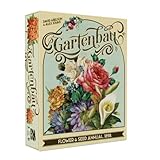
Overview: Gartenbau is a Mensa Select-winning abstract strategy game where 2-4 players design 19th-century gardens across three vertical tile layers. Using simple tile-laying mechanics, players compete to create harmonious floral arrangements by matching colors and shapes while blocking opponents. Its historical botanical art and dual difficulty levels cater to families and puzzle enthusiasts.
What Makes It Stand Out: The innovative three-tiered board transforms standard tile placement into a spatial puzzle, demanding forward planning as lower-layer choices impact upper layers. The inclusion of beginner and advanced rules ensures accessibility, while the stunning 19th-century botanical illustrations provide serene aesthetic appeal rare in abstracts.
Value for Money: Priced moderately, Gartenbau offers solid value through high replayability and heirloom-quality art. It provides more strategic depth than Carcassonne: Kids but less complexity than Cascadia, fitting perfectly as a gateway for families or casual gamers seeking thoughtful, non-confrontational play.
Strengths and Weaknesses: Strengths: Unique three-level spatial puzzle; beautiful historical artwork; quick to learn with scalable depth; Mensa-endorsed for cognitive appeal. Weaknesses: Limited player interaction; theme is purely aesthetic; advanced rules add complexity without dramatic gameplay shifts.
Bottom Line: Gartenbau is a serene, intellectually satisfying puzzle ideal for families and art lovers. Its elegant mechanics and visual charm justify its cost, though its niche appeal may not suit competitive gamers. A refined choice for peaceful strategy sessions.
10. Memoir ‘44 Board Game - WWII Historical Board Game of Epic Battles! Tabletop Miniatures Strategy Game for Kids & Adults, Ages 8+, 2-8 Players, 30-60 Minute Playtime, Made by Days of Wonder

Overview: Memoir ‘44 is a WWII-themed strategy game for 2-8 players, featuring plastic miniatures and historically inspired battles. Players command troops across varied terrains using simple card-driven commands and dice combat, recreating iconic scenarios like D-Day in 30-60 minutes. Its accessible rules make it a staple for families and casual war-game fans.
What Makes It Stand Out: The game shines through its educational yet approachable design—authentic battle setups teach history organically, while modular boards and diverse units (tanks, paratroopers) enable dynamic tactics. The plastic miniatures and terrain enhance immersion without overwhelming complexity, bridging wargaming and family play.
Value for Money: Excellent value with durable miniatures, multiple scenarios, and high player count flexibility. It surpasses cheaper card games in physical quality and offers more historical depth than abstract strategy games at a similar price, though hardcore wargamers may find it too light.
Strengths and Weaknesses: Strengths: Highly accessible for ages 8+; strong historical integration; versatile for 2-8 players; engaging miniatures; quick setup. Weaknesses: Luck-heavy dice combat; limited strategic depth for veterans; scenario repetition over time.
Bottom Line: Memoir ‘44 remains a top recommendation for introducing historical strategy to families. Its blend of education, accessibility, and physical charm delivers outstanding entertainment per dollar, cementing its status as a modern classic.
Choosing Historical Board Games for Authentic Learning
Understanding the Core Educational Goal
Before diving into themes or mechanics, clarify what you want to learn or teach. Are you focusing on a specific time period like the Renaissance or the Cold War? Is the goal understanding economic systems, cultural exchange, military strategy, or social structures? Pinpointing the primary educational objective helps filter out games that merely use history as a superficial backdrop. A game centered on resource management in ancient Mesopotamia serves a very different purpose than one simulating diplomatic negotiations during the Congress of Vienna. Knowing your goal ensures the game’s core mechanics directly support the intended learning outcome.
Evaluating Historical Accuracy vs. Playability Balance
Perfect historical simulation often sacrifices fun, while pure entertainment can distort facts. The sweet spot lies in games that prioritize plausible historical experiences over rigid accuracy. Look for titles developed with input from historians or that transparently explain where they take creative liberties for gameplay flow. Does the game capture the spirit and key constraints of the era (e.g., communication delays, technological limitations, cultural norms) even if specific events are abstracted? Avoid games that blatantly contradict well-established historical facts for the sake of mechanics, as this can reinforce misconceptions.
Assessing Age Appropriateness and Cognitive Load
Complexity isn’t just about rules length; it’s about cognitive demands. A game with intricate economic systems might overwhelm younger players, even if the theme seems appealing. Conversely, oversimplified games may bore teens or adults seeking depth. Consider reading level required for cards or rules, the need for abstract thinking (e.g., understanding long-term strategy vs. immediate actions), and the emotional maturity needed to handle themes like conflict or scarcity. A game suitable for a 10-year-old exploring ancient Egypt might focus on building monuments with simple resource gathering, while a high school version could involve nuanced trade negotiations reflecting geopolitical tensions.
Analyzing Gameplay Mechanics for Learning Potential
The way a game works is crucial for education. Does it encourage critical thinking through meaningful choices? Mechanics like variable player powers can illustrate different societal roles or national strengths. Set collection might represent gathering historical knowledge or resources. Worker placement can model labor allocation in different economic systems. Look for mechanics that require players to analyze situations, weigh trade-offs, adapt strategies based on changing “historical” events (simulated through the game), and understand cause-and-effect relationships within the historical context. Avoid games where luck dominates strategy, as this minimizes the opportunity to engage with historical reasoning.
Considering Thematic Integration Depth
Superficial history is just artwork on the box. True thematic integration means the mechanics feel like the history they represent. Moving a ship across a map because you rolled a 5 isn’t deeply thematic; successfully navigating a trade route by managing crew morale, cargo space, and weather events is. Ask: Do the rules and player actions directly connect to the historical setting? Does winning require understanding the era’s challenges? Strong thematic integration makes the learning organic – players grasp concepts because the game mechanics necessitate it, not because a rulebook footnote mentions it.
Maximizing the Educational Experience
Pre-Game Context Setting is Key
Don’t expect the game to teach history in a vacuum. A brief, engaging introduction primes the brain for learning. Share 2-3 key facts about the era, the main historical challenges players will face, or the real-world figures/events the game abstracts. For younger players, a short story or image can set the scene. This context helps players connect the abstract game components (cards, tokens, boards) to real historical concepts, making the subsequent gameplay a meaningful exploration rather than just a puzzle to solve.
Facilitating Reflective Play During the Game
The real learning often happens in the discussions during play. Encourage questions like, “Why do you think building that pyramid cost so many resources?” or “How did that unexpected event (like a drought card) mirror real historical challenges?” Prompt players to justify their strategic choices based on the historical setting: “You chose to negotiate instead of fight – what historical examples might that reflect?” This active reflection transforms gameplay from a sequence of moves into a dynamic historical analysis session, deepening understanding in real-time.
Structuring Meaningful Post-Game Debriefs
Dedicate time after the game ends to synthesize the experience. Discuss what surprised players, what strategies worked (and why, historically), and where the game might have simplified or diverged from reality. Compare game outcomes to actual historical results: “In the game, we focused on trade, but what other factors led to the actual fall of this empire?” This debrief solidifies connections between the game’s abstractions and real historical cause-and-effect, moving beyond “who won” to “what did we learn about how this period actually functioned?”
Integrating Supplementary Resources Seamlessly
Use the game as a springboard, not the entire curriculum. Pair gameplay with targeted resources: a short documentary clip about the real trade routes simulated, primary source documents reflecting the negotiations players engaged in, or maps showing the actual geography. Choose resources that address specific questions or themes that arose during play, making the supplementary material immediately relevant and reinforcing the experiential learning from the game. Avoid overwhelming players; select one or two high-impact resources per session.
Navigating Different Historical Periods and Themes
Ancient Civilizations: Foundations and Innovations
Games set in antiquity often focus on foundational developments: agriculture, early writing systems, monument building, and the rise of city-states. Look for mechanics that model resource scarcity in early settlements, the spread of innovations along trade networks, or the management of labor for large-scale projects. These games excel at illustrating how environmental factors and basic technological advancements shaped the trajectory of early societies, making concepts like the Neolithic Revolution tangible through resource conversion mechanics.
Medieval Societies: Faith, Feudalism, and Fortifications
The Middle Ages offer rich ground for exploring feudal hierarchies, religious influence, castle construction, and the complexities of pre-modern warfare. Effective games in this period often involve area control, resource management tied to land and vassals, and strategic placement reflecting the importance of fortifications. They can vividly demonstrate the decentralized nature of power, the economic basis of feudal obligations, and the constant interplay between military defense and agricultural productivity that defined medieval life.
Age of Exploration and Colonialism: Trade, Conflict, and Cultural Exchange
This era demands careful handling due to its complex and often painful legacy. Strong games focus on navigation challenges, the economics of global trade networks (including the tragic reality of the slave trade, handled with appropriate gravity), and the consequences of cultural encounters. Mechanics might involve route planning with limited information, managing risk on long voyages, or negotiating with diverse factions. The best titles encourage critical thinking about power dynamics, unintended consequences, and the global interconnectedness spurred by exploration, avoiding glorification of conquest.
Revolutionary Periods: Ideals, Uprisings, and New Nations
Games simulating revolutions (American, French, etc.) or independence movements delve into political ideology, coalition building, resource mobilization during conflict, and the challenges of nation-building. Key mechanics often include influencing factions, managing public opinion, balancing military and diplomatic efforts, and navigating internal dissent. These games powerfully illustrate the messy reality of revolutionary change – the gap between ideals and implementation, the role of key individuals and mass movements, and the difficult choices inherent in establishing new political orders.
Industrial Revolution and Modern Conflicts: Scale, Speed, and Complexity
The 19th and 20th centuries introduce themes of rapid technological change, mass production, urbanization, and large-scale warfare. Games here might feature complex economic engines, logistics management on unprecedented scales, intricate diplomacy reflecting shifting global alliances, or asymmetric warfare. They effectively model how technology reshaped society, economy, and conflict, highlighting concepts like the arms race, the impact of railroads on strategy, or the societal pressures leading to labor movements and political reforms.
Practical Considerations for Different Settings
Family Game Nights: Balancing Fun and Learning
For families, accessibility and engagement are paramount. Prioritize games with clear, intuitive rules, shorter playtimes (under 60 minutes ideally), and vibrant components that capture attention. Cooperative mechanics can reduce competitive stress and foster teamwork in solving historical challenges. Ensure the theme resonates with the kids’ current interests (e.g., knights, pirates, ancient mysteries) while subtly weaving in educational elements. The goal is sustained enjoyment that naturally sparks curiosity, not a forced history lesson.
Classroom Integration: Curriculum Alignment and Management
Teachers need games that directly support specific curriculum standards and are feasible within class periods. Look for games with modular scenarios matching lesson objectives, clear setup/reset procedures, and components durable enough for repeated use. Consider scalability (can it handle 30 students in groups?) and the time required for rules explanation versus active play. Games with strong discussion prompts built into the mechanics or rulebook are invaluable for driving targeted historical analysis aligned with learning goals.
Homeschooling Flexibility: Depth and Pacing Control
Homeschoolers have the advantage of tailoring depth and duration. Choose games allowing for deep dives into specific events or systems, potentially playing over multiple sessions. Mechanics that enable players to explore different historical paths (e.g., “what if” scenarios within plausible bounds) are particularly valuable. The focus can shift towards detailed research prompted by in-game events, writing historical narratives based on gameplay outcomes, or extended comparative analysis between the game’s model and primary sources.
Library and Community Programs: Accessibility and Broad Appeal
Libraries and community centers need durable, easy-to-teach games that attract diverse age groups and experience levels. Games with strong visual storytelling, minimal text reliance, and quick setup are ideal. Consider thematic variety to appeal to different interests (not just military history). Programs can enhance value by pairing game sessions with short historical talks, artifact displays (replicas or images), or themed craft activities, making the game a central hub for a broader historical exploration experience.
Frequently Asked Questions
What’s the biggest mistake people make when choosing a historical board game for education?
Focusing solely on the theme depicted on the box without examining how the actual gameplay mechanics connect to historical learning. A game with beautiful Egyptian art might teach excellent set collection but zero about ancient Egyptian society if the mechanics are generic.
How can I tell if a game’s historical portrayal is respectful, especially for sensitive topics?
Look for publisher statements on research, consultation with cultural historians or community representatives, avoidance of harmful stereotypes in artwork and text, and mechanics that encourage critical thinking about power dynamics rather than glorifying oppression or violence.
Are cooperative historical games better for learning than competitive ones?
Not inherently. Both have value. Cooperative games foster teamwork in solving historical problems, while competitive games can effectively model rivalries, resource competition, and diplomatic negotiations. The key is whether the chosen dynamic authentically reflects the historical context being explored.
My child finds historical events “boring.” Can a board game really change that?
Often, yes. Games transform passive facts into active challenges. The inherent engagement of gameplay – making decisions, facing consequences, working towards a goal within a themed world – can spark genuine curiosity and make historical contexts feel relevant and exciting in a way textbooks sometimes fail to do.
How much historical “fudging” for gameplay is acceptable?
It depends on the educational goal. Abstraction (simplifying complex systems into manageable mechanics) is necessary. However, significant distortions of cause-and-effect, major events, or cultural realities to fit a generic game system undermine educational value. Transparency from the designer about liberties taken is a good sign.
What’s a good starting point for very young children (ages 5-8)?
Look for games with strong visual storytelling, minimal reading, simple matching or memory mechanics tied to historical concepts (e.g., matching tools to jobs in a medieval village), and quick playtimes. Physical interaction with components (like building a small pyramid with blocks) is highly engaging.
Can historical board games replace traditional learning methods?
No, and they shouldn’t try to. They are most powerful as a complement – a dynamic tool that provides experiential context, sparks interest, and reinforces concepts introduced through reading, lectures, or primary sources. They excel at making abstract historical forces tangible.
How do I handle it when the game’s outcome contradicts actual history?
This is a fantastic teaching moment! Discuss why the game allowed a different outcome (simplified mechanics, random elements, player choices). Compare the game’s model to the complex reality. Analyze the actual historical factors that led to the real result, deepening understanding of causality.
Are expensive games always more educational?
Not necessarily. Many highly educational games are mid-priced. Focus on the depth of thematic integration and learning potential relative to your specific goals, not the component cost or Kickstarter hype. Simpler, well-designed games often facilitate clearer historical understanding than overly complex, expensive ones.
How much time should I spend prepping before playing with students or kids?
For first-time plays, 15-30 minutes of focused rule study is usually sufficient. Crucially, also spend 5-10 minutes identifying 1-2 key historical concepts the game illustrates and preparing 1-2 open-ended questions to ask during or after play to guide reflection. Over-prepping on rules can be counterproductive; learn alongside the players.
See Also
- Stop Wasting Time on Boring Games with the 10 Best Quick Play Board Games This Year
- Stop Wasting Time on Generic Games with the 10 Best Historical Board Games This Year
- Stop Arguing Over Rules with the 10 Best Easy-to-Learn Board Games This Year
- Stop Arguing Over Rules with the 10 Best Abstract Board Games This Year
- The 10 Best Board Games Every New Player Needs This Year