Table of Contents
Imagine the scene: laughter bubbling up as someone frantically sketches a lopsided camel while their team shouts wildly inaccurate guesses. Crayon stubs roll off the table, sticky fingers leave smudges on scorecards, and even the quietest family member is suddenly animated, pointing at the drawing with gleeful recognition. This isn’t just playtime; it’s the magic of shared creativity sparking genuine connection, a powerful antidote to the digital noise that often fills our homes. Drawing games transform ordinary living rooms into vibrant studios of imagination, where the focus shifts from screens to smiles and the only “likes” that matter are the giggles earned from a brilliantly terrible sketch.
In an era where family time feels increasingly fragmented by individual devices and competing schedules, the simple act of putting pen to paper together holds surprising power. These games bypass complex rules or expensive setups, offering an accessible, screen-free activity that bridges generations effortlessly. Whether it’s a young child drawing their first recognizable cat or grandparents dusting off their artistic skills, the shared vulnerability of creating—and often hilariously failing—is what makes these moments stick. As we look toward 2026, the demand for authentic, engaging family interaction continues to rise, making the thoughtful selection of the right drawing game more important than ever for fostering those irreplaceable bonds and joyful memories.
Top 10 Drawing Games
Detailed Product Reviews
1. Telestrations 8 Player 2nd Edition Board Game, Award Winning Hilarious and Unpredictable Must Have Party Game with a New Look, Sketch What Your Read Then Guess What You Saw, 4-8 Players, Ages 10+

Overview: Telestrations 8 Player is a party game where players sequentially sketch and interpret phrases in a chain, creating a hilarious game of telephone with drawings. Designed for 4-8 participants aged 10+, it emphasizes chaotic fun over artistic skill, leveraging its unique passing mechanic to generate unpredictable outcomes.
What Makes It Stand Out: The game’s brilliance lies in its “telephone” structure: players draw a phrase, pass the sketch, then guess what it depicts, repeating until the phrase cycles back. This often results in wildly distorted final interpretations. The 2,000+ prompts (mixing classic and new) ensure replayability, while the updated design and focus on “delightfully terrible” art make it accessible and riotous for all skill levels.
Value for Money: Priced competitively for its player count and component quality (durable booklets, markers), it offers exceptional replay value. Compared to similar games, the included prompts and structured gameplay eliminate the need for expansions, justifying its cost for regular group gatherings.
Strengths and Weaknesses:
Strengths: Incredibly easy to learn; scales perfectly for 4-8 players; generates consistent laughter; high replayability; no drawing expertise needed.
Weaknesses: Limited to 8 players (smaller groups may feel sparse); booklet pages can tear with heavy use; storage isn’t compact for travel.
Bottom Line: An essential party game that delivers guaranteed laughter through its ingenious chain-drawing mechanic. Ideal for family nights or social gatherings, it’s worth every penny for groups of 4-8 seeking accessible, replayable fun.
2. Six Second Scribbles: The frantically Fast and fantastically Fun Drawing Game | A Family Friendly Party Game for Children, Teens and Adults (New Edition)
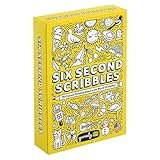
Overview: Six Second Scribbles challenges players to rapidly sketch 10 items from a single category within 60 seconds. Designed for groups of any size, this fast-paced game focuses on quantity over quality, turning frantic doodling into a laugh-out-loud guessing challenge suitable for ages 8+.
What Makes It Stand Out: Its unique simultaneous play—where all sketch at once before passing scribbles for guessing—creates constant engagement. The 1,000+ items across 100+ categories (from “food” to “cheeses”) offer surprising depth, while the tiny, eco-conscious box (card-sized) makes it supremely portable—a rarity for drawing games.
Value for Money: The compact design reduces production waste and cost, yet it delivers massive content. For the price, the sheer volume of categories and reusability (using included pencils/paper) outshines bulkier competitors, especially for travelers or casual gamers.
Strengths and Weaknesses:
Strengths: Incredibly portable; simultaneous play eliminates downtime; huge variety of categories; eco-friendly packaging; simple scoring.
Weaknesses: Tiny paper can be hard to draw on; guessing accuracy often hinges on deciphering messy scribbles; lacks structured team play.
Bottom Line: A brilliantly portable, high-energy alternative to traditional drawing games. Perfect for quick sessions or on-the-go fun, it’s a top pick for families and travelers who prioritize convenience and rapid gameplay.
3. Telestrations 12 Player 2nd Edition Board Game, Award Winning Hilarious and Unpredictable Must Have Party Game with a New Look, Sketch What Your Read Then Guess What You Saw, 4-12 Players, Ages 10+
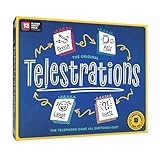
Overview: This expanded Telestrations edition accommodates up to 12 players, retaining the core “draw-interpret-pass” mechanic that made the original iconic. Players sketch phrases, pass booklets, and guess interpretations in a chaotic chain, creating escalating hilarity ideal for large gatherings of ages 10+.
What Makes It Stand Out: The standout feature is its scalability—handling 12 players smoothly without gameplay bloat. With 2,000+ prompts and the same beloved telephone-game effect, it generates even more unpredictable outcomes in bigger groups. The fresh design and “no skill required” ethos lower barriers to entry.
Value for Money: Justifying its slightly higher price than the 8-player version, it’s unmatched for large parties. Few games support 12 players so effectively, and the included components eliminate the need for multiple copies, making it economical for event hosts.
Strengths and Weaknesses:
Strengths: Exceptional for large groups (8-12 players); identical, proven hilarious gameplay; robust replayability; inclusive for non-artists.
Weaknesses: Overkill for small groups (<6); bulkier than smaller editions; booklet durability concerns persist.
Bottom Line: The definitive choice for big parties seeking Telestrations’ magic. If you regularly host 8+ players, this edition is a worthy investment that transforms any gathering into a laughter-filled event.
4. Spin Master Games, Rough Shapes, Quick-Drawing Game for Artists & Doodlers of All Levels with Hilarious & Challenging Prompts, Easy Indoor Activity, for Kids & Family, 3-10 Players, Ages 8 & Up

Overview: Rough Shapes tasks players with transforming abstract, pre-drawn “rough shapes” into depictions of secret words within 45 seconds. This judge-based game (3-10 players, ages 8+) emphasizes creativity under pressure, where the best interpretation—funniest or most clever—wins the round.
What Makes It Stand Out: The unique constraint of using provided funky shapes (e.g., squiggles, blobs) forces inventive thinking, distinguishing it from blank-canvas drawing games. The rotating judge role and focus on subjective scoring (“impress or amuse”) foster dynamic, personalized humor, accommodating all skill levels seamlessly.
Value for Money: Affordable and compact, it offers high replayability through diverse prompts and emergent player creativity. While lacking Telestrations’ volume of content, its novel mechanic provides fresher moments per playthrough compared to similar-priced games.
Strengths and Weaknesses:
Strengths: Innovative shape-based challenge; quick rounds (45 seconds); highly inclusive for kids/adults; portable; encourages creative problem-solving.
Weaknesses: Judge subjectivity can cause disputes; fewer included prompts than competitors; less structured for large groups (>8).
Bottom Line: A refreshing twist on drawing games that rewards imagination over accuracy. Best for smaller, creative groups wanting fast, adaptable fun—ideal for casual family nights or icebreaker sessions.
5. Mattel Games Pictionary Family Board Game for Kids, Adults and Game Night for 2 Teams with Erasable Markers, Boards and Sand Timer

Overview: Celebrating 40 years, this classic Pictionary edition pits two teams against each other in sketch-and-guess challenges using a physical board, erasable markers, and a sand timer. Designed for families, it includes tiered clues (including “Learn to Draw” tutorials) for ages 8+.
What Makes It Stand Out: Its legacy and structured board-game format provide familiar, competitive energy. The three-tiered clue system (including step-by-step drawing guides for kids) makes it uniquely accessible for mixed-age groups. “All Play” rounds, where both teams guess simultaneously, amplify engagement and reduce downtime.
Value for Money: As the original, it commands a slight premium but delivers polished components (durable boards, quality markers) and timeless appeal. Compared to newer alternatives, its focus on team strategy and tiered difficulty offers broader family utility per dollar.
Strengths and Weaknesses:
Strengths: Proven, intuitive gameplay; excellent for teaching kids drawing/guessing; team-based strategy; high-quality reusable components; inclusive clue levels.
Weaknesses: Less chaotic/funny than Telestrations; board limits portability; clue depth may feel shallow for repeat players.
Bottom Line: A reliably fun, family-oriented staple that excels in structured team play. While less unpredictable than newer games, it remains a top recommendation for traditional game nights prioritizing teamwork and accessibility.
6. Telestrations: After Dark 8 Player 2nd Edition Board Game, Adults-Only Laugh Out Loud Must Have Party Game, Sketch What You Read & Guess What You Saw, New Look, Same NSFW Fun, 4-8 Players, Ages 18+

Overview: Telestrations: After Dark is the raunchy sibling of the classic sketch-and-pass game, designed exclusively for adult gatherings. Players alternately sketch wild prompts and interpret others’ drawings through a telephone-style chain, resulting in gloriously inaccurate evolutions of the original phrase. With its 18+ rating, it leans heavily into NSFW humor. What Makes It Stand Out: The standout feature is its massive library of over 2,000 scandalous and absurd prompts specifically curated for mature audiences, ensuring no two games feel repetitive. The “chain reaction” mechanic—where a phrase transforms through multiple sketches and guesses—creates unparalleled, unpredictable comedy. The refreshed 2nd Edition design maintains the chaotic charm while feeling modern. Value for Money: Priced competitively against standard Telestrations sets, the adult-exclusive content justifies a slight premium for its target audience. The sheer volume of unique prompts and seamless integration into the core gameplay offer better replayability than generic party games, making it a smart investment for regular adult game nights. Strengths and Weaknesses: Strengths: Hilarious, high-energy group interaction; zero artistic skill required; excellent replay value with vast prompt variety. Weaknesses: Strictly limited to mature players (excludes mixed crowds); chain mechanics can stall with fewer than 6 players; occasional prompt overlap with base game editions. Bottom Line: An essential, riotously funny addition to any adult party game collection. Its targeted NSFW humor and perfected miscommunication chaos deliver unmatched group laughter, though families should opt for the standard version.
7. Brass Monkey Drawing from Memory - Social Party Game with 300+ Game Card Prompts for Drawing from Memory

Overview: Drawing from Memory flips traditional sketch games by challenging players to recreate familiar subjects—like cartoon characters or animals—strictly from recall, not sight. This 500+ prompt card game thrives on the universal struggle to visualize common icons accurately, turning artistic incompetence into competitive fun for all ages. What Makes It Stand Out: The genius lies in its “memory-only” constraint: players sketch without reference, ensuring even skilled artists falter (e.g., “draw Bugs Bunny from memory”). Secret, randomized judging criteria (e.g., “most unintentionally hilarious”) add strategic unpredictability, while whimsical prompts guarantee accessible, inclusive humor regardless of age or talent. Value for Money: At a modest price point, it outperforms many drawing games with its massive prompt library and durable components. The emphasis on shared frustration—not skill—makes it ideal for diverse groups, offering exceptional longevity compared to games requiring purchased expansions for replayability. Strengths and Weaknesses: Strengths: Universally engaging for mixed-age groups; brilliantly simple rules; prompts spark nostalgic debates. Weaknesses: Judging subjectivity can cause mild disputes; lacks physical components beyond cards/paper; memory challenge may frustrate very young children. Bottom Line: A brilliantly conceived party staple that turns collective forgetfulness into uproarious entertainment. Highly recommended for casual gatherings where laughter matters more than artistic merit.
8. BULLDOZER GAMES Doodle Disaster: The Art of Miscommunication | A hilarous Drawing Game, 2-6 Player Party Game for Families, Kids, and Adults | Dry erasers and 240 Image Cards
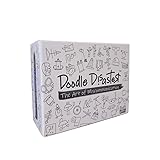
Overview: Doodle Disaster centers on miscommunication: one “Doodle Dictator” describes a hidden image using only lines and shapes while others sketch based solely on verbal instructions. This family-friendly game highlights how language gaps transform simple prompts into bizarre doodles, playable by ages 8+. What Makes It Stand Out: The “Doodle Dictator” role is revolutionary—players compete to give clearest instructions, shifting focus from drawing skill to descriptive ability. Short 2-minute rounds maintain high energy, while the dry-erase components and 240 cards enable quick setup and endless replayability without app dependencies. Value for Money: Its affordable price includes substantial physical components (dry-erase tools, cards), outperforming digital alternatives. The inclusive design works for kids and adults alike, making it a cost-effective choice for families seeking screen-free group entertainment versus pricier electronic games. Strengths and Weaknesses: Strengths: Unique instruction-based gameplay; fast-paced rounds; excellent for developing communication skills; minimal artistic pressure. Weaknesses: Dictator role can feel repetitive; younger kids may struggle with abstract descriptions; limited player count (max 6) for large groups. Bottom Line: A clever, accessible gem that transforms communication blunders into family fun. Ideal for game nights prioritizing teamwork and giggles over competitive intensity.
9. Educational Insights SpinDoodle - Fun Board Games for Adults, Teens and Kids, Party Games for Family Game Night, Funny Quick Drawing Game, Guess The Sketch, Groups of 4 Ages 8+

Overview: SpinDoodle reinvents drawing games with a motorized spinning whiteboard. Teams race to sketch and guess clues as the board rotates, adding physical challenge to the classic “draw-and-guess” format. Designed for groups of 4+, it scales well for family or adult parties. What Makes It Stand Out: The spinning mechanism is the game-changer—drawing on a moving surface creates intentionally wobbly, hilarious results. Five difficulty tiers (including “It’s Impossible”) cater to all skill levels, while adjustable spin speeds let teams risk higher points for faster rotation, adding strategic depth missing in static competitors. Value for Money: Priced mid-range, it justifies cost with innovative hardware (spinning board, timer, 100 clue cards). Unlike app-based games, it requires no subscriptions or updates, offering reliable, long-term value for multi-age households compared to disposable party games. Strengths and Weaknesses: Strengths: Dynamic physical challenge; scalable difficulty; batteries-last design; encourages quick thinking. Weaknesses: Requires AA batteries (not included); spinning can frustrate perfectionists; board stability issues on uneven surfaces. Bottom Line: A brilliantly original twist on drawing games that elevates party energy. Highly recommended for families wanting interactive, tech-enhanced fun that stands out from traditional sketch kits.
10. Createures SketchaMoley Silly Family Drawing Game of Round Robin Art Mashups! 1-6+ Players. 55 Cards Travel Deck. Creative Stocking Stuffer Gifts for Kids Teens Artists Daily Art Prompts Ideas

Overview: SketchaMoley is a compact round-robin drawing game where players collaboratively build absurd mashup creatures across a single sketchpad. Each card lists six prompts (e.g., “shark + toaster”), passed sequentially as artists add elements, resulting in unpredictable hybrid “Createures.” What Makes It Stand Out: Its ultra-portable 55-card deck enables impromptu art sessions anywhere—no boards or apps needed. The round-robin mechanic fosters shared creativity, while solo play options (e.g., “Super SketchaMoley” challenges) extend usability beyond group settings, making it uniquely versatile among drawing games. Value for Money: As a budget-friendly travel game, it excels. The tiny deck replaces bulky kits, offering endless combinations from minimal components. Its dual role as a creative tool and party game provides exceptional utility for artists and families, outperforming similarly priced standalone prompt decks. Strengths and Weaknesses: Strengths: Exceptionally portable; sparks wild creativity; zero setup; inclusive for all skill levels. Weaknesses: Requires separate art supplies; lacks structured scoring; group play demands sequential attention spans. Bottom Line: A genius, pocket-sized catalyst for collaborative imagination. Perfect as a gift or travel companion for artists and families seeking spontaneous, stress-free creative play.
Why Drawing Games Are Essential Family Entertainment
Building Stronger Connections Through Shared Creativity
Drawing games inherently require interaction, observation, and communication, forcing family members to truly engage with each other. Unlike passive screen time, these activities demand active participation, where explaining a doodle or deciphering a teammate’s sketch fosters empathy and understanding. The collaborative or competitive nature (depending on the game style) creates shared goals and inside jokes, strengthening emotional ties through lighthearted, cooperative problem-solving. It’s in these moments of mutual support or good-natured rivalry that families build deeper rapport.
Boosting Cognitive and Social Development Naturally
Beyond the fun, these games are stealthy learning tools. They enhance fine motor skills as players grip pencils or markers, improve visual-spatial reasoning when translating ideas onto paper, and boost vocabulary through descriptive guessing and clue-giving. Crucially, they nurture social-emotional skills: players learn patience while waiting for turns, resilience when their drawing isn’t guessed correctly, and the ability to interpret non-verbal cues from teammates. For younger children, it’s foundational; for older participants, it’s a refreshing mental workout disguised as play.
Creating Lasting Memories Beyond the Game Board
The unique, often chaotic, outcomes of drawing sessions become cherished family folklore. That time Uncle Bob drew a “dragon” that looked suspiciously like a shoe, or when the five-year-old perfectly captured the family pet in three scribbled lines—these moments are replayed in stories for years. The physical artifacts—crumpled drawing pads, sticky note masterpieces—become tangible keepsakes of shared joy, far more meaningful than any digital trophy. This builds a reservoir of positive shared history that strengthens family identity.
Key Features to Prioritize When Choosing a Drawing Game
Age Range and Skill Level Flexibility
A game that only caters to one age group excludes half the family. Look for adaptable mechanics: adjustable time limits, tiered difficulty cards (simple words for kids, abstract concepts for adults), or role variations (e.g., “draw for 10 seconds” vs. “draw for 30 seconds”). Games offering solo or cooperative modes alongside competitive play ensure everyone, from toddlers to grandparents, feels included and challenged appropriately without constant rule modifications.
Replayability Through Dynamic Content
The biggest pitfall is a game that gets stale after a few uses. Prioritize titles with vast, expandable content libraries—thousands of unique prompts across diverse categories (animals, emotions, inventions). Modular components like interchangeable card decks or apps generating fresh challenges prevent predictability. Games incorporating player-generated prompts or “house rule” adaptability ensure the experience evolves with your family’s inside jokes and interests, keeping it fresh for years.
Physical Components and Mess Management
Consider your family’s tolerance for chaos. Sturdy, washable markers that don’t bleed through paper are essential. Look for games with compact storage for art supplies or built-in trays to contain crayons. For smaller spaces, opt for wipe-clean boards or reusable sketch pads instead of endless paper stacks. Non-toxic, easily washable materials are non-negotiable for younger players, while ergonomic pens matter for adults playing marathon sessions. Durability against sticky fingers is a must.
Understanding Gameplay Mechanics for Maximum Enjoyment
Cooperative vs. Competitive Dynamics
Some families thrive on friendly rivalry, while others prefer teamwork. Cooperative drawing games—where the whole group works to solve a single drawing challenge against the clock—eliminate pressure on individual artists and build unity. Competitive formats (like team-based guessing races) energize high-spirited groups but can frustrate less confident drawers. Observe your family’s natural interactions: if someone shuts down after losing, lean toward cooperative or hybrid models where competition is low-stakes and team-focused.
Time Commitment and Session Length
Be realistic about your family’s attention spans. Games requiring 45-minute sessions might work for weekend afternoons but fail on a Tuesday night. Seek options with adjustable rounds: quick 5-minute “speed sketch” modes for busy evenings, or deeper 20-minute narrative-driven challenges for relaxed weekends. Clear, intuitive timers (physical sand timers or gentle app alerts) help manage expectations without constant clock-watching, keeping the focus on fun.
Prompt Quality and Thematic Variety
The heart of any drawing game is its prompts. Avoid limited, repetitive topics. Seek diverse categories that spark imagination: abstract concepts (“time,” “hope”), pop culture references (appropriate for all ages), science themes, or even family-specific inside jokes. Prompts should encourage creativity beyond literal representation—phrases like “a robot learning to dance” inspire more engaging drawings than simple nouns like “apple.” High-quality prompts turn every round into a unique adventure.
Educational Value Hidden in the Fun
Developing Visual Literacy and Communication Skills
Translating an idea into a visual sketch requires breaking down complex concepts into simple shapes—a core visual literacy skill. Players learn to communicate non-verbally, understanding how perspective, line weight, and composition convey meaning. Guessers, meanwhile, practice interpreting visual information quickly, a skill increasingly vital in our image-saturated world. This dual process builds a shared visual language within the family, enhancing overall communication.
Encouraging Creative Problem-Solving Under Pressure
The ticking timer forces quick thinking: How do you draw “photosynthesis” in 30 seconds? Players learn to simplify, prioritize key elements, and think metaphorically (e.g., drawing a lightbulb over a plant for “energy”). This fosters adaptability and on-the-spot innovation. Mistakes become part of the fun (“Oops, that giraffe has three necks—must be a mutant!”), teaching players to pivot creatively rather than abandon the task.
Supporting Emotional Expression and Confidence
For children (and adults!) who struggle with verbal expression, drawing provides a safe outlet. Games with emotion-based prompts (“draw ’excited’”) help identify and articulate feelings non-verbally. Successfully communicating an idea through art, even imperfectly, builds significant confidence. The non-judgmental, playful context reduces fear of criticism—everyone’s a “bad” artist here, which levels the field and encourages risk-taking.
Practical Considerations for Family Integration
Space and Setup Requirements
Honesty about your living space is crucial. Do you have a large table for sprawling drawings, or do you need compact play for couch-side gaming? Games requiring vertical easels won’t work in cramped apartments, while floor-based drawing mats suit energetic kids but might overwhelm tidy households. Consider storage: bulky boxes gather dust, while slim tuck boxes tucked into bookshelves stay accessible. Quick setup (under 2 minutes) ensures the game gets played, not avoided.
Budget and Long-Term Value Assessment
Resist cheap, flimsy sets that disintegrate after two uses. Invest in quality components that withstand enthusiastic play—thick cardstock, durable markers, robust storage. Calculate cost-per-play: a $30 game used weekly for a year offers incredible value versus a $50 game gathering dust. Look for expandable systems where new card packs or digital content updates extend longevity. Sometimes, a slightly higher initial cost saves money (and frustration) long-term.
Inclusivity for Diverse Family Dynamics
Ensure the game accommodates different abilities. Can players take turns describing instead of drawing? Are prompts sensitive to cultural or physical differences within your family? Games with multiple input methods (drawing, charades, verbal clues) include non-artists. For families with sensory sensitivities, consider texture of materials (smooth markers vs. scratchy pencils) and noise levels (silent drawing vs. buzzer-based timers). Truly inclusive games let every member contribute meaningfully.
Future-Proofing Your Family Game Collection for 2026
Adapting to Evolving Family Interests
Choose games with modular design that can grow with your family. As kids age, swap in advanced prompt decks. Incorporate themes from current family obsessions—space exploration one year, baking the next—through customizable card slots or digital add-ons. Games that allow player-created content (submitting your own prompts) ensure relevance as your family’s inside jokes and interests evolve, preventing the “this is babyish” dismissal.
Balancing Digital and Analog Elements Thoughtfully
While pure analog play is ideal for screen breaks, some hybrid models enhance without dominating. A companion app that only provides randomized prompts (no gameplay) or gentle timers keeps focus on physical interaction. Avoid apps requiring constant screen interaction, which defeats the purpose. The best 2026-ready games use technology minimally—as a convenience tool, not the core experience—preserving the tactile joy of drawing.
Sustainability and Ethical Production Values
Modern families increasingly consider environmental impact. Prioritize games made from recycled/recyclable materials, with refillable art supplies (like marker cartridges instead of whole disposable pens). Support companies with ethical manufacturing practices. Durable construction reduces waste, while digital prompt expansions (instead of new physical decks) offer eco-friendly content updates. Choosing responsibly aligns playtime with family values.
Frequently Asked Questions
Frequently Asked Questions
Can drawing games work for very young children who can’t draw well yet?
Absolutely. Look for games using simple shapes, stickers, or tracing elements. Many include “draw with one line” challenges or allow describing instead of drawing. The focus should be on participation, not artistic skill—scribbles are celebrated!
How do I handle family members who feel “too bad” at drawing to play?
Emphasize the humor in imperfect art—most games thrive on terrible drawings! Choose titles with team play so no one is spotlighted, or roles like “prompt reader” for non-drawers. Remind everyone that the goal is laughter, not masterpieces.
Are there drawing games suitable for solo play or quiet time?
Yes! Some systems include “challenge yourself” prompt decks or timed sketching exercises. Reusable drawing pads with wipe-clean surfaces are perfect for independent creativity, often sparking ideas to share with the family later.
What’s the best way to store drawings made during gameplay?
Opt for games with built-in storage for sketch pads or use digital tools: quickly photograph standout drawings with your phone to compile a shared family album. For physical keepsakes, designate a “family art bin” for temporary storage before rotating favorites onto the fridge.
How can I prevent arguments during competitive drawing games?
Clear, simple rules are key. Use physical timers everyone can see, and agree on “spirit of the game” guidelines beforehand (e.g., no whispering clues). Cooperative formats often eliminate conflict, but if competing, focus on team scores rather than individual wins.
Do these games require artistic talent to enjoy?
Not at all! The fun comes from the communication challenge and shared laughter. Many families find the worse the drawing, the better the game—simple stick figures often lead to the funniest guesses and strongest connections.
What’s a reasonable time limit per drawing turn for mixed ages?
Start with adjustable timers: 30 seconds for young kids, 60 seconds for adults. Observe your group—frustration means it’s too short, boredom means too long. Most successful family games offer 20-45 second ranges, with flexibility to extend during learning phases.
Can drawing games accommodate large family gatherings (8+ people)?
Definitely. Prioritize team-based formats where small groups collaborate on one drawing. Games with audience participation (e.g., spectators vote on best interpretation) scale well. Avoid titles requiring individual turns in huge groups, which cause long waits.
How do I clean up marker stains from tables or clothes quickly?
Always play with washable, water-based markers. Keep a damp microfiber cloth nearby for table smudges—they lift easily if caught fast. For fabric, pre-treat stains with dish soap before washing. Prevention is best: use placemats or old sheets as protective surfaces.
Are there drawing games that specifically encourage storytelling?**
Yes! Some innovative formats have players create sequential drawings to build group stories, or use narrative prompts like “draw the beginning, middle, and end of an adventure.” These deepen engagement and spark imagination beyond single-concept sketches.
See Also
- The 10 Ultimate Best Word Board Games for Language Nerds in 2026
- The 10 Ultimate Best Acting Games for Birthday Parties in 2026
- The 10 Ultimate Best Word Board Games for Language Lovers in 2026
- The 10 Ultimate Best Sports Trivia Games for Competitive Players in 2026
- The 10 Ultimate Best Word Puzzle Games for Solo Players in 2026