Table of Contents
There’s something uniquely magical about the clatter of letter tiles, the rustle of cards, and the sudden burst of laughter when a clever word clicks into place around the family table. In a world saturated with digital screens and instant entertainment, gathering for a word-based board game offers a tangible, shared experience that smartphones simply can’t replicate. It’s not just about forming words; it’s about the spark of connection, the gentle challenge that engages young minds and seasoned thinkers alike, and the pure, unscripted joy of creating something together—one letter at a time. These games transform living rooms into arenas of friendly competition and collaborative triumph, where the real victory lies in the shared moments, not just the final score.
Forget passive scrolling or solitary gaming marathons. Word board games are powerful tools disguised as pure fun, building vocabulary, strategic thinking, and communication skills without anyone feeling like they’re “studying.” They level the playing field, allowing a ten-year-old with a knack for anagrams to shine just as brightly as a grandparent with a thesaurus in their head. Whether you’re navigating the whimsical paths of a storytelling adventure or racing to build the highest-scoring crossword grid, these games foster patience, creativity, and that priceless family glue: inside jokes born from hilarious mispronunciations or unexpectedly brilliant plays. Choosing the right one, however, is key to unlocking that magic for your unique crew.
Top 10 Word Board Games
Detailed Product Reviews
1. USAOPOLY The Original TAPPLE, The Fast-Paced Family Board Game,Choose a Category & Race Against The Timer to be The Last Player,Learning Word Game for Ages 8 & Up, 2-8 Players, 15-20 Minute Play Time

Overview:
TAPPLE revitalizes family game nights with its rapid-fire word challenge. Players race against a built-in timer, shouting words fitting a category and starting letter before pressing the corresponding tab. Designed for 2-8 players aged 8+, it promises high-energy fun in 15-20 minutes per round, stored neatly in its portable wheel.
What Makes It Stand Out:
Its electrifying pace sets TAPPLE apart. The physical timer adds tangible tension, while the portable wheel with integrated card storage enables play anywhere. The simple “category + letter” mechanic is instantly graspable, making it ideal for large groups where traditional word games might lag. The 144 categories ensure significant replayability without complexity.
Value for Money:
Priced competitively against standard board games, TAPPLE delivers exceptional value through its unique timer-driven format and portability. It outshines similar party games by accommodating up to 8 players effortlessly, eliminating downtime. The durable wheel and card system justify the cost for frequent use, though budget options exist for smaller groups.
Strengths and Weaknesses:
Strengths: Incredibly fast setup; perfect for diverse age groups; highly portable; minimizes player elimination; encourages quick thinking. Weaknesses: Timer pressure may frustrate younger or less confident players; limited strategic depth; card quality feels thin compared to premium alternatives.
Bottom Line:
TAPPLE is a must-have for families seeking quick, inclusive, and adrenaline-pumping fun. Its portability and group-friendly design make it ideal for parties or travel, easily earning its place as a top-tier party game despite minor material shortcomings.
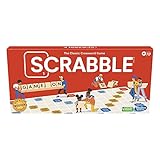
2. Hasbro Gaming Scrabble Board Game, Classic Word Games for Kids Ages 8 and Up, Fun Family Game for 2-4 Players, The Classic Crossword Game
Overview:
Scrabble remains the gold standard for word-based strategy, challenging players to build high-scoring crossword grids using letter tiles. This classic edition includes a textured board, wooden racks, and 100 letter tiles, supporting 2-4 players in timeless competitions that test vocabulary and tactical placement.
What Makes It Stand Out:
Authenticity and tactile quality define this version. The premium wooden tiles and racks, combined with the textured board preventing slippage, elevate the experience. Its dual appeal—simple enough for kids yet deep for adults—cements its status as a generational staple. The scoring system, with premium squares and challenge rules, adds strategic layers absent in newer word games.
Value for Money:
While pricier than budget word games, Scrabble’s enduring replayability and physical durability justify the investment. The wooden components outlast cardboard alternatives, and the game’s universal recognition ensures consistent use. It’s cost-effective over time compared to niche titles with shorter lifespans.
Strengths and Weaknesses:
Strengths: Unmatched strategic depth; high-quality wooden components; timeless appeal across ages; excellent vocabulary builder. Weaknesses: Slower pace unsuited for young children; scoring complexity can intimidate beginners; limited to 4 players.
Bottom Line:
An essential purchase for word-game enthusiasts. Scrabble’s blend of education, strategy, and family bonding makes it worth every penny, though newcomers should expect a learning curve before unlocking its full magic.
3. Winning Moves Yahtzee Words Games USA, Family Word Game Version for 2 or More Players, Ages 8+

Overview:
Yahtzee Words ingeniously merges the dice-rolling mechanics of Yahtzee with word formation. Players roll seven letter dice to create words, filling a familiar Yahtzee-style scoresheet with categories like “All Consonants” or rare 7-letter “Yahtzees,” accommodating 2+ players aged 8+.
What Makes It Stand Out:
The fusion of Yahtzee’s probabilistic strategy with wordplay is refreshingly unique. The scoresheet structure—split into upper/lower sections with mandatory scoring—adds tension rarely seen in word games. Its accessibility shines: no deep vocabulary needed, as short words and patterns (e.g., “All Vowels”) level the playing field.
Value for Money:
Offering novelty at a mid-range price, it provides distinct gameplay for Yahtzee fans seeking variety. The compact dice-and-scoresheet format costs less than board-heavy alternatives but lacks physical heft. Best for households owning standard Yahtzee, as the reuse of scoring concepts maximizes value.
Strengths and Weaknesses:
Strengths: Quick to learn; exciting risk/reward decisions; highly replayable due to dice randomness; great for casual players. Weaknesses: Limited strategic depth compared to Scrabble; scoresheet focus may feel restrictive; rare 7-letter words are overly challenging.
Bottom Line:
A delightful spin for Yahtzee devotees wanting word-based fun. While not a Scrabble rival, its playful mechanics and fast pace make it a worthy, budget-friendly addition to any game shelf.
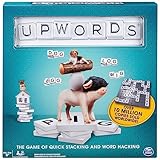
4. Spin Master Games, Upwords, Classic Word Game with Stackable Letter Tiles, Family Board Game, Crossword Activity, 1-4 Players, for Ages 8 & Up
Overview:
Upwords reinvents crossword gameplay by allowing players to stack tiles vertically on existing words, transforming them into higher-scoring terms. With a rotating board, seven-tile racks, and point bonuses for full racks, it supports 1-4 players in dynamic word-building sessions.
What Makes It Stand Out:
The stackable tile system is revolutionary—it democratizes play by letting novices alter expert words, reducing frustration. The lazy Susan board ensures seamless turns, while stacking multiplies scores creatively. Unlike Scrabble, no “passing” occurs, keeping engagement high even for younger participants.
Value for Money:
Priced near premium word games, Upwords justifies cost through innovative mechanics and durable components. The rotating board adds unique utility, and the game’s adaptability (solo to 4 players) enhances longevity. It’s a smarter investment than single-mechanic alternatives for growing families.
Strengths and Weaknesses:
Strengths: Inclusive for mixed-skill groups; innovative stacking boosts strategy; rotating board minimizes disputes; quick setup. Weaknesses: Tile stacking can feel chaotic; board mechanism may jam over time; less vocabulary-focused than Scrabble.
Bottom Line:
Ideal for families craving interactive, non-competitive wordplay. Upwords’ clever design fosters collaboration over cutthroat scoring, making it a standout choice for stress-free game nights.
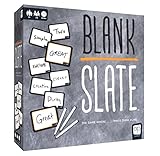
5. USAOPOLY BLANK SLATE, Where Great Minds Think Alike, Fun Family-Friendly Board Game, Word Association Party Game, Easy to Learn, Fun to Play Family Game Night, 3-8 Players, Ages 8+
Overview:
Blank Slate is a social prediction game where players write words to complete phrases (e.g., “Fast ___”), aiming to match others’ unseen answers. With dry-erase slates and cue cards, 3-8 players race to find consensus without collaboration in this lighthearted party hit.
What Makes It Stand Out:
Its focus on collective psychology—predicting common associations—creates hilarious, revealing moments. The “no hints” rule and simultaneous writing eliminate downtime, while 500 phrase options (from 250 double-sided cards) fuel endless replayability. Perfect for ice-breaking or large gatherings.
Value for Money:
An excellent party-game investment, offering massive group scalability (up to 8 players) at a modest price. The reusable slates reduce waste versus card-only games, and the sheer volume of prompts ensures longevity. Outperforms trivia games in social engagement per dollar.
Strengths and Weaknesses:
Strengths: Effortless setup/rules; thrives with big groups; sparks laughter and conversation; highly replayable. Weaknesses: Minimal strategic depth; repetitive after extended play; dry-erase smudging can occur.
Bottom Line:
A must-buy for social hosts. Blank Slate’s ability to unite strangers or family in shared giggles makes it invaluable for parties, easily surpassing its cost through pure entertainment value.
6. Shenanigrams! – The Mega-Mischievous Word Game! A Super Fun & Fast Family Party Game for Kids, Teens & Adults - Great for Travel, Couples & Family Board Games Night

Overview:
Shenanigrams! is a fast-paced word game where players collaboratively build a shared grid while strategically stealing opponents’ tagged words by altering letters. Designed for 2-6 players aged 8+, it thrives in family game nights, travel, or casual gatherings, emphasizing laughter and linguistic agility.
What Makes It Stand Out:
Its chaotic “stealing” mechanic creates constant tension and unexpected turns, distinguishing it from static word games. The compact, portable design and multi-award-winning status (including 2024 Game of the Year) underscore its educational value and replayability. Simple rules enable immediate play, fostering vocabulary growth without feeling like homework.
Value for Money:
Priced competitively for a premium word game, it outshines alternatives through durability and endless reconfiguration. The inclusion of travel-friendly components justifies its cost, especially compared to single-mechanic games that lose novelty faster.
Strengths and Weaknesses:
Strengths: Highly engaging for mixed-age groups; exceptional portability; promotes spelling/vocabulary organically; award validation ensures quality.
Weaknesses: Stealing mechanic can frustrate competitive players; limited grid space may constrain longer words.
Bottom Line:
A brilliantly chaotic, award-winning game that transforms vocabulary practice into uproarious fun. Ideal for families seeking laughter and learning—highly recommended for game nights and travel.
7. CGE Codenames Board Game (2nd Edition) The Top Secret Word Association Party Game for Friends & Family Game Nights, 4+ Players

Overview:
Codenames pits two teams against each other in a battle of wits, where spymasters give one-word clues to guide teammates through a 5x5 grid of words. Designed for 4+ players, it blends deduction, creativity, and tension, making it a staple for game nights.
What Makes It Stand Out:
The spymaster role demands clever lateral thinking—linking seemingly unrelated words with minimal clues—while the ever-present threat of the assassin card injects high-stakes drama. Its elegant design encourages teamwork and strategic risk-taking, scaling perfectly from casual to competitive play.
Value for Money:
As a reimagined classic, the 2nd Edition offers exceptional longevity. Its replayability dwarfs cheaper alternatives, with near-infinite combinations ensuring freshness across dozens of sessions, justifying the premium price.
Strengths and Weaknesses:
Strengths: Deep strategic depth; accommodates large groups; rules are simple but gameplay rich; fosters communication skills.
Weaknesses: Reliant on a skilled spymaster for optimal fun; slower pace may not suit young children.
Bottom Line:
A masterclass in party-game design that balances tension, intellect, and accessibility. Essential for groups who enjoy collaborative challenges—easily one of the best word-association games available.
8. Ransom Notes - The Ridiculous Word Magnet Party Game, 3+ Players

Overview:
Ransom Notes tasks players with crafting absurd responses to outrageous prompts (e.g., “Tell someone you’ve clogged their toilet”) using magnetic word tiles. With 840 magnets and 250 prompt cards, it’s designed for 3–6+ players seeking chaotic, creative humor.
What Makes It Stand Out:
The physical magnet mechanic encourages tactile play, while prompts range from delightfully silly to intentionally edgy. Its genius lies in forcing players to work within constrained word pools, yielding unpredictable, laugh-out-loud moments that break the ice effortlessly.
Value for Money:
The sheer volume of components (840 magnets, 250 cards) offers immense replayability at a mid-range price. Compared to card-only games, the magnets’ durability and reusability enhance long-term value, especially for frequent players.
Strengths and Weaknesses:
Strengths: Instant setup; magnet format sparks creativity; scales well for large groups; highly inclusive for introverts.
Weaknesses: Some prompts are inappropriate for families (requires card curation); magnets can scatter during play.
Bottom Line:
A hilariously inventive party game that turns word limitations into comedy gold. Best for mature groups—filter prompts for family play, but otherwise, a gift-worthy standout.
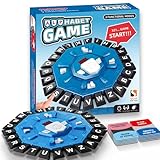
9. Word Game Family Board Games for Kids & Adults with 2 Modes,220 Topic Categories 24 Letters Pressing Games,Fun Fast-Paced Learning Game with English Pronunciation for Boys Girls Age 3+,35 Cards,Blue
Overview:
This electronic word game features two modes: Category Quick Answer (220 voice-randomized topics) and Step On Thunder (a fast-paced letter challenge). With a 10-second LCD timer, 24-letter wheel, and 35 category cards, it targets players aged 3+ for 2–8 participants.
What Makes It Stand Out:
The built-in timer and voice prompts create urgent, dynamic rounds, while dual modes cater to varied skill levels. Its educational focus on vocabulary and pronunciation—paired with physical letter-pressing—makes learning tactile and energetic, ideal for short attention spans.
Value for Money:
Affordable for its tech-enhanced features, though the electronic components feel less durable than pure board games. Still, the 220 categories and portability offer solid bang for buck versus simpler flashcard alternatives.
Strengths and Weaknesses:
Strengths: Engaging timer mechanics; excellent for quick thinking; versatile for ages 3+; compact travel design.
Weaknesses: Timer pressure may overwhelm young kids; electronic elements could malfunction; “age 3+” claim is optimistic for complex modes.
Bottom Line:
A spirited, fast-paced educational tool that excels in short bursts of play. Great for building vocabulary—just manage expectations for preschoolers. Recommended for active family learning.
10. Winning Moves Big Boggle with 5x5 Grid and 25 Letter Cubes Games USA, Thought Provoking Word Game Bigger Than The Original, for 2 or More Players, Ages 8+ (1147)

Overview:
Big Boggle expands the classic with a 5x5 grid and 25 letter cubes, challenging players to find four+ letter words within three minutes. Its “unique words only” scoring system—where shared words earn zero points—adds strategic depth for ages 8+.
What Makes It Stand Out:
The larger grid enables longer, more complex words than standard Boggle, while the scoring twist encourages creative vocabulary hunting. Its timeless design, backed by 40+ years of popularity, ensures broad appeal without gimmicks.
Value for Money:
A budget-friendly classic that outlasts trendier games. The physical cube-shaker and sturdy grid justify its price, offering more replayability per dollar than app-based alternatives.
Strengths and Weaknesses:
Strengths: Pure, focused wordplay; simple rules; highly replayable; excellent for solo or group play.
Weaknesses: Scoring disputes can arise; limited engagement for non-competitive players; grid can feel cramped.
Bottom Line:
A brilliantly streamlined word game that remains unmatched for quick, brain-teasing fun. A must-have for traditionalists—simple, satisfying, and endlessly challenging.
Understanding Word Game Mechanics: What Makes Them Tick
Anagram Builders: Shuffling and Rearranging
These games challenge players to constantly manipulate a set of letters, forming new words by rearranging (“anagramming”) them. Speed and pattern recognition are often crucial, creating a dynamic, fast-paced atmosphere. Look for mechanics that allow refreshing letters or adjusting difficulty, ensuring players of varying skill levels stay engaged without feeling overwhelmed or bored. The tactile nature of physically moving tiles adds a satisfying sensory element.
Crossword Style Grids: Building Interlocking Words
Inspired by the classic newspaper puzzle, these games involve collaboratively or competitively building a grid where words intersect vertically and horizontally. Strategy comes into play with tile placement, maximizing point values, and blocking opponents. Consider how the grid expands—does it feel organic, or overly restrictive? Games with flexible starting points or variable board setups often offer greater replayability and accommodate different group sizes more smoothly.
Storytelling and Creative Wordplay
Moving beyond simple vocabulary, some games encourage narrative construction or abstract word association. Players might create sentences, tell short stories based on prompts, or link words through thematic connections. These excel at sparking imagination and can be less intimidating for younger players or those less confident in pure spelling, focusing instead on creative expression and listening skills. They often foster richer conversation around the table.
Race Against the Clock Mechanics
Timers inject a pulse-pounding element, demanding quick thinking and reflexes. While exciting, they can also heighten anxiety for some players, particularly children still developing spelling confidence. Assess whether the timer is adjustable or optional. Games offering a “no-rush” mode or cooperative timer challenges often provide a more inclusive experience, letting families choose the intensity level that suits their mood.
Cooperative Word Challenges
Not all word games are about beating each other. Cooperative formats have the entire group working together against the game itself to achieve a common goal, like building a specific word structure or solving a word-based puzzle within constraints. This eliminates competitive pressure, making it ideal for mixed-age groups or families prioritizing teamwork and shared problem-solving over individual winners.
Matching the Game to Your Family Dynamics
Navigating the Age Spectrum
A game perfect for teenagers might frustrate a six-year-old, while one too simplistic will bore older kids. Look for games with explicitly stated age ranges and, more importantly, scalable rules. Does the rulebook offer “junior” variants? Can advanced players impose self-handicaps (like using only longer words)? Games that naturally allow players to operate at their own cognitive level within the same framework are golden for multi-generational play.
Player Count Flexibility: From Duos to Crowds
How many people typically gather at your table? Some word games shine with just two players, fostering a more intimate, strategic duel. Others truly come alive with 4-6 participants, creating a lively, social buzz. Crucially, check how well the game scales. Does adding a seventh player bog it down, or does it maintain its pace and engagement? Games that work well across a range of player counts (e.g., 2-6) offer the most value for diverse family gatherings.
Balancing Luck and Skill
Pure luck-based word games rarely hold attention long-term, while those demanding intense skill can alienate beginners. The sweet spot lies in games where luck (like drawing random letters) provides initial setup, but skill (strategy, vocabulary, quick thinking) determines the outcome over multiple rounds. This balance keeps games exciting for newcomers while rewarding practice and improvement, ensuring everyone feels they have a fair shot to win with effort.
Evaluating Game Components and Practicality
The Feel of the Pieces: Tiles, Cards, and Boards
High-quality components significantly impact enjoyment and longevity. Chunky, well-printed tiles are easier for small hands to manipulate and less likely to chip. Cards should be thick enough to withstand shuffling. Consider storage too—does the box have clever compartments, or will pieces inevitably get lost? Durable materials mean the game survives years of enthusiastic play and travel to grandparents’ houses.
Setup and Cleanup Speed
The best family games minimize the barrier to play. If setup takes longer than the game itself, it won’t see the table often. Similarly, complicated cleanup frustrates everyone, especially kids. Games with minimal components that pour out quickly and slide back into a tray or bag encourage spontaneous play sessions. Look for “ready to play in under 2 minutes” as a major plus.
Playtime Duration: Fitting into Family Schedules
Honesty about playtime is essential. A 90-minute game might be perfect for a weekend evening but disastrous for a Tuesday night after homework. Consider your family’s typical attention spans and available windows. Many modern word games offer satisfying rounds in 15-30 minutes, ideal for keeping engagement high without causing fatigue. Some even allow for “best of three” quick-play sessions.
Enhancing the Experience: Beyond the Basic Rules
Incorporating House Rules for Personalization
Don’t feel bound strictly by the rulebook! Families often develop beloved house rules that tailor the experience. Maybe you allow proper nouns for the youngest player, add bonus points for using a word in a sentence, or introduce a “steal” rule for high-value tiles. Experimenting together makes the game feel uniquely yours and helps address specific group dynamics or learning goals.
Focusing on Learning Moments, Not Just Winning
Shift the emphasis from “who won” to “what cool word did we learn?” Encourage discussion about unfamiliar words, their origins, or alternative meanings. Celebrate creative (even if slightly questionable!) plays. This transforms the game from a competition into a shared learning adventure, reducing pressure and making it more educational without feeling like a chore.
Creating a Positive and Encouraging Atmosphere
Model good sportsmanship. Genuinely celebrate others’ clever words. Offer helpful hints instead of pointing out mistakes harshly (“Oh, interesting! Did you know ‘queue’ is spelled with four silent letters?”). For younger players, focus on participation and effort. A supportive environment ensures everyone wants to play again, building confidence alongside vocabulary.
Long-Term Value: Will It Stay on the Shelf?
Replayability Through Variable Setup
Games that feel different every time you play them have incredible staying power. Look for mechanisms like randomized starting tiles, modular boards, varied objective cards, or sand timers that change the flow. High replayability means the game avoids becoming stale, consistently offering fresh challenges that keep family members eager to pull it out month after month.
Adapting as Skills Grow
The ideal family game grows with your players. As kids get older and vocabularies expand, can the game handle more complex strategies? Does it remain challenging and engaging for adults even after dozens of plays? Games that offer depth beyond the initial learning curve provide years of evolving fun, making them a worthwhile investment compared to those quickly outgrown.
Fostering Connection Over Competition
Ultimately, the most enduring word games are those that consistently bring your family closer. Does it spark laughter and conversation? Do you find yourselves referencing inside jokes from the game days later? Does playing it feel like quality time well spent, regardless of who technically “won”? Prioritize games that strengthen your family bond; the linguistic benefits are a fantastic bonus, but the connection is the real treasure.
Frequently Asked Questions
Can word board games actually help improve my child’s spelling and vocabulary?
Absolutely. Engaging with words in a playful, low-pressure context reinforces spelling patterns, introduces new vocabulary in memorable ways, and demonstrates word roots and connections. The repetition and active use during gameplay are far more effective for retention than rote memorization.
What’s the best type of word game for a group with very different ages (e.g., 6-year-olds and grandparents)?
Look for games with highly adaptable rules or cooperative play. Storytelling games, simple anagram races with adjustable timers, or cooperative grid-builders often work best. The key is allowing younger players to participate meaningfully (e.g., contributing short words, helping find letters) without slowing down the game for others.
How do I handle a very competitive player who dominates the game and discourages others?
Focus on cooperative variants if possible. For competitive games, emphasize house rules like “no stealing points from the youngest player” or implementing mandatory team play (pairing strong and developing players). Most importantly, consciously model celebrating all good plays, not just the highest-scoring ones, to shift the group’s focus.
Are there word games that work well for just two players?
Definitely. Many anagram-based speed games, head-to-head crossword builders, and strategic tile-laying word games shine with two players. They often foster a deeper, more tactical duel compared to larger group dynamics. Look for games specifically noting strong two-player suitability.
My child gets frustrated when they can’t find words quickly. How can I make it less stressful?
Opt for games without strict timers or with adjustable time limits. Cooperative games eliminate individual pressure. Start with simpler word games focused on very short words (3-4 letters). Offer to play with them as a team initially, or let them use a “help token” per game to ask for one suggestion without penalty.
Do these games benefit adults’ cognitive health too?
Research suggests engaging in mentally stimulating activities like word games can help maintain cognitive function and potentially delay age-related decline. The combination of vocabulary recall, strategic planning, pattern recognition, and social interaction provides a robust mental workout for players of all ages.
How can I encourage reluctant readers to try word games?
Start with games heavy on creativity and light on strict spelling rules, like storytelling or picture-word association games. Focus on the fun and social aspects first, not the “learning” component. Let them see family members genuinely enjoying the game. Choose games with vibrant components and quick rounds to maintain interest.
What’s a good way to introduce complex rules to younger players without overwhelming them?
Teach the game in stages. Start with the absolute core objective and basic actions for the first round (“Just try to make any word with these letters!”). Add one simple rule or scoring element in the next round. Using the “junior rules” if provided is ideal. Keep initial explanations under 2 minutes.
Are digital versions of word board games as good as physical ones for family time?
Physical games generally foster better family interaction. Passing tiles, leaning over a shared board, and the tactile experience create a more connected, present atmosphere. Digital versions often lack this shared physical space and can encourage individual screen focus, defeating the purpose of a family bonding activity.
How often should we play to see benefits without it feeling like a chore?
Consistency matters more than frequency. Aiming for one enjoyable, relaxed session per week is often ideal. The key is keeping it fun and pressure-free. If it starts feeling like homework, take a break. Spontaneous 15-minute games during a lull are often more valuable than forcing a longer, dreaded session. Let enthusiasm guide you.
See Also
- Top 10 Best Word Board Games for Family Game Night in 2026
- How to Choose the 10 Best Word Board Games for Game Night in 2026
- 10 Best Spelling Board Games for Kids That Make Learning Fun in 2026
- 10 Affordable Party Board Games That Don’t Sacrifice Fun in 2026
- 10 Game-Changing Word Board Games for Language Lovers in 2026