Table of Contents
Gathering around the table for family game night creates memories that outlast any digital distraction, and word board games have emerged as the perfect bridge between entertainment and education. In 2026, these games have evolved far beyond simple spelling challenges, incorporating rich storytelling elements, strategic depth, and designs that captivate everyone from early readers to grandparents. The resurgence of analog gaming has pushed designers to create experiences that strengthen language skills while fostering the kind of laughter-filled competition that brings families closer together.
Choosing the right word game for your family means looking beyond the box cover and understanding what makes a game truly engaging for mixed ages and skill levels. The landscape has shifted dramatically, with new mechanics that reward creativity over vocabulary size, cooperative modes that let families work together, and adaptive features that level the playing field between adults and children. Whether you’re replacing a worn-out classic or discovering this genre for the first time, knowing what to look for will transform your game nights from frustrating to phenomenal.
Top 10 Word Board Games for Family
Detailed Product Reviews
1. USAOPOLY BLANK SLATE, Where Great Minds Think Alike, Fun Family-Friendly Board Game, Word Association Party Game, Easy to Learn, Fun to Play Family Game Night, 3-8 Players, Ages 8+
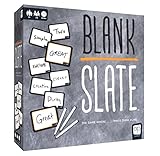
Overview: USAOPOLY’s Blank Slate transforms simple word association into an engaging party game where predicting others’ thoughts becomes the ultimate victory. Designed for 3-8 players ages eight and up, this game challenges participants to complete phrases like “peanut ______” hoping their answer matches at least one opponent. The dry-erase slate system keeps gameplay fluid and environmentally conscious while adding tactile satisfaction.
What Makes It Stand Out: The genius lies in its minimalist design—no complex rules, just pure psychological guesswork. With 250 double-sided Word Cue cards providing 500 unique prompts, replayability remains exceptionally high for countless game nights. The “no hints” policy creates delicious tension as players nervously reveal their answers. The analog charm of writing on slates feels refreshingly social in our digital age.
Value for Money: Positioned competitively against other party games, Blank Slate offers substantial content with its extensive card deck and quality components. The wooden scoreboard and durable slates suggest longevity absent in cheaper alternatives. Most sessions span 20-30 minutes, delivering excellent entertainment-per-dollar for repeated family gatherings and social events throughout the year.
Strengths and Weaknesses: Strengths include immediate accessibility for non-gamers, scalable difficulty based on group familiarity, and natural laughter generation that breaks the ice instantly. Weaknesses emerge with repetitive play among the same group (answers become predictable) and limited strategic depth for serious gamers seeking complexity. The 8-player maximum may constrain larger parties.
Bottom Line: Blank Slate excels as a gateway word game perfect for family reunions and casual get-togethers. While it won’t satisfy hardcore strategists, its universal appeal and quick setup make it an essential addition to any social game collection.
2. Word Game Family Board Games for Kids & Adults with 2 Modes,220 Topic Categories 24 Letters Pressing Games,Fun Fast-Paced Learning Game with English Pronunciation for Boys Girls Age 3+,35 Cards,Blue
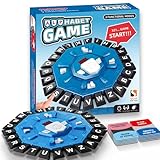
Overview: This versatile word game combines two distinct modes with modern digital elements for a dynamic family experience. Supporting 2-8 players from ages three and up, it features an LCD countdown timer and 220 built-in categories. Players race against ten seconds to name words fitting specific topics while manipulating a 24-letter board, creating an accessible yet challenging vocabulary challenge.
What Makes It Stand Out: The dual-mode system offers genuine variety—Category Quick Answer mode provides traditional topical challenges while Step On Thunder introduces customizable letter-based rules. The integrated voice system and digital timer inject urgency absent in manual alternatives. With 35 double-sided cards offering 140 categories and portable design, it adapts to various settings from classrooms to picnics.
Value for Money: As a budget-friendly electronic word game, it undercuts premium alternatives while delivering comparable features. The two-in-one design effectively provides double the gameplay options of single-mode competitors. However, the generic branding suggests potential quality trade-offs versus established names, making it best suited for cost-conscious buyers prioritizing function over prestige.
Strengths and Weaknesses: Strengths include the engaging timer mechanic, educational vocabulary building, and true portability. The advertised 3+ age rating is overly ambitious—the pressure mechanics realistically suit ages six and up better. Build quality concerns and potentially limited voice recognition accuracy represent notable drawbacks.
Bottom Line: An affordable, feature-rich option for families seeking interactive wordplay. While quality may not match premium brands, its dual modes and portability make it a solid choice for educational entertainment, provided buyers adjust age expectations realistically.
3. Hasbro Gaming Scrabble Board Game, Classic Word Games for Kids Ages 8 and Up, Fun Family Game for 2-4 Players, The Classic Crossword Game
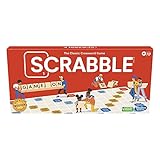
Overview: Hasbro’s classic Scrabble remains the gold standard of strategic word games, bringing generations together through competitive crossword building. This edition features 100 wooden letter tiles and racks on a textured gameboard designed for 2-4 players ages eight and up. Players construct intersecting words to maximize points using premium squares, balancing vocabulary breadth with tactical positioning.
What Makes It Stand Out: The wooden components elevate this above cardboard-tile versions, providing satisfying tactile weight and durability. Premium squares (double/triple letter and word scores) create layered strategic decisions beyond mere word knowledge. The included expert tips guide helps newcomers grasp advanced techniques like parallel plays and blocking strategies, extending the learning curve gracefully.
Value for Money: Scrabble’s enduring popularity justifies its mid-range price point through infinite replayability and proven longevity. Unlike trendy games that fade, this classic maintains relevance across decades. The wooden tile upgrade ensures decades of use, making it cheaper per-play than disposable entertainment options. Generic knockoffs rarely match the board quality and tile weight.
Strengths and Weaknesses: Strengths include unmatched strategic depth, educational spelling benefits, and cross-generational appeal. The textured board prevents disruptive tile shifting. Weaknesses include slower pace that may lose younger players’ attention and a steep learning curve for casual gamers. The four-player limit restricts larger gatherings.
Bottom Line: An essential investment for any household valuing educational entertainment. While not the fastest-paced option, Scrabble’s perfect blend of vocabulary and strategy creates timeless appeal that transcends age and skill levels.
4. Winning Moves Yahtzee Words Games USA, Family Word Game Version for 2 or More Players, Ages 8+

Overview: Winning Moves revives the 1980s classic Yahtzee Words, ingeniously adapting familiar dice mechanics into a letter-based challenge. Players roll seven letter dice to form words and achieve specific combinations on a traditional Yahtzee-style scoresheet. Designed for two or more players ages eight and up, it merges chance-based rolling with vocabulary skills in quick succession rounds.
What Makes It Stand Out: The nostalgic Yahtzee framework provides immediate familiarity for seasoned players while introducing inventive categories like All Consonants, All Vowels, and the elusive 7-letter “Yahtzee” word. The scoresheet’s familiar Upper/Lower Section structure creates comforting continuity with the original game. This hybrid approach attracts both dice-game enthusiasts and word-puzzle fans.
Value for Money: Priced similarly to standard Yahtzee, it offers comparable component quality with added linguistic complexity. The seven custom dice and scorepad provide substantial initial content, though scorepads will eventually require replacement. As a licensed product with unique gameplay, it justifies its cost over generic word dice games lacking the proven Yahtzee scoring system.
Strengths and Weaknesses: Strengths include rapid learning curve, excellent portability for travel, and clever fusion of luck and vocabulary. The dice quality ensures consistent rolls. Weaknesses involve limited long-term strategic depth compared to Scrabble, and the scorepad dependency creates ongoing supply needs. Pure luck elements may frustrate word-game purists.
Bottom Line: Ideal for Yahtzee devotees seeking fresh challenges and families wanting light, travel-friendly word entertainment. While not replacing deeper strategy games, its nostalgic charm and accessible mechanics make it a worthy addition to casual game collections.
5. USAOPOLY The Original TAPPLE, The Fast-Paced Family Board Game,Choose a Category & Race Against The Timer to be The Last Player,Learning Word Game for Ages 8 & Up, 2-8 Players, 15-20 Minute Play Time

Overview: USAOPOLY’s TAPPLE delivers high-energy word association through its innovative letter-tabbed wheel design. This award-winning party game accommodates 2-8 players ages eight and up in fast-paced 15-20 minute sessions. Participants select a category card, press the central timer, and race to shout words starting with available letters while physically pressing corresponding tabs, eliminating used letters until one player remains.
What Makes It Stand Out: The mechanical letter-tab system creates tactile urgency impossible in card-only games. The built-in timer’s ticking pressure generates genuine excitement, while the integrated storage for 36 category cards (144 categories) ensures remarkable portability. Its “last player standing” elimination mechanic keeps all participants engaged throughout each rapid round.
Value for Money: TAPPLE occupies the sweet spot between budget party games and premium electronic alternatives. The durable plastic wheel withstands enthusiastic play, and the category variety prevents rapid repetition. Unlike app-based games requiring devices, this self-contained unit offers unlimited replay without batteries or subscriptions, delivering strong long-term value.
Strengths and Weaknesses: Strengths include immediate accessibility, adjustable difficulty through category selection, and genuine physical interaction. The timer’s audible ticking heightens tension effectively. Weaknesses involve potential mechanical wear on tabs over time, and limited categories may require expansion packs. Quiet players might struggle under pressure, and some letters (Q, X, Z) create disproportionate difficulty.
Bottom Line: A must-have for energetic groups seeking loud, laugh-filled entertainment. TAPPLE’s perfect balance of simplicity and excitement makes it the ultimate icebreaker for parties, though it may overwhelm shy players or those preferring contemplative gameplay.
6. Spin Master Games, Upwords, Classic Word Game with Stackable Letter Tiles, Family Board Game, Crossword Activity, 1-4 Players, for Ages 8 & Up
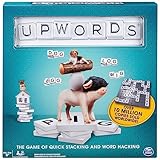
Overview: Upwords reinvents classic word-building by adding a vertical dimension. Players start with seven letter tiles and build crosswords across a board, but the real twist comes from stacking tiles on existing words to create new ones. The lazy Susan-style rotating board ensures everyone has easy access, while scoring rewards both horizontal and vertical thinking. Designed for 1-4 players ages eight and up, it works as a solo puzzle or competitive family challenge.
What Makes It Stand Out: The three-dimensional stacking mechanic distinguishes Upwords from Scrabble clones. Stacking letters to transform “cat” into “bat” then “bag” creates dynamic board evolution that demands spatial strategy. The rotating board eliminates reach issues and keeps gameplay fluid. Bonus points for using all seven tiles incentivize bold plays, while the solitaire mode offers genuine single-player value—a rarity in board games. The tactile satisfaction of physically stacking tiles adds a hands-on element digital games can’t replicate.
Value for Money: Priced competitively with premium board games, Upwords delivers substantial replay value through its evolving board state. The durable plastic tiles and sturdy rotating base justify the cost over flimsier alternatives. Unlike collectible card games or expansion-dependent titles, everything needed for infinite sessions comes in one box. Comparable word games often cost more while offering less mechanical innovation, making this a solid mid-range investment for families.
Strengths and Weaknesses: Strengths: Unique stacking mechanic adds strategic depth; rotating board improves accessibility; solitaire mode included; quality components; quick to learn but challenging to master. Weaknesses: Limited to four players maximum; tile letters can feel small for older eyes; scoring requires careful tracking; experienced Scrabble players may initially dominate.
Bottom Line: Upwords successfully modernizes word games through its vertical stacking innovation. Perfect for families seeking strategic depth without complexity, it’s a worthwhile addition to any game collection that rewards clever thinking over vocabulary alone.
7. Word Game Family Board Games for Kids & Adults with 2 Modes,220 Topic Categories 24 Letters Pressing Games,Fun Fast-Paced Learning Game,35 Cards,LCD Display Timer,Christmas & Birthday Gifts,Red
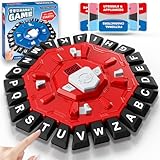
Overview: This electronic word game combines physical letter pressing with digital timing for high-energy gameplay. Two distinct modes—Category Quick Answer and Step On Thunder—challenge 2-8 players to think rapidly across 220 built-in topics displayed on 35 double-sided cards. The 24-letter board with LCD countdown timer creates urgency, making sessions last 15-20 minutes. Designed for ages three and up, it’s highly portable for travel, picnics, or home use.
What Makes It Stand Out: The dual-mode system offers genuine variety: Quick Answer mode tests categorical knowledge, while Step On Thunder introduces customizable risk-reward mechanics. The LCD timer’s visual countdown builds palpable tension that analog games lack. With 220 topics spanning from simple to complex, it scales from preschool vocabulary to adult trivia. The pressing mechanism provides satisfying tactile feedback, and its ability to accommodate up to eight players makes it ideal for large gatherings where traditional board games feel limiting.
Value for Money: This delivers exceptional value for multi-generational households. The electronic component and extensive topic library outpace simple card games at a similar price point. While requiring two AA batteries (not included), the replayability from 220 topics and two modes prevents rapid staleness. Compared to single-purpose educational toys, this hybrid entertainment-learning tool justifies its cost through versatility and broad age appeal.
Strengths and Weaknesses: Strengths: Accommodates 2-8 players; two distinct game modes; 220 topics ensure variety; highly portable; suitable for ages 3+; promotes quick thinking. Weaknesses: Batteries not included; younger children may find timer stressful; button durability concerns with heavy use; audio quality could be clearer in noisy environments.
Bottom Line: An excellent choice for dynamic families needing flexible player counts and quick gameplay. The electronic timer and dual modes create excitement that paper-based games can’t match, though longevity depends on button durability.
8. Dabble® Word Game | Fast-Paced Family Board Game | Enhances Spelling and Vocabulary for All Ages | Spell The First Five Words | Award-Winning and Educational Learning Game | Great Game for All Ages

Overview: Dabble challenges players to race against time and each other to spell five words using 20 letter tiles. Designed for 2-4 players, this award-winning game includes 148 letter tiles (with Spanish options), four racks, and a two-minute sand timer. The simple premise—first to correctly arrange all tiles into five words wins—belies surprising strategic depth. Rules in both English and Spanish broaden its educational reach for all ages.
What Makes It Stand Out: The “five words from twenty tiles” constraint creates a unique puzzle-solving rush unlike typical word-building games. This forced anagramming develops pattern recognition and vocabulary simultaneously. The included Spanish tiles and rules make it genuinely bilingual, a rare feature in word games. Its award-winning status reflects well-tested gameplay that balances accessibility with challenge. The two-minute timer creates intense but not overwhelming pressure, making it suitable for both competitive adults and learning children without causing frustration.
Value for Money: Dabble offers strong value through its bilingual capabilities and quality components. The solid tile construction and included racks feel premium compared to bag-only games at similar price points. As an educational tool that grows with players from childhood through adulthood, it replaces multiple age-specific learning games. No batteries or electronic parts mean zero ongoing costs and infinite longevity, making it a one-time investment for years of mental exercise.
Strengths and Weaknesses: Strengths: Bilingual English/Spanish; award-winning design; quality tile racks included; no batteries needed; excellent educational value; balanced difficulty curve. Weaknesses: Limited to four players; sand timer can be inconsistent; tile distribution may favor certain strategies; experienced players gain significant advantage.
Bottom Line: Dabble excels as a fast-paced educational tool that doesn’t sacrifice fun for learning. Its bilingual feature and quality components make it ideal for families prioritizing language development through engaging competition.
9. Resflycheng Word Game Family Board Game with Digital Display Timer and 2 Categories Modes Fun Fast-Paced 24-Letter Game for Learning Party Interactive (Blue)

Overview: This electronic word roulette challenges players across two modes using a 24-letter board with integrated LCD timer and 35 double-sided category cards covering 140 categories and 220 total topics. Supporting two or more players in 15-20 minute sessions, it combines physical letter pressing with digital countdown urgency. The portable design suits travel, parties, and family nights, though it requires two AA batteries. Suitable for all ages, it emphasizes interactive learning through rapid word recall.
What Makes It Stand Out: The “Skill VS Luck” branding accurately reflects its dual-mode design, offering both relaxed category answering and high-stakes thunder mode where customizable rules create unpredictable challenges. The digital display’s 10-second countdown provides visual pressure that analog timers can’t replicate. With 220 topics ranging from animals to abstract concepts, it prevents repetition better than limited-card games. The sturdy construction withstands energetic play, and its self-contained design means no loose pieces beyond cards, making it genuinely travel-friendly compared to tile-based games.
Value for Money: Positioned as a mid-range electronic game, it offers good value through its extensive content library and dual functionality. The 220 topics provide more variety than many competitors, while the two distinct modes effectively deliver two games in one. Battery requirement adds minimal operating cost. While similar to other electronic word games, its robust build quality and comprehensive category coverage justify the price for families seeking versatile entertainment that bridges generations.
Strengths and Weaknesses: Strengths: Two distinct modes; 220 topics prevent repetition; sturdy, travel-friendly design; visual timer adds excitement; suitable for all ages; no loose tiles to lose. Weaknesses: Batteries not included; maximum 10-second timer may be too brief for some; audio cues could be louder; button sensitivity varies; limited strategic depth.
Bottom Line: A solid electronic alternative to traditional word games, best for families wanting fast, portable fun. The dual modes and extensive topics keep it fresh, though it’s more about quick thinking than deep strategy.
10. Wordplay – The Ultimate Fast-Paced Word Challenge Board Game for Family & Friends – Adult & Family Game Night Fun

Overview: Wordplay throws conventional word game rules out the window with its spinner-driven letter and category combinations. Designed for ages 15+ and 2+ players, each round presents unique constraints—like naming foods starting with ‘S’ containing ‘D’ (salad, soda) or places starting with ‘B’ containing ‘N’ (Boston, Berlin). Players can score partial points with creative out-of-category answers. The dynamic scoring system rewards cleverness over vocabulary size, creating unpredictable, high-energy gameplay perfect for adult game nights.
What Makes It Stand Out: The spinner mechanic generates infinite combinations that prevent memorization or repetitive strategies. Unlike static board games, every round feels fresh and challenging. The dual-letter constraint system (starting letter + contained letter) creates sophisticated puzzles that reward lateral thinking. Allowing out-of-category answers for reduced points balances accessibility with expert challenge—players never feel completely stumped. The scoring system that rewards cleverness over mere correctness is innovative, encouraging risky, creative plays that spark hilarious debates and memorable moments.
Value for Money: For mature game groups, Wordplay delivers exceptional replay value through its emergent gameplay. The simple components keep costs reasonable while the mechanical innovation provides depth rivaling premium strategy games. No expansions needed—the spinner ensures perpetual novelty. Compared to trivia games requiring constant updates or word games limited by static dictionaries, this offers lasting entertainment. It’s specifically worth the investment for households hosting regular adult gatherings where quick, clever party games are prized.
Strengths and Weaknesses: Strengths: Infinite replayability via spinner; rewards creative thinking; accessible to non-word experts; fast-paced and energetic; excellent for large groups; simple rules, deep strategy. Weaknesses: Ages 15+ limits family use; no solo mode; subjective scoring can cause disputes; requires active moderator; spinner may loosen over time; not suitable for young children.
Bottom Line: Wordplay is a brilliant party game for clever adults who enjoy linguistic creativity under pressure. Its infinite variety and accessible-yet-deep design make it essential for regular game hosts, though families with younger children should look elsewhere.
Why Word Games Dominate Family Game Nights
Building Vocabulary Through Play
Word games naturally expand language skills without the pressure of formal learning. Players encounter new terms through contextual gameplay, where meaning becomes clear through usage rather than dictionary definitions. The best designs introduce sophisticated vocabulary gradually, allowing younger players to absorb complex words while adults discover they’ve been spelling certain terms incorrectly for years. This organic learning creates “aha moments” that stick with players long after the game ends.
Strengthening Family Bonds
Unlike screen-based activities, word games demand face-to-face interaction and create shared experiences. The collaborative nature of many modern designs encourages family members to celebrate each other’s clever plays rather than simply competing for points. These games become conversation starters, with inside jokes developing from particularly impressive or hilarious word combinations that emerge during play.
Cognitive Development Benefits
Word games exercise multiple mental muscles simultaneously—memory retrieval, pattern recognition, strategic planning, and quick thinking. For children, this builds neural pathways that support academic success. For adults, it provides mental stimulation that keeps minds sharp. The intergenerational play creates a unique dynamic where different cognitive strengths shine, teaching everyone to appreciate diverse problem-solving approaches.
Key Features to Look for in 2026 Word Board Games
Scalability for Different Skill Levels
The most successful family word games include built-in handicapping systems or adjustable difficulty settings. Look for games that offer variant rules for different ages, bonus scoring opportunities for younger players, or mechanisms where experience becomes less important than creativity. Some designs incorporate “helper” cards or allow adults to play with additional constraints while children receive more flexibility.
Replayability Factors
A game’s longevity depends on its variability. Consider games with modular boards, random tile draws, or card combinations that create infinite possibilities. The best designs avoid repetitive gameplay by introducing elements of surprise or strategy that shift with each session. Games that feel fresh after dozens of plays offer the best value for your investment.
Rule Complexity vs. Accessibility
The sweet spot for family games lies in simple rules that enable complex strategies. You should be able to explain the basics in under five minutes, but master the nuances over months of play. Avoid games with lengthy setup procedures or convoluted scoring systems that require constant reference to rulebooks. The 2026 market favors elegant designs where the mechanics teach themselves through intuitive play.
Understanding Different Game Mechanics
Tile-Laying Systems
Tile-based word games offer tactile satisfaction and visual progression. Players physically build a changing game board where placement matters as much as the words themselves. These systems often reward spatial thinking alongside language skills, creating multiple paths to victory. Consider whether the game uses fixed boards or freeform building, as this dramatically affects strategy and table space requirements.
Card-Driven Word Building
Card-based systems provide portability and faster setup while introducing hand management strategies. These games often include action cards that let players manipulate letters, steal components, or trigger special effects. The card economy adds a layer of resource management that appeals to strategy gamers while remaining accessible to casual players.
Cooperative vs. Competitive Play
Cooperative word games have surged in popularity, tasking families with beating the game itself rather than each other. These designs eliminate hurt feelings and foster teamwork, making them ideal for families with sensitive players or wide age gaps. Competitive games, however, teach valuable lessons about graceful winning and losing when designed with catch-up mechanics that keep everyone engaged until the final round.
Speed-Based Challenges
Real-time word games add excitement through time pressure, forcing quick thinking and rewarding pattern recognition. These work best for families who thrive on energy and laughter but may frustrate methodical thinkers. The key is finding games where speed enhances fun without eliminating strategic depth—where the fastest player doesn’t always win, but quick thinking provides advantages.
Age-Appropriate Selection Guidelines
Games for Early Readers (Ages 5-7)
Young learners need games that emphasize phonics, letter recognition, and simple word formation without penalizing creative attempts. Look for games with picture cues, flexible scoring that rewards effort over perfection, and components sized for small hands. The best designs for this age group hide educational content so thoroughly that kids don’t realize they’re practicing reading skills.
Elementary Age Engagement (Ages 8-10)
Children in this range can handle more complex rules and longer words but still benefit from games that reward shorter, clever plays alongside sophisticated vocabulary. Seek games with moderate strategy, clear visual aids, and mechanics that let them compete genuinely with adults. This age group particularly enjoys games with thematic elements and story progression.
Multi-Generational Appeal (Ages 11+)
Teenagers and adults require deeper strategic layers and enough complexity to feel mentally challenged. Games for this demographic should include advanced variants, nuanced scoring systems, and opportunities for clever combos or long-term planning. The most successful designs create satisfying “engine-building” experiences where early decisions impact late-game success.
Player Count Considerations
Two-Player Dynamics
Some word games truly shine with just two players, offering intense head-to-head battles of wits. These designs often feature direct conflict or racing mechanisms where each move directly impacts your opponent. For couples or parent-child pairs, look for games with minimal downtime and opportunities for blocking or strategic interference that make the duel feel dynamic.
Small Group Gameplay (3-4 Players)
The classic family size requires games that balance individual strategy with group interaction. Turn-based games work well here, giving everyone time to think without long waits. Look for designs where players can affect each other’s boards or scores indirectly, creating engagement between turns. The sweet spot often includes limited resources that players compete for, generating natural tension.
Large Family Gatherings (5+ Players)
Bigger groups demand games with simultaneous play or rapid turns to prevent boredom. Party-style word games with team variants work exceptionally well, allowing for social dynamics and reducing individual pressure. Consider games with audience participation or judge roles that keep everyone involved even when it’s not their turn.
Game Duration and Attention Spans
Quick 15-Minute Rounds
Short games fit perfectly into busy schedules and maintain focus for younger players or those new to gaming. These designs often feature multiple rounds where scores accumulate, allowing families to play “best of three” or stop after any round without feeling incomplete. The brevity also enables easy rule learning and encourages repeat play in a single evening.
Standard 30-45 Minute Sessions
This duration represents the goldilocks zone for most families—long enough to develop strategy and feel substantial, short enough to hold attention and fit between dinner and bedtime. Games in this category typically include a clear mid-game point where strategies solidify and a satisfying endgame where all players remain competitive.
Extended Campaign-Style Play
Some modern word games offer legacy-style progression where decisions carry between sessions, or campaign modes with evolving rules. These work best for committed gaming families who meet regularly. The ongoing narrative creates anticipation for the next game night, though they require consistent attendance and careful component storage.
Educational Benefits Beyond Entertainment
Spelling and Phonics Reinforcement
Word games provide contextual spelling practice that’s more effective than rote memorization. Players actively manipulate letter combinations, internalizing patterns and exceptions through repetition. Advanced games introduce etymology and word origins naturally, helping older children understand language structure and borrowing between languages.
Strategic Thinking Development
Beyond vocabulary, these games teach resource management, risk assessment, and long-term planning. Players must decide whether to use high-value letters immediately or save them for better opportunities, weighing short-term gains against potential future bonuses. This mirrors real-world decision-making in a low-stakes environment.
Social Skills and Sportsmanship
Turn-taking, graceful losing, and celebrating others’ successes are fundamental social lessons embedded in gameplay. Word games uniquely encourage admiration for clever plays, even when they cost you the game. Families can model positive competition and discuss strategies afterward, building communication skills that extend beyond the table.
Theme and Aesthetic Appeal
Visual Design Trends for 2026
Modern word games have abandoned sterile, academic appearances for vibrant artwork and cohesive themes. Look for games with illustration styles that match your family’s interests—whether that’s fantasy, space exploration, mystery, or nature. Quality components with satisfying tactile elements (chunky tiles, linen-finished cards, custom meeples) enhance the experience and justify higher price points.
Theme Integration with Gameplay
The best designs weave theme into mechanics rather than slapping artwork on generic systems. A mystery-themed word game might involve solving puzzles with words, while a cooking theme could have players “recipes” that require specific letter ingredients. This integration makes rules more intuitive and creates immersive experiences that engage reluctant players.
Component Quality and Durability
Family games suffer wear and tear, so thick cardboard, quality card stock, and robust tiles matter. Consider games with double-sided boards for variety, organized insert trays that speed setup, and clear iconography that reduces text dependency. For families with young children, waterproof or wipeable components provide peace of mind.
Storage and Component Quality
Box Organization Systems
Thoughtful packaging with dedicated spaces for each component prevents loss and reduces setup time. Look for games with molded inserts, labeled bags, or magnetic closures that keep everything secure. Some 2026 designs include QR codes inside the box linking to setup videos or digital component inventory checklists.
Material Sustainability
Eco-conscious families increasingly prefer games made from recycled materials, soy-based inks, and plastic-free packaging. Many manufacturers now highlight their environmental credentials, offering take-back programs for worn components. Wooden tiles and pieces often outlast plastic alternatives and provide a premium feel that enhances gameplay.
Travel-Friendly Options
Compact boxes with magnetic boards or roll-up mats enable word gaming on vacations or at restaurants. Consider games with minimal small pieces that won’t get lost during travel, or those offering digital apps that replicate the physical experience when space is limited. Some designs feature dual-purpose packaging that unfolds into the game board itself.
Digital Integration Trends
Companion App Features
Many 2026 word games include optional apps that handle scoring, provide word verification, or offer solo play modes. These digital tools can enhance rather than replace the physical experience, offering tutorials, rule clarifications, and even AI opponents for practice. The best integrations remain optional, ensuring the game works perfectly without technology.
QR Code Expansions
Manufacturers increasingly use QR codes to deliver free content updates, new challenges, or community-created word lists. This extends a game’s lifespan without requiring expensive expansions. Some games feature monthly puzzles or seasonal events accessed through codes, creating ongoing engagement and justifying the initial purchase.
Hybrid Physical-Digital Gameplay
Emerging designs blend tangible components with tablet interfaces, where physical tiles interact with digital boards. While innovative, consider whether your family prefers purely analog experiences or enjoys tech-enhanced play. These hybrids often provide dynamic scoring and animated feedback but require device sharing and charging considerations.
Budget-Friendly vs Premium Options
Entry-Level Price Points
Affordable word games (under $20) often deliver exceptional value through simple but clever designs. These typically feature fewer components and streamlined rules, making them ideal for families new to gaming or those wanting to test a mechanic before investing more. Many classics fall into this category, offering proven gameplay without frills.
Mid-Range Value Picks
Games priced between $25-50 represent the market’s heart, balancing component quality, design innovation, and replayability. This range includes most award winners and family favorites, offering robust experiences without collector-level pricing. These games often include expansions or variants that extend their value over time.
Collector’s Edition Features
Premium word games ($60+) justify their cost through deluxe components, metal coins, wooden inserts, or limited edition artwork. While unnecessary for casual play, these versions enhance tactile satisfaction and often become heirloom pieces. Consider whether your family will appreciate the upgraded materials or if standard editions provide equivalent gameplay.
Creating the Perfect Game Night Atmosphere
Setting Up Your Gaming Space
Designate a comfortable area with good lighting and enough table space for all players to reach components easily. Keep dictionaries or word reference books nearby for disputes, though the best games minimize these needs. Consider background music that matches the game’s theme without distracting from concentration.
Snack and Beverage Pairings
Choose mess-free snacks that won’t damage components—pretzels over cheesy chips, water bottles with caps over open cups. Some families create themed snacks matching their game’s motif. Establish a “no food on the board” rule early, using small side tables for refreshments to prevent costly accidents.
Establishing House Rules
Every family develops their own variations that increase enjoyment. Document these adaptations in the game box for consistency. Perhaps you allow proper nouns on birthdays, or create team variants for uneven player counts. Customizing games to your family’s preferences increases ownership and ensures everyone feels included.
Troubleshooting Common Family Game Night Challenges
Managing Competitive Tempers
Word games can frustrate when one player dominates or luck seems unfair. Implement “comeback mechanics” where trailing players receive slight advantages, or play multiple short rounds where everyone gets a fresh start. Model positive reactions to losses and establish that clever wordplay deserves celebration regardless of who creates it.
Engaging Reluctant Players
Some family members may feel intimidated by strong spellers or vocabulary differences. Choose cooperative games or those where creativity trumps word length. Offer “consultant” roles where hesitant players can help others without pressure to perform. Celebrate unusual or funny words to shift focus from competition to shared amusement.
Adapting Rules for Fairness
When skill gaps create imbalance, introduce handicaps like bonus starting points for younger players or limited dictionaries for adults. Some families let children draw extra letters or ignore time limits. The goal is competitive balance where everyone feels they have a legitimate chance to win through cleverness rather than just vocabulary breadth.
Frequently Asked Questions
What age should children be before introducing competitive word games?
Most children can enjoy simplified word games around age 5-6, but competitive scoring works better around age 8 when they understand both winning and losing gracefully. Start with cooperative variants or team play to build confidence and skills before introducing head-to-head competition.
How do I prevent one strong player from dominating every game?
Look for games with luck elements, secret objectives, or catch-up mechanics that reward creative risks over vocabulary size. Rotating teams, implementing handicaps, or choosing games where speed or pattern recognition matter as much as word knowledge helps level the playing field naturally.
Are digital word game apps a good substitute for physical board games?
Apps excel for solo practice or remote play, but physical games provide tactile learning, screen-free family time, and social interaction that digital versions can’t replicate. The best approach uses apps as supplements for skill building while reserving physical game nights for relationship building.
How much should I expect to spend on a quality family word game?
Excellent options exist at every price point, but most families find the best value between $25-40. This range offers durable components, thoughtful design, and enough complexity to remain interesting. Budget under $20 for simpler gateway games or over $50 for deluxe editions with premium materials.
What features indicate a word game will have long-term replayability?
Seek games with variable setups, multiple victory paths, random elements that change each session, and expansions or community content support. Games that reward different strategies or include advanced modules you can add later maintain interest as skills grow.
Can word games really help with school performance?
Research shows regular word game play improves spelling retention, reading comprehension, and verbal reasoning skills. The key is consistency and choosing games that match the child’s developmental level. Games that make language manipulation fun create positive associations that translate to academic confidence.
How do I store games to prevent losing pieces?
Use zippered bags for different component types, label everything clearly, and store boxes flat to prevent pieces from shifting. Some families photograph the organized box interior to reference when putting games away. For games with many small pieces, consider purchasing inexpensive plastic storage containers that fit inside the original box.
What’s the ideal player count for family word games?
Most word games work best with 3-4 players, offering enough interaction without excessive downtime. However, many 2026 designs include excellent two-player variants and scalable rules for 5-6 players. Consider your typical group size when purchasing, but prioritize games that play well across multiple counts.
How long should a family game night session last?
For families with children under 10, aim for 30-40 minutes of active gameplay plus setup time. Older children and adults can enjoy 60-90 minute sessions. Many families play multiple short games rather than one marathon session, allowing natural break points and accommodating varying attention spans.
What should I do if my family gets bored with a word game?
Before retiring a game, try official variants, create house rules, or introduce expansion content. Sometimes switching from competitive to cooperative mode (or vice versa) refreshes interest. If boredom persists, the game may have been outgrown or was a poor fit initially—consider trading it for something with different mechanics rather than forcing play.
See Also
- How to Choose the 10 Best Word Board Games for Game Night in 2026
- 10 Essential Word Board Games Every Game Night Host Needs in 2026
- 10 Expert-Recommended Trivia Board Games for Game Night in 2026
- How to Choose the 10 Best Trivia Board Games for Game Night in 2026
- 10 Expert-Recommended Multiplayer Word Games for Game Night Enthusiasts in 2026