Table of Contents
Family game nights can lose their spark when the same old games start feeling predictable. You know the moment—when everyone’s going through the motions, the strategies are memorized, and even the youngest players can predict what comes next. That familiar boredom doesn’t mean you need to abandon your favorite games or splurge on entirely new ones. The smartest solution often lies in expanding what you already love.
Board game expansions offer a brilliant way to inject fresh excitement into trusted favorites without starting from scratch. These carefully designed add-ons can introduce surprising new mechanics, welcome additional players, or weave in compelling storylines that make familiar games feel brand new. As we look toward 2026, the expansion market continues to evolve with innovative approaches that cater specifically to families seeking both accessibility and depth.
Top 10 Family Board Game Expansions
Detailed Product Reviews
1. Ransom Notes Expansion Pack, Family Edition - The Ridiculous Word Magnet Party Game, 3+ Players

Overview: The Ransom Notes Family Edition Expansion Pack injects fresh hilarity into the base word-magnet party game. This add-on delivers 180 contemporary word magnets—including trendy slang like “lowkey,” “sus,” and “bussin”—plus 100 family-friendly prompt cards designed to bridge generational divides. Players craft absurd sentences from limited word pools to answer prompts such as confessing party fouls.
What Makes It Stand Out: The strategic inclusion of modern slang transforms the experience, letting kids and parents speak the same linguistic language while creating unintentionally funny sentences. The family-specific prompts lean into wholesome humor, offering a peek into how children interpret adult situations. It’s a clever way to keep the base game relevant for households that want PG-rated fun without sacrificing the core comedic mechanic.
Value for Money: For families who already own the base game and play regularly, this expansion delivers substantial replay value at a reasonable price point. The 180 words and 100 prompts effectively double your content library, preventing repetitive gameplay. However, if your base game collects dust, this won’t revive it—it’s purely additive, not transformative.
Strengths and Weaknesses: Strengths include timely vocabulary updates, genuinely funny family prompts, and seamless integration. The main weakness is its dependency—you cannot use this without the original. Additionally, some slang terms may age quickly, potentially dating the expansion.
Bottom Line: A worthwhile investment for active Ransom Notes families wanting to keep the laughter fresh and connect with younger players through shared language. Skip if you haven’t touched the base game in months.
2. Herd Mentality: Udderly Funny Family Board Game | Easy & Fun for Big Groups of 4-20 Players | Includes 20 Extra Exclusive Questions

Overview: Herd Mentality scales the classic “majority wins” party game formula to accommodate massive groups of 4-20 players, making it ideal for extended family gatherings or classroom settings. This edition includes 20 exclusive bonus questions beyond the base game. Players answer prompts like “Name a bad pizza topping,” aiming to match the majority response to earn adorable cow tokens.
What Makes It Stand Out: The brilliant “pink cow of doom” mechanic penalizes the odd one out, creating hilarious tension without eliminating players. The enormous player count flexibility means no one sits out during holiday parties. The 20 extra questions provide immediate added value, extending the game’s lifespan before repetition sets in.
Value for Money: Party games for large groups often cost more while offering less content. Herd Mentality delivers exceptional replayability through its psychological gameplay—answers change based on who’s playing. The bonus questions sweeten the deal, making this version preferable to the standard edition for only a modest price increase.
Strengths and Weaknesses: Strengths include inclusive player range, simple rules that take seconds to explain, and genuine laugh-out-loud moments. The pink cow adds strategic depth as players try to avoid being unique. Weaknesses: overly simple for strategy gamers, and the pink cow penalty can frustrate competitive personalities. The base game’s card pool still feels limited despite the bonus questions.
Bottom Line: Perfect for families, teachers, and party hosts needing an accessible, laughter-filled game that scales effortlessly. A must-have for holiday gatherings where mixed-age groups need quick, inclusive entertainment.
3. Uzzle 3.0 & Expansion Bundle - Includes New Level 5 Challenges - Fun for Family Game Nights - Skill Development & Gift Set – Bundle of Fun Board Games for Adults & Children - Ages 4+

Overview: The Uzzle 3.0 & Expansion Bundle delivers the complete pattern-matching puzzle experience in one convenient package. The base game includes 100 puzzles across four difficulty levels, while the expansion adds 50 brutal Level 5 challenges and eight new plastic blocks. Designed for ages four and up, it transforms family game night into a brain-training session.
What Makes It Stand Out: This bundle’s graduated difficulty system genuinely grows with your family, from preschooler-friendly puzzles to adult-level spatial reasoning torture. The Level 5 expansion cards provide a legitimate challenge even for puzzle enthusiasts, while the tactile plastic blocks offer satisfying manipulation. It’s rare to find a game that credibly claims to develop skills across such a wide age spectrum.
Value for Money: Purchasing the bundle saves approximately 15-20% versus buying separately, making it economical for gift-givers. The educational value—improving spatial reasoning, pattern recognition, and fine motor skills—adds intangible worth that justifies the upfront cost compared to purely entertainment-focused games.
Strengths and Weaknesses: Strengths include comprehensive content, genuine cognitive benefits, quick setup, and universal appeal. The physical blocks are durable and satisfying to handle. Weaknesses: the jump to Level 5 can be intimidating, younger children may lose interest at higher difficulties, and the puzzle cards could be thicker. The base game’s 100 puzzles may feel insufficient for power users without the expansion.
Bottom Line: An exceptional educational gift that entertains while developing critical thinking skills. Ideal for families seeking screen-free cognitive development or puzzle lovers wanting a progressive challenge system.
4. CATAN 5-6 Player Board Game Expansion (6th Edition) Add More Players to Your Adventure, Ages 10+, 3-6 Players, 60-90 Minute Playtime

Overview: The CATAN 5-6 Player Expansion seamlessly extends the beloved settlement-building game to accommodate larger groups. This add-on includes additional roads, settlements, cities, and resource cards, plus a refined turn-taking mechanism that maintains engagement across six players. Designed specifically for the 6th Edition base game, it integrates without disrupting the core balance.
What Makes It Stand Out: The enhanced turn-taking system is the secret sauce, preventing downtime from ballooning with more players. By allowing trading and building during others’ turns, it keeps everyone invested. The component quality matches the base game perfectly, and the expanded island geography creates new strategic opportunities without breaking the established resource economy.
Value for Money: For CATAN enthusiasts who regularly host game nights, this expansion is essentially mandatory. It costs roughly half the base game price while doubling player capacity. The alternative—buying a second copy of CATAN—is impractical. The value compounds if your group would otherwise split into separate games.
Strengths and Weaknesses: Strengths include flawless integration, maintained game balance, and the clever turn-taking innovation. It preserves CATAN’s strategic depth while adding social dynamics. Weaknesses: requires the specific 6th Edition base game, extends playtime to 90+ minutes, and increases setup complexity. More players mean more trading chaos, which may frustrate purists.
Bottom Line: An essential purchase for CATAN fans with friend groups exceeding four players. It successfully scales the experience without diluting what makes CATAN great, making it indispensable for larger households.
5. CATAN Board Game (6th Edition) Trade, Build & Settle in The Classic Strategy Game for Family, Kids & Adults, Ages 10+, 3-4 Players, 60-90 Min Playtime

Overview: CATAN 6th Edition remains the gateway strategy game that transformed board gaming, tasking 3-4 players with settling a modular island through resource management and trading. Players collect brick, wood, wheat, ore, and sheep to build roads, settlements, and cities in a race to ten victory points. The hexagonal tile board ensures no two games play identically.
What Makes It Stand Out: The elegant trading mechanic creates organic player interaction, turning every session into a social negotiation. The modular board design offers infinite replayability, while the robber mechanism adds just enough “take-that” spice without overwhelming new players. It strikes a perfect balance between accessible rules and strategic depth that reveals itself over dozens of plays.
Value for Money: As one of gaming’s most-played titles, CATAN delivers unmatched ROI through endless strategic variations. Comparable strategy games cost more while offering less immediate accessibility. The base game provides hundreds of hours of entertainment, and its universal recognition means finding players is effortless. The 6th Edition’s refined components and rules clarity add polish to an already proven formula.
Strengths and Weaknesses: Strengths include perfect learning curve, social engagement, strategic variety, and family-friendly competition. The robber adds tactical interference opportunities. Weaknesses: the dice-based resource generation introduces luck that can frustrate planners, player elimination isn’t possible but falling behind feels bad, and you’ll need the expansion for 5-6 players. Some find the base game repetitive after extensive play.
Bottom Line: A non-negotiable cornerstone for any board game collection. Whether you’re new to hobby gaming or seeking a reliable family favorite, CATAN 6th Edition delivers timeless strategic fun that grows with your group.
6. Monopoly Go to Jail Expansion | Add More Fun to Classic Monopoly Game and Play Faster | Ages 8+ | 2-6 Players | 40 Mins. | Family Board Games

Overview: This expansion transforms Monopoly’s most dreaded space into a strategic goldmine. Requiring the classic game to play, it injects fresh mechanics that cut playtime to 40 minutes while adding mischievous depth. The expansion reimagines jail not as punishment but as an opportunity to amass power through a clever corruption system that rewards time behind bars.
What Makes It Stand Out: The corruption card mechanic brilliantly subverts Monopoly’s core logic, turning incarceration into a resource engine. Super Jail escalates stakes with higher costs and richer corruption rewards. This risk-reward dynamic creates delicious tension—you must play “dirty” to win, turning family game night into a lighthearted battle of wits where moral flexibility becomes a winning strategy.
Value for Money: Priced competitively against other board game expansions, it delivers substantial value by essentially creating a new game experience. The 40-minute playtime alone justifies the cost for families struggling to finish standard Monopoly marathons. Compared to purchasing an entirely new game, this refresh breathes life into an existing investment while adding meaningful strategic layers.
Strengths and Weaknesses: Pros: Dramatically reduces game time; adds strategic depth; makes jail visits engaging; easy to integrate with base game. Cons: Requires base Monopoly (sold separately); may alienate traditional purists; corruption theme might not suit all families; adds complexity that could confuse younger players despite the 8+ rating.
Bottom Line: Perfect for Monopoly fans seeking faster, more cutthroat gameplay. If your family tolerates mild mischief and wants to revitalize a classic, this expansion delivers. Skip if you prefer traditional Monopoly or want a standalone experience.
7. Do You Really Know Your Family? A Fun Family Game Filled with Conversation Starters and Challenges - Great for Kids, Teens and Adults
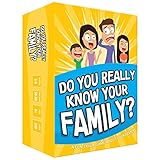
Overview: This card game transforms family gatherings into laugh-filled discovery sessions. Designed for ages 8 and up, it combines conversation starters with silly challenges to reveal how well relatives truly know each other. The straightforward mechanics ensure immediate play without complex rulebooks, making it accessible for all skill levels.
What Makes It Stand Out: The blend of trivia questions and physical challenges creates unpredictable moments that break down generational barriers. Unlike traditional board games, it prioritizes connection over competition, making it ideal for mixed-age groups. The questions spark genuine conversations while challenges inject physical comedy, creating memories that extend beyond the game itself.
Value for Money: As a compact card game, it offers exceptional value. The replayability is high since family dynamics constantly evolve with new experiences. Compared to pricier board games, this delivers more meaningful interactions per dollar. It’s also portable for vacations and gatherings, maximizing its utility across different settings.
Strengths and Weaknesses: Pros: Extremely easy to learn; builds family bonds; suitable for all ages; creates lasting memories; compact and travel-friendly. Cons: May feel repetitive after multiple plays; requires willing participants; not ideal for competitive gamers; some questions might not suit every family dynamic or cultural background.
Bottom Line: An essential addition to any family game collection. Best for families who value connection and laughter over cutthroat competition. If your crew enjoys sharing stories and doesn’t mind being silly together, this delivers priceless moments. Competitive strategists should look elsewhere.
8. Monopoly Free Parking Jackpot Expansion | Add More Fun to Classic Monopoly Game and Play Faster | Ages 8+ | 2-6 Players | 40 Mins. | Family Board Games

Overview: This expansion reinvents Monopoly’s most house-ruled space into an official jackpot mechanic. Requiring the classic game, it accelerates play to 40 minutes by transforming Chance and Community Chest into spin spaces. The centerpiece is a spinner that turns Free Parking into a high-stakes prize zone with tangible rewards.
What Makes It Stand Out: The Deal Mobile token adds a novel layer, letting lucky players acquire free properties and dodge rent. This creates exciting swing moments that keep all players engaged until the end. By institutionalizing the popular house rule, it legitimizes a chaotic element while maintaining game balance through the spinner’s risk-reward design and strategic timing considerations.
Value for Money: Similar to other Monopoly expansions, it offers good value by refreshing a game you already own. The time-saving aspect alone makes it worthwhile for busy families. The spinner component feels substantial, and the new cards provide enough variety to justify the investment over repeatedly playing the base game, especially for regular players.
Strengths and Weaknesses: Pros: Speeds up gameplay significantly; spinner adds tactile excitement; Deal Mobile creates strategic opportunities; officializes popular house rule. Cons: Requires base game; luck-heavy mechanics may frustrate strategic players; can create runaway leaders; doesn’t fix Monopoly’s fundamental design flaws like player elimination.
Bottom Line: Ideal for families wanting faster, more dynamic Monopoly sessions. If you already use the Free Parking house rule, this adds structure and excitement. Strategy purists may find the luck factor excessive, but it delivers exactly what casual players crave: quick, unpredictable fun with familiar mechanics.
9. Asmodee Ticket to Ride Board Game (2025 Refresh) - A Cross-Country Train Adventure for Friends and Family, Strategy Game for Kids & Adults, Ages 8+, 2-5 Players, 30-60 Minute Playtime

Overview: This refreshed edition of the modern classic remains the gold standard for gateway strategy games. Players collect train cards to claim routes across North America, balancing short-term gains against long-term ticket objectives. The 2025 update preserves the beloved gameplay while likely enhancing components and production quality for contemporary audiences.
What Makes It Stand Out: Ticket to Ride’s genius lies in its elegant simplicity—easy enough for children to grasp, yet deep enough for serious gamers. The 2025 refresh maintains this accessibility while offering multiple paths to victory: route completion, longest train, and strategic blocking. The tactile train pieces and beautiful map create an immersive experience that appeals across generations.
Value for Money: As a premium standalone game, it justifies its price through exceptional replayability and component quality. Unlike expansions, this is a complete experience. The 30-60 minute playtime is perfect for modern attention spans, and the game scales beautifully from 2-5 players, offering more versatility than many competitors in the strategy genre.
Strengths and Weaknesses: Pros: Perfect learning curve; high replay value; beautiful components; scales well; blends luck and strategy elegantly. Cons: Can feel cutthroat with aggressive players; some luck in card draws; base map may feel limited after many plays; expansions sold separately for variety.
Bottom Line: An essential purchase for any game collection. Perfect for families seeking strategy without overwhelming complexity. Whether you’re new to hobby gaming or refreshing your collection, this delivers unmatched quality and accessibility. The 2025 edition ensures you’re getting the latest production standards.
10. Hasbro Gaming The Game of Life Board Game, Family Games for Kids Ages 8+, Includes 31 Careers, Family Board Games for 2-4 Players, (Amazon Exclusive)

Overview: This Amazon-exclusive edition modernizes the childhood classic with 31 quirky careers and vacation choices. Players navigate life’s twists through a spinner-driven journey, making decisions about education, work, and family. The game captures life’s unpredictability in a family-friendly package that balances nostalgia with contemporary updates.
What Makes It Stand Out: The expanded career options—including ice cream flavor maker and secret agent—inject personality into each playthrough. The 115 action cards create branching narratives that feel more dynamic than the original’s rigid path. The vacation choices add a thematic layer that resonates with modern families seeking experiential variety.
Value for Money: As a complete standalone game, it offers solid value with substantial content. The exclusive Amazon edition likely includes premium components not found in standard versions. While luck-heavy, the variety of cards and careers provides enough replayability to justify the price point for families seeking casual entertainment over strategic depth.
Strengths and Weaknesses: Pros: Nostalgic appeal with modern updates; simple rules; great for mixed-age groups; promotes conversation about life choices; exclusive content adds value. Cons: Heavy reliance on luck over strategy; gameplay can feel lengthy; limited strategic depth; spinner mechanism can be unreliable and frustrating.
Bottom Line: A worthy update for fans of the original. Best for families wanting lighthearted, luck-based fun rather than strategic depth. The quirky careers and vacation choices make it more engaging than the classic version, though serious gamers will crave more control. Perfect for introducing kids to board games.
The Magic of Board Game Expansions for Families
What Makes Expansions Different from New Games
Expansions build upon established foundations rather than requiring everyone to learn completely new rulesets. Your family already understands the core mechanics, which means you can focus on enjoying the new elements rather than sitting through lengthy tutorials. This familiarity creates a comfort zone where even hesitant players feel confident trying new strategies.
Economic and Emotional Value Proposition
Investing in expansions typically costs less than purchasing brand new games while delivering comparable entertainment value. More importantly, expansions preserve the emotional connections and memories your family has built around favorite titles. That inside joke about Dad’s infamous move last Thanksgiving? Expansions let you keep those traditions alive while adding fresh layers to laugh about.
10 Expansion Categories That Transform Family Game Night
These expansions solve the most common family gathering problem: too many or too few players. Smart designs scale gameplay elegantly, whether you’re accommodating surprise guests or playing with just two people on a rainy afternoon. Look for modular boards or adjustable turn structures that maintain game balance across different group sizes.
When younger players grow into more sophisticated thinkers, these expansions add complexity without overwhelming anyone. They typically introduce new decision points, resource management layers, or long-term planning elements that challenge teens and adults while remaining accessible to developing minds.
Story-driven expansions weave narrative threads through your gameplay, turning isolated sessions into ongoing adventures. These work particularly well for families who enjoy creative storytelling and character development. The best versions include branching paths where your group’s decisions genuinely matter.
Sometimes the best expansion isn’t about new rules but enhanced physical pieces. Metal coins, wooden tokens, or detailed miniatures elevate the tactile experience and make game nights feel more special. These upgrades especially engage younger players who benefit from visual and hands-on elements.
Competitive games can create tension in families. Collaborative expansions shift everyone onto the same team against the game itself. These introduce shared objectives, timed challenges, or escalating threats that require genuine teamwork and communication—perfect for building family bonds.
Conversely, some families thrive on friendly rivalry. These expansions amplify competitive elements with direct player interaction, bidding systems, or territory control mechanics. They work best when families establish clear sportsmanship guidelines beforehand.
Modern families appreciate flexibility. Solo expansions let individual members practice strategies or enjoy the game alone when schedules don’t align. The best designs create genuinely satisfying single-player experiences that feel purposeful, not like watered-down versions of the multiplayer game.
Legacy expansions transform standalone games into episodic campaigns where each session permanently changes the board, components, or rules. These create incredible anticipation for the next game night and give families shared secrets and inside jokes that last for months.
Visual and tactile improvements can reignite interest even when gameplay stays the same. Detailed miniatures bring characters to life, while refreshed artwork keeps the game feeling contemporary. These expansions particularly appeal to creative families and visual learners.
Innovative expansions now connect different games within the same family, allowing characters or resources to travel between titles. This creates a meta-game experience where your collection becomes an interconnected ecosystem, adding strategic depth for families who own multiple compatible games.
Key Features to Evaluate Before Buying
Complexity Matching and Age Appropriateness
Measure the expansion’s learning curve against your family’s patience and experience. Check recommended ages, but also consider your specific children’s cognitive development. Some eight-year-olds handle complexity better than certain teenagers. Preview rulebooks online when possible to gauge true complexity.
Replayability Value Assessment
Calculate how many unique experiences the expansion provides. Does it offer modular scenarios? Randomized setups? Variable player powers? The best expansions feel fresh after dozens of plays, not just two or three. Consider whether the expansion creates memorable moments or just minor variations.
Component Quality and Durability
Examine material specifications and user reviews focusing on component longevity. Thin cards that bend easily or stickers that peel frustrate families, especially those with younger children. Look for expansions with production values matching or exceeding the base game.
Rule Integration and Clarity
The finest expansions integrate seamlessly with base game rules rather than creating confusing exceptions. Check if the expansion includes clear reference materials or player aids. Poorly written rulebooks can ruin game night faster than any mechanical flaw.
How to Introduce Expansions to Your Family
Gradual Implementation Strategies
Don’t dump every new rule on your family at once. Introduce one or two key mechanics first, then add others in subsequent sessions. This phased approach prevents cognitive overload and lets everyone master new elements progressively. Start with the most exciting feature to generate immediate enthusiasm.
Teaching Techniques That Work
Frame expansions as “new powers” or “special abilities” rather than “more complicated rules.” Use analogies to video game DLC or sports rule variations that kids already understand. Demonstrate new mechanics with practice rounds before starting serious scoring.
Building Family Buy-In
Involve everyone in the selection process by showing preview videos or rule summaries. Let different family members choose which expansion to try next, giving everyone ownership. Celebrate when someone successfully uses a new strategy, reinforcing positive associations.
Storage and Organization Solutions
Consolidating Components Effectively
Expansions often create storage headaches. Invest in adjustable compartment boxes or bag systems that keep base game and expansion pieces together. Label everything clearly so setup doesn’t become a treasure hunt. Some families create custom foam core inserts for professional-grade organization.
Protecting Your Investment
Sleeve cards immediately, especially in games children handle frequently. Store painted miniatures separately to prevent chipping. Keep rulebooks in protective covers or laminate frequently referenced player aids. Proper care ensures your expansion investment lasts for years.
When to Choose an Expansion Over a New Game
Cost-Benefit Analysis for Families
Expansions typically cost 30-50% less than new games of similar complexity. Calculate the “cost per hour of entertainment” by estimating how many sessions you’ll get. Expansions often provide better value because the learning curve is shorter, meaning more actual playtime per dollar spent.
Sentimental Value Considerations
That game you played during the power outage last winter? The one where your youngest beat everyone for the first time? Expansions preserve those emotional connections while creating space for new memories. This intangible value often outweighs the novelty of starting fresh with unfamiliar games.
Learning Curve Trade-Offs
New games require everyone to learn from zero. Expansions leverage existing knowledge, meaning you spend less time teaching and more time playing. For busy families with limited game night windows, this efficiency matters enormously.
Troubleshooting Common Expansion Challenges
Resolving Rule Conflicts and Ambiguities
Even well-designed expansions occasionally create rule questions. Establish a family “rules referee” role that rotates among members. Keep a tablet handy for official FAQ pages. When disputes arise, vote on interpretations and stick with them for the session—you can always look up official rulings later.
Addressing Player Resistance
Not everyone embraces change. Acknowledge that some family members might prefer the original game. Offer “vanilla mode” sessions occasionally to honor those preferences. Frame expansions as optional modules rather than mandatory upgrades, letting resistant players ease in at their own pace.
Managing Game Balance Issues
Some expansions inadvertently favor certain play styles. If one family member consistently wins using expansion features, create house rules that level the playing field. Many expansion designers actually encourage this customization, especially for family play.
Building a Family Expansion Collection
Budgeting and Prioritizing Purchases
Set an annual “expansion budget” and let family members advocate for their preferred choices. Track which expansions see actual play versus those that sit unused. Prioritize expansions that address your family’s specific pain points—whether that’s player count, complexity, or replayability.
Trading and Selling Unused Expansions
The secondary market for expansions remains robust. If an expansion doesn’t click with your family after three honest attempts, consider trading it locally or online. This funds future purchases and prevents shelf clutter. Be honest in listings about component condition and why it didn’t work for your group.
Frequently Asked Questions
How do I know if my family is ready for a board game expansion? If your family plays a base game at least twice monthly and everyone understands the rules without referencing the rulebook, you’re likely ready. Signs include players requesting “something new” or inventing their own house rules to add variety.
Will expansions make our favorite family game too complicated? Not necessarily. Many expansions offer modular components you can add selectively. Start with the simplest module and gauge your family’s comfort. You can always play the base game anytime or remove expansion elements that don’t resonate.
Are expansions worth the investment for casual family gamers? Absolutely. Expansions typically cost less than new games while providing comparable entertainment hours. Since your family already knows the core mechanics, you’ll spend more time playing and less time learning, maximizing value for casual gaming schedules.
How can I preview an expansion before purchasing? Watch gameplay videos that focus on family play, read rulebooks posted on publisher websites, and check family-specific board gaming forums. Many local game stores have demo copies you can examine. Some publishers offer print-and-play mini-expansions as free samples.
What’s the best way to store base games with multiple expansions? Consolidate everything into the original box when possible, using compartmentalized storage systems. Remove unnecessary packaging and keep all components together. Label baggies clearly and laminate reference sheets. Custom foam core inserts or third-party storage solutions work wonderfully for heavily expanded games.
Can expansions help with different age ranges in my family? Yes! Many expansions include “family” or “junior” modes that simplify rules for younger players while offering advanced modules for older participants. Some even feature asymmetric abilities where players of different skill levels can compete fairly.
How often should we introduce new expansion content? Introduce significant new mechanics every 4-6 sessions to maintain interest without causing burnout. Smaller additions, like new cards or characters, can be added more frequently. Pay attention to your family’s enthusiasm levels—they’ll tell you when they’re ready for more.
What if only some family members want to use expansions? Most expansions work as optional modules. Play “base game plus expansion” where expansion features are available but not mandatory. This lets eager players explore new content while traditionalists stick with familiar strategies. Over time, reluctant players often warm to new features.
Do expansions affect game length significantly? Some add 15-30 minutes, others maintain similar playtimes by streamlining other mechanics. Check estimated playtimes on the expansion box and read reviews focusing on timing. For families with limited time, expansions adding variety without extending duration often provide the best value.
How can I tell if an expansion is compatible with my edition of the game? Check publisher websites for compatibility guides. Many games have multiple editions with slight component differences. Reputable publishers clearly state which base game versions work with each expansion. When in doubt, contact the publisher directly or ask at your local game store before purchasing.
See Also
- Stop Boredom with the 10 Best Family Board Game Expansions This Year
- Stop Boredom with the 10 Best Economic Game Expansions This Year
- 10 Top-Rated Trivia Game Expansions According to Experts in 2026
- The 10 Ultimate Best Economic Game Expansions for Resource Management Lovers in 2026
- How to Choose the 10 Best Economic Game Expansions for Your Collection in 2026