Table of Contents
Family game nights have evolved far beyond the dusty boxes of Monopoly and Scrabble tucked away in your closet. As we head into 2026, board game expansions have become the secret ingredient that keeps these cherished gatherings fresh, exciting, and engaging for everyone from your strategy-loving teenager to your just-learning-to-read kindergartener. These clever add-ons breathe new life into the games you already love, transforming familiar experiences into entirely new adventures without forcing you to learn an entirely new rulebook from scratch.
The beauty of modern expansions lies in their ability to grow with your family. Rather than constantly purchasing brand-new games that may or may not click with your crew, strategic expansions allow you to build upon established favorites, scaling complexity up or down based on who’s at the table. They represent one of the most cost-effective ways to expand your entertainment library while deepening the skills and connections that make family game time so valuable. Whether you’re looking to add more players, extend game length, introduce new challenges, or simply refresh a title that’s grown stale, understanding what makes an expansion truly family-friendly is key to making smart purchasing decisions.
Top 10 Family Board Game Expansions
Detailed Product Reviews
1. Ransom Notes Expansion Pack, Family Edition - The Ridiculous Word Magnet Party Game, 3+ Players

Overview: The Ransom Notes Expansion Pack, Family Edition injects fresh hilarity into the base game with 180 contemporary word magnets and 100 family-friendly prompts. This add-on transforms the adult party game into a cross-generational experience, allowing parents and children to create absurd sentences together using modern slang like “bussin” and “sus.” Designed for 3-6+ players, it maintains the original’s quick-play format while bridging the gap between generations through shared laughter.
What Makes It Stand Out: The integration of current youth slang sets this expansion apart, creating authentic moments where kids see their vocabulary reflected in gameplay. The family-oriented prompts are thoughtfully crafted to elicit innocent yet funny responses, giving parents insight into their children’s creative thinking. The low barrier to entry means even first-time players can jump in within seconds, making it ideal for mixed-age gatherings where complex rules would be a hindrance.
Value for Money: Priced reasonably for an expansion, the value hinges entirely on owning the base game. For families who already enjoy Ransom Notes, the 280 new components significantly extend replayability. Compared to purchasing a separate family-friendly party game, this offers a cost-effective way to adapt existing content. However, as a non-standalone product, it’s a zero-value proposition for newcomers.
Strengths and Weaknesses: Pros include genuinely funny family prompts, high-quality word magnets with relevant modern slang, and seamless integration with the base game. Cons are its dependency on the base game, limited appeal for child-free households, and potential for slang to feel dated quickly.
Bottom Line: An excellent investment for Ransom Notes owners seeking family-inclusive entertainment, but worthless if you don’t own the original.
2. Herd Mentality: Udderly Funny Family Board Game | Easy & Fun for Big Groups of 4-20 Players | Includes 20 Extra Exclusive Questions

Overview: Herd Mentality delivers entertaining group dynamics for 4-20 players, making it a powerhouse for large family gatherings or parties. This board game taps into consensus psychology, where players answer questions hoping to match the majority. The included 20 exclusive questions add extra value to this version. With a 10+ age rating and quick gameplay, it fills that crucial niche of games that work equally well for teens, adults, and mixed groups.
What Makes It Stand Out: The dreaded pink cow of doom is a brilliant mechanical hook that punishes individualism without eliminating players. This keeps everyone engaged throughout, unlike elimination games that sideline participants. The game’s true genius lies in its scalability—whether you have 4 or 20 people, the experience remains tight and entertaining. The 20 bonus questions provide immediate added value, extending the game’s lifespan before repetition sets in.
Value for Money: For hosts who regularly entertain large groups, this offers exceptional value. One purchase replaces multiple smaller party games and scales effortlessly. The price point is competitive with other mass-market party games, but the player count flexibility gives it a distinct advantage. The 20 extra questions sweeten the deal compared to standard editions.
Strengths and Weaknesses: Pros include massive player scalability, no player elimination, instant learnability, and broad age appeal. Cons are shallow strategic depth that may disappoint serious gamers, and optimal experience requires at least 6+ players.
Bottom Line: A must-have party game for anyone hosting large gatherings, though less essential for intimate game nights.
3. CATAN 5-6 Player Board Game Expansion (6th Edition) Add More Players to Your Adventure, Ages 10+, 3-6 Players, 60-90 Minute Playtime

Overview: This expansion solves the social dilemma of who gets left out of CATAN night by accommodating two additional players. Seamlessly integrating with the 6th Edition base game, it includes extra settlements, roads, cities, and resource cards needed for 5-6 player sessions. The enhanced turn-taking mechanism prevents excessive downtime, a critical improvement for larger groups. Designed for ages 10+ and maintaining the 60-90 minute playtime, it preserves the core CATAN experience while expanding your gaming circle.
What Makes It Stand Out: The thoughtful turn-taking system is the unsung hero, keeping all six players invested during what could otherwise be lengthy gaps between turns. The component quality perfectly matches the base game, ensuring a cohesive visual and tactile experience. Unlike some expansions that dilute the core gameplay, this maintains CATAN’s elegant resource-trading tension while adding welcome negotiation complexity with more players.
Value for Money: For CATAN enthusiasts, this is a necessary purchase to avoid excluding friends. The price is standard for board game expansions, and the components are substantial enough to justify the cost. Compared to buying an entirely new 6-player game, extending your existing CATAN collection is economically sound.
Strengths and Weaknesses: Pros include eliminating player exclusion, maintaining gameplay quality at higher player counts, and robust component quality. Cons are the prerequisite base game ownership, slightly longer total playtime, and increased downtime despite mitigation efforts.
Bottom Line: Indispensable for CATAN fans with larger friend groups; skip if you consistently play with four or fewer.
4. Uzzle 3.0 & Expansion Bundle - Includes New Level 5 Challenges - Fun for Family Game Nights - Skill Development & Gift Set – Bundle of Fun Board Games for Adults & Children - Ages 4+

Overview: The Uzzle 3.0 Bundle combines the base game with its expansion, delivering 150 puzzles across five difficulty levels, including the formidable Level 5 challenges. With 100 base puzzles and 50 additional advanced cards, plus eight extra plastic blocks, this comprehensive set serves ages 4+ through adult. The tactile puzzle format emphasizes spatial reasoning and pattern matching at speed, making it an educational tool disguised as frantic fun. This all-in-one package eliminates the need for separate purchases.
What Makes It Stand Out: The Level 5 challenges genuinely test adult cognitive limits while Level 1 remains accessible to preschoolers—a remarkable difficulty range rarely achieved in puzzle games. The bundle format provides immediate progression path, preventing the “what next?” syndrome after mastering base puzzles. Its dual identity as both entertainment and developmental tool makes it versatile for family use.
Value for Money: Purchasing the bundle saves approximately 15-20% versus buying separately, making it the smart choice for committed buyers. The educational ROI is significant for parents seeking screen-free skill development. However, casual buyers might find the upfront cost steep if uncertain about the game’s appeal.
Strengths and Weaknesses: Pros include exceptional age range, cognitive skill development, progressive difficulty, and cost savings. Cons are plastic pieces that may feel cheap to some, and advanced players might burn through puzzles quickly.
Bottom Line: A stellar educational gaming investment for families with varied ages; puzzle enthusiasts should purchase confidently.
5. CATAN Board Game (6th Edition) Trade, Build & Settle in The Classic Strategy Game for Family, Kids & Adults, Ages 10+, 3-4 Players, 60-90 Min Playtime

Overview: CATAN 6th Edition remains the gold standard for gateway strategy games, tasking 3-4 players with settling an island through resource management and trading. Players collect brick, wood, wheat, ore, and sheep to build roads, settlements, and cities in a race to 10 victory points. The modular hexagonal board ensures no two games share the same geography, while the robber mechanic introduces controlled conflict. With a 60-90 minute runtime and 10+ age rating, it balances accessibility with strategic depth.
What Makes It Stand Out: The trading mechanic creates organic social interaction that transcends the game itself, fostering negotiation and diplomacy. The variable board setup provides genuine replayability rather than mere marketing promise. As a teaching tool for probability and resource management, it’s unparalleled in the hobby game space. The 6th Edition’s refined components and clarified rules lower the learning curve without sacrificing depth.
Value for Money: Despite being pricier than mass-market games, CATAN’s longevity and replayability justify every penny. It replaces multiple lesser games on your shelf and maintains resale value. For families, it’s an investment in countless evenings of engagement. The endless expansion possibilities extend its lifespan indefinitely.
Strengths and Weaknesses: Pros include perfect gateway complexity, social trading dynamics, true replayability, and massive expansion ecosystem. Cons involve potential for player conflict, luck dependency through dice rolls, and base game limited to four players.
Bottom Line: An essential purchase for anyone serious about board gaming; the perfect foundation for a growing collection.
6. Monopoly Go to Jail Expansion | Add More Fun to Classic Monopoly Game and Play Faster | Ages 8+ | 2-6 Players | 40 Mins. | Family Board Games

Overview: The Monopoly Go to Jail Expansion directly tackles the classic game’s biggest flaw: endless playtime. This clever add-on transforms incarceration from a penalty into a strategic mechanic, promising 40-minute sessions while injecting mischievous new cards and rules into the familiar property-trading formula.
What Makes It Stand Out: The Corruption card system rewards jail time with powerful sabotage abilities, flipping the original game’s logic upside down. The “Super Jail” mechanic intensifies this risk-reward dynamic, making the Go to Jail space a calculated destination rather than a setback. It’s a rare expansion that meaningfully redefines strategy rather than just adding content.
Value for Money: At $15-20, this expansion effectively doubles the value of your $30 base game by making it playable again for time-conscious families. Unlike cosmetic add-ons, this fundamentally changes the experience. Competing quick-play board games typically cost $40+, making this an economical way to refresh a classic.
Strengths and Weaknesses: Strengths include dramatically reduced playtime, genuine strategic depth, and renewed excitement for veteran players. However, it requires the base game (sold separately), adds complexity that may confuse younger children, and the corruption mechanic can create runaway leads. Monopoly purists may reject the thematic shift.
Bottom Line: Essential for families who love Monopoly’s core but crave faster, more cutthroat gameplay. If your base game is gathering dust, this is a no-brainer purchase. Just don’t expect it to convert Monopoly skeptics—it amplifies the original experience rather than reinventing it.
7. Do You Really Know Your Family? A Fun Family Game Filled with Conversation Starters and Challenges - Great for Kids, Teens and Adults
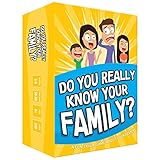
Overview: “Do You Really Know Your Family?” elevates game night beyond competition into genuine connection. This card-based party game eliminates complex rules in favor of relationship-testing questions and lighthearted challenges, creating memorable interactions across generations.
What Makes It Stand Out: Rather than testing facts, this game tests familiarity through personalized prompts and silly physical tasks. Its cross-generational appeal works seamlessly for ages 8 to 80, sparking conversations that extend far beyond gameplay. The conversation starters often unlock family stories and revelations that become the evening’s true highlight.
Value for Money: Priced under $20, the 200+ card deck provides dozens of sessions before repetition occurs, offering better value than a single movie night. Similar relationship-building games cost more while providing less structure. The emergent storytelling creates intangible value that transcends pure entertainment.
Strengths and Weaknesses: Strengths include instant setup, true portability, and authentic bonding opportunities. It scales effortlessly from 3 to 20+ players without requiring boards or pieces. Weaknesses include reliance on family willingness to engage openly—reserved groups may struggle. Some cards become repetitive after extensive play, and the competitive element can feel artificial for those preferring pure conversation.
Bottom Line: A must-have for families prioritizing screen-free interaction over strategic depth. While unsuitable for strangers or distant relatives, it excels at strengthening immediate family bonds. Purchase this if you value laughter and storytelling above complex mechanics.
8. Monopoly Free Parking Jackpot Expansion | Add More Fun to Classic Monopoly Game and Play Faster | Ages 8+ | 2-6 Players | 40 Mins. | Family Board Games

Overview: The Free Parking Jackpot Expansion transforms Monopoly’s most popular house rule into an official, game-accelerating mechanic. By converting the previously neutral Free Parking space into a spin-to-win jackpot and introducing token upgrades, this expansion delivers faster, more dynamic 40-minute sessions.
What Makes It Stand Out: The physical spinner introduces tactile excitement, while the Deal Mobile token offers clever property acquisition abilities. Transforming Chance and Community Chest spaces into spin opportunities creates constant anticipation. This expansion both honors and enhances the original experience in ways that feel organic rather than forced.
Value for Money: Offering tangible components beyond just cards, the $15-20 price point justifies itself by making Monopoly relevant again for busy families. It effectively doubles your base game’s utility. Competing quick-play strategy games cost $40+, making this an economical refresh.
Strengths and Weaknesses: Strengths include significantly reduced playtime, heightened player interaction, and a satisfying jackpot mechanic. The spinner is sturdy and well-crafted. However, the base game is required, and the luck-heavy spinner can create unpredictable swings. The free property mechanic may unbalance late-game strategy, and integrating components into the original box is awkward.
Bottom Line: Perfect for families wanting to inject adrenaline into Monopoly while reducing playtime. The jackpot element adds genuine excitement, though luck-averse players should be cautious. If you own Monopoly, this expansion is worthwhile. Without the base game, purchase that first.
9. Asmodee Ticket to Ride Board Game (2025 Refresh) - A Cross-Country Train Adventure for Friends and Family, Strategy Game for Kids & Adults, Ages 8+, 2-5 Players, 30-60 Minute Playtime

Overview: The 2025 refresh of Ticket to Ride preserves the beloved cross-country train adventure while subtly upgrading components. This gateway strategy game remains the gold standard for accessible depth, connecting cities through card collection and route building across early 20th-century North America.
What Makes It Stand Out: This edition features enhanced artwork and components without altering the flawless original mechanics. Its genius lies in the “easy to learn, hard to master” balance—children grasp basics immediately while adults strategize over ticket selection and blocking. The 30-60 minute playtime perfectly suits family engagement.
Value for Money: At $50, this delivers premium quality in the board game market. The detailed board, miniature trains, and linen-finish cards justify the cost over budget alternatives. With essentially infinite replayability through varied route strategies, the per-play cost drops below a dollar after months of use. Similar-weight strategy games typically cost $60-70.
Strengths and Weaknesses: Strengths include a perfect learning curve, beautiful production values, and genuine strategic depth. It plays excellently from 2-5 players, creating satisfying engine-building moments. Weaknesses include potential for analysis paralysis, minimal changes for existing owners, and the base map can feel limited after extensive play. Expansions are necessary for long-term variety.
Bottom Line: Essential for any family or casual gaming group. If you don’t own Ticket to Ride, this refresh is the definitive version. Current owners should skip unless replacing worn components. For newcomers, this is the perfect entry into modern board gaming.
10. Hasbro Gaming The Game of Life Board Game, Family Games for Kids Ages 8+, Includes 31 Careers, Family Board Games for 2-4 Players, (Amazon Exclusive)

Overview: Hasbro’s refreshed Game of Life maintains the classic career-and-family simulation while adding modern vacation options and quirky career paths. This Amazon exclusive streamlines setup and emphasizes choice through 115 cards, letting players navigate from ice cream flavor maker to secret agent.
What Makes It Stand Out: The 31 career cards provide surprising variety, while vacation choices add narrative flavor beyond simple wealth accumulation. The “Spin to Win” mechanic retains its end-game thrill. As an Amazon exclusive, it includes subtle component upgrades and packaging improvements that distinguish it from standard versions.
Value for Money: At $25-30, Life positions itself as a premium family game without reaching hobby board game pricing. The exclusive content and improved components justify the modest upcharge over discount versions. Compared to $50 strategy games, it offers similar playtime for half the cost, albeit with less depth.
Strengths and Weaknesses: Strengths include instant nostalgia, straightforward rules, and the tactile satisfaction of spinning the wheel. Career variety prevents repetition. Weaknesses include heavy luck dependency that can frustrate strategic players, a 2-4 player limit that excludes larger families, and gameplay that feels dated compared to modern board games. The money management is simplistic.
Bottom Line: An excellent choice for families seeking lighthearted, nostalgic entertainment over strategic complexity. Ideal for introducing children to board games or facilitating multi-generational play where complexity is a barrier. Avoid if you prefer skill-based competition, but embrace it for casual family fun that honors the original.
Why Board Game Expansions Transform Family Game Night
Breathing New Life Into Beloved Classics
That game your family has played two dozen times doesn’t have to gather dust. Expansions reinvigorate familiar experiences by introducing unexpected elements that force everyone to rethink their strategies. The comfort of known base mechanics combined with the excitement of new variables creates a sweet spot where both cautious learners and adventurous players thrive. Kids who’ve mastered the original game find renewed challenge, while parents appreciate not having to teach an entirely new system from scratch.
Cost-Effective Entertainment Value
A quality expansion typically costs 30-50% less than a full new game while delivering comparable playtime. When you factor in the replay value multiplier effect—where each session feels distinct from the last—the return on investment becomes clear. For families building their collection strategically, expansions allow you to maximize entertainment dollars while minimizing storage space, a practical consideration when your game shelf is already overflowing.
Building on Established Rules
The learning curve for expansions is naturally gentler since you’re working from a foundation everyone already understands. This is particularly valuable for families with mixed age groups, as younger children can lean on their mastery of base mechanics while gradually absorbing new concepts. The confidence boost from already “knowing” the game reduces anxiety and keeps frustration levels low during the introduction phase.
Key Features to Evaluate in Family-Friendly Expansions
Age Appropriateness and Complexity Scaling
Not all expansions are created equal when it comes to age ranges. Look for options that explicitly offer simplified variants or modular components you can add incrementally. The best family expansions include “junior modes” or beginner setups that allow younger players to participate meaningfully while older siblings tackle full complexity. Check for age recommendations that align with your youngest regular player, then verify if the expansion offers ways to scale up for advanced users.
Player Count Flexibility
One of the most common reasons families seek expansions is to include more participants. Whether you’re hosting cousins for the holidays or your child’s friend group is growing, expansions that increase player capacity are invaluable. Evaluate not just the maximum player count but how the game flows at different numbers. The ideal expansion maintains snappy turn pacing even with six or seven players and doesn’t leave anyone waiting too long between actions.
Game Duration Considerations
Family schedules are busier than ever, and not every game night can accommodate a three-hour epic. Quality expansions offer ways to adjust session length—whether through shortened variants, adjustable end-game triggers, or scenarios designed specifically for 30-minute windows. Conversely, if your family loves marathon sessions, some expansions extend gameplay in meaningful ways rather than just adding filler time.
Theme Consistency and Appeal
That dragon-heavy expansion might thrill your fantasy-obsessed teen but could alienate your preschooler who loves the base game’s cute animal theme. The most successful family expansions maintain visual and thematic consistency with the original while broadening the appeal. Look for artwork styles that match seamlessly and themes that feel like natural extensions rather than jarring departures.
Understanding Expansion Types
Modular Add-Ons
These expansions function like building blocks, allowing you to mix and match components based on your family’s mood and experience level. You might add a new map board one week and introduce advanced character powers the next. This flexibility is perfect for families who want variety without overwhelming complexity. Modular designs also let you remove elements that aren’t working and fine-tune your perfect experience.
Campaign Extensions
For families who love ongoing narratives, campaign expansions transform standalone games into episodic adventures where decisions carry from session to session. These work best with older children who can remember story threads and appreciate long-term consequences. The commitment level is higher, but the payoff in family storytelling and shared memories is unmatched. Look for campaign expansions with built-in catch-up mechanics so newer players aren’t permanently disadvantaged.
Component Upgrades
Sometimes an expansion focuses primarily on enhancing physical quality—metal coins, wooden tokens, or detailed miniatures that replace cardboard standees. While these don’t change gameplay, they can dramatically increase tactile engagement, especially for younger players who benefit from sensory-rich experiences. These upgrades also tend to extend a game’s lifespan by making components more durable for repeated family use.
Standalone Variants
These clever hybrids function as both expansions and independent games. You can play them alone for a lighter experience or combine them with the base game for maximum depth. This versatility is ideal for families still building their collection, as you’re essentially getting two games for the price of one. The key is ensuring the standalone version is robust enough to satisfy on its own merits.
Compatibility and Integration Factors
Base Game Requirements
Always verify exactly which version of the base game an expansion requires. Publishers sometimes release updated editions with revised components or rules that aren’t backward compatible. Check for edition-specific icons on the expansion box and read the fine print about component requirements. Nothing kills game night excitement like discovering your new expansion needs pieces you don’t own.
Storage Solutions
Expansions inevitably increase your game’s footprint. Consider whether the expansion includes an upgraded storage system or if you’ll need to invest in separate organizers. Some families prefer expansions that consolidate into the original box, while others don’t mind dedicated storage. Think about your shelf space and whether you’re willing to repurpose baggies and containers for component management.
Rulebook Clarity
The best expansions integrate new rules seamlessly into the original framework with clear reference materials. Look for rulebooks that highlight changes in colored boxes, include summary sheets for quick lookup, and provide illustrated setup examples. For families, video tutorials from the publisher can be invaluable for visual learners. Poorly organized rulebooks can turn an exciting expansion into a frustrating evening of constant lookups.
Mixing Multiple Expansions
If you’re a family that loves to go all-in, investigate how well multiple expansions from the same line work together. Some are designed to integrate seamlessly, while others create rule conflicts or component overload. The most expansion-friendly games have official compatibility guides that suggest which combinations work best and in what order to introduce them.
Educational Benefits of Strategic Expansions
Cognitive Skill Development
Well-chosen expansions layer in increasingly sophisticated thinking skills. Pattern recognition games might add probability elements, while resource management titles could introduce basic economic concepts. Each new mechanic builds upon previous learning, creating a scaffolded educational experience that feels like play, not homework. Track which skills your children are developing and select expansions that target areas for growth.
Social-Emotional Learning
Expansions that introduce negotiation, trading, or cooperative elements provide rich opportunities for practicing empathy and communication. Kids learn to read social cues, handle disappointment when plans fail, and celebrate others’ successes. Look for expansions that balance competition with collaboration, ensuring everyone stays emotionally invested without tears or tantrums.
Math and Literacy Integration
Many modern expansions sneak in educational content through engaging mechanics. Dice-based combat reinforces probability, card drafting builds reading comprehension, and set collection strengthens pattern recognition. The key is choosing expansions where these elements are integrated naturally rather than feeling like forced learning tools. Your kids will practice math facts willingly when they’re calculating victory points for a winning move.
Critical Thinking Enhancement
Expansions excel at teaching adaptability—just when players think they’ve mastered a strategy, new variables force them to rethink their approach. This mental flexibility is a cornerstone of critical thinking. Seek expansions that reward creative problem-solving over rote memorization of optimal moves. The best ones make every player feel clever for finding unique solutions.
Budget Planning for Expansion Collections
Price vs. Content Value
Expansions range from $15 mini-packs to $50 mega-boxes. Calculate cost per hour of expected playtime by considering how often your family plays the base game. A $40 expansion you’ll use monthly for two years delivers better value than a $20 one that hits the table twice and gathers dust. Factor in whether the expansion includes enough new content to feel substantial or if it’s mostly reprinted base game components.
Seasonal Release Patterns
Many publishers target major releases for spring (ahead of summer vacation) and fall (before holiday gifting). Planning your purchases around these cycles can help you snag pre-order bonuses or early-bird pricing. Some families create a “game fund” where kids contribute allowance toward expansions, teaching delayed gratification and making new content feel more special when it arrives.
Bundling Opportunities
Retailers often discount expansion bundles, especially during holiday sales. If you know your family loves a particular game line, purchasing multiple expansions together can yield significant savings. Just be sure to pace the introduction—unwrapping three expansions at once can lead to analysis paralysis. Store the extras and treat them as future surprises.
Long-term Investment Perspective
Think of expansions as building a family legacy rather than one-off purchases. The best ones remain enjoyable as children grow, with layers that reveal themselves over years of play. Consider whether an expansion will still interest your kids at age 15 if they’re currently 8. Timeless mechanics and flexible complexity offer the best long-term value for families committed to gaming together.
Preparing Your Family for New Content
Introducing New Mechanics Gradually
Rather than dumping all expansion content at once, implement a “one new rule per session” approach. Start with the simplest addition and only introduce further complexity once everyone is comfortable. This prevents cognitive overload and lets each family member feel confident before tackling the next challenge. Some families create a visual tracker showing which expansion modules they’ve mastered, building anticipation for what’s next.
House Rules and Customization
The best family game nights often involve personalized tweaks. Expansions provide raw material for creating house rules that suit your unique dynamic. Maybe you remove a cutthroat element for sensitive players or add a bonus for creative storytelling. Document your family’s custom rules in a notebook that stays with the game box—these modifications become part of your shared history.
Managing Younger Players’ Expectations
When an expansion targets older demographics, younger siblings may feel left out. Frame these additions as “goals to grow into” rather than barriers to participation. Assign them supportive roles like banker, card distributor, or official “storyteller” to keep them engaged. Many expansions include simplified player aids—laminate these for durability and let younger kids reference them proudly.
Creating Family Traditions
Use expansions as milestones to mark special occasions. Maybe you add the new map pack on the first day of summer vacation or unwrap the campaign expansion for a holiday weekend marathon. These rituals build anticipation and make expansions feel like celebrations rather than routine purchases. Document your family’s gaming journey with photos of each new addition’s first playthrough.
Troubleshooting Common Expansion Challenges
Rule Conflicts and Clarifications
Even well-designed expansions can create ambiguous situations. Establish a family “rules council” where disputed interpretations get voted on after a brief discussion. Keep a tablet handy for quick online FAQ checks from the publisher. For persistent confusion, print a one-page “family rulings” sheet that becomes your official house rulebook, preventing the same debate from recurring.
Component Quality Variations
Sometimes expansion pieces don’t match the base game’s quality—thinner cards, different cardstock, or color variations. While frustrating, this rarely impacts gameplay. Invest in card sleeves that unify the feel, or embrace the differences as “collector’s editions.” For significant mismatches, contact the publisher; many offer replacement component programs for quality control issues.
Overcoming Initial Complexity
If an expansion feels too daunting, step back and play the base game alone for a session to rebuild confidence. Then introduce just one expansion element as an “experiment” with no pressure to play perfectly. Celebrate mistakes as learning opportunities, and remind everyone that the first playthrough is always the slowest. Some families designate a “rules champion” who previews the expansion solo to smooth the group learning process.
When Expansions Don’t Click
Sometimes an expansion simply doesn’t fit your family’s style, and that’s okay. Rather than forcing it, set it aside and revisit in six months as children mature. The board game secondary market is robust—unwanted expansions can be traded or sold to fund better fits. Use these mismatches as learning experiences to refine your family’s preferences, making future purchases more strategic.
Frequently Asked Questions
What makes a board game expansion “family-friendly”?
Family-friendly expansions prioritize accessibility, offering scalable complexity that accommodates mixed age groups and experience levels. They maintain clear rule structures, minimize player elimination, and include engaging themes that appeal across generations. The best ones provide optional simplified modes for younger players while retaining depth for adults, ensuring everyone stays invested without feeling overwhelmed or bored.
How do I know if my family is ready for an expansion?
Readiness signs include consistent mastery of base game rules, expressed interest in “more options,” and the ability to handle minor rule additions without frustration. If your family plays the base game at least twice monthly and can set it up without referencing the rulebook, you’re likely ready. Also consider whether current sessions feel too short or repetitive—boredom with the base game is a clear expansion indicator.
Should I buy multiple expansions at once or one at a time?
Pacing is crucial for family enjoyment. Purchase one expansion, play it at least 3-5 times to ensure mastery, then evaluate what your family wants next. This prevents rule overload and lets you identify which mechanics resonate. However, if you find a bundle deal during a major sale, buying multiples is fine—just store the extras and introduce them sequentially as “future surprises” to maintain excitement.
What’s the best way to store expansions with the base game?
Invest in adjustable storage solutions like modular foam inserts or adjustable compartment boxes. Many families remove expansion components from their original boxes and consolidate everything into the base game box using labeled baggies. Keep rulebooks in a dedicated folder or use digital PDFs to save space. For large expansion lines, a separate storage tub with a custom organizer often works better than cramming everything into one overstuffed box.
Can expansions make a game too complicated for kids?
Absolutely, which is why modular expansions are ideal for families. Choose expansions with clear “beginner” and “advanced” setup options. Start with the simplest configuration and only add complexity as children demonstrate readiness. Many families create “kids’ versions” using expansion components while ignoring advanced rules, gradually layering in mechanics as cognitive skills develop. The key is matching complexity to your specific children’s abilities, not just age recommendations.
How do I teach an expansion without confusing everyone?
Use a “learn as you play” approach rather than front-loading all the new rules. Set up the game and explain only what’s needed for the first turn. As situations arise, introduce the relevant new rule naturally. Have a “rules captain” (often a parent) handle edge cases quietly without stopping the flow. Consider playing an “open hand” first game where everyone shares strategies and asks questions freely, focusing on learning over winning.
Are digital app versions good substitutes for physical expansions?
Apps excel at rule enforcement and setup speed but lack the tactile social experience crucial for family bonding. They’re best used as learning tools—play the digital version with the expansion a few times to internalize new mechanics, then transition to the physical version for family nights. Some hybrid games integrate apps for specific expansion content, offering the best of both worlds. However, for building memories and practicing social skills, physical expansions remain superior.
What if only part of my family likes the expansion?
Democratic enjoyment is key to sustainable family game nights. If some love it and others don’t, try mixing expansion modules selectively—use the components everyone enjoys while omitting problematic rules. Alternatively, designate the expansion for “advanced player nights” with a subset of the family, keeping the base game for full-group sessions. Never force an expansion that creates genuine dislike; it will poison enthusiasm for future game nights.
How can expansions help with different learning styles?
Visual learners benefit from expansions with detailed artwork and iconography. Kinesthetic learners thrive with expansions adding tactile components like custom dice or textured tokens. Auditory learners engage with story-driven expansions that encourage narration and discussion. Strategic thinkers love engine-building add-ons that reward planning. Choose expansions that complement your family’s dominant learning styles while gently stretching into new modalities for balanced development.
Will expansions still be available if I wait to buy them?
Board game production runs vary widely. Popular expansions often stay in print for years, but niche titles can disappear quickly. If an expansion perfectly fits your family’s needs and budget, waiting risks missing out. However, most major publishers reprint high-demand expansions annually. Follow publishers on social media for restock announcements, and subscribe to retailer newsletters for back-in-stock alerts. For truly rare expansions, the secondary market usually has copies, though at premium prices.
See Also
- 10 Best Family Board Game Expansions for Game Night in 2026
- Stop Boredom with the 10 Best Family Board Game Expansions in 2026
- 10 Best Budget Family Board Game Expansions Under $30 for Game Nights in 2026
- Stop Boredom with the 10 Best Family Board Game Expansions This Year
- 10 Best Economic Game Expansions for Resource Management Fans in 2026