Table of Contents
The world of tabletop gaming has evolved far beyond simple dice rolls and card draws, with escape room board games emerging as one of the most immersive and intellectually stimulating genres available to modern enthusiasts. These premium experiences transport players into meticulously crafted narratives where every component, puzzle, and clue serves a purpose in the larger mystery waiting to be unraveled. For those who have graduated from entry-level titles and crave something more substantial, the investment in high-quality escape room games delivers returns measured not in dollars, but in unforgettable moments of revelation and triumph.
What separates a truly premium escape room board game from its mass-market counterparts isn’t just a higher price tag—it’s the uncompromising attention to detail in every facet of the experience. From the weight of the components in your hands to the layers of storytelling woven through each puzzle, these games respect your intelligence as a player while challenging your observational skills, logical reasoning, and ability to work under pressure. Understanding what makes these investments worthwhile helps enthusiasts build collections that provide years of engaging entertainment rather than one-off experiences that gather dust on shelves.
Top 10 Escape Room Board Games for Enthusiasts
Detailed Product Reviews
1. Clue Escape: The Midnight Hotel Board Game, Clue Escape Room Game, 1-Time Solve Mystery Games, Family Games for Ages 10+, 1-6 Players, 90 Mins. Avg.

Overview: This innovative fusion transforms the classic Clue formula into a cooperative escape room experience. Set in a mysterious hotel after Boddy’s murder, players collaborate to identify which character stole blackmail files by solving interconnected puzzles. The game accommodates 1-6 players and lasts approximately 90 minutes, making it an accessible entry point for families and casual gamers seeking narrative-driven mystery.
What Makes It Stand Out: The dynamic 3D gameboard physically evolves as you progress, with new rooms and details emerging puzzle-by-puzzle—a tactile innovation that mirrors the escalating tension. Unlike traditional competitive Clue, this is a fully cooperative, one-time solve experience that emphasizes teamwork over deduction alone. The narrative continuation from the classic murder mystery provides familiar characters in an entirely new context.
Value for Money: Priced competitively with other narrative escape room games, the unique board-building mechanic and licensed Clue branding justify the investment. While single-use games inherently offer limited replayability, the 90-minute runtime and multi-player flexibility provide solid entertainment value compared to pricier escape room outings.
Strengths and Weaknesses: Strengths include the innovative expanding board, strong thematic integration with the Clue universe, and scalable difficulty for various age groups. The cooperative nature encourages true teamwork. Weaknesses stem from its one-and-done design that prevents replay or sharing, and experienced puzzlers may find the challenge moderate rather than extreme. The 90-minute length might stretch for younger players.
Bottom Line: An excellent choice for families and Clue enthusiasts wanting a fresh take on mystery gaming. The physical board evolution creates genuine excitement, though puzzle veterans should expect moderate difficulty. Best for groups seeking narrative immersion over brutal challenge.
2. Escape Room The Game, Version 2 - with 4 Thrilling Escape Rooms | Solve The Mystery Board Game for Adults and Teens
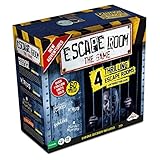
Overview: This premium kit delivers four distinct escape room adventures with a sophisticated hardware component. The Chrono Decoder device creates authentic pressure with its 60-minute countdown and audio feedback, while a companion app provides thematic soundtracks. Designed for 3-5 players ages 16+, each adventure contains three escalating parts that grow progressively more challenging.
What Makes It Stand Out: The physical Chrono Decoder transforms your tabletop into a genuine escape room environment with its digital timer and penalty sounds. The four included scenarios offer varied themes and difficulty curves, while the expansion pack ecosystem extends longevity beyond the base content. The three-part structure within each adventure creates natural checkpoint moments and escalating complexity.
Value for Money: While pricier than basic card-based alternatives, the electronic decoder and four complete adventures provide substantial content. The expansion pack compatibility protects your initial investment. Compared to actual escape room costs ($25-30 per person), this pays for itself after one group session.
Strengths and Weaknesses: Strengths include immersive technology, scalable difficulty across four scenarios, and professional production values. The app integration adds atmospheric depth. Weaknesses include the 16+ age restriction limiting family play, the need for batteries, and potential decoder malfunctions. Some puzzles rely too heavily on the decoder rather than creative problem-solving.
Bottom Line: Ideal for serious escape room fans seeking authentic atmosphere at home. The tech components deliver genuine tension, though families with younger teens should look elsewhere. A worthwhile investment if you’ll pursue expansion packs.
3. ThinkFun Escape The Room Stargazer’s Manor - A Thrilling Escape Room Game in a Box for Ages 10 and Up | Enhances Logical Reasoning | Perfect for Family Game Night | Ideal Gift for Puzzle Lovers

Overview: Leveraging ThinkFun’s educational game expertise, this entry combines entertainment with cognitive development. The package supports 3-8 players aged 10+ through a Victorian-themed mystery at Stargazer’s Manor. With sealed envelopes, a scenic card, and a solution wheel, the game emphasizes logical deduction over complex apparatus.
What Makes It Stand Out: ThinkFun’s pedagogical approach ensures puzzles develop critical reasoning skills while remaining entertaining. The generous player range accommodates larger groups than most competitors. The solution wheel provides immediate, non-destructive answer verification, preserving the game for reuse or sharing. Clear, high-quality instructions lower the barrier to entry for escape room newcomers.
Value for Money: Positioned as a mid-range option, the reusable components and educational value enhance its worth. The 8-player capacity divides the cost effectively. While not the cheapest, the brand reliability and replay potential (through passing along) justify the price.
Strengths and Weaknesses: Strengths include excellent instructional clarity, cognitive skill development, flexible player count, and non-destructive design. The ThinkFun brand ensures quality puzzle logic. Weaknesses include less immersive atmosphere compared to tech-enhanced games and a relatively straightforward difficulty curve that may not challenge veterans. The thematic presentation is functional rather than lavish.
Bottom Line: A smart purchase for educators, families, and larger groups prioritizing learning and accessibility over high-tech flash. Puzzle enthusiasts seeking brutal challenge should look elsewhere, but it’s perfect for introducing newcomers to escape room mechanics.
4. Escape From the Museum Escape Room Game

Overview: Part of Professor Puzzle’s Escape Room Collection, this compact experience traps 1-4 players in a museum after hours. Players must decipher a series of interconnected puzzles to secure their freedom. The streamlined design focuses on pure puzzle-solving without electronic components or elaborate setup, making it an accessible entry point for smaller groups.
What Makes It Stand Out: Its minimalist approach strips away complexity while retaining core escape room satisfaction. The museum theme integrates naturally with artifact-based puzzles. As a smaller-format game, it requires less table space and setup time than sprawling alternatives. The standalone nature means no additional purchases necessary for a complete experience.
Value for Money: Among the most affordable options in the category, it delivers solid puzzle density for the price. While offering less content than premium alternatives, the lower cost and quick playtime (under an hour) make it ideal for casual game nights or as an introduction before committing to pricier titles.
Strengths and Weaknesses: Strengths include affordability, quick setup, logical puzzle flow, and suitability for solo play. The compact size travels easily. Weaknesses include limited content depth, smaller player capacity, and no technological enhancement. Experienced players may complete it too quickly, and the components feel less premium than competitors.
Bottom Line: Perfect for puzzle-curious individuals and small groups on a budget. Don’t expect epic scope or production values, but it reliably delivers a satisfying hour of mental challenge. An excellent stocking stuffer or gateway game before investing in more elaborate systems.
5. Exit: The Abandoned Cabin - Kennerspiel Des Jahres Winner, Card-Based Family Escape Room Game for 1-4 Players, Ages 12+, Blue

Overview: Winner of the prestigious Kennerspiel des Jahres award, this card-based escape room distills the genre to its essence. Designed for 1-4 players ages 12+, players must escape a mysterious cabin by any means necessary—including marking, folding, and tearing components. The 1-2 hour experience prioritizes inventive puzzle design over elaborate components.
What Makes It Stand Out: The award pedigree guarantees exceptional puzzle craftsmanship and balanced difficulty. Its destructive single-use design creates unparalleled tension—every action feels consequential. The compact card-based system makes it highly portable and affordable. The puzzle variety showcases creative lateral thinking challenges that consistently surprise and delight.
Value for Money: Very inexpensive compared to competitors, making it accessible for experimentation. While single-use prevents sharing, the low price point offsets this limitation. The award-winning design ensures quality per dollar exceeds most alternatives. For the cost of a movie ticket, you get a memorable interactive experience.
Strengths and Weaknesses: Strengths include brilliant puzzle design, genuine tension from destructibility, compact storage, and award recognition. The difficulty satisfies veterans without alienating newcomers. Weaknesses are inherent: you literally destroy the game, preventing replay, resale, or passing to friends. The 12+ rating may disappoint younger families.
Bottom Line: A must-buy for escape room purists seeking masterful puzzle design over production flash. The destructive mechanic creates true commitment, and the Kennerspiel award validates its excellence. Buy it, savor it, then recycle it—just don’t expect to share it.
6. Clue Escape: The World’s Fair Board Game | Escape Room 1-Time Solve Mystery Games | Ages 10+ | 1 to 6 Players | 90 - 120 Mins.| Family Games

Overview: The Clue Escape: World’s Fair reimagines the classic whodunit as a cooperative escape room experience. This one-time solve mystery accommodates 1-6 players aged 10+ and unfolds over 90-120 minutes. Players investigate a scientist’s murder at the World’s Fair, decoding puzzles to unlock a dynamic board that reveals new exhibit halls and evidence. The game merges traditional Clue characters with modern escape room mechanics, creating a cinematic, story-driven investigation.
What Makes It Stand Out: This installment distinguishes itself through its evolving gameboard that physically transforms as you progress, mimicking the exploratory nature of a real World’s Fair. The included secret evidence-collection tool adds tactile engagement beyond standard card-based puzzles. Integrating familiar Clue suspects into a fresh narrative provides nostalgic appeal while the puzzle variety—ranging from logic challenges to hidden clues in the fair brochure—keeps the experience intellectually stimulating throughout its substantial runtime.
Value for Money: At typical escape room game pricing ($25-35), the 90-120 minute experience offers solid value for a single session. However, the one-time-solve nature means no replayability once solved, making it best for groups who prioritize experience over longevity. Compared to premium escape room subscriptions, it’s more affordable but less economical than replayable options.
Strengths and Weaknesses: Strengths include strong thematic integration, scalable difficulty for various ages, and excellent cooperative mechanics. The extended playtime allows deep immersion. Weaknesses center on its disposable nature—once completed, puzzles are spoiled. The longer duration may test younger players’ attention spans, and the single-use format generates waste.
Bottom Line: Perfect for families and friend groups seeking a substantial, story-rich puzzle night who don’t mind the single-use format. Fans of classic Clue will appreciate the fresh twist, but budget-conscious buyers should consider replayability needs.
7. Clue Escape: The Illusionist’s Club Board Game | Escape Room Family Game | 1-Time Solve Mystery | Ages 10+ | 1-6 Players | Difficulty 4 | 90-120 Mins. (Amazon Exclusive)

Overview: The Illusionist’s Club transports Clue’s iconic characters to a magic-themed escape room where players unravel a magician’s sabotage. Designed for 1-6 detectives aged 10+, this Amazon-exclusive, one-time solve experience runs 90-120 minutes at difficulty level 4. Participants decode magic-inspired puzzles to escape the club while collecting evidence to identify the perpetrator, weapon, and location—blending classic deduction with immersive escape mechanics.
What Makes It Stand Out: This edition’s magic motif delivers uniquely thematic puzzles inspired by classic illusions and sleight-of-hand, requiring players to think like magicians. The “magical” secret tool is cleverly integrated into these tricks, enhancing immersion. As an Amazon exclusive with a stated difficulty of 4, it targets seasoned puzzlers seeking a stiffer challenge than typical family games, while the dynamic board reveals hidden club rooms that mirror the mystery of a magician’s hidden secrets.
Value for Money: Priced similarly to other Clue Escape titles ($25-35), the value hinges on puzzle quality rather than replayability. The elevated difficulty extends entertainment for experienced groups, but the single-use design remains a limitation. Exclusivity may limit discount opportunities compared to mass-market alternatives.
Strengths and Weaknesses: Strengths include sophisticated, thematically cohesive puzzles and strong narrative integration with the Clue universe. The difficulty rating accurately reflects challenging content. Weaknesses mirror other Clue Escape games: no replay value, potential similarity between titles, and the 90+ minute commitment may overwhelm casual players.
Bottom Line: Ideal for magic enthusiasts and experienced puzzlers craving a tougher cooperative challenge. The exclusive status adds collectibility, but families should ensure the difficulty matches their group’s skill level before investing in this one-shot experience.
8. Fizz Creations Solve The Case – 3D Escape Room Game in a Portable Suitcase with 5 Unique Play-Throughs, Clue Cards & 3D Puzzles – Family Game Night, Ages 12+, 1+ Players

Overview: Solve The Case revolutionizes home escape rooms with a portable suitcase containing five distinct mysteries. Unlike single-use competitors, this kit offers replayability through varied scenarios using 3D puzzle cards and interactive components. Designed for ages 12+ and any player count from solo to large groups, each case delivers 60+ minutes of deductive gameplay without requiring electronics or apps, making it a versatile, travel-friendly option for families and puzzle enthusiasts.
What Makes It Stand Out: The suitcase format provides unmatched portability and organized storage, while five unique play-throughs deliver exceptional longevity. The 3D puzzle cards create tactile, multi-dimensional challenges that transcend traditional flat-paper puzzles. This physical interactivity, combined with scenario variety—from heists to murders—ensures fresh experiences across multiple game nights without generating single-use waste.
Value for Money: At approximately $40-50, the cost-per-game drops to $8-10 per scenario, dramatically outperforming disposable alternatives. The durable components and replayability justify the premium over one-time games, offering families months of entertainment from one purchase. It’s among the best value propositions in the home escape room market.
Strengths and Weaknesses: Strengths include five complete scenarios, true replayability, zero setup complexity, and age-appropriate challenges for teens and adults. The 3D elements enhance engagement. Weaknesses: the 12+ age minimum excludes younger family members, and five scenarios will eventually run out. The lack of an electronic timer reduces atmospheric pressure.
Bottom Line: The ultimate choice for families seeking sustainable, long-term puzzle entertainment. Its replayability and portability make it a superior investment over single-use games, perfect for repeated family game nights or travel.
9. Identity Games [www.identity games.com] Escape Room The Game, Family Edition - with 3 Exciting Jungle Escape Rooms | Solve The Mystery Board Game for Family, Kids & Teens (English Version)
![Identity Games [www.identity games.com] Escape Room The Game, Family Edition - with 3 Exciting Jungle Escape Rooms | Solve The Mystery Board Game for Family, Kids & Teens (English Version)](https://m.media-amazon.com/images/I/61oetw6KYWL._SL160_.jpg)
Overview: Identity Games’ Family Edition brings the adrenaline of timed escape rooms home with three jungle-themed adventures. The electronic Chrono Decoder creates authentic pressure as 1-6 players aged 8+ race against 60 minutes to solve puzzles using 16 keys and hint cards. The cooperative format emphasizes teamwork, making it accessible for families with kids and teens. However, the product note reveals two scenarios overlap with the Jumanji edition, potentially duplicating content for collectors.
What Makes It Stand Out: The integrated electronic timer distinguishes this from analog competitors, providing audible pressure and automated hint delivery that mimics commercial escape rooms. The three jungle scenarios—Magic Monkey, Snake Bite, and Moon Portal—offer distinct narratives within a unified theme. The hint system prevents frustration by offering structured assistance, making this particularly welcoming for escape room newcomers or younger players.
Value for Money: Retailing around $30-40 for three scenarios, the value is strong—unless you own the Jumanji version, which shares two adventures. For first-time buyers, it’s excellent; for existing owners, it’s effectively a single new scenario purchase. The electronic component adds production value but limits portability and requires batteries.
Strengths and Weaknesses: Strengths include the atmospheric timer, family-friendly difficulty, clear instructions, and effective hint system. Weaknesses: content overlap with Jumanji edition is poorly advertised, the 60-minute limit may feel rushed for some groups, and the electronic component adds potential failure points.
Bottom Line: An excellent entry point for families new to escape room games, provided you don’t already own the Jumanji version. Verify your collection before purchasing to avoid paying for duplicate content.
10. Identity Games [www.identity games.com] Escape Room The Game, New Family Edition - with 2 New Exciting Escape Rooms | Solve The Mystery Board Game for Family, Kids & Teens (English Version)
![Identity Games [www.identity games.com] Escape Room The Game, New Family Edition - with 2 New Exciting Escape Rooms | Solve The Mystery Board Game for Family, Kids & Teens (English Version)](https://m.media-amazon.com/images/I/61ACHnIffvL._SL160_.jpg)
Overview: This New Family Edition refreshes Identity Games’ escape room system with two original adventures: Candy Factory and Super Heroes. Retaining the signature electronic Chrono Decoder, 16 keys, and hint cards, it supports 1-6 players in 60-minute cooperative challenges. Designed for families with kids and teens, this edition focuses on delivering new content for owners of the base system rather than standalone value, making it essentially an expansion pack.
What Makes It Stand Out: The all-new scenarios provide fresh puzzles for veterans of the series, with kid-friendly themes that younger players find more approachable than darker mystery motifs. The Candy Factory and Super Heroes settings offer colorful, imaginative environments distinct from previous jungle or horror themes. The proven electronic timer and key-based puzzle system remain reliable and engaging.
Value for Money: At $20-25 for two scenarios, the value depends entirely on whether you already own the Chrono Decoder hardware. As a standalone purchase, it’s incomplete; as an expansion, it’s reasonably priced for 2 hours of new content. First-time buyers should purchase the full Family Edition instead.
Strengths and Weaknesses: Strengths include high-quality new scenarios and compatibility with existing system. The family-friendly themes broaden appeal. Weaknesses: it’s not a standalone product despite being marketed as an edition, contains only two adventures, and offers poor value for first-time buyers who must purchase the decoder separately.
Bottom Line: Only purchase if you already own an Identity Games Escape Room base set and crave new scenarios. For newcomers, buy the full Family Edition with included hardware. This is an expansion disguised as a standalone product.
What Defines a Premium Escape Room Board Game?
Component Quality and Tactile Experience
Premium escape room games distinguish themselves immediately through exceptional component quality. Thick, linen-finished cards that feel substantial between your fingers, custom-molded plastic or wooden pieces with precise tolerances, and metal coins or tokens that provide satisfying heft all contribute to an experience that feels valuable. The tactile nature of these components isn’t merely aesthetic—well-crafted physical pieces often serve as puzzles themselves, requiring manipulation, assembly, or examination under different conditions. When you invest in premium titles, you’re paying for materials that won’t warp, fade, or degrade after a single playthrough, ensuring your game remains pristine for future sessions or potential resale.
Narrative Depth and Immersive Storytelling
The difference between a standard puzzle game and a premium escape room experience often lies in the narrative architecture. High-end titles weave complex stories that unfold gradually through discovered documents, audio recordings, and environmental details. These narratives feature branching paths, character development, and multiple endings based on player decisions or success rates. Rather than simply solving disconnected puzzles to “escape,” players become investigators, archaeologists, or detectives whose actions directly impact the story’s resolution. This depth transforms what could be a series of logic exercises into a memorable journey that players discuss and debate long after the final puzzle is solved.
Complexity and Challenge Level
Premium games respect their audience by offering sophisticated challenge curves that escalate logically throughout the experience. Early puzzles might seem straightforward but actually teach mechanics or establish crucial narrative elements that become vital in later, more complex scenarios. These games avoid cheap difficulty spikes or obscure solutions that require leaps of logic. Instead, they build layered puzzles where solving one aspect reveals new questions, creating satisfying “aha!” moments that feel earned rather than stumbled upon. The complexity often extends beyond mental challenges to include spatial reasoning, pattern recognition, and collaborative problem-solving that requires genuine teamwork.
Replayability Value
While many escape room games are designed as single-play experiences due to their mystery-based nature, premium titles often incorporate innovative solutions to extend their lifespan. Resettable puzzle mechanics, alternative difficulty modes, or narrative branches that encourage multiple playthroughs to see all content justify the higher investment. Some titles include legacy-style elements where decisions permanently alter components, creating a unique artifact of your group’s experience. Others feature modular puzzle designs where the order or combination of challenges can change, offering fresh experiences for different play groups or upon returning after time has faded your memory of specific solutions.
Key Features That Justify the Investment
Intricate Puzzle Design Mechanics
The heart of any escape room game lies in its puzzles, and premium titles showcase design philosophies that elevate them above simpler alternatives. These games employ a variety of puzzle types that engage different cognitive skills: linguistic riddles, mathematical patterns, spatial reasoning challenges, and physical manipulation tasks. The best designs integrate these elements so that solutions feel interconnected rather than random. You might decode a message that reveals a sequence, which corresponds to physical pieces that must be arranged in a specific orientation, with the final arrangement exposing a hidden compartment. This multi-layered approach creates cascading moments of discovery that maintain engagement throughout lengthy play sessions.
Multi-Session Campaign Structures
One hallmark of premium escape room games is their move away from single-evening experiences toward multi-session campaigns that unfold over weeks or months. These titles parcel out content across several chapters or episodes, with each session concluding with a cliffhanger or new mystery that compels players to schedule their next gathering. This structure allows for more complex overarching narratives, character arcs that develop across sessions, and puzzles that reference earlier solutions or establish patterns that pay off dramatically in later installments. The episodic nature also makes the investment more palatable when calculated as cost-per-hour of entertainment spread across multiple game nights.
Physical Props and 3D Elements
Where budget escape room games might rely solely on cards and paper components, premium titles incorporate physical props that blur the line between board game and interactive theater. Working locks with unique keys, UV-reactive materials requiring special light sources, three-dimensional construction puzzles, or electronic components that respond to player actions create immersion impossible to achieve through print alone. These tangible elements demand that players interact with the game world physically, turning the entire play area into a crime scene to be examined or a laboratory to be manipulated. The production costs for these components naturally increase the retail price but deliver experiences that feel genuinely special.
Digital Integration and App Support
Modern premium escape room games often leverage smartphone apps or web-based platforms to enhance gameplay without replacing the physical components. These digital elements might provide atmospheric soundtracks that react to game events, timer functions with escalating tension through audio cues, or input systems where players enter codes to receive narrative feedback. Some apps include augmented reality features that bring static components to life or provide branching narrative choices that would be impractical to implement physically. The key is that digital integration serves the physical experience rather than replacing it, creating a hybrid that feels contemporary while respecting the tactile nature of tabletop gaming.
Collector’s Edition Packaging
The unboxing experience of a premium escape room game should feel like discovering a mysterious package delivered to your door. High-end titles often feature magnetic closure boxes, custom inserts that organize components thematically rather than functionally, and packaging that becomes part of the experience itself. Some games hide puzzles within the box construction or include sealed envelopes that must be opened only when certain conditions are met. This attention to packaging design signals the game’s quality before you even begin playing and provides elegant storage solutions that protect your investment while making setup and teardown more efficient.
Evaluating Puzzle Variety and Difficulty Progression
Logic Puzzles vs. Physical Manipulation
A well-balanced premium escape room game alternates between cerebral challenges and hands-on tasks to maintain energy levels and engage different player strengths. Logic puzzles might involve deciphering codes, completing pattern sequences, or solving deductive reasoning problems. Physical manipulation tasks could require assembling a device, manipulating a 3D object to reveal hidden information, or using components in unexpected ways. The variety prevents mental fatigue and allows different players to shine throughout the experience. Premium games excel at signaling which type of challenge you’re facing without explicitly stating it, letting players naturally gravitate toward puzzles that match their skills while still requiring collaboration for ultimate success.
Linear vs. Non-Linear Puzzle Paths
The structure of puzzle progression significantly impacts both difficulty and group dynamics. Linear designs require solving puzzles in a specific sequence, with each solution providing the tools or information needed for the next challenge. This approach creates focused collaboration but can lead to downtime if some players solve puzzles faster than others. Non-linear designs present multiple simultaneous puzzles that can be tackled in any order, allowing groups to split responsibilities and reconvene to combine findings. Premium games often employ a hybrid approach: a generally linear narrative progression with branching puzzle paths that allow for player agency while maintaining story coherence. This design accommodates different group sizes and skill levels more effectively than rigidly structured alternatives.
Hint Systems and Player Support
Even the most skilled puzzle enthusiasts occasionally encounter mental blocks, and premium games implement hint systems that preserve the experience’s integrity while preventing frustration. The best systems offer tiered hints that gradually increase in specificity, allowing players to request just enough guidance to overcome a specific obstacle without revealing the entire solution. Some games integrate hints into the narrative through character messages or discovered documents, maintaining immersion while providing assistance. The key difference in premium titles is that hint systems feel like part of the design rather than an afterthought, with careful consideration given to when and how help is offered to maintain challenge while respecting players’ time and investment.
The Role of Theming in Premium Experiences
Atmospheric Artwork and Graphic Design
Visual design in premium escape room games transcends mere decoration to become an active participant in puzzle-solving. Every illustration, font choice, and graphic element potentially conceals clues or establishes patterns that become relevant later. The artwork creates atmosphere while serving functional purposes—weathered documents that hide watermarks, architectural drawings with dimensional secrets, or portraits whose eyes seem to follow players. High production values ensure that these visual elements are clear enough to be examined closely without revealing their secrets too easily. The cohesive aesthetic vision ties disparate components together, making the game world feel authentic and fully realized rather than a collection of random puzzles.
Audio and Visual Components
Beyond static artwork, premium titles increasingly incorporate multimedia elements that deepen immersion. Soundtracks dynamically respond to gameplay, with tension building as time runs low or eerie ambient noise creating unease during exploration phases. Some games include video components that can be accessed via QR codes, featuring live-action performances that deliver exposition or react to player progress. Lighting becomes a gameplay element when UV-reactive inks or components that must be viewed under specific lighting conditions are introduced. These sensory dimensions transform the playing space, making it feel like you’ve stepped into another world where every sense must be engaged to succeed.
Narrative Cohesion Throughout Gameplay
The mark of a truly premium experience is how thoroughly the theme permeates every aspect of gameplay. Puzzles don’t feel tacked on or generic—they arise naturally from the scenario’s logic. A game set in a Victorian mansion might feature puzzles based on period-appropriate technology, social customs, or architectural features. A sci-fi adventure could incorporate hacking mini-games, alien language decryption, or physics-based challenges that reflect the setting’s rules. This cohesion means that solutions feel satisfying not just because you’ve solved a puzzle, but because you’ve understood something fundamental about the game world. The narrative rewards curiosity, with optional side paths that reveal lore or character backstory for players who thoroughly investigate every component.
Multiplayer Dynamics and Group Sizes
Optimal Player Count Considerations
Premium escape room games are designed with specific player counts in mind, and understanding these design intentions helps you select titles that match your regular gaming group. Some games excel with intimate duos, creating intense collaborative experiences where every discovery feels personal. Others shine with four to six players, facilitating natural division of labor and social dynamics that mirror real escape room experiences. The best premium titles include scaling mechanisms that adjust puzzle complexity or content based on player count, ensuring the experience remains balanced whether you’re playing solo or with a full team. Pay attention to how games distribute information among players—titles that require sharing and synthesizing separate clues create more interactive experiences than those where everyone stares at the same puzzle simultaneously.
Solo Play Capabilities
While escape rooms are traditionally social experiences, many enthusiasts appreciate premium titles that offer robust solo modes. These adaptations might include adjusted puzzle sequences that don’t require multiple perspectives, modified hint systems that compensate for the lack of collaborative brainstorming, or narrative elements that make sense for a single protagonist. Premium games treat solo play as a valid way to experience the content rather than a tacked-on afterthought, often providing unique insights or alternative story paths for individual players. The ability to play alone also increases a game’s value proposition, allowing you to explore content at your own pace before introducing it to a group, or simply enjoying a quiet evening of puzzle-solving when gathering friends isn’t feasible.
Cooperative vs. Competitive Modes
Most escape room games are purely cooperative, but some premium titles introduce competitive elements that add new dimensions to gameplay. These might include hidden information where players have secret objectives, timed head-to-head puzzle races, or scoring systems that reward individual contributions. The key is that competition enhances rather than undermines the core experience, creating friendly rivalry while maintaining the collaborative spirit of escaping together. Some games offer separate competitive and cooperative rule sets, essentially providing two distinct experiences within the same box. This versatility significantly increases replay value and ensures the game remains engaging across different social contexts and player preferences.
Longevity and Replayability Factors
Destructible vs. Resettable Components
A major consideration for premium escape room games is whether components are consumed during play. Some titles embrace destructible elements—tearing cards, folding paper, writing on components—to create intense, one-time experiences that feel genuinely consequential. Others prioritize resettability, using clever design to allow all puzzles to be restored to their original state for subsequent plays or for passing the game to friends. Premium titles often find innovative compromises, such as using separate consumable sheets while preserving core components, or providing digital replacements for destroyed elements. The choice between these approaches reflects different philosophies about value: consumable games offer unmatched narrative tension, while resettable titles provide better long-term return on investment.
Expansion Content and Legacy Elements
The most successful premium escape room games treat the base box as a platform for ongoing content. Expansion packs might introduce new puzzle modules, alternative storylines, or increased difficulty levels that breathe fresh life into familiar systems. Legacy-style games permanently alter components based on player choices, creating a unique artifact of your group’s journey. These elements transform a single purchase into a hobby rather than a disposable experience. When evaluating premium titles, consider the publisher’s track record for supporting games post-release and whether the community remains active in creating user-generated content that extends the game’s lifespan organically.
Community and User-Generated Content
A vibrant player community significantly enhances the value of premium escape room games. Enthusiastic fans create custom puzzles, alternative scenarios, and online tools that expand the game’s possibilities. Premium titles often foster these communities by providing puzzle-creation guidelines or official platforms for sharing user content. This ecosystem means your investment continues to appreciate as new content emerges, often free of charge. Before purchasing, investigate whether the game has an active online presence where players share experiences, ask questions, and contribute their own creations. A strong community also helps when you’re stuck, offering hints and discussion that preserve the experience better than official solutions might.
Price vs. Value Analysis for Enthusiasts
Cost Per Hour of Entertainment
When evaluating premium escape room games, calculate the cost relative to the total hours of engagement provided. A $80 game that offers 12-15 hours of gameplay across multiple sessions delivers better value than a $30 game completed in 90 minutes. Premium titles justify their price through density of content, with puzzles that require genuine contemplation rather than quick solves. They also offer higher production values that enhance immersion, making every hour feel more valuable. Consider how the game scales with different group sizes—content that entertains four people for three hours provides twelve total player-hours of entertainment, significantly reducing the per-person cost compared to other entertainment options.
Resale Value and Collectibility
Unlike digital games or mass-market titles, premium escape room games often maintain strong resale value, particularly when kept in excellent condition. Limited edition releases, games that are out of print, or titles with strong cult followings can appreciate over time, making them more like collectibles than disposable entertainment. The collector’s market for these games recognizes the quality of components and the rarity of complete sets. Even if you never intend to sell, knowing your purchase holds value provides peace of mind. Preserve original packaging, organize components carefully, and avoid destructive elements if resale is a consideration. Some enthusiasts even purchase duplicate copies—one to play and one to keep sealed as a collector’s item.
Comparison to Real Escape Room Pricing
Real-world escape rooms typically cost $25-40 per person for a single hour of entertainment. A premium board game costing $100 that provides 10 hours of gameplay for a group of four represents a dramatic savings—equivalent to paying $2.50 per person per hour versus $30+ for a physical location. While the atmosphere differs, premium board games offer advantages in convenience, replayability, and the ability to play at your own pace without time pressure. They also eliminate travel costs and scheduling constraints. For enthusiasts who regularly visit escape rooms, investing in premium board games provides similar mental challenges at a fraction of the long-term cost, making them financially sensible additions to your entertainment budget.
Storage and Component Organization
Box Inserts and Component Management
Premium escape room games deserve storage solutions that match their quality. Custom box inserts do more than keep components tidy—they often become part of the experience by organizing materials thematically or hiding elements until they’re needed. Well-designed inserts prevent damage during storage, make setup dramatically faster, and enhance the unboxing ritual that begins each session. Some games include puzzle-like insert designs where removing components in a specific order is part of the initial discovery phase. When components have designated homes, you’re less likely to lose crucial pieces that would render the game unplayable, protecting your investment and reducing pre-game stress.
Protecting Premium Components
Given the investment in high-quality materials, proper component protection becomes essential for maintaining value and functionality. Sleeves for cards, protective bags for tokens, and careful handling of delicate props ensure your game remains pristine through multiple plays. Some premium titles include replacement parts programs or sell component upgrade packs, but prevention is always preferable. Establish house rules about food and drinks near the game, designate a clean play area with good lighting, and teach players to handle components gently. For games with electronic elements, remove batteries between sessions to prevent corrosion, and store UV-reactive materials away from direct sunlight to prevent fading.
Space Requirements for Setup
Premium escape room games often require substantial table space and benefit from dedicated play areas where components can be left set up between sessions. Before purchasing, consider whether you have adequate space to spread out documents, arrange props, and organize discovered clues. Some games recommend or require vertical space for standing puzzles or wall-mounted components. Understanding these spatial needs prevents frustration and ensures you can fully engage with the experience as designed. Games with multi-session campaigns particularly benefit from setups that can be preserved undisturbed, allowing you to jump back in immediately rather than spending time reconstructing the previous session’s progress.
Building Your Premium Collection Strategically
Starting with Gateway Premium Titles
If you’re new to premium escape room games, begin with titles that showcase high production values while remaining accessible to a variety of skill levels. Look for games that offer tutorial-style early puzzles, comprehensive hint systems, and clear rulebooks that teach as you play. These gateway titles should demonstrate what makes premium games special without overwhelming you with complexity. They serve as excellent introductions for friends who might be intimidated by heavier games, acting as ambassadors that convince your gaming group to invest in more challenging experiences. Choose themes with broad appeal—classic mysteries, archaeological adventures, or sci-fi scenarios that resonate with popular media.
Diversifying Themes and Mechanics
As your collection grows, intentionally seek variety in both theme and mechanical focus. If your first premium game was a Victorian mystery heavy on document analysis, your next might be a sci-fi adventure emphasizing electronic components and spatial puzzles. This diversity ensures your collection remains fresh and appealing to different players in your group. It also prevents puzzle fatigue, where mechanics start feeling repetitive across titles. Consider different session lengths, player count optimizations, and difficulty levels to create a well-rounded library ready for any gaming occasion. Variety also hedges against the risk of a particular theme or mechanic falling flat with your regular group.
Knowing When to Upgrade
Many enthusiasts begin with entry-level escape room games before committing to premium investments. Recognize when you’ve outgrown simpler titles—perhaps when puzzles feel too straightforward, when components seem flimsy, or when you crave deeper narratives. The upgrade to premium should coincide with a genuine appreciation for the genre and regular play habits that justify the cost. Don’t rush to buy the most expensive titles simply because they’re highly rated; wait until a game’s theme and mechanics align with your group’s preferences. Premium games are investments not just in entertainment, but in quality time with friends and family, so timing your purchases around stable gaming groups ensures maximum value.
Frequently Asked Questions
How long does a typical premium escape room board game take to complete? Most premium titles offer 3-5 hours of content for a single playthrough, with many designed as multi-session campaigns totaling 10-15 hours. The exact time depends on your group’s puzzle-solving speed, whether you use hints, and how thoroughly you explore optional content. Unlike real escape rooms with strict time limits, board game versions allow you to play at your own pace, often spreading longer experiences across multiple evenings.
Are premium escape room games suitable for players new to the genre? Many premium games include robust tutorial systems and tiered hint structures that make them accessible to newcomers, though they’re generally designed with experienced enthusiasts in mind. For absolute beginners, starting with a mid-tier title before investing in premium can help develop puzzle-solving vocabulary. However, if your group includes at least one experienced player who can guide others, jumping straight into premium quality often creates more memorable first impressions.
Can I replay a premium escape room game after solving it once? Replayability varies by title. Some premium games use consumable components for a single, unforgettable experience, while others are fully resettable for multiple plays or for sharing with friends. Many fall in between, offering resettable core puzzles with some consumable elements that can be replaced. Multi-session campaigns and branching narratives also provide reasons to replay, as do expansions and user-generated content that extend the base game’s lifespan.
How do I preserve the resale value of my premium escape room games? Keep all original packaging, organize components using the provided inserts, avoid destructive elements when possible, and store games in climate-controlled environments away from direct sunlight. Use protective sleeves for cards, handle pieces with clean hands, and remove batteries from electronic components between sessions. Maintaining pristine condition can help premium titles retain 60-80% of their retail value, with out-of-print games sometimes appreciating beyond original cost.
What group size works best for premium escape room board games? Most premium titles are optimized for 3-4 players, providing enough minds for collaborative brainstorming without causing analysis paralysis. However, many include scaling for 1-6 players through adjusted puzzle complexity or non-linear designs that accommodate parallel solving. The best group size depends on the specific game’s design and your players’ experience levels—larger groups benefit from natural division of labor, while smaller groups enjoy more intimate collaboration.
Do premium escape room games require a game master or facilitator? The vast majority of modern premium escape room games are designed to be played without a facilitator, using apps or automated systems to manage timing and hints. This ensures all players can participate equally in solving puzzles. Some titles offer optional facilitator modes for groups who want a more guided experience, but these are rarely necessary and can diminish the sense of discovery that makes these games special.
How do premium escape room games compare to real escape rooms in terms of experience? Premium board games offer different but equally valid experiences. They lack the physical scale and environmental immersion of real rooms but provide advantages in narrative depth, puzzle variety, and the ability to play at your own pace without time pressure. The tactile quality of premium components can rival real props, and the convenience of home play eliminates travel and scheduling constraints. Many enthusiasts enjoy both, using board games to supplement real escape room visits.
Should I invest in expansions or multiple base games first? Build a foundation with 2-3 diverse base games before purchasing expansions. This gives you variety and helps identify which themes and mechanics your group prefers. Once you’ve found a favorite title that sees regular play, expansions offer excellent value by extending a proven experience. Some expansions require the base game but fundamentally transform it, effectively creating a new game at a lower price point.
How much table space do I need for premium escape room games? Most require at least a 3x4 foot table surface, with some needing additional vertical space for standing displays or wall-mounted components. Multi-session campaigns benefit from areas where setups can remain undisturbed between plays. Before purchasing, check the game’s specifications and consider your available space—crowded conditions can diminish the experience and increase the risk of component damage.
What makes a premium escape room game “worth it” compared to standard versions? The value lies in superior component quality that enhances tactile immersion, deeper narratives that reward careful attention, more sophisticated puzzle design that provides genuine challenge, and features like resettability or expansions that extend lifespan. Premium games respect your time and intelligence, creating experiences you’ll remember and discuss long after completion. For enthusiasts who play regularly, the cost-per-hour often beats other entertainment options while delivering higher satisfaction than mass-market alternatives.
See Also
- 10 Premium Escape Room Board Games for Serious Players (Worth the Investment)
- 10 Premium Escape Room Board Games (Worth the Investment) for Serious Gamers
- 10 Premium Sci-Fi Cooperative Board Games (Worth the Investment) in 2026
- 10 Premium Cooperative Board Games for Serious Gamers (Worth the Investment)
- 10 Premium Adventure Cooperative Board Games (Worth the Investment) in 2026