Table of Contents
The escape room phenomenon has evolved far beyond physical locations with padlocks and hidden keys. For serious gamers seeking immersive puzzle-solving experiences at home, premium escape room board games represent a sophisticated intersection of narrative design, tactile components, and mental challenge. These aren’t your mass-market party games—they’re carefully crafted experiences that justify their higher price points through exceptional production values, intricate storytelling, and gameplay that can consume entire evenings while leaving lasting memories.
What separates a truly premium escape room game from the crowd of box-and-cardboard alternatives? It’s the difference between solving disconnected riddles and stepping into a cohesive world where every puzzle propels a compelling narrative forward. Serious gamers understand that the investment goes beyond the initial purchase—it’s about the hours of engaged problem-solving, the quality components that feel substantial in your hands, and the satisfaction of unraveling a mystery that respects your intelligence. These games reward careful observation, logical thinking, and collaborative effort in ways that justify their place in any discerning collection.
Top 10 Escape Room Board Games for Serious Gamers
Detailed Product Reviews
1. Clue Escape: The Midnight Hotel Board Game, Clue Escape Room Game, 1-Time Solve Mystery Games, Family Games for Ages 10+, 1-6 Players, 90 Mins. Avg.

Overview: This innovative hybrid merges classic Clue’s murder mystery DNA with modern escape room mechanics. Continuing the story after Mr. Boddy’s murder, players collaborate to identify who stole the blackmail files while trapped in a hotel. The cooperative design supports 1-6 players and transforms the familiar deduction formula into a puzzle-solving race against time, clocking in at approximately 90 minutes of investigative gameplay.
What Makes It Stand Out: The dynamic 3D gameboard physically evolves as you progress, with new rooms and clues literally building upward, creating tangible tension. Unlike traditional Clue’s competitive nature, this version demands teamwork to decode puzzles that unlock narrative layers. The solo mode offers genuine single-player engagement, rare in social deduction games, while maintaining the cinematic atmosphere that makes you feel like you’re inside a classic mystery film.
Value for Money: At its price point, you’re investing in a premium narrative experience rather than a replayable board game. Comparable to a family trip to an escape room, it delivers similar thrills at a fraction of the cost per person. While single-use might seem limiting, the production quality and innovative board mechanics justify the expense for a memorable game night.
Strengths and Weaknesses: Strengths include the immersive evolving board, strong thematic connection to Clue lore, flexible player count, and satisfying puzzle variety. Weaknesses center on its one-time-only nature and the fact that experienced puzzlers might find the difficulty moderate. The 90-minute runtime can feel lengthy for younger players.
Bottom Line: Perfect for families and Clue enthusiasts seeking a fresh take on the franchise. The Midnight Hotel successfully bridges nostalgia with modern game design, delivering a memorable cooperative mystery worth experiencing despite its single-play limitation.
2. Escape Room The Game, Version 2 - with 4 Thrilling Escape Rooms | Solve The Mystery Board Game for Adults and Teens
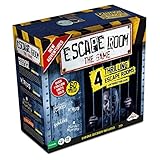
Overview: This comprehensive home escape room kit transforms your living room into four distinct adventure scenarios, each with three escalating acts. Designed for mature players (16+), it includes a physical Chrono Decoder that creates authentic pressure with a 60-minute countdown. The kit provides a professional-grade escape room experience without the venue costs, supporting 3-5 players in cooperative puzzle-solving challenges.
What Makes It Stand Out: The electronic Chrono Decoder with sound effects and key validation delivers unparalleled authenticity, eliminating the honor system found in other games. The companion app adds atmospheric soundtracks tailored to each scenario, while the four included adventures offer progressive difficulty. Crucially, the reusable components and expansion pack compatibility extend the lifecycle beyond the initial scenarios.
Value for Money: With four complete escape rooms included, this represents exceptional value compared to single-experience competitors. The Chrono Decoder’s reusability for expansions makes it a long-term investment. While pricier upfront, it costs less than one real escape room visit and provides multiple game nights, with expansion packs offering continued value.
Strengths and Weaknesses: Strengths include the professional timer system, app integration, multiple scenarios, and expansion potential. Weaknesses are the higher age recommendation limiting family play, requirement for a smart device, and that puzzles can be unforgiving for beginners. Some groups may find 60 minutes too intense.
Bottom Line: Ideal for adult gaming groups seeking the most authentic home escape room experience. The Chrono Decoder and app integration set a high bar for immersion, making it worth the premium price for serious enthusiasts who value reusable components and expansion options.
3. Escape From the Museum Escape Room Game

Overview: This compact escape room game from Professor Puzzle distills the museum heist fantasy into a tabletop format for 1-4 players. Trapped after hours, participants must crack a series of interconnected puzzles to secure freedom. The streamlined design focuses on pure puzzle-solving without complex components, making it an accessible entry point into the escape room genre with a manageable difficulty curve suitable for most skill levels.
What Makes It Stand Out: Its miniaturized footprint delivers maximum tension in minimal space, perfect for smaller gatherings or travel. The Professor Puzzle pedigree ensures clever, fair puzzle design that challenges without frustrating. Unlike digital-heavy competitors, it relies on tactile components and paper-based clues, creating an old-school puzzle hunt feel that purists appreciate. The 1-player mode functions as a satisfying solo brain workout.
Value for Money: Positioned as a budget-friendly option, it offers solid value for smaller groups or first-time buyers. While it lacks the electronic gimmicks of pricier alternatives, the quality puzzles and replay potential for different players make it cost-effective. It’s an excellent “sampler” before investing in more elaborate systems.
Strengths and Weaknesses: Strengths include accessibility, compact size, fair puzzle design, and no technology requirements. Weaknesses involve limited player count, less epic scope than premium alternatives, and fewer “wow” moments. Experienced escapers might find it too brief or straightforward.
Bottom Line: A smart choice for puzzle novices or those wanting a quick, satisfying escape room fix without complexity. While it won’t overwhelm you with production value, Escape From the Museum delivers clean, clever puzzles that make it a reliable addition to any casual game night rotation.
4. Clue Escape: The Illusionist’s Club Board Game | Escape Room Family Game | 1-Time Solve Mystery | Ages 10+ | 1-6 Players | Difficulty 4 | 90-120 Mins. (Amazon Exclusive)

Overview: This Amazon-exclusive entry in the Clue Escape series trades the hotel setting for a magic club where a famous magician has been sabotaged. Supporting 1-6 players for 90-120 minutes, it maintains the cooperative deduction framework while introducing magic-themed puzzles. As an extension of the Midnight Hotel narrative, it offers similar mechanics but with a fresh theme and increased difficulty rating, challenging families to escape the club while solving the sabotage mystery.
What Makes It Stand Out: The magic theme permeates every puzzle, with some requiring a secret “magical” tool that adds delightful physical interaction. The dynamic board returns, evolving to reveal hidden compartments and illusions. As an Amazon exclusive, it offers collectors a unique addition, while the difficulty 4 rating provides genuine challenge for seasoned puzzlers who found Midnight Hotel too gentle.
Value for Money: Similar pricing to its predecessor reflects the premium production quality and exclusive status. The extended playtime (up to 120 minutes) and increased difficulty deliver more content per dollar. While still single-use, the magic-themed puzzles and secret tool create memorable moments that justify the cost for fans of the series.
Strengths and Weaknesses: Strengths include the immersive magic theme, clever secret tool mechanics, flexible player count, and satisfying difficulty bump. Weaknesses remain the one-time limitation and potentially long runtime for younger players. The exclusive label may limit availability.
Bottom Line: Essential for those who enjoyed Midnight Hotel and want a tougher challenge. The Illusionist’s Club successfully raises the stakes with its magic motif and innovative puzzles, making it a worthy sequel that justifies its exclusive status for dedicated escape room enthusiasts.
5. Exit: The Abandoned Cabin - Kennerspiel Des Jahres Winner, Card-Based Family Escape Room Game for 1-4 Players, Ages 12+, Blue

Overview: This award-winning entry in the Exit series distills escape room tension into a card-based system where players must escape a mysterious cabin. As a Kennerspiel Des Jahres winner, it represents puzzle design excellence, requiring players to markup, fold, and tear components—making it truly single-use. For 1-4 players and lasting 1-2 hours, it prioritizes innovative puzzle mechanics over production flash, creating an intensely cerebral experience that has captivated European gaming circles.
What Makes It Stand Out: The destructive gameplay mechanics aren’t gimmicks—they’re integral puzzle elements that create unparalleled immersion. Winning Germany’s prestigious Kennerspiel Des Jahres award signals exceptional design quality. The card-based system allows for mind-bending lateral thinking puzzles impossible in reusable formats. Every component serves multiple functions, forcing players to think beyond conventional board game logic.
Value for Money: Lower price point compensates for its disposable nature. The award pedigree ensures you’re getting masterfully crafted puzzles. While you can’t replay or resell it, the experience rivals premium escape rooms at a fraction of the cost. For puzzle purists, the quality outweighs the single-use limitation.
Strengths and Weaknesses: Strengths include brilliant puzzle design, genuine tension from destructible components, compact size, and award-winning pedigree. Weaknesses are absolute single-use nature, inability to pass along to friends, and potential frustration for those uncomfortable destroying game pieces. The difficulty can spike unexpectedly.
Bottom Line: The definitive choice for puzzle aficionados who value design brilliance over reusability. Exit: The Abandoned Cabin delivers a ruthlessly clever experience that justifies its disposable format through sheer creative ingenuity, making it essential for serious escape room fans.
6. Hasbro Gaming Dungeons & Dragons: Bedlam in Neverwinter Board Game, Escape Room, Cooperative Strategy Games for Ages 12+, 2-6 Players, 3 Acts Approx. 90 Mins Each (Amazon Exclusive)

Overview: This innovative hybrid merges Dungeons & Dragons with escape room mechanics in a three-act campaign. Players cooperatively investigate mysterious disappearances in Neverwinter by solving puzzles, battling monsters, and tracking clues across a dynamic gameboard. Each act runs approximately 90 minutes, creating a substantial 4.5-hour narrative experience for 2-6 players.
What Makes It Stand Out: Authentic D&D integration sets this apart. Players create custom characters by selecting Race, Class, and Starting Weapon, then collect loot and engage in genuine D&D combat encounters. The three-act structure delivers an epic, serialized story rare in board games. The evolving gameboard physically transforms as puzzles unlock new locations, creating tangible progression. Multi-card visual riddles and wordplay puzzles require genuine teamwork, embodying the “don’t split the party” ethos.
Value for Money: Retailing around $35-40, this offers three complete escape room experiences in one box—effectively $12-13 per adventure. Compared to single-session escape room games at $15-20 each, the value is exceptional. D&D fans gain a structured, low-prep alternative to traditional campaigns, while escape room enthusiasts get deeper narrative than typical offerings.
Strengths and Weaknesses: Strengths include faithful D&D atmosphere, substantial replay value across three distinct acts, scalable complexity, and high-quality miniatures. The cooperative mystery format encourages true collaboration. Weaknesses: the significant time commitment per act demands scheduling discipline; complexity may alienate casual players or those unfamiliar with D&D; campaign progress requires consistent player groups; and storage between sessions can be cumbersome.
Bottom Line: Ideal for D&D players seeking streamlined adventures and escape room fans craving narrative depth. The three-act format justifies every dollar, though casual gamers may find it overwhelming. Best for dedicated gaming groups willing to invest time.
7. EXIT: The Game - Family - 2 Escape Adventures, at-Home Escape Room, Co-Operative Game, Family Activity, Brainteasers, 2-4 Players

Overview: This family-oriented entry in the EXIT series delivers two distinct escape room experiences—The Mystery at Meanstone Manor and The Caper at Candy Castle—in one compact package. Designed for 2-4 players, it tasks families with solving mysteries through tactile puzzle manipulation, including ripping, folding, and drawing on components to progress through each 45-60 minute story.
What Makes It Stand Out: The “two-in-one” format provides immediate variety, while the family-friendly difficulty bridges EXIT Kids and standard EXIT games. The physical interaction with components—destroying cards, folding paper, discovering hidden elements—creates an immersive, hands-on experience digital games cannot replicate. Silly, lighthearted themes (missing animals, candy corruption) engage younger players without sacrificing puzzle quality.
Value for Money: At approximately $20-25 for two complete adventures, this undercuts buying separate EXIT titles by 30-40%. Each scenario delivers comparable puzzle density to standalone EXIT games, making it an economical entry point for families testing the genre. The replay limitation is mitigated by having two distinct stories.
Strengths and Weaknesses: Strengths include age-appropriate challenges, genuinely cooperative gameplay, clever tactile puzzles, and excellent value for families. The whimsical themes avoid darker escape room tropes. Weaknesses: single-use components prevent replay or sharing; experienced puzzlers will find it too easy; the 2-4 player count may be restrictive for larger families; and component destruction feels wasteful to some.
Bottom Line: A perfect gateway for families with children ages 8-12. The dual-adventure format and tactile puzzles justify the cost, though puzzle veterans should look elsewhere. Best for introducing escape rooms to younger players.
8. Clue Escape: The World’s Fair Board Game | Escape Room 1-Time Solve Mystery Games | Ages 10+ | 1 to 6 Players | 90 - 120 Mins.| Family Games

Overview: This sixth installment in the Clue Escape series reimagines classic Clue characters in a murder mystery at the 1893 World’s Fair. Players collaboratively investigate a scientist’s murder by solving puzzles to unlock exhibit halls on a dynamic board. As a one-time solve game for 1-6 players, it delivers a cinematic 90-120 minute narrative experience culminating in deducing the killer, location, and weapon.
What Makes It Stand Out: The integration of beloved Clue suspects (Scarlet, Mustard, etc.) into a fresh narrative provides nostalgic appeal, while the included secret evidence-gathering tool adds tactile intrigue. The dynamic board physically evolves as puzzles unlock new fair exhibits, creating visual progression. Solo play capability distinguishes it from many cooperative games requiring multiple participants.
Value for Money: Priced similarly to other premium escape room games at $25-30, the single-play nature is offset by the 90-120 minute runtime and high production values. The secret tool component adds tangible value, and solo capability increases utility for single-player households. Comparatively, it’s priced fairly within the Clue Escape series.
Strengths and Weaknesses: Strengths include engaging narrative, satisfying puzzle variety, quality components, flexible player count (1-6), and seamless integration of Clue branding. The World’s Fair brochure provides immersive flavor text. Weaknesses: one-time use limits sharing; 90-120 minutes may be lengthy for younger players; some puzzles require careful component preservation; and experienced solvers may complete it faster than advertised.
Bottom Line: Excellent for Clue fans and mystery enthusiasts seeking a narrative-driven escape room. The solo option and thematic depth justify the single-use format. Recommended for game nights or dedicated solo puzzlers.
9. Identity Games [www.identity games.com] Escape Room The Game, New Family Edition - with 2 New Exciting Escape Rooms | Solve The Mystery Board Game for Family, Kids & Teens (English Version)
![Identity Games [www.identity games.com] Escape Room The Game, New Family Edition - with 2 New Exciting Escape Rooms | Solve The Mystery Board Game for Family, Kids & Teens (English Version)](https://m.media-amazon.com/images/I/61ACHnIffvL._SL160_.jpg)
Overview: This family edition of Escape Room The Game delivers two adventures—Candy Factory and Super Heroes—built around an electronic Chrono Decoder that counts down from 60 minutes. Designed for families with kids and teens, it emphasizes teamwork through sequential puzzle-solving, where players must insert keys into the decoder to validate solutions and receive hints when stuck.
What Makes It Stand Out: The electronic Chrono Decoder creates genuine tension and atmosphere unmatched by sand timers or apps. The hint system integrates seamlessly—players scan hint cards when stuck without breaking immersion. Two distinct themes (whimsical candy manufacturing, superhero training) cater to different interests. The 16 physical keys provide satisfying tactile feedback when solving puzzles correctly.
Value for Money: At $30-35 including electronic hardware, this represents strong value. The decoder is reusable with expansion packs, extending longevity. Two included adventures provide 2-3 hours of initial gameplay. Compared to app-based escape rooms, the physical decoder justifies the modest premium, especially for families preferring screen-free experiences.
Strengths and Weaknesses: Strengths include atmospheric timer, integrated hint system, family-appropriate difficulty, emphasis on teamwork, and expansion compatibility. The physical keys make solutions feel concrete. Weaknesses: only two adventures included (expansions sold separately); decoder requires batteries; puzzles may be too simple for veteran enthusiasts; and the 60-minute limit can feel rushed for larger groups.
Bottom Line: An outstanding family gateway to escape rooms. The electronic decoder and dual adventures deliver strong initial value, with expansion potential adding longevity. Best for families with kids ages 10-14 seeking cooperative screen-free entertainment.
10. Hasbro Gaming Clue Board Game Robbery at The Museum, Escape Room Game, Murder Mystery Games, 1-6 Players, 10+ (Amazon Exclusive)

Overview: This heist-themed Clue Escape game shifts from murder to robbery, tasking players with escaping a museum and identifying a traitor among them. The one-time solve cooperative game supports 1-6 players in a cinematic 90-minute experience. Players explore dynamic exhibits, solve puzzles to unlock rooms, and gather evidence to determine who betrayed the team, what they stole, and where they hid it.
What Makes It Stand Out: The fresh heist narrative diverges from traditional Clue murder mysteries, offering a modern betrayal storyline. The dynamic gameboard physically expands as players solve puzzles, revealing new museum wings and clues. The traitor angle adds psychological intrigue absent in standard escape rooms. As an Amazon exclusive, availability is limited but ensures direct manufacturer support.
Value for Money: Positioned at $25-30, it aligns with other Clue Escape titles. The 90-minute runtime and cinematic storytelling provide satisfactory content density. While single-use, the experience quality justifies the cost for mystery fans. The 1-6 player flexibility increases value for various household sizes compared to fixed-player-count games.
Strengths and Weaknesses: Strengths include compelling heist theme, quality puzzle integration with story, flexible player count, solo playability, and strong component quality. The museum setting feels fresh and explorative. Weaknesses: single-play nature prevents replay or resale; some puzzles require component marking; the traitor concept may confuse younger players; and experienced groups might solve it in under 75 minutes.
Bottom Line: A worthy addition to the Clue Escape series that refreshes the formula with a heist theme. The dynamic board and betrayal storyline engage mystery fans effectively. Recommended for game nights, particularly for families and friends who enjoy narrative-driven cooperative challenges.
What Defines a Premium Escape Room Board Game?
Premium escape room games distinguish themselves through a combination of factors that elevate them above standard puzzle games. The definition extends beyond price to encompass the holistic experience from opening the box to solving the final enigma.
Component Quality and Tactile Experience
The moment you lift the lid on a premium escape room game, the difference becomes palpable. Heavy cardstock, wooden components, metal tokens, and custom-molded pieces replace flimsy cards and thin cardboard. These games often include three-dimensional puzzles, locking mechanisms, and physical objects that players must manipulate. The weight of a brass key, the click of a magnetic lock, or the texture of aged parchment paper transforms abstract puzzles into tangible discoveries. This tactile richness creates immersion that digital or low-component games simply cannot replicate.
Narrative Depth and Storytelling
A premium escape room game weaves puzzles into a compelling narrative framework rather than presenting disconnected challenges. The story unfolds through multiple acts, with each solved puzzle revealing new plot points, character motivations, or world-building details. Players aren’t just opening locks—they’re uncovering family secrets, deciphering ancient conspiracies, or preventing catastrophes. The best examples feature branching narratives where player choices influence outcomes, creating a sense of agency that rewards engagement beyond simple puzzle completion.
Puzzle Complexity and Variety
Serious gamers crave mental challenges that escalate in complexity and require diverse problem-solving approaches. Premium titles deliver multi-layered puzzles that combine cryptography, spatial reasoning, pattern recognition, and lateral thinking. A single solution might require combining information from five different components, decoding a cipher, then applying that answer to a three-dimensional mechanism. The variety ensures different player strengths shine throughout the experience, preventing any single person from dominating while maintaining engagement for all skill levels.
Replayability Value
While many escape room games are technically single-use experiences, premium options justify their cost through extended playtime, branching paths, or resettable designs. Some feature multiple scenarios within one box, while others include elaborate campaigns spanning multiple sessions. The investment calculation includes not just the initial three-to-five-hour experience but potential for second plays with different groups, expansion content that leverages the base components, or legacy-style elements that create a unique, personalized game state worth preserving.
Production Value and Artwork
Visual design in premium escape room games approaches art book quality. Every component—from rulebooks designed as case files to newspapers filled with actual articles and hidden clues—reinforces the theme. Illustrations aren’t merely decorative; they contain concealed information, coded messages, or subtle details that become crucial hours into gameplay. This integration of art and puzzle design means players must scrutinize every element, making the visual presentation as important as the mechanical components.
Key Features Serious Gamers Should Evaluate
When considering a premium escape room game purchase, several technical and design elements separate exceptional titles from merely good ones. Understanding these features helps you make informed investments aligned with your gaming preferences.
Linear vs. Non-Linear Puzzle Paths
The puzzle structure fundamentally shapes the gameplay experience. Linear designs guide players through sequential challenges, ensuring everyone focuses on the same problem at once—ideal for smaller groups or those preferring tight narrative control. Non-linear structures present multiple simultaneous puzzles that can be tackled in any order, better suited for larger groups where splitting up maximizes engagement. Premium games often hybridize these approaches, offering a main story thread with optional side puzzles that enrich the experience without blocking progress.
Integrated Digital Components
Modern premium escape room games frequently incorporate digital elements through companion apps or websites. These might provide atmospheric soundtracks, timer functions, hint systems, or input verification that prevents brute-force solutions. The integration should feel seamless rather than tacked-on. The best implementations use technology to enhance physical components—perhaps through augmented reality features that reveal hidden details when viewing cards through your phone, or audio logs that provide clues when played at specific timestamps.
Physical Destruction Elements
Some premium games incorporate “destructible” components that players must cut, fold, or write on to progress. This irreversible alteration creates incredible immersion but raises questions about replayability and resale value. Serious gamers should evaluate whether a game includes replacement packs for these components, if destruction is truly necessary (versus clever workarounds), and whether the experience justifies the permanent modification. The psychological impact of physically altering game pieces adds weight to decisions in ways that temporary puzzles cannot match.
Campaign and Legacy Elements
The most substantial investments often deliver campaign experiences spanning multiple sessions with persistent consequences. Legacy-style games permanently alter components based on your decisions, creating a unique artifact of your group’s journey. These might include sticker placement, character development, or unlocking sealed boxes that contain future scenarios. While this means reduced resale value, the personalized narrative and evolving mechanics create experiences impossible to replicate with resettable games. Consider your group’s commitment level before investing in these epics.
Difficulty Scaling Options
Premium games cater to serious gamers by offering adjustable difficulty without dumbing down core puzzles. This might manifest as layered hint systems that provide graduated assistance, optional expert-level puzzles that aren’t required for completion, or modular rules that add complexity for experienced players. The best implementations integrate difficulty into the narrative—perhaps as “classified documents” you can choose to investigate or ignore—maintaining immersion while respecting player skill differences.
Solo Mode Capabilities
Many serious gamers appreciate the option to tackle complex puzzles alone, either for personal challenge or because coordinating schedules proves difficult. Premium escape room games increasingly include solo variants that adjust puzzle structures or provide automated hint systems for solitary play. Evaluate whether solo mode feels like an afterthought or a thoughtfully designed alternative. The best solo experiences maintain the narrative urgency while rebalancing puzzles that normally require multiple perspectives to solve.
Group Size Optimization
The ideal player count significantly impacts enjoyment. Too few players and you might miss puzzles requiring diverse thinking; too many and some participants become passive observers. Premium games often include mechanisms that scale dynamically—perhaps by having more puzzle threads available with larger groups, or by designing puzzles that naturally benefit from multiple simultaneous attempts. Check whether the game genuinely supports its advertised player range or if the experience diminishes at the extremes.
Investment Considerations for Premium Games
The financial commitment for premium escape room games ranges from $50 to over $100—substantially more than standard board games. Serious gamers must weigh several factors to determine whether a particular title warrants the investment.
Price vs. Playtime Ratio
Calculate the cost per hour of gameplay, but factor in intangible value. A $80 game providing five hours of intense, memorable gameplay delivers better value than a $40 game collecting dust after two hours. Consider also the “table presence” factor—games that create such memorable experiences that friends request replays or you eagerly host new groups. The conversation-starting potential and social capital generated by a truly impressive game adds value beyond raw playtime metrics.
Storage and Component Organization
Premium games with dozens of components require thoughtful storage solutions. Evaluate whether the box includes adequate organization—custom inserts, baggies, or trays—or if you’ll need to invest additional time and money in storage upgrades. Disorganized components can ruin the immersive experience and extend setup time dramatically. Some games become display pieces on shelves due to their aesthetic appeal, while others demand careful archival storage to preserve resettability.
Expansion and Continuation Potential
Research whether the game exists as part of a larger ecosystem. Some premium lines offer annual expansions, new scenarios using the same core components, or sequels that continue narrative threads. Investing in a game with robust expansion support extends the lifecycle of your initial purchase. Check the publisher’s track record for supporting their titles long-term versus releasing one-off experiences that leave you wanting more with no avenue to continue.
Resale and Trade Value
While many premium escape room games lose value once played (especially those with destructive elements), certain titles maintain strong secondary market prices due to scarcity or exceptional reputation. Limited print runs, Kickstarter exclusives, or games from boutique publishers can appreciate in value. Even played copies of highly regarded games often resell for 60-70% of retail if properly preserved. Consider this factor if you regularly cycle games through your collection rather than permanently archiving favorites.
Maximizing Your Premium Experience
Owning a premium escape room game is just the beginning. Serious gamers optimize every aspect of the experience to extract maximum value and enjoyment from their investment.
Setting the Right Atmosphere
Transform your gaming space into an extension of the game’s world. Dim lighting, thematic background music, and eliminating digital distractions (except those required by the game) heighten immersion. Some gamers create themed snacks or cocktails that align with the narrative. The physical environment should signal to players that this experience differs from a casual game night—consider it more akin to hosting a murder mystery dinner than playing a board game.
Organizing Your Gaming Session
Plan sessions when all participants can commit to the full estimated playtime without interruptions. Premium escape room games lose momentum when paused frequently. Designate a “game master” who understands the rules but won’t spoil puzzles—they can manage the timer, handle hint requests, and ensure smooth flow. Prepare a designated “puzzle area” where players can spread out components without risk of damage or loss. Have scratch paper, pens, and possibly a digital camera ready for note-taking and tracking clues.
Resetting and Preservation Techniques
For non-destructive games, develop a systematic reset process. Photograph the initial component layout before playing, organize pieces by puzzle section, and store solved puzzles separately from unsolved ones. Some serious gamers create “reset guides” documenting the precise starting state, making future plays smoother. For games with destructive elements, purchase replacement packs immediately if you anticipate replaying, or laminate critical components that need writing or folding. Proper preservation ensures your investment retains both play and resale value.
Community and Online Resources
Engage with online communities dedicated to escape room games, but approach strategically. Post-game discussions can reveal clever alternative solutions you missed, while pre-game research should focus on non-spoiler content like playtime estimates and component quality. Many premium games have unofficial fan-created expansions or scenario variants that extend value. Just exercise extreme caution with spoilers—knowing even the type of puzzles ahead can diminish the “aha!” moments that define the premium experience.
Frequently Asked Questions
How much should I expect to spend on a truly premium escape room board game?
Premium titles typically range from $60 to $120, with some collector’s editions exceeding $150. The price reflects component quality, design complexity, and limited production runs rather than just brand markup. Consider this an investment in a curated experience rather than a simple game purchase.
Can premium escape room games be replayed, or are they single-use?
It varies dramatically. Some are designed for single play with destructive elements, while others are fully resettable or include multiple scenarios. Check product descriptions carefully—many premium games offer “replacement packs” for destroyed components, and some campaign-style games are explicitly designed for one epic playthrough that creates a unique legacy artifact.
What’s the ideal group size for most premium escape room games?
Most premium games optimize for 3-4 players, though many support 1-6. The sweet spot depends on puzzle structure—non-linear games with multiple simultaneous puzzles work better with 4-5 players, while narrative-heavy linear experiences often shine with 2-3 participants to prevent some players from feeling sidelined.
How do premium escape room games compare to visiting a physical escape room?
Premium board games offer different advantages: they cost less per hour than physical rooms, allow pacing flexibility, and create a more intimate social experience. However, they can’t replicate the sheer physical scale or specialized technology of professional rooms. Think of them as complementary experiences—board games for regular puzzle fixes, physical rooms for special occasions.
Are digital companion apps required, or can I play offline?
Most premium games function offline but use apps to enhance experience through soundtracks, timers, or hint systems. A few integrate apps as core puzzle components. Offline play is usually possible but may require manual timing and self-managed hint discipline, which some groups prefer for a purer experience.
How do I judge difficulty before purchasing?
Check if the game uses a standardized difficulty rating, read non-spoiler reviews focusing on playtime and frustration levels, and assess your group’s experience with puzzle games. Many premium games include “introductory puzzles” that scale to harder challenges, allowing you to gauge difficulty early without committing to a brutal experience.
What should I do if my group gets stuck on a puzzle?
Premium games typically include structured hint systems. Use them strategically—try setting a time limit per puzzle (e.g., 20 minutes) before taking a hint. Some groups appoint a “hint master” who can discreetly check solutions without spoiling the reveal. The goal is maintaining momentum and enjoyment, not proving you can solve everything unaided.
Can I play these games solo effectively?
Many premium titles now include solo modes, but the experience differs from group play. Solo play allows deeper focus and eliminates communication overhead, but loses the collaborative “aha!” moments. Some puzzles designed for multiple perspectives may feel harder alone. Solo mode works best for gamers who enjoy intense personal challenge and can handle extended solitary focus.
How long should I expect a premium escape room game to last?
Playtimes range from 90 minutes for focused scenarios to 5+ hours for epic campaigns. Most premium single-session games average 3-4 hours. Budget additional time for setup, rule comprehension, and post-game discussion. Campaign games spread across multiple 2-3 hour sessions often provide the best value and prevent mental fatigue.
Will premium escape room games appreciate in value?
Some limited editions or out-of-print titles from boutique publishers appreciate significantly, especially Kickstarter exclusives with unique components. However, most mass-market premium games depreciate like typical board games. Collectibility depends on scarcity, reputation, and whether the game is part of a sought-after series. Buy for the experience, not investment potential.
See Also
- 10 Premium Escape Room Board Games for Serious Players (Worth the Investment)
- 10 Premium Escape Room Board Games for True Enthusiasts (Worth the Investment)
- 10 Premium Cooperative Board Games for Serious Gamers (Worth the Investment)
- 10 Premium Sci-Fi Cooperative Board Games (Worth the Investment) in 2026
- 10 Premium Adventure Cooperative Board Games (Worth the Investment) in 2026