Table of Contents
The world of tabletop gaming has evolved far beyond simple dice rolls and card draws. For serious players seeking immersive challenges that test their wit, patience, and collaborative skills, premium escape room board games represent the pinnacle of at-home entertainment. These aren’t your typical party games with flimsy components and predictable outcomes—they’re meticulously crafted experiences that rival professional escape rooms in complexity and narrative depth.
Investing in high-quality escape room games means committing to evenings filled with intricate puzzles, rich storytelling, and tangible components that feel substantial in your hands. While mass-market versions offer quick thrills, premium titles deliver lasting value through replayable scenarios, expansion compatibility, and collector-worthy production values that justify their higher price points. Whether you’re building a curated collection or searching for your next cerebral obsession, understanding what separates premium options from the crowd will transform how you approach these immersive puzzles.
Top 10 Escape Room Board Games
Detailed Product Reviews
1. Exit: The Abandoned Cabin - Kennerspiel Des Jahres Winner, Card-Based Family Escape Room Game for 1-4 Players, Ages 12+, Blue

Overview: This award-winning escape room game brings the thrill of a physical escape room into your living room. Designed for 1-4 players ages 12 and up, this card-based adventure tasks you with solving puzzles to escape a mysterious cabin before time runs out. The experience lasts 1-2 hours and involves physically altering components—folding, tearing, and marking materials—which creates an intensely immersive but single-use experience.
What Makes It Stand Out: As a Kennerspiel des Jahres winner, this game boasts exceptional puzzle design and narrative cohesion. The physical destruction mechanic is revolutionary—you’ll actually cut, draw on, and dismantle components, making discoveries feel tangible and permanent. This creates genuine tension and investment that digital alternatives can’t replicate. The clue system is elegantly integrated, offering hints without breaking immersion, and the difficulty curve perfectly balances challenge with accessibility for families and solo players alike.
Value for Money: At its typical price point, this delivers a premium puzzle experience comparable to a single admission at a physical escape room, but with the convenience of home play. While single-use nature limits replayability, the craftsmanship and award-winning design justify the cost for puzzle enthusiasts. Consider it a special occasion activity rather than a repeatable board game.
Strengths and Weaknesses: Pros include award-winning puzzle design, tangible immersive mechanics, flexible player count, and excellent clue integration. Cons are its single-use limitation, potential frustration for puzzle novices, and the permanence may feel wasteful to some. The 1-2 hour runtime may also feel short for the price.
Bottom Line: Perfect for puzzle-loving families and escape room enthusiasts seeking a memorable, high-quality at-home experience. The one-time nature demands commitment but delivers exceptional payoff.
2. Clue Escape: The Midnight Hotel Board Game, Clue Escape Room Game, 1-Time Solve Mystery Games, Family Games for Ages 10+, 1-6 Players, 90 Mins. Avg.

Overview: This innovative fusion transforms the classic Clue mystery into a cooperative escape room experience. Continuing the story after Boddy’s murder, 1-6 players aged 10+ must decode puzzles to discover who stole the blackmail files. With a 90-minute runtime, the game features a dynamic 3D board that literally builds as you progress, creating a unique tactile narrative experience that’s designed for one-time play.
What Makes It Stand Out: The evolving 3D gameboard is genuinely innovative, physically manifesting your progress and escalating tension. Leveraging the beloved Clue universe adds narrative depth and character familiarity that enhances engagement. The cooperative deduction mechanic requires players to crack puzzles collectively to gather evidence, blending traditional Clue’s “who, where, what” structure with modern escape room gameplay. This creates a cinematic, story-driven experience.
Value for Money: Positioned competitively, this offers strong value for groups up to six players. The 3D board components and licensed IP add production value. While single-use, the 90-minute experience provides substantial content, and the cooperative nature makes it ideal for family game nights. It’s more accessible than many escape room games, justifying its price for casual gamers.
Strengths and Weaknesses: Strengths include the innovative growing board, familiar Clue branding, flexible 1-6 player count, and family-friendly age range. Weaknesses involve single-use limitation, potentially simpler puzzles for veterans, and reliance on Clue knowledge may alienate some. The narrative continuation might confuse newcomers to the franchise.
Bottom Line: An excellent choice for families and Clue fans seeking an accessible, story-rich escape room experience. The 3D board mechanic alone makes it worth trying.
3. Escape Room The Game, Version 2 - with 4 Thrilling Escape Rooms | Solve The Mystery Board Game for Adults and Teens
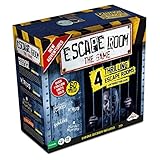
Overview: This comprehensive kit delivers four distinct escape room adventures, each escalating in difficulty and designed for 3-5 players aged 16+. The centerpiece is the electronic Chrono Decoder—a device with a digital countdown timer and sound effects that authenticates your solutions. With a strict 60-minute timeframe per scenario and companion app integration, this system creates intense, replayable experiences across multiple sessions, with expansion packs available.
What Makes It Stand Out: The electronic Chrono Decoder is a game-changer, providing tactile feedback and authentic escape room pressure. The companion app adds immersive soundtracks, while the four included scenarios offer genuine replay value within the base set. The escalating difficulty curve caters to growing skills, and the expansion ecosystem means your investment extends beyond the initial purchase. This is the most technologically advanced option in the category.
Value for Money: Despite a higher upfront cost, four full adventures make this the best value for serious enthusiasts. The reusable decoder and app infrastructure justify the price, and expansion packs offer continued play at lower incremental costs. For groups seeking multiple game nights, this outperforms single-use alternatives economically.
Strengths and Weaknesses: Pros include four scenarios, tech integration, difficulty progression, expansion capability, and authentic timer pressure. Cons are the higher price point, 16+ age restriction limiting family play, requirement for app/device compatibility, and 3-5 player range excludes pairs or large groups.
Bottom Line: The premier choice for dedicated escape room fans wanting multiple challenges and technological immersion. Ideal for adult game groups seeking ongoing puzzle content.
4. Thames & Kosmos EXIT: The Enchanted Forest| A Kosmos Escape Room Game in a Box| Family Friendly, Card-Based at-Home Escape Room Experience for 1 to 4 Players, Ages 12+ , Black

Overview: Part of the acclaimed EXIT series, this fairy tale-themed escape room game transports 1-4 players aged 12+ into a mystical forest where strange creatures block your path home. Like other EXIT titles, this is a single-use, card-based experience where you’ll physically manipulate components—folding, marking, and tearing—to solve riddles. The included clue cards ensure players won’t remain permanently stuck, creating a balanced 1-2 hour adventure.
What Makes It Stand Out: As a Kennerspiel des Jahres award-winning series entry, it delivers consistently excellent puzzle logic and thematic integration. The enchanted forest setting offers a refreshing fantasy narrative distinct from typical horror or mystery themes. The clue card system is particularly well-designed, providing graduated hints that preserve the “aha!” moment. Its compact packaging makes it an accessible entry point into the EXIT series.
Value for Money: Priced similarly to other EXIT games, it offers comparable value—roughly equivalent to a single physical escape room ticket. The award-winning pedigree ensures quality, and while single-use, the experience feels complete and satisfying. For fans of fantasy themes, the thematic uniqueness adds extra value.
Strengths and Weaknesses: Strengths include the reputable EXIT series quality, helpful clue system, engaging fairy tale theme, and manageable difficulty for newcomers. Weaknesses are the single-use nature, potentially shorter runtime, and less complex puzzles compared to the series’ harder entries. The fantasy theme may not appeal to all players.
Bottom Line: A fantastic entry point for newcomers to EXIT games or families wanting a fantasy-flavored puzzle experience. Quality design makes the one-time play worthwhile.
5. ThinkFun Escape The Room Stargazer’s Manor - A Thrilling Escape Room Game in a Box for Ages 10 and Up | Enhances Logical Reasoning | Perfect for Family Game Night | Ideal Gift for Puzzle Lovers

Overview: From the trusted ThinkFun brand, this escape room game accommodates an impressive 3-8 players aged 10+ in a celestial mystery at Stargazer’s Manor. The package includes a scenic card, five sealed envelopes, a solution wheel, and emphasizes logical reasoning skill development. With a focus on accessibility and education, this single-scenario game provides a family-friendly entry into escape room gaming from a company with over 50 million games sold.
What Makes It Stand Out: The 3-8 player capacity is exceptional, making this ideal for large families or parties. ThinkFun’s educational pedigree shines through puzzles designed to enhance logical deduction and critical thinking. The solution wheel offers a unique, tactile answer verification system without requiring app downloads or electronic components. The brand’s reputation for quality ensures reliable components and clear instructions.
Value for Money: For large groups, this offers excellent per-player value. While containing only one scenario, the reusable components (solution wheel, envelopes) could potentially be reset for new players. ThinkFun’s educational focus adds intangible value for parents seeking skill-building activities. The price is competitive for the player capacity.
Strengths and Weaknesses: Pros include large player capacity (3-8), skill development focus, trusted brand quality, no tech requirements, and family-friendly age range. Cons are single scenario, potentially less immersive atmosphere, simpler puzzles for enthusiasts, and limited replayability even with reset potential.
Bottom Line: Perfect for large families, classrooms, or casual groups prioritizing accessibility and educational value over extreme challenge. A reliable, crowd-pleasing introduction to escape rooms.
6. EXIT: The Game - Adventures on Catan | Interactive Escape Room Experience| Cooperative | 1-4 Players | 10+ | Kosmos | Game for Kids and Adults

Overview: EXIT: The Game - Adventures on Catan merges the beloved board game universe with escape room mechanics, creating a unique puzzle-solving experience. Players leave their village to explore Catan, building a new life through cooperative problem-solving. Designed for 1-4 participants aged 10 and up, this one-time adventure lasts 1-2 hours as you work through a series of interconnected challenges using components found within the box.
What Makes It Stand Out: This game brilliantly integrates Catan’s resource trading and island-building concepts into an escape room narrative. The familiar setting provides immediate engagement for fans of the franchise, while the puzzle-driven gameplay offers fresh challenges. The cooperative structure ensures everyone participates equally, and the tactile components—including actual Catan pieces—create an authentic connection to the source material that generic escape rooms lack.
Value for Money: Priced similarly to other EXIT titles, this offers comparable value despite its one-time-play nature. The Catan licensing adds thematic depth that justifies the cost for franchise enthusiasts. While you can’t replay the main story, the quality of puzzles and components matches premium escape room games. Compared to a real-world escape room experience costing $25+ per person, this provides affordable entertainment for up to four players at a fraction of the price.
Strengths and Weaknesses: Strengths include clever Catan-themed puzzles, high-quality components, and seamless theme integration. The cooperative design scales well across player counts. Weaknesses stem from the single-use format—once solved, the game loses its mystery. Some puzzles may feel too easy for experienced escape room enthusiasts, and the narrative depth doesn’t quite match the complexity of the board game it’s based on.
Bottom Line: EXIT: Adventures on Catan excels as a bridge between board gaming and escape rooms. Perfect for Catan fans seeking a narrative puzzle experience, it delivers solid entertainment value despite its limited replayability. Recommended for families and friend groups who enjoy collaborative problem-solving within a familiar fantasy setting.
7. Clue Escape: The Illusionist’s Club Board Game | Escape Room Family Game | 1-Time Solve Mystery | Ages 10+ | 1-6 Players | Difficulty 4 | 90-120 Mins. (Amazon Exclusive)

Overview: The Illusionist’s Club transforms classic Clue into a cinematic escape room experience where players investigate a sabotaged magician at a mysterious magic club. This one-time cooperative mystery accommodates 1-6 players aged 10+ and runs 90-120 minutes. Through a dynamic gameboard that reveals new rooms and secrets, participants decode magic-themed puzzles using a special secret tool to collect evidence and ultimately determine who committed the crime, where, and with what.
What Makes It Stand Out: The evolving gameboard mechanic distinguishes this from static escape room games, creating genuine discovery as new areas emerge. Magic-themed puzzles authentically incorporate classic illusions and tricks rather than generic riddles. The included secret “magical” tool adds tactile engagement beyond typical paper-based clues. Blending Clue’s deductive framework with escape room urgency creates a unique hybrid that feels both familiar and innovative.
Value for Money: As an Amazon exclusive with professional production values, this delivers solid entertainment for its price point. The 90-120 minute runtime provides substantial content, and components justify the cost despite single-use limitations. Compared to other Clue Escape entries, it offers comparable complexity. While you can’t replay the mystery, the experience rivals a commercial escape room at a fraction of per-person cost, especially with maximum player count.
Strengths and Weaknesses: Strengths include immersive magic theme, dynamic board mechanics, and scalable difficulty that works for families. The secret tool adds memorable interactive elements. Weaknesses include the irreversible nature—once solved, it’s done. Some magic puzzles may feel opaque without prior knowledge of illusions. At difficulty level 4, younger players might struggle, and the narrative depth doesn’t always match the mechanical complexity.
Bottom Line: Clue Escape: The Illusionist’s Club successfully merges murder mystery with escape room excitement. Ideal for magic enthusiasts and families seeking cooperative deduction, it provides a satisfying single-session experience. The dynamic board and thematic puzzles make it a standout entry in the Clue Escape series worth the investment for puzzle fans.
8. Hunt A Killer: Death At The Dive Bar, Solve a Murder at Old Scratch Tavern, Immersive Murder Mystery Game, Play Detective in Unsolved Mysteries, Great Gift For True Crime Fans, Designed for Ages 14+

Overview: Hunt A Killer: Death at the Dive Bar delivers a gritty true crime experience where players investigate the suspicious death of bar owner Nick Webster. Designed as a realistic detective simulation for ages 14+, this single-sitting investigation runs 45-60 minutes. Participants examine forensic files, eliminate suspects, and analyze evidence to determine if the ruled “accident” was actually murder. The beginner-friendly difficulty (1/5) makes it accessible while maintaining investigative depth for true crime enthusiasts.
What Makes It Stand Out: Unlike fantasy-themed escape rooms, this focuses on realistic police procedural work with authentic-feeling evidence documents. The mature narrative and forensic detail create genuine immersion for true crime fans. Its compact 45-60 minute runtime fits busy schedules better than multi-hour alternatives. The standalone format provides a complete story without subscription commitment, while the evidence-quality materials elevate it above typical party games.
Value for Money: While single-use, the production quality and realistic documents justify the price for true crime aficionados. It’s cheaper than Hunt A Killer’s subscription model and requires no ongoing commitment. Compared to other murder mystery games, the forensic focus adds unique value. However, the shorter playtime means less content than 90+ minute alternatives, making it best purchased on sale or as a specialized gift rather than a primary game night investment.
Strengths and Weaknesses: Strengths include authentic true crime atmosphere, high-quality evidence replicas, and accessible difficulty for newcomers. The realistic investigation process feels genuinely different from puzzle-heavy escape rooms. Weaknesses include the brief playtime relative to cost, age restriction limiting family play, and lack of replayability. Experienced detectives may find the 1/5 difficulty too simple, and the single-location setting offers less variety than sprawling mysteries.
Bottom Line: Death at the Dive Bar serves true crime fans exceptionally well, offering a realistic investigative experience in a digestible format. Perfect as a gift or introductory Hunt A Killer product, it delivers quality over quantity. Recommended for mature players seeking authenticity over complex puzzles, though value-conscious buyers may prefer longer alternatives.
9. Escape From the Museum Escape Room Game

Overview: Escape From the Museum offers a compact escape room experience where players find themselves locked in a museum after hours. Designed for 1-4 players, this Professor Puzzle title challenges participants to decipher clues and solve brain-busting puzzles to secure their freedom. The game emphasizes deductive reasoning and problem-solving skills, delivering an authentic escape room atmosphere in a portable format that fits easily into game night rotations.
What Makes It Stand Out: As part of Professor Puzzle’s established Escape Room Collection, this benefits from proven puzzle design expertise. Its mini format makes it more accessible and less intimidating than sprawling escape room games, while still providing substantial challenge. The museum setting offers natural puzzle variety through exhibits and artifacts. The compact packaging and reasonable playtime make it an ideal gateway product for escape room newcomers or a reliable filler for enthusiasts.
Value for Money: This represents excellent entry-level value, typically priced lower than premium escape room titles. The shorter experience doesn’t feel cheap—puzzle density remains high. For families or groups testing the genre, it’s a low-risk investment. While it lacks the elaborate components of pricier alternatives, the focused design ensures no filler content. Compared to digital escape rooms or app-based games, the tactile components justify the physical purchase.
Strengths and Weaknesses: Strengths include tight puzzle design, manageable playtime, and quality components from a reputable brand. The museum theme provides logical puzzle integration. Weaknesses include less narrative depth than story-driven alternatives and fewer “wow” moments than high-production games. Experienced players may find it too brief, and the 1-4 player range limits larger groups. Replayability is non-existent once solved.
Bottom Line: Escape From the Museum succeeds as a focused, well-designed mini escape room. Perfect for newcomers or as a palate cleanser between longer games, it delivers quality puzzles without overstaying its welcome. Recommended for families and casual gamers seeking an accessible, affordable entry into physical escape rooms, though veterans may crave more complexity.
10. Clue Escape: The World’s Fair Board Game | Escape Room 1-Time Solve Mystery Games | Ages 10+ | 1 to 6 Players | 90 - 120 Mins.| Family Games

Overview: Clue Escape: The World’s Fair transports players to a historical exhibition where a brilliant scientist has been murdered. This cooperative one-time mystery supports 1-6 players aged 10+ through 90-120 minutes of puzzle-solving gameplay. Participants explore dynamic exhibit halls that build and change throughout the session, decoding puzzles with help from a secret tool and the included World’s Fair brochure. The goal: escape the fair while deducing who committed the murder, where, and with what weapon.
What Makes It Stand Out: The World’s Fair setting provides a fresh historical backdrop distinct from typical mansion or modern scenarios. The dynamic board mechanic continues to impress, revealing new areas organically. The secret tool, unique to each Clue Escape installment, adds tactile puzzle variety. The integration of the fair brochure as both flavor text and puzzle component demonstrates thoughtful design. This sixth entry in the series refines the formula with stronger narrative-puzzle cohesion.
Value for Money: Following the series standard, this offers comparable value to other Clue Escape games. The 90-120 minute runtime ensures substantial content, and component quality remains consistent. As a one-time experience, it’s priced fairly against commercial escape rooms, especially for larger groups. While lacking replay value, the production values and puzzle variety justify the cost for fans of the series. Waiting for slight discounts maximizes value without sacrificing experience.
Strengths and Weaknesses: Strengths include engaging historical theme, polished dynamic board system, and scalable player support. The secret tool adds memorable interactions, and puzzle difficulty feels balanced for the target age. Weaknesses include the fundamental single-use limitation and potential similarity to previous Clue Escape entries in structure. Some puzzles may feel derivative of earlier installments, and the narrative resolution occasionally rushes after lengthy puzzle sections.
Bottom Line: The World’s Fair represents another solid entry in the Clue Escape series, offering refined mechanics and an engaging historical setting. Ideal for families and mystery fans who’ve exhausted previous titles, it delivers dependable entertainment. Recommended for those seeking cooperative deduction with escape room flair, though newcomers might start with earlier, potentially cheaper entries.
What Defines a Premium Escape Room Board Game?
Component Quality and Tactile Experience
Premium escape room games distinguish themselves immediately through exceptional component quality. Think weighted metal coins, wooden ciphers with precision engraving, linen-finished cards, and custom-molded plastic pieces that feel purposeful rather than disposable. These tactile elements aren’t merely aesthetic—they’re integral to puzzle-solving, with every texture, weight, and mechanism designed to provide subtle clues or enhance immersion. Serious players recognize that the physical interaction with components mirrors the satisfaction of manipulating real locks and keys in professional escape rooms.
Narrative Depth and Immersive Storytelling
Where budget titles might slap puzzles onto a thin premise, premium games weave challenges into layered narratives that unfold like mystery novels. You’ll encounter branching storylines, character development through discovered documents, and thematic consistency where every puzzle logically exists within the game world. The best examples treat the escape room format as interactive fiction, with players uncovering conspiracies, solving historical mysteries, or surviving supernatural events through documents that feel authentically aged and artifacts that tell their own stories.
Complexity and Challenge Level
Serious players crave puzzles that can’t be solved through simple pattern recognition or brute force. Premium titles deliver multi-stage challenges requiring lateral thinking, code-breaking, spatial reasoning, and sometimes even basic research skills. These games respect your intelligence, offering “aha!” moments that feel earned rather than handed to you. The difficulty curve is carefully calibrated—early puzzles teach you the game’s logic, while later challenges demand synthesis of multiple clue types and sustained mental endurance.
Why Serious Players Should Invest in Premium Titles
Long-Term Value Over Mass-Market Alternatives
A $60 premium game offering 8-12 hours of gameplay across multiple scenarios provides better value than four $15 games you’ll play once and forget. Premium titles often include modular components that support fan-made content or official expansions, extending their lifespan indefinitely. The initial investment pays dividends when you’re still discovering new puzzle paths months later, whereas cheaper alternatives typically offer linear, one-and-done experiences that gather dust after a single session.
Enhanced Replayability Through Modular Design
The hallmark of a worthy investment is a game that reveals new secrets on subsequent plays. Premium escape room games achieve this through non-linear puzzle structures, randomized clue placement, or scenario generators that create fresh challenges. Some employ legacy-style campaigns where your decisions permanently alter components, while others offer “reset kits” that allow you to reassemble puzzles for different groups. This modularity transforms what could be a disposable experience into a permanent fixture of your game library.
Collector’s Appeal and Resale Value
Limited print runs, deluxe editions with upgraded components, and games from boutique publishers often appreciate in value. Serious players understand that certain premium titles become sought-after collectibles, especially when publishers cease production. A well-maintained copy with all components intact can recoup 80-100% of its original cost on secondary markets. This collectibility factor adds an investment dimension beyond mere entertainment value, turning your hobby into a curated asset collection.
Key Features to Evaluate Before Purchasing
Puzzle Integration with Theme
Before committing to a premium purchase, assess how naturally puzzles emerge from the game’s narrative. The best titles disguise their mechanics as organic elements of the story—decoding a ship’s log to navigate treacherous waters, or analyzing chemical formulas to create an antidote. Avoid games where puzzles feel arbitrarily bolted onto an unrelated theme. Read reviews focusing on whether solutions feel satisfying within the story’s context or merely like abstract exercises in logic.
Game Duration and Session Flexibility
Consider your group’s typical gaming sessions. Some premium titles deliver 4-6 hour epics best split across multiple evenings, while others offer 60-90 minute standalone scenarios perfect for weeknight play. Look for games with clear chapter breaks, save-state mechanics, or independent scenarios that accommodate varying time commitments. The most versatile premium games include “quick start” modes for newcomers and “expert tracks” that extend gameplay for dedicated groups.
Player Count Optimization
Premium games often excel within specific player count ranges. Solo modes should offer genuine challenge without requiring you to play multiple characters simultaneously. Two-player experiences need puzzles that encourage collaboration rather than parallel solo work. Four to five player groups require enough components to keep everyone engaged simultaneously. Examine whether the game scales difficulty or adds content based on participant numbers, ensuring optimal experience regardless of your regular group size.
Hint System Sophistication
A premium game’s hint system reveals its design philosophy. Top-tier titles offer tiered hints that progressively nudge you toward solutions without spoiling the “aha!” moment. The best systems are integrated into the narrative—a mysterious contact sending increasingly explicit messages, for example. Avoid games with binary “solution cards” that immediately reveal answers. Instead, seek those with hint apps or online systems that track your progress and provide contextual clues based on what you’ve already discovered.
Understanding Different Game Formats
Legacy and Campaign-Based Experiences
Legacy-style escape room games create persistent narratives where your decisions permanently alter components, stickers modify boards, and destroyed elements signal story progression. These campaigns typically span 12-20 sessions, with each scenario building on previous discoveries. The investment is substantial but delivers a television-series-like arc with character development and evolving mechanics. Perfect for dedicated groups meeting regularly, these games become shared experiences that you’ll discuss long after the final puzzle is solved.
Replayable Modular Systems
These titles prioritize infinite replayability through randomized setups and procedural puzzle generation. You’ll encounter scenario books with multiple difficulty levels, interchangeable clue sets, and puzzle components that combine in countless configurations. While individual puzzles may be less bespoke than one-time-use games, the variety ensures you’ll never exhaust the content. For serious players, these become staple offerings—reliable go-to games when new scenarios aren’t available.
One-Time-Use Narrative Adventures
The most cinematic premium experiences often sacrifice replayability for bespoke, tightly woven narratives. These games deliver meticulously crafted puzzle sequences that surprise and delight exactly once. The value proposition lies in the quality of that single play—comparable to tickets for an immersive theater production. Many include “reset kits” or instructions for carefully preserving components, allowing you to gift the experience to another group, effectively doubling your investment’s utility.
App-Integrated Hybrid Experiences
Modern premium titles increasingly incorporate digital elements—companion apps that provide atmospheric soundtracks, timer functions with thematic audio cues, and augmented reality features that bring components to life. The best implementations use technology to enhance rather than replace physical puzzles, offering dynamic hint systems and automatic puzzle verification that eliminates tedious manual checking. Evaluate whether the app requires constant internet connectivity and whether it will remain supported long-term.
Investment Considerations for Your Collection
Cost-Per-Play Analysis
Calculate value by dividing the purchase price by estimated plays. A $80 game played once by five people costs $16 per person-play. That same game replayed three times with different groups drops to $5.33 per person-play. Premium titles with expansion potential can reach under $1 per person-play over their lifetime. Factor in resale value—games that retain 70% of their cost after one play effectively cost you only 30% of the sticker price.
Storage Solutions and Box Organization
Premium games deserve premium storage. Many serious players invest in custom foam inserts, labeled baggies, and component trays that streamline setup and prevent damage. Consider games with logical organization systems—numbered puzzle envelopes, color-coded components, and intuitive box layouts that make resetting between sessions painless. Poorly organized premium games quickly become frustrating time-sinks, undermining their value proposition.
Expansion Compatibility and Future-Proofing
Research a game’s publisher history before buying. Do they regularly release expansions? Is there an active community creating unofficial content? Premium titles from established publishers with track records of supporting their games offer better long-term value. Look for games with “expansion symbols” on components, indicating future compatibility. Avoid titles from companies that publish and abandon—no matter how attractive the initial offering.
Building a Serious Player’s Library
Balancing Genres and Difficulty Curves
A well-rounded collection includes variety—horror-themed tension-builders, historical mysteries requiring research, sci-fi puzzles with logical systems, and fantasy adventures with magical mechanics. Mix difficulty levels too: accessible introductory games for new players, medium-complexity titles for regular sessions, and brutally challenging epics for dedicated marathon nights. This balance ensures you always have the right game for the right audience and mood.
Sourcing Out-of-Print and Limited Editions
Serious collecting means hunting rare titles. Join dedicated forums, monitor secondary markets, and build relationships with boutique publishers. Limited editions often include upgraded components, exclusive scenarios, or numbered certificates. Be prepared to pay premiums for out-of-print games—but verify completeness first. Missing a single cipher card can render an entire game unsolvable, and replacement parts rarely exist for limited runs.
Community-Driven Content and Fan Scenarios
The best premium games inspire passionate communities that create and share custom scenarios. Before purchasing, investigate whether active fan groups exist online. These communities often produce free content rivaling official releases, extending your game’s lifespan indefinitely. Some publishers even endorse fan creation, providing official templates and guidelines. A game with robust community support becomes a platform rather than a single product.
Advanced Play Strategies for Maximum Enjoyment
Optimal Group Dynamics and Roles
Serious players develop specialized roles—the “codebreaker” who excels at ciphers, the “lore master” who tracks narrative threads, the “spatial analyst” who manipulates physical puzzles, and the “project manager” who organizes clue flow. Recognize each player’s strengths and assign responsibilities accordingly. Rotate roles between sessions to develop well-rounded skills and prevent burnout. The most successful groups treat escape room nights as team sports requiring practice and strategy.
Solo Play Techniques and Adaptations
Playing premium games solo requires different approaches. Document everything photographically to avoid memory overload. Use digital note-taking apps to track connections between clues. Many serious solo players create “pseudo-multiplayer” experiences by playing different roles on different days—approaching puzzles first as a codebreaker, then revisiting as a lore master. Some premium titles include official solo variants; for those that don’t, community forums often feature adapted rulesets.
Resetting and Re-gifting Protocols
Preserve your investment by developing meticulous resetting habits. Photograph component layouts before disassembly. Store solved puzzles separately from unsolved content. Create reset checklists to ensure no pieces go missing. For one-time-use games, consider “white-glove” playthroughs where you handle components minimally, preserving them for regifting. Some serious players even purchase duplicate copies—one to play, one to keep pristine for collecting.
The Social Dimension of Premium Escape Gaming
Hosting Themed Game Nights
Elevate your sessions by creating immersive environments. Match music to the game’s theme, serve era-appropriate snacks, and decorate your play space. For Victorian mystery games, use candlelight and classical music. Sci-fi adventures benefit from ambient electronic soundscapes and metallic serving ware. These details transform puzzle-solving into event hosting, justifying premium prices by creating memories that extend beyond the game itself.
Tournament Play and Speedrunning
Serious communities organize competitive play, tracking completion times and hint usage across standardized scenarios. Speedrunning premium escape room games requires memorizing puzzle structures and optimizing teamwork. Some players maintain leaderboards for their collections, challenging friends to beat recorded times. This competitive dimension adds replay value even to narrative-heavy titles, as you strive for more efficient solutions.
Trading and Community Engagement
Build relationships with other collectors through trading networks. Exchange completed games for new experiences, effectively rotating your library without continuous spending. Participate in puzzle design contests hosted by publishers, potentially seeing your creations become official content. Engage with online communities to discuss theories, share “easter eggs,” and coordinate group buys for expensive imports. The social network surrounding premium escape room games enhances their value immeasurably.
Maintenance and Preservation
Component Care and Protection
Invest in microfiber cloths for cleaning wooden pieces, silica gel packets for moisture control, and UV-protective sleeves for frequently handled cards. Store games in climate-controlled environments away from direct sunlight. For metal components, occasional light oiling prevents rust. Document any manufacturing defects immediately—premium publishers often provide replacement parts, but warranties expire. Treat your collection as museum pieces requiring active conservation.
Digital Element Archiving
For app-integrated games, screenshot important content and back up digital files. Apps can be delisted or become incompatible with future operating systems. Some serious players run old devices specifically for deprecated apps. Check community archives for downloadable content backups. When possible, choose games offering offline modes or printable alternatives to digital components, ensuring playability decades from now.
Organizing Solved and Unsolved Content
Develop a personal database tracking which scenarios you’ve completed, completion times, and which expansions you own. Use spreadsheet software to log component conditions and missing pieces. For games with multiple scenarios, mark envelopes subtly to indicate difficulty or estimated playtime. This organization prevents accidentally replaying solved content and helps you quickly identify the perfect game for any given session.
Frequently Asked Questions
What makes an escape room board game “premium” versus standard? Premium games feature superior component quality, integrated narratives, complex multi-stage puzzles, and often include expansion potential. They typically cost $50-$100+ but deliver 10+ hours of content with replayable elements, whereas standard titles offer 1-2 hours of simpler puzzles with disposable components.
Are premium escape room games worth it if I only play once? Even single-play premium games can justify their cost when shared. A $70 game played once by five people costs $14 per person—comparable to a movie ticket. Many one-time-use games include reset instructions for regifting, effectively doubling their value. Focus on narrative quality and puzzle uniqueness to maximize that single experience.
How do I know if my group is ready for a premium-level challenge? If your group regularly solves standard escape room games in under 30 minutes without hints, you’re ready. Premium games assume familiarity with common puzzle tropes and require sustained focus for 2-4 hours. Start with premium titles offering multiple difficulty levels to gauge your group’s tolerance for complexity.
Can premium escape room games be played solo effectively? Many premium titles include official solo modes, but the experience differs fundamentally. Solo play demands excellent note-taking and memory skills. Some games actually improve solo, as you avoid groupthink and maintain narrative immersion. Check community reviews specifically for solo playthroughs before purchasing for single-player use.
What’s the best way to preserve a one-time-use game for regifting? Handle components with clean hands, avoid folding or creasing paper elements, and photograph setups before disassembly. Store solved puzzles in separate marked envelopes. Some players laminate key components or create photocopies for personal use while preserving originals. Always follow publisher reset instructions exactly.
How do I spot limited editions worth collecting? Look for numbered certificates, publisher reputation for limited runs, upgraded component lists (metal tokens vs cardboard), and exclusive scenario content. Join collector forums to learn which titles historically appreciate. First editions from boutique publishers often become valuable—research print run sizes before general releases sell out.
What should I do if I’m missing a component from a premium game? Contact the publisher immediately with purchase proof and photos. Premium publishers typically offer excellent customer service and replacement parts. For out-of-print games, search community marketplaces or 3D printing repositories where fans recreate missing pieces. Never attempt to improvise missing components—they’re often uniquely identifiable for puzzle solutions.
Are app-integrated games risky long-term investments? Yes, but manageable. Prioritize games with offline app modes or printable backup content. Archive app data when possible. Consider the publisher’s track record—companies with 5+ years of app support are safer bets. Some premium games release “app-less” editions later; waiting for these can mitigate digital dependency risks.
How many premium escape room games should a serious collection include? A balanced starter collection includes 3-5 titles: one legacy campaign, one replayable modular system, one narrative one-time-use epic, and one quick-play option. This covers various group sizes and time commitments. Serious collectors often own 15-20+ titles, but quality trumps quantity—five exceptional games beat fifteen mediocre ones.
What’s the etiquette for trading premium escape room games? Always disclose completion status and component condition honestly. Provide detailed photos of all contents. Reset games thoroughly before trading. Use tracked shipping for valuable titles. Many communities use reputation systems—build trust by trading lower-value games first. Never trade for incomplete games unless explicitly seeking replacement parts.
See Also
- 10 Premium Escape Room Board Games (Worth the Investment) for Serious Gamers
- 10 Premium Escape Room Board Games for True Enthusiasts (Worth the Investment)
- 10 Premium Cooperative Board Games for Serious Gamers (Worth the Investment)
- 10 Premium Sci-Fi Cooperative Board Games (Worth the Investment) in 2026
- 10 Premium Adventure Cooperative Board Games (Worth the Investment) in 2026