Table of Contents
Hosting unforgettable gatherings often hinges on one critical element: the right game. Too many nights devolve into awkward small talk or repetitive drinking games because the chosen activity falls flat. Premium adult party games, however, transcend the flimsy, single-use novelties cluttering discount bins. They represent a deliberate investment in connection, laughter, and experiences that linger long after the last card is played or the final token claimed. Think of them as curated social catalysts, designed with intention to spark genuine interaction and create shared stories worth retelling.
Forget the frustration of warped boards, flimsy cards that tear after two plays, or mechanics so convoluted they kill the mood before the first round ends. Truly premium party games prioritize exceptional craftsmanship and thoughtful design that withstands enthusiastic play and adapts to diverse group dynamics. They understand that the best nights aren’t just about winning, but about the unpredictable, hilarious, or surprisingly profound moments that emerge when people engage meaningfully. Investing in quality means investing in nights where the game isn’t just an activity, but the unforgettable heart of the party itself.
Top 10 Adult Party Games
Detailed Product Reviews
1. CMYK Wavelength: The Mind Reading Party Game

Overview:
Wavelength challenges players to align their thinking by guessing where a clue falls on a spectrum (e.g., “hot to cold” or “wizard to not a wizard”). Designed for 2–12+ players, it sets up in 5 seconds, teaches in 1 minute, and plays in 30 minutes, making it ideal for large gatherings, offsites, or family events.
What Makes It Stand Out:
Its telepathic teamwork mechanic—where teammates subtly guide a spinner toward a hidden target—creates infectious “aha!” moments. Endorsements from Polygon and NYT Wirecutter validate its exceptional replayability and social depth, distinguishing it from chaotic party games.
Value for Money:
Priced competitively against similar social deduction games, its scalability (works for tiny or massive groups) and near-zero setup maximize utility. Unlike games requiring constant repurchasing of expansions, Wavelength’s core box delivers endless rounds with no added costs.
Strengths and Weaknesses:
Strengths: Incredibly inclusive for varied group sizes; sparks genuine connection; intuitive rules. Weaknesses: Spectrum interpretations can feel subjective; less engaging for highly analytical players who prefer strategy over intuition.
Bottom Line:
An essential, brilliantly designed party game that transforms group dynamics. Highly recommended for fostering laughter and camaraderie—worth every penny for regular hosts.
2. WHAT DO YOU MEME? Incohearent, The Guess The Gibberish Party Game by Relatable, A Funny Card Game for Adults, Great for Bachelorette Party Games or Game Night Games, Includes 300 Cards

Overview:
Incohearent tasks players with decoding scrambled “gibberish” phrases on 300 cards within a time limit. Aimed at 3–8 adults (17+), it leverages viral TikTok popularity (750M+ views) for fast-paced, laughter-driven gameplay centered on pop culture, party themes, and spicy humor.
What Makes It Stand Out:
The game’s internet fame isn’t hype—players shout phonetic guesses (e.g., “sauce” for “cause”), creating chaotic, meme-worthy moments. Three themed card categories (Party, Spicy, Pop Culture) ensure freshness, while the simple “hold up card, guess phrase” mechanic lowers entry barriers.
Value for Money:
At its price point, the 300-card deck offers substantial replay value compared to smaller card games. Though niche, it outperforms generic word games by tapping into relatable, trending humor—ideal for audiences craving modern, social-media-savvy fun.
Strengths and Weaknesses:
Strengths: Hilarious group interactions; exceptional for breaking the ice; compact and portable. Weaknesses: Humor relies heavily on internet culture familiarity; limited depth for strategy lovers; “Spicy” cards may not suit all groups.
Bottom Line:
A riotous, accessible game night staple for pop-culture enthusiasts. Perfect for teens and adults seeking viral-style fun—just ensure your group enjoys edgy humor.
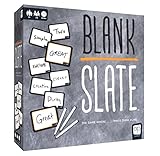
3. USAOPOLY BLANK SLATE, Where Great Minds Think Alike, Fun Family-Friendly Board Game, Word Association Party Game, Easy to Learn, Fun to Play Family Game Night, 3-8 Players, Ages 8+
Overview:
Blank Slate is a family-friendly word association game where players write single words to complete phrase prompts (e.g., “______ minds think alike”), aiming to match others’ responses without communication. For 3–8 players (ages 8+), it’s easy to learn and plays in quick, engaging rounds.
What Makes It Stand Out:
The dry-erase slates and double-sided cue cards (250 total) foster creative, pressure-free play. Unlike competitive trivia, it celebrates shared thinking—success hinges on predicting the group’s mindset, making victories feel communal and surprisingly satisfying.
Value for Money:
Includes robust components (scoreboard, 8 slates, cards) at a mid-range price. While not as expansive as mega-deck games, its reusability via wipe-clean slates and universal appeal offer better longevity than disposable card-only alternatives.
Strengths and Weaknesses:
Strengths: Truly all-ages fun; sparks clever wordplay; minimal setup. Weaknesses: Can grow repetitive with small groups; younger kids may struggle with abstract prompts; lacks high-energy “wow” factor for hardcore gamers.
Bottom Line:
A wholesome, clever addition to family game nights. Highly recommended for inclusive, screen-free bonding—especially for mixed-age gatherings seeking lighthearted mental gymnastics.
4. Fofeadm Drinking Board Games for Adults, Rubber Mat Drinking Board Game, Funny Party Interactive Drinking Games for Game Night, Birthday, Family Play or Any Occasion, Age 21+, 2-8 Players

Overview:
This rubber mat-based game transforms drinking into a structured board experience. Players roll dice, move pieces, and complete dares, answer questions, or take drinks while navigating the mat. Tailored for 2–8 adults (21+), it targets parties, birthdays, or casual nights with beverages.
What Makes It Stand Out:
Its portability and simplicity shine: the compact mat (15"x11") stores easily, and rules require no prior gaming knowledge. Versatility across events—from bachelorette parties to tailgates—makes it a reliable social lubricant, emphasizing spontaneous fun over complex mechanics.
Value for Money:
Budget-friendly for a dedicated drinking game, but components are basic (rubber mat, plastic pieces). While cheaper than multi-game kits, it offers less variety than apps or digital alternatives, though the tactile mat avoids phone dependency.
Strengths and Weaknesses:
Strengths: Effortless setup; encourages group interaction; durable mat. Weaknesses: Shallow gameplay; lacks innovation beyond standard drinking rules; limited replay value after initial novelty wears off.
Bottom Line:
A decent entry-level drinking game for casual hosts, but better suited as a gift than a core collection piece. Ideal for newcomers to interactive drinking—but seasoned players may find it simplistic.
5. What Do You Meme? After Hours by Relatable, The Explicit Expansion Pack for Game Night, Board Games, Adult Games, and Party Games, Includes 100 Caption Cards to Play with Full-Sized Game

Overview:
This explicit 100-card expansion pack adds NSFW humor to the base What Do You Meme? game. Players compete to pair raunchy caption cards with photo cards, targeting mature audiences (18+) for bachelorette parties, 21st birthdays, or adult gatherings.
What Makes It Stand Out:
It doubles down on the franchise’s viral success with unapologetically edgy content—covering taboo topics and dark comedy. As an expansion, it revitalizes the core game without requiring new mechanics, leveraging existing fans’ familiarity for instant, chaotic fun.
Value for Money:
At a low cost for 100 extra cards, it extends the base game’s lifespan significantly. However, it’s useless without the original set, making the combined investment pricier than standalone alternatives. Worthwhile for fans seeking bolder humor but redundant for casual players.
Strengths and Weaknesses:
Strengths: Hilariously bold content; seamless integration with base game; perfect for close-knit adult groups. Weaknesses: Niche appeal; risks offending sensitive players; no standalone functionality.
Bottom Line:
A must-buy for What Do You Meme? enthusiasts craving spicier gameplay—but strictly for mature, like-minded crowds. Avoid if your group prefers family-friendly humor.
6. Put A Finger Down Party Game by Hunch Games | Viral Prompt and Challenge Card Game for Adults, Teens, and College Groups | Hilarious Social Icebreaker with 400 Cards for 2+ Players

Overview: This viral sensation translates the popular social media challenge into a physical card game, designed to spark laughter and connection among groups through relatable, often awkward, life prompts. It requires no setup beyond drawing cards. What Makes It Stand Out: Its genius lies in ultra-simple mechanics—players hold up five fingers and react instantly to prompts by lowering them—creating immediate, high-energy engagement. The 400 curated cards feature “Up and Down” twist cards that introduce playful penalties and storytelling, ensuring dynamic, unpredictable rounds perfect for breaking the ice. Value for Money: Priced competitively for a high-quality card game, the sheer volume of unique prompts (400 cards) offers immense replayability compared to alternatives with fewer cards. It delivers exceptional value for groups seeking low-cost, high-impact social interaction without complex rules or components. Strengths and Weaknesses: Strengths: Effortless to learn, scales perfectly from 2 to large groups, brilliantly fosters conversation and vulnerability, portable. Weaknesses: Relies heavily on group chemistry; quieter players might disengage, and some prompts may feel repetitive after extended play. Lacks physical components beyond cards. Bottom Line: An outstanding, accessible icebreaker for teens and adults that consistently delivers laughter and connection; highly recommended for casual gatherings, dorm rooms, or parties seeking spontaneous fun without complexity.
7. It’s Bananas! The Monkey Tail Game – Funny Family & Party Game for Kids & Adults | Hilarious Gift for Birthday, Christmas, Bachelorette, Thanksgiving, White Elephant

Overview: A physically interactive party game centered around mimicking monkey poses based on card draws, generating uproarious physical comedy as players contort themselves into silly stances while holding an imaginary “tail.” What Makes It Stand Out: Its viral TikTok fame (250M+ views) and celebrity endorsements (ABC, ITV) highlight its massive appeal. The core mechanic—performing exaggerated poses like backward squats or “monkey thrusts”—creates uncontrollable, shared laughter. Its carbon-neutral production adds eco-friendly credibility to the chaotic fun. Value for Money: Justifying its price with multi-generational appeal, it works equally well for kids’ parties, adult gatherings, or holidays. The minimal components (cards, tail) are durable, and the endless replayability through varied poses offers far more sustained entertainment than many higher-priced board games. Strengths and Weaknesses: Strengths: Universally hilarious across ages, incredibly easy to learn, promotes physical activity and bonding, eco-conscious packaging. Weaknesses: Requires floor space for movement, potentially embarrassing for shy players, poses may be strenuous for some. Lacks strategic depth for hardcore gamers. Bottom Line: A near-perfect icebreaker for active, laughter-seeking groups; ideal as a gift for any occasion where physical comedy and shared joy are the goals. Highly recommended for families and parties prioritizing fun over finesse.
8. Cards Against Humanity

Overview: A deliberately offensive, fill-in-the-blank party game where players match dark-humor white cards to provocative black card prompts, aiming to win rounds by appealing to the “Card Czar’s” twisted sense of humor. Overview: A deliberately offensive, fill-in-the-blank party game where players match dark-humor white cards to provocative black card prompts, aiming to win rounds by appealing to the “Card Czar’s” twisted sense of humor. What Makes It Stand Out: Its infamous, boundary-pushing humor sets it apart, catering explicitly to groups comfortable with taboo topics. Version 2.0’s 600-card total (500 white, 100 black) and inclusion of alternate rules ensure chaotic, unpredictable gameplay that thrives on discomfort and shock value. Value for Money: The core set offers substantial content for the price, with high replayability due to random card combinations. However, its niche appeal means it’s only valuable for audiences specifically seeking crude, politically incorrect humor—useless for family-friendly or sensitive groups. Strengths and Weaknesses: Strengths: Unmatched for groups loving dark comedy, simple rules, massive cultural recognition, endless expansion potential. Weaknesses: Offensive content alienates many, zero physical production value (just cards), gameplay lacks evolution beyond shock factor. “America’s #1 gerbil coffin” humor won’t land for all. Bottom Line: A cult classic strictly for mature, like-minded players seeking unapologetic edginess; avoid if your group prefers wholesome fun. Only recommend if offensive humor is your collective love language.
9. Lucky Egg Official Grab The Mic – Family Karaoke Board Game w/Foam Mic, 8+ Ages, 2-10 Players - Games for Bad Singers w/ 240 Lyrics (120 Cards) (First Edition)

Overview: A fast-paced karaoke alternative where players race to grab a foam mic and sing song lyrics containing a randomly revealed word, celebrating musical recall (or hilarious failures) without vocal skill requirements. What Makes It Stand Out: It brilliantly eliminates singing pressure by focusing purely on lyric knowledge under time constraints. The physical mic-grabbing mechanic adds frantic energy, while multiple game board modes (e.g., team play, speed rounds) keep sessions fresh and adaptable for varied group sizes and ages. Value for Money: The inclusion of a durable foam mic, board, tokens, and 120 word cards (240 lyrics) provides excellent bang for buck. It outperforms generic karaoke machines for group play by emphasizing quick thinking over talent, making it ideal for mixed-skill musical gatherings. Strengths and Weaknesses: Strengths: Incredibly inclusive for non-singers, high replayability via game modes, generates constant laughter, sturdy components. Weaknesses: Lyric recall favors older players/musical fans, limited song range may frustrate pop enthusiasts, physical mic-grabbing can get rowdy with young kids. Bottom Line: A superb, accessible party game that turns musical knowledge into chaotic fun; highly recommended for families, teens, and casual game nights where laughter matters more than pitch-perfect vocals.
10. Cards Against Humanity: Nasty Bundle • 6 Nasty Themed Packs + 10 All-New Cards
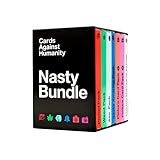
Overview: An expansion pack for the base Cards Against Humanity game, bundling six controversial themed decks (Period, Weed, Ass, etc.) plus 10 exclusive cards to intensify the game’s signature offensive humor. What Makes It Stand Out: These packs amplify CAH’s core appeal with hyper-specific, boundary-pushing content designed to shock even veteran players. Themes like “Picture Card Packs” introduce visual gags, while “Saves America” targets political satire, offering deeper dives into niche offensive territory. Value for Money: Bundling six expansions plus exclusives at a lower cost than buying individually provides solid value if you already own the base game and crave more extreme content. However, its niche relevance means it’s worthless without the core set and only valuable to players seeking maximum discomfort. Strengths and Weaknesses: Strengths: Massive content boost for dedicated fans, thematically cohesive expansions heighten shock value, seamless integration with base game. Weaknesses: Requires base game (not standalone), humor is significantly more polarizing than core set, risks alienating players already on the fence about CAH’s tone. Bottom Line: A must-buy only for Cards Against Humanity veterans craving even darker, more specific humor; strictly avoid if you’re new to CAH or prefer subtlety—this bundle exists solely to make seasoned players deeply uncomfortable.
Understanding the Value of Premium Party Games
Beyond the Price Tag: What “Premium” Really Means
When we discuss “premium” in the context of adult party games, it’s not merely about a higher cost. It signifies a significant leap in design philosophy, material quality, and overall experience. Premium games prioritize durability—think thick, linen-finished cards that resist spills and bends, substantial tokens with a satisfying heft, and boards made from rigid, warp-resistant materials. The investment translates directly into longevity, ensuring your game remains a reliable centerpiece for countless gatherings, not a one-time novelty destined for the donation pile after a single rough night.
The Craftsmanship Difference You Can Feel
Premium games elevate the tactile experience far beyond standard offerings. Notice the subtle texture of high-quality cardstock, the smooth glide of well-cut tokens, the precise fit of game pieces within a custom tray. This attention to physical detail isn’t just aesthetic; it enhances gameplay immersion. Durable components withstand the inevitable bumps and spills of a lively party, while thoughtful design elements—like color-coded pieces for quick identification or intuitive iconography—keep the focus on interaction and fun, not fumbling with frustratingly cheap parts. It’s the difference between cardboard chafing and components that feel like they belong in your cherished game collection.
Design Depth for Lasting Replayability
The true hallmark of a premium adult party game is its ability to remain fresh and engaging over multiple plays. This stems from sophisticated design principles: modular elements that change the game state significantly each time, variable player powers that encourage different strategies, or narrative-driven mechanics that unfold uniquely based on group choices. Avoid games reliant solely on random draws or one-note jokes; seek out those with layered mechanics, emergent storytelling, and strategic depth that rewards repeated plays. This depth combats the “played it once” syndrome, ensuring your investment delivers value long-term.
Key Features to Evaluate Before You Buy
Material Quality and Component Durability
Scrutinize the specifics beyond vague marketing terms. What is the actual weight of the cards (e.g., 300gsm+)? Are tokens made of thick cardboard, wood, or plastic? Does the box include a sturdy insert to protect components during storage and transport? High-quality materials resist wear from frequent handling, accidental spills (a common party occurrence!), and the general chaos of group play. Durable components mean less frustration mid-game and a significantly longer lifespan, protecting your financial investment and ensuring consistent performance.
Player Count Flexibility and Group Dynamics
Don’t just check the box for the maximum player count. Consider how the game truly scales. Does it play well with the minimum number listed, or does it require hitting the sweet spot (e.g., 5-7 players) to shine? Crucially, assess how the mechanics interact with different group sizes and personalities. A game built for cutthroat competition might bomb with a laid-back crowd, while a highly collaborative game could frustrate a group craving head-to-head rivalry. Look for games offering adjustable difficulty, role variations, or team options to accommodate your typical guest list and desired energy level.
Gameplay Length and Pacing Control
Time management is critical for party flow. A game that drags past 90 minutes can lose momentum, while one that ends too abruptly feels unsatisfying. Premium games often incorporate clever pacing mechanisms: clear round structures, built-in time limits for decisions, or escalating tension that naturally concludes within a predictable window (e.g., 45-75 minutes). Investigate if the game allows players to influence the pace—can downtime between turns be minimized? Are there ways to gently speed up a lagging game without breaking rules? Consistent, engaging pacing keeps energy high and prevents awkward lulls.
Accessibility vs. Strategic Depth Balance
The magic of a great adult party game lies in striking the perfect equilibrium. Rules need to be simple enough to grasp quickly—ideally explained in under 5 minutes—so the party starts now, not after a lengthy tutorial. Yet, beneath that accessible surface, there should be meaningful choices, tactical opportunities, and room for clever plays that reward attentive players without overwhelming newcomers. Avoid games with excessive rules minutiae; seek those where the core loop is intuitive, but mastery reveals subtle depth, keeping both casual players and gaming enthusiasts engaged.
Matching Games to Your Specific Crowd and Occasion
Gauging Your Group’s Competitive Spirit
Honesty is key here. Is your circle full of friendly rivals who relish a good-natured battle, or do they prefer cooperative challenges where everyone wins or loses together? Some premium games thrive on direct player conflict, bluffing, and tactical sabotage, generating high-energy, laugh-out-loud moments. Others foster teamwork, shared problem-solving, and collective storytelling. Choosing a highly competitive game for a non-competitive group, or vice versa, is a recipe for disengagement. Observe past interactions: what kind of dynamics consistently create the most joy at your gatherings?
Considering Social Dynamics and Comfort Levels
Premium games vary wildly in how they engage players socially. Some require bold performances, improvisation, or revealing personal anecdotes, which can be hilarious with the right group but deeply uncomfortable for others. Others focus on deduction, strategy, or creative thinking with minimal direct confrontation or personal exposure. Consider your guests’ personalities: are they extroverted performers, shy observers, or somewhere in between? Prioritize games whose social demands align with the collective comfort zone to ensure everyone feels included and safe, not pressured or embarrassed.
Aligning with the Desired Party Vibe
What’s the mood you’re cultivating? A sophisticated cocktail soirée calls for a different energy than a raucous birthday blowout or a relaxed game night with close friends. A premium game should amplify, not fight against, your intended atmosphere. Seek elegant deduction games with refined components for upscale gatherings, or high-energy, physically engaging party games with simple, explosive mechanics for wilder celebrations. Consider the space too: a game needing a large table won’t work in a cramped apartment, while a quiet word game might get lost in a loud bar setting. Match the game’s inherent energy to your party’s personality.
Complexity Tolerance Within Your Circle
Be realistic about your group’s collective patience for rules. While premium games often offer depth, that depth shouldn’t come with insurmountable complexity for casual players. Assess the typical gaming experience of your regular guests. Are they experienced hobbyists comfortable with intricate systems, or mostly casual players who prefer straightforward fun? The best premium games for general adult parties offer “easy to learn, hard to master” mechanics—simple core rules that open the door to strategic nuance. Avoid games where understanding the full rulebook is a prerequisite for basic enjoyment; the learning curve should be gentle and intuitive.
Practical Buying Considerations for Savvy Hosts
Assessing Long-Term Value Beyond the Initial Cost
Viewing a premium game as a single-night expense misses the point. Calculate its potential cost-per-play: a $60 game played 20 times costs $3 per session, offering incredible value compared to a $20 game played once. Consider how often you realistically host gatherings where this game would be the star. Will it appeal to a wide range of your guests, or is it too niche? Factor in durability—cheap games break, forcing repeat purchases. A well-made premium game that stays in rotation for years delivers far superior value than multiple disposable alternatives, making it a smart financial decision for frequent hosts.
Storage Space and Portability Realities
Premium games often come with substantial components. Before purchasing, critically evaluate your storage capacity. Does the box fit neatly on your shelf? Will you need extra space for expansions? If you frequently host at others’ homes or travel with games, consider portability. Heavy wooden components or oversized boxes become burdensome. Some premium games excel with clever internal organization or even offer optional travel cases. Be practical: a fantastic game is useless if it lives perpetually in the closet because it won’t fit anywhere, or if lugging it to a friend’s place feels like moving furniture.
Reading Between the Lines of Reviews
When researching, look beyond star ratings. Seek out detailed reviews from sources that describe actual gameplay experiences with groups similar to yours. Pay attention to comments about setup time, rule clarity for new players, pacing issues, and component quality in real-world (i.e., slightly messy party) conditions. Be wary of reviews solely focused on theme or art style; prioritize feedback on mechanics, replayability, and how well the game facilitates social interaction. Look for consensus on potential dealbreakers like excessive downtime or rules ambiguities that cause arguments—these can ruin a party regardless of the game’s other merits.
Where to Find Trusted Information Sources
Rely on established platforms known for thorough, community-driven game reviews and discussions. Look for detailed video reviews showcasing actual play with clear explanations of rules and group dynamics. Dedicated board game databases often compile user ratings with filters for player count, complexity, and playtime, providing valuable aggregate data. Engage with local board game groups or stores—they offer firsthand insights and sometimes demo opportunities. Avoid relying solely on retailer descriptions or influencer posts that might prioritize aesthetics or sponsorship over genuine gameplay analysis relevant to adult social settings.
Maximizing Your Premium Game Investment
Mastering the Art of the Game Explanation
Your success as a host hinges significantly on how you introduce the game. Avoid deep dives into edge cases. Focus on the core objective, the essential turn structure (e.g., “Draw a card, do the thing on it, pass to the left”), and the win condition. Use clear, concise language and show examples with components if possible. Keep it under five minutes. A well-executed, upbeat explanation sets the tone for fun; a muddled, overly detailed one kills momentum before it starts. Practice explaining the rules simply—it’s a skill that pays off every time you play.
Creating the Optimal Play Environment
Set the stage for success. Ensure adequate lighting so players can easily read cards. Arrange seating so everyone can see the central play area comfortably—avoid isolating players. Minimize major distractions if possible (e.g., loud TV in the background). Have necessary peripherals ready: pens/paper for scoring, a reliable timer app on your phone, spare glasses for potential spills near the play area. A little preparation prevents constant interruptions and keeps the focus squarely on the game and the social interaction it fosters.
Facilitating Play for Mixed Experience Levels
When experienced players mingle with newcomers, subtle facilitation prevents frustration. Briefly explain key strategies after the first round, not during the initial rules explanation. Encourage veterans to hold back obvious plays initially, allowing new players to discover strategies organically. Assign a “rules guru” (often yourself) to handle questions without derailing the game flow. Most importantly, foster a welcoming atmosphere where asking “How does this work?” is encouraged and met with patience, not eye-rolls. The goal is shared enjoyment, not just optimal play.
Knowing When to Pivot or Adapt
Even the best-prepared game night might hit a snag. Maybe the chosen game is too complex for the current energy, or a rule ambiguity causes tension. Be prepared to adapt. Have a simpler, faster game as a backup. Don’t be afraid to house-rule a minor sticking point to keep things moving (“Let’s just flip a coin for this now and look it up later”). If energy is flagging, suggest a quick break or even pivoting to a different activity. Your flexibility as a host ensures the party vibe remains positive, regardless of any single game’s performance.
Frequently Asked Questions
How can I justify the higher cost of premium party games?
Consider the cost-per-play over time. A durable game used frequently for years offers significantly better value than repeatedly buying cheaper, disposable games that break or get stale after one use. The enhanced experience, reduced frustration, and longevity make the initial investment worthwhile for regular hosts.
What’s the ideal player count range for most premium adult party games?
While specifics vary, the sweet spot for many premium social games is typically between 4 and 8 players. This size allows for dynamic interaction without excessive downtime. Always check how well the game scales at both the minimum and maximum counts listed, as performance can differ significantly.
How do I know if a game’s complexity is right for my group?
Look for the game’s stated “weight” or complexity rating on reputable review sites (often on a scale of 1-5). Prioritize games rated 1.5-2.5 for general adult groups. Read reviews specifically mentioning “easy to learn” or “good for non-gamers.” Avoid games requiring memorization of many rules or lengthy setup for casual parties.
Are premium games suitable for groups with some non-competitive people?
Absolutely. Many premium games focus on cooperation, creativity, or lighthearted deduction rather than cutthroat competition. Look for keywords like “cooperative,” “team-based,” “narrative,” or “party game” in descriptions, and read reviews noting the game’s social atmosphere and emphasis on fun over winning.
What material qualities should I prioritize when checking component quality?
Focus on card thickness (300-350gsm is excellent), linen finish (reduces glare, shuffles better), token material (wood or thick plastic vs. thin cardboard), and board rigidity. A well-designed internal tray to organize components during play and storage is also a strong indicator of quality craftsmanship.
How important is replayability, and how can I assess it?
Replayability is crucial for justifying the premium price. Look for games with variable setups, modular boards, numerous unique roles/cards, or emergent storytelling that creates different experiences each time. Reviews often highlight replay value; avoid games reliant solely on random draws of identical cards without strategic depth.
Can premium party games work for less “wild” or more sophisticated gatherings?
Definitely. Many premium games offer elegant mechanics, refined components, and engaging but not raucous themes perfect for cocktail parties or dinner gatherings. Look for deduction games, strategic card games, or creative storytelling games with sophisticated aesthetics rather than those focused on drinking or outrageous dares.
How much time should I realistically budget for learning and playing?
Aim for games where the core rules can be explained in 5 minutes or less. Total playtime for a premium party game should ideally fall between 45-90 minutes for optimal pacing at most adult gatherings. Check average playtimes reported by other users, not just the publisher’s estimate, as these can be optimistic.
What are the biggest red flags indicating a “premium” game might not be worth it?
Beware of games with overwhelmingly negative reviews citing frequent rule ambiguities, poor component durability (e.g., chipping paint, flimsy cards), extremely limited replayability (“played it once”), or a playtime that consistently exceeds 2 hours for a party game. Also, be cautious if the high price seems driven primarily by theme/license rather than mechanical innovation or quality.
How can I try before I commit to a big purchase?
Check if your local game store offers demos or has a game library. Attend board game meetups or conventions where you can play various titles. Watch multiple detailed “actual play” video reviews to observe the game’s flow and social dynamics with real people. Some publishers also offer printable prototype versions of games online for testing.
See Also
- 10 Premium Adult Party Games (Worth the Investment) for Memorable Nights
- 10 Premium Trivia Games for Adult Game Nights (Worth the Investment)
- 10 Premium Adult Party Games for Sophisticated Gatherings (Worth the Investment)
- 10 Premium Word Board Games for Gifted Players (Worth the Investment)
- 10 Premium Word Trivia Games for Language Nerds (Worth the Investment)