Table of Contents
Rainy days often bring that familiar chorus of “I’m bored!” echoing through the house, turning what should be cozy downtime into a parental puzzle. But what if those puddle-filled afternoons could transform into vibrant hubs of laughter, learning, and genuine connection? The humble board game remains one of the most powerful, screen-free tools at our disposal to turn indoor confinement into golden moments of childhood development. Forget the digital distractions for a while; the right tabletop adventure can spark imagination, build crucial life skills, and create memories that outlast any fleeting app trend, making wet weather something to genuinely look forward to.
As we move further into the 2020s, the landscape of children’s play is evolving, but the core magic of rolling dice, moving pieces, and sharing a story around a board hasn’t diminished. Today’s parents are more intentional than ever, seeking games that offer more than just temporary quiet – they want experiences that nurture emotional intelligence, critical thinking, and cooperation, all while keeping the fun quotient sky-high. Choosing wisely isn’t just about filling time; it’s about investing in your child’s cognitive and social toolkit for the years ahead. Let’s explore how to find those truly essential games that will become cherished staples for every rainy day forecast.
Top 10 Kids Board Games
Detailed Product Reviews
1. Hasbro Gaming Candy Land Kingdom of Sweet Adventures Board Game for Kids, Ages 3 & Up (Amazon Exclusive)

Overview: Candy Land remains a quintessential introductory board game for preschoolers, requiring zero reading skills. Players draw colorful cards to advance their gingerbread pawns along a winding path of sweets toward the ultimate castle destination, making it ideal for the youngest gamers.
What Makes It Stand Out: Its pure simplicity—no reading, counting, or complex rules—lets toddlers grasp turn-taking and color recognition effortlessly. Vibrant, candy-themed artwork holds children’s attention, while the race-to-the-finish mechanic creates gentle, stress-free excitement perfect for short attention spans.
Value for Money: Priced accessibly as an Amazon exclusive, it offers exceptional longevity for ages 3+. Unlike electronic toys, it fosters face-to-face interaction without batteries or screens, outlasting flashier playthings. Comparable starter games often lack its iconic status or visual appeal.
Strengths and Weaknesses: Strengths: Effortless setup, durable components, promotes color identification, zero frustration for beginners. Weaknesses: Highly luck-dependent (no strategy), limited replay depth for older kids, minimal physical engagement beyond card drawing.
Bottom Line: An unbeatable first board game that introduces core concepts through pure, sugary fun. Its timeless design justifies every penny for parents seeking screen-free bonding with preschoolers—highly recommended for foundational play.
2. Hasbro Twister Party Classic Board Game for 2 or More Players,Indoor and Outdoor Game for Kids 6 and Up,Packaging May Vary

Overview: Twister is the legendary physical party game where players contort their bodies to place hands and feet on colored mat circles based on a spinner’s call. It transforms living rooms into laughter-filled obstacle courses for kids and adults alike.
What Makes It Stand Out: The iconic spinner-driven chaos creates spontaneous, high-energy fun that’s impossible to replicate digitally. Its team-play and tournament variations extend versatility, while the mat’s portability allows play indoors or on grass, making it a dynamic break from sedentary activities.
Value for Money: As a durable, multi-generational investment, Twister delivers unmatched physical engagement per dollar. Cheaper alternatives often use flimsy mats, but Hasbro’s version withstands years of enthusiastic play, justifying its cost for active family entertainment.
Strengths and Weaknesses: Strengths: Encourages physical activity, inclusive for all ages, sparks social interaction, easy to learn. Weaknesses: Requires significant floor space, risks minor collisions or falls, spinner can be fiddly, not ideal for very young children.
Bottom Line: A must-have for burning energy and building connections during gatherings. Despite spatial needs, its ability to unite generations in giggles makes it worth every cent—essential for active households.
3. Sorry! Board Game for Kids Ages 6 and Up; Classic Hasbro Board Game; Each Player Gets 4 Pawns; Family Game
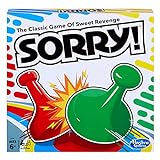
Overview: Sorry! is a strategic race game where players move pawns around the board using cards, aiming to be the first to get all four home while sending opponents backward with “Sorry!” slides—a blend of luck and tactical decisions.
What Makes It Stand Out: The “sweet revenge” mechanic (bumping rivals to Start) adds thrilling unpredictability, fostering playful rivalry. With cards enabling slides, jumps, and backwards moves, it introduces light strategy beyond simple roll-and-move games, keeping older kids engaged.
Value for Money: Its strategic depth offers replayability that outshines purely luck-based competitors. At a modest price, it bridges childhood nostalgia with modern family nights, providing hours of interaction without apps or accessories.
Strengths and Weaknesses: Strengths: Engaging player interaction, simple rules with strategic layers, durable board, perfect for 2–4 players. Weaknesses: High luck element can frustrate competitive players, card draws may lead to prolonged setbacks, limited appeal for under-6s.
Bottom Line: A superb step-up from preschool games, balancing luck and tactics for school-aged children. Its enduring charm and interactive fun make it a standout value—highly recommended for family game rotations.
4. Hasbro Gaming Hungry Hungry Hippos Game for Preschoolers | Instant Marble Relaunch, Easy Set-Up & Storage| Ages 4 and Up | 2 to 4 Players | Kids Games

Overview: Hungry Hungry Hippos delivers fast-paced, marble-gobbling action where players frantically press levers to chomp marbles into their hippo’s mouth. The relaunched version features instant marble reloads and streamlined storage, reviving the classic for modern play.
What Makes It Stand Out: The instant marble reload trough eliminates downtime, enabling nonstop chomping frenzy. Clever storage—marbles nest neatly under collapsible hippos—solves the perennial “lost marble” headache, while the tactile lever-pressing delights preschoolers’ motor skills.
Value for Money: This iteration’s durability and thoughtful design (especially storage) enhance longevity over older versions. Compared to similar dexterity games, its all-in-one portability and hassle-free setup justify the price for frequent use.
Strengths and Weaknesses: Strengths: Zero setup time, encourages hand-eye coordination, contained storage, highly engaging for ages 4+, minimal rules. Weaknesses: Marbles pose a choke hazard for under-3s, limited strategic depth, noise may overwhelm in quiet spaces.
Bottom Line: A brilliantly refreshed classic that maximizes playtime and minimizes parent frustration. Its seamless design and energetic fun make it a top-tier investment for preschool playdates—enthusiastically recommended.
5. Hasbro Gaming Trouble Board Game for Kids Ages 5 and Up 2-4 Players

Overview: Trouble challenges players to race four pawns around the board by pressing the iconic Pop-o-Matic die roller. The first to bring all pieces home wins, blending luck with light strategic choices via optional Power Up Spaces.
What Makes It Stand Out: The irresistible Pop-o-Matic bubble—satisfying to pop and eliminating lost dice—is the star. Its tactile feedback captivates children, while Power Up Spaces add customizable challenge depth without complicating the core, accessible gameplay.
Value for Money: Exceptionally durable and endlessly replayable, Trouble outperforms digital distractions in fostering patience and turn-taking. Budget-friendly compared to strategy-heavy games, it offers decades of use across generations.
Strengths and Weaknesses: Strengths: Pop-o-Matic bubble is universally loved, quick setup, teaches number recognition, suits ages 5+, calm indoor activity. Weaknesses: Purely luck-based (no strategy), repetitive for older kids, bubble mechanism can jam with wear.
Bottom Line: A timeless, sensory-rich starter game that reliably sparks joy. Despite its simplicity, the Pop-o-Matic magic delivers unmatched engagement for young children—essential for any family game shelf.
6. Hasbro Gaming Connect 4 Classic Grid,4 in a Row Game,Strategy Board Games for Kids,2 Player .for Family and Kids,Ages 6 and Up
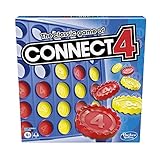
Overview:
The Hasbro Connect 4 Classic Grid revitalizes the timeless 4-in-a-row strategy game with a modern aesthetic. Designed for two players aged 6+, it challenges participants to drop colored discs into a vertical grid, aiming to align four before their opponent. Its streamlined setup and quick gameplay make it ideal for family game nights.
What Makes It Stand Out:
Beyond the classic rules, this edition offers three distinct play modes: standard Connect 4, the chaotic Connect 4 Frenzy, and the strategic Pop-Out variation (allowing disc ejection from the grid’s base). The sleek, contemporary design with vibrant colors enhances visual appeal, while the durable plastic grid resists tipping during intense matches.
Value for Money:
Priced affordably, it outperforms flimsy budget alternatives with its sturdy construction and versatile gameplay. The triple-variant system extends replayability significantly, justifying its cost against single-mode competitors. It’s a cost-effective investment for families seeking lasting entertainment.
Strengths and Weaknesses:
Strengths: Simple rules for young players; three engaging game modes; compact and travel-friendly; high-quality plastic resists wear.
Weaknesses: Limited strategic depth for older players; discs can occasionally jam in the grid; two-player focus excludes larger groups.
Bottom Line:
An essential upgrade to a beloved classic, the Connect 4 Classic Grid delivers accessible fun, clever variations, and robust durability. Perfect for introducing strategy to kids or quick family duels, it earns a strong recommendation for households with young children.
7. Hasbro Gaming Scrabble Board Game, Classic Word Games for Kids Ages 8 and Up, Fun Family Game for 2-4 Players, The Classic Crossword Game
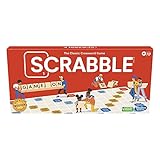
Overview:
Hasbro’s Scrabble remains the gold standard for word-building board games, inviting 2–4 players aged 8+ to craft high-scoring words on a premium crossword-style board. This edition emphasizes tactile play with wooden components, fostering vocabulary skills and friendly competition during family gatherings.
What Makes It Stand Out:
The inclusion of 100 wooden letter tiles and matching racks elevates the experience over plastic versions, offering satisfying heft and durability. Textured board squares prevent tiles from sliding, while expert strategy tips in the guide deepen engagement. Its generational appeal bridges ages, making it a nostalgic yet fresh choice.
Value for Money:
Though slightly pricier than basic sets, the wooden components ensure longevity unmatched by cheaper alternatives. The comprehensive rulebook with team-play variants maximizes replay value, providing years of educational entertainment that justifies the investment for word-game enthusiasts.
Strengths and Weaknesses:
Strengths: High-quality wooden tiles and racks; textured board enhances stability; inclusive for varied skill levels; timeless educational value.
Weaknesses: Setup can feel slow for impatient players; scoring complexity may challenge younger children; plastic storage trays feel flimsy.
Bottom Line:
A superbly crafted iteration of the iconic word game, this Scrabble set balances tradition with thoughtful upgrades. Its durability and depth make it a worthwhile purchase for families prioritizing learning through play, earning a confident endorsement.
8. Monopoly Game, Family Board Games for 2 to 6 Players & Kids Ages 8 and Up, Includes 8 Tokens (Token Vote Edition)
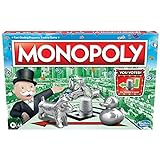
Overview:
Hasbro’s Token Vote Edition of Monopoly reimagines the classic property-trading game for 2–6 players aged 8+. Featuring eight distinct tokens—including fan favorites like the Penguin and Rubber Ducky—it retains the core pursuit of buying, developing, and monopolizing neighborhoods to bankrupt opponents.
What Makes It Stand Out:
The “Token Vote” gimmick lets players democratically choose their pieces from eight options, adding a personalized touch. Updated designs modernize the board and cards, while the inclusion of both houses and hotels maintains strategic depth. Its familiarity ensures instant engagement for new and returning players alike.
Value for Money:
As an entry-point Monopoly set, it offers excellent value with all essential components at a standard price point. The extra tokens enhance collectibility without inflating cost, though digital alternatives provide similar gameplay free. Still, the physical edition’s tangibility justifies its cost for traditionalists.
Strengths and Weaknesses:
Strengths: Broad player count (2–6); nostalgic yet refreshed design; simple rules for kids; tokens spark emotional connections.
Weaknesses: Gameplay often drags beyond 60 minutes; luck-heavy mechanics frustrate strategy seekers; paper money tears easily.
Bottom Line:
A reliable, modernized take on the property-trading staple, this edition shines for casual family fun despite inherent game-length flaws. Ideal for introducing kids to economic concepts, it’s a solid buy for game-night regulars.
9. Hasbro® Don’t Break The Ice Game, Classic Version for Ages 3+ Years, 2-4 Players
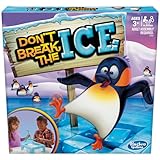
Overview:
Don’t Break The Ice is a charming dexterity game for toddlers and preschoolers (ages 3+), where 2–4 players take turns tapping acrylic “ice” blocks from a grid, hoping not to drop Phillip the Penguin. Its simplicity and cute theme make it a gentle introduction to structured play.
What Makes It Stand Out:
The game brilliantly merges fine-motor skill development with imaginative storytelling—kids “help” Phillip build an igloo while learning cause-and-effect. The vibrant penguin figure and chunky mallet engage young children, and the tension of imminent collapse creates giggly suspense perfect for short attention spans.
Value for Money:
Exceptionally priced for its target demographic, it surpasses flimsier preschool games in durability. The compact size and minimal pieces reduce cleanup stress, offering high replay value per dollar. For early childhood development, it’s a budget-friendly standout.
Strengths and Weaknesses:
Strengths: Perfect for ages 3+; develops hand-eye coordination; quick rounds (under 5 minutes); adorable penguin theme.
Weaknesses: Ice blocks may crack with rough handling; limited strategic depth; small parts pose choke hazards for under-3s.
Bottom Line:
A delightful, age-appropriate game that transforms motor-skill practice into joyful play. Highly recommended for preschoolers as a first board game that’s both educational and endlessly entertaining.
10. Azul Asmodee Azul Board Game - Award-Winning Tile-Placement Strategy Game, Beautiful Mosaic Art, Family Fun for Kids & Adults, Ages 8+, 2-4 Players, 30-45 Minute Playtime
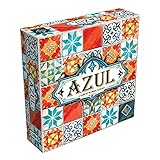
Overview:
Azul, the Spiel des Jahres-winning tile-drafting game, invites 2–4 players aged 8+ to compete in crafting vibrant mosaic walls inspired by Portuguese azulejos. With elegant rules and stunning components, it delivers strategic depth within a tight 30–45 minute timeframe, appealing to families and seasoned gamers alike.
What Makes It Stand Out:
The game’s brilliance lies in its “simple to learn, hard to master” design: players draft colorful resin tiles from factories, balancing immediate gains against future opportunities. The tactile, high-quality tiles and visually striking board create an immersive experience, while variable player boards ensure no two games feel identical.
Value for Money:
Priced mid-range for strategy games, Azul offers exceptional replayability through its modular setup and emergent strategies. It outshines cheaper abstract games with heirloom-quality components and near-perfect pacing, making it a worthwhile splurge for game-night enthusiasts.
Strengths and Weaknesses:
Strengths: Gorgeous, durable components; seamless blend of accessibility and depth; consistently engaging turns; highly replayable.
Weaknesses: Tile drafting may overwhelm absolute beginners; limited player interaction reduces “take-that” excitement; storage tray not included.
Bottom Line:
A masterclass in modern board game design, Azul combines beauty, brains, and brevity flawlessly. Its universal appeal and strategic richness earn it a top-tier recommendation for anyone seeking elevated family or social gameplay.
Understanding Your Child’s Developmental Stage
Choosing the perfect game starts long before opening the box. Matching the game mechanics and complexity to your child’s current abilities is paramount for ensuring enjoyment and avoiding frustration. A game that’s too simplistic bores an older child, while one that’s overly complex can overwhelm a younger one, turning playtime into a source of stress instead of joy. Pay close attention to the manufacturer’s recommended age range, but remember it’s just a starting point. Observe your child’s current interests, attention span, and social skills to make the best match.
Assessing Cognitive Readiness
Consider your child’s current grasp of rules, turn-taking, and basic strategy. Can they follow multi-step instructions reliably? Do they understand concepts like “counting spaces” or “matching symbols”? Games for preschoolers often rely on color recognition and simple motor skills, while early elementary games might introduce basic reading or simple arithmetic. Pushing a child into a game requiring advanced abstract thinking before they’re ready leads to disengagement. Look for games where the cognitive challenge is just a step beyond their current comfort zone to foster growth without causing meltdown.
Evaluating Emotional Maturity
How does your child handle winning and losing? Some games inherently involve luck, which can be frustrating for a child still developing emotional regulation. Others focus purely on cooperative play, eliminating direct competition altogether. For children who struggle with losing, cooperative games where everyone wins or loses together are often an excellent starting point. They build teamwork and reduce the sting of setbacks. Observe if your child can manage mild disappointment or if they need the safety net of a no-losing scenario initially.
Considering Physical Dexterity
Don’t overlook the physical aspects! Younger children or those with developing fine motor skills might struggle with tiny pieces, intricate setups, or games requiring precise manipulation. Look for chunkier components, larger boards, and simpler actions like spinning a spinner or rolling oversized dice. Games with cards that are easy to shuffle and hold, or tokens that are large enough to pick up easily, ensure the physical act of playing doesn’t become a barrier to the fun and learning.
Maximizing Educational and Social Value
The best children’s board games seamlessly weave learning into the fabric of play, making skill development feel like an exciting adventure rather than a lesson. Moving beyond pure entertainment, these games provide structured opportunities to practice essential life skills in a safe, supportive environment. When selecting a game, consider the specific developmental areas you’d like to nurture, knowing that even simple mechanics can have profound impacts.
Building Foundational Cognitive Skills
Many games naturally reinforce core cognitive abilities. Pattern recognition is honed through matching games or sequencing activities. Memory is exercised in games requiring players to recall locations or previous moves. Basic math skills like counting, adding, and understanding simple probabilities emerge during dice rolling, resource tracking, or movement calculations. Spatial reasoning gets a workout with games involving tile placement or navigating boards. Look for mechanics that align with skills your child is currently developing or could benefit from strengthening.
Fostering Social-Emotional Intelligence
Perhaps one of the most valuable aspects of board game play is its power to teach social dynamics. Turn-taking is a fundamental lesson practiced in almost every game. Learning to communicate clearly, negotiate trades (in appropriate games), and understand different perspectives are crucial skills. Games provide a microcosm for experiencing fairness, handling disappointment gracefully, and celebrating others’ successes. Cooperative games are particularly strong here, emphasizing shared goals, collective problem-solving, and supporting teammates through challenges.
Encouraging Creative Problem Solving
Games that present obstacles or puzzles encourage children to think flexibly and explore different solutions. “How can I get my piece home fastest?” “What’s the best way to use this special card?” “How do we work together to solve this challenge before time runs out?” These questions prompt strategic thinking, planning ahead, and adapting to changing circumstances. Open-ended games or those with variable setups offer particularly rich ground for creative approaches, allowing children to experiment and learn from trial and error in a low-stakes environment.
Nurturing Language and Communication
Reading game instructions, discussing strategies, explaining moves, and engaging with thematic elements all contribute to language development. Games with storytelling components or those requiring players to describe clues or actions significantly boost vocabulary and expressive language skills. Even non-reading games rely heavily on verbal communication for understanding rules and interacting with other players. Pay attention to games that spark conversation and encourage players to articulate their thoughts clearly.
Evaluating Game Components and Durability
The physical quality of a board game significantly impacts its longevity and play experience, especially in the hands of enthusiastic (and sometimes rough) young players. Flimsy boards, tiny pieces that get lost instantly, or cards that bend after one use quickly render a game unusable, leading to frustration and wasted money. Investing time in assessing the build quality ensures your chosen games withstand repeated rainy-day assaults and remain enjoyable for years.
Board and Piece Construction
Examine the thickness and sturdiness of the game board. A flimsy, curling board is annoying to play on and won’t last. Look for substantial cardboard or durable alternatives. Similarly, check the size and material of playing pieces. Chunky wooden tokens are generally more durable and easier for small hands to manage than tiny plastic figurines. Consider whether pieces are prone to chipping or breaking. For younger children, larger, solid pieces are almost always preferable for both safety and longevity.
Card Quality and Handling
Cards are often the weakest link. Thin, flimsy cards bend, tear, and become difficult to shuffle quickly. Seek out games with cards made from thicker stock, ideally with a smooth finish that allows for easy shuffling and dealing. Consider the size of the cards too; standard playing card size might be challenging for very young children, while larger cards can be easier to handle but take up more space. Laminated cards offer superior durability but are less common in children’s games.
Storage and Organization
A well-designed storage solution is crucial for preserving the game and making setup/cleanup manageable. Does the box have internal compartments or a tray to keep pieces separated and prevent damage during storage? Are there bags for small components? Games that come with a dedicated storage insert or clear organization system within the box drastically reduce the frustration of lost pieces and make it easier for children to participate in cleanup, fostering responsibility. Poor organization leads to lost pieces and a game that’s abandoned after a few plays.
Ensuring Replayability and Engagement
The true mark of a must-have rainy day game is its ability to stay exciting long after the first playthrough. Games that become stale after a few rounds quickly gather dust, defeating the purpose of investing in them for frequent use. High replay value keeps children asking to play again and again, maximizing the return on your purchase and providing consistent opportunities for fun and learning.
Variable Setup and Scenarios
Games that offer different ways to set up the board, shuffle objectives, or introduce variable player powers ensure no two games play exactly the same. This unpredictability keeps players on their toes and encourages strategic adaptation. Look for mechanics like modular boards (where sections can be arranged differently), randomized goal cards, or scenario books that provide new challenges. This variation combats predictability and boredom, making each session feel fresh.
Meaningful Player Interaction
Games where players’ actions directly impact each other – through negotiation, light competition, or required cooperation – are inherently more engaging than solitaire-style experiences where everyone plays independently. The dynamic shifts created by other players’ choices create excitement and investment. Cooperative games thrive on this interaction, as players must constantly communicate and adjust their strategies based on the group’s progress and the game’s evolving challenges.
Appropriate Pacing and Length
A game that drags on far too long for a child’s attention span is a recipe for disengagement and frustration. Conversely, a game that ends too quickly might not feel substantial enough. Match the game’s typical playtime (usually listed on the box) to your child’s current ability to focus. For younger children, 10-20 minutes is often ideal; early elementary might handle 20-30 minutes; older children can manage longer sessions. Games with clear phases or built-in stopping points can also help manage playtime effectively.
Navigating Social Dynamics at the Table
Board games are inherently social experiences, and the dynamics around the table significantly influence whether playtime is positive or problematic. Understanding how different game types foster interaction helps you choose options that promote healthy social development and minimize conflict, turning game time into a constructive family or friend activity.
Cooperative vs. Competitive Play
This is a fundamental choice. Competitive games (where players vie to be the single winner) are classic but can highlight winning/losing sensitivities. Cooperative games (where players work as a team against the game itself) eliminate direct player conflict, fostering teamwork and shared accomplishment. Many modern children’s games blend elements, offering “competitive cooperation” where players have individual goals but also shared challenges. Consider your child’s temperament and the group dynamic; cooperative games are often excellent starting points for younger children or sensitive players.
Managing Player Count Realities
Games specify a minimum and maximum number of players for good reason. A game designed for 2-4 players might feel chaotic or unbalanced with only two, or slow and disjointed with five. Respect these limits. Games that scale well across their player count range (e.g., offering different experiences at 2 vs. 4 players) are particularly valuable for families with varying group sizes. Also, consider if the game allows for “team play” where younger children can partner with an older sibling or adult, making larger player counts manageable.
Fostering Inclusive Participation
Ensure the game mechanics allow all players, regardless of age or skill level within the group, to feel involved and capable. Avoid games where experienced players dominate every turn or where luck completely overshadows skill, leaving some players feeling powerless. Games with simultaneous action selection, variable player powers that cater to different styles, or mechanisms that give trailing players catch-up potential help maintain engagement for everyone at the table. The goal is for all participants to feel they contributed to the outcome.
Future-Proofing Your Game Selection for 2026 and Beyond
The world of children’s entertainment is constantly evolving, and board games are no exception. While core principles of good gameplay remain, being aware of emerging trends and considerations can help you choose games that feel fresh and relevant not just today, but for the coming years, ensuring your collection stays engaging as your child grows.
Embracing Evolving Educational Priorities
Educational focus is shifting beyond basic ABCs and 123s. Look for games that subtly integrate modern priorities like computational thinking (breaking down problems, pattern recognition), creative engineering challenges, or fostering emotional literacy and empathy. Games that encourage open-ended problem-solving or exploring real-world concepts (like simple ecology or community building) in an age-appropriate way will resonate more strongly with contemporary learning approaches and prepare children for future challenges.
Considering Sustainability and Ethical Production
Environmental awareness is increasingly important to consumers. More game publishers are utilizing recycled and recyclable materials, sustainable forestry for wood components, and minimizing plastic use. While not always the primary factor, supporting companies with strong environmental and ethical manufacturing practices aligns with growing values. Check packaging and component descriptions for mentions of recycled content or eco-conscious initiatives if this is a priority for your family.
The Role of Technology Integration (Thoughtfully)
While the core appeal of board games is their screen-free nature, some modern titles incorporate technology in subtle, enhancing ways – not as a replacement for physical play. This might include companion apps that handle setup, scoring, or provide immersive soundscapes/storytelling without dictating gameplay, or augmented reality features viewed briefly through a device to reveal hidden elements on the board. The key is that the app enhances the physical interaction, not controls it. Evaluate if any tech element is truly necessary and age-appropriate, or if it adds unnecessary complexity.
Frequently Asked Questions
Frequently Asked Questions
What’s the most important factor when choosing a board game for a young child? The absolute most crucial factor is matching the game’s complexity to your child’s current developmental stage, particularly their attention span, understanding of rules, and emotional maturity regarding winning and losing. A game slightly above their current level can be great for growth, but one that’s too far beyond will cause frustration, not fun.
How can I tell if a game will be too frustrating for my child who hates losing? Look specifically for cooperative games where the players work together against the game itself. These eliminate direct player competition, so there’s no single “loser.” Games heavily reliant on luck (like simple dice rolling) can also soften the impact of losing, as outcomes feel less personal. Avoid highly competitive games with steep catch-up mechanics if losing causes significant distress.
Are more expensive board games always better quality and more durable? Not necessarily. While higher price can sometimes indicate better components (thicker cards, wooden pieces), many excellent, durable children’s games are very reasonably priced. Focus on reading reviews that specifically mention component quality and longevity, especially from parents with young children. Sometimes a mid-range game offers the best balance of durability and value.
How many new board games should I introduce to my child at once? Introducing too many new games simultaneously can be overwhelming and lead to none being mastered or enjoyed deeply. Start with one or two new games that fit their current interests and skills. Allow them to become familiar and comfortable before adding more. Mastering a few games builds confidence and reinforces the skills they teach.
Can board games really help with my child’s school readiness? Absolutely. Well-chosen games strengthen foundational skills critical for school success: turn-taking and rule-following (classroom behavior), counting and pattern recognition (math), letter/sound recognition (reading readiness), expressive language (communication), and problem-solving (critical thinking). The social-emotional skills built through play are equally vital.
What’s a good rule of thumb for game length with different age groups? Preschoolers (3-5): Aim for 10-15 minute games. Early Elementary (6-8): 15-25 minutes is often ideal. Upper Elementary (9-12): Can handle 20-40 minute sessions. Always watch for engagement cues – fidgeting, lack of focus, or repeated rule questions signal it’s time to wrap up, regardless of the game’s stated time.
How do I handle arguments during game play? Stay calm and neutral. Briefly restate the relevant rule. For younger children, redirect focus to the game’s fun aspects. With older kids, use disagreements as a teaching moment about fair play and sportsmanship. For persistent issues with a specific game, it might be mismatched to their current skills or maturity. Cooperative games minimize direct conflict.
Are there board games suitable for mixed-age groups (e.g., 5-year-old and 8-year-old)? Yes! Look for games with variable rules or difficulty levels that can be adjusted per player. Cooperative games are excellent for mixed ages, as older kids can support younger ones. Games with simple core mechanics but strategic depth (like some tile-laying games) also work well, allowing the older child to engage more deeply while the younger one grasps the basics.
How can I encourage my child to help clean up the game afterwards? Make cleanup part of the game ritual. Use timers (“Can we beat the clock?”), turn it into a sorting challenge (“Who can find all the blue pieces fastest?”), or assign specific cleanup roles. Games with good internal organization (compartments, bags) make cleanup easier and less daunting, encouraging participation. Consistently involve them from the start.
What should I do if my child loses interest in a game quickly? Don’t force it. Put the game away for a few months; sometimes a break reignites interest. Consider if it was truly the right match for their age/skill level – it might have been too hard or too easy. Observe why they lost interest (boredom, frustration, complexity) to inform future choices. Not every game will be a lifelong favorite, and that’s okay.
See Also
- 10 Top-Rated Kids Board Games According to Parents in 2026
- 10 Must-Have Preschool Board Games for Early Learning in 2026
- We Tested 50 Interactive Board Games for Kids - Here are the 10 Best for Engagement in 2026
- 10 Must-Have Preschool Board Games for 3-5 Year Olds in 2026
- Stop Boredom with the 10 Best Family Board Games for Kids in 2026