Table of Contents
Owning or operating a game café isn’t just about serving coffee and snacks; it’s about curating an experience where people disconnect from screens and reconnect through shared laughter, strategy, and friendly competition. But let’s be real: the financial pressures are immense. High rent, staffing costs, and the constant need to refresh your offerings while managing wear and tear on hundreds of game components can turn your passion project into a precarious balancing act. The secret weapon for sustainable success? Choosing board games that deliver exceptional value – not just the cheapest upfront cost, but titles that maximize return on investment through durability, replayability, and consistent player draw over years, not months. Getting this selection wrong means constantly replacing broken pieces or watching popular titles gather dust because they’re too complex for casual drop-ins.
Think about your peak hours. Tables are packed, energy is high, and the right game choice keeps players engaged, encourages longer stays (hello, extra coffee orders!), and transforms first-time visitors into loyal regulars. Conversely, a fragile game that falls apart after three plays, a title with such a steep learning curve it scares off newcomers, or a niche strategy monster that only appeals to a tiny segment of your clientele becomes a costly liability. Value in a game café context is a multifaceted equation: it’s the game’s ability to withstand relentless play, attract diverse groups, minimize your operational headaches, and ultimately, become a reliable revenue generator. This guide cuts through the noise to focus on the principles and features that define true long-term value for your specific business environment, helping you build a collection that thrives financially and socially.
Top 10 Board Games for Game Cafés
Detailed Product Reviews
1. Order Overload: Café – Cooperative Memory Game | 2–6 Players | Ages 6+ | Portable Travel Board Game

Overview: Order Overload: Café is a lighthearted cooperative memory game where players work together to fulfill whimsical café orders within a tight timeframe. Designed for quick play, it challenges participants to recall items across multiple hands, fostering teamwork and mental agility in a stress-free, family-oriented setting.
What Makes It Stand Out: Its pure cooperative nature eliminates player elimination, ensuring everyone stays engaged. The compact box and 15–20 minute playtime make it exceptionally travel-friendly, while the focus on shared memory-building—rather than competition—creates inclusive fun for young children and adults alike.
Value for Money: Priced accessibly for a niche memory game, it outshines alternatives by serving double duty as both entertainment and cognitive exercise. Families gain a durable, portable tool for brain training that avoids the complexity or cost of heavier strategy games.
Strengths and Weaknesses: Strengths: Effortless rules, inclusive teamwork, excellent portability, and broad age appeal. Weaknesses: Limited replay depth for seasoned gamers; memory mechanics may feel repetitive after extended use. Lacks strategic layers beyond recall.
Bottom Line: An ideal introductory memory game for families seeking quick, cooperative fun on the go. Highly recommended for travel or casual game nights with kids, though less suited for strategy enthusiasts.
2. Cafe Baras by KTBG | Ages 8+ | 2-4 Players | Family Card Game | Run Your Own Cozy Café as a Capybara, Create Menus, Decorate, and Attract Customers for Strategy Fun

Overview: Cafe Baras casts players as capybara baristas competing to build the most popular café through strategic menu planning, décor choices, and customer acquisition. This card-driven engine-builder merges accessible rules with meaningful decisions, wrapped in a delightfully whimsical theme.
What Makes It Stand Out: The charming capybara-centric art and café-management theme stand out, transforming abstract strategy into a tangible, joyful experience. Balancing menu variety, décor appeal, and customer conversion creates engaging short-term tactics within a tight 30-minute framework.
Value for Money: Offers solid replayability through variable setup and strategic depth at a mid-range price point. While slightly pricier than simple card games, its thematic richness and thoughtful design justify the cost for families seeking more than luck-based play.
Strengths and Weaknesses: Strengths: Adorable artwork, smooth blend of strategy and theme, scalable difficulty, and strong player interaction. Weaknesses: Limited player count (max 4); initial setup can confuse younger kids. Theme may feel too niche for some.
Bottom Line: A standout family strategy game that balances accessibility with meaningful choices. Perfect for casual gamers wanting thematic depth without complexity—highly recommended for ages 8+.
3. This Way to Murder: The Board Game Cafe Mysteries

Overview: “This Way to Murder” is a murder mystery novel set against the backdrop of a board game cafe, blending cozy mystery tropes with niche gaming culture. It targets readers who enjoy puzzle-solving narratives infused with community-driven charm.
What Makes It Stand Out: The unique board game cafe setting differentiates it from generic cozy mysteries, offering authentic gaming references and puzzles that resonate with hobbyists. The premise promises an immersive “whodunit” where game mechanics may cleverly mirror the investigation.
Value for Money: As a genre novel, it delivers expected tropes at standard paperback pricing. Its niche appeal to board game fans adds perceived value, though broader mystery readers might find the theme gimmicky without deeper execution.
Strengths and Weaknesses: Strengths: Fresh setting for mystery fans; likely strong character dynamics; accessible pacing. Weaknesses: Untested premise depth; potential for superficial gaming references; no standout hooks evident from title alone.
Bottom Line: A promising pick for cozy mystery aficionados craving a gaming twist, but recommend verifying plot substance before purchase. Ideal as light, thematic escapism if the setting resonates.
4. Second Chances at the Board Game Cafe: A cosy romance with a board game twist, perfect for fans of small-town settings

Overview: This romance novel centers on second-chance love within a quaint board game cafe, targeting readers who adore small-town charm and hobbyist communities. It leverages gaming culture as both backdrop and metaphor for relationship rebuilding.
What Makes It Stand Out: The board game cafe setting offers a novel twist on the overcrowded small-town romance subgenre, potentially using game mechanics to symbolize emotional growth. Focus on community and shared passions could deepen character connection beyond typical tropes.
Value for Money: Priced competitively for digital/physical romance paperbacks. Its niche hook may justify purchase for gaming fans craving representation, though general romance readers might prefer more traditional settings.
Strengths and Weaknesses: Strengths: Unique thematic angle; likely strong emotional beats; relatable hobbyist community portrayal. Weaknesses: Risk of forced gaming integration; potential predictability; unproven character depth from title alone.
Bottom Line: Worth exploring for romance readers invested in board games, but approach with tempered expectations regarding thematic execution. Best for fans prioritizing setting over innovation.
5. Coffee Rush: Piece of Cake Board Game Expansion - Add 3D Cake Tokens, New Player Boards, Upgrades & More, Strategy Game for Kids & Adults, Ages 8+, 2-4 Players, 30 Minute Playtime

Overview: This expansion enhances the “Coffee Rush” base game by introducing cake-themed elements, new components, and strategic layers focused on menu expansion and staff management. It’s designed to deepen gameplay for existing fans seeking fresh challenges.
What Makes It Stand Out: The tactile 3D cake tokens and upgraded order cards significantly elevate immersion, while staff-hiring mechanics add meaningful strategic depth. New player boards streamline integration, making expansion adoption seamless and visually rewarding.
Value for Money: Excellent value if you own the base game, offering substantial content for the price. However, its dependency renders it worthless standalone—a caveat that must be weighed against the enhanced replayability and thematic cohesion it provides.
Strengths and Weaknesses: Strengths: High-quality components; intuitive new mechanics; extends game longevity; family-friendly depth. Weaknesses: Useless without base game; minimal impact for players fatigued by core gameplay; slight runtime increase may disrupt flow.
Bottom Line: A must-buy for “Coffee Rush” enthusiasts craving richer strategy and visual flair, but strictly avoid if new to the base game. Maximizes value for invested players.
6. Cafe by Pythagoras PY0011 Coffee Board Game

Overview: Cafe is a compact strategy board game from Pythagoras, designed for coffee enthusiasts seeking a thematic tabletop experience. It supports multiple languages (English, German, Spanish, Portuguese), emphasizing accessibility for international players. The game simulates managing a bustling café, where players compete to serve customers efficiently through resource management and tactical decision-making.
What Makes It Stand Out: Its minimalist design and multilingual rulebook eliminate language barriers, making it ideal for diverse gaming groups. The coffee-shop theme is woven into simple mechanics—like drafting ingredients and fulfilling orders—without overwhelming complexity. This focus on universal appeal and quick setup (under 10 minutes) sets it apart from heavier Eurogames.
Value for Money: Priced moderately for a niche strategy game, it offers solid replayability through variable player powers and scenario cards. While not as polished as premium titles, it outperforms similarly priced abstract games by delivering a cohesive, thematic experience rarely found at this cost point.
Strengths and Weaknesses:
Strengths: Intuitive rules, strong multilingual support, engaging theme, portable size.
Weaknesses: Limited strategic depth for hardcore gamers, component quality is functional but not premium, minimal player interaction may disappoint some.
Bottom Line: A charming, accessible gateway game perfect for casual players or coffee lovers. Though light for veterans, its elegance and inclusivity make it a worthwhile addition to any collection focused on social, low-commitment gaming sessions.
7. The Little Board Game Cafe: A feel-good, uplifting, small-town romance perfect for fans of cosy reads in 2024!

Overview: This novel by an unknown author centers on a heartwarming romance set in a quaint board game café, targeting fans of cozy contemporary fiction. It promises uplifting storytelling with small-town charm, focusing on community, personal growth, and the joy of analog gaming in a digital age.
What Makes It Stand Out: The unique board game café setting differentiates it from typical romance locales (e.g., bookshops or bakeries), offering fresh metaphors for relationships through game mechanics. Its emphasis on “feel-good” escapism and 2024 relevance taps into current reader cravings for low-stakes, hopeful narratives.
Value for Money: As an ebook or paperback, it delivers standard genre value—ideal for readers seeking undemanding, comforting stories. While lacking deep thematic complexity, its niche setting justifies the price for romance enthusiasts wanting something slightly unconventional.
Strengths and Weaknesses:
Strengths: Soothing atmosphere, relatable characters, clever integration of board game motifs, fast-paced plot.
Weaknesses: Predictable romance tropes, superficial exploration of gaming culture, minimal conflict depth.
Bottom Line: A delightful, if unspectacular, read for cozy fiction fans. It succeeds as light entertainment but won’t revolutionize the genre. Recommended for readers prioritizing warmth and whimsy over originality.
8. Korea Board Games Coffee Rush Board Game - Brew Up Success in a Quick, Addictive, and Fun Coffee Adventure! Strategy Game for Kids & Adults, Ages 8+, 2-4 Players, 30 Minute Playtime
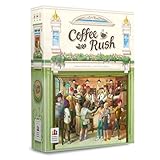
Overview: Coffee Rush is a family-friendly strategy game where players race to run successful coffee shops by fulfilling orders, managing ingredients, and upgrading skills. Designed for ages 8+, it combines quick setup (5 minutes) with 30-minute sessions, targeting both children and casual adult gamers seeking lighthearted competition.
What Makes It Stand Out: Its vibrant coffee-shop theme drives genuinely strategic yet accessible gameplay. Unique mechanics like penalty-free order abandonment and skill-upgrade triggers after three fulfilled orders create dynamic tension. The 30-minute playtime ensures high replayability without fatigue, perfect for game nights or classroom use.
Value for Money: Exceptional for its $25 price point. It surpasses comparably priced children’s games with meaningful decisions and durable components. While light for hardcore strategists, it outperforms many family games in thematic cohesion and re-play value.
Strengths and Weaknesses:
Strengths: Engaging theme, perfect runtime, intuitive rules, beautiful art, strong family appeal.
Weaknesses: Limited depth for experienced gamers, ingredient scarcity can feel punishing, minimal player interaction.
Bottom Line: A near-perfect gateway game that balances simplicity and strategy. Highly recommended for families, educators, or coffee lovers wanting a cheerful, brain-teasing diversion that consistently delivers fun.
9. Love Letters on Hazel Lane: A cosy, uplifting, feel-good romance with a board game twist to curl up with (The Little Board Game Cafe Book 2)

Overview: The second installment in the “Little Board Game Cafe” series, this novel continues the cozy romance saga centered around the beloved café. It promises emotional growth, community bonds, and subtle board game metaphors woven into a comforting small-town narrative, targeting readers who adored the first book.
What Makes It Stand Out: The sequel deepens character relationships while using board game scenarios as clever parallels for romantic hurdles—e.g., “taking turns” in commitment or “strategy vs. luck” in love. Its focus on uplifting emotional journeys (not drama) caters specifically to readers fatigued by angst-heavy romance tropes.
Value for Money: As part of a series, it offers expected genre satisfaction at a standard paperback price. While not groundbreaking, fans invested in the café’s world will find the continuation worth the cost for its reliable warmth and narrative comfort.
Strengths and Weaknesses:
Strengths: Consistent cozy tone, satisfying character development, therapeutic escapism, seamless integration of gaming themes.
Weaknesses: Formulaic plot progression, underdeveloped secondary characters, minimal stakes.
Bottom Line: A safe, soothing sequel that delivers exactly what series fans expect. Ideal for readers seeking stress-free emotional comfort, though unlikely to attract new audiences unfamiliar with Book 1.
10. Christmas at the Board Game Cafe: Little Board Game Cafe, Book 4

Overview: The fourth book in the series shifts the cozy café setting to the festive season, blending holiday cheer with the familiar small-town romance formula. It follows characters navigating Christmas traditions, community events, and heartwarming connections within the board game café’s twinkling backdrop.
What Makes It Stand Out: Seasonal storytelling elevates this entry, using Christmas themes—gift-giving parallels to game strategy, holiday parties as plot catalysts—to refresh the series’ formula. The emphasis on “uplifting” holiday magic (vs. saccharine clichés) targets readers craving joyful, low-conflict festive reads.
Value for Money: Priced competitively for a holiday-themed romance, it maximizes seasonal appeal with timely release (late 2023/2024). Series devotees get essential closure and festive twists, justifying purchase despite predictable structure.
Strengths and Weaknesses:
Strengths: Festive atmosphere, nostalgic holiday charm, satisfying series conclusion, gentle pacing.
Weaknesses: Over-reliance on Christmas tropes, thin conflict resolution, repetitive character arcs.
Bottom Line: A charming, if unsurprising, holiday capstone for the series. Best suited for existing fans wanting a comforting seasonal escape; newcomers should start with Book 1 for full emotional payoff.
Defining True Value for Your Game Café Environment
Understanding “value” in a commercial gaming space is fundamentally different from a home collection. It’s not about personal preference or owning the latest hotness; it’s a strategic business decision centered on longevity, profitability, and operational smoothness.
Beyond the Sticker Price: The Total Cost of Ownership
Focusing solely on the initial purchase price is a fast track to frustration. True value assessment requires calculating the total cost of ownership over the game’s expected lifespan in your café. Factor in the inevitable: component replacements (lost cards, broken miniatures), time spent staff repairing or explaining overly complex rules, potential downtime when a popular game is unusable, and even the cost of player dissatisfaction leading to negative reviews. A game costing $50 that lasts 2 years with minimal maintenance often delivers far better value than a $30 game needing constant fixes and replacement after 6 months.
Player Traffic and Wear Patterns
Your games face unique stressors. Consider how many different hands touch each component daily, the likelihood of spills near the table, the speed at which games are set up and broken down, and the varying skill levels of players who might mishandle pieces. Games designed for gentle home play often crumble under café conditions. Value is intrinsically linked to a game’s resilience against the specific wear patterns generated by high-volume, public use – think sturdy card sleeves as a baseline necessity, not an optional extra.
The Revenue Generation Multiplier
A high-value game actively contributes to your bottom line. Does it consistently fill tables during slow periods? Does it encourage players to stay longer (and order more food/drink) due to engaging gameplay? Does it appeal to a broad enough audience (couples, families, mixed groups) to maximize table turnover potential? Does its theme or mechanics act as a draw, bringing in new customers specifically to try it? Games that sit idle or only appeal to a niche segment, no matter how beloved by hardcore gamers, represent sunk costs.
Essential Features That Drive Long-Term Value
When evaluating potential additions, prioritize features that directly impact durability, accessibility, and operational efficiency in a busy café setting. These are your non-negotiable value drivers.
Component Resilience and Repairability
Prioritize games with inherently durable materials. Thick, linen-finished cards resist bending and shuffling damage far better than flimsy stock. Wooden components should be solid, not hollow or prone to splintering. Plastic miniatures need to be chunky and free of delicate protrusions. Crucially, assess how easy it is to replace lost or broken parts. Are components generic (like standard poker chips) or easily 3D-printable? Does the publisher offer replacement part kits? Games where a single lost token renders the entire game unplayable are operational nightmares.
Streamlined Setup and Takedown
Every minute your staff spends wrestling with complex setups or intricate resets is a minute not spent on customer service or generating revenue. High-value games feature intuitive organization within the box (custom trays, clearly labeled bags), minimal component sorting, and quick reset times. Think color-coded decks, self-contained play areas, and rulebooks with crystal-clear setup diagrams. Games requiring meticulous piece arrangement before play or complex post-game sorting drain productivity.
Accessibility for Diverse Player Groups
Your café serves everyone from first-time board gamers to seasoned veterans. Truly valuable games offer a low barrier to entry. Clear, concise rulebooks with excellent visual examples are mandatory. Gameplay should be easy to grasp within 5-10 minutes, allowing staff to teach efficiently. Look for mechanisms that are intuitive (dice rolling, card drafting, simple set collection) rather than overly abstract or reliant on obscure jargon. Games that scale smoothly from 2 to 4+ players without drastic rule changes are gold.
Consistent Replayability Without Burnout
A game must be engaging enough to warrant repeat plays by regulars, but not so complex or time-consuming that it monopolizes tables for hours. Games with variable setups, modular boards, or inherent player-driven variability (like different character powers or asymmetric objectives) offer fresh experiences without needing expansions. However, avoid games whose replayability relies solely on mastering deep, unforgiving strategies that frustrate casual players – consistent frustration drives customers away.
Space Efficiency and Storage Practicality
Café real estate is expensive. Games that play well on a standard café table (approx. 3x3 feet) without requiring massive board expansion are preferable. Consider the physical footprint of the box itself – can it fit efficiently on your game library shelves? Bulky boxes with excessive empty space waste valuable storage. Games with compact, well-organized components maximize shelf space and make restocking quicker.
Low Maintenance Cleaning Protocols
Spills happen. Games with minimal textured surfaces, washable components (like plastic tokens instead of cardboard), and cards that can be easily sleeved (and the sleeves cleaned or replaced) are far more practical. Avoid games with fabric components, intricate miniatures with crevices, or books/pages that are impossible to sanitize after a coffee mishap. Easy cleaning directly translates to less downtime and lower replacement costs.
Staff Teachability and Confidence
Your staff are your frontline ambassadors. If they dread teaching a particular game due to confusing rules or fragile components, it won’t get played. Value is high when staff can confidently explain the core mechanics in under 5 minutes and feel comfortable handing the game to players. Games with strong visual aids in the rulebook, clear player aids, and intuitive turn structures empower your team and reduce teaching bottlenecks.
Theme Universality and Broad Appeal
While niche themes have their place, core café value often lies in universally relatable or timeless themes (exploration, resource gathering, deduction, light strategy) that don’t alienate potential players. Avoid overly specific pop-culture references that might date quickly or appeal only to a narrow fanbase. A strong, clear theme that enhances gameplay (not obscures it) helps attract players and makes the experience more immersive for newcomers.
Scalability Across Player Counts
Games that rigidly require exactly 3 players, or become unplayable with only 2, create logistical headaches during off-peak hours or when groups are uneven. High-value games typically offer solid experiences across a range of player counts (e.g., 2-4 or 3-6 players) with minimal adjustments. Check if the game includes official variants or if the community has developed reliable rules for different group sizes – this flexibility keeps tables full more often.
Built-In Player Aids and Reference Materials
Games that include sturdy, well-designed player aid cards summarizing key actions, phases, or scoring are invaluable. They reduce constant rulebook consultation, speed up gameplay, minimize disputes, and allow staff to move on to other tasks. Look for aids that are large enough to read easily and placed prominently within the game box for quick access during play.
Publisher Support and Community Health
While not a direct game feature, consider the publisher’s reputation. Do they offer robust customer support for replacements? Is there an active player community providing clarified rules, printable resources, or fan-made player aids? Games with strong community support often have their longevity extended through user-generated fixes and enhancements, indirectly boosting their value for your café.
Minimal “Table Tetris” Requirements
Some games require constant shuffling of components, moving cards between multiple areas, or intricate spatial arrangements that eat up table space and cause pieces to get knocked over. High-value games keep the play area organized and contained, minimizing the need for constant component management during play. This reduces frustration, prevents accidents, and makes the game more accessible to casual players.
Forgiving Gameplay for Mistakes
In a public setting, rules misunderstandings or accidental rule breaks are inevitable. Games with mechanics that are somewhat forgiving of minor errors, or where the impact of a single mistake doesn’t completely derail the game for everyone, create a better experience. Avoid games where one player’s error necessitates a complete restart – this breeds frustration and discourages repeat plays.
Efficient Endgame Conditions
Games that drag on due to unclear or overly complex win conditions, or that require lengthy end-game scoring calculations, tie up tables unnecessarily. Value is high when endgame triggers are intuitive, scoring is relatively quick and transparent (aided by good player materials), and the conclusion feels satisfying without excessive post-game admin. Players are more likely to replay if the experience feels complete and time-efficient.
Resistance to “Analysis Paralysis”
Deep strategic games can be fantastic, but in a café environment where players might be distracted or want a lighter social experience, games prone to causing significant “analysis paralysis” (where players take excessively long turns) can slow down the entire café and frustrate other patrons. Look for games with inherent time pressures (like real-time elements or simple, fast-paced turns) or clear action limits that keep the game moving briskly for mixed-skill groups.
Implementing Your Value-Driven Game Selection Strategy
Building a valuable collection is an ongoing process. It requires deliberate choices, data-driven decisions, and a willingness to adapt based on real-world performance in your specific café.
Establishing Clear Acquisition Criteria
Before purchasing anything, define your non-negotiable value criteria based on your café’s unique demographics, space, and budget. Create a simple checklist: minimum player count range, maximum setup time, required durability level, target playtime, staff teaching time limit. Use this checklist religiously to filter out unsuitable options, regardless of how popular or critically acclaimed they might be elsewhere.
Tracking Performance Metrics Religiously
Don’t guess – measure. Implement a simple system to track key metrics for each game: number of plays per week, average playtime, frequency of component issues/replacements, staff feedback on teachability, and even casual player comments. This data is irreplaceable for identifying your true high-value performers versus the costly duds that seem appealing on paper but falter in practice.
Phased Testing with Real Café Conditions
Never buy a large quantity of a new game based solely on reviews or demos. Acquire one copy and put it through a rigorous trial period under actual café conditions during different shifts and with varied customer groups. Monitor its performance against your metrics. Does it hold up? Do players request it? Does staff avoid setting it up? Only after a successful trial should you consider expanding your stock of that title.
Strategic Retirement of Low-Value Titles
Part of maintaining value is knowing when to let go. Have a clear policy for retiring games that consistently underperform on your metrics, require excessive maintenance, or no longer align with your café’s evolving clientele. Don’t let sunk cost fallacy keep broken or unpopular games taking up precious shelf space. Consider selling retired games to customers or trading with other cafés.
Frequently Asked Questions
Frequently Asked Questions
How do I objectively measure if a game is “high value” for my café? Track concrete metrics: plays per week, average playtime, cost of component replacements over 3 months, average staff time spent teaching it, and frequency of player complaints or requests. Compare these figures against your acquisition cost and shelf space used.
Are expensive games ever worth it for game cafés? Yes, if their high durability, massive popularity driving consistent table fills, and low maintenance significantly outweigh the initial cost over 2-3 years. A $100 game played 50 times a week with minimal upkeep is often more valuable than a $40 game played 10 times a week needing constant fixes.
How crucial is component sleeving for café games? It’s non-negotiable for card-based games. Quality sleeves dramatically extend card life, protect against spills, and make cleaning possible. Factor the ongoing cost of sleeves into your total cost of ownership calculations for any game with significant card use.
What’s the biggest mistake new game cafés make with game selection? Prioritizing complex “hobbyist” games popular in online communities over accessible, durable titles that appeal to casual players and withstand heavy use. Your café’s success hinges on serving the broad middle, not just the hardcore niche.
How often should I refresh my game library? Focus less on constant new additions and more on replacing proven low-value performers. Aim for strategic additions (1-2 highly vetted titles per quarter) based on performance data, rather than chasing every new release. Quality over quantity is key for value.
Can digital tools help manage game value tracking? Absolutely. Simple spreadsheets work, but café management software often includes features to track plays, checkouts, and maintenance logs. Even using basic QR codes on game shelves linked to a shared doc for staff notes can provide valuable usage data.
Is it worth investing in games with required expansions for full value? Generally, avoid them. Games needing expansions to reach optimal player counts or fix core issues complicate your inventory, increase total cost, and create frustration if expansions go out of stock. Seek complete, self-contained experiences.
How do I handle games that are popular but very fragile? If a fragile game is a major draw, implement strict protocols: dedicated staff setup/teardown, mandatory sleeves, clear handling warnings for players, and potentially higher押金 (damage deposits). If maintenance costs still exceed revenue, it’s time to retire it despite popularity.
Should theme heavily influence my value-based decisions? Theme matters for attraction, but gameplay mechanics and durability are paramount for long-term value. A great theme on a poorly built or inaccessible game is a liability. Prioritize solid mechanics first; choose themes that broadly appeal to your target market as a secondary filter.
What’s the single most overlooked value factor by café owners? Staff experience. If your team dreads teaching or setting up a game due to complexity or fragility, it won’t get played consistently, regardless of its theoretical appeal. Always prioritize games your staff feel confident and positive about using.
See Also
- 10 Best Value Board Games for Game Night Hosts in 2026
- The 10 Best Mind Game Board Games for Sharpening Focus in 2026
- 10 Board Games Recommendations for Game Night Hosts in 2026
- Stop Boring Game Nights with the 10 Best Timer-Based Board Games in 2026
- Best Board Games for Game Designers: 10 Expert Picks for 2026