Table of Contents
Watching tiny hands carefully place their first game piece or hearing a triumphant giggle after a successful turn—that’s the pure magic of introducing board games to young children. It’s more than just play; it’s the beginning of foundational skills disguised as fun. For parents and caregivers, finding that perfect first game feels like searching for a unicorn: something simple enough for short attention spans, durable enough for clumsy fingers, and engaging enough to earn repeat requests. The right starter game can transform quiet frustration into joyful laughter, building confidence and connection one turn at a time. In 2026, with so many options flooding the market, the challenge isn’t scarcity—it’s cutting through the noise to discover what truly works for your child’s unique developmental stage.
Forget complicated rules or tiny pieces that vanish like morning mist. The best introductory games for young players prioritize experience over complexity, focusing on cooperative play, sensory engagement, and immediate feedback. They turn abstract concepts like taking turns or dealing with “oops” moments into tangible, low-stakes adventures. This guide cuts through trendy marketing hype to focus on the core principles that make a board game genuinely successful for first-time players aged 2-6. We’ll explore the subtle art of matching game mechanics to developmental milestones, why durability is non-negotiable, and how the simplest designs often spark the deepest learning. Your mission isn’t to find the “best” game universally—it’s to find the right game for your child’s first joyful steps into the world of play.
Top 10 Kids Board Games
Detailed Product Reviews
1. Hasbro Gaming Candy Land Kingdom of Sweet Adventures Board Game for Kids, Easter Gifts for Boys and Girls, Ages 3 & Up (Amazon Exclusive)

Overview:
This vibrant Amazon-exclusive edition revives the beloved Candy Land experience, designed specifically for preschoolers ages 3 and up. Players navigate a sugary trail using color-coded cards, racing gingerbread pawns toward the castle amid whimsical, candy-themed locations.
What Makes It Stand Out:
Its brilliance lies in zero reading requirements, making it ideal for pre-literate children. The bold colors, engaging illustrations, and tactile pawns sustain attention spans while teaching color recognition and turn-taking. The Amazon-exclusive packaging also enhances its appeal as a holiday gift.
Value for Money:
Priced accessibly, it outperforms similar starter games by offering durable components and pure simplicity. Competing titles often include complex rules or flimsy pieces, but Candy Land’s focus on effortless play ensures years of reuse—justifying its cost for foundational social skill development.
Strengths and Weaknesses:
Strengths: Effortless setup; promotes color learning; inclusive for young ages; high-quality visuals; nostalgic value for parents.
Weaknesses: Lacks strategic depth; outcome relies entirely on luck; limited replay innovation for older kids beyond age 5.
Bottom Line:
An exceptional first board game that transforms early learning into joyful play. Highly recommended for toddlers seeking gentle introduction to game mechanics and family bonding.
2. Hasbro Twister Party Classic Board Game for 2 or More Players,Indoor and Outdoor Game for Kids 6 and Up,Packaging May Vary

Overview:
Twister remains the quintessential physical party game where players contort their bodies to place hands and feet on colored dots. This versatile version works indoors or outdoors for ages 6+, accommodating groups or teams with its iconic spinning wheel.
What Makes It Stand Out:
The game’s genius is its universal physical comedy—sparking laughter as players tangle into human pretzels. Packaging variations ensure freshness, while team/tournament rules extend playability beyond basic rounds, making it a dynamic group energizer for all ages.
Value for Money:
Its durability and multi-scenario use (family nights, parties, rain-day activity) eclipse cheaper knockoffs that tear easily. At this price, it delivers unmatched active entertainment per dollar, especially considering its decades-long appeal across generations.
Strengths and Weaknesses:
Strengths: Encourages physical activity; scales perfectly for groups; simple rules; fosters teamwork in team mode; iconic nostalgia.
Weaknesses: Requires significant floor space; risky for mobility-impaired players; spinner mechanism occasionally jams; mat storage can be bulky.
Bottom Line:
A must-have for active households seeking laughter-filled interaction. Worth every penny as a timeless, high-energy staple for game nights or classroom breaks.
3. Sorry! Board Game for Kids Ages 6 and Up; Classic Hasbro Board Game; Each Player Gets 4 Pawns; Family Game
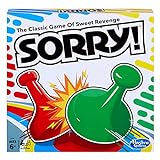
Overview:
Sorry! delivers fast-paced card-driven strategy where players race four pawns home while sabotaging opponents with “Sorry!” cards. This classic iteration retains the nostalgic charm ideal for family game nights with kids aged 6+.
What Makes It Stand Out:
The thrill of “sweet revenge” via card-based pawn captures creates unforgettable tension. Unlike luck-heavy games, it blends strategy (card management) with excitement, while the 4-pawn system amplifies comeback opportunities and chaotic fun.
Value for Money:
Competitively priced against modern board games, it offers superior replay value through emergent tactics and quick rounds (15–20 minutes). Cheaper alternatives lack its strategic depth, making this a smart investment for developing critical thinking in children.
Strengths and Weaknesses:
Strengths: Engaging risk/reward decisions; accommodates 2–4 players smoothly; teaches consequence evaluation; compact storage; timeless appeal.
Weaknesses: High randomness can frustrate competitive players; pawn collisions may cause accidental game disruption; limited appeal for teens without rule variants.
Bottom Line:
A brilliantly balanced family favorite that transforms simple rules into endlessly replayable drama. Essential for households valuing spirited, strategic play.
4. Hasbro Gaming Hungry Hungry Hippos Game for Preschoolers | Instant Marble Relaunch, Easy Set-Up & Storage| Ages 4 and Up | 2 to 4 Players | Kids Games

Overview:
This refreshed Hungry Hungry Hippos captivates preschoolers with its motorized marble-chomping hippos. Players race to gulp down the most marbles using lever-controlled jaws, featuring instant reloads and hassle-free storage for ages 4+.
What Makes It Stand Out:
The instant marble reload trough eliminates tedious resetting—keeping play nonstop. Combined with one-push hippo collapse for storage, it solves classic pain points. The tactile lever action also uniquely develops fine motor skills better than passive board games.
Value for Money:
Though slightly pricier than vintage versions, the modernized mechanics justify the cost. Competing marble games lack seamless reload/storage, making this a durable, frustration-free choice that withstands years of enthusiastic play.
Strengths and Weaknesses:
Strengths: Encourages hand-eye coordination; zero setup time; contained marble system; perfect for short attention spans; nostalgic yet updated.
Weaknesses: Motor sounds may startle sensitive kids; marbles pose choking hazards for under-3s; limited strategic depth beyond reflexes.
Bottom Line:
An impeccably engineered preschool essential that maximizes fun while minimizing parental headaches. Highly recommended for active, imaginative playdates.
5. Hasbro Gaming Connect 4 Classic Grid,4 in a Row Game,Strategy Board Games for Kids,2 Player .for Family and Kids,Ages 6 and Up
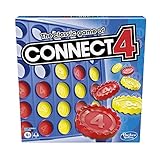
Overview:
Connect 4 reimagines the vertical slotting classic with a sleek grid and modern color scheme. Two players drop discs to align four horizontally, vertically, or diagonally, blending simplicity with tactical depth for ages 6+.
What Makes It Stand Out:
Its three gameplay modes (classic, Frenzy, Pop-Out) exponentially boost longevity. The stylish design elevates it beyond clunky vintage sets, while the compact footprint fits easily on tables—making strategy accessible without overwhelming young minds.
Value for Money:
Affordably priced for a dual-purpose game (fun + cognitive development), it surpasses digital alternatives by fostering face-to-face interaction. The durable plastic grid outlasts flimsy travel versions, offering exceptional longevity per dollar.
Strengths and Weaknesses:
Strengths: Sharpens spatial reasoning; quick setup/play; portable; visually appealing; Pop-Out mode adds strategic layers.
Weaknesses: Strictly 2-player only; first-move advantage can dominate; disc jams occasionally occur in humid conditions.
Bottom Line:
A brilliantly executed strategy gateway that’s equally compelling for kids and adults. An unreserved pick for families seeking quick, brain-boosting duels.
6. zeyce Tic Tac Toe Board Game,Tic Tac Toe Family Game, Classic Board Game, Classical Family Board Game,Children’s Tic Tac Toe Game, Plastic tic tac Toe Game, Board Size 15 X 15 cm

Overview: This compact plastic Tic Tac Toe set offers a portable take on the classic strategy game, designed specifically for children and family play. Measuring 15x15 cm, it features colorful X and O pieces made from lightweight, eco-friendly resin plastic, emphasizing safety and ease of transport for car trips or gatherings.
What Makes It Stand Out: Its vibrant colors and distinct shapes actively boost children’s color and shape recognition skills while promoting fine motor development. The waterproof, durable plastic ensures longevity, and its small footprint makes it an ideal travel companion or party favor, encouraging quick, screen-free interaction between parents and kids.
Value for Money: Priced affordably as an entry-level educational toy, it outperforms flimsy paper versions with its reusable, sturdy construction. While basic, it delivers exceptional value for fostering early cognitive skills and impromptu play, though premium wooden sets may appeal more to collectors.
Strengths and Weaknesses: Strengths: Excellent portability; enhances learning through play; durable and safe materials; perfect icebreaker for shy children. Weaknesses: Limited replay depth for older kids; plastic aesthetic lacks the charm of wood; no storage compartment for pieces.
Bottom Line: A practical, engaging tool for young children’s development and family bonding, ideal for on-the-go fun. Recommended for parents seeking affordable, educational travel games for ages 3-8.
7. Monopoly Junior Super Mario Edition Board Game, Fun Kids’ Ages 5 and Up, Explore The Mushroom Kingdom as Mario, Peach, Yoshi, or Luigi (Amazon Exclusive)

Overview: This vibrant Monopoly Junior edition reimagines the classic property-trading game within Nintendo’s Mushroom Kingdom, featuring beloved characters like Mario and Luigi. Tailored for ages 5+, it simplifies gameplay with colorful boards depicting Yoshi’s Hill and Rock-Candy Mines, replacing money with coins.
What Makes It Stand Out: Authentic Super Mario artwork and sound effects (via a coin-collecting unit) create immersive gameplay, while character-themed tokens and recognizable locations captivate young fans. The power-up die adds surprise elements, making it far more engaging than standard junior board games.
Value for Money: At a mid-range kids’ game price, it justifies cost through licensed IP appeal and durable components. It bridges nostalgia for parents and modern gaming excitement for children, though standalone Mario toys might offer similar thrills without board-game mechanics.
Strengths and Weaknesses: Strengths: Strong franchise integration; intuitive rules for beginners; audio feedback enhances immersion; excellent gift potential. Weaknesses: Short playtime limits depth; Amazon exclusivity restricts accessibility; coin sound unit requires batteries.
Bottom Line: A delightful, accessible introduction to strategy games for Super Mario fans. Highly recommended for gifting to children aged 5-8 who adore the franchise.
8. Hasbro® Don’t Break The Ice Game, Classic Version for Ages 3+ Years, 2-4 Players
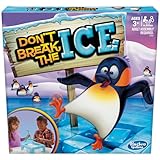
Overview: A timeless preschool staple, this game challenges players to carefully tap out ice blocks without causing Phillip the Penguin to plummet. Designed for ages 3+, it combines dexterity and suspense in a simple wooden frame with removable plastic “ice” cubes.
What Makes It Stand Out: Its tactile, physical gameplay teaches cause-and-effect and patience, while the cheerful penguin figure adds narrative charm. The quick setup and elimination-free turns ensure young children stay engaged without frustration during family game nights.
Value for Money: Exceptionally affordable for its durability and replayability. As a classic Hasbro title, it outlasts trend-driven toys, offering decades of use. Budget alternatives exist, but none match its brand reliability or seamless integration into early-learning routines.
Strengths and Weaknesses: Strengths: Perfect for developing fine motor skills; inclusive for 2-4 players; no reading required; robust construction withstands rough play. Weaknesses: Small parts pose choking hazards for under-3s; repetitive after extended use; penguin figure may detach easily.
Bottom Line: An essential, budget-friendly game for developing preschoolers’ coordination and social skills. Unreservedly recommended for families with children aged 3-6.
9. Hasbro Gaming Scrabble Board Game, Classic Word Games for Kids Ages 8 and Up, Fun Family Game for 2-4 Players, The Classic Crossword Game
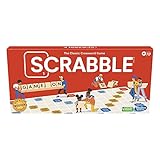
Overview: This premium Scrabble edition revives the iconic word-building game with 100 wooden tiles, textured board, and sturdy racks. Targeted at ages 8+, it challenges players to craft high-scoring words across premium squares while fostering vocabulary and strategic thinking.
What Makes It Stand Out: The high-quality wooden components elevate the tactile experience, with a textured board preventing tile slippage. It masterfully balances educational depth (spelling, math via scoring) with competitive fun, making it a timeless choice for multigenerational family nights.
Value for Money: Priced moderately for its heirloom-quality materials, it surpasses cheaper plastic sets in longevity. While digital versions exist, this physical edition encourages unplugged interaction, justifying its cost as a long-term investment in family bonding.
Strengths and Weaknesses: Strengths: Durable wooden pieces; excellent educational benefits; adaptable for teams or solo play; premium board design. Weaknesses: Steep learning curve for young children; storage bag not included; scoring complexity may overwhelm beginners.
Bottom Line: The definitive Scrabble experience for families seeking intellectually stimulating, screen-free entertainment. Highly recommended for households with kids aged 8+.
10. Hasbro Gaming Chutes and Ladders Board Game | 2 to 4 Players | Back to School Gifts for Kids | Preschool Classroom Games | Ages 3+ (Amazon Exclusive)

Overview: A nostalgic reboot of the classic counting game, this edition tasks preschoolers with climbing ladders and sliding down chutes to reach the top first. With bold artwork and a simple spinner, it’s engineered for children ages 3+ with zero reading requirements.
What Makes It Stand Out: Its emphasis on number recognition and counting practice disguises learning as pure fun. The “good deeds” theme (e.g., helping friends) subtly reinforces positive behavior, while vibrant visuals maintain engagement during repetitive climbs and slides.
Value for Money: An economical classroom or gift staple, it outperforms flashcards by embedding math skills in play. Though conceptually simple, its durability and universal appeal make it a smarter buy than single-use educational toys at similar price points.
Strengths and Weaknesses: Strengths: Perfect for early numeracy; inclusive for pre-readers; quick setup; promotes turn-taking. Weaknesses: Luck-based gameplay lacks strategy; Amazon exclusivity complicates returns; spinner may jam over time.
Bottom Line: A must-have for introducing preschoolers to board games while building foundational math skills. Strongly recommended for educators and parents of 3-5 year olds.
Understanding Developmental Readiness: Matching Games to Growing Minds
Recognizing Key Milestones for Game Play
Before even glancing at a box, consider your child’s current abilities. Can they sit for 5-10 minutes? Do they understand basic concepts like “my turn/your turn”? Can they follow a single-step instruction consistently? Games for true beginners (ages 2-3) should require minimal waiting, use mostly visual cues, and avoid complex counting or reading. Look for games where actions are immediate—spin, move, do something physical—rather than abstract decisions. Children this age thrive on cause-and-effect they can see and feel.
The Critical Role of Sensory Engagement
Young children learn through their senses. Games incorporating tactile elements—chunky, easy-to-grip tokens, textured path spaces, or even scented components—create deeper engagement and memory hooks. Sound is equally vital; games with satisfying clicks, gentle chimes, or fun sound effects provide instant auditory feedback that reinforces actions. Avoid games relying solely on visual symbols or written words at this stage; multisensory input makes rules intuitive and play more immersive.
Managing Emotional Regulation During Play
First-time players often struggle with big emotions—frustration when things don’t go their way, or overwhelming excitement. Ideal starter games minimize direct competition (think cooperative or “everybody wins” formats) and incorporate gentle, built-in consequences. Look for mechanics where “losing” a turn feels like a small, temporary pause (“Oh no, the bridge is down! We’ll fix it next time!”) rather than a crushing defeat. Games should teach resilience through manageable challenges, not constant setbacks.
Core Mechanics That Captivate Young Beginners
Simplicity of Action: One Step at a Time
Forget multi-layered decisions. The most effective mechanics for novices involve a single, clear action per turn: spin a spinner and move that many spaces, roll a die and do what the picture shows, or draw a card and perform a simple physical task (like hopping once). Overly complex choices (“Do I move my piece or collect a token?”) cause paralysis and frustration. Streamlined actions keep the pace snappy and ensure every child feels capable.
Visual Clarity Over Verbal Instructions
A game board should tell most of the story. Clear, uncluttered paths with bold colors, easily distinguishable symbols, and minimal text are essential. Icons should be intuitive (a picture of a frog means “hop,” a sun means “move forward”). Rulebooks for beginner games should rely heavily on illustrations demonstrating gameplay, allowing parents to guide play without lengthy explanations that young ears will tune out.
Predictable Patterns and Rhythm
Children find comfort and confidence in repetition. Games with a clear, predictable sequence (e.g., roll -> move -> do action on space -> next player) create a reassuring structure. This rhythmic flow helps them anticipate what comes next, reducing anxiety and allowing them to focus on the fun rather than deciphering the process. Avoid games with sudden rule changes or chaotic elements that disrupt this comforting predictability.
Essential Physical Design Considerations
Durability: Surviving the Toddler Test
This isn’t optional. Boards should be thick cardboard resistant to bending and spills. Pieces must be large enough to avoid choking hazards (typically 1.5+ inches) yet substantial enough not to snap under enthusiastic handling. Look for components made from sturdy plastic or thick wood, not flimsy cardboard chits. Spinner mechanisms should be securely attached and able to withstand vigorous spins. Consider washable materials—sticky fingers and game pieces are inevitable companions.
Piece Size and Manipulation Ease
Tiny tokens are a recipe for disaster and tears. Opt for pieces children can easily grasp with their developing fine motor skills—think chunky animal figures, oversized dice, or large, flat tokens. Spinner arrows should have a comfortable knob. Game boards should lie flat without constant curling. If a child struggles physically to interact with the components, the cognitive and social benefits of the game are lost in the struggle.
Storage Solutions That Actually Work
Disappearing pieces are the nemesis of family game nights. Seek games with integrated storage: trays that hold boards and pieces securely, boxes with dedicated compartments, or sturdy bags that keep everything contained. Avoid games where pieces are loose in a box or rely on flimsy plastic bags that tear. Easy setup and cleanup are crucial for maintaining the magic—nobody wants a 15-minute pre-game hunt for missing dragons.
Fostering Social and Cognitive Growth Through Play
The Power of Cooperative Play
Games where players work together towards a common goal (“Can we all reach the castle before the sun sets?”) are often the smoothest entry point. They eliminate the sting of direct competition, encourage communication (“You go this way, I’ll go that way!”), and build teamwork skills early. Cooperative mechanics naturally foster empathy and shared problem-solving, making losses feel like shared challenges to overcome next time, not personal failures.
Building Foundational Executive Function
Simple games are stealthy brain trainers. Taking turns strengthens impulse control. Remembering basic rules (like “land on blue, draw a card”) boosts working memory. Moving a piece a specific number of spaces develops early counting and spatial reasoning. Games with simple choices (“Do you want the apple or the banana card?”) introduce basic decision-making. The best starter games embed these cognitive workouts within the play itself, not as separate drills.
Language and Communication Catalysts
Every turn is a chance to build vocabulary and social skills. Describing actions (“I moved my bear to the honey pot!”), asking for help (“Can you spin for me?”), or celebrating others (“You found the treasure!”) are natural outcomes of gameplay. Games with rich themes (farms, oceans, space) introduce new words contextually. Look for opportunities to narrate play gently (“Oh no, the river is flooded! How can we cross?”), sparking imagination and verbal expression.
Practical Buying Guide: Making the Right Choice for Your Family
Assessing Your Child’s Specific Interests
A child obsessed with dinosaurs will engage far more with a game featuring T-Rex tokens than one with generic shapes. Theme matters immensely for initial buy-in. Observe what captivates them in books or toys—is it vehicles, animals, helping others, bright colors? Aligning the game theme with existing passions lowers resistance and makes learning the mechanics feel like an extension of familiar fun.
Evaluating Playtime Realistically
Honesty is key. If your child’s focused play rarely exceeds 8 minutes, a game promising “15-minute fun” is likely too long. Starter games should ideally run 5-10 minutes max for ages 2-3, gradually extending to 10-15 minutes for ages 4-5. Check the box estimate, but prioritize reviews mentioning actual playtimes with young kids. Short, successful sessions build positive associations; dragging out play leads to meltdowns and game exile.
Considering Family Dynamics and Space
Think about your play environment. Do you have a dedicated game table, or do you play on the floor? Floor-friendly boards (larger, sturdier) might be better than small table-top games. How many players does the game comfortably accommodate? A game for 2-4 players is ideal for family play. If siblings are close in age, look for games with adjustable difficulty so older kids aren’t bored while younger ones learn. Also, consider storage space—a massive box might not fit your toy rotation system.
Navigating Common Pitfalls and Setting Realistic Expectations
Avoiding “Too Advanced” Traps
It’s tempting to buy a game labeled “ages 4+” for your sharp 3-year-old, but developmental gaps are significant. Games requiring complex strategy, reading, or long-term planning will frustrate both child and adult. Stick to the lower end of age ranges for true beginners. Remember, the goal is success and enjoyment now, not stretching abilities prematurely. You can always revisit more complex games in six months.
Managing Parental Involvement Levels
Be prepared to be the game’s engine initially. Young children often need a parent to physically guide turns, interpret symbols, and gently enforce rules. Don’t expect independent play right away. The adult role is to facilitate, not dominate—ask questions (“What should we do next?”), narrate actions, and keep energy positive. Gradually step back as confidence grows. Your patience is part of the game mechanics.
Embracing the Imperfect First Game
The first few plays might be chaotic! Pieces get knocked over, rules are “interpreted” creatively, and someone might cry. This is normal. Focus on the shared experience, not flawless execution. Celebrate small wins (“You waited so patiently for your turn!”). If a game consistently causes meltdowns after several attempts, it’s not the right fit yet—shelve it and try something simpler. Flexibility is key to long-term success.
Frequently Asked Questions
Frequently Asked Questions
What’s the absolute youngest age to start board games?
Most children show interest and basic readiness around 2.5 to 3 years old with extremely simple games (like first matching or roll-and-move). Look for games specifically designed for ages 2+ with very short playtimes and large components. Follow your child’s cues—if they’re not engaged, wait a few months.
How do I handle my child getting upset when they “lose”?
Focus on cooperative games initially where everyone wins or loses together. If playing competitive games, emphasize effort over outcome (“You worked so hard to get that piece!”). Keep games very short. If upset occurs, calmly pause play, acknowledge feelings (“It’s hard when things don’t go our way”), and redirect. Never force continuation.
Are digital apps a good alternative to physical board games for beginners?
While some apps have value, physical games offer irreplaceable benefits for young children: fine motor skill development, face-to-face social interaction, spatial reasoning with 3D pieces, and reduced screen time. Start with tangible games; apps can complement later.
How many players is ideal for a first board game?
Games designed for 2-4 players are most versatile. Starting with just you and your child minimizes wait time and complexity. Adding one more player (sibling or friend) is manageable once basics are understood. Avoid games requiring large groups for initial play.
My child doesn’t understand taking turns. What can I do?
Use visual aids like a “turn token” (a special coin or figure) that passes between players. Practice turn-taking in other low-stakes activities first (taking turns rolling a ball, stacking blocks). Keep your own turns very short and model waiting patiently. Celebrate successful turn-taking immediately.
Should I modify the rules for my young child?
Absolutely, and encouraged! Simplify rules, shorten the board, reduce the number of pieces, or let them have two turns in a row initially. The goal is engagement and success. You can gradually introduce the full rules as skills develop. Flexibility prevents frustration.
How important is the game’s theme for a beginner?
Very important for initial buy-in. A child passionate about rescue vehicles will engage more with a simple game featuring fire trucks than one with abstract shapes, even if the mechanics are identical. Theme fuels motivation to learn the play.
Can a game be too simple for a slightly older preschooler?
Yes. For ages 4-5, seek games with slightly more decision-making (simple choices), cooperative problem-solving, or basic strategy elements. Look for games advertising “grows with your child” or offering rule variants. Boredom sets in quickly if the challenge is too low.
What are red flags that a game isn’t suitable for first-timers?
Excessive small pieces, complex rulebooks over 1 page, playtimes over 15 minutes for ages 3-4, heavy reliance on reading, purely luck-based with no player agency, or themes that might scare sensitive children (dark imagery, intense conflict).
How often should we play to build skills without burnout?
Short, frequent sessions are best—aim for 5-10 minutes, 2-3 times a week, rather than one long session. Follow your child’s lead; stop before they lose interest. The goal is to leave them wanting more, reinforcing positive associations with game time.
See Also
- 10 Board Games for Kids Recommendations for First-Time Parents in 2026
- Best Board Games for Toddlers: 10 Expert Picks for 2026
- Best Family Board Games for Rainy Days: 10 Expert Picks for 2026
- 10 Must-Have Kids Board Games for Rainy Day Fun in 2026
- 10 Best Board Games for Kids After 6 Months of Testing in 2026