Table of Contents
Imagine being trapped in a vehicle with restless children for hours on end. The initial excitement of the journey fades fast, replaced by the dreaded chorus of “Are we there yet?” and the frantic search for distractions that won’t drain your phone battery or cause sibling wars. Long trips with kids can quickly shift from adventure to anxiety for parents, especially when traditional entertainment options fail. The right solution isn’t just about keeping little hands busy—it’s about creating moments of connection, sparking imagination, and transforming travel time into something genuinely enjoyable for everyone involved.
This is where the evolution of travel-specific board games shines. Forget bulky boxes or games spilling tiny pieces across the car floor. Modern travel games are engineered with the unique challenges of movement in mind: compact, durable, and designed to engage young minds without requiring constant adult intervention. Choosing the perfect game isn’t just a convenience—it’s a strategic move to preserve sanity, encourage screen-free play, and build positive travel memories. Let’s explore how to find the ideal companion for your next family adventure, focusing on what truly matters for journeys in 2026.
Top 10 Travel Board Games for Kids
Detailed Product Reviews
1. Hasbro Games Grab and Go! Bundle (4 Pack) | Kids Travel Board Games | Battleship, Connect 4, Guess Who?, Hungry Hungry Hippos Games | 2 Players I Ages 7+

Overview:
This compact bundle delivers four beloved Hasbro classics—Battleship, Connect 4, Guess Who?, and Hungry Hungry Hippos—in travel-sized editions designed for on-the-go play. Tailored for kids aged 7+, each game retains authentic mechanics while fitting neatly into pockets or bags, making it ideal for road trips, flights, or waiting rooms.
What Makes It Stand Out:
The standout feature is its nostalgic authenticity; these aren’t simplified versions but true miniaturized replicas of the full games. Built-in storage compartments prevent piece loss—a common travel-game flaw—and the no-screen, interactive design encourages face-to-face engagement. Unlike magnetic alternatives, these prioritize tactile play with familiar rules kids already know.
Value for Money:
Priced competitively for a 4-in-1 set, it offers exceptional value compared to buying individual travel games. While lacking magnets (a downside for bumpy rides), the durability and replayability of four distinct games justify the cost, especially as a gift alternative to single-use toys or digital distractions.
Strengths and Weaknesses:
Strengths: Authentic gameplay; intuitive setup; excellent piece containment; strong gift appeal for holidays. Weaknesses: Not magnetic, so pieces may shift during transit; limited to 2 players per game; smaller boards could frustrate very young kids.
Bottom Line:
A near-perfect travel solution for families seeking screen-free fun with trusted classics. Despite minor portability quirks, its reliability and variety make it a top-tier choice for kids’ entertainment on the move.
2. Hasbro Gaming Magnetic Game Travel Set for Kids - Bundle with 4 Travel Games in Tin Featuring Connect 4, Sorry, Trouble, Guess Who Plus Stickers | Travel Games for Kids 8-12

Overview:
This magnetic tin bundle packs four Hasbro staples—Connect 4, Sorry!, Trouble, and Guess Who?—into compact, portable sets ideal for kids aged 8–12. Each game fits inside a durable metal tin with magnetic pieces, designed to withstand travel chaos while preserving classic gameplay.
What Makes It Stand Out:
The magnetic pieces are the hero here, securely holding during car or plane rides—a critical upgrade over non-magnetic sets. The tins double as storage and play surfaces, and the inclusion of Rex-Man stickers adds playful flair. It’s a cohesive, space-saving solution that minimizes lost parts.
Value for Money:
At a mid-range price, it delivers solid value for four magnetized games, outperforming single-game purchases. However, the stickers and door hanger feel like filler; the real worth lies in the durable tins and reliable magnets, which justify a slight premium over non-magnetic bundles.
Strengths and Weaknesses:
Strengths: Magnets prevent piece displacement; sturdy tins; easy storage; broad age appeal. Weaknesses: Stickers add little utility; Trouble’s pop-o-matic dome is scaled down, reducing tactile fun; no Battleship/Hungry Hippos options.
Bottom Line:
A practical, well-executed travel set for magnet-dependent reliability. Best for frequent travelers prioritizing piece security, though the gimmicky extras slightly dilute an otherwise excellent package.
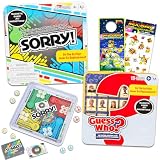
3. Magnetic Game Travel Set for Kids - Bundle with 2 Travel Games in Tin Featuring Sorry, Guess Who Plus Stickers, More | Hasbro Travel Games for Kids 8-12
Overview:
This streamlined Hasbro bundle offers two magnetic travel games—Sorry! and Guess Who?—in compact tins, targeting kids 8–12. It mirrors the larger 4-pack but with fewer titles, focusing on portability and piece retention during trips.
What Makes It Stand Out:
The magnetic play surfaces and enclosed tins ensure pieces stay put, a must for vehicles or planes. The set’s simplicity (only two games) makes it less overwhelming for younger kids, while the Rex-Man stickers and door hanger add novelty for gifting.
Value for Money:
Priced lower than the 4-pack, it’s budget-friendly but offers limited variety. For casual travelers or as a stocking stuffer, it’s reasonable—but the 4-pack provides better long-term value per game. The stickers don’t enhance functionality, making this feel slightly barebones.
Strengths and Weaknesses:
Strengths: Reliable magnets; ultra-portable tins; quick setup; affordable entry point. Weaknesses: Only two games reduce replay diversity; stickers are forgettable; lacks popular titles like Connect 4.
Bottom Line:
A competent but unremarkable option for those needing just one or two games. Opt for the 4-pack unless you specifically want only Sorry! and Guess Who?
4. Gamie Magnetic Board Travel Games for Kids, Includes 12 Retro Fun Games - 5" Compact Design, Individually Boxed Travel Essentials for Kids Road Trip/Airplane/Camping, Stocking Stuffers for All Ages

Overview:
This expansive kit features 12 magnetic mini-games—including Chess, Checkers, and Snakes & Ladders—in a 5-inch format, catering to all ages. Each game is individually boxed, promising hours of screen-free travel entertainment with strong educational undertones.
What Makes It Stand Out:
The sheer diversity (12 games!) is unmatched, covering strategy, luck, and logic. Magnets secure pieces reliably, and the individual boxes simplify storage and game selection. Educational claims are credible, with games fostering critical thinking—ideal for parents seeking developmental play.
Value for Money:
Exceptional value given the volume; it’s cheaper per game than most bundles. While some titles (e.g., Backgammon) may suit older kids, the range ensures broad household use. Slightly pricier than 4-packs but justified by variety and quality construction.
Strengths and Weaknesses:
Strengths: Unbeatable game selection; sturdy individual boxes; strong educational benefits; magnets work flawlessly. Weaknesses: Smaller games like Solitaire may frustrate young children; instructions can be dense for novices.
Bottom Line:
The ultimate all-in-one travel solution for families. Its educational depth and variety make it a standout investment, especially for multi-child households or frequent travelers.
5. Pedolini 4 in a Row Connect Game Travel Board Game (Small) Mini 7x4.8 Inch

Overview:
Pedolini’s mini Connect 4 delivers the classic “4-in-a-row” strategy experience in a pocket-sized 7x4.8-inch board, crafted for travel with high-quality plastic. Targeted at all ages, it emphasizes simplicity and durability for on-the-go play.
What Makes It Stand Out:
Premium build quality sets it apart—smoother discs and sturdier construction than most travel sets. The compact size fits anywhere, yet retains full gameplay integrity. Unlike multi-game bundles, it’s a single-game specialist, ideal for Connect 4 devotees seeking reliability.
Value for Money:
Priced higher than bundle components but justified by its robust materials and flawless mechanics. If you prioritize one game’s longevity over variety, it’s a smart splurge—though bundles offer more bang for buck for casual players.
Strengths and Weaknesses:
Strengths: Exceptional durability; seamless play; truly portable; elegant design. Weaknesses: Only one game limits replay diversity; no magnets (discs can shift); less versatile than multi-game kits.
Bottom Line:
A superb standalone choice for Connect 4 fans valuing craftsmanship. Not for variety seekers, but unmatched in its niche for dedicated, high-quality travel play.
6. Regal Games Card Games for Kids - Go Fish, Crazy 8’s, Old Maid, Slap Jack, Garbage Monster, War - Simple & Fun Classic Family Table Games - Games May Vary (6 Set)

Overview:
This 6-in-1 card game set delivers classic family fun tailored for young children (ages 4+). Featuring Go Fish, Crazy 8’s, Old Maid, Slap Jack, Garbage Monster (Silly Monster Memory Match), and War, it supports 2-6 players and prioritizes ease of use and engagement for little hands and minds.
What Makes It Stand Out:
The standout feature is its versatility—six distinct games in one compact package, eliminating the need for multiple purchases. The oversized, vibrantly colored cards with intuitive symbols make gameplay accessible for pre-readers, while the included skill-building elements (color/number recognition, memory, matching) cleverly blend education with entertainment. Its pocket-friendly size ensures portability for trips or waiting rooms.
Value for Money:
Priced competitively against single-game decks, this set offers exceptional value. Buying six separate children’s card games would cost significantly more, making this an economical choice for parents seeking variety without clutter. The durable cardstock justifies the cost for frequent use, though card longevity may vary with very young children.
Strengths and Weaknesses:
Strengths: Huge variety, perfect card size for small hands, strong educational benefits, highly portable, and vibrant designs hold attention. Weaknesses: Some games (like War) lack depth for older kids, and “Garbage Monster” rules may confuse younger players without guidance. Card durability, while decent, isn’t indestructible.
Bottom Line:
An outstanding starter set for fostering family interaction and early learning. Its affordability, portability, and skill-building focus make it a must-have for parents of preschoolers and early elementary kids—ideal for travel, gifts, or daily play.
7. Hasbro Gaming Guess Who? Card Game for Kids, 2 Player Guessing Game, Fun Summer Activities, Vacation Travel Essentials, Ages 5+

Overview:
Hasbro reimagines its iconic board game into a compact, travel-ready card version for two players aged 5+. This streamlined take on Guess Who? retains the core deduction gameplay—using yes/no questions to identify a hidden character—but fits in a pocket for on-the-go fun.
What Makes It Stand Out:
The brilliance lies in its portability and faithful adaptation of the classic guessing mechanic. The miniaturized format (cards instead of flippable boards) makes it perfect for planes, cars, or restaurants without sacrificing the strategic questioning that develops critical thinking. The recognizable characters and simple rules ensure instant engagement.
Value for Money:
As a dedicated travel game, it’s reasonably priced compared to full-sized board games. While not cheaper than generic card games, Hasbro’s quality control and brand trust justify the cost for a durable, ready-to-play solution. It’s a smarter investment than single-use travel kits, offering repeated replayability.
Strengths and Weaknesses:
Strengths: Authentic Guess Who? experience, ultra-portable, quick setup, builds logic skills, and sturdy cardstock. Weaknesses: Strictly limited to two players (unlike the board game), lacks the tactile “flipping” action kids love, and character variety is reduced versus the original.
Bottom Line:
A near-perfect travel companion for parents needing quiet, screen-free entertainment. Despite the two-player limit, its educational value and portability make it a top-tier choice for vacations or waiting periods—highly recommended for families on the move.
8. Melissa & Doug On The Go Game On! Reusable Games Wipe-Off Activity Pad Reusable Travel Toy with 2 Dry-Erase Markers - FSC Certified

Overview:
This spiral-bound activity pad offers 17 reusable games (word, number, and picture-based) for ages 6+, designed specifically for travel. Featuring FSC-certified materials and two dry-erase markers, it provides mess-free, repeatable entertainment for one or two players.
What Makes It Stand Out:
The standout feature is its eco-conscious reusability—no lost pieces or disposable sheets. The sturdy construction, built-in marker storage, and compact 6"x10" size make it ideal for cars or planes. Games like “Word Search” and “Tic-Tac-Toe” cleverly disguise learning as play, targeting literacy and math skills without feeling academic.
Value for Money:
Priced higher than single-use coloring books, it pays for itself through endless replays. The included markers (with eraser caps) eliminate extra costs, and FSC certification adds ethical value. Compared to apps, it offers screen-free focus—a worthwhile investment for frequent travelers seeking sustainable options.
Strengths and Weaknesses:
Strengths: Truly reusable, durable spiral binding, eco-friendly materials, diverse game types, and excellent portability. Weaknesses: Marker tips may wear quickly, some games lack instructions, and younger kids (6-7) might need help with complex puzzles like “Mystery Number.”
Bottom Line:
A smart, sustainable travel essential that combats boredom without screens. While markers require occasional replacement, its educational depth and durability make it indispensable for road trips—highly recommended for eco-conscious families.
9. PlayMonster Spoons in a Case, Card Games for Kids - Spoons Game, Fun Family Games for Kids and Adults, Game Night, Travel Games, 3-6 Players, Ages 7+

Overview:
PlayMonster’s Spoons delivers chaotic, high-energy fun for 3-6 players aged 7+. This classic card game challenges players to collect four-of-a-kind and snatch a physical spoon before others, packaged in a compact case for travel or game nights.
What Makes It Stand Out:
The game’s magic is its blend of speed, strategy, and physical comedy—the scramble for spoons guarantees laughter. The included storage case (holding cards and 4 plastic spoons) solves the usual “lost spoon” problem, making it uniquely travel-ready. Simple rules ensure immediate play, fostering family bonding through friendly competition.
Value for Money:
Competitively priced against similar party games, it offers immense replay value through sheer unpredictability. The durable case and included spoons eliminate setup hassles, providing better utility than generic card decks. It’s a cost-effective upgrade from DIY spoon games using kitchenware.
Strengths and Weaknesses:
Strengths: Exceptional replayability, perfect portability, inclusive for all ages, easy to learn, and the case prevents lost components. Weaknesses: Plastic spoons feel flimsy, and younger players may struggle with the game’s frantic pace, potentially causing disputes over spoon grabs.
Bottom Line:
A must-have for lively game nights or travel—it transforms any space into a laughter-filled arena. Despite minor durability quirks, its universal appeal and portability earn it a strong recommendation for families seeking active, social fun.
10. University Games, Pizza Party Dice Game, Dice Game for Kids and Families, Ages 6+

Overview:
This charming dice game tasks two players (ages 6+) with building a complete pizza by rolling ingredient-themed dice. Each roll adds toppings to a cardboard slice, with the first to finish their pizza winning—a simple, food-themed race ideal for young children.
What Makes It Stand Out:
The playful pizza motif and tactile dice (featuring toppings like pepperoni and mushrooms) captivate kids, turning basic dice mechanics into an imaginative cooking adventure. Its compact size and quick rounds (5-10 minutes) make it perfect for short attention spans or as a travel distraction.
Value for Money:
Priced accessibly, it offers solid value as a dedicated two-player game, but the strict player limit reduces versatility. Compared to multi-player alternatives, it’s niche—best for siblings or parent-child bonding. The cardboard components feel lightweight, though durability suffices for casual use.
Strengths and Weaknesses:
Strengths: Engaging theme for kids, very easy rules, fast gameplay, and highly portable. Weaknesses: Only supports two players (a major limitation), cardboard “pizzas” may warp, and replay value diminishes quickly once the novelty fades for older children.
Bottom Line:
A delightful starter game for preschoolers and early elementary kids, especially as a travel toy. However, the two-player restriction and limited longevity make it less versatile than broader family games—recommended only for targeted, short-play scenarios.
Key Features to Prioritize When Choosing Travel Games
Compact and Lightweight Design
Portability is non-negotiable. Games should fit easily into carry-on luggage, backpacks, or even cup holders without adding significant weight. Look for slim cases under 6 inches square or roll-up boards that tuck away discreetly. Bulky components defeat the purpose of a travel game, turning a helpful tool into another item to juggle during transit chaos.
Secure Piece Storage
Loose pieces are the arch-nemesis of travel games. Prioritize designs with integrated compartments, magnetic boards, or elastic closures that keep every token, card, or die firmly in place. Games requiring constant piece retrieval quickly become more frustrating than fun, especially on bumpy roads or turbulent flights.
Age-Appropriate Complexity
Match the game’s cognitive demands to your child’s developmental stage. Preschoolers thrive with simple matching or cooperative mechanics, while elementary-aged kids can handle light strategy and decision-making. Avoid games with rules longer than a short story—quick setup and intuitive play are essential when attention spans are already stretched thin.
Minimal Setup Time
Games requiring lengthy assembly eat into precious playtime and test patience. Ideal travel games unfold in under 60 seconds. Think flip-the-board-and-play or “deal three cards and go” simplicity. The faster you start, the sooner the peace returns.
Durability for Real-World Use
Travel is rough. Games must withstand drops, spills, and enthusiastic handling. Prioritize materials like thick cardboard, laminated cards, or flexible silicone components over flimsy plastic. Water-resistant surfaces are a bonus for inevitable snack mishaps.
Essential Game Mechanics for Engaged Young Travelers
Cooperative Play Dynamics
Games where players work together toward a common goal reduce competition-induced stress. Instead of fostering rivalry, these mechanics encourage teamwork and shared problem-solving—perfect for confined spaces where tension can escalate quickly. Look for themes where everyone wins or loses as a unit.
Quick Rounds and Variable Length
Journeys have unpredictable durations. Games offering flexible play sessions—some rounds lasting 5 minutes, others extending to 20—allow you to adapt to changing conditions. This prevents the agony of starting a 45-minute game with only 20 minutes left in the trip.
Visual and Tactile Engagement
Bright colors, distinctive shapes, and satisfying textures hold attention better than text-heavy options. Games emphasizing visual cues over reading accommodate younger players and reduce reliance on adult narration. Tactile elements like chunky tokens or spinners provide sensory input that calms restless energy.
Built-In Replayability
Avoid games that feel “solved” after three plays. Randomized elements like shuffled cards, variable objectives, or modular boards ensure novelty trip after trip. Children stay invested when outcomes feel fresh, reducing demands for constant new purchases.
Low Noise and Mess Potential
Consider your environment. Games requiring loud dice rolls or generating confetti-like pieces are poor choices for planes or quiet train cars. Opt for silent mechanics like card drafting or quiet tile placement that won’t disturb fellow travelers or require constant cleanup.
Optimizing Travel Game Use for Maximum Success
Pre-Trip Familiarization at Home
Introduce the game during a calm evening before travel. Let kids learn rules in a stress-free setting so the actual journey focuses on enjoyment, not confusion. This builds anticipation and ensures smoother gameplay when you’re on the move.
Strategic Timing for Game Introduction
Don’t deploy your best game during the first hour of travel when energy is high. Save it for when restlessness peaks—typically 60-90 minutes into the journey. Pairing it with a snack or bathroom break creates positive associations and resets attention spans.
Involving Kids in Game Selection
Give children agency by letting them choose from 2-3 pre-vetted options. This investment increases engagement and reduces resistance. Discuss why certain games suit travel (“This one has magnets so pieces won’t fly everywhere!”).
Adapting Rules for Flexibility
Don’t be rigid. If a rule causes frustration, modify it immediately. Shorten rounds, remove complex elements, or play solo while siblings rest. The goal is engagement, not rulebook perfection. Document tweaks that work for future trips.
Combining Games with Other Activities
Use games as part of a rotation. Alternate 20 minutes of gameplay with storytelling, window observation challenges, or quiet drawing. This prevents overstimulation and extends the lifespan of each activity without burnout.
Frequently Asked Questions
Can travel board games really keep young children engaged for hours?
While no single game guarantees hours of uninterrupted play, well-chosen games significantly extend focus periods. Combine short-session games (5-15 minutes) with rule variations to create the illusion of “new” activities, effectively stretching engagement across longer stretches.
How do I prevent game pieces from getting lost during travel?
Prioritize games with magnetic components, sealed compartments, or oversized pieces designed for small hands. Conduct a quick “piece count” ritual with your child before packing the game away after each session to build accountability.
Are there travel games suitable for mixed-age siblings?
Absolutely. Look for games with adjustable difficulty sliders—like optional challenge cards or simplified rule variants—that let younger players participate meaningfully alongside older siblings without feeling left behind.
What if my child loses interest quickly during gameplay?
This is common. Have a “game doctor” kit ready: two pre-planned rule tweaks (e.g., “now we play with eyes closed!”) or a surprise element (like a special token earned for good sportsmanship) to reignite interest without restarting.
Can these games work on airplanes with limited space?
Yes, but size matters. Choose games requiring minimal surface area—lap-sized boards or card-only formats. Avoid games needing wide armrest space; instead, opt for vertical play areas like magnetic boards clipped to tray tables.
How do I clean travel games after inevitable snack spills?
Select games with wipeable surfaces—laminated cards, plastic tokens, or fabric boards. Avoid porous materials. Pack miniature cleaning supplies: a damp microfiber cloth and small absorbent towel specifically for game emergencies.
Are digital companion apps necessary for modern travel games?
Not at all. While some 2026 games offer optional app enhancements, the best travel-focused designs function perfectly offline. Prioritize physical-only mechanics to avoid battery anxiety and screen time conflicts.
What’s the ideal number of players for travel games?
Two to four players is ideal. Games supporting solo play are valuable backups, but avoid those requiring exactly three players—a number that rarely aligns with family travel realities. Flexibility prevents exclusion.
How can I store games to prevent damage in luggage?
Place games in the center of your suitcase, sandwiched between soft items like clothes. Avoid edges where pressure occurs. For car trips, use a dedicated “game pouch” clipped to a seatback organizer, never loose on the floor.
Do travel games help with motion sickness?
Indirectly. Games requiring minimal head movement (like card games) are better than those needing constant visual tracking. Pair gameplay with forward-facing seating and frequent horizon-gazing breaks to reduce discomfort triggers.
See Also
- The 10 Ultimate Best Travel Board Games for Kids for Road Trips in 2026
- How to Choose the 10 Best Travel Board Games for Kids in 2026
- 10 Top-Rated Travel Board Games for Kids According to Experts in 2026
- 10 Most Durable Travel Board Games for Kids Based on Real User Reviews in 2026
- Stop Boredom on Road Trips with the 10 Best Travel Board Games for Kids This Year