Table of Contents
If you’ve ever felt the rush of cracking a complex cipher seconds before the clock runs out or the satisfaction of connecting scattered clues to reveal a hidden truth, you already understand the magic of escape rooms. That same pulse-pounding excitement has migrated from locked physical spaces onto our tabletops, transforming game nights into immersive investigative adventures. Mystery board games have evolved far beyond simple whodunit puzzles, now offering layered narratives, tactile components, and mind-bending challenges that rival their real-world counterparts.
For escape room aficionados seeking to recreate that thrill at home, the landscape of mystery board games offers rich territory to explore. These games capture the essence of collaborative problem-solving while giving you control over the pacing, difficulty, and atmosphere. Whether you’re hunting for a single-session brain-burner or a campaign that unfolds over months, understanding what separates a good mystery game from a truly exceptional one will help you build a collection that keeps your detective instincts sharp.
Top 10 Mystery Board Games for Escape Room Fans
Detailed Product Reviews
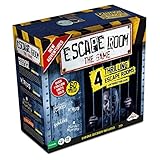
1. Escape Room The Game, Version 2 - with 4 Thrilling Escape Rooms | Solve The Mystery Board Game for Adults and Teens
Overview:
This comprehensive kit delivers four complete escape room adventures in one box, complete with an electronic Chrono Decoder and companion app. Designed for 3-5 players ages 16+, each scenario unfolds across three escalating parts with a tense 60-minute countdown. The kit transforms any space into an immersive puzzle-solving environment where teamwork and creative thinking are essential for success.
What Makes It Stand Out:
The physical Chrono Decoder device with digital countdown, sound effects, and key insertion mechanism creates authentic urgency that app-only games can’t match. The companion smartphone app adds thematic soundtracks for each adventure. Four distinct scenarios offer progressive difficulty, and expansion packs extend the system’s longevity indefinitely.
Value for Money:
At approximately $30-40 for four escape rooms, this represents exceptional value compared to real-world venues charging $30+ per person. The reusable decoder and expansion compatibility transform this from a single purchase into an ongoing platform, delivering entertainment for years rather than one night.
Strengths and Weaknesses:
Strengths include the atmospheric hardware, clear progression system, and app integration. The decoder provides immediate feedback, and expansion support extends value. Weaknesses involve the 16+ age restriction limiting family play, mandatory smartphone requirement, and single-use nature of puzzle components. Some may find setup time lengthy.
Bottom Line:
Perfect for dedicated puzzle enthusiasts seeking an authentic, expandable escape room experience. The Chrono Decoder’s tangible interface elevates immersion dramatically, making this ideal for adult groups wanting professional-quality home entertainment.
2. Clue Escape: The World’s Fair Board Game | Escape Room 1-Time Solve Mystery Games | Ages 10+ | 1 to 6 Players | 90 - 120 Mins.| Family Games

Overview:
This innovative fusion merges classic Clue’s murder mystery narrative with modern escape room mechanics. Set at the 1893 World’s Fair, players investigate a scientist’s murder through cooperative puzzle-solving. Designed for 1-6 players ages 10+, it features a dynamic board that physically evolves during 90-120 minutes of gameplay, blending deduction with hands-on exploration.
What Makes It Stand Out:
The board transforms as puzzles are solved, revealing new exhibit halls and clues through clever tile placement. A unique secret tool helps collect evidence, while puzzles hidden in the World’s Fair brochure add tactile discovery layers. It successfully balances traditional Clue character deduction with contemporary escape room challenges.
Value for Money:
Positioned in the mid-range price bracket, this single-play experience delivers strong value through its extended 2-hour runtime and flexible 1-6 player design. The cinematic narrative and cooperative structure provide multiple family game nights’ worth of entertainment, especially for groups new to escape rooms.
Strengths and Weaknesses:
Strengths include recognizable Clue characters, seamless solo play, and evolving board mechanics. The family-friendly age rating broadens accessibility. Weaknesses involve single-use limitations and potentially simplistic puzzles for seasoned escape room veterans. The Clue theme may feel constraining to those unfamiliar with the franchise.
Bottom Line:
An excellent entry point for families and Clue fans exploring escape rooms. The dynamic board creates memorable shared moments, though experienced puzzlers might desire greater complexity. Perfect for introducing teens to cooperative deduction games.
3. Clue Escape: The Midnight Hotel Board Game, Clue Escape Room Game, 1-Time Solve Mystery Games, Family Games for Ages 10+, 1-6 Players, 90 Mins. Avg.

Overview:
Continuing directly after Mr. Boddy’s murder, this installment traps players in a mysterious hotel where someone attempts to steal blackmail files. The innovative 3D board literally builds upward as suspense increases, creating a unique spatial puzzle experience. For 1-6 players ages 10+, it delivers approximately 90 minutes of narrative-driven investigation.
What Makes It Stand Out:
Vertical board construction adds physical dimension to puzzle-solving—players physically stack layers to reveal new rooms, creating tangible progression. This spatial element distinguishes it from flat board games. The direct story continuation strongly appeals to Clue aficionados invested in the unfolding narrative and character motivations.
Value for Money:
Comparable to other Clue Escape titles, this offers 90 minutes of immersive gameplay. The 3D innovation justifies the price for fans seeking novelty, though it contains only one scenario versus multi-game kits. For narrative-driven players, the story continuation adds intangible value.
Strengths and Weaknesses:
Strengths include the innovative 3D board, direct narrative continuation, and flexible player count. Solo mode integrates seamlessly. Weaknesses are the single-use design and prerequisite Clue knowledge that may confuse newcomers. Puzzle complexity may disappoint hardcore enthusiasts seeking brutal challenges.
Bottom Line:
Best suited for Clue devotees wanting narrative closure and novel mechanics. The 3D board delivers tangible satisfaction, but standalone entries better serve casual players. A must-buy for those following the Clue Escape storyline.
4. Clue Escape: The Illusionist’s Club Board Game | Escape Room Family Game | 1-Time Solve Mystery | Ages 10+ | 1-6 Players | Difficulty 4 | 90-120 Mins. (Amazon Exclusive)

Overview:
This magic-themed Clue Escape installment challenges players to solve a magician’s sabotage within an exclusive club. Rated difficulty 4/5, it’s the series’ most challenging entry, offering 90-120 minutes of intricate puzzles for 1-6 players. The Amazon exclusive blends illusion-themed challenges with classic deduction, targeting experienced enthusiasts rather than casual families.
What Makes It Stand Out:
Magic trick-inspired puzzles require a special “magical” tool, creating authentic thematic immersion beyond standard logic puzzles. The dynamic board reveals secrets through clever mechanisms mirroring stage illusions. Its high difficulty rating specifically targets veteran players who’ve exhausted easier games, providing serious mental challenges.
Value for Money:
As an Amazon exclusive at premium pricing, it delivers value through elevated difficulty and unique theme. For veteran players seeking worthy challenges, the complexity justifies the cost. However, casual families may not fully utilize its depth, making it less economical for mixed-skill groups.
Strengths and Weaknesses:
Strengths include challenging puzzles, innovative magic theme, and quality components. The difficulty progression satisfies seasoned enthusiasts craving depth. Weaknesses involve potential frustration for younger or inexperienced players, single-use nature, and premium pricing that may not suit all budgets. The niche theme limits broad appeal.
Bottom Line:
The ideal choice for escape room veterans craving difficulty. Its magic theme and challenging puzzles deliver a satisfying experience, but families with children should select easier Clue Escape titles. A specialist game for dedicated puzzle solvers.
5. Identity Games [www.identity games.com] Escape Room The Game, New Family Edition - with 2 New Exciting Escape Rooms | Solve The Mystery Board Game for Family, Kids & Teens (English Version)
![Identity Games [www.identity games.com] Escape Room The Game, New Family Edition - with 2 New Exciting Escape Rooms | Solve The Mystery Board Game for Family, Kids & Teens (English Version)](https://m.media-amazon.com/images/I/61ACHnIffvL._SL160_.jpg)
Overview:
This family-friendly edition adapts Escape Room The Game for younger players, featuring two adventures: Candy Factory and Super Heroes. It retains the electronic Chrono Decoder but simplifies puzzles, making it accessible for kids and teens while maintaining cooperative excitement. The design bridges age gaps for inclusive family game nights.
What Makes It Stand Out:
Specifically engineered for families, it offers appropriately challenging scenarios without adult themes or excessive frustration. The same atmospheric Chrono Decoder creates urgency scaled for younger minds. Strong teamwork emphasis teaches valuable communication skills through engaging, non-frightening themes that parents can trust.
Value for Money:
With two included adventures at a lower price point than the adult version, this offers excellent family value. It serves as a perfect introduction to escape room mechanics, potentially saving money by gauging interest before investing in more complex kits. The reusable decoder adds long-term utility.
Strengths and Weaknesses:
Strengths include age-appropriate challenges, quality components, and educational teamwork focus. The Chrono Decoder adds authentic atmosphere without complexity. Weaknesses are limited content (only two games) and simplicity that may bore adult players. Replay value is minimal once solved, though the decoder remains useful.
Bottom Line:
The definitive starting point for families with children under 16. It delivers authentic escape room fun scaled for younger minds, though adult groups should choose the standard version for greater challenge. An investment in family cooperation skills.
6. Hasbro Gaming Clue Board Game Robbery at The Museum, Escape Room Game, Murder Mystery Games, 1-6 Players, 10+ (Amazon Exclusive)

Overview: This innovative twist on classic Clue transforms the traditional murder mystery into a cooperative museum heist escape room. Players work together to escape a museum while identifying a traitor among them, combining social deduction with puzzle-solving for a cinematic single-play experience.
What Makes It Stand Out: The dynamic gameboard physically changes as you explore exhibits, revealing new rooms and clues through puzzle-solving. Unlike competitive Clue, this version demands teamwork for 1-6 players, creating a shared narrative. The heist theme refreshes the 70-year-old franchise with modern escape room mechanics, perfect for immersive game nights.
Value for Money: Priced similarly to premium board games, it offers roughly 90 minutes of unique gameplay. While single-use nature might seem limiting, the cooperative design and story-driven puzzles deliver richer engagement than standard replayable games. It’s comparable to at-home escape room kits but with superior component quality.
Strengths and Weaknesses: Strengths include fresh cooperative gameplay, high-quality evolving board, and accessible 10+ age rating. The cinematic storytelling keeps everyone invested. Weaknesses: single-play design limits replayability, and experienced puzzlers may find it moderately challenging. The traitor mechanic could frustrate younger players.
Bottom Line: Ideal for families and friend groups seeking a memorable one-night adventure. It successfully modernizes Clue while maintaining its investigative spirit, making it worth the investment for special game nights.
7. EXIT: The Professor’s Last Riddle | Escape Room| Brainteasers | Mystery Solving | Treasure Hunt | Kosmos Game | at-Home Escape Room

Overview: This at-home escape room sends players on a globe-trotting adventure to unravel an archaeology professor’s final mystery. As you travel from Paris to New York, you’ll solve integrated puzzles using physical components, working through a 1-2 hour narrative that demands creative thinking and collaboration.
What Makes It Stand Out: The game requires destroying components—ripping, folding, and manipulating materials—which creates unparalleled immersion. Puzzles seamlessly blend with mysterious objects in the box, making every element potential evidence. The travel theme adds educational value while maintaining Kosmos’s signature challenging puzzle design.
Value for Money: Standard EXIT pricing delivers a solid 90-120 minute experience. While single-use nature is inherent to the genre, the complexity and satisfaction rival commercial escape rooms at a fraction of the cost. For puzzle enthusiasts, the mental challenge justifies the price.
Strengths and Weaknesses: Strengths include ingenious puzzle integration, high difficulty suitable for adults, and tangible object manipulation. The narrative arc feels complete and rewarding. Weaknesses: mandatory component destruction prevents replay or gifting. Some puzzles may feel obscure without hint system access, and 1-2 hour runtime is brief for the cost.
Bottom Line: Perfect for dedicated puzzlers who value experience over preservation. The Professor’s Last Riddle delivers Kosmos’s most sophisticated at-home escape challenge, ideal for adult game nights.
8. Finders Seekers Mystery Game | National Parks Trail of Secrets – Be a Detective and Investigate an Unsolved case, Escape Room Puzzle Game, for Date Night, Family Night or Solo.

Overview: This acclaimed mystery game transports players through America’s National Parks to solve an unsolved case. With over 700,000 games sold, it combines escape room puzzles with detective work in a family-friendly, non-violent format that works for date nights, families, or solo play.
What Makes It Stand Out: The #1 rating reflects exceptional production quality—beautiful case documents, travel posters, and souvenirs create immersion. Unique extras like authentic recipes and curated playlists elevate the experience beyond typical puzzle games. The non-violent content remains challenging for adults while accessible to younger players.
Value for Money: While subscription-based, individual boxes offer 2-3 hours of gameplay with premium components. The reusable nature of most materials provides better long-term value than destructive escape rooms. Comparable to high-end puzzle books but with superior tactile elements and thematic depth.
Strengths and Weaknesses: Strengths include gorgeous artwork, family-appropriate content, versatile player count, and immersive extras. The non-destructive design allows sharing or replay. Weaknesses: subscription model can be costly long-term, and some puzzles may feel easy for veteran escape room players. National Parks theme might not appeal to everyone.
Bottom Line: An outstanding choice for families seeking quality screen-free entertainment. The Trail of Secrets edition balances challenge and accessibility, making it the gold standard for at-home mystery games.
9. EXIT: The Game - Family - 2 Escape Adventures, at-Home Escape Room, Co-Operative Game, Family Activity, Brainteasers, 2-4 Players

Overview: This family-oriented EXIT package delivers two complete escape room adventures—Meanstone Manor and Candy Castle—in one box. Designed as a bridge between EXIT Kids and adult versions, it offers cooperative puzzle-solving tailored for younger players while keeping adults engaged.
What Makes It Stand Out: Two distinct stories provide exceptional value, with silly, whimsical themes perfect for family bonding. The puzzles scale appropriately for mixed-age groups, allowing parents and children to contribute equally. It maintains EXIT’s signature component manipulation without overwhelming complexity.
Value for Money: Getting two full games for the price of one standard EXIT title represents excellent value. Each adventure runs 45-60 minutes, totaling 2+ hours of gameplay. Compared to family entertainment outings, it’s a cost-effective option for repeated family nights (though each story is single-use).
Strengths and Weaknesses: Strengths include dual-game value, age-appropriate challenge, cooperative focus, and fun themes that avoid frustration. The hint system supports younger players. Weaknesses: component destruction prevents replay, 2-4 player limit restricts larger families, and themes may feel too juvenile for teens seeking serious challenge.
Bottom Line: A smart investment for families with kids aged 8-12. It successfully introduces escape room mechanics while delivering enough entertainment value for parents, making it ideal for regular family game nights.
10. PROFILER - Missing in the Caribbean: John LeBlanc Reported Missing – Murder Mystery Games for Adults – Individuals, Date Night, Family Night - Escape Room Board Game - Find Clues and Solve the Mystery

Overview: This mature murder mystery places players aboard the “Colossus of the Seas” cruise ship, investigating a passenger’s disappearance. Through realistic case files, witness statements, and deck plans, 1-6 players aged 14+ piece together timelines and suspect lists, with internet integration for Dark Web hacking and email access.
What Makes It Stand Out: The required internet integration creates unprecedented realism—players actually “hack” and access digital clues. Materials feel authentically criminal: cruise brochures, witness statements, and deck plans mirror true crime investigations. Four sealed envelopes unlock through puzzle-solving, adding tactile progression.
Value for Money: Premium pricing reflects high-quality production and tech integration. The 1.5-2 hour experience rivals interactive theater or escape rooms in immersion. For true crime fans, the realistic case file approach justifies the cost over standard puzzle games.
Strengths and Weaknesses: Strengths include cutting-edge tech integration, adult-oriented storytelling, detailed physical evidence, and scalable difficulty. The cooperative deduction feels genuinely investigative. Weaknesses: mandatory internet access limits portability, 14+ rating excludes younger families, and single-play design offers no replay value. Some digital elements may date the game.
Bottom Line: Tailored for adult mystery lovers and true crime enthusiasts. The Caribbean cruise setting and realistic investigation mechanics make it perfect for date nights or sophisticated game groups seeking narrative depth.
What Makes a Mystery Board Game Perfect for Escape Room Enthusiasts?
The Thrill of Puzzle-Solving Under Pressure
Escape room fans crave that delicate balance between challenge and achievability. The best mystery board games replicate this by structuring puzzles that feel impossible at first glance but click into place with satisfying clarity once solved. Look for games that incorporate multiple puzzle types simultaneously—spatial reasoning challenges, pattern recognition, and lateral thinking exercises that keep every player engaged. The pressure doesn’t always need to come from a literal timer; some games create tension through dwindling resources or escalating story consequences that make every decision weighty.
Narrative Immersion and Story-Driven Gameplay
A hallmark of great escape rooms is their ability to transport you into another world through environmental storytelling. Mystery board games achieve this through branching narratives, detailed character profiles, and world-building that rewards careful attention. The most immersive titles feature storylines that adapt based on your successes and failures, creating a personalized experience that feels consequential. Rich lore and coherent plots separate memorable games from mere puzzle collections, giving context to every cipher and clue you encounter.
Cooperative vs. Competitive Mystery Experiences
While escape rooms are inherently cooperative, the board game medium offers flexibility in how players interact. Cooperative games mirror the escape room dynamic perfectly, with everyone working toward a common goal and sharing those eureka moments. Competitive mystery games, however, add an intriguing layer where players might be solving the same crime but racing to crack it first, or perhaps one player secretly works against the group. Understanding your group’s preferred social dynamic helps narrow down which style will resonate most.
Key Features to Look for in Mystery Board Games
Complexity Levels and Learning Curves
Not every game night calls for a four-hour brain marathon. Mystery games range from quick 30-minute deduction challenges to sprawling epics requiring multiple sessions. Consider your group’s patience for rulebooks and setup time. Games with intuitive core mechanics but layered complexity offer the best of both worlds—easy to start but difficult to master. Pay attention to how well the game teaches itself; quality tutorials and gradual difficulty ramps prevent early frustration.
Replayability: One-and-Done vs. Endless Entertainment
Some mystery games function like escape rooms themselves—once you’ve solved the central puzzle, the experience can’t be repeated. These titles often deliver incredibly tight, cinematic narratives but require you to pass them along to friends afterward. Others feature modular components, randomization systems, or procedurally generated content that keeps them fresh for dozens of plays. Your budget and storage space might influence whether you prioritize depth over breadth in your collection.
Component Quality and Tactile Engagement
Escape rooms excel at making puzzles physically interactive, and the best board games replicate this through outstanding components. Think embossed letters, UV-reactive inks, metal coins, wax seals, or destructible elements that you literally cut, fold, or tear during gameplay. These tactile elements transform abstract puzzles into concrete experiences. Weighty, well-crafted pieces signal a game designed for immersion rather than just shelf appeal.
Digital Integration and App-Supported Gameplay
Many modern mystery games companion apps that manage timing, soundscapes, or hidden information without requiring a game master. When done well, these apps handle administrative tasks, letting players focus on solving. They can also provide atmospheric audio, hint systems, and story updates that would be impossible with cardboard alone. However, consider whether your group prefers purely analog experiences or embraces technology as an enhancement.
Popular Mechanics in Modern Mystery Games
Deduction and Logic Puzzle Systems
At the core of any mystery game lies deduction—eliminating possibilities until truth emerges. Advanced titles move beyond simple process-of-elimination by introducing logical fallacies, unreliable narrators, or contradictory evidence that forces players to question their assumptions. The best systems make you feel like a real detective, constructing case boards with string and thumbtacks, literally or figuratively, as you map relationships and timelines.
Hidden Movement and Shadow Tracking
Some mystery games incorporate a predator-prey dynamic where one player’s movements are concealed from others. This creates delicious tension as investigators narrow down a suspect’s location through deduction and probability. The hidden player might leave clues, create diversions, or manipulate the environment, turning the game into a psychological chess match. This mechanic particularly appeals to groups that enjoy bluffing and social deduction layers.
Code-Breaking and Cipher Challenges
From Caesar ciphers to complex cryptographic systems, code-breaking remains a staple. Innovative games embed codes within the artwork itself, requiring players to physically manipulate components or use real-world tools like mirrors or water to reveal secrets. The satisfaction comes from discovering that the solution was hiding in plain sight all along. Look for games that teach actual cryptographic concepts while remaining accessible to beginners.
Time-Based Challenges and Countdown Mechanics
Whether through a sand timer, a soundtrack with escalating tension, or a story-driven clock that advances with each action, time pressure transforms methodical deduction into frantic problem-solving. Some games use time as a resource you spend carefully, while others impose hard limits that create heart-pounding finales. The key is that time pressure should enhance excitement without making the experience feel punishingly difficult.
Legacy and Campaign-Style Progression
For groups that meet regularly, legacy games offer evolving mysteries where each session permanently alters the game world. Decisions ripple forward, characters develop, and the board itself transforms through stickers, torn cards, and written records. This format builds investment and creates inside jokes and shared history that strengthen group bonds. The commitment is significant, but the payoff is a truly unique narrative shaped by your specific choices.
Thematic Variations for Every Detective
Classic Noir and Victorian-Era Mysteries
There’s timeless appeal in foggy London streets, gaslight mysteries, and hardboiled detectives narrating their thoughts in metaphor-heavy monologues. These settings often emphasize social deduction, interrogation mechanics, and evidence gathered through conversation. The aesthetic typically involves muted colors, period-appropriate typography, and literary writing styles that transport you to a world of trench coats and typewriters.
Supernatural and Paranormal Investigations
When the mystery involves things that go bump in the night, puzzle logic can bend toward the mystical. These games might incorporate occult symbols, ritual components, or mechanics where the rules of reality shift. The supernatural element allows for creative puzzle design that breaks real-world constraints, offering solutions that feel magical yet internally consistent. Expect darker themes and atmospheric horror elements that build dread.
Heist and Espionage Thrillers
Rather than solving a crime after it happens, these games put you in the middle of executing the perfect plan. The mystery becomes “how do we pull this off?” with puzzles centered on security systems, guard patrols, and contingency planning. The tone is often lighter and more action-oriented, emphasizing teamwork and timing. Components might include floor plans, security passes, and gadgets that feel straight from a spy film.
Sci-Fi and Cyberpunk Conspiracies
Futuristic settings allow for puzzles involving hacking, AI manipulation, and corporate intrigue. These games often feature modular boards representing networks or city sectors, with players jacking into virtual spaces to solve digital puzzles. The aesthetic leans neon and chrome, and themes explore surveillance, identity, and technological ethics. Puzzle complexity can escalate exponentially as you uncover deeper layers of conspiracy.
Setting Up Your Game Night for Maximum Immersion
Creating the Right Atmosphere
Transform your dining room into a detective’s office with simple touches. Dim lighting, thematic background music, and even costume elements like fedoras or lab coats signal to your brain that this isn’t an ordinary game night. Some groups create “case files” with printed suspect photos and evidence bags. The goal is sensory immersion—when the environment matches the game’s tone, players suspend disbelief more easily.
Managing Game Flow and Player Engagement
Escape rooms maintain momentum through constant discovery, and your game night needs a similar rhythm. Designate a “rules keeper” to handle lookups so others stay in character. Use break times strategically—pause at cliffhangers, not mid-puzzle. Keep snacks and drinks thematically appropriate but separate from game components to avoid spills. Most importantly, establish a hint system agreement before starting; nothing kills momentum like a twenty-minute rules debate.
Handling Player Count and Group Dynamics
Mystery games can crumble under the wrong player count. Too many detectives and some players become passive observers; too few and you lack the brainstorming diversity that makes breakthroughs satisfying. Many games scale poorly, so check the sweet spot in reviews. For larger groups, consider rotating the “lead detective” role or splitting into teams that share information selectively. Know your group’s tolerance for alpha gamers and choose mechanics that prevent one person from dominating the deduction.
Budget Considerations and Value Assessment
Entry-Level Price Points
You don’t need to spend a fortune to get quality mystery experiences. Many solid titles come in compact boxes with streamlined components, focusing on clever puzzle design rather than lavish production. These games often provide 2-3 hours of engaging play and make excellent entry points for groups new to the genre. They’re also easier to trade or sell if the theme doesn’t click with your group.
Premium Collector’s Editions
At the higher end, mystery games become display pieces with custom inserts, metal tokens, and art books. The gameplay experience may be identical to standard editions, but the tactile luxury enhances immersion. For serious enthusiasts, these editions feel like owning a piece of the story. Consider whether your group will appreciate the craftsmanship or if the extra cost could fund two different games instead.
Expansion Content and Long-Term Investment
Some mystery games offer expansion packs that add new cases, characters, or puzzle types. This extends the life of your initial purchase but requires evaluating whether the base game captivated your group enough to warrant more. Campaign games might have “continuing the adventure” boxes that pick up where the original story ends. Factor in whether your group finishes campaigns or tends to lose interest halfway through.
Frequently Asked Questions
What’s the ideal group size for most mystery board games?
Most mystery games shine with 3-4 players, offering enough diverse perspectives without too much downtime. Cooperative titles often scale up to 6, but beyond that, individual contribution can diminish. Always check the specific game’s recommended player count, as some deduction mechanics break with too many or too few participants.
How do I avoid spoilers when researching which game to buy?
Stick to component and mechanic overviews rather than story summaries. Many reviewers clearly mark spoiler sections you can skip. Focus on videos that discuss setup, component quality, and learning curve without revealing puzzle solutions. BoardGameGeek forums often have spoiler-free recommendation threads for this exact purpose.
Can mystery board games be replayed once solved?
It depends entirely on the design. Narrative-heavy, puzzle-box style games are typically one-time experiences, though you can gift them to friends. Games with randomized elements, modular cases, or procedural generation offer extensive replayability. Check product descriptions for terms like “legacy,” “campaign,” or “procedural” to gauge longevity.
Are these games suitable for family game nights?
Many mystery games cater specifically to families, offering age-appropriate themes and simplified logic puzzles. Look for age ratings and complexity scores (often 1-5) on product pages. Some titles include separate rule sets for younger players, letting everyone participate at their comfort level. Themes involving violence or horror are usually clearly indicated.
How long should I expect a typical session to last?
Session length varies dramatically—from 30-minute quick mysteries to 6-hour marathon investigations. Most fall in the 90-120 minute range. Check playtime estimates but add 30 minutes for first-time setup and rules explanation. Campaign games divide their stories into 60-90 minute chapters designed for single evenings.
What if my group gets stuck on a puzzle?
Quality mystery games include structured hint systems, often through apps or keyed guidebooks. Decide beforehand whether you’ll take hints freely, limit yourselves to one per game, or play purist style. Some groups assign a “hint master” who discreetly checks solutions without revealing them, offering nudges instead of answers.
Do I need any special equipment beyond what’s in the box?
Most games are self-contained, but some recommend common household items like scissors, water, or smartphones for digital components. A few immersive titles suggest downloading specific apps or printing additional materials from the publisher’s website. Always read the “what you need” section before game night to avoid mid-session interruptions.
How do legacy mystery games differ from regular ones?
Legacy games permanently change through play—you’ll place stickers, write on components, and open sealed packages. This creates a unique, personalized story but means you can’t replay the campaign or easily resell the game. They’re designed for dedicated groups willing to commit to 12-20 sessions with the same players.
Can I play these games solo?
Many mystery games include official solo variants where you control multiple characters or face streamlined challenges. The experience differs from group play—more contemplative, less chaotic—but can be deeply satisfying. Solo modes often adjust difficulty by reducing required actions or providing additional hints, making complex investigations manageable alone.
What’s the best way to store and organize mystery game components?
Invest in baggies or small plastic containers to separate puzzles you’ve solved from those still in play. For campaign games, maintain a “current case” folder with notes and active clues. Some enthusiasts photograph their setup before packing up, making it easier to resume mid-investigation. Never throw away any component, even seemingly disposable ones, until you’ve finished the entire game—designers love to hide clues in unexpected places.
See Also
- 10 Expert-Recommended Escape Room Board Games for Teens in 2026
- 10 Game-Changing Timer-Based Board Games for Escape Room Fans in 2026
- 10 Expert-Recommended Escape Room Board Games for Team Building in 2026
- Top 10 Best Escape Room Board Games for Family Game Night in 2026
- 10 Must-Have Themed Board Games for Escape Room Lovers in 2026