Table of Contents
Gather ‘round the table, dim the overhead lights, and silence those ever-pinging phones. Game night isn’t just about rolling dice or drawing cards anymore; it’s become a vital ritual for connection in our hyper-connected yet often isolating world. Forget the cutthroat competition that leaves someone sulking in the corner – the real magic happens when players unite against a common challenge, pooling brains and banter to conquer the board together. Cooperative board games transform your living room into a shared adventure space, fostering teamwork, communication, and genuine laughter that resonates long after the final token is placed. It’s not about who wins; it’s about how you win, or sometimes, how you spectacularly fail as one united front.
Why has this shift towards collective play exploded in popularity? Modern life often leaves us feeling siloed, battling solo against daily stresses. Cooperative games offer a refreshing antidote: a structured, screen-free environment where collaboration is the only path to victory. They dissolve the “me vs. you” tension, making game nights welcoming for diverse groups – from seasoned strategists to casual players, competitive spouses to multi-generational families. There’s no blame to assign when the ancient evil awakens; the responsibility, and the triumph, belongs to everyone. This shared journey builds empathy, sparks creative problem-solving, and creates stories you’ll recount for years (“Remember when we almost saved the city?”). Choosing the right cooperative experience is the key to unlocking this unique brand of game night success, especially as the landscape continues to evolve.
Top 10 Cooperative Board Games
Detailed Product Reviews
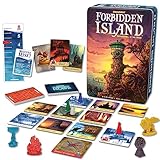
1. Gamewright - Forbidden Island - Cooperative Strategy Survival Board Game, 2-4 Players
Overview:
Forbidden Island, designed by Matt Leacock, is a cooperative board game where 2-4 players race against time to retrieve four sacred treasures from a sinking island before it vanishes. Aimed at ages 10+, it emphasizes teamwork, strategic planning, and shared decision-making as players use unique roles to navigate tiles, shore up sinking ground, and escape via helicopter.
What Makes It Stand Out:
Its brilliance lies in the dynamic, collaborative tension: players win or lose together, fostering genuine communication. The modular board ensures replayability, while intuitive role abilities (like the Engineer or Pilot) encourage creative problem-solving. Stunning artwork immerses players in the perilous island setting, making strategy visually engaging.
Value for Money:
Priced affordably for its quality, it outperforms many competitive family games by eliminating player-elimination frustration. Its durability and reconfigurable board justify the cost, offering far more strategic depth than similar-priced games, especially for families seeking meaningful interaction.
Strengths and Weaknesses:
Strengths: Exceptional teamwork focus, high replay value, accessible rules, beautiful components. Weaknesses: Limited player count (max 4), younger kids may struggle with strategy, and the difficulty curve can feel steep for absolute beginners.
Bottom Line:
A near-perfect entry into cooperative gaming, Forbidden Island delivers thrilling, family-friendly strategy that builds critical thinking. Its balance of simplicity and depth earns a strong recommendation for game nights.
2. Scorpion Masqué Sky Team | Voted Game of The Year 2024 | Best 2 Player Game | Work Together to Land The Plane | Ages 14+ | 20 Minutes

Overview:
Sky Team is an intensely collaborative 2-player game where you and your co-pilot must land a plane safely within 20 minutes. Using dice and role-specific actions (Captain and First Officer), you manage speed, altitude, and systems while navigating challenges like kerosene leaks or icy runways.
What Makes It Stand Out:
Its unparalleled tension stems from asymmetric roles and timed pressure—dice rolls force immediate, interdependent decisions. The immersive cockpit components (like a coffee cup marker) heighten realism. With 20 scenarios and modular rules, no two landings feel identical, earning its 2024 Game of the Year title.
Value for Money:
Despite a premium price, Sky Team justifies cost through exceptional replayability and craftsmanship. It surpasses other 2-player games in depth and innovation, offering a unique, cinematic experience that feels worth every dollar for couples or dedicated duos.
Strengths and Weaknesses:
Strengths: Unmatched cooperative intensity, brilliant role asymmetry, modular scenarios, top-tier components. Weaknesses: Strictly 2 players, high stress may frustrate casual gamers, and setup requires careful attention.
Bottom Line:
A masterclass in two-player synergy, Sky Team delivers heart-pounding teamwork in a compact package. Highly recommended for experienced gamers seeking a challenging, unforgettable partnership test.
3. Pandasaurus Cooperative Strategy Card Game - Fun Interactive Family Game for Ages 8+, 1-5 Players, 20 Minute Playtime
Overview:
“The Game” is a cooperative card game where players race to play all cards from two countdown decks (1-100) while adhering to strict ascending/descending play rules. With 1-5 players and a 20-minute runtime, it transforms simple number sequencing into a frantic, brain-teasing puzzle.
What Makes It Stand Out:
Its genius is in minimalism: no board or tokens, just cards and shared tension. Players must silently strategize, memorize discards, and anticipate moves—fostering deep non-verbal communication. The Spiel Des Jahres award reflects its addictive, universally appealing challenge that scales perfectly for any group size.
Value for Money:
Exceptionally affordable, it offers immense replayability through variable difficulty and player counts. Outperforms pricier games by delivering pure, portable fun. For under $20, it’s a steal for families or offices seeking quick, engaging mental workouts.
Strengths and Weaknesses:
Strengths: Incredibly portable, easy to learn, intense teamwork, scales flawlessly. Weaknesses: High frustration risk on losses, limited visual appeal, and silence requirement can feel restrictive.
Bottom Line:
A brilliant, award-winning exercise in cooperative deduction. Despite its simplicity, “The Game” creates unforgettable moments—highly recommended for quick sessions with any group.
4. Happy Camper - The Four Doors | Cooperative Game by Pandemic and Forbidden Island Creator | Perfect for Solo Play, Two Players, and Small Groups | Portable Adventure Game
Overview:
Crafted by Matt Leacock (Pandemic), Happy Camper: The Four Doors challenges 1-5 players to recover treasures behind mystical doors in a light tower before shadows seal them. With 30-minute sessions and robust solo mode, it blends exploration and resource management in a compact travel box.
What Makes It Stand Out:
Leacock’s signature cooperative design shines with elegant mechanics: players draft dice to explore doors, manage light tokens, and race against a shadow track. Its portability and seamless solo adaptation are unmatched, while the light-tower theme offers fresh visual storytelling distinct from his classics.
Value for Money:
A standout for solo and small-group enthusiasts, its durable components and re-playable scenarios justify the price. Outshines many travel games with strategic depth, though niche appeal may limit family crossover compared to broader hits like Forbidden Island.
Strengths and Weaknesses:
Strengths: Superb portability, excellent solo mode, innovative dice-drafting, quick setup. Weaknesses: Narrower theme may not resonate with all, fewer player interactions than Pandemic, and limited physical components.
Bottom Line:
A delightful, focused adventure perfect for on-the-go strategy fans. While not Leacock’s most accessible, its polish makes it a top pick for portable co-op play.
5. Castle Panic 2nd Edition | Cooperative Board Game for Adults and Family | Ages 8+ | for 1 to 6 Players | Average Playtime 45 Minutes | Made by Fireside Games

Overview:
Castle Panic pits 1-6 players against monster hordes besieging Castle Bravehold. Using card-based defenses, players strategically position archers, knights, and walls across concentric rings to protect towers. With 45-minute sessions and multiple modes, it merges tower defense with frantic collaboration.
What Makes It Stand Out:
Its standout feature is inclusivity: seamless scaling from solo to 6 players with distinct modes (including competitive Overlord). Vibrant 3D towers, thematic monster tokens (like trolls and dragons), and dynamic threats (plagues, boulders) create immersive, accessible fun that accommodates mixed-skill groups effortlessly.
Value for Money:
Priced competitively, it offers exceptional longevity through varied play modes and high player count flexibility. The physical components (e.g., sturdy towers) enhance value, outperforming similar games in sheer replay potential for families or game groups.
Strengths and Weaknesses:
Strengths: Inclusive player range, engaging tower-defense theme, multiple game modes, high-quality components. Weaknesses: Can become chaotic with 6 players, limited strategic depth for hardcore gamers, and setup is slightly fiddly.
Bottom Line:
A versatile, crowd-pleasing co-op game that excels in group cohesion and re-playability. Highly recommended for families or casual gamers seeking accessible, exciting teamwork.
6. The Night Cage by Smirk and Dagger | Cooperative Candlelit Horror Strategy Game | Tile Laying Labyrinth Escape Adventure | for 1 to 5 Players | Ages 14+

Overview:
The Night Cage immerses players in a tense, cooperative horror experience where a team navigates a dynamically shifting labyrinth lit only by a single candle. As players move, newly revealed paths replace consumed candlelight, forcing strategic pathfinding while evading Wax Eaters in the encroaching darkness. Designed for 1–5 players aged 14+, it transforms tile-laying mechanics into a visceral race against time and terror.
What Makes It Stand Out:
Its revolutionary candlelit vision system creates unparalleled atmosphere—players literally see only what the candle illuminates, with darkness swallowing past paths. This mechanic, combined with award-winning tile design and adjustable difficulty (including advanced monster variants), ensures each session feels uniquely suspenseful. The emotional weight of limited vision and constant threat elevates it beyond typical cooperative games.
Value for Money:
Priced competitively for its component quality and depth, it offers exceptional replayability through modular scenarios and escalating challenges. While niche, its innovative mechanics justify the cost compared to simpler horror games, delivering hours of team-based tension rarely matched in the genre.
Strengths and Weaknesses:
Strengths: Unmatched atmospheric tension; intuitive yet strategic tile-laying; seamless solo-to-group scalability; high-quality thematic components. Weaknesses: Candle dependency requires dim lighting (limiting play environments); steep learning curve for casual gamers; limited player interaction beyond shared strategy.
Bottom Line:
A masterclass in immersive horror design, The Night Cage is essential for strategy enthusiasts seeking intense, cooperative storytelling. Its unique mechanics and award-winning execution make it worth the investment despite minor environmental constraints.
7. Flow: The Official Cooperative Board Game | Strategy Game for 1–4 Players Ages 8+ | Based on The Award-Winning Animated Film | Family & Solo Play | Survive The Flood, Rescue Allies
Overview:
Flow adapts the beloved animated film into a real-time cooperative board game where players navigate a modular village map threatened by rising floodwaters. Working together, teams must rescue allies and gather resources before water engulfs the board. Designed for 1–6 players aged 8+, it emphasizes quick decision-making and shared strategy under pressure.
What Makes It Stand Out:
The dynamic “rising water” mechanic forces constant adaptation as players race against an expanding flood line. Scenario cards introduce varied objectives, while the film’s emotional narrative is woven into gameplay through ally rescues and tile-based world-building. Its seamless solo-to-family scalability and real-time tension distinguish it from turn-based competitors.
Value for Money:
At mid-range pricing, Flow delivers robust replayability with 11 scenarios and modular tiles. While components are functional rather than premium, the film’s thematic depth and high engagement for young families justify the cost, especially compared to pricier narrative-driven games.
Strengths and Weaknesses:
Strengths: Exciting real-time pressure; strong film integration; accessible rules for kids; excellent replay variety. Weaknesses: Water mechanics can feel overly punishing; component durability concerns; limited strategic depth for veteran gamers.
Bottom Line:
An engaging, family-friendly gateway to cooperative play that captures the film’s spirit. Ideal for young players and casual gamers seeking thematic, replayable fun, though less suited for strategy purists.
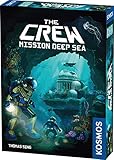
8. The Crew - Mission Deep Sea | Card Game | Cooperative | 2 to 5 Players | Ages 10+ | Trick-Taking | 32 Levels of Difficulty | Endless Replayability
Overview:
Mission Deep Sea builds on its Kennerspiel des Jahres-winning predecessor with an underwater-themed cooperative trick-taking challenge. Players collaborate across 50 missions to win specific tricks under communication constraints, navigating escalating difficulty through 32+ levels. Designed for 2–5 players aged 10+, it reimagines classic card play with innovative teamwork.
What Makes It Stand Out:
The ingenious “limited communication” system—where players share minimal signals while submerged—creates brilliant strategic puzzles. Its progressive mission structure (from tutorial to expert) ensures gradual skill development, while underwater objectives (e.g., collecting artifacts) add thematic flair absent in traditional trick-taking games.
Value for Money:
Priced accessibly for its replay depth, the 50 missions offer hundreds of sessions. It outperforms standard card games in longevity and provides exceptional value versus niche cooperative titles, though its narrow focus may not appeal to non-card-game fans.
Strengths and Weaknesses:
Strengths: Gradual difficulty curve; creative communication limits; highly replayable missions; compact and portable. Weaknesses: Limited player count flexibility; niche appeal for trick-taking newcomers; minimal component variety.
Bottom Line:
A near-perfect evolution of cooperative card play, Mission Deep Sea is a must-have for puzzle and strategy fans seeking layered, replayable challenges. Its clever design justifies every penny for card-game enthusiasts.
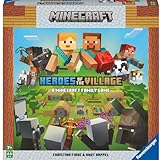
9. Ravensburger Minecraft Heroes of The Village | Cooperative Board Game | Exciting & Unpredictable | Perfect for Families and Minecraft Enthusiasts | Suitable for Kids & Adults
Overview:
Ravensburger translates Minecraft’s block-building adventure into a cooperative board game where 2–4 players defend a village from mobs. Using modular world tiles and resource management, teams strategize to construct buildings and fend off threats. Aimed at ages 7+, it blends Minecraft’s creativity with accessible family gameplay.
What Makes It Stand Out:
The ever-changing map tiles ensure no two games play alike, while familiar Minecraft elements (Creepers, Endermen) delight fans. Ravensburger’s signature quality—evident in sturdy wooden blocks and vibrant components—elevates it above licensed-game mediocrity, and the cooperative focus fosters teamwork without competition.
Value for Money:
Mid-priced for component richness (25 wooden blocks, 18 tiles), it offers strong family value. While not as deep as complex strategy games, its seamless integration of Minecraft’s charm and Ravensburger’s reliability makes it a standout for its target audience.
Strengths and Weaknesses:
Strengths: High-quality, durable components; authentic Minecraft theme; excellent replayability; intuitive for young kids. Weaknesses: Simplistic strategy for older players; limited mob interaction depth; setup time increases with expansions.
Bottom Line:
A joyful, well-crafted entry point into cooperative gaming for Minecraft-loving families. Ravensburger’s polish ensures it’s a worthwhile investment for shared play, despite lighter strategic demands.
10. Peaceable Kingdom Race to the Treasure! Cooperative Path Building Game for 2 to 4 Kids Ages 5+

Overview:
Race to the Treasure! challenges 2–4 children (ages 5+) to collaboratively build a path from start to finish before the Ogre claims the treasure. Using colorful tiles, players place pathways to connect the map while evading the Ogre’s advancing footsteps—a perfect first cooperative game for young families.
What Makes It Stand Out:
Its brilliant simplicity shines: no reading required, with intuitive tile placement teaching spatial reasoning and planning. The shared victory condition eliminates competitive stress, while the “Ogre tracker” adds gentle urgency. Award-winning design (including Oppenheim Platinum) ensures smooth, frustration-free play.
Value for Money:
Exceptionally priced for durability and replayability, its compact size and minimal components deliver maximum value. Outperforms pricier kids’ games by focusing purely on cooperative development, making it ideal for classrooms or family rotations.
Strengths and Weaknesses:
Strengths: Effortless rules for preschoolers; builds early strategy skills; promotes teamwork; eco-friendly packaging. Weaknesses: Short playtime (10–15 mins); limited depth for ages 8+; tile storage could be sturdier.
Bottom Line:
An essential cooperative starter game that nails educational fun for young children. Its award-winning design and accessible mechanics make it a no-brainer purchase for fostering early social and strategic skills.
Understanding the Cooperative Game Landscape
Defining True Cooperation Beyond the Label
Not every game labeled “cooperative” delivers the same experience. True cooperative play means all players win or lose together as a single team, facing an artificial opponent built into the game’s mechanics – be it a timer, a deck of cards, an app, or evolving game states. It’s crucial to distinguish this from semi-cooperative games, where hidden roles or individual objectives can undermine the team effort, potentially reintroducing unwanted competition. Focus on games where the core design philosophy centers on collective decision-making and shared responsibility for the outcome.
The Evolution of Cooperative Mechanics
Cooperative gaming has matured far beyond simple roll-and-move with a shared health bar. Modern designs incorporate sophisticated systems like legacy elements that change the game permanently over multiple sessions, app integration for dynamic scenarios and hidden information management, and intricate narrative engines that respond directly to player choices. Understanding these evolving mechanics helps identify games that offer depth and replayability, moving beyond one-and-done experiences to create ongoing sagas within your group.
Why Cooperative Games Excel for Diverse Groups
The inherent inclusivity of cooperative play makes it a powerhouse for mixed-skill gatherings. New players aren’t disadvantaged by facing off against veterans; instead, everyone contributes to solving the puzzle. This dynamic reduces frustration for less experienced gamers while allowing seasoned players to mentor rather than dominate. It’s particularly effective for family game nights, corporate team-building, or introducing non-gamers to the hobby, as the focus shifts from individual prowess to group synergy and communication.
Key Features to Evaluate Before You Buy
Assessing Player Count and Group Dynamics
The ideal player count isn’t just a number on the box; it fundamentally shapes the experience. A game designed for 3-4 players might become chaotic or dilute individual contribution with 6 people, while a 1-5 player game could feel sparse with only two. Consider your typical game night crew size. Also, analyze your group’s communication style: do you thrive on open discussion, or prefer games that encourage quieter deduction? Some co-ops shine with loud, collaborative shouting matches, while others demand focused, strategic whisper sessions.
Difficulty Level and Learning Curve Nuances
“Difficulty” in co-ops is multi-faceted. Look beyond just “easy/medium/hard” settings. How does the game scale? Does it offer adjustable parameters (like fewer cards, shorter timers, or reduced threats) that let you tailor the challenge precisely to your group’s skill and confidence level? Crucially, examine the learning curve. A game might be complex to set up but intuitive to play, or vice-versa. For groups with varying familiarity, prioritize titles where the core concepts click quickly, even if mastery takes several plays. Steep initial barriers can derail a first playthrough.
Theme Integration and Immersion Factors
The theme isn’t just window dressing; it should be woven into the mechanics. Does the game feel like you’re defusing bombs, exploring a haunted mansion, or managing a space station? Strong theme integration makes rules more intuitive (e.g., “quarantine” actions making sense in a disease-fighting game) and significantly boosts player investment. Consider whether your group prefers gritty realism, high fantasy, sci-fi adventure, or lighthearted whimsy – the right thematic fit enhances engagement and makes the shared struggle more compelling.
Navigating Gameplay Mechanics for Maximum Enjoyment
Communication Rules: Open Table vs. Restricted Talk
This is a critical design choice impacting the entire experience. “Open table” co-ops allow free discussion of all information and strategies at all times, fostering a lively, inclusive atmosphere perfect for social groups. In contrast, games with “restricted communication” (e.g., limited talking phases, hidden information only certain players can see) create intense pressure and deeper strategic layers, mimicking real-world communication challenges. Be honest about your group’s preference: do you want a fun, talkative evening, or a tense, brain-burning puzzle? Choosing the wrong style can lead to frustration.
Player Agency and Avoiding Alpha Gaming Pitfalls
A common co-op trap is “alpha gaming,” where one dominant player dictates all moves, reducing others to passive followers. Evaluate how the game distributes agency. Do all players have meaningful, unique roles or actions that require active participation? Games with asymmetric player powers (where each has special abilities) or distributed information (no single player sees the whole picture) naturally combat alpha gaming by forcing interdependence. Look for mechanics that ensure everyone feels essential to the team’s success on every turn.
Replayability Through Variable Setup and Narrative Branching
Avoiding repetition is key for long-term success. How does the game ensure no two plays feel identical? Robust replayability often comes from modular boards, randomized scenario decks, variable player powers, or legacy/narrative elements that change based on outcomes. Games where the “opponent” (the game system itself) has multiple strategies or difficulty levels also offer significant longevity. Prioritize titles that promise evolving challenges rather than a single, solvable puzzle.
Considering Practical Game Night Logistics
Setup Time and Component Management
The excitement of game night can evaporate during a 20-minute setup slog. Evaluate the physical footprint and organizational demands. Does the game require intricate board assembly, sorting numerous tiny tokens, or managing complex card decks? Games with streamlined setup (intuitive iconography, well-organized trays, clear rulebook diagrams) preserve precious social time. Similarly, consider teardown and storage – a game that’s a nightmare to put away is less likely to see repeated plays, no matter how good the gameplay is.
Session Length and Pacing Dynamics
Be realistic about your group’s attention spans and available time. A sprawling 2-hour epic might be perfect for dedicated weekends but disastrous for a weeknight gathering. Look for games that clearly state playtime for your expected player count. Also, consider pacing: does the game maintain tension throughout, or does it drag in the middle? Games with escalating threats, clear phases, or satisfying mini-victories along the way tend to hold engagement better than those with a slow build to a single climax.
Age Appropriateness and Accessibility Considerations
While many co-ops are family-friendly, “cooperative” doesn’t automatically mean “for kids.” Scrutinize complexity, theme maturity (e.g., horror elements), and physical dexterity required. Can younger players contribute meaningfully, or will they feel sidelined? For groups with accessibility needs, check for colorblind-friendly components, large text, or rules that can be adapted for different physical abilities. Truly inclusive co-ops empower everyone at the table to participate fully.
Future-Proofing Your Cooperative Game Collection
Recognizing Emerging Design Trends for 2026 and Beyond
The cooperative genre is constantly innovating. Keep an eye out for trends like deeper integration of technology (beyond simple apps, think AR elements or seamless digital tracking), increased focus on narrative depth and player-driven storytelling, and mechanics that explore social deduction within the cooperative framework (without resorting to hidden traitors). Games emphasizing emotional intelligence, resource diplomacy, or tackling real-world themes through metaphorical gameplay are also gaining traction, offering richer experiences for mature groups.
Balancing Novelty with Proven Core Mechanics
While chasing the newest gimmick can be tempting, don’t overlook the enduring power of well-executed classic cooperative structures. Games built on solid foundations of area control, set collection, or worker placement adapted for teamwork often provide more reliable, long-term satisfaction than experimental designs that might feel gimmicky after a few plays. The sweet spot lies in titles that introduce fresh twists on proven, intuitive systems, ensuring accessibility without sacrificing depth.
Building a Cohesive Game Library for Your Group
Think of your collection as a curated toolkit for different occasions. Aim for variety: a quick, light co-op for warming up or playing with kids; a medium-weight strategic game for your core group; and perhaps one heavier, immersive experience for special occasions. Consider how games complement each other – do they cover different themes, player counts, and playtimes? A well-rounded collection ensures you always have the perfect cooperative tool for whatever game night throws your way, keeping the experience fresh and exciting year after year.
Frequently Asked Questions
How do I explain cooperative rules to completely new players without overwhelming them?
Start with the core objective and the single biggest threat they face. Use the theme to make rules intuitive (“Think of these cards as the disease spreading – we need to stop it!”). Introduce mechanics gradually during the first play, focusing on essential actions first. A quick reference sheet is invaluable. Most importantly, emphasize that it’s okay to make mistakes – they’re learning together as a team.
What if someone in my group prefers competitive games? Can co-ops still work?
Absolutely! Many competitive players enjoy the unique strategic puzzle and shared tension of co-ops. Frame it as “us vs. the game” – a different kind of challenge. Choose co-ops with strong strategic depth and meaningful decisions to appeal to their competitive nature. The absence of direct player conflict can actually be a refreshing change. Start with a game known for its tight, engaging mechanics.
How can we avoid one person taking over and telling everyone what to do?
Choose games with mechanics that inherently prevent this: asymmetric roles where only specific players can perform certain actions, distributed hidden information (so no one has the full picture), or simultaneous action selection. Establish a group norm early: “Let’s hear everyone’s ideas before deciding.” A gentle group reminder like “What do others think?” can redirect an alpha player effectively.
Are cooperative games generally more expensive than competitive ones?
Not necessarily. While some complex co-ops with many components can be pricey, there are excellent cooperative games across all price points, from affordable card-driven experiences to larger box games. The cost often reflects component quality, game depth, and replayability features, similar to competitive games. Focus on value per play rather than the initial sticker shock.
How important is the theme really? Can we enjoy a co-op with a weak theme?
Theme significantly impacts immersion and rule recall. A strong theme makes actions feel logical and the stakes feel real, enhancing engagement. However, some groups prioritize pure mechanics and puzzle-solving. If your group is highly analytical, a well-designed abstract or lightly themed co-op (focusing on spatial reasoning or logic puzzles) can be deeply satisfying. Know your group’s preference.
What’s the biggest mistake new cooperative game groups make?
Rushing into a highly complex game. Starting with something too difficult leads to frustration and confusion, overshadowing the cooperative spirit. Begin with a lighter, more accessible game to learn the feeling of cooperative play – communication, shared tension, collective problem-solving. Master the fundamentals of teamwork at the table before tackling epic challenges.
How do I handle it when we lose… again? Does constant losing kill the fun?
Losing is part of the cooperative journey! Analyze why you lost together: was it bad luck, a misunderstood rule, or a strategic flaw? Many games offer adjustable difficulty – dial it down slightly after a tough loss. Focus on the fun moments and near-misses during the game. The shared struggle and storytelling around the loss can be as memorable as a victory. Persistence is key!
Do cooperative games work well for virtual game nights?
Yes, but choose carefully. Games with simple information sharing, minimal physical components (or good digital representations), and clear turn structure translate best. Avoid games requiring constant passing of cards or intricate board manipulation. Dedicated online platforms or video calls with shared screen capabilities (using tools like Tabletop Simulator) are essential. Prioritize digital-native co-ops or those with official apps designed for remote play.
How can I find cooperative games that fit a very specific player count, like exactly 5 players?
Be meticulous when researching. Don’t just rely on the box stating “1-5 players”; dig into reviews or dedicated board game databases (like BoardGameGeek) to see how the game actually plays at your specific count. Look for comments like “shines at 4” or “a bit clunky with 5.” Many modern co-ops are designed with specific sweet spots; knowing yours helps narrow the field significantly.
Are there cooperative games suitable for solo play as well?
Many excellent cooperative games include robust solo modes, often designed as an official variant. These modes typically involve controlling multiple roles or adapting the game’s “AI” to challenge a single player. If solo play is important, specifically seek out co-ops known for strong, engaging solo experiences – it significantly increases the game’s value and flexibility for your collection.
See Also
- How to Solve Game Night Conflicts with the 10 Best Cooperative Board Games in 2026
- Top 10 Best Cooperative Board Games for Family Game Night in 2026
- 10 Best Cooperative Board Games for Game Night Survivors in 2026
- How to Choose the Best Family Cooperative Board Games for Game Night in 2026
- Top 10 Best Escape Room Board Games for Family Game Night in 2026