Table of Contents
Finding meaningful ways to connect in our fast-paced world can feel like searching for a needle in a haystack, especially for couples juggling careers, chores, and the constant ping of digital distractions. Board games offer a tangible escape, a dedicated space to put the phones down and truly engage—but not all games create the magic you’re seeking. Competitive titles, while fun, can sometimes spark unintended tension or leave one partner feeling defeated. That’s where the unique power of two-player cooperative board games shines. These experiences are designed from the ground up for you to stand shoulder-to-shoulder, combining your wits against the game itself, transforming playtime into a powerful catalyst for teamwork, communication, and shared triumph.
Imagine the satisfaction of solving a complex puzzle together, the collective gasp when a challenging scenario unfolds, or the quiet confidence that builds as you navigate hurdles as a unified team. Cooperative two-player games eliminate the “us versus them” dynamic, replacing potential rivalry with a profound sense of partnership. They foster an environment where brainstorming, compromise, and mutual support aren’t just strategies—they’re the core ingredients of the experience. In 2026, the landscape of these intimate, collaborative adventures has evolved significantly, offering deeper narratives, more sophisticated mechanics tailored for duos, and experiences that resonate on an emotional level far beyond the game board. Choosing the right one, however, requires understanding what truly makes these shared journeys work for your unique relationship dynamic.
Top 10 Two-Player Cooperative Board Games
Detailed Product Reviews
1. Scorpion Masqué Sky Team | Voted Game of The Year 2024 | Best 2 Player Game | Work Together to Land The Plane | Ages 14+ | 20 Minutes

Overview: Sky Team is a tightly designed, award-winning cooperative dice game where two players assume the roles of pilot and co-pilot racing to land a plane safely before it crashes. Each 20-minute session delivers intense, real-time decision-making within a beautifully realized cockpit setting.
What Makes It Stand Out: Its genius lies in the asymmetric dice-rolling mechanics: players plan jointly but execute actions independently under pressure, creating genuine tension. The 20 distinct global airport scenarios and modular challenges (like kerosene leaks or icy runways) ensure high replayability while deepening strategic complexity. Immersive components, including a descent tracker and coffee-brewing focus tool, elevate the theme effectively.
Value for Money: Priced competitively for a premium 2-player experience, it justifies its cost through exceptional component quality, modular depth, and near-perfect pacing. It outshines many co-op games in this niche by offering consistent innovation without bloat, making it a standout investment for couples or strategy enthusiasts.
Strengths and Weaknesses: Strengths: Brilliant asymmetric tension, seamless integration of theme and mechanics, exceptional replayability via scenarios/modules, and intuitive yet deep strategy. Weaknesses: Limited player count (strictly 2), steep initial learning curve for non-gamers, and reliance on precise dice luck in early plays.
Bottom Line: Sky Team is a masterclass in cooperative design—tense, innovative, and endlessly engaging. Highly recommended for couples seeking a challenging, shared victory; it earns its Game of the Year title with flying colors.
2. ALLPLAY Sail Cooperative Strategy 2 Player Board Game for Adults and Family - Unique Trick Taking Card Game - Communication Limits and Challenging Scenarios in Small, Travel Size Box (5" x 5" x 2")

Overview: Sail reimagines trick-taking as a silent, cooperative pirate adventure where two players navigate a ship through treacherous seas by strategically winning and losing tricks. Housed in a compact travel box, it delivers a fresh twist on classic card mechanics for ages 10+.
What Makes It Stand Out: The enforced communication limits—players cannot speak during rounds—create genuine teamwork pressure as partners must intuitively coordinate card plays using unique pirate abilities. The clever “steering” mechanic, where trick outcomes directly move your ship toward goals or kraken encounters, adds spatial strategy rarely seen in card games.
Value for Money: Its ultra-portable size belies significant strategic depth, offering exceptional bang-for-buck. Priced accessibly, it outperforms larger games in replay value through scenario variety and emergent storytelling. Ideal for travelers seeking a substantial yet packable game, it’s a steal compared to bulkier alternatives.
Strengths and Weaknesses: Strengths: Innovative trick-taking with intentional losing, brilliant communication constraint fostering true partnership, highly portable, and quick setup. Weaknesses: Pirate theme feels superficial, limited player count, and the silence rule may frustrate some seeking discussion.
Bottom Line: Sail is a clever, travel-friendly gem that revitalizes trick-taking with silent-coop tension. Perfect for couples or friends wanting a focused, brain-teasing challenge; its compact size and depth make it an easy recommendation.
3. Gamewright - Forbidden Island - Cooperative Strategy Survival Board Game, 2-4 Players
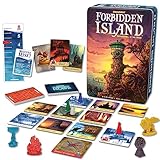
Overview: Forbidden Island, designed by Matt Leacock, is a foundational cooperative adventure where 2-4 players race to retrieve ancient treasures from a sinking island before it vanishes. Targeted at ages 10+, it emphasizes teamwork over competition in accessible, family-friendly sessions.
What Makes It Stand Out: Its elegant “island tile” mechanic—where the board physically collapses as players move—creates escalating tension and urgent strategic planning. Each player’s unique role (e.g., Explorer or Engineer) offers distinct abilities that synergize organically, while vibrant artwork immerses players in a perilous, thematic escape.
Value for Money: An outstanding entry point into cooperative gaming at a modest price. Its durable components, multiple difficulty levels, and broad age appeal provide far more value than many pricier games. Families gain years of replayability, making it a perennial game-night essential.
Strengths and Weaknesses: Strengths: Highly accessible rules, strong family appeal, tangible tension from the sinking board, and promotes genuine collaboration. Weaknesses: Can feel luck-dependent on early plays, limited depth for hardcore gamers, and art may appear dated to some.
Bottom Line: Forbidden Island remains a gold standard for family co-ops—simple to learn, rich in teamwork, and endlessly replayable. An essential purchase for new gamers and households seeking inclusive, screen-free fun.
4. Stellar Factory Ravine: A Crafty and Cooperative Card Game

Overview: Ravine is a streamlined cooperative party game for 3-6 players (ages 12+) centered on navigating treacherous terrain using strategic card combos. It emphasizes quick setup and immediate engagement with minimal rules overhead, ideal for casual groups.
What Makes It Stand Out: Its standout feature is the focus on “crafty” resource management: players combine cards to overcome environmental hazards, with screen-printed wood tokens adding tactile satisfaction to health tracking. The casino-quality cards and large fire token enhance visual and physical appeal, while the 193-card deck supports varied scenarios.
Value for Money: Priced accessibly for its component quality (notably the wood tokens and premium cards), it offers solid value as a gateway co-op. Though lighter than strategic heavyweights, its ease of play and group focus justify the cost for casual gatherings or as a filler game.
Strengths and Weaknesses: Strengths: Effortless setup, high-quality tactile components, scales well for groups, and encourages lively group problem-solving. Weaknesses: Shallow strategy for experienced gamers, limited scenario variety, and theme lacks distinct identity.
Bottom Line: Ravine excels as a casual, social co-op with excellent components—perfect for game nights prioritizing accessibility over depth. Recommended for groups seeking a relaxed, collaborative card experience without complex rules.
5. The Crew - Mission Deep Sea | Card Game | Cooperative | 2 to 5 Players | Ages 10+ | Trick-Taking | 32 Levels of Difficulty | Endless Replayability
Overview: Mission Deep Sea builds on the award-winning The Crew formula, casting 2-5 players as astronauts completing underwater missions through cooperative trick-taking. With 32 escalating challenges, it masterfully blends classic card mechanics with innovative communication limits.
What Makes It Stand Out: Its genius lies in constrained communication: players share limited info (e.g., suit hints) while racing to win specific tricks—creating intense “aha!” moments. The underwater narrative and increasing difficulty curve (from tutorial to expert) ensure steady engagement, while mission variety prevents stagnation.
Value for Money: The 32 unique missions provide extraordinary replayability at a mid-range price, dwarfing competitors in longevity. It outperforms standard trick-taking games by transforming a familiar framework into a fresh, narrative-driven co-op puzzle.
Strengths and Weaknesses: Strengths: Brilliant communication constraints, progressive difficulty that teaches strategy organically, high replay value, and seamless scalability (2-5 players). Weaknesses: Strict mission structure reduces free-form play, and later levels demand near-perfect coordination.
Bottom Line: Mission Deep Sea is a near-perfect evolution of cooperative trick-taking—smart, challenging, and endlessly replayable. A must-buy for puzzle and card-game fans seeking deep, collaborative fun.
6. Happy Camper - The Four Doors | New Cooperative Game by Creator of Forbidden Island and Pandemic | Super Portable | Great for Solo Play, Two Players, and Groups
Overview: Happy Camper: The Four Doors is a compact cooperative adventure designed by Matt Leacock (Pandemic, Forbidden Island), challenging 1-5 players to retrieve sacred treasures from a mystical light tower before sinister shadows prevail. Aimed at ages 10+, it delivers a 30-minute experience centered on teamwork and strategic exploration. What Makes It Stand Out: Leacock’s signature cooperative design shines here, emphasizing communication and shared decision-making. Its super-portable size makes it ideal for travel or quick game sessions, while the solo-friendly rules and scalability from 1 to 5 players offer exceptional flexibility uncommon in strategy games. Value for Money: Priced competitively for a Leacock title, it justifies cost through high replayability, durable components, and broad accessibility. It outperforms many similarly priced games by eliminating player elimination and providing a consistently engaging challenge regardless of group size. Strengths and Weaknesses: Strengths: Intuitive rules, seamless solo/co-op integration, travel-ready design, and tense, narrative-driven gameplay. Weaknesses: Limited strategic depth for hardcore gamers; treasure mechanics may feel repetitive after extended play. Theme integration, while charming, lacks deeper narrative layers. Bottom Line: An excellent, accessible entry in cooperative gaming, perfect for casual players, families, and travelers seeking a quick, brain-teasing challenge. Highly recommended for fans of Pandemic’s teamwork focus but scaled down for portability.
7. Spin Master Games, SolidRoots Escaping Extinction, Cooperative Strategy Board Game from The Makers of Mind The Gap, for Kids & Family, 1-4 Players, for Ages 12 & Up

Overview: Escaping Extinction casts players as clever dinosaurs racing to build a 3D rocket before a meteor strikes. This cooperative strategy game for 1-4 players (ages 12+) combines tile-based exploration with dynamic events, demanding teamwork to gather rocket parts across a shifting prehistoric landscape. What Makes It Stand Out: The standout feature is its earthquake mechanic, which physically alters the board mid-game, creating unpredictable challenges. The 3D rocket assembly adds tactile engagement, while the tile-based layout ensures no two games play alike, boosting replay value significantly. Value for Money: Offers solid value with its durable, thematic components and high replayability. Though slightly pricier than basic family games, the strategic depth and dynamic board justify the cost compared to static alternatives in the cooperative genre. Strengths and Weaknesses: Strengths: Innovative earthquake mechanic, strong theme integration, high replayability via modular boards, and accessible strategy. Weaknesses: 3D rocket assembly can feel fiddly; age recommendation (12+) may exclude younger kids despite simple rules; limited player interaction beyond shared goals. Bottom Line: A refreshing, dynamic cooperative experience that excels in family game nights. Recommended for groups seeking thematic, ever-changing challenges, though younger players might need guidance with setup.
8. Pandasaurus Cooperative Strategy Card Game - Fun Interactive Family Game for Ages 8+, 1-5 Players, 20 Minute Playtime
Overview: The Game is a globally acclaimed cooperative card game where 1-5 players collaboratively play down two shared number decks (1-100) under strict communication constraints. Designed for ages 8+, it packs intense strategic teamwork into just 20 minutes per session. What Makes It Stand Out: Its brilliance lies in minimalist rules masking deep strategic tension: players can’t discuss tactics, forcing intuitive teamwork and nonverbal cues. With 1.3 million copies sold and a Spiel des Jahres award, its “beat the game” premise offers addictive, replayable challenges. Value for Money: Exceptional value at its price point. The compact deck delivers near-infinite replayability, outperforming many bulkier games. It’s a cost-effective gateway to cooperative play, especially for families seeking screen-free interaction without complex setups. Strengths and Weaknesses: Strengths: Award-winning simplicity, intense player engagement, perfect scalability (1-5 players), and lightning-fast setup. Weaknesses: Communication restrictions frustrate some; limited visual appeal; high luck dependency in early plays reduces strategic depth initially. Bottom Line: A must-have for families and casual gamers wanting quick, brain-burning cooperation. Highly recommended despite minor luck elements—it’s a masterclass in elegant game design that justifies its global success.
9. Everdell Duo – 2-Player Standalone Board Game with Competitive, Co-Op & Campaign Modes – Strategy Game with Woodland Theme, Ages 10+, Fast 30-Minute Gameplay

Overview: Everdell Duo is a streamlined, standalone version of the acclaimed Everdell universe, crafted exclusively for 1-2 players. It combines worker placement and card drafting across competitive, cooperative, and 15-chapter campaign modes, all set in a charming woodland realm with 30-minute play sessions. What Makes It Stand Out: The trio of distinct play modes (competitive, co-op, campaign) in one compact box is revolutionary for 2-player strategy. Sun/moon tokens and shifting meadow rules introduce fresh tactical layers, while the campaign’s evolving narrative deepens engagement beyond typical standalone games. Value for Money: Premium components (130+ pieces, dual-sided board) justify its higher price. It surpasses many 2-player games by offering varied experiences—effectively three games in one—making it a superior investment over single-mode alternatives. Strengths and Weaknesses: Strengths: Unmatched mode variety, strategic depth in minimal time, exquisite components, and high replayability. Weaknesses: Campaign mode requires significant commitment; limited player count excludes larger groups; initial rule complexity may daunt younger players. Bottom Line: An essential purchase for 2-player strategy enthusiasts. Its versatility and polished mechanics earn a strong recommendation, though those needing group play should look elsewhere.
10. Jekyll & Hyde vs. Scotland Yard by 25th Century Games – Cooperative Trick Taking Board & Card Game for Two Players – Story Based Gameplay – for Ages 10+ & 20 Min Playtime

Overview: Jekyll & Hyde vs. Scotland Yard is a tightly focused cooperative trick-taking game for two players, casting them as the dual-natured protagonist evading Scotland Yard across story-driven chapters. Completed in 20 minutes, it merges classic card play with narrative objectives for ages 10+. What Makes It Stand Out: It uniquely adapts trick-taking—a traditionally competitive mechanic—into a cooperative, story-rich experience. Balancing Jekyll’s intellect against Hyde’s chaos through chapter-specific objectives creates thematic tension rarely seen in two-player card games. Value for Money: Offers niche value for trick-taking fans, though its specialized design may not appeal broadly. The replayable story chapters and clever mechanics justify the cost for duos seeking deep, thematic card play over generic alternatives. Strengths and Weaknesses: Strengths: Innovative cooperative trick-taking, strong narrative integration, ultra-portable, and intense player synergy. Weaknesses: Very limited audience (only 2 players); steep learning curve for trick-taking newcomers; minimal component variety reduces visual appeal. Bottom Line: A brilliant, niche gem for two-player strategy lovers and trick-taking veterans. Recommended only for its target audience—it excels within its narrow scope but won’t replace versatile party games.
Why Cooperative Play Elevates Your Game Night
Building Bridges Through Shared Objectives
The fundamental shift from competition to collaboration creates a radically different emotional landscape. Instead of guarding strategies or celebrating an opponent’s misfortune, your focus becomes entirely outward—towards the common challenge presented by the game. This shared external goal fosters a natural inclination towards open communication and mutual support. You’re actively invested in each other’s ideas and successes, creating a positive feedback loop where solving problems together strengthens your real-world connection and builds genuine rapport during play.
Reducing Pressure and Fostering Safe Exploration
Competitive games often carry an inherent pressure to win, which can sometimes overshadow enjoyment, especially if skill levels differ significantly. Cooperative play removes this burden. The “enemy” is the game system, not your partner. This allows both players to take creative risks, suggest unconventional solutions, and even make strategic mistakes without fear of personal blame or resentment. It creates a psychologically safe space for experimentation and learning, making the experience more relaxed and conducive to genuine fun, regardless of the outcome.
Emotional Investment Through Shared Goals
When victory or defeat hinges entirely on your combined effort, the emotional stakes become deeply intertwined. Celebrating a hard-won success feels profoundly rewarding because it was earned together. Conversely, navigating a challenging loss becomes a shared learning experience rather than a point of contention. This shared emotional journey—through tension, problem-solving, and eventual resolution—mirrors real-life partnership dynamics in a microcosm, reinforcing trust and the understanding that you’re a team facing challenges head-on.
Key Features to Prioritize for Couples
Intuitive Rules Without Oversimplification
The sweet spot lies in mechanics that are easy to grasp initially but offer meaningful depth as you play. You want to spend your time collaborating on the challenge, not constantly flipping through a dense rulebook. Look for games with a clean core loop that can be explained in 10-15 minutes, yet provide enough strategic nuance to remain engaging over multiple sessions. Avoid systems that feel either childishly simple or require excessive memorization just to get started; the focus should be on interaction, not rule arbitration.
Balanced Player Agency and Meaningful Choices
True cooperation requires both partners to feel like active, essential contributors. Be wary of games where one player dominates decision-making (“quarterbacking”) or where individual actions feel inconsequential to the overall outcome. Seek designs that encourage discussion by presenting dilemmas where both players have distinct, valuable perspectives or resources to bring to the table. Every turn should present choices that genuinely impact the shared path forward, ensuring neither partner feels like a passive passenger.
Optimal Play Time for Realistic Scheduling
Honesty about your available time is crucial. While epic campaigns exist, the most sustainable games for regular couple’s play often fit neatly into 60-90 minute windows. Consider your typical weeknight or weekend afternoon availability. A game that consistently overruns its stated playtime becomes a source of stress, not relaxation. Prioritize experiences designed with a clear, achievable arc within a timeframe that respects your real-world commitments, making it easier to say “yes” to game night.
Understanding Gameplay Mechanics for Duos
Asymmetric Roles and Complementary Skills
Some of the most engaging cooperative experiences assign unique roles, abilities, or objectives to each player. This mechanic inherently prevents quarterbacking and forces genuine collaboration, as success hinges on leveraging your distinct strengths. One partner might excel at resource management while the other handles tactical movement, requiring constant communication and interdependence. This mirrors real partnership dynamics beautifully, highlighting how different skills combine to overcome obstacles.
Legacy Elements and Evolving Narratives
Legacy-style games, where choices permanently alter the game state and story over multiple sessions, have matured significantly for two-player formats. These offer unparalleled long-term engagement, transforming game night into a shared narrative journey. Unlocking new components, discovering story threads, and seeing the consequences of past decisions unfold creates a powerful sense of shared history and investment unique to the cooperative legacy format, making each session feel like a meaningful chapter.
Puzzle-Like Challenges vs. Dynamic Opposition
Cooperative games often present challenges in two main flavors: intricate puzzles demanding logical deduction and planning, or dynamic systems (like an AI opponent or event deck) that actively push back against your efforts. Puzzle-focused games emphasize calm, cerebral teamwork, while dynamic opposition creates exciting, unpredictable tension. Consider your shared preference: do you relish methodical problem-solving, or thrive on the adrenaline rush of adapting to a cunning, evolving adversary?
Evaluating Thematic Resonance and Mood
Matching Your Shared Interests and Energy
The theme isn’t just window dressing; it sets the entire tone and emotional temperature of your experience. A high-stakes sci-fi thriller evokes a very different feeling than a serene gardening simulation or a whimsical fantasy quest. Choose a theme that genuinely excites both of you. Playing a game whose setting or story resonates with your mutual interests makes the collaborative effort feel more immersive and meaningful, transforming abstract mechanics into a shared adventure you both care about.
Managing Tension: Stressful vs. Relaxing Experiences
Cooperative games span a wide spectrum of intensity. Some are designed to be heart-pounding, high-pressure races against doom tracks, while others offer gentle, meditative challenges perfect for unwinding. Be honest about the mood you want to cultivate. If your week has been stressful, a relentlessly punishing game might amplify tension rather than relieve it. Conversely, if you crave excitement, a too-placid game might feel dull. Alignment on the desired energy level is key to a satisfying session.
Narrative Depth and Player Influence
How much does your input shape the unfolding story? Some games offer branching narratives where key decisions lead to significantly different outcomes or endings, fostering a powerful sense of authorship. Others provide a more linear path with rich flavor text. If storytelling is important, look for games where your collaborative choices genuinely feel like they steer the narrative direction, making your shared victory (or defeat) feel uniquely earned and personal.
Practical Considerations for Seamless Play
Streamlined Setup and Takedown
Nothing kills the pre-game buzz faster than wrestling with complex component organization for 20 minutes. Prioritize games with intuitive, quick setup—ideally under 5 minutes once familiar. Similarly, efficient takedown and storage are vital for maintaining the habit. Games with well-designed trays, clear component sorting, and minimal fiddly bits ensure you spend your precious time playing and connecting, not prepping or cleaning up, removing friction from the ritual.
Visual Clarity and Table Presence
When you’re deeply engaged in strategy, confusing iconography or a cluttered board layout becomes a major hindrance. Look for strong graphic design: clear player boards, intuitive iconography (with good reference guides), and a board state that remains readable even in tense moments. A visually appealing game that looks inviting on your table also enhances the overall experience, making the physical act of playing more enjoyable and less like deciphering a manual.
Scalability and Solo Potential (A Bonus)
While focused on two players, some cooperative games offer official solo modes or even adapt well for solo play with minor rule tweaks. This isn’t essential, but it’s a valuable bonus. It allows a partner to enjoy the game independently if schedules clash, potentially bringing fresh insights back to your next joint session. Similarly, seamless two-player scaling (where the game wasn’t just tacked on as an afterthought to a larger-player design) is non-negotiable for a truly optimized duo experience.
Maximizing Replayability and Longevity
Variable Setups and Scenario Diversity
The antidote to predictability is inherent variability. Games that randomize key elements—starting conditions, objectives, encounter decks, or map layouts—ensure that no two sessions play out identically. This forces you to adapt your strategies and communication on the fly, keeping the challenge fresh. Multiple distinct scenarios or missions, each with unique goals and mechanics, significantly extend the game’s lifespan by offering varied challenges to conquer together.
Legacy Progression and Unlockable Content
As mentioned earlier, legacy systems excel at long-term engagement. The anticipation of opening a new envelope, revealing a hidden rule, or unlocking a powerful ability after a hard-fought victory creates unparalleled investment. This structured progression, where your past successes literally shape future possibilities, provides a compelling reason to keep returning to the table, building a shared narrative tapestry session by session.
Modular Expansions and Community Creations
While not always necessary upfront, the potential for future expansion can be a factor. Look for games with a strong community or publisher support that offers modular expansions adding new scenarios, roles, or mechanics without overhauling the core system. User-generated content shared online can also breathe new life into a favorite title. This potential for curated growth ensures your initial investment can evolve alongside your partnership.
Creating the Ideal Environment for Connection
Establishing Pre-Game Rituals and Mindset
Set the stage for success before the first card is drawn. Clear physical and mental space: put phones away, maybe light a candle, pour a drink. Briefly discuss your shared goal for the session – “Let’s focus on having fun and communicating clearly,” or “No stressing over mistakes tonight.” This small ritual signals a transition from daily life into your dedicated partnership space, priming both of you for collaborative engagement and reducing the likelihood of real-world stress bleeding into play.
Navigating Disagreements Constructively
Even in cooperative games, you’ll encounter moments of differing strategies. This is normal and even healthy! The key is how you handle it. Frame disagreements as “How do we solve this together?” rather than “My way vs. your way.” Practice active listening: “I see why you suggest X; what if we try Y first and see how it plays out?” Remember, the game is the opponent. A minor tactical dispute is an opportunity to practice real-world conflict resolution in a low-stakes, fun environment.
Post-Game Reflection and Celebration
Don’t just pack up immediately after the final move. Take 5 minutes to debrief. What worked well in your teamwork? Was there a moment of brilliant synergy? What’s one thing you’ll try differently next time? Celebrate the effort and the connection, regardless of winning or losing. “That puzzle in round three was amazing when we figured it out together!” This reflection cements the positive bonding experience and carries the cooperative spirit beyond the game board into your everyday interactions.
Frequently Asked Questions
Frequently Asked Questions
What’s the biggest advantage of cooperative games over competitive ones for couples? Cooperative play fundamentally shifts the dynamic from opposition to unity, eliminating winner-takes-all tension and fostering shared problem-solving, open communication, and mutual support, which directly strengthens relationship bonds through positive, collaborative experiences.
How can we avoid one partner dominating decision-making (quarterbacking)? Choose games with asymmetric roles or mechanics that force interdependence. Actively encourage both players to voice ideas, use “I think we should…” language, and consider implementing a rule where the non-active player makes the final call on certain actions to balance agency.
Are cooperative games suitable if one partner is significantly more experienced with board games? Absolutely, and often preferable. The shared goal reduces pressure on the less experienced player. Look for games with smooth learning curves and clear role differentiation where the experienced player can guide strategically without taking over, turning it into a positive teaching and bonding opportunity.
What’s a realistic time commitment for a satisfying two-player cooperative session? Aim for games with a stated playtime of 60-90 minutes for regular weeknight play. This allows enough depth for engagement without becoming burdensome. Always check actual player-reported times online, as box estimates can be optimistic; consistency within this window makes scheduling easier and reduces pre-game stress.
Can cooperative games help improve real-life communication skills? Yes, significantly. They provide a safe, structured environment to practice active listening, clearly articulating ideas under mild pressure, negotiating solutions, and managing disagreements constructively – all core communication skills that translate directly to everyday relationship dynamics.
What should we do if we keep losing and it starts to feel frustrating? First, acknowledge the shared frustration (“This game is really challenging us!”). Take a short break. Then, analyze why you’re losing as a team – is it a specific mechanic? Adjust difficulty if possible, or switch to a lighter game. Remember, the goal is connection; sometimes agreeing to pause a tough game and return later is healthier than pushing through negative feelings.
How important is theme compared to mechanics for couple’s enjoyment? Theme is critically important for sustained engagement. Mechanics provide the structure, but a theme that resonates with both partners creates emotional investment and makes the collaborative effort feel meaningful. Playing a game whose setting or story excites you both transforms abstract strategy into a shared adventure you genuinely care about.
Are there cooperative games that work well for winding down rather than high intensity? Definitely. Seek out titles emphasizing puzzle-solving, resource optimization, or serene themes like gardening or exploration. These often feature lower stress levels, predictable pacing, and calming aesthetics, providing a meditative, relaxing shared activity perfect for unwinding after a long day.
How can we find games that match our preferred balance of strategy and luck? Look for detailed player reviews focusing on “player agency” and “randomness impact.” Games heavy on dice rolling or card draws often have higher luck factors, while those centered on set collection, engine building, or pure deduction offer more strategic control. Reading about specific decision points helps gauge how much your choices truly influence outcomes.
Is investing in a legacy-style cooperative game worth it for just two players? For many couples, yes, if you value long-term narrative engagement. Modern two-player legacy designs are highly optimized, offering deep, evolving stories and mechanics that unfold over 10-20+ sessions. The shared investment in unlocking the story creates unparalleled bonding and a unique chronicle of your partnership journey through gameplay.
See Also
- How to Choose the Best Two-Player Cooperative Board Games for Couples
- The 10 Best Two-Player Cooperative Board Games in 2026
- How Two-Player Cooperative Board Games Redefine Teamwork at the Table in 2026
- 10 Game-Changing Cooperative Board Games for Couples in 2026
- 10 Essential Cooperative Board Games Every Two-Player Duo Needs in 2026