Table of Contents
Forget scrolling through endless feeds or solo gaming marathons for a moment. Imagine the electric buzz of a room where teens are leaning forward, eyes wide with anticipation, debating their next move in a world they’ve collectively built. Board games aren’t just cardboard and tokens—they’re the secret sauce for creating genuine connection, sparking strategic thinking, and building memories that outlast any viral TikTok trend. For teenagers navigating a complex world, these immersive experiences offer a rare, screen-free space to collaborate, compete, and simply be present with friends, fostering skills that resonate far beyond the game table.
Choosing the right thematic board game for teens isn’t about picking the shiniest box; it’s about unlocking a portal to shared adventure. The perfect game becomes a catalyst for laughter, healthy debate, and moments of triumphant teamwork. But with themes ranging from interstellar exploration to solving ancient mysteries, how do you cut through the noise? It’s less about chasing the “hottest” title and more about understanding what truly resonates with teenage minds—their desire for meaningful agency, rich storytelling, and social interaction that feels authentic, not forced. Let’s dive into what makes a thematic board game not just fun, but genuinely impactful for this dynamic age group.
Top 10 Thematic Board Games for Teens
Detailed Product Reviews
1. Hasbro Gaming Clue Conspiracy Board Game for Adults and Teens, Secret Role Strategy Games, Ages 14+, 4-10 Players, 45 Minutes, Mystery & Party Games
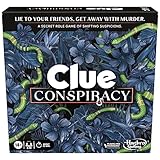
Overview: Clue Conspiracy reinvents the classic murder mystery formula into a dynamic social deduction game for adults and teens. Set on a tropical island resort, players take secret roles on opposing teams—Friends trying to protect the manager or Conspiracy members plotting his murder—blending strategy with high-stakes bluffing in a 45-minute session for 4-10 players.
What Makes It Stand Out: The game excels with its shifting-team mechanic, where hidden allegiances force constant deception and deduction. Unlike traditional Clue, players actively sabotage or protect targets using traps and weapons, creating emergent narratives through player-driven mind games rather than static clue-solving. The tropical setting and multiple win conditions add fresh strategic layers.
Value for Money: Priced competitively against premium party games, it delivers exceptional replayability through variable player counts, hidden roles, and evolving strategies. The depth justifies the cost for groups seeking more engagement than standard deduction games offer, though lighter party-game fans might find it complex.
Strengths and Weaknesses:
Strengths: High replay value; seamless scaling for large groups; brilliantly merges strategy with social interaction; clear win conditions prevent analysis paralysis.
Weaknesses: Rule complexity may overwhelm casual players; shorter sessions risk incomplete role immersion; limited physical components beyond cards.
Bottom Line: An inventive, adrenaline-fueled evolution of Clue that masterfully balances strategy and social chaos. Highly recommended for mature groups craving deception-driven fun, though beginners should opt for simpler alternatives.
2. Herd Mentality: Udderly Funny Family Board Game | Easy & Fun for Big Groups of 4-20 Players | Includes 20 Extra Exclusive Questions

Overview: Herd Mentality is a rapid-fire party game where players predict majority opinions on humorous, open-ended questions. Designed for massive groups (4-20 players), it thrives on simplicity: flip a card, guess what most think, and win cows—or risk the “pink cow of doom” for unpopular answers. Ideal for holidays or family nights.
What Makes It Stand Out: Its genius lies in effortless scalability and universal accessibility. The 20 included bonus questions enhance replayability, while the herd-mentality mechanic sparks laughter by revealing how players truly think. No setup or strategy is needed—just pure, quick social comedy.
Value for Money: An outstanding investment for large gatherings, costing less than many 4-player games while accommodating 20+. The added questions and durable components maximize longevity, though niche humor might not resonate universally.
Strengths and Weaknesses:
Strengths: Incredibly easy to learn; perfect for chaotic group settings; generates non-stop laughter; inclusive for kids 10+ and adults; minimal cleanup.
Weaknesses: Humor can feel repetitive after extended play; lacks strategic depth for hardcore gamers; “pink cow” mechanic occasionally frustrates younger players.
Bottom Line: The ultimate icebreaker for big crowds, delivering guaranteed giggles with zero learning curve. A must-buy for holiday hosts or educators needing lighthearted engagement—just don’t expect nuanced strategy.
3. Outsmarted Ultimate Edition - 10 Exciting Bonus Categories | Kids, Teens & Adults | Next-Level Game Night for Family & Friends | 2–24 Players | Age 8+ | 10,000+ Questions | 2026 Edition

Overview: Outsmarted Ultimate Edition transforms trivia into an app-driven TV quiz show experience. Using smartphones or tablets, players compete across 10,000+ dynamically adjusted questions spanning 10 core categories plus 10 festive bonuses (like Logo Quiz or Movie Music), accommodating 2–24 players aged 8+ with adaptive difficulty.
What Makes It Stand Out: The AI-driven age adjustment is revolutionary—kids face age-appropriate questions while adults tackle tougher challenges, ensuring fair play. Remote participation and smart-TV streaming make it uniquely versatile, while multimedia elements (song clips, images) elevate standard trivia.
Value for Money: Justified by its staggering content library and tech integration. The Ultimate Edition’s bonus categories and free remote-play feature offer unmatched scalability, though reliance on personal devices could deter low-tech households.
Strengths and Weaknesses:
Strengths: Brilliant age-inclusivity; endless replayability; seamless remote/social distancing play; rich multimedia questions; smooth app interface.
Weaknesses: Requires stable Wi-Fi; setup complexity for non-tech-savvy users; in-app purchases for extra categories may add cost.
Bottom Line: A future-proof trivia powerhouse that bridges generational gaps with intelligent design. Essential for modern game nights, though tech hiccups could frustrate traditionalists.
4. That’s Just Wrong! – A Critical Thinking & Debate Game for Teens & Classrooms | Fun Ethical Dilemmas & Real-Life Legal Scenarios for Engaging Conversations

Overview: This discussion-based game challenges players to debate real ethical and legal dilemmas, guessing how judges ruled while defending their reasoning. Designed for classrooms or family nights, it turns abstract concepts into lively arguments about consequences, risks, and perspectives for teens and adults.
What Makes It Stand Out: Uniquely educational, it transforms critical thinking into accessible fun using true legal cases. The focus on “why” over “what” builds empathy and logic skills organically—ideal for sparking nuanced conversations teens rarely initiate otherwise.
Value for Money: Exceptional for educators or parents prioritizing skill development. The thought-provoking content justifies the price as a long-term educational tool, though pure entertainment seekers may prefer lighter alternatives.
Strengths and Weaknesses:
Strengths: Cultivates critical life skills; sparks deep, organic discussions; versatile for classrooms or homes; high replayability via varied scenarios.
Weaknesses: Minimal physical components; outcomes rely heavily on group dynamics; less “game-like” for players seeking competition.
Bottom Line: A vital resource for nurturing articulate, empathetic thinkers. Highly recommended for educators and families—but skip if you want fast-paced fun over meaningful dialogue.
5. Spy Alley - Mensa Award-Winning Strategy Game - Social Deduction & Bluffing Board Game - Family Game Night Fun - Ages 8+ for 2-6 Players

Overview: Spy Alley is a timeless deduction game where players navigate a grid to collect national items while concealing their secret identity. Awarded by Mensa for its strategic depth, it pits 2–6 players in a battle of bluffing and observation, requiring logic to unmask spies without revealing your own allegiance.
What Makes It Stand Out: Its elegant design—simple rules masking profound strategy—allows all ages to compete meaningfully. The hidden-identity tension rivals modern social deduction games, yet its 30-year legacy proves enduring appeal, enhanced by the charming WWII spy lore woven into gameplay.
Value for Money: A perennial investment; durable components and endless replayability make it cost-effective versus disposable party games. The Mensa pedigree and multi-generational appeal solidify its worth.
Strengths and Weaknesses:
Strengths: Perfect blend of accessibility and depth; minimal setup; thrives with 2+ players; teaches logic subtly; nostalgic yet fresh.
Weaknesses: Artwork feels dated; limited player interaction beyond deduction; slower pace may test younger kids’ patience.
Bottom Line: A masterclass in strategic simplicity that deserves its classic status. An essential addition to any game library for families or strategy enthusiasts seeking pure, unadulterated deduction.
6. Beat The Heat Game | Family Party Card Game for Kids and Adults | Ages 8+ | 2 to 10 Players | 20 Mins. | Easy to Learn Strategy Card Games for Groups

Overview: Beat The Heat is a streamlined strategy card game where players aim to collect the fewest points by strategically placing number cards into rows. Based on Wolfgang Kramer’s classic “Take 5,” it challenges 2–10 players (ages 8+) to avoid triggering point penalties by playing the sixth card in any row, making it ideal for family game nights or group gatherings.
What Makes It Stand Out: Its genius lies in ultra-simple rules paired with surprising tactical depth. The tension of deciding where to play each card—risking point collection or forcing opponents into traps—creates addictive, interactive play. Scaling seamlessly from 2 to 10 players in just 20 minutes is rare, and Kramer’s pedigree ensures polished, timeless mechanics.
Value for Money: Priced competitively against similar party games, it offers exceptional replayability with no complex setup. While cheaper filler games exist, Beat The Heat’s strategic nuance and scalability justify its cost, outperforming alternatives like UNO in depth without sacrificing accessibility.
Strengths and Weaknesses: Strengths: Effortless learning curve, inclusive for mixed ages, and wildly adaptable group sizes. Minimal components (just cards) enhance portability. Weaknesses: Light strategy may dissatisfy hardcore gamers, and luck plays a minor role in card draws. The “avoid 6th card” mechanic can occasionally feel punishing.
Bottom Line: A near-perfect gateway game for families and casual groups seeking quick, engaging strategy. Its blend of simplicity, replayability, and social interaction makes it a standout value—highly recommended for game nights with 3+ players.
7. Ravensburger Horrified Games - Greek Monsters - Strategy Board Game - Boost Critical Thinking & Teamwork - Cooperative Gameplay - Unique Monster Challenges - 1 to 5 Players - Adults & Kids 10+

Overview: Horrified: Greek Monsters is a cooperative strategy game where 1–5 players team up to defeat six mythical Greek creatures (like Medusa and Cerberus) on the Isle of Elysium. Players navigate a beautifully illustrated board, combining critical thinking and teamwork to overcome unique monster mechanics within 60 minutes.
What Makes It Stand Out: Each monster presents distinct, thematic challenges—slaying Hydra requires burning regrown heads, while luring Cerberus needs careful movement. The stunning artwork and high-quality components (including detailed monster figures) immerse players in Greek mythology. Unlike competitive games, its cooperative focus fosters genuine teamwork and communication.
Value for Money: At a mid-range price point, it delivers exceptional depth for its runtime. Compared to other co-ops like Pandemic, it offers fresher mechanics per monster and superior thematic integration. The 60-minute sessions and variable monster setups ensure lasting replayability, justifying the investment.
Strengths and Weaknesses: Strengths: Brilliant monster variety, gorgeous components, and engaging teamwork. Rules are intuitive despite strategic depth. Weaknesses: The 60-minute playtime may feel lengthy for younger kids (10+), and solo play lacks the group synergy that defines the experience.
Bottom Line: A masterclass in cooperative design that balances accessibility with rich strategy. Its thematic depth, replayability, and emphasis on collaboration make it essential for families and horror fans seeking meaningful shared challenges.
8. Skillmatics Rapid Rumble - Fast-Paced Board Game for Kids, Teens & Adults, Fun for Family Game Night & Educational Toy, Quick-Thinking Card Game, Easter Gifts for Ages 6, 7, 8, 9 & Up

Overview: Rapid Rumble is a lightning-fast category game where players race to shout answers matching rolled letters and drawn categories (e.g., “Animals starting with B”). Designed for ages 6+, it combines a timer, letter cards, and 120 category cards to create chaotic, laughter-filled rounds that end when a player discards all their letter cards.
What Makes It Stand Out: Its breakneck pace and inclusivity shine—kids and adults compete on equal footing through quick thinking, not knowledge depth. The 120 diverse categories (Science, Culture, etc.) and award-winning design (2022 Parents’ Picks) ensure no two games feel alike, while the physical components (wooden die, timer) enhance tactile engagement.
Value for Money: Priced affordably for an educational party game, it outperforms trivia-heavy alternatives by prioritizing universal accessibility. Unlike niche games, its broad age appeal (6+) and minimal setup maximize long-term use, offering exceptional replay value per dollar.
Strengths and Weaknesses: Strengths: Incredibly easy to learn, promotes rapid cognition, and scales perfectly for 2–6 players. High replayability thanks to category variety. Weaknesses: Can devolve into shouting matches, and younger kids may struggle with obscure categories. Letter-card matching occasionally feels arbitrary.
Bottom Line: A brilliantly energetic game that transforms trivia into accessible, inclusive fun. Its speed, simplicity, and educational stealth make it a top-tier choice for family game nights—highly recommended for fostering quick thinking without pressure.
9. QUOKKA Board Games for Kids 8-12 and Family - Educational Trivia Card Game for Kids Age 8+ - Who Knows Biology Better - 500+ Questions for Fun Learning and Family Game Night

Overview: QUOKKA’s biology trivia game pits family members against each other in a 500+ question showdown covering topics like ecosystems, anatomy, and species. Aimed at ages 8+, it frames learning as friendly competition, with 15-minute rounds designed to spark curiosity and discussion during family game night.
What Makes It Stand Out: It uniquely merges rigorous educational content with accessible gameplay—questions range from “What is photosynthesis?” to fun animal facts, avoiding dry textbook vibes. The emphasis on multi-generational bonding through shared discovery (e.g., grandparents explaining concepts) sets it apart from solo-learning apps or rote flashcards.
Value for Money: At a modest price, it delivers serious educational ROI. Compared to subscription-based learning tools, its physical format encourages screen-free interaction, and the 500+ questions ensure longevity. While niche, it’s a steal for science-oriented families versus pricier STEM kits.
Strengths and Weaknesses: Strengths: Strengthens family communication, builds biology literacy organically, and questions are well-graded for ages 8–12. Weaknesses: Limited scope (biology-only) may bore non-science fans, and some questions skew too advanced for younger kids. Lacks visual aids beyond cards.
Bottom Line: An engaging, conversation-starting tool for families prioritizing education. Best suited for households with budding scientists—it transforms learning into joyful competition without sacrificing substance.
10. Hasbro Gaming Monopoly Harry Potter Edition Board Game | A Magical Adventure at Hogwarts | Ages 8 and Up | 2 to 6 Players | Family Games | Gifts for Kids and Adults

Overview: This Harry Potter-themed Monopoly edition reimagines the classic property-trading game within Hogwarts. Players choose a house (Gryffindor, Slytherin, etc.), collect house points instead of money, and navigate iconic locations like the Great Hall while drawing “Owl Post” cards. Designed for ages 8+ and 2–6 players, it leans heavily into Potter nostalgia.
What Makes It Stand Out: The thematic integration is exceptional—from golden tokens (Hippogriff, Firebolt) to house-based scoring and Howler “jinx” cards. Owning classrooms or common rooms instead of streets creates immersive fan appeal, while house rivalry mechanics encourage strategic alliances. It’s Monopoly perfected for Potterheads.
Value for Money: Priced slightly above standard Monopoly, it justifies the premium with high-quality Potter artwork and unique components (owl card holder). Compared to other licensed editions, it offers deeper thematic engagement, though non-fans may prefer the original’s simplicity.
Strengths and Weaknesses: Strengths: Unbeatable for franchise fans, visually stunning, and the house-point system adds fresh strategy. Weaknesses: Core gameplay remains Monopoly’s luck-dependent flaws (long runtime, elimination risk). Educational or strategic depth is minimal beyond theme.
Bottom Line: A must-have for Harry Potter enthusiasts seeking nostalgic fun, but a hard sell for Monopoly skeptics. Delivers magical fan service within a familiar, accessible framework—ideal as a gift for Potter-loving families.
Understanding Teen Preferences in Thematic Gaming
The Power of Player Agency
Teens crave control and meaningful choices. Games that offer genuine agency—where decisions significantly alter the narrative path or player outcomes—resonate deeply. Look for mechanics where players shape the story through their actions, not just roll dice and move. This sense of ownership over the unfolding adventure fosters engagement and replayability, as teens want to explore different consequences of their choices. Avoid experiences where the path feels overly linear or predetermined, as this can quickly lead to disinterest.
Narrative Depth Without Overwhelm
A compelling story is essential, but teens aren’t looking for a dense novel disguised as a board game. The narrative should be woven seamlessly into the mechanics, revealed through gameplay moments, component discoveries, and player interactions. The theme shouldn’t feel like mere window dressing; it should justify the rules and create emotional investment. However, excessive text on cards or complex lore dumps can be barriers. The best games integrate story through evocative art, intuitive mechanics, and emergent storytelling driven by play.
Social Dynamics as Core Gameplay
For teens, the social experience is often the main event. Games where interaction is mandatory and meaningful—beyond simple take-that mechanics—are key. Cooperative play builds strong bonds through shared challenges, while competitive games thrive when they encourage negotiation, alliances (that might be temporary!), and lively discussion. Avoid games where players frequently sit out during others’ turns (“multiplayer solitaire”); constant engagement keeps energy high and prevents disconnection.
Key Features to Prioritize When Choosing
Balanced Complexity and Accessibility
The sweet spot lies between overly simplistic children’s games and brutally complex strategy marathons. Teens appreciate mechanics with depth they can grow into, but the initial learning curve shouldn’t be a barrier to entry. Look for games with intuitive core concepts that gradually introduce layers of strategy. Clear iconography, well-designed rulebooks with visual examples, and streamlined setup are crucial. The goal is for the group to grasp the basics quickly and dive into the fun, with room to master subtleties over multiple plays.
Replayability Through Variable Setup
No one wants to play the exact same scenario repeatedly. Games that offer significant replay value through modular boards, randomized elements, multiple objectives, or branching narrative paths keep teens coming back. Legacy systems (where the game physically changes over multiple sessions) or app integration that unlocks new content are fantastic for long-term engagement. This variability ensures each game night feels fresh and encourages groups to schedule the next session.
Engaging Physical Components
Teens respond well to tactile, high-quality components that enhance immersion. Think detailed miniatures, textured resource tokens, intriguing map tiles, or interactive gadgets that feel substantial in hand. Artwork should be vibrant, thematic, and age-appropriate—not childish, but also avoiding overly mature or generic styles. Components that serve a clear functional purpose within the game (not just decoration) deepen the connection to the theme and make setup and play more enjoyable.
Playtime That Fits Real Life
Respect the teen attention span and schedule. While epic 3-hour campaigns have their place, prioritize games with a stated playtime of 60-90 minutes for ideal group engagement. Games that consistently run significantly longer than advertised risk frustration and abandonment. Look for mechanics that maintain momentum, minimize downtime between turns, and have natural stopping points if needed. A game that reliably delivers a satisfying experience within a reasonable timeframe is far more likely to be chosen repeatedly.
Budget and Practical Considerations
Assessing Long-Term Value
Beyond the initial price tag, consider the cost per play. A slightly more expensive game with immense replayability (thanks to variable setups, expansions, or legacy elements) often offers better value than a cheaper game played once. Factor in durability—thick cardboard, quality art, and sturdy boxes withstand enthusiastic play and storage in crowded rooms. A game that survives multiple sessions and remains appealing months later is a worthy investment.
Expansion Potential and Community
Check if the game system supports expansions or scenario packs that add new content, characters, or narrative threads. A vibrant player community can also extend a game’s life through fan-made scenarios, online discussion, and organized events. While not essential, knowing there’s potential for growth beyond the base box can be appealing for teens looking for a long-term gaming hobby. Ensure expansions are reasonably priced and add meaningful content, not just minor tweaks.
Space and Storage Realities
Be realistic about where the game will live and be played. Teens often have limited space in bedrooms or common areas. Consider the footprint of the game board, the number of components requiring sorting, and how easily the game can be packed up and stored. Games with efficient component trays or organized storage solutions within the box are a huge plus. Avoid games with massive boards or overwhelming numbers of tiny pieces that are easily lost in a typical teen environment.
Navigating Social and Developmental Aspects
Fostering Healthy Competition and Cooperation
The right game can teach valuable lessons in sportsmanship, strategic thinking, and collaboration. Cooperative games build communication skills and shared problem-solving, emphasizing teamwork over individual victory. Competitive games, when designed well, encourage negotiation, risk assessment, and gracious winning/losing. Pay attention to how the game handles conflict—does it create fun, spirited rivalry, or does it breed genuine frustration or resentment? The social environment it cultivates is paramount.
Managing Group Size Flexibility
Teen gatherings can be unpredictable—planning for 4 might end up with 6 showing up. Prioritize games that scale well across a range of player counts (e.g., 2-5 or 3-6 players) without drastically changing the experience or requiring significant rule adjustments. Games that feel equally engaging whether played with a small intimate group or a larger party offer maximum utility and ensure the game gets played more often, regardless of who’s available.
Sensitivity to Maturity Levels
Themes matter. While teens often seek more mature narratives than children’s games, be mindful of content that might be overly intense, graphically violent, or thematically inappropriate for the specific group. Look for games that tackle complex subjects (like resource management, ethical dilemmas, or historical events) with nuance and respect, offering discussion opportunities without being gratuitous. The ideal theme should intrigue and challenge without causing discomfort.
Future-Proofing Your Selection for 2026 and Beyond
Embracing Evolving Tech Integration
App-assisted games are becoming more sophisticated, offering dynamic narratives, hidden information management, and evolving soundscapes that deepen immersion. Look for apps that enhance, not replace, the physical board game experience—providing narrative prompts, managing complex setups, or introducing unexpected events. Ensure the app is well-reviewed for stability and longevity (avoiding games reliant on servers likely to shut down soon). This tech layer can significantly boost replayability and keep the experience feeling fresh.
Sustainability in Design and Materials
Eco-consciousness is increasingly important to teens. Consider games from publishers committed to sustainable practices—using recycled/recyclable materials for boxes and components, minimizing plastic, and ensuring ethical manufacturing. While not always the primary factor, supporting companies with responsible practices aligns with many teens’ values and contributes to a more positive gaming culture.
Building Towards a Gaming Community
The best thematic games often act as gateways, sparking interest in the wider board gaming hobby. Choose titles with accessible entry points that might lead teens to explore related genres or more complex strategic games later. Games with strong thematic hooks (space exploration, fantasy adventures, historical mysteries) can naturally connect to other interests, fostering a lasting passion for interactive storytelling and strategic play that evolves as they grow older.
Frequently Asked Questions
Frequently Asked Questions
What’s the ideal player count for most teen-focused thematic games? Most well-designed games for this age group comfortably accommodate 3-5 players, offering the best balance of interaction, manageable downtime, and strategic depth without becoming chaotic.
How important is the game’s physical weight or component quality for teens? Very important. Teens respond positively to substantial, well-made components that feel durable and enhance immersion. Flimsy cards or thin cardboard can break the thematic spell and feel like a poor value, regardless of the gameplay.
Can thematic games genuinely help develop skills relevant to teens? Absolutely. They foster critical thinking, strategic planning, resource management, negotiation, teamwork, communication, and even literacy through narrative engagement—all within a highly motivating and social context.
What’s a reasonable budget range for a quality thematic game teens will enjoy? Expect to invest $40-$70 for a new release with strong production values and replayability. This often represents better long-term value than multiple cheaper games with limited staying power.
How do I know if a game’s theme is appropriate for a specific teen? Research the theme beyond the box art. Read concise, spoiler-free reviews focusing on content notes (e.g., “light fantasy combat,” “exploration without graphic elements,” “historical conflict handled thematically”). When in doubt, publishers’ websites often provide detailed content descriptions.
Are app-assisted games worth the potential hassle for teens? Often yes, if the app is well-designed. They can streamline complex rules, add dynamic storytelling elements, and significantly boost replayability. Prioritize games with highly rated, stable apps that don’t require constant internet connectivity during play.
What’s the biggest mistake to avoid when choosing a game for teens? Choosing based solely on adult preferences or complexity. The game must resonate with teen interests—offering agency, social interaction, and a theme that feels relevant and exciting to them, not just intellectually stimulating to an older player.
How crucial is playtime length for keeping teens engaged? Extremely crucial. Games consistently exceeding 90-100 minutes for the advertised player count risk losing attention and goodwill. Look for games known for tight, engaging gameplay that respects the player’s time commitment.
Can cooperative games work well for competitive teen groups? Yes, exceptionally well. Well-designed co-ops shift the competition to overcoming the game itself, fostering teamwork against a common challenge. They reduce direct player conflict while still providing intense, strategic engagement and shared triumph.
How can I assess replayability before buying a game? Look for key indicators: variable player powers, modular boards/scenarios, legacy elements, or app-driven narrative branches. Reviews often specifically mention “replay value” – prioritize games where players report wanting to try different strategies or see alternate story outcomes immediately after finishing.
See Also
- 10 Best Thematic Board Games for Families with Teens in 2026
- 10 Thematic Board Games Recommendations for Date Nights in 2026
- 10 Thematic Board Games That Solve Lack of Engagement in 2026
- 10 Best Thematic Board Games for Solving Common Boredom Problems in 2026
- 10 Thematic Board Games That Solve the ‘Nothing to Play’ Problem in 2026