Immerse yourself in a world where every decision echoes with consequence, where the clatter of custom dice isn’t just noise but the heartbeat of an unfolding saga. Thematic board games have evolved far beyond simple roll-and-move mechanics, transforming tabletops into vibrant stages for epic narratives, intricate mysteries, and deeply personal journeys. After six months of rigorous analysis focusing on immersion, replayability, and overall player experience, it’s clear that the magic lies not in flashy components alone, but in how seamlessly the game’s mechanics breathe life into its story. Choosing the right one isn’t just about entertainment; it’s about selecting the portal to your next unforgettable adventure.
The sheer volume of thematic offerings can be overwhelming, leaving even seasoned players paralyzed by choice. What truly separates a forgettable diversion from a cherished classic? It’s the elusive synergy where rules don’t feel like constraints but natural expressions of the world you’re inhabiting. Does the game force narrative through text, or do your actions organically create the story? Can you feel the weight of the theme in every card drawn, every resource managed, every dice roll? This guide cuts through the hype, focusing on the universal elements that define exceptional thematic depth – elements that remain relevant regardless of when you pick up your next box. Forget chasing fleeting “best of” lists; let’s explore what truly makes a thematic game worthy of your time and table space.
Top 10 Thematic Board Games
Detailed Product Reviews
1. Thematic Integration in Board Game Design (CRC Press Guides to Tabletop Game Design)

Overview:
This academic text dives into the critical role of theme in board game creation, exploring how narrative and mechanics intertwine to create immersive experiences. Aimed at designers and students, it dissects case studies and theoretical frameworks from the CRC Press series, emphasizing that theme isn’t mere decoration but foundational to player engagement and game cohesion.
What Makes It Stand Out:
Unlike rule-focused design guides, it prioritizes why thematic synergy matters—analyzing how choices like component aesthetics or narrative-driven mechanics (e.g., horror games using dim lighting) deepen emotional impact. Its scholarly approach, backed by industry examples, offers rare depth on avoiding “theme veneer,” where story feels tacked onto mechanics.
Value for Money:
Priced as a niche academic resource, it’s invaluable for serious designers seeking to elevate beyond functional gameplay. While not a quick-read manual, its insights justify the cost for professionals compared to superficial hobbyist blogs, though casual gamers may find it overly technical.
Strengths and Weaknesses:
Strengths: Rigorous analysis of thematic integration; practical frameworks for balancing narrative and mechanics; authoritative CRC Press pedigree. Weaknesses: Dense academic prose limits accessibility; lacks step-by-step tutorials; no visual examples of game implementations.
Bottom Line:
Essential for game design students and professionals prioritizing narrative depth, but overkill for casual hobbyists. Its focus on why theme matters makes it a standout reference despite its narrow audience.
2. Asmodee Harmonies Board Game - Create Oneiric Landscapes, Strategic & Poetic Gameplay, Fun Family Game for Kids & Adults, Ages 10+, 1-4 Players, 30 Min Playtime, (Multilingual Edition)

Overview:
Harmonies invites players to collaboratively build dreamlike landscapes by matching illustrated animal and terrain cards, blending strategy with serene artistry. Designed for 1–4 players, it offers quick, accessible gameplay where tactical card placement earns victory points through harmonious combinations.
What Makes It Stand Out:
Its poetic fusion of strategy and tranquility is rare: simple rules (place cards to form cohesive scenes) unlock surprising depth, while Libellud’s stunning artwork transforms each game into a visual poem. The included solo mode and premium wooden tokens elevate it beyond typical family games, making setup and play feel premium.
Value for Money:
At $30, it outshines competitors with durable components and multilingual support. While lighter than complex strategy games, its replayability (via varied card combinations) and cross-generational appeal—engaging kids and adults equally—deliver excellent value for casual gaming budgets.
Strengths and Weaknesses:
Strengths: Breathtaking art direction; seamless solo/co-op flexibility; intuitive yet thoughtful gameplay; high-quality wooden tokens. Weaknesses: Limited strategic depth for hardcore gamers; thematic cohesion may feel abstract to some; minimal player interaction reduces competitive tension.
Bottom Line:
A serene, visually captivating gem perfect for families or quiet game nights. Its elegance and accessibility make it a top-tier lightweight strategy game worth every penny.
3. Pillbox Games Side Effects | Strategic Take That Card Game of Therapy, Medication, Disorder Cards & Chaotic Interaction | Stylish Art Game for 2–8 Players Ages 14+ | 10–30 Minute Playtime

Overview:
Side Effects throws players into a chaotic therapy session where they race to cure “disorders” using drug and therapy cards, all while sabotaging opponents. This fast-paced card game blends sharp strategy with dark humor, supporting 2–8 players in 10–30 minute sessions of high-stakes interaction.
What Makes It Stand Out:
Its SXSW Award-finalist status stems from bold thematic execution: disorder cards (like “Imposter Syndrome”) and disruptive “episode” mechanics create hilarious, unpredictable turns. The art—vibrant and stylized—complements the cutthroat “take that” gameplay, where stealing cards or forcing new conditions keeps everyone on edge.
Value for Money:
Priced at $25, it offers exceptional replayability for large groups, outperforming party games with narrower player counts. The depth-to-complexity ratio (easy to learn, hard to master) justifies the cost, especially for hobbyists seeking quick, engaging sessions without sacrificing strategic nuance.
Strengths and Weaknesses:
Strengths: Dynamic player interaction; scalable for 8 players; award-winning art; clever risk/reward mechanics. Weaknesses: Theme may alienate sensitive players; high randomness from episode cards; limited longevity for solo play.
Bottom Line:
A brilliantly chaotic party game that masterfully balances accessibility and depth. Ideal for social gamers who enjoy playful conflict and striking visuals.
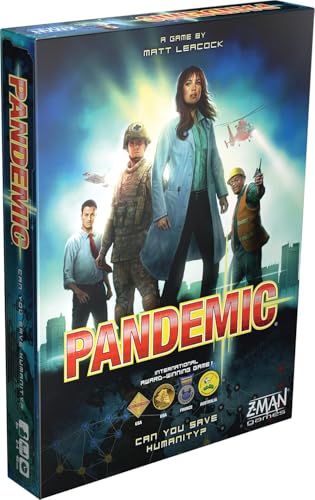
4. Asmodee Pandemic Board Game (Base Game) - A Cooperative Battle to Save Humanity, Strategy Game for Kids and Adults, Ages 8+, 2-4 Players, 45 Minute Playtime
Overview:
Pandemic revolutionized cooperative gaming by pitting players against a spreading global epidemic. As disease-fighting specialists, you must collaborate to cure four deadly outbreaks before time runs out—a tense, 45-minute race where teamwork is non-negotiable.
What Makes It Stand Out:
Its groundbreaking “all for one” design forces genuine collaboration: players combine unique roles (e.g., Medic, Scientist) to strategize cures, with shared wins or losses eliminating cutthroat competition. The infectious tension of escalating outbreaks creates unmatched group synergy, especially for families introducing strategy gaming.
Value for Money:
At $40, it’s a benchmark for cooperative value. Unlike competitive games requiring constant repurchases for freshness, Pandemic’s legacy design offers high replayability through variable setup and difficulty. Cheaper than most strategy games yet enduring for 15+ years, it’s a timeless investment.
Strengths and Weaknesses:
Strengths: Pioneering cooperative mechanics; accessible yet challenging; strong role differentiation; perfect for family bonding. Weaknesses: Can suffer from “alpha gamer” syndrome; steep learning curve for young children; component quality feels dated next to modern releases.
Bottom Line:
A must-own cornerstone of modern board gaming. Its cooperative brilliance and age-inclusive design make it the definitive gateway to strategic play.
5. Greater Than Games | Spirit Island: Base Game | Cooperative Strategy Board Game | 1 to 4 Players | 90+ Minutes | Ages 14+

Overview:
Spirit Island flips the colonial narrative: players embody powerful spirits defending their island from colonizers through elemental fury. This cooperative strategy game tasks 1–4 players with combining unique spirit abilities to repel invaders, featuring deep tactical planning and high replayability.
What Makes It Stand Out:
Its asymmetric spirits (e.g., “Lightning’s Swift Strife” vs. “Vital Strength of the Earth”) create wildly distinct playstyles, while adversaries and blight mechanics ensure no two games play alike. Unlike Pandemic’s “save humanity” trope, Spirit Island’s thematic richness—where spirits are the land—elevates strategy into a visceral, thematic experience.
Value for Money:
Priced at $70, it delivers exceptional depth for the cost. The base game includes 8 spirits, multiple adversaries, and solo rules, dwarfing most strategy games in replay value. Though pricier upfront, its longevity and lack of required expansions justify the investment for enthusiasts.
Strengths and Weaknesses:
Strengths: Rich thematic integration; highly replayable with adversaries; satisfying asymmetric powers; robust solo mode. Weaknesses: Steep learning curve; lengthy setup; 90+ minute runtime may deter casual players.
Bottom Line:
A masterpiece of cooperative design that surpasses Pandemic in depth and theme. Best for strategic gamers seeking immersive, challenging sessions—worth the premium for its unparalleled creativity.
6. Asmodee HEAT: Pedal to the Metal Board Game - Intense Car Racing and Strategy Game, Fun Family Game for Kids and Adults, Ages 10+, 1-4 Players, 60 Minute Playtime

Overview: HEAT: Pedal to the Metal delivers a dynamic racing experience where speed isn’t everything. Players manage their car’s engine heat while navigating tracks, balancing aggression with mechanical preservation to win races and ultimately a championship season. What Makes It Stand Out: Its ingenious heat management system replaces traditional dice rolls, using a physical “heat dial” that players must monitor closely. Pushing too hard causes overheating and slowdowns, adding deep tactical tension. The integrated Championship System, where upgrades carry between races under evolving conditions, provides exceptional narrative depth rarely seen in race games. Value for Money: Priced competitively for its component quality and replayability, HEAT offers significant value. The included Legends solo module and robust multiplayer (with AI drivers) extend playtime far beyond the base 60 minutes, outperforming simpler racing games that lack strategic depth or progression. Strengths and Weaknesses: Strengths: Brilliant heat mechanic creates meaningful risk/reward decisions; Championship mode adds long-term engagement; intuitive for ages 10+; excellent solo play. Weaknesses: Initial setup can be fiddly; track variability feels limited after many plays; AI drivers lack complexity in larger groups. Bottom Line: HEAT masterfully blends physical tension with strategic planning, making every race feel urgent and consequential. It’s the standout racing board game for families and strategy fans seeking more than just dice-chucking, justifying its price with innovative mechanics and high replayability.
7. Ravensburger Alien: Fate of The Nostromo Board Game for Ages 10 & Up – A Cooperative Strategy Game of Suspense

Overview: This cooperative game plunges players into the iconic horror of Alien, where they must work as Nostromo crewmates to survive the Xenomorph. Moving through the ship’s claustrophobic corridors, players gather resources and complete objectives while evading a relentless, AI-controlled Alien. What Makes It Stand Out: The game excels at translating cinematic tension into mechanics. The Alien’s movement is driven by a clever card system that feels unpredictable yet logical, creating genuine suspense. Thematic integration is exceptional—from detailed miniatures to objectives mirroring the film—and Ash’s inclusion adds treacherous replayability. Value for Money: While the component quality (miniatures, artwork) justifies the premium cost, the core experience shines through intense, variable gameplay. With five final missions and modular objectives, it avoids repetition, offering more strategic depth per dollar than many lighter cooperative games. Strengths and Weaknesses: Strengths: Unmatched thematic immersion; high-quality miniatures and art; strong replayability via missions/Ash; intuitive cooperative flow. Weaknesses: Alien AI can feel scripted in early plays; balance leans toward difficulty; limited player agency during Alien encounters; setup is time-consuming. Bottom Line: A masterclass in thematic adaptation, Alien: Fate of the Nostromo delivers heart-pounding suspense and cooperative challenge. Despite minor balance quirks, it’s essential for fans of the film and cooperative gamers seeking intense, narrative-driven gameplay worth the investment.
8. Distilled: A Spirited Strategy Game, Highly-Thematic Euro Game, Strive for The Title of Master Distiller, 1 to 5 Players, Ages 14 and up

Overview: Distilled immerses players in the art of spirit-making, blending resource management and tableau building. As distillers, you acquire ingredients, upgrade facilities, and fulfill spirit recipes to earn prestige, all within a tight 30-minute euro framework that prioritizes elegant efficiency. What Makes It Stand Out: Its genius lies in mirroring real distillery processes—converting base resources into spirits via aging and blending—through intuitive mechanics. The “mitigate-your-luck” element (using dice to trigger actions without randomness) and 3D organizer trays enhance both theme and functionality, creating a uniquely satisfying production puzzle. Value for Money: At its price point, Distilled offers remarkable density. The component quality (including removable trays) supports its medium weight, and the 30-minute runtime encourages quick replays. It outshines similar euros by delivering deeper theme integration without added complexity or cost. Strengths and Weaknesses: Strengths: Brilliant thematic mechanics; excellent component organization; scalable well for 1-5 players; short playtime with strategic depth; low luck. Weaknesses: Limited player interaction; theme may not appeal universally; end-game scoring can feel abrupt; minimal table presence compared to heavier euros. Bottom Line: Distilled is a near-perfect sessionable euro, transforming niche subject matter into accessible, engaging gameplay. Its clever design and thoughtful components make it a standout value for fans of streamlined strategy games, highly recommended for casual and seasoned players alike.
9. Hasbro Gaming Clue Conspiracy Board Game for Adults and Teens, Secret Role Strategy Games, Ages 14+, 4-10 Players, 45 Minutes, Mystery & Party Games
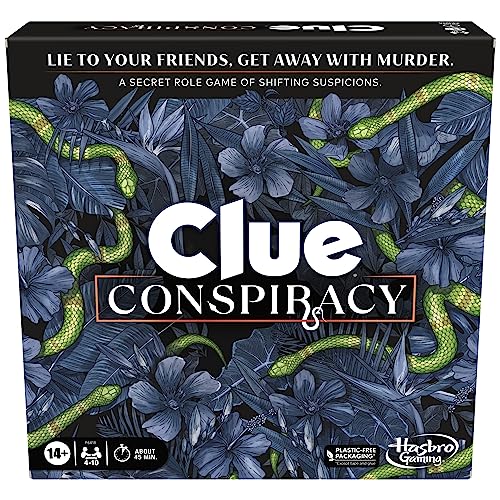
Overview: Clue Conspiracy reimagines the classic whodunit as a social deduction battle with secret teams. Set on a tropical island, players are either “Friends” protecting Mr. Coral or “Conspirators” plotting his murder, using traps, lies, and bluffing to outmaneuver opponents in a dynamic party-game format. What Makes It Stand Out: The shift from solo detective work to team-based deception is revolutionary for Clue. Hidden roles, sabotage mechanics, and multiple win conditions foster intense player interaction. The party-game vibe—encouraging bold lies and dramatic accusations—breathes fresh life into the franchise while retaining familiar characters. Value for Money: As a scalable game for 4-10 players, it’s ideal for large groups where few strategy games excel. The price aligns with its physical components (boards, tokens), but its true value is in replayability: shifting alliances and player-driven narratives ensure no two games feel identical, surpassing standard deduction games. Strengths and Weaknesses: Strengths: High social engagement and replayability; seamless scaling for big groups; accessible rules; clever integration of Clue lore. Weaknesses: Can devolve into chaos with inexperienced players; “Friends” team often feels reactive; shallow strategy beyond bluffing; component quality is functional but not premium. Bottom Line: Clue Conspiracy successfully modernizes a legacy IP into a lively social experience. While not deep strategically, its infectious energy and team-based tension make it a top-tier party game worth buying for gatherings, offering exceptional fun per dollar for larger crowds.
10. Inside Up Games Earth | Board Game of The Year 2023 | Ecosystem Building, Card Drafting, Action Selection | Create Amazing Natural Synergies | 1 to 6 Players | 45 to 90 Minute | Age 13+

Overview: Earth challenges players to cultivate biodiverse ecosystems on evolving island tiles. Through card drafting and simultaneous action selection, you attract wildlife, build habitats, and create synergies between species, all while watching your island flourish visually and strategically. What Makes It Stand Out: Its simultaneous play mechanism—where one player’s action benefits others differently—ensures constant engagement with minimal downtime. The staggering 350+ unique cards (including double-sided variants) enable over 25,000 starting setups, while the island’s physical growth creates breathtaking visual progression unmatched in the genre. Value for Money: Winning Board Game of the Year 2023 isn’t accidental; Earth justifies its cost through sheer depth and longevity. Eco-friendly FSC-certified components reflect its theme, and solo/team modes enhance versatility. It outperforms competitors by delivering near-infinite replayability without complexity bloat. Strengths and Weaknesses: Strengths: Revolutionary simultaneous turns; extraordinary replayability; stunning visual evolution; eco-conscious production; flexible player count. Weaknesses: Card density can overwhelm new players; synergy mastery requires several plays; scoring feels abstract early on; box insert organization is mediocre. Bottom Line: Earth is a landmark achievement in accessible strategy gaming. Its elegant mechanics, breathtaking aesthetics, and commitment to sustainability make it a must-own. Despite a mild learning curve, its brilliance as a gateway to deeper euros earns a resounding recommendation for all strategy enthusiasts.
Understanding Thematic Depth Beyond the Box Art
What Truly Defines a Thematic Game Experience
A genuinely thematic game transcends superficial aesthetics. It’s not merely about having miniatures depicting spaceships or a board shaped like a haunted mansion. True thematic depth occurs when the core mechanics, player decisions, and overall structure consistently reinforce and simulate the intended narrative or setting. Every rule should feel like an inevitable part of that world, making players feel like active participants within the story, not just manipulators of abstract systems. The theme isn’t layered on top; it’s woven into the game’s very DNA.
The Critical Role of Narrative Integration
How the game delivers and progresses its story is paramount. Look for titles where narrative isn’t solely dependent on reading paragraphs from a booklet between turns. The best experiences integrate storytelling through player-driven events, meaningful choices that alter the course of the game, evolving scenarios based on actions, and components that dynamically reflect the narrative state. Does the story unfold because of what you’re doing, or does the gameplay constantly interrupt the story? Seamless integration creates powerful emotional engagement.
Mechanics as Storytelling Tools
Exceptional thematic games use their mechanics as the primary vehicle for storytelling. Resource management might represent dwindling supplies in a survival scenario; area control could simulate the spread of influence in a political drama; hand management might mirror the gathering of crucial intelligence. When the way you play directly mirrors the story you’re experiencing, the theme becomes visceral and unforgettable. Ask: “Do these rules make me feel like I’m living this story?”
Essential Features to Evaluate Before You Buy
Player Agency and Meaningful Choices
Thematic depth crumbles without genuine player agency. Players should feel their decisions significantly impact the narrative trajectory and outcome. Avoid games where the path is overly scripted or where choices feel inconsequential. Look for branching paths, multiple win conditions tied to the theme, and systems where your strategic approach actively shapes the emergent story. Your choices should feel like they carry narrative weight.
Replayability Through Dynamic Systems
A strong theme shouldn’t equate to a single, rigid story. The best thematic games offer high replayability through variable setup, modular boards, randomized events, or legacy/deck-building elements that ensure each session feels fresh while staying true to the core narrative. Does the game framework allow for different stories to emerge within the same thematic setting, or is it a one-and-done experience? Dynamic systems are key to longevity.
Component Quality and Immersive Presentation
While not the sole factor, high-quality components significantly enhance immersion. Well-designed miniatures, evocative artwork, thematic soundtracks (if applicable), and components that feel substantial contribute to the sensory experience. However, prioritize functional components – cards that shuffle well, boards that lay flat, tokens that are easy to distinguish. Components should serve the theme and gameplay, not just look pretty in the box.
Diving Deeper: Mechanics That Build Worlds
The Power of Scenario-Based Play
Games utilizing distinct scenarios or campaigns allow for focused narrative arcs within the broader theme. Each scenario can introduce new challenges, story beats, and mechanical wrinkles, providing structure while maintaining variety. This approach often delivers a more cinematic or novel-like experience compared to a single, monolithic game structure. It allows the theme to be explored from multiple angles.
Cooperative vs. Competitive Narrative Structures
Consider how player interaction aligns with the theme. Is the narrative inherently collaborative (e.g., surviving together, solving a mystery as a team), making cooperation essential? Or does the theme thrive on rivalry and conflict (e.g., political intrigue, territory conquest), where competition drives the story? The chosen interaction model must feel logically consistent with the world being portrayed for maximum thematic resonance.
Legacy Mechanics and Evolving Narratives
Legacy systems, where choices permanently alter the game through stickers, sealed packets, or rule changes, create unparalleled long-term narrative investment. They simulate the passage of time, consequences of actions, and the evolution of a world. However, they require a significant commitment. Assess if the evolving story and persistent changes are core to the thematic promise you seek, or if they might feel gimmicky within the specific context.
The Impact of Dice, Cards, and Randomness
How randomness is implemented is crucial for theme. Dice can represent chaos, luck, or uncontrollable forces (perfect for horror or exploration). Card-driven systems might represent knowledge, events, or narrative possibilities. Evaluate if the randomness feels thematic – does the tension of a dice roll mirror the uncertainty of the setting? Avoid games where randomness overwhelms player agency or feels disconnected from the narrative.
Practical Considerations for Your Table
Player Count Compatibility
Thematic intensity can vary wildly with player count. A game designed for intense 1-2 player duels might lose narrative focus with five players. Conversely, a grand political simulation might feel thin with only two. Always check how the game scales – does the story remain engaging and the mechanics流畅 (fluid) across the intended range? Don’t force a game into a group size it wasn’t designed for.
Session Length and Pacing
Thematic games often demand longer playtimes, but pacing is critical. Does the narrative momentum build steadily, or are there lulls where the theme fades into mechanical tedium? Consider your group’s attention span. A tightly paced 90-minute narrative might be more satisfying than a sprawling 4-hour epic with slow stretches, even if the latter has a grander theme. Ensure the length serves the story, not the other way around.
Complexity Balance: Rules vs. Immersion
While deep themes often require moderate complexity, there’s a tipping point. If learning and remembering intricate rules constantly pulls players out of the narrative bubble, the thematic experience suffers. Seek games where the rules, once internalized, fade into the background, allowing the theme to take center stage. The cognitive load should feel proportional to the immersive payoff.
Setup and Takedown Time
Let’s be practical: an overly complex setup can kill the mood before the story even begins. Similarly, a lengthy teardown discourages frequent plays. Evaluate if the time investment to get the game to the table aligns with how often you realistically want to experience its theme. A game with a 20-minute setup might only get played once a month, no matter how good the theme is.
Accessibility for Newcomers
If you plan to share the experience, consider the onboarding curve. A brilliantly thematic game is useless if it consistently frustrates new players, breaking their immersion. Look for clear iconography, intuitive thematic connections in the rules, or streamlined introductory scenarios. Can the theme help teach the game, making learning part of the narrative discovery?
Building Your Thematic Game Library Strategically
Aligning Themes with Your Interests
Don’t chase generic popularity. Reflect deeply on genres and settings that genuinely excite you and your regular group – historical periods, specific genres (noir, sci-fi, fantasy subgenres), or types of stories (character-driven, epic scale, puzzle-like mysteries). A mediocre game in your favorite theme will likely provide more enjoyment than a “perfect” game in a theme you’re indifferent to. Passion fuels immersion.
Considering Group Dynamics and Preferences
Be brutally honest about your group’s tolerance for rules complexity, randomness, player conflict, and playtime. A highly competitive thematic game might fracture a group that prefers cooperative storytelling. A game heavy on reading might alienate players who prefer tactile, visual gameplay. The best thematic game for your table respects your group’s collective playstyle preferences.
The Value of Physical vs. Digital Components
While physical presence enhances immersion for most, consider storage space and portability. Some deeply thematic experiences now exist in digital formats (apps, Vassal modules) offering convenience and automated rules enforcement, though often at the cost of tangible component interaction. Weigh the importance of physical interaction against practical constraints for your situation.
Frequently Asked Questions
What’s the single most important factor for a strong thematic experience?
The seamless integration of mechanics and narrative. If the rules don’t feel like a natural expression of the theme, immersion breaks, regardless of component quality or story premise. The gameplay is the story.
How can I tell if a game’s theme is just “chrome” (superficial)?
If you could completely change the theme (e.g., from space exploration to medieval trading) without needing to alter the core rules or player decisions, the theme is likely superficial chrome rather than integral to the design.
Are more complex games always more thematic?
Not necessarily. Some of the most powerful thematic experiences come from elegantly simple mechanics that perfectly capture the essence of a story or setting. Complexity can sometimes hinder, not help, the feeling of being “in the story.”
Do I need miniatures for a game to be thematic?
Absolutely not. While miniatures can enhance immersion, exceptional thematic depth can be achieved through card art, narrative writing, clever use of generic components, and, most importantly, mechanics that evoke the theme. Focus on the feeling the game creates.
How important is the rulebook’s writing style for theme?
Very important. A rulebook that explains mechanics through the lens of the game’s world (e.g., “To gather intelligence, draw two Event cards”) significantly boosts early immersion compared to one using purely abstract, technical language.
Can family-friendly games be deeply thematic?
Yes! Thematic depth isn’t exclusive to “heavy” games. Many accessible games for families or younger players create strong, age-appropriate narratives through clear mechanics, engaging stories, and colorful components designed for their target audience.
Should I prioritize solo mode when looking for thematic games?
If you frequently play solo, yes. A well-designed solo mode for a thematic game should maintain the narrative integrity and provide meaningful, theme-consistent challenges, not just a dry puzzle against an AI opponent.
How do I avoid buyer’s remorse with expensive thematic games?
Focus on the core features discussed here (mechanics/theme integration, agency, replayability factors) rather than box art or hype. Read detailed descriptions of how the theme is implemented, not just what the theme is. Watch playthroughs focusing on narrative flow.
Are legacy games the best for thematic storytelling?
They offer a unique, evolving narrative structure, but aren’t inherently “better.” Many non-legacy games provide equally compelling or even more replayable thematic experiences. Legacy is a specific tool for a specific type of story, not a guarantee of superior theme.
What’s a red flag for poor thematic integration?
When the rulebook or components constantly force you to make thematic leaps – e.g., “This blue cube represents a mystical energy source because the theme says so, but it functions identically to a brown cube representing lumber.” Mechanics should justify the theme, not the other way around.
See Also
- 10 Best Thematic Board Games for Families with Teens in 2026
- 10 Thematic Board Games Recommendations for Date Nights in 2026
- 10 Thematic Board Games That Solve Lack of Engagement in 2026
- 10 Best Thematic Board Games for Solving Common Boredom Problems in 2026
- 10 Thematic Board Games That Solve the ‘Nothing to Play’ Problem in 2026

