Table of Contents
Imagine gathering around a table where the usual competitive tension melts away, replaced by shared focus and collective problem-solving. Cooperative board games transform gaming from a battle of wits against friends into a united front against the game itself – a thrilling shift where victory belongs to the team, not just the loudest voice. For strategy enthusiasts, this genre offers a uniquely satisfying intellectual challenge: deciphering complex systems, optimizing group decisions under pressure, and experiencing the profound satisfaction of overcoming seemingly insurmountable odds together. It’s not just about winning; it’s about the intricate dance of communication, trust, and strategic foresight that defines the journey.
The allure of modern cooperative strategy games lies in their ability to simulate high-stakes scenarios where every choice carries weight and collaboration is non-negotiable. Gone are the days of simplistic “everyone vs. the box” mechanics; today’s designs feature sophisticated AI-like systems, dynamic difficulty scaling, and deeply integrated themes that make each playthrough feel urgent and alive. Whether you’re managing scarce resources during an ecological crisis, coordinating a heist with precise timing, or navigating political intrigue in a fragile alliance, these games demand genuine teamwork and strategic depth. Choosing the right one, however, requires understanding the nuanced elements that transform a simple group activity into a memorable, brain-teasing adventure worth returning to time and again.
Top 10 Strategy Cooperative Board Games
Detailed Product Reviews
1. Gamewright - Forbidden Island - Cooperative Strategy Survival Board Game, 2-4 Players
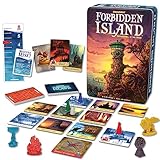
Overview: Forbidden Island, designed by Matt Leacock, is a pulse-pounding cooperative board game where 2-4 players race against time to retrieve four sacred treasures from a sinking island. Players assume unique roles with special abilities, navigating tile-based terrain that literally disappears beneath them as the water level rises, demanding urgent teamwork and strategic planning.
What Makes It Stand Out: Its ingenious “sinking island” mechanic creates relentless, escalating tension. The game masterfully balances accessibility with depth, using vivid illustrations to immerse players in a perilous paradise. Unlike competitive games, it fosters genuine collaboration, forcing families and friends to strategize collectively under pressure, making every narrow escape or heartbreaking defeat a shared experience.
Value for Money: Priced accessibly, it delivers exceptional replayability through variable island layouts and adjustable difficulty levels. Compared to similarly complex strategy games, it offers more family-friendly engagement without sacrificing strategic depth, justifying its cost as a staple for game nights focused on unity over rivalry.
Strengths and Weaknesses: Strengths: Simple rules for ages 10+, stunning visuals, promotes critical thinking and communication, high replay value. Weaknesses: Limited player count (max 4), shorter playtime may feel brief for hardcore gamers, and the high difficulty curve can frustrate younger players without guidance.
Bottom Line: Forbidden Island remains a benchmark for cooperative gaming, perfectly blending tension, strategy, and teamwork. Highly recommended for families and casual gamers seeking an engaging, accessible adventure that truly rewards collective problem-solving.
2. Ravensburger Horrified Games – Dungeons & Dragons – Strategy Board Game – Boost Critical Thinking & Teamwork – Cooperative Gameplay – Unique Monster Challenges – 1 to 5 Players – Adults & Kids 10+

Overview: Horrified: Dungeons & Dragons plunges 1-5 players into the streets of Waterdeep, where they must cooperatively defend citizens from four iconic D&D monsters—the Beholder, Displacer Beast, Mimic, and Red Dragon. Each creature demands unique tactics, turning the board into a dynamic battlefield requiring smart resource management and coordinated heroics.
What Makes It Stand Out: The game brilliantly translates D&D lore into tangible mechanics, with each monster offering distinct, thematic challenges that evolve as the game progresses. High-quality sculpted miniatures, a custom d20, and a richly illustrated board create deep immersion, while the adjustable difficulty ensures both new and seasoned players stay challenged.
Value for Money: At its price point, it offers remarkable value with substantial components and exceptional replayability. Switching between monsters resets strategies entirely, providing vastly different experiences. It surpasses generic cooperative games by delivering authentic D&D storytelling and strategic depth suitable for a wide age range.
Strengths and Weaknesses: Strengths: Stunning components, deeply thematic monster mechanics, scalable difficulty, strong educational value for critical thinking. Weaknesses: Setup can be time-consuming with multiple monster decks, and the 60-minute playtime may extend significantly with larger groups or new players.
Bottom Line: Horrified: D&D is a must-have for fantasy fans and families, masterfully blending cooperative strategy with beloved lore. Its unique monster challenges and high production quality make it a standout investment for memorable, replayable game nights.
3. Asmodee Mysterium Board Game - Enigmatic Cooperative Mystery Game with Ghostly Intrigue, Family Fun for Kids & Adults, Ages 10+, 2-7 Players, 42 Minute Playtime

Overview: Mysterium casts players as psychics attempting to solve a murder by interpreting surreal, symbolic visions from a silent ghost. In this 42-minute cooperative deduction game for 2-7 players, the ghost communicates solely through abstract illustrated cards, guiding psychics to identify the culprit, location, and weapon before time runs out.
What Makes It Stand Out: The game’s revolutionary asymmetric design—where one player is the non-verbal ghost—creates a uniquely engaging communication challenge. Its breathtaking, dreamlike artwork transforms abstract clues into a captivating narrative experience, fostering creativity and empathy as players debate interpretations of the ghost’s cryptic visions.
Value for Money: Despite a moderate price tag, Mysterium excels in replayability with countless suspect/location/weapon combinations and adjustable difficulty levels. It outperforms similar deduction games by offering richer storytelling and visual appeal, making it ideal for groups seeking imaginative, discussion-driven gameplay.
Strengths and Weaknesses: Strengths: Exceptional artwork, innovative ghost-psyhic dynamic, scales perfectly for large groups, encourages creative discussion. Weaknesses: The ghost’s limited influence can feel passive, and interpreting clues may frustrate players who prefer concrete logic over abstract thinking.
Bottom Line: Mysterium is a masterpiece of cooperative storytelling that turns deduction into an artistic, emotionally resonant experience. Highly recommended for families and groups who relish creative problem-solving and stunning visual narratives.
4. Spin Master Games, SolidRoots Escaping Extinction, Cooperative Strategy Board Game from The Makers of Mind The Gap, for Kids & Family, 1-4 Players, for Ages 12 & Up

Overview: In Escaping Extinction, 1-4 players become clever dinosaurs racing to assemble a 3D rocket before a meteor strikes. This cooperative strategy game tasks players with exploring a modular prehistoric world, gathering scattered rocket parts while surviving dynamic threats like earthquake cards that reshape the board mid-game.
What Makes It Stand Out: The tile-based, ever-changing board ensures no two games play alike, while the physical 3D rocket assembly adds tactile excitement. Earthquake cards introduce thrilling unpredictability, forcing teams to adapt strategies on the fly. Its unique dino-survival theme stands out in a crowded cooperative genre.
Value for Money: Priced competitively, it delivers strong replay value through variable layouts and evolving challenges. Though the 3D rocket is a standout feature, the game’s moderate component quality means it offers slightly less longevity than premium alternatives, though its novelty justifies the cost for family collections.
Strengths and Weaknesses: Strengths: Innovative 3D rocket build, dynamic earthquake mechanic, high replayability, accessible for ages 12+. Weaknesses: Some components feel less durable, theme may not resonate as widely as fantasy/sci-fi titles, and limited player count caps group fun.
Bottom Line: Escaping Extinction is a creative, engaging choice for families seeking fresh cooperative gameplay with tangible goals. While not the most durable option, its dynamic board and unique assembly mechanic make it a worthwhile addition for strategic game nights.
5. Ravensburger Alien: Fate of The Nostromo Board Game for Ages 10 & Up – A Cooperative Strategy Game of Suspense
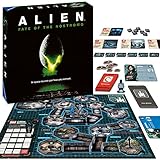
Overview: Alien: Fate of The Nostromo thrusts 1-5 players into the claustrophobic corridors of the doomed spaceship Nostromo. As crew members like Ripley or Dallas, players must gather supplies, craft tools, and complete objectives while evading a relentless Xenomorph—all before the ship’s self-destruct sequence ends their mission.
What Makes It Stand Out: The game masterfully recreates the film’s oppressive tension through brilliant spatial mechanics; the Alien moves silently based on player actions, creating heart-pounding suspense. Detailed miniatures, thematic artwork, and variable final missions ensure each playthrough feels uniquely terrifying and cinematic.
Value for Money: Its premium components (including sculpted miniatures and a double-sided board) justify a higher price point. With five distinct final missions and the challenging Ash variant, replayability far exceeds most narrative-driven co-ops, offering exceptional depth for sci-fi horror fans.
Strengths and Weaknesses: Strengths: Immersive atmosphere, high-quality components, exceptional theme integration, strong replayability. Weaknesses: Steeper learning curve than entry-level co-ops, intense suspense may overwhelm younger players, and setup is complex for casual sessions.
Bottom Line: Alien: Fate of The Nostromo is a top-tier cooperative experience for horror and sci-fi enthusiasts, delivering unmatched tension and thematic depth. Despite its complexity, it’s a worthy investment for players seeking a truly cinematic, replayable adventure.
6. Scorpion Masqué Sky Team | Voted Game of The Year 2024 | Best 2 Player Game | Work Together to Land The Plane | Ages 14+ | 20 Minutes

Overview: Sky Team delivers intense, cooperative gameplay where two players act as pilot and co-pilot racing to land a plane safely before critical systems fail. With its 20-minute runtime and cockpit-themed components, it masterfully blends tension and teamwork for mature audiences.
What Makes It Stand Out: Its ingenious dice-driven communication mechanic forces players to strategize between rounds but mandates trust during execution—no mid-roll adjustments allowed. The 20 unique airport scenarios and optional modules (like kerosene leaks) ensure high replayability, while immersive components like the descent tracker and coffee-brewing action deepen engagement.
Value for Money: Priced competitively for a premium, award-winning 2-player experience, it outshines longer, less focused games. The depth-to-playtime ratio is exceptional, offering hundreds of landing challenges without filler. Alternatives rarely match its precision in cooperative design.
Strengths and Weaknesses: Pros: Unmatched tension in communication, brilliant scenario variety, exceptional component integration, and flawless pacing. Cons: Steep learning curve for casual gamers, limited player count (only 2), and high-pressure gameplay may frustrate some.
Bottom Line: An essential purchase for serious 2-player strategy fans; its innovation, replayability, and thematic execution justify the Game of the Year accolade. Not for those seeking relaxed or large-group fun.
7. Pandasaurus Cooperative Strategy Card Game - Fun Interactive Family Game for Ages 8+, 1-5 Players, 20 Minute Playtime
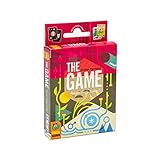
Overview: “The Game” is a globally acclaimed cooperative card game where players collaboratively play descending and ascending number sequences from shared decks. Its minimalist design belies deep strategic tension as teams race to empty decks before critical mistakes force an early end.
What Makes It Stand Out: The sheer simplicity—no board, just 98 cards—creates profound interdependence. Players must silently coordinate plays, reading teammates’ intentions without communication, fostering intense nonverbal teamwork. Its addictive “just one more try” loop and 1.3 million copies sold underscore its universal appeal.
Value for Money: An outstanding bargain; the compact, durable cards offer near-limitless replayability for under $15. It surpasses pricier family games by delivering pure, focused strategy without complex rules—ideal for quick sessions or extended challenges.
Strengths and Weaknesses: Pros: Effortlessly learned, scales perfectly for 1-5 players, promotes genuine teamwork, and highly portable. Cons: Limited visual appeal, repetitive after dozens of plays, and losing streaks can frustrate younger players.
Bottom Line: A must-have for families and casual gamers seeking accessible, brain-teasing cooperation. Its Spiel des Jahres win is well-earned—affordable, portable, and endlessly engaging despite minor aesthetic simplicity.
8. Happy Camper - The Four Doors | New Cooperative Game by Creator of Forbidden Island and Pandemic | Super Portable | Great for Solo Play, Two Players, and Groups
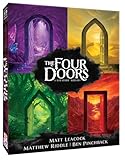
Overview: From Pandemic’s designer, Happy Camper: The Four Doors is a compact cooperative adventure where 1-5 players explore a mystical tower to retrieve treasures before shadows seal the exits. Its 30-minute playtime targets quick, strategic sessions for ages 10+.
What Makes It Stand Out: Leacock’s signature cooperative tension shines through streamlined mechanics—managing limited actions while racing against a shadow tracker. The portable tin and modular door layouts enable deep strategy in a travel-friendly package. Solo mode integrates seamlessly, a rarity for group-focused designs.
Value for Money: Priced fairly for its portability and pedigree, it offers more strategic depth than similarly sized games. While components are modest, the replayability from varied door combinations and shadow behaviors provides long-term value.
Strengths and Weaknesses: Pros: Exceptional portability, intuitive rules, strong solo/co-op flexibility, and Pandemic-level tension in miniature. Cons: Cardstock quality feels thin, treasure mechanics lack thematic depth, and limited player interaction compared to Leacock’s bigger titles.
Bottom Line: A stellar travel companion for co-op fans, especially solo players. It sacrifices some production polish for portability but delivers smart, accessible fun worthy of its creator’s legacy.
9. Asmodee Choose Your Own Adventure: House of Danger Board Game - Embark on a Perilous Journey in this Cooperative Narrative Adventure, Ages 10+, 1+ Players, 1+ Hour Playtime
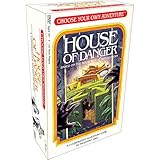
Overview: House of Danger merges classic “Choose Your Own Adventure” storytelling with board game mechanics, casting players as investigators unraveling mysteries in a haunted mansion. Though marketed for 1+ players, the provided features erroneously list “8” players—likely a listing error.
What Makes It Stand Out: Its app-driven narrative replaces dice rolls with branching story choices, creating cinematic immersion. Real-time decisions impact outcomes across 2+ hour campaigns, while cooperative clue-solving fosters teamwork. The physical components (like maps and cards) enhance tactile engagement beyond pure app reliance.
Value for Money: Justified for story-driven enthusiasts; the extensive narrative content offers 10+ hours of unique play. However, app dependency and the corrected 1-5 player count (not 8) slightly reduce accessibility versus app-free alternatives at similar price points.
Strengths and Weaknesses: Pros: Rich storytelling, highly replayable branching paths, strong solo suitability, and thematic cohesion. Cons: App mandatory (no physical-only mode), confusing player count discrepancy, and setup time exceeds advertised playtime.
Bottom Line: A compelling narrative adventure for fans of immersive storytelling, but verify player count before purchase. Ideal for solo/co-op groups prioritizing story over traditional board game mechanics.
10. Ravensburger Horrified Games - Greek Monsters - Strategy Board Game - Boost Critical Thinking & Teamwork - Cooperative Gameplay - Unique Monster Challenges - 1 to 5 Players - Adults & Kids 10+

Overview: Horrified: Greek Monsters tasks 1-5 players with defeating six mythical beasts (Medusa, Cerberus, etc.) across a shared board. Each monster requires unique tactics, blending critical thinking and teamwork in 60-minute cooperative sessions for ages 10+.
What Makes It Stand Out: The game’s genius lies in distinct monster mechanics—Medusa petrifies players, while Cerberus demands multi-path navigation—forcing adaptive strategies per session. Stunning Greek-themed art and modular board tiles elevate immersion beyond typical family games.
Value for Money: Excellent for its scope; the 6-in-1 monster variety provides lasting replayability at a mid-range price. It outperforms single-mechanic competitors by delivering six unique challenges in one box, justifying its cost for frequent game nights.
Strengths and Weaknesses: Pros: Innovative monster-specific rules, beautiful components, strong educational value in strategy, and seamless 1-5 player scaling. Cons: Setup is time-consuming, monster rulebooks feel fragmented, and luck elements occasionally undermine planning.
Bottom Line: A top-tier cooperative experience for families seeking strategic depth and thematic richness. Minor setup quirks are outweighed by its creativity and replay value—highly recommended for monster mythology fans.
Understanding Cooperative Strategy Fundamentals
Before diving into specific features, it’s crucial to grasp what truly defines a strategic cooperative experience. It’s far more than just having a common enemy; it involves interconnected systems where individual actions directly impact the group’s overall trajectory, demanding constant evaluation of risks and shared objectives.
Defining True Cooperation vs. Multiplayer Solitaire
True cooperative strategy games require constant, meaningful interaction where players must actively share information, delegate tasks based on evolving roles, and make joint decisions that affect everyone. Beware of “multiplayer solitaire” experiences disguised as cooperative – these lack the essential communication and interdependence, reducing the game to individuals solving separate puzzles on the same board without genuine synergy or shared consequence.
The Critical Role of Hidden Information
Strategic depth often emerges from how information is distributed. Games utilizing hidden roles, obscured objectives, or concealed threats force players to interpret limited clues, negotiate trustworthiness, and make critical deductions together. This mechanic prevents dominant players from taking over, as no single person possesses the full picture, necessitating collaborative analysis and hypothesis testing to succeed.
Balancing Player Agency and Group Consensus
An ideal cooperative game empowers each participant with meaningful decisions while requiring collective agreement on high-stakes moves. Look for designs where individual turns involve significant strategic choices (like resource allocation or action selection) but major milestones or crisis responses demand group discussion and unified action. This balance prevents analysis paralysis while ensuring no single voice dictates the entire strategy.
Essential Mechanics for Strategic Depth
The mechanical foundation determines whether a cooperative game offers fleeting fun or enduring strategic richness. Focus on systems that create layered decision-making and evolving challenges that resist simple memorization or optimal-path solutions.
Dynamic Threat Systems and Escalation
Static challenges quickly become predictable. Seek games with adaptive or escalating threats – timers that accelerate under pressure, enemy behaviors that shift based on player actions, or environmental hazards that compound over time. This creates genuine urgency and forces the group to prioritize dynamically, weighing short-term fixes against long-term consequences in a constantly shifting landscape.
Resource Management Complexity
Beyond simple point counting, strategic cooperation shines when managing scarce, interconnected resources. Consider how the game handles trade-offs: Are actions, time, materials, or information tightly constrained? Do resources have multiple potential uses, creating tough choices? Effective systems make every expenditure feel significant and encourage players to develop specialized roles within the team’s economy.
Variable Player Powers and Asymmetry
Asymmetrical roles, where each player has unique abilities, strengths, and limitations, significantly enhance strategic replayability and teamwork. This mechanic necessitates understanding not just your own role but how it synergizes (or conflicts) with others. It prevents “quarterbacking” by ensuring every player holds essential knowledge or capabilities vital to the team’s strategy, fostering true interdependence.
Legacy and Campaign Progression Systems
For long-term engagement, legacy or campaign modes introduce persistent changes based on session outcomes. Unlocking new rules, components, or narrative threads creates a evolving strategic landscape where past decisions have tangible future consequences. This deepens investment and forces teams to adapt overarching strategies across multiple sessions, moving beyond single-game tactics to long-term planning.
Evaluating Player Experience and Accessibility
Even the most strategically brilliant game falls flat if the experience doesn’t resonate with your group. Consider how the game facilitates communication, manages difficulty, and accommodates different playstyles to ensure it becomes a staple, not a shelf-warmer.
Managing Table Talk and Communication Rules
The rules governing player discussion are pivotal. Some games encourage open negotiation at all times, while others impose strict communication limits during critical phases. Understand your group’s preference: Do you thrive on intense debate, or prefer constrained dialogue that heightens tension? The right communication framework prevents dominant personalities from overshadowing others and maintains the intended challenge level.
Difficulty Scaling and Player Count Flexibility
A great cooperative strategy game shouldn’t feel trivial with experienced players or impossibly hard with novices. Look for robust difficulty scaling – adjustable threat levels, variable setups, or modular components that let you tailor the challenge. Crucially, assess how the game performs across its intended player range; some mechanics shine with four players but collapse with two, impacting your group’s flexibility.
Replayability Through Modular Design
Avoid games with a single, fixed path to victory. Prioritize titles featuring modular boards, randomized scenarios, shuffled decks of challenges, or multiple win/loss conditions. True replayability means that even after mastering the core rules, each session presents fresh strategic puzzles due to setup variations, ensuring the game remains engaging through dozens of plays.
Learning Curve and Onboarding Experience
Steep learning curves can alienate potential players. Evaluate how the game introduces complexity: Does it offer phased rulebooks, tutorial scenarios, or intuitive iconography? A well-designed onboarding process allows new players to contribute meaningfully in their first game without overwhelming them, making it easier to bring in fresh participants and sustain your gaming group.
Practical Considerations for Your Gaming Group
Beyond pure mechanics, real-world factors determine whether a cooperative strategy game integrates smoothly into your regular game nights and delivers consistent value over time.
Time Investment and Session Length
Be brutally honest about your group’s available time. Some strategic cooperatives demand 90-minute sessions, while others span multiple hours. Consider setup and teardown time too – intricate setups with dozens of components can eat into precious playtime. Choose a game whose total time commitment realistically fits your typical gaming slot to avoid frustration or abandoned sessions.
Physical Space and Component Quality
Cooperative strategy games often sprawl across the table. Assess your available space: Do you have room for large boards, multiple player screens, and component trays? Also, scrutinize component durability – flimsy cards or tiny tokens become frustrating after repeated plays. Sturdy boards, clearly marked tokens, and readable cards significantly enhance the experience during lengthy, intense sessions.
Thematic Integration and Immersion
While mechanics are paramount, a compelling theme elevates engagement. The best games weave narrative seamlessly into the strategic fabric – decisions feel thematically justified, and the game state visually reflects the unfolding story. Avoid games where the theme feels pasted on top of abstract mechanics; deep integration makes the strategic choices more meaningful and memorable.
Handling Player Elimination and Downtime
True cooperative games rarely eliminate players, but some mechanics can sideline individuals temporarily. Evaluate if the game minimizes downtime – are players actively engaged during others’ turns through negotiation, planning, or shared resource management? Games where everyone has constant meaningful input prevent disengagement and keep energy levels high throughout the session.
Frequently Asked Questions
How do I prevent one person from dominating decision-making (“quarterbacking”)?
Implement the game’s communication rules strictly, use hidden information mechanics that distribute essential knowledge, and encourage players to declare intentions rather than dictate moves (“I think we should focus on the northern threat – what do you see on your side?”). Some groups also use timed discussions to ensure balanced input.
Are cooperative strategy games suitable for couples or just larger groups?
Many excel with just two players, offering intense, intimate strategic challenges. Look for games specifically designed or well-tested for lower player counts, as some mechanics scale poorly below three players. Two-player co-ops often emphasize tight synergy and shared burden.
How important is a game’s physical component quality for the strategic experience?
Critical. Poorly designed components (e.g., tiny unreadable text, flimsy boards that shift) create constant friction that disrupts strategic focus and causes errors. Durable, clearly labeled components ensure the mental energy stays on strategy, not managing fiddly bits.
Can these games work well with mixed skill levels in the group?
Yes, but choose carefully. Games with robust difficulty scaling and asymmetrical roles allow newer players to handle specific, manageable tasks while veterans tackle complex coordination. Avoid titles requiring deep meta-knowledge from the first play; prioritize those with intuitive onboarding.
What’s the biggest sign a cooperative game lacks true strategic depth?
If experienced groups consistently follow the same optimal path to victory after just a few plays, with little room for creative problem-solving or adaptation. True depth means multiple viable strategies, meaningful trade-offs, and emergent challenges that resist memorization.
How do I know if a game’s theme genuinely enhances the strategy?
The theme should inform the mechanics: resource scarcity should feel narratively justified, player roles should align with the setting, and critical choices should have thematic resonance. If you could swap the theme (e.g., from space exploration to medieval trade) without changing rules, the integration is weak.
Are legacy/campaign cooperative games worth the investment?
For groups committed to long-term play, absolutely. They transform strategy by adding persistent consequences and evolving complexity, creating a unique shared narrative. However, they require consistent group attendance and a willingness to embrace permanent changes – not ideal for casual or rotating groups.
What’s the ideal session length for maintaining strategic engagement?
Most find 60-90 minutes optimal for deep focus without fatigue. Sessions exceeding two hours risk decision fatigue, where strategic quality declines. If a game takes longer, ensure it has natural pacing breaks or phases to reset mental energy.
How do cooperative games handle difficult decisions that might cause group conflict?
Well-designed games frame conflicts as shared problems against the system (“How do we solve this impossible choice?”) rather than interpersonal disputes. Clear rules on tie-breaking and mechanics that distribute tough calls (e.g., voting on sacrifices) help mitigate frustration.
Can cooperative strategy games be effectively played online via apps or platforms?
Yes, but prioritize titles with dedicated, polished digital implementations that automate rules enforcement and tracking. Avoid games relying heavily on physical manipulation of components or hidden information that’s hard to replicate digitally, as these often lose strategic nuance online.
See Also
- 10 Essential Cooperative Strategy Games Every Board Game Group Needs in 2026
- How to Choose the 10 Best Strategy Cooperative Board Games for Game Nights in 2026
- How to Solve Game Night Conflicts with the 10 Best Cooperative Board Games in 2026
- 10 Best Value Cooperative Board Games for Game Libraries in 2026
- 10 Expert-Recommended Cooperative Board Games for Game Night Success in 2026