Table of Contents
Remember that magical moment when your child’s eyes light up, not from a screen, but from the simple joy of building a fantastical world with cardboard tiles and colorful tokens? In a world buzzing with digital distractions, board games offer a tangible, shared experience that screens simply can’t replicate. They transform your living room floor into a launchpad for imagination, where rules are flexible, stories unfold spontaneously, and laughter becomes the soundtrack to genuine connection. Choosing the right game isn’t just about passing time; it’s about investing in moments where creativity isn’t just encouraged—it’s the entire point of play.
Gone are the days when kids’ board games meant rigid paths and luck-based outcomes. Today’s best creative games are designed as dynamic playgrounds for the mind, inviting children to co-author adventures, solve open-ended challenges, and express their unique perspectives. As a parent, navigating the vast sea of options can feel overwhelming. What truly makes a game creative? How do you find one that sparks sustained engagement rather than gathering dust? This guide cuts through the noise, focusing on the essential features and thoughtful considerations that turn a simple game box into a cherished catalyst for your child’s imaginative growth and joyful family interaction.
Top 10 Creative Board Games for Kids
Detailed Product Reviews
1. KEFF Make Your Own Board Game Set - DIY Blank Game Board Kit with Game Pieces, Blank Cards, Dice, Spinner, Pawns & More - Fun Family Board Games for Kids & Adults

Overview: This DIY kit empowers families to design custom board games from scratch, targeting collaborative creativity for all ages. It provides essential blank components to craft unique rules and gameplay experiences.
What Makes It Stand Out: The inclusion of six colored permanent markers for direct board/card customization is a key differentiator, alongside a sand timer for timed challenges. Its compact 18"x18" board and balanced mix of tokens (6 pawns), dice (3 blank + 1 standard), and 52 cards streamline entry-level creation without overwhelming beginners.
Value for Money: Priced accessibly for casual use, it delivers solid utility for spontaneous game nights. While card count lags behind premium kits, the markers and spinner add tangible value, outperforming generic craft supplies for structured play.
Strengths and Weaknesses: Strengths: Intuitive for young kids; markers enable vibrant designs; spinner/dice variety sparks innovation; ideal for holiday gifting. Weaknesses: Limited card count (52) restricts complex games; pawns lack diversity; sand timer durability concerns; no rulebook template slows initial setup.
Bottom Line: A beginner-friendly, imaginative starter kit for family bonding, though enthusiasts may outgrow its component limits—best for casual creators seeking quick, colorful fun.
2. Create Your Own Board Game Set – DIY Kit with Blank Game Board, Game Pieces, Blank Cards, Dice, Spinner, Rulebook, Sand Timer – Build Your Own Game Kit - Deluxe Edition
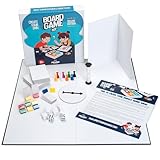
Overview: Apostrophe Games’ Deluxe Edition elevates DIY board game creation with extensive premium components, targeting serious hobbyists and educators seeking robust, reusable materials for intricate custom designs.
What Makes It Stand Out: Exceptional component volume defines this kit: 108 blank cards, 8 player tokens, dual rule sheets, and 8 player boards with stands enable multi-layered games. The heavy-duty card stock withstands repeated editing, while dual standard dice and a customizable spinner support complex mechanics.
Value for Money: Justifies a higher price point through professional-grade durability and scalability. The 108 cards and player boards surpass competitors, offering classroom or group usability that generic kits can’t match—ideal for frequent use.
Strengths and Weaknesses: Strengths: Unmatched card/token quantity; rulebook template accelerates design; resilient materials; sand timer included; suits group collaboration. Weaknesses: Bulkier storage than junior kits; no markers included (requires separate purchase); spinner base may wobble during intense play.
Bottom Line: The top-tier choice for educators and dedicated creators needing depth and longevity, though overkill for simple family projects—invest here for serious game development.
3. Blank Board Game Kit for Kids & Families – Make Your Own Game with 180+ Pieces: Double-Sided Blank Game Board, Blank Cards, Dice, Wooden Tokens, Spinner | DIY Board Game Kit for Learning & Play
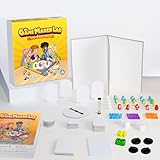
Overview: This education-focused kit merges creativity with STEM learning, featuring 180+ pieces—including wooden tokens and double-sided boards—to foster screen-free problem-solving for classrooms and families.
What Makes It Stand Out: The double-sided board and 24 wooden figures (vs. plastic pawns) elevate tactile engagement, while 84 stickers and “story dice” inspire narrative-driven games. Explicit STEM/homeschool alignment and compact packaging make it classroom-ready.
Value for Money: Excels as an educational tool, with wooden components ensuring longevity. The sticker variety and dual-board flexibility offer more creative pathways per dollar than plastic-centric rivals, especially for group settings.
Strengths and Weaknesses: Strengths: Wooden tokens enhance durability; stickers boost storytelling; strong STEM emphasis; ideal for ages 8+; gift-ready packaging. Weaknesses: No sand timer included; standard dice lack blanks for customization; card count (100) falls short of Deluxe Edition; spinner less sturdy than competitors.
Bottom Line: A standout educational investment for teachers and parents prioritizing hands-on learning—opt for this when blending creativity with cognitive development is key.
4. Hasbro Gaming Cootie Mixing and Matching Bug-Building Game | 2-4 Players | Easy Preschool Board Games | Back to School Gifts for Kids | Ages 3+

Overview: A nostalgic preschool classic reimagined, Cootie focuses on simple, no-reading bug assembly for toddlers, emphasizing color recognition and fine motor skills over complex strategy.
What Makes It Stand Out: Its charm lies in whimsical plastic pieces (mix-and-match eyes, legs, accessories) and effortless gameplay—spin to collect parts. The “Switcheroo” variant adds replayability, while vibrant bugs captivate young children instantly.
Value for Money: Budget-friendly for its target age group, with durable plastic surviving rough handling. Outperforms pricier educational toys in pure engagement for 3–5-year-olds, though less versatile long-term.
Strengths and Weaknesses: Strengths: Zero setup/no reading needed; builds dexterity; quick 10-minute rounds; perfect for toddlers; nostalgic appeal for parents. Weaknesses: No creative customization; limited replay depth; plastic pieces may snap if forced; only 2–4 players; minimal educational expansion.
Bottom Line: An unbeatable starter game for preschoolers craving tactile fun—skip if seeking creativity or longevity, but ideal for introducing absolute beginners to board games.
5. Create Your Own Board Game Set – DIY Kit with Blank Game Board, Game Pieces, Blank Cards, Dice, Spinner – Build Your Own Game Kit - Junior Edition

Overview: Apostrophe Games’ Junior Edition tailors DIY design for younger creators (ages 6–12), scaling down the Deluxe kit with a smaller board and simplified components while retaining core creative flexibility.
What Makes It Stand Out: The 16.25" board and 54 cards make it manageable for kids, with 8 vibrant tokens and 5 blank dice encouraging accessible experimentation. Heavy-duty cards resist marker bleed-through, and the spinner’s blank base invites personalized art.
Value for Money: Cost-effective for family use, trimming Deluxe Edition luxuries (like player boards) without sacrificing essentials. Better suited for casual home use than classrooms, offering 80% of the fun at a lower price.
Strengths and Weaknesses: Strengths: Age-appropriate size; ample tokens/dice for groups; card stock quality; encourages independent play; ideal for school arts projects. Weaknesses: Fewer cards (54) than Deluxe; no sand timer or rule templates; spinner less stable; box not customizable.
Bottom Line: The sweet spot for families and young students wanting creative play without complexity—choose this over Deluxe for kids under 12 or occasional game nights.
6. My First Dragon Adventure Board Game - Kids Save The Kingdom, Beginner Fantasy Adventure Game for Children 5+, Exciting Hands-On Dragon Fun for Family Game Night

Overview: This cooperative board game invites children aged 5+ to embark on a fantasy quest to relight a castle’s s’mores fire by convincing a dragon to return. Players navigate an illustrated board using numbered and image-based cards, blending storytelling with simple mechanics ideal for early learners.
What Makes It Stand Out: Its imaginative, screen-free narrative stands out, transforming skill-building into adventure. Kids develop counting, communication, and strategic thinking while immersed in a cohesive story. The family-owned business angle and emphasis on “meaningful play” add ethical appeal, fostering creativity through vibrant art and role-play.
Value for Money: Priced accessibly for its educational depth, it outperforms generic kids’ games by merging learning with engagement. While comparable titles focus solely on mechanics, this delivers holistic development, making it a smarter investment than purely entertainment-driven alternatives.
Strengths and Weaknesses:
Strengths: Exceptional storytelling enhances replayability; intuitive rules for young children; beautifully designed components spark imagination; promotes social skills and cooperation.
Weaknesses: Limited player count (2–4) may exclude larger groups; dragon interaction lacks complexity for older kids beyond age 7.
Bottom Line: An outstanding introductory board game that turns skill development into magical play. Highly recommended for families seeking educational, screen-free bonding—especially for ages 5–7.
7. BRAVEBUG You Laugh You Lose Game - Funny Charades Kids Games - Board Games for Kids & Teens - Try Not to Laugh Challenge - Sleepover Party Supplies for Girls, Birthday Game for Family, Kids & Girls

Overview: A high-energy charades-style party game where players must avoid laughing while others act out hilarious prompts. Designed for ages 8+, it uses 150 challenge cards and a sand timer to create quick, laughter-filled rounds perfect for groups of 3+.
What Makes It Stand Out: Its portability and universal appeal shine—compact enough for travel yet dynamic for diverse settings (sleepovers, parties, or family nights). The “penalty card” mechanic escalates tension cleverly, ensuring even shy players engage. Inclusivity across ages (teens to adults) is rare in party games.
Value for Money: Affordable for the sheer replayability; 150 cards sustain laughter through dozens of sessions. Cheaper than bulkier party kits but outperforms single-use gag gifts, offering long-term entertainment value for group gatherings.
Strengths and Weaknesses:
Strengths: Effortless setup and rules; portable design ideal for on-the-go fun; adaptable for varied group sizes; consistently generates organic laughter.
Weaknesses: Short rounds may feel repetitive after extended play; some prompts skew younger, limiting teen/adult depth.
Bottom Line: A must-have for social events craving instant fun. Despite minor repetitiveness, its simplicity and portability make it a top-tier choice for parties, sleepovers, or family game nights.
8. Taco vs Burrito - The Wildly Popular Surprisingly Strategic Card Game Created by a 7 Year Old - 5 Ways to Play - a Family-Friendly Party Game for Kids, Teens & Adults

Overview: A whimsical card game where players battle to build the ultimate taco or burrito using ingredient and action cards. Created by a child, it offers five gameplay variants, quick 15-minute rounds, and caters to ages 6–106+ for 2–4 players.
What Makes It Stand Out: The origin story (designed by a 7-year-old) lends authentic charm, while the “5 ways to play” mechanic ensures surprising longevity. Strategic depth emerges from simple rules—action cards enable clever combos, making it equally engaging for kids and adults.
Value for Money: Exceptional versatility justifies its cost; one box delivers multiple game modes rivaling pricier sets. Outshines similar card games by avoiding disposable gimmicks, focusing instead on replay-driven strategy ideal for gifting.
Strengths and Weaknesses:
Strengths: Highly replayable with varied modes; genuinely strategic yet easy to learn; inclusive age range; compact and durable components.
Weaknesses: Limited to 4 players; ingredient art may not resonate with very young children.
Bottom Line: A brilliantly inventive game that balances fun and strategy. Perfect for families or casual gamers seeking affordable, multi-occasion entertainment—especially as a gift.
9. Ravensburger Rivers, Roads and Rails - Innovative Matching Game for Kids | Encourages Strategic Thinking | Award-Winning Design

Overview: An award-winning tile-matching game where players connect transportation-themed paths (rivers, roads, rails) to build evolving networks. Designed for 1–8 players aged 5+, it emphasizes spatial reasoning within 15-minute sessions.
What Makes It Stand Out: Its scalability (1–8 players) and Parent’s Choice Gold Seal award highlight unmatched flexibility. The ever-changing board ensures no two games are alike, while serene artwork promotes calm focus—unusual in fast-paced kids’ games.
Value for Money: Premium quality justifies the price; durable tiles withstand heavy use. Competes favorably with complex strategy games at half the cost, offering educational depth without sacrificing accessibility for young children.
Strengths and Weaknesses:
Strengths: Exceptional replayability; builds associative thinking and patience; solo-play option is rare for strategy games; inclusive for large groups.
Weaknesses: Abstract mechanics may confuse very young players (under 6); limited competitive edge for older kids.
Bottom Line: A masterclass in elegant, educational design. Ideal for families prioritizing cognitive development—especially for ages 5–10—and a standout for group settings.
10. EZKITS4KIDZ Fun Monster Hunt Board Game for Kids 3+ | Preschool Learning Game | Family Card Game with 36 Monster Cards & Wooden Dice | Fun Birthday Gift for Boys & Girls

Overview: A preschool-ready game where toddlers hunt monsters using wooden dice and illustrated cards. With 30-minute play sessions, it targets ages 3+ through tactile, observation-based challenges ideal for short attention spans.
What Makes It Stand Out: Tactile components (wooden dice, sturdy cards) elevate sensory engagement—a rarity in budget kids’ games. The focus on reflexes and concentration seamlessly blends learning with play, while the compact box doubles as a giftable package.
Value for Money: Outstanding for early learners; durable materials outlast cheaper alternatives. Surpasses typical preschool games by embedding skill-building (observation, quick thinking) into vibrant, intuitive gameplay at a reasonable price.
Strengths and Weaknesses:
Strengths: Perfectly scaled for preschoolers; high-quality, safe components; fast-paced to maintain interest; strong educational foundation.
Weaknesses: Minimal strategy may bore older siblings; limited replayability beyond age 5.
Bottom Line: A top-tier starter game for toddlers, combining developmental benefits with irresistible fun. Highly recommended as a birthday gift for ages 3–5—just be mindful of its narrow age ceiling.
Why Creativity in Play Matters More Than Ever
The Cognitive Powerhouse of Open-Ended Play
Creative board games are far more than just fun—they’re stealthy brain trainers. When children engage with games that lack a single “right” answer, they activate critical cognitive muscles. Problem-solving shifts from memorization to innovation, as they navigate unexpected scenarios and invent novel solutions. This flexible thinking is foundational for tackling real-world challenges later in life, building mental agility that rigid, linear games simply don’t foster.
Building Emotional Intelligence Through Storytelling
Games centered around narrative creation or character interaction provide a safe space for kids to explore complex emotions. By stepping into different roles or crafting stories about fictional dilemmas, children practice empathy, perspective-taking, and emotional regulation. Negotiating game rules or resolving in-game conflicts also teaches valuable social skills like compromise and respectful communication, all within the supportive context of play.
Fostering Resilience and Risk-Taking
Creative games often involve trial and error without harsh penalties for “failure.” When a constructed story takes an unexpected turn or a built structure wobbles, children learn that mistakes are part of the process, not endpoints. This cultivates a growth mindset, encouraging them to experiment, take creative risks, and persist through challenges—skills that translate directly to academic and personal resilience.
Key Features That Spark True Creativity
Narrative Freedom Over Prescribed Paths
Look for games where the journey matters more than the destination. The best creative experiences offer frameworks, not scripts. Does the game provide prompts, themes, or modular components that allow for infinite story variations? Avoid titles where every move is dictated by dice rolls or fixed cards; instead, seek mechanics that empower players to shape the narrative direction, making each session uniquely theirs.
Tangible Building and Manipulation
The physicality of handling pieces is crucial. Games incorporating sculpting materials, magnetic tiles, or customizable boards engage fine motor skills while making abstract ideas concrete. The act of building—whether it’s a physical structure, a story sequence, or a strategic plan—grounds imagination in the real world, deepening cognitive processing and satisfaction. Texture, color, and spatial arrangement become part of the creative language.
Collaborative Creation Mechanics
True creative magic often happens when players build together. Prioritize games where success hinges on shared imagination rather than cutthroat competition. Mechanics like cooperative storytelling, communal world-building, or joint puzzle-solving foster teamwork and amplify the sense of collective achievement. This shifts the focus from “winning” to the joy of co-creation, reducing frustration and boosting social bonds.
Flexible Rules for Evolving Skill Levels
A hallmark of enduring creative games is adaptability. The best options include “easy mode” rules for beginners and natural progression paths for advanced players. Look for systems where kids can modify rules as they grow, add their own house rules, or change objectives. This scalability ensures the game remains challenging and relevant for years, growing alongside your child’s developing abilities and interests.
Open-Ended Components with Multiple Uses
Avoid games where every piece has only one designated purpose. Seek out components that invite reinterpretation—a card might be a bridge, a spell, or a character in different sessions; a tile could represent land, a challenge, or a resource. This “loose parts” theory in play design sparks innovation, as children assign new meanings and functions, constantly refreshing the experience without needing new purchases.
Choosing the Right Fit for Your Child’s Age and Stage
Understanding Developmental Readiness (Ages 4-6)
For preschoolers and early elementary kids, simplicity is key. Focus on games with vibrant visuals, minimal reading, and quick rounds. Mechanics should emphasize sensory exploration and basic cause-and-effect (e.g., “If I place this tile here, my creature can cross the river”). Short playtimes (10-15 minutes) match attention spans, while cooperative goals prevent early frustration. Physical components should be chunky and easy to manipulate.
Engaging Early School-Age Creativity (Ages 7-9)
Children in this range crave more complex narratives and personal expression. Look for games introducing light strategy, character customization, and longer story arcs they can influence. Mechanics involving drafting unique items, creating simple maps, or making meaningful choices that impact the game world resonate deeply. Reading support is helpful but not essential—icon-based systems work well. Play sessions can extend to 20-30 minutes.
Challenging Tweens with Depth (Ages 10+)
Older kids are ready for sophisticated systems that demand critical thinking and nuanced storytelling. Games with layered mechanics, strategic resource management tied to creative outcomes, and opportunities for deep world-building shine here. They appreciate games where their decisions have significant, visible consequences and where mastering complex rules feels like a rewarding achievement. Session length can comfortably reach 45 minutes to an hour.
Beyond Fun: Hidden Benefits of Creative Play
Bridging the Digital Divide
Creative board games offer a compelling alternative to passive screen consumption. They provide structured yet open-ended engagement that satisfies the brain’s craving for novelty and interaction without the pitfalls of algorithms or infinite scrolling. This “analog screen time” reduces digital fatigue while developing focus and sustained attention in a way curated content often doesn’t.
Cultivating Real-World Problem Solving
The unscripted nature of creative games mirrors life’s complexities. Players learn to assess ambiguous situations, weigh multiple solutions, and adapt when plans change—all within a low-stakes environment. Whether negotiating story directions or repurposing game components mid-play, children practice the iterative problem-solving process essential for future academic and professional success.
Strengthening Family Bonds Through Shared Narrative
When families co-create stories or build worlds together, they forge unique shared memories and inside jokes. The collaborative nature of these games minimizes sibling rivalry (common in competitive games) and creates positive association with quality time. Discussing the game’s events afterward—“Remember when your dragon befriended the robot?"—reinforces connection and reinforces storytelling skills.
Smart Shopping Strategies for Lasting Value
Prioritizing Replayability Over Novelty
Resist the allure of flashy, one-trick ponies. The most valuable creative games generate endless variety through modular boards, randomized elements, or player-driven narratives. Ask: “Can we play this 20 times and have a different experience each time?” Games where components can be recombined or rules tweaked inherently offer greater longevity than those with fixed scenarios.
Evaluating Storage and Setup Simplicity
A brilliant game is useless if setup takes longer than playtime. Consider how easily components organize and store. Look for intuitive sorting trays, clearly labeled bags, or nested pieces. Games requiring minimal setup (under 5 minutes) encourage spontaneous play sessions, especially crucial for maintaining younger children’s interest. Durability of components also impacts long-term use—thick cardboard and non-toxic finishes matter.
Frequently Asked Questions
Frequently Asked Questions
How do creative board games differ from standard strategy games for kids? Creative games prioritize open-ended expression and narrative over fixed objectives or pure competition. While strategy games often focus on optimal moves to “win,” creative games measure success through imagination, collaboration, and unique solutions, making the process itself the reward.
Can these games work for solo play, or are they strictly for groups? Many creative games include adaptable solo modes where players challenge themselves to build stories or structures against a timer or personal goal. However, their true magic often emerges in social settings, leveraging group dynamics to spark unexpected ideas and shared laughter.
Won’t my child get bored if there’s no clear winner? Initially, some kids accustomed to competitive games might resist. Frame it as “Did we create something amazing together?” rather than winning. Most children quickly embrace the freedom and reduced pressure, finding deeper satisfaction in the collaborative journey and unique outcomes each session produces.
How much screen time can a creative board game realistically replace? Focus on quality, not strict replacement. Even 2-3 dedicated family game sessions per week (30-45 minutes each) can significantly reduce passive screen consumption. The key is making board game time consistently engaging and ritualistic, so children anticipate it as a preferred alternative.
Are creative games suitable for children with learning differences or ADHD? Often, yes. Many creative games offer flexible pacing, visual/tactile components, and reduced pressure—beneficial for neurodiverse kids. Look for games with clear visual cues, short rounds, and physical interaction. Avoid those requiring intense sustained focus or punishing mistakes harshly; cooperative mechanics also reduce anxiety.
What’s a reasonable budget for a quality creative game? Expect to invest $25-$50 for durable, well-designed games with high replay value. While cheaper options exist, they often skimp on component quality or depth. View it as a long-term investment in screen-free engagement—costing less per hour of play than most digital subscriptions over time.
How can I encourage a reluctant child to try creative play? Start small! Choose games with strong tactile elements (like molding clay or arranging magnets) to hook them physically before engaging mentally. Let them lead the first story or theme. Avoid forcing complex rules—begin with freeform play using the components, then gradually introduce light structure as their interest grows.
Do these games actually help with school skills? Absolutely. They strengthen narrative writing foundations, spatial reasoning, flexible thinking, and collaborative skills directly applicable to classroom learning. Teachers often incorporate similar mechanics for this reason—creative play builds the cognitive “muscles” underlying academic success without feeling like homework.
How do I know if a game is too advanced or too simple? Check the manufacturer’s age and complexity ratings, but prioritize your child’s specific interests. A simpler game they’re passionate about (e.g., dinosaurs) beats a complex one they find dull. Observe their frustration cues during play—excessive sighing or disengagement signals it’s too hard; rushing through without engagement suggests it’s too easy.
Can creative games accommodate mixed-age siblings? Yes, but choose wisely. Games with scalable roles work best—older kids handle rule interpretation or complex strategy, while younger ones focus on storytelling or physical tasks like moving pieces. Cooperative games prevent older siblings from dominating, ensuring everyone contributes meaningfully regardless of age.
See Also
- 10 Essential Math Board Games for Kids Every Parent Needs in 2026
- 10 Affordable Creative Board Games for Kids That Don’t Sacrifice Quality in 2026
- 10 Best Value Creative Board Games for Kids in 2026
- How to Choose the 10 Best Memory Board Games for Kids in 2026
- 10 Best Math Board Games for Kids That Make Numbers Fun in 2026