Table of Contents
Solo gaming has evolved from a niche hobby into a mainstream phenomenon, and nowhere is this more evident than in the escape room board game genre. As we look toward 2026, designers are increasingly crafting experiences specifically tailored for the single player, recognizing that the intimate, focused nature of puzzle-solving often shines brightest when you’re alone with your thoughts. These games offer a unique blend of narrative immersion, tactile manipulation, and cerebral challenge that transforms your tabletop into a personal adventure zone.
The beauty of escape room board games for solo play lies in their ability to replicate that heart-pounding race against the clock without the social pressure of group dynamics. You can take time to appreciate clever design details, backtrack when needed, or pause to savor an “aha!” moment without feeling you’re holding anyone back. Modern releases are incorporating innovative mechanics that scale seamlessly for one, ensuring you’re getting the full intended experience rather than a watered-down version of a multiplayer game.
Top 10 Escape Room Board Games for Solo Players
Detailed Product Reviews
1. Escape From the Museum Escape Room Game

Overview: This compact escape room experience from Professor Puzzle’s Escape Room Collection transforms your living room into a locked museum after dark. Designed for 1-4 players, it challenges participants to decipher interconnected puzzles and clues to secure virtual freedom. The game promises an immersive brain-teasing adventure that captures the essence of real-world escape rooms without the hefty price tag or time constraints.
What Makes It Stand Out: The mini escape room format is genuinely portable and accessible, making it ideal for spontaneous game nights. As part of the established Professor Puzzle brand, it benefits from proven puzzle design expertise. The museum theme offers rich narrative potential, and its compact nature doesn’t require extensive table space. Unlike digital escape rooms, this physical game provides tangible components that enhance the tactile puzzle-solving experience.
Value for Money: Priced competitively against other tabletop escape games, it offers significant savings compared to visiting an actual escape room. While it’s a one-time play experience like most escape room games, the quality of puzzles and components justifies the investment for puzzle enthusiasts. However, replay value is essentially non-existent once solved, making it more of an experience purchase than a permanent collection addition.
Strengths and Weaknesses: Strengths include challenging, well-designed puzzles; compact packaging; and suitability for small groups. The museum theme is engaging and the difficulty curve is satisfying. Weaknesses are its single-use nature, potential frustration for puzzle novices, and lack of replayability. Some puzzles may feel obscure without hints, and the 1-4 player range might feel limiting for larger gatherings.
Bottom Line: Perfect for couples or small families seeking an affordable escape room alternative. Puzzle veterans will appreciate the challenge, though beginners should approach with patience. A solid addition to any game collection if you value experience over replayability.
2. Finders Seekers Mystery Game | National Parks Trail of Secrets – Be a Detective and Investigate an Unsolved case, Escape Room Puzzle Game, for Date Night, Family Night or Solo.

Overview: Finders Seekers delivers a globe-trotting mystery experience with this National Parks edition, boasting over 700,000 games sold. This family-friendly investigation transports players into a beautifully crafted world of secrets, ciphers, and puzzles without resorting to violence or murder themes. Designed as a subscription-style experience, each box stands alone as a complete mystery that can be enjoyed anywhere.
What Makes It Stand Out: The commitment to family-appropriate content while maintaining adult-level challenge is remarkable. The production quality shines through stunning artwork, authentic case documents, and immersive touches like themed recipes and curated music playlists. Unlike traditional murder mysteries, it focuses on exploration and discovery, making it accessible to younger players while still engaging seasoned puzzle solvers.
Value for Money: As a one-time purchase, it offers solid value with hours of gameplay. However, the true model is subscription-based, which can accumulate costs. Compared to escape rooms or dinner mystery parties, it’s more affordable and flexible. The physical components and digital integrations provide tangible value, though completion eliminates replay value.
Strengths and Weaknesses: Strengths include gorgeous production values, genuinely challenging puzzles, family-friendly content, and exceptional immersion through multimedia elements. The subscription model ensures fresh experiences. Weaknesses involve the lack of replayability, potential cost for regular subscribers, and puzzles that may occasionally feel too abstract. Hardcore escape room enthusiasts might find it less intense than advertised.
Bottom Line: Ideal for families seeking quality screen-free entertainment or couples wanting an engaging date night. The National Parks theme particularly resonates with outdoor enthusiasts. Worth the investment for those who value storytelling and aesthetics alongside puzzle-solving.
3. Clue Escape: The World’s Fair Board Game | Escape Room 1-Time Solve Mystery Games | Ages 10+ | 1 to 6 Players | 90 - 120 Mins.| Family Games

Overview: This innovative hybrid merges classic Clue’s murder mystery DNA with modern escape room mechanics. Players investigate a scientist’s murder at the World’s Fair, decoding puzzles that unlock new areas of a dynamic, evolving gameboard. Designed for 1-6 players and 90-120 minutes of gameplay, it transforms the familiar deduction formula into a cooperative, puzzle-driven narrative experience.
What Makes It Stand Out: The dynamic board that physically changes as you progress is a brilliant innovation, creating genuine discovery. The inclusion of a secret evidence-collection tool adds tactile intrigue. By integrating Clue’s beloved characters and setting into an escape room framework, it honors the brand while offering something entirely fresh. The cooperative nature encourages true teamwork rather than competitive deduction.
Value for Money: Positioned as a premium escape room alternative, it delivers substantial content for its price point. The 90-120 minute runtime feels generous, and component quality matches the cost. However, as a one-time solve game, its value depends entirely on your group’s enjoyment. Compared to traditional board games with infinite replayability, it’s an experience purchase, but cheaper than actual escape rooms.
Strengths and Weaknesses: Strengths include clever puzzle integration with the Clue universe, high-quality components, satisfying difficulty progression, and excellent scalability for different player counts. The dynamic board is genuinely impressive. Weaknesses are its single-use nature, potential for component destruction during gameplay, and puzzles that may frustrate younger players despite the 10+ rating. Clue purists might miss the classic competitive element.
Bottom Line: A must-buy for Clue fans and escape room enthusiasts seeking narrative depth. Perfect for game nights with teens and adults who enjoy collaborative problem-solving. The World’s Fair theme adds historical charm to an already compelling package.
4. theory11 Box ONE Board Game Presented by Neil Patrick Harris 1 player

Overview: Created by Neil Patrick Harris exclusively for solo play, Box ONE represents a premium puzzle experience that challenges a single player through an evolving journey of trivia, riddles, and interactive adventures. This isn’t just a game—it’s a personal test of wit designed for ages 14+ and requiring internet access. Its reputation as one of the highest-rated board games reflects its unique approach to single-player entertainment.
What Makes It Stand Out: The unapologetic solo focus is revolutionary in a market dominated by multiplayer games. Harris’s creative fingerprints are evident in theatrical presentation and narrative flair. Internet integration allows for dynamic, surprising interactions that static components couldn’t achieve. The ever-evolving nature means the game literally changes as you progress, creating a personalized experience that feels alive.
Value for Money: As a premium product, it commands a higher price point but delivers a bespoke experience. For solo gamers, it offers exceptional value—comparable to a high-end puzzle book but with multimedia depth. The production quality justifies the cost, though multiplayer households may find limited utility. It’s an investment in self-challenge rather than social gaming.
Strengths and Weaknesses: Strengths include unparalleled production values, genuinely innovative puzzles, perfect difficulty curve for solo play, and seamless digital integration. The narrative is engaging and the reveals are satisfying. Weaknesses are its mandatory solo limitation, internet dependency, higher price point, and age restriction that excludes younger puzzle fans. Once completed, it offers no replay value and can’t be shared socially.
Bottom Line: Essential for dedicated solo gamers and puzzle aficionados. If you enjoy testing yourself against masterfully crafted challenges, Box ONE delivers an unforgettable experience. Not suitable for those seeking group entertainment, but perfect for quiet evenings of intellectual immersion.
5. Clue Escape: The Midnight Hotel Board Game, Clue Escape Room Game, 1-Time Solve Mystery Games, Family Games for Ages 10+, 1-6 Players, 90 Mins. Avg.

Overview: Continuing the Clue Escape narrative, The Midnight Hotel explores the aftermath of Mr. Boddy’s murder through a sophisticated escape room lens. This cooperative mystery tasks 1-6 players with preventing blackmail file theft while navigating a hotel that literally builds upward as puzzles are solved. With a 90-minute average playtime, it combines classic Clue atmosphere with modern puzzle mechanics.
What Makes It Stand Out: The 3D board innovation is this edition’s crown jewel—rooms physically stack and expand, creating unprecedented spatial immersion. As a direct narrative sequel, it deepens the Clue universe in ways fans will appreciate. The hotel setting provides intimate, tension-filled atmosphere perfect for escape room dynamics. This mechanical evolution from the World’s Fair edition shows genuine design progression.
Value for Money: Similar to its predecessor, it offers substantial content for a one-time experience. The 3D components add tangible value, and the gameplay length feels appropriate. For Clue enthusiasts, the narrative continuation justifies purchase even if owning other editions. However, the single-use limitation remains—once solved, it’s a display piece rather than a replayable game.
Strengths and Weaknesses: Strengths include the revolutionary 3D board mechanic, strong narrative ties to Clue lore, excellent puzzle variety, and scalable player count. Component quality is high and the hotel theme is atmospheric. Weaknesses involve the same single-play constraint, potential similarity to other Clue Escape titles, and puzzles that may feel derivative for series veterans. The 3D board requires careful handling.
Bottom Line: An excellent evolution of the Clue Escape formula. Perfect for fans who enjoyed the World’s Fair edition and want more narrative depth. The 3D board alone makes it worth experiencing for escape room aficionados. Ideal for teens and adults seeking a challenging, story-driven cooperative game night.
6. Clue Escape: The Illusionist’s Club Board Game | Escape Room Family Game | 1-Time Solve Mystery | Ages 10+ | 1-6 Players | Difficulty 4 | 90-120 Mins. (Amazon Exclusive)

Overview: Clue Escape: The Illusionist’s Club reimagines the classic murder mystery franchise as a cooperative escape room experience. Players must work together to escape a magic club and solve the disappearance of a famous magician. Designed for 1-6 players and lasting 90-120 minutes, this one-time solve game targets ages 10+ with a moderate difficulty rating of 4/5. The game blends traditional Clue characters with magic-themed puzzles, creating a fresh take on both genres.
What Makes It Stand Out: The dynamic gameboard sets this apart, physically changing to reveal new rooms and secrets as you progress. A secret “magical” tool adds tactile immersion, requiring players to interact with components beyond standard cards and tokens. The inclusion of familiar Clue suspects provides narrative continuity for franchise fans, while the cooperative format welcomes solo play—a rarity in board games. Magic-inspired puzzles feel thematic rather than generic, enhancing the atmospheric experience.
Value for Money: Positioned in the mid-range for escape room games, the price reflects its licensed IP and innovative board mechanics. While one-time use limits replayability, the 90-120 minute runtime and multi-player scalability offer strong entertainment value per dollar compared to single-session activities like movies or escape rooms. The physical transformation of components provides a satisfying sense of permanence to your progress.
Strengths and Weaknesses: Strengths include the evolving gameboard, accessible difficulty for families, flexible player count, and strong thematic integration. Weaknesses: single-use nature limits replay value, experienced puzzlers may find it too straightforward, and the Clue branding might alienate players seeking a more serious tone. The magic theme, while charming, occasionally feels juvenile for adult groups.
Bottom Line: Perfect for families and casual gamers who enjoy light mystery themes. The Illusionist’s Club successfully merges Clue’s nostalgia with modern escape room mechanics, offering an engaging evening of entertainment. Hardcore puzzle enthusiasts should look elsewhere, but for its target audience, it delivers a magical experience worth the investment.
7. ThinkFun Escape The Room Stargazer’s Manor - A Thrilling Escape Room Game in a Box for Ages 10 and Up | Enhances Logical Reasoning | Perfect for Family Game Night | Ideal Gift for Puzzle Lovers

Overview: ThinkFun’s Stargazer’s Manor brings the escape room experience home with a celestial mystery designed for 3-8 players ages 10 and up. This single-play cooperative game emphasizes logical reasoning and critical thinking as players unravel the disappearance of an astronomer. The package includes a scenic manor card, five sealed envelopes with secret items, a solution wheel, and clear instructions. With over 50 million games sold, ThinkFun leverages its reputation for quality brain games.
What Makes It Stand Out: The educational focus differentiates this from pure entertainment products, explicitly targeting skill development alongside fun. The solution wheel provides a clever verification mechanism without requiring app downloads or device dependencies. Supporting up to 8 players makes it ideal for larger gatherings or classroom settings. The sealed envelope structure builds anticipation, creating a “reveal” moment that enhances the narrative pacing and keeps all players engaged throughout.
Value for Money: As an award-winning brand’s offering, it commands a slight premium but delivers exceptional component quality and puzzle design. The 8-player capacity maximizes cost-per-person value, making it economical for parties. While single-use, the robust materials and thoughtful design justify the price point. Compared to hiring an escape room for a large group, this represents significant savings while maintaining professional-grade puzzle logic.
Strengths and Weaknesses: Strengths: excellent for large groups, strong educational component, no electronic dependencies, clear instructions, and high-quality materials. Weaknesses: minimum 3-player requirement limits flexibility, one-time use reduces long-term value, and the mystery may feel too linear for advanced solvers. The astronomical theme, while unique, lacks the visceral excitement of more dramatic escape room narratives.
Bottom Line: An outstanding choice for educators, large families, or party hosts prioritizing inclusive fun and cognitive development. Stargazer’s Manor excels as a gateway escape room game that teaches while entertaining. Its higher player count and trusted brand make it a reliable purchase, though dedicated hobbyists may crave more complexity.
8. The Sentinel. Escape Room Puzzle Game. Puzzle Solving Murder Mystery Crime Strategy Challenge for Adults, Teens, Couples, Date Nights or Solo. 1-4 Players

Overview: The Sentinel delivers a mature, covert-ops escape room experience where 1-4 players race against time to thwart a terrorist plot. Designed for ages 14+ with a 3.5/5 difficulty rating, this 1-2 hour game includes over 18 pieces of classified intel: 30 cards, a book, blueprints, intelligence photos, maps, logbooks, and microdots. Players must physically manipulate materials—marking, folding, and tearing—to progress. The narrative emphasizes realistic espionage over fantasy, targeting teens and adults seeking serious thematic depth.
What Makes It Stand Out: The hyper-realistic spy thriller premise distinguishes it from family-friendly alternatives. Its extensive physical components create an immersive intelligence operation atmosphere rarely achieved in boxed games. The 1-4 player flexibility accommodates solo play and intimate date nights equally well. The requirement to permanently alter materials enhances commitment and realism, making each puzzle feel consequential. The moderate difficulty strikes a balance between accessibility and challenge for adult players.
Value for Money: Mid-range pricing feels justified by the sheer volume of physical components and mature content. Unlike simpler card-based games, the multi-format materials (photos, blueprints, logbooks) deliver a premium tactile experience. For couples or small adult groups, it offers comparable value to a night out. The one-time use is offset by the dense, layered puzzles that maximize engagement during play.
Strengths and Weaknesses: Strengths: compelling adult theme, rich physical immersion, flexible player count, realistic narrative, and satisfying puzzle variety. Weaknesses: terrorist theme may be too intense for some, marking materials prevents resale/donation, and occasional unclear puzzle logic may require hints. The 1-2 hour runtime can feel short given the setup complexity.
Bottom Line: Ideal for adult gamers, couples, or teen groups craving a serious, immersive challenge. The Sentinel successfully captures espionage thriller tension in a box. While not for families or casual players, its sophisticated theme and substantial components make it a standout choice for mature audiences seeking narrative depth alongside puzzle-solving.
9. Exit: The Abandoned Cabin - Kennerspiel Des Jahres Winner, Card-Based Family Escape Room Game for 1-4 Players, Ages 12+, Blue

Overview: Exit: The Abandoned Cabin represents the award-winning series that pioneered the at-home escape room genre, earning the prestigious Kennerspiel Des Jahres award. This card-based mystery accommodates 1-4 players ages 12+ for 1-2 hours of gameplay. True to the series’ design philosophy, players must physically alter components—marking, folding, and tearing cards—to solve puzzles and escape. The minimalist approach focuses on pure puzzle logic rather than elaborate components, delivering a concentrated mental challenge.
What Makes It Stand Out: The Kennerspiel Des Jahres badge instantly signals exceptional design quality and accessibility. Its stripped-down, card-only format makes it highly portable and approachable for newcomers. The puzzle design emphasizes “aha!” moments over complex setup, with clever meta-puzzles that reward creative thinking. The single-use destruction mechanic creates a uniquely satisfying sense of finality, transforming the game into a memorable experience rather than a shelf trophy. The difficulty scales subtly with player count.
Value for Money: As one of the more affordable options in the genre, it offers tremendous value for puzzle purists. The award-winning design ensures no filler content—every puzzle earns its place. While one-time use limits longevity, the dense challenge and replayability through different player groups maximize utility. It’s an economical entry point for testing the escape room format before investing in pricier alternatives.
Strengths and Weaknesses: Strengths: award-winning design, accessible difficulty, portable format, focused puzzle quality, and strong value. Weaknesses: destroying components prevents replay/resale, minimalist components may feel underwhelming, and the theme is less immersive than narrative-heavy alternatives. Some puzzles require lateral leaps that may frustrate linear thinkers.
Bottom Line: A must-have foundation for any escape room game collection. The Abandoned Cabin proves that brilliant puzzle design trumps component extravagance. Perfect for puzzle enthusiasts who value mental challenge over thematic fluff. Its award pedigree and accessible price make it an essential purchase, though those seeking cinematic immersion should look elsewhere.
10. Escape Room The Game, Version 2 - with 4 Thrilling Escape Rooms | Solve The Mystery Board Game for Adults and Teens
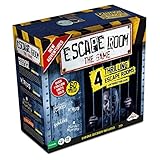
Overview: Escape Room The Game, Version 2 elevates the at-home experience with electronic integration and four distinct adventures in one box. Designed for 3-5 players ages 16+, each scenario challenges teams to solve three-part mysteries within 60 minutes. The centerpiece Chrono Decoder provides digital countdown, sound effects, and answer verification, while a companion app delivers thematic soundtracks. After completing the included scenarios, expansion packs extend the system’s longevity.
What Makes It Stand Out: The Chrono Decoder creates authentic pressure through audio-visual feedback, mimicking commercial escape rooms more closely than any competitor. Four distinct adventures with escalating difficulty provide immediate variety and extended play value. The app integration adds atmospheric depth without requiring complex setup. The expansion ecosystem future-proofs your investment, addressing the genre’s primary weakness. The three-part structure within each adventure creates satisfying narrative arcs and checkpoint moments.
Value for Money: Premium pricing is justified by the electronic hardware and four included scenarios. When calculated per adventure, it matches mid-range single-game prices while offering superior production value. The expansion capability transforms it from a disposable experience into a reusable system, delivering long-term value unmatched by single-use competitors. For groups planning multiple game nights, this represents exceptional economy.
Strengths and Weaknesses: Strengths: electronic immersion, four scenarios included, expansion support, authentic timer pressure, and professional production values. Weaknesses: higher age rating limits family play, 3-player minimum restricts flexibility, electronic dependency risks obsolescence, and some puzzles may feel rushed with the 60-minute limit. The hardware requires battery maintenance and careful storage.
Bottom Line: The ultimate choice for serious escape room enthusiasts seeking commercial-grade immersion at home. Version 2’s electronic components and expansion path justify its premium price, making it a wise long-term investment for regular gaming groups. While less accessible than simpler options, it delivers the most authentic escape room replication available in a box.
Why Solo Escape Room Games Are Booming
The Appeal of Single-Player Puzzle Solving
Escape room board games tap into something primal in the solo gamer: the satisfaction of connecting disparate clues and overcoming challenges through sheer mental fortitude. When you’re playing alone, every solved puzzle feels deeply personal—there’s no debate about who contributed what, just the pure joy of your own cognitive leap. This intimacy creates a flow state that’s harder to achieve in group settings, where conversation and consensus-building can interrupt the immersive experience.
Mental Health Benefits of Solo Gaming
Beyond entertainment, these games serve as powerful tools for mindfulness and stress relief. The focused attention required to decode ciphers and manipulate components acts as a form of active meditation, pulling your mind away from daily anxieties. In 2026’s fast-paced digital landscape, the analog nature of physical puzzles provides a much-needed screen break, while still delivering the narrative richness we’ve come to expect from interactive entertainment.
The Challenge of Designing for One
Creating a compelling solo escape room experience presents unique design challenges. Developers must balance difficulty carefully—too easy and the game feels trivial; too hard and players become frustrated without teammates to share the burden. The best 2026 releases incorporate subtle hint systems that feel like natural extensions of the narrative rather than admission of defeat, and puzzle structures that allow for multiple paths forward so individual bottlenecks don’t halt entire sessions.
Key Features to Look for in 2026
Narrative Depth and Immersion
The days of thin stories propping up disconnected puzzles are long gone. Modern solo escape room games weave narrative directly into every mechanism. Look for titles where the very act of solving a puzzle reveals character backstory, advances plot threads, or unlocks environmental details. The most immersive experiences include physical props that feel like artifacts from the game world—aged documents, mysterious objects, or handwritten letters that blur the line between game and reality.
Difficulty Scaling Mechanisms
Superior solo games feature built-in scaling that adjusts complexity based on performance or preference. This might manifest as optional “expert mode” puzzles that can be skipped without penalty, or layered clue systems where you can choose how much assistance to receive. Some 2026 innovations include AI-driven hint algorithms that analyze where you’re stuck and provide tailored nudges rather than generic spoilers.
Component Quality and Tactile Experience
Since you’re handling every piece yourself, material quality matters immensely. Thick cardstock, wooden components, and custom-molded pieces elevate the experience from disposable entertainment to treasured collection. Pay attention to how components interact—magnifying glasses that reveal hidden text, UV light interactions, or 3D constructions that transform during gameplay create memorable moments that digital alternatives simply can’t replicate.
Digital Integration and App Support
While physical components remain king, companion apps in 2026 have matured into sophisticated tools rather than gimmicks. The best implementations provide atmospheric soundtracks, timer functions with dynamic audio cues, and input verification without replacing the tactile core. Beware games where the app does the heavy lifting—true escape room board games use technology to enhance, not replace, the analog puzzle-solving experience.
Replayability Factors
Solo players often revisit favorite games, so replay value is crucial. Some games achieve this through randomized puzzle configurations, while others offer narrative branches that encourage multiple playthroughs. Legacy-style games with persistent consequences across sessions provide extended value, though they sacrifice the ability to reset for others. Consider whether you value a single, perfect experience or multiple runs when evaluating your options.
Understanding Game Formats
Linear vs. Non-Linear Puzzle Chains
Linear games present puzzles in strict sequence, creating a directed experience that’s easier to manage solo but can feel restrictive. Non-linear designs offer multiple simultaneous puzzles you can tackle in any order, providing agency but risking analysis paralysis. Hybrid models often work best for solo play—a main linear thread with optional side puzzles that flesh out the world without blocking progress.
Legacy and Campaign-Style Games
These evolving experiences span multiple sessions with permanent changes to components and storylines. For solo players, they create a deeply personal journey where your decisions carry real weight. The trade-off is irreplaceability—once completed, the game can’t truly be reset. However, many 2026 releases include “reset kits” or digital preservation methods that allow you to revisit earlier states for a second solo run.
One-and-Done Experiences
Single-session games offer a complete narrative arc in one sitting, typically lasting 60-180 minutes. These are perfect for solo players who want a satisfying evening activity without ongoing commitment. The best examples feel substantial despite their brevity, packing dense puzzle content into efficient designs that respect your time and deliver a complete emotional journey.
Expandable and Modular Systems
A growing category in 2026 features core systems that accept expansion packs, allowing you to reuse familiar mechanisms with fresh content. This approach offers the best of both worlds: you master the interface once, then enjoy new puzzles at a lower cost per experience. For solo players building a collection, these systems provide incredible long-term value and reduced storage footprint.
Difficulty Levels and Player Experience
Entry-Level Games for Beginners
If you’re new to escape room board games, seek titles that explicitly cater to beginners. These feature clear iconography, generous hint systems, and puzzles that teach you how to think like a designer. They often include tutorial puzzles that introduce common mechanisms—cipher wheels, pattern recognition, and spatial reasoning—building your skills gradually without overwhelming you.
Intermediate Challenges
For players comfortable with escape room conventions, intermediate games offer satisfying complexity without brutal frustration. These titles assume you understand basic puzzle types and instead focus on creative twists and combinations. Expect multi-step reasoning, ambiguous clues that require interpretation, and occasional red herrings that test your ability to distinguish relevant from irrelevant information.
Expert-Level Mind Benders
Veteran solo players crave puzzles that demand lateral thinking, extensive note-taking, and sometimes even external research. Expert games in 2026 might incorporate real-world knowledge like Morse code, historical facts, or scientific principles. They reward deep concentration and often feature “meta-puzzles” that require you to recognize connections across the entire game rather than solving discrete challenges in isolation.
Adaptive Difficulty Systems
The most sophisticated solo games now track your progress and adjust on the fly. If you’re breezing through puzzles, the game might unlock harder variants. If you’re struggling, it might offer subtle environmental clues or simplify upcoming challenges. This ensures you’re always in the sweet spot of productive struggle, maximizing engagement without risking abandonment.
Setup and Table Space Considerations
Minimal Footprint Options
Not everyone has a dedicated gaming table. Compact escape room games designed for solo play often fit in a small tray or box lid, allowing you to play on a coffee table or even in bed. These typically use decks of cards or small booklets rather than sprawling components, making them ideal for apartment dwellers or those who want to game while traveling.
Multi-Room Spread Requirements
Some epic experiences require you to spread components across multiple rooms, creating a true “escape room” feel in your home. You might start in your kitchen with some clues, move to the living room for puzzle solving, and finish in the bedroom with the final reveal. While immersive, these demand significant space and the ability to leave components undisturbed between sessions—consider your household setup before committing.
Storage Solutions for Ongoing Campaigns
Legacy and campaign games need safe storage between sessions. Look for boxes with dedicated inserts or plan to invest in organizer systems. Some 2026 releases include “pause kits” with labeled bags and save sheets that let you pack everything away mid-puzzle without losing progress. For solo players without permanent gaming space, this feature transforms impossible into practical.
Portability for Travel Gaming
Solo gamers often want entertainment on the go. Travel-friendly escape room games use magnetic components, spiral-bound books, or digital verification to prevent lost pieces. Waterproof cards and durable cases ensure your game survives the journey. Consider whether you’ll primarily play at home or need something that fits in a carry-on when making your selection.
Time Commitment and Session Length
30-Minute Quick Escapes
Short-form games deliver a concentrated burst of puzzle satisfaction perfect for lunch breaks or winding down before bed. These experiences prioritize immediate engagement over complex narrative, often featuring a single clever mechanism explored through escalating variations. They’re excellent for maintaining your hobby habit when life gets busy, providing that escape room rush without demanding your entire evening.
2-3 Hour Deep Dives
The traditional sweet spot for escape room board games, these longer experiences allow for proper story development, varied puzzle types, and satisfying difficulty curves. For solo players, this duration hits the flow state perfectly—you have time to get fully immersed without mental fatigue setting in. Many 2026 releases in this category include natural break points if you need to pause for a meal or rest.
Multi-Session Campaigns
Some narrative epics span 5-10 sessions, each 60-90 minutes long. These create true investment in the unfolding mystery, with cliffhangers that keep you thinking between sessions. The solo format shines here—there’s no scheduling coordination needed, and the story feels intensely personal. Just ensure the game includes robust save systems so you can maintain continuity without leaving components out indefinitely.
Pause-and-Resume Mechanics
Life interrupts even the best-laid gaming plans. Superior solo escape room games include explicit pause rules—perhaps a designated “save sheet” where you record component positions, or numbered bags for organizing partially solved puzzles. Some companion apps even let you photograph your current state for easy restoration. This feature separates good solo designs from great ones.
Budget and Value Considerations
Price vs. Play Time Analysis
Solo players should calculate cost per hour of entertainment. A $40 game that provides 3 hours of unique content costs about $13/hour—comparable to a movie ticket but with interactive engagement. However, a $25 game you can replay three times with different paths might offer better long-term value. Consider both initial playtime and replayability when evaluating price points.
Subscription Models in 2026
The subscription box model has reached escape room games, with services delivering new puzzle experiences monthly or quarterly. For solo players, this provides constant fresh content without storage bloat from completed games. Evaluate whether you prefer owning physical components or would rather receive curated experiences, solve them, and pass them along to friends.
Second-Hand Market Viability
Unlike multiplayer games where wear matters, many escape room games maintain value after one careful playthrough. Solo players who meticulously preserve components can recoup 50-70% of their investment by reselling completed games. However, legacy games with permanent alterations lose significant resale value—factor this into your purchasing decision if budget is a concern.
Cost Per Hour of Entertainment
When you break down entertainment value, escape room board games often outperform many hobbies. A $50 game providing 5 hours of initial play, plus 3 hours on replay, costs roughly $6.25 per hour. Compare that to video games, movies, or even books, and the value proposition becomes clear. Solo play maximizes this value since you’re never dependent on others to get your money’s worth.
Common Pitfalls to Avoid
Overly Linear Designs
Beware games that force you down a single path with no room for exploration. While linearity simplifies solo play, excessive rigidity removes the joy of discovery. If you get stuck on one puzzle, you’re completely blocked. Quality solo games include branching paths or optional challenges that let you feel agency even within a directed narrative.
Components That Don’t Scale
Some games designed for groups include components meant to be passed around or viewed simultaneously by multiple people. In solo play, these can be cumbersome—large boards you can’t easily reach across, or pieces designed for team manipulation. Check reviews specifically mentioning solo ergonomics before purchasing.
Story vs. Puzzle Imbalance
The best escape room games integrate story and puzzles seamlessly, but some titles lean too heavily in one direction. Story-heavy games might feel like interactive novels with trivial puzzles, while puzzle-dense games can feel like disconnected brain teasers with a flimsy narrative wrapper. For solo play, you need both elements working in harmony to maintain engagement throughout the session.
App Dependency Issues
While companion apps enhance many experiences, some games cross the line into app-required territory, where the physical components are mere tokens for digital puzzles. This defeats the purpose of tabletop gaming and can leave you stranded if the app becomes unsupported. Prioritize games where the app is optional or merely verification-based rather than puzzle-solving essential.
Enhancing Your Solo Experience
Creating the Right Atmosphere
Transform your gaming space into an immersive environment. Dim the lights, play thematic background music, and eliminate distractions. Some solo players even dress in character or use scented candles to match the game’s setting. The more you commit to the atmosphere, the more vivid the experience becomes—this is your personal theater, and you’re both the audience and the star.
Note-Taking Strategies
Serious solo escape room gamers develop systematic note-taking methods. Keep a dedicated notebook with sections for different clue types, working theories, and solved codes. Use colored pens to track connections, and don’t be afraid to draw diagrams or maps. This externalizes your thinking process and prevents the frustration of forgetting a brilliant insight you had two hours ago.
Organizing Components Between Sessions
For campaign games, develop an organization system from day one. Use small plastic bags labeled by puzzle section, and photograph complex setups before packing them away. Some players create “index sheets” listing where each component belongs, making setup for the next session nearly instantaneous. This preparation transforms the gap between sessions from a chore to anticipation.
Joining Solo Gaming Communities
Even solo gamers benefit from community. Online forums and social media groups dedicated to escape room board games offer spoiler-free hint exchanges, discussion of puzzle design philosophy, and recommendations tailored to single-player preferences. Many communities host “solo game jams” where designers create experiences specifically for one player, expanding your options beyond commercial releases.
Frequently Asked Questions
What makes an escape room board game good for solo play versus group play?
Solo-optimized games feature puzzles that don’t require simultaneous viewing by multiple people, hint systems that feel like natural narrative elements rather than team votes, and difficulty curves designed for individual pacing rather than group consensus. They often include mechanisms for tracking your progress automatically, removing the need for a game master or note-taker.
How do I know if a game is too difficult for me as a solo player?
Check reviews specifically mentioning solo difficulty. Many 2026 releases include “solo difficulty ratings” separate from group ratings. Look for games with robust, tiered hint systems you can consult without penalty. If you’re consistently needing maximum hints early on, consider stepping down a difficulty level until you build confidence and pattern recognition skills.
Can I replay escape room board games after solving them once?
It depends on the design. Linear narrative games often have limited replay value since you know the solutions, though some players enjoy speed runs. Games with randomized elements, multiple story branches, or purely puzzle-focused designs offer better replayability. Campaign games sometimes include “reset kits” that let you experience alternative paths on subsequent playthroughs.
Are digital escape room apps a good alternative to physical board games?
Apps offer convenience and lower cost, but lack the tactile satisfaction of physical components. The ideal 2026 approach is hybrid—physical components with digital enhancement. Purely digital games miss the spatial reasoning and manipulative pleasure that make tabletop escape rooms special. Consider them supplements rather than replacements.
How much table space do I realistically need for solo escape room gaming?
Compact games fit in a 12x12 inch space, while epic experiences might need a full 3x4 foot table plus additional surfaces for reference materials. Always check the “table space required” specification in game descriptions. Solo play often needs slightly less space than group play since you’re not passing components, but you still need room to spread out clues and organize your thinking.
What’s the average cost of a quality solo escape room board game in 2026?
Entry-level games start around $15-20, premium experiences range from $40-60, and campaign-style epics can reach $80-100. Subscription services typically charge $25-35 per monthly box. Consider cost per hour rather than sticker price—a $60 game providing 10 hours of engaging play offers better value than a $20 game you’ll finish in 90 minutes and never replay.
How do I preserve legacy games if I want to replay them later?
Use removable stickers instead of permanent ones, photograph component states before making irreversible changes, and store altered pieces separately. Some 2026 releases include “legacy preservation kits” with duplicate stickers and reset instructions. Alternatively, buy two copies—one to play legacy-style, one to keep pristine for future replay.
Can I create my own solo escape room experiences at home?
Absolutely! Many solo gamers design custom puzzles using online cipher generators, printable props, and household items. Start by deconstructing your favorite commercial games to understand their puzzle logic, then create a simple 3-5 puzzle chain. Online communities offer templates and feedback. This hobby-within-a-hobby extends your enjoyment infinitely.
What should I do if I get completely stuck during a solo session?
First, take a 15-minute break—fresh eyes solve many problems. Review your notes for overlooked details or misinterpretations. Use the game’s hint system, starting with the most subtle nudge. If still stuck, consult spoiler-free forums where you can ask specific questions without revealing full solutions. As a last resort, check a walkthrough, but try to limit yourself to just the step you’re stuck on to preserve the rest of the experience.
Are there escape room board games suitable for playing while traveling?
Yes! Look for “travel edition” labels, magnetic components, spiral-bound puzzle books, or purely card-based designs. Some 2026 releases are specifically designed for airplane tray tables or hotel rooms. Prioritize games with minimal setup, no loose tokens, and compact boxes. Digital companion apps that work offline are also crucial for travel gaming.
See Also
- Top 10 Best Escape Room Board Games for Family Game Night in 2026
- 10 Must-Have Themed Board Games for Escape Room Lovers in 2026
- 10 Expert-Recommended Escape Room Board Games for Teens in 2026
- 10 Best Escape Room Board Games for Classroom Learning in 2026
- 10 Premium Escape Room Board Games for Serious Players (Worth the Investment)