Table of Contents
Imagine gathering around a table, dice in hand, maps unfurled, and a shared objective hanging in the balance. The clock is ticking, resources are scarce, and the pressure is mounting. But instead of competitors eyeing each other warily, you see teammates leaning in, eyes locked, voices low but urgent. This isn’t just play; it’s a dynamic training ground for one of life’s most critical skills: communication. In an era where digital interactions often replace face-to-face dialogue, cooperative board games offer a uniquely powerful, tangible space to practice and refine how we truly connect, listen, and collaborate with others. They transform abstract concepts like “active listening” or “clear instruction” into immediate, high-stakes necessities for survival within the game’s world.
Why do these shared challenges resonate so deeply? Because they strip away the passive observation of solo play or the adversarial tension of competitive games, forcing participants into a state of interdependence. Success hinges entirely on the group’s ability to synthesize information, articulate strategies under pressure, and navigate misunderstandings without blame. It’s not about outsmarting an opponent; it’s about collectively outsmarting the game itself. This shared struggle creates a low-risk, high-reward environment where communication breakdowns are learning opportunities, not personal failures. Whether you’re a team leader seeking better collaboration tools, a parent wanting to nurture social skills, or simply someone craving meaningful connection, understanding how to leverage these games is invaluable. Let’s explore the mechanics and principles that make cooperative board games such exceptional communication catalysts.
Top 10 Cooperative Board Games
Detailed Product Reviews
1. Gamewright - Forbidden Island - Cooperative Strategy Survival Board Game, 2-4 Players
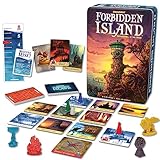
Overview: Forbidden Island, designed by Matt Leacock, is a cooperative board game where players race to retrieve four sacred treasures from a sinking island before it vanishes. Ideal for 2-4 players aged 10+, it emphasizes teamwork over competition in a high-stakes adventure. What Makes It Stand Out: Its innovative “sinking tile” mechanic creates escalating tension as the island literally disappears beneath players’ feet. Beautiful thematic artwork immerses players in the perilous setting, while the purely cooperative structure—where everyone wins or loses together—fosters genuine collaboration and strategic planning without player elimination. Value for Money: Priced accessibly, it delivers exceptional replayability through adjustable difficulty levels and varied treasure locations. Compared to similar strategy games, its compact size, quick setup (under 5 minutes), and consistent engagement offer superior bang for buck, especially for families seeking quality shared experiences. Strengths and Weaknesses: Strengths: Intuitive rules for beginners, promotes critical thinking and communication, visually captivating components, and scalable challenge. Weaknesses: Limited player count (max 4), and experienced gamers may find it less complex after multiple plays. Bottom Line: A near-perfect entry-point cooperative game that masterfully balances accessibility with strategic depth. Highly recommended for family game nights or educators seeking to build teamwork skills—it’s an enduring classic that rarely gathers dust.
2. Ravensburger Horrified Games - Greek Monsters - Strategy Board Game - Boost Critical Thinking & Teamwork - Cooperative Gameplay - Unique Monster Challenges - 1 to 5 Players - Adults & Kids 10+

Overview: Horrified: Greek Monsters plunges 1–5 players into ancient Greece, where they must cooperatively banish six iconic mythical threats—from Medusa to Cerberus—using unique tactics for each creature. This thematic strategy game blends lore with puzzle-solving for ages 10+. What Makes It Stand Out: Each monster operates under distinct rules, demanding tailored strategies that evolve dramatically between plays. The stunning, horror-infused artwork and modular board (featuring the Labyrinth and Underworld) create a deeply immersive atmosphere rarely seen in family-oriented co-ops, while the 60-minute sessions maintain tight pacing. Value for Money: With high-quality miniatures, intricate boards, and immense replayability from varied monster combinations, it justifies its premium price. It outshines competitors by offering five unique “games in one” through its monster mechanics, making it a cost-effective long-term investment for game groups. Strengths and Weaknesses: Strengths: Exceptional thematic depth, highly replayable due to monster variety, encourages advanced tactical planning, and accommodates solo play seamlessly. Weaknesses: Setup time increases with more monsters, and the rulebook’s monster-specific nuances can overwhelm newcomers initially. Bottom Line: A masterclass in thematic cooperative design that transforms myth into gripping gameplay. Its clever mechanics and stunning components make it essential for strategy enthusiasts—a resounding buy for families and hobbyists seeking depth without excessive complexity.
3. Flow: The Official Cooperative Board Game | Strategy Game for 1–4 Players Ages 8+ | Based on The Award-Winning Animated Film | Family & Solo Play | Survive The Flood, Rescue Allies
Overview: Flow adapts the acclaimed animated short into a real-time cooperative board game where 1–4 players navigate a modular, flooding island to rescue allies before rising waters trap them. Designed for ages 8+, it captures the film’s emotional depth through urgent, tactile gameplay. What Makes It Stand Out: The ingenious “rising water” mechanic physically alters the board as water markers advance, forcing dynamic route planning and split-second decisions. Its modular tile system and 11 scenario cards ensure no two games play alike, while the solo mode is seamlessly integrated—uncommon in narrative-driven co-ops. Value for Money: Though slightly higher-priced, its robust replayability (via scenarios and variable setups) and dual appeal to film fans and strategy gamers deliver strong value. Components like the water tracker and ally tokens feel purposeful, outperforming cheaper abstract co-ops in thematic cohesion. Strengths and Weaknesses: Strengths: Unique real-time pressure, emotionally resonant theme, exceptional solo suitability, and modular design. Weaknesses: Tile setup can be fiddly, and the 8+ age rating feels low—some mechanics may challenge younger kids. Title lists “1–6 players” but components support only 4. Bottom Line: A beautifully crafted, emotionally engaging co-op that excels in tension and replayability. Despite minor setup quirks, it’s a must-have for fans of narrative games or families wanting meaningful collaborative challenges—highly recommended.
4. Pressman The Oregon Trail Card Game - Cooperative Gameplay Based on The Classic Computer Game, Ages 12 and Up, 2-6 Players

Overview: This card game reimagines the iconic computer classic, challenging 2–6 players to cooperatively lead a wagon train from Missouri to Oregon while battling dysentery, broken wheels, and other period-accurate perils. It’s a darkly humorous, accessible take on survival strategy for ages 12+. What Makes It Stand Out: Its cheeky 8-bit art style and unapologetic embrace of the original game’s grim humor (e.g., “You have died of dysentery” cards) deliver nostalgic charm. Simple card-drafting mechanics—where players manage resources and ailments—create tense, laugh-out-loud moments without complex rules. Value for Money: At a budget-friendly price, it offers quick 30-minute sessions packed with personality. While less strategic than heavier co-ops, its unique theme, portability, and sheer fun for groups justify the cost, especially for fans of the digital original or casual game nights. Strengths and Weaknesses: Strengths: Hilarious theme integration, effortless setup/rules, strong group interaction, and perfect for larger parties (up to 6 players). Weaknesses: Limited strategic depth; luck-heavy card draws can undermine teamwork, and replay value diminishes after a few sessions. Bottom Line: A lighthearted, nostalgic romp that prioritizes fun over complexity. Best for groups seeking giggles and quick cooperative play—ideal if you adore the source material, but skip if you demand deep strategy.
5. Pandasaurus Cooperative Strategy Card Game - Fun Interactive Family Game for Ages 8+, 1-5 Players, 20 Minute Playtime
Overview: Simply titled The Game, this award-winning card game challenges 1–5 players to cooperatively play all cards from two shared decks in ascending and descending sequences. Despite minimalist components, its fiendish logic puzzles create addictive 20-minute sessions for ages 8+. What Makes It Stand Out: Its genius lies in near-zero setup and profound strategic interdependence—players must communicate only through card plays, fostering intense non-verbal teamwork. Winning requires near-perfect coordination, making victories incredibly satisfying. The Spiel Des Jahres pedigree underscores its elegant design. Value for Money: Exceptional for its price, offering near-infinite replayability through pure card manipulation. With no board or tokens, it’s ultra-portable and durable, outperforming pricier games in longevity per dollar. Over 1.3 million copies sold attest to its mass appeal. Strengths and Weaknesses: Strengths: Incredibly portable, lightning-fast setup, deeply engaging teamwork, and scales perfectly from solo to 5 players. Weaknesses: Minimalist aesthetic won’t thrill component lovers, and the strict communication rules can frustrate competitive players. Bottom Line: A masterstroke of minimalist game design that proves depth needs no bells or whistles. Its brilliance in fostering silent collaboration makes it an essential, affordable addition to any game library—unreservedly recommended.
6. Spin Master Games, SolidRoots Escaping Extinction, Cooperative Strategy Board Game from The Makers of Mind The Gap, for Kids & Family, 1-4 Players, for Ages 12 & Up

Overview: This cooperative board game casts players as clever dinosaurs racing against a meteor impact, working together to explore a dynamic prehistoric world, gather rocket parts, and build a 3D escape vehicle before time runs out. Designed for families and strategy fans aged 12+. What Makes It Stand Out: Its tile-based modular board ensures every game layout differs significantly, while earthquake cards dynamically shift pathways mid-game, forcing constant adaptation. The unique 3D rocket assembly adds tangible excitement and a clear, collaborative win condition distinct from typical point-based games. Value for Money: Priced competitively for a strategy game with substantial components (including the 3D rocket), it offers strong replayability through variable setups and cooperative tension. It provides more strategic depth than many family games at this price point, justifying its cost for frequent game nights. Strengths and Weaknesses: Strengths: Highly replayable due to modular board; engaging theme blending education and fun; cooperative play fosters teamwork; earthquake mechanic adds thrilling unpredictability. Weaknesses: Dinosaur theme may feel juvenile for older teens; rocket assembly can be slightly fiddly; limited strategic depth compared to hardcore strategy games. Bottom Line: An excellent, accessible cooperative game for families seeking strategic engagement with high replay value; ideal for game nights but may not satisfy seasoned strategy gamers needing deeper complexity.
7. The Lord of The Rings: Adventure to Mount Doom | Family Game | Cooperative Game | Strategy Game

Overview: This cooperative adventure tasks players with guiding Frodo across Middle-earth to destroy the One Ring before Sauron’s forces overwhelm him. Players collaborate using dice rolls and card draws to navigate threats, evade Ringwraiths, and fulfill the quest within a tight 50-minute timeframe. What Makes It Stand Out: It successfully distills Tolkien’s epic into a concise, family-friendly experience, leveraging iconic lore for immediate immersion. The dual focus on dice-driven movement and strategic card management creates accessible tension, while the shared objective perfectly captures the Fellowship’s unity against overwhelming odds. Value for Money: Offers solid value for fans of the franchise, delivering authentic atmosphere and cooperative mechanics at a mid-range price. While component quality is good (thematic art, essential tokens), it lacks the elaborate miniatures of premium games, making it a worthwhile investment primarily for Tolkien enthusiasts seeking a focused narrative experience. Strengths and Weaknesses: Strengths: Strong thematic integration; easy to learn with meaningful choices; perfect playtime; great for solo or small groups. Weaknesses: Limited strategic depth for hardcore gamers; component variety is modest; replayability hinges heavily on theme familiarity; luck-dependent dice rolls can dominate outcomes. Bottom Line: A charming, accessible entry for Lord of the Rings fans wanting a quick cooperative adventure, though its simplicity and luck elements may disappoint those seeking deep strategy.
8. Castle Panic 2nd Edition | Cooperative Board Game for Adults and Family | Ages 8+ | for 1 to 6 Players | Average Playtime 45 Minutes | Made by Fireside Games

Overview: Players band together as heroes defending Castle Bravehold from encroaching monsters in this streamlined tower-defense game. Using card-based actions, the team must strategically eliminate threats approaching from the forest before they destroy all six castle towers within the 45-minute play session. What Makes It Stand Out: Its ingenious 3D cardboard towers (which visibly crumble when hit) create unmatched tactile engagement. Four distinct play modes (including competitive “Master Slayer”) and dynamic events like plagues and boss monsters ensure high replayability. The elegant ruleset makes complex strategy accessible to ages 8+. Value for Money: Exceptional value given the robust components (durable 3D towers, vibrant tokens), high player count flexibility (1-6), and immense replayability. It outperforms many games at similar or higher prices by delivering consistent, tension-filled fun for diverse groups without requiring expansions. Strengths and Weaknesses: Strengths: Highly accessible yet strategically satisfying; 3D towers enhance immersion; excellent scalability for player count; multiple game modes extend longevity; fosters genuine teamwork. Weaknesses: Artwork feels slightly dated; limited player agency in solo mode; monster AI can feel simplistic after many plays. Bottom Line: A near-perfect family cooperative game offering tense, accessible strategy and outstanding replayability; a must-have for any game shelf due to its versatility and enduring appeal.
9. Happy Camper - The Four Doors | New Cooperative Game by Creator of Forbidden Island and Pandemic | Super Portable | Great for Solo Play, Two Players, and Groups
Overview: Designed by Pandemic’s Matt Leacock, this compact cooperative game challenges 1-5 players to explore mystical doors, recover sacred treasures, and reignite a beacon before sinister shadows trap them forever. It delivers a focused 30-minute adventure emphasizing teamwork and strategic card play. What Makes It Stand Out: Its super-portable design (fits in a small box) makes it ideal for travel, while Leacock’s signature cooperative mechanics ensure smooth, engaging play. The unique “door exploration” system creates distinct pressure points, and its seamless scaling from solo to 5 players is remarkably well-tuned for its size. Value for Money: Excellent value for the price, offering Leacock’s refined design philosophy in an ultra-convenient package. Though component count is modest (cards, tokens), the strategic depth and portability far exceed expectations for a travel game, outshining bulkier alternatives needing significant setup. Strengths and Weaknesses: Strengths: Unbeatable portability; masterful solo/co-op balance; intuitive rules; high replayability with variable setups; efficient 30-minute playtime. Weaknesses: Lacks thematic depth compared to Leacock’s epics; minimal physical components (no miniatures); treasure mechanics can feel repetitive after extended play. Bottom Line: An essential travel game for cooperative enthusiasts, delivering smart, portable fun; highly recommended despite minor thematic lightness, especially for fans of Pandemic’s design elegance.
10. Ravensburger Alien: Fate of The Nostromo Board Game for Ages 10 & Up – A Cooperative Strategy Game of Suspense
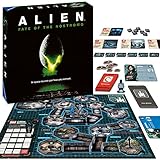
Overview: Players become Nostromo crewmates working together to gather supplies, complete objectives, and evade a deadly Alien stalking the ship in this tense cooperative adaptation of the sci-fi horror classic. Survival hinges on strategic resource management and careful navigation within the claustrophobic vessel. What Makes It Stand Out: It masterfully replicates the film’s suspense through atmospheric components (detailed miniatures, evocative art) and mechanics like hidden movement for the Alien. The variable final missions and Ash traitor mechanic add significant replayability, while the included online tutorial lowers the learning curve for a complex game. Value for Money: Justifies its premium price with exceptional thematic immersion and component quality (miniatures, dual-layer board). Though costly, the depth, strong narrative integration, and multiple scenarios provide long-term value, especially for Alien fans seeking a premium, cinematic experience over casual play. Strengths and Weaknesses: Strengths: Immersive theme execution; high-quality miniatures and art; excellent replayability via missions/Ash; clear rulebook + video tutorial; tense, cooperative gameplay. Weaknesses: Steep price point; setup/teardown is time-consuming; Alien AI can feel predictable; horror theme may not suit all families. Bottom Line: A top-tier, must-play for Alien franchise devotees seeking a deeply thematic, suspenseful cooperative challenge, though its cost and intensity make it less ideal for casual or budget-focused gamers.
Understanding Cooperative Game Dynamics for Communication Growth
The Essential Shift from Competition to Collaboration
Moving away from head-to-head competition fundamentally alters the social dynamic at the table. Players transition from guarding information to actively seeking and sharing it. This shift creates psychological safety, where admitting uncertainty or requesting clarification isn’t a weakness but a necessary step towards the common goal. The absence of a designated “winner” within the group reduces defensiveness and encourages players to focus energy on collective problem-solving rather than individual advantage, fostering a more open exchange of ideas.
Defining Shared Objectives and Collective Stakes
Clear, well-defined shared objectives are the bedrock of effective communication in cooperative play. When everyone understands precisely what they are working towards and why specific actions matter, communication becomes purposeful and efficient. Games that articulate high collective stakes – the tangible consequences of failure for the entire group – naturally heighten engagement and motivate players to communicate proactively, ensuring no critical piece of information remains unshared.
The Role of Interdependence in Driving Dialogue
True interdependence is the engine of communication in these experiences. When each player possesses unique information, abilities, or perspectives essential for overcoming challenges, the game structure forces interaction. You cannot succeed in isolation; your unique role is only valuable when integrated with others. This mechanic inherently promotes questions, explanations, and the active seeking of diverse viewpoints, mirroring real-world team dynamics where specialized knowledge must be synthesized.
Core Communication Mechanics Amplified Through Play
Active Listening Beyond Surface Comprehension
Cooperative games demand more than just hearing words; they require deep, contextual listening. Players must absorb information quickly, connect it to the evolving game state, and often recall it minutes later under pressure. This trains the ability to filter relevant details from noise, ask clarifying questions instinctively (“So you’re saying the threat is moving here next turn?”), and demonstrate understanding through paraphrasing – skills directly transferable to complex workplace discussions or sensitive personal conversations.
Precision in Verbal Expression and Clarity
Vague instructions lead to swift defeat in cooperative scenarios. Players quickly learn that phrases like “handle that thing over there” are disastrous, while “Use your engineer ability to repair the broken bridge tile at coordinates B4 before the flood marker advances” is essential. This necessity cultivates the habit of providing specific, actionable information, considering the listener’s perspective, and avoiding jargon or ambiguity – a crucial skill for project management, instruction, and conflict resolution.
Non-Verbal Communication and Shared Context Building
While verbal exchange is vital, cooperative games also leverage non-verbal cues. Pointing to a specific board location, using facial expressions to signal urgency or confusion, or the shared physical act of manipulating components together builds a rich, immediate context. Players learn to “read the room” at the table, interpreting gestures and reactions to supplement spoken words, enhancing overall communication effectiveness and group cohesion.
Design Elements That Foster Constructive Dialogue
Information Asymmetry as a Communication Catalyst
Many effective cooperative games deliberately distribute critical information unevenly among players. One person might see hidden threats, another holds key resource data, while a third understands complex mechanics. This asymmetry requires structured information sharing. Players must learn to describe what they see accurately, ask targeted questions to fill knowledge gaps, and synthesize fragmented data – a direct parallel to team projects where departments hold specialized knowledge.
Time Pressure and Its Impact on Communication Efficiency
Introducing a ticking clock (literal or mechanical) simulates real-world urgency. Under time pressure, players quickly discover that rambling explanations or unfocused discussions are fatal. This pressure cooker environment trains concise communication, rapid consensus-building, and the ability to prioritize the most critical information first – invaluable for crisis management, deadline-driven work, and high-stakes decision-making.
Feedback Loops for Learning from Miscommunication
The best cooperative games provide immediate, tangible feedback when communication fails: a shared loss, a preventable disaster on the board. Crucially, this feedback is directed at the group’s process, not individuals. This allows the team to analyze what went wrong in their communication (“We didn’t confirm who was handling the fire!”) without personal blame, fostering a culture of constructive post-mortems and iterative improvement in communication strategies.
Navigating Common Communication Challenges in Play
Managing Dominant Personalities and Encouraging Inclusion
In any group, some voices naturally dominate. Cooperative games provide a structured setting to practice techniques for inclusive communication. Facilitators (or the game’s mechanics themselves) can encourage turn-taking in discussion, explicitly ask quieter members for input (“What’s your take on the resource allocation, Sam?”), and value diverse perspectives. This practice directly translates to leading meetings or group projects where equitable participation is key.
Resolving Disagreements Through Structured Discussion
Differing strategies are inevitable. Cooperative games teach how to navigate these disagreements productively. Players learn to articulate reasoning behind proposals (“If we save the medkit now, we can handle the epidemic in zone C later”), actively listen to counter-arguments, seek compromise based on shared goals, and commit to the group decision even if it wasn’t their first choice – mastering conflict resolution without fracturing the team.
Overcoming Assumptions and Confirmation Bias
Players often enter games with preconceived notions about mechanics or optimal strategies. Cooperative play exposes how dangerous assumptions can be when shared understanding is lacking. The process of verifying information (“Are you sure that card says ‘discard two’ not ‘one’?”), challenging groupthink, and staying open to new interpretations combats confirmation bias, fostering intellectual humility and evidence-based discussion.
Translating Game Skills to Real-World Applications
Enhancing Workplace Team Collaboration
The communication patterns honed around the game board – clear role definition, active listening during briefings, precise task delegation under pressure, constructive post-action reviews – are directly applicable to professional environments. Teams that play cooperatively together often develop shorthand, trust, and a shared understanding of communication styles that significantly improve project execution and reduce workplace friction.
Building Foundational Skills in Educational Settings
Educators leverage cooperative games to teach communication as a core competency. Students practice articulating complex ideas simply, listening respectfully to peers, negotiating solutions, and giving/receiving feedback in a safe, engaging context. These experiences build confidence in verbal expression and collaborative problem-solving, forming a bedrock for future academic and social success.
Strengthening Family Dynamics and Social Bonds
For families or social groups, cooperative games shift interactions from passive entertainment (like watching TV) to active co-creation. Parents and children, or friends of different ages, learn to communicate across generational or experiential gaps. Working through challenges together builds empathy, patience, and shared memories, strengthening relationships through the positive reinforcement of collective achievement.
Selecting Games for Maximum Communication Impact
Assessing Complexity and Cognitive Load
Choosing the right game complexity is crucial. A game overly burdened with intricate rules can overwhelm players, leaving little mental bandwidth for effective communication. Conversely, something too simple may not present sufficient challenges to necessitate deep discussion. Opt for games where the rules are learnable but the strategic decisions require genuine dialogue, ensuring the cognitive load supports, rather than hinders, communication practice.
Matching Game Mechanics to Specific Skill Goals
Different mechanics target different communication facets. Games emphasizing real-time coordination demand rapid, clear calls. Those with hidden information prioritize precise description and questioning. Puzzle-solving games foster collaborative deduction and hypothesis testing. Identify the specific communication skills you wish to develop (e.g., concise instruction-giving, active listening under pressure) and seek games whose core mechanics naturally exercise those muscles.
Considering Group Size and Dynamics
Communication dynamics shift dramatically with group size. Smaller groups (2-4 players) often allow for deeper, more nuanced discussion. Larger groups (5+) necessitate more structured communication, delegation, and potentially sub-group coordination – excellent for practicing managing bigger teams. Consider your typical group size and whether you need a game that accommodates fluid participation or encourages organized turn-taking in discussion.
Frequently Asked Questions
Frequently Asked Questions
What makes cooperative games better for communication than competitive ones? Cooperative games eliminate adversarial tension, creating psychological safety where sharing information and admitting uncertainty is necessary for success, not a strategic risk. This fosters open dialogue and active listening focused solely on the shared goal.
Can these games really help with workplace communication issues? Absolutely. They provide a safe, structured environment to practice core skills like active listening, clear instruction-giving, constructive disagreement resolution, and inclusive discussion – all directly transferable to team meetings, project management, and cross-departmental collaboration.
How young can children start benefiting from these communication-focused games? Many accessible cooperative games are designed for ages 5-7. Young children learn foundational skills like taking turns speaking, listening to others’ ideas, following simple group instructions, and working towards a common simple goal, building essential social communication blocks.
What if someone in the group dominates the conversation during play? This is common. Use the game itself as a tool: encourage explicit turn-taking in strategy discussion, assign specific roles requiring input from quieter players, and after the game, gently discuss how ensuring everyone’s voice is heard improves the team’s overall performance.
Do we need a lot of time to see communication benefits from playing? Significant benefits emerge even in single sessions due to the immediate feedback loop of communication success or failure. Consistent play deepens these skills, but the structured, high-stakes nature of cooperative challenges makes each session a potent communication workout.
How do I choose a game that matches our specific communication weaknesses? Identify the specific issue (e.g., poor listening, vague instructions, conflict avoidance). Then look for games emphasizing mechanics that counter it: hidden information for precise description, time pressure for concise communication, or required consensus votes for constructive disagreement resolution.
Are digital adaptations as effective as physical board games for building communication? Physical games generally offer superior communication training. The shared physical space, handling of components, and lack of digital mediation encourage natural non-verbal cues, eye contact, and spontaneous verbal interaction that screen-based play often diminishes.
What if our group keeps losing? Does it hinder communication development? Losses are valuable learning opportunities! Focus the post-game discussion on how communication broke down (“We didn’t confirm who was handling the threat”) rather than the loss itself. Analyzing miscommunication constructively after failure is where significant skill growth often occurs.
Can these games help remote or hybrid teams build communication skills? While physical proximity is ideal, some cooperative digital games designed for video calls can help. However, the lack of shared physical space and non-verbal cues makes it less potent. For remote teams, prioritize games with strong voice chat requirements and structured information-sharing phases.
How often should we play to see noticeable improvements? Consistency matters more than frequency. Integrating one or two focused cooperative game sessions per month, with intentional reflection on communication dynamics afterward, provides significant ongoing practice. The key is mindful engagement during play, not just the number of hours.
See Also
- 10 Best Cooperative Board Games for Building Teamwork Skills in 2026
- 10 Best Cooperative Board Games for Building Team Communication in 2026
- 10 Best Cooperative Board Games for Teaching Problem-Solving Skills in 2026
- The 10 Best Cooperative Board Games for Team Building in 2026
- 10 Best Value Cooperative Board Games for Team Building in 2026