Table of Contents
Remember that magical feeling when board game night meant actual connection? No glowing screens, no notifications—just the satisfying shuffle of cards, the collective gasp at a surprise twist, and the sound of genuine laughter filling the room. In today’s hyper-connected world, carving out that dedicated time for face-to-face interaction feels more precious than ever. Card games offer the perfect antidote to digital fatigue, packing endless fun, strategic thinking, and shared moments into a compact, affordable package that fits in a drawer. They’re the unsung heroes of family bonding, ready to transform an ordinary evening into a cherished memory.
But let’s be honest: navigating the overwhelming sea of card games can feel daunting. You want something that genuinely engages everyone—from the youngest sibling just learning the rules to the grandparents who prefer a lighter strategy. You need games that spark joy without sparking arguments, offer replayability without requiring a PhD in rulebooks, and fit seamlessly into your busy schedule. Forget chasing fleeting “top 10” lists that become obsolete by next season. Instead, let’s dive deep into the essential features that make a card game truly shine for your unique family game night. Understanding these core elements is the real key to finding your perfect match, game after game.
Top 10 Card Games for Family
Detailed Product Reviews
1. USAOPOLY Flip 7, The Ultimate Blend of Press Your Luck & Strategy, Fast-Paced Addictive Card Game,Quick to Learn & Easy to Teach,Perfect for Game Nights, 3+ Players, Ages 8 & Up, 20 Minutes Play Time

Overview: Flip 7 is a rapid-fire press-your-luck card game where players risk accumulating points by revealing numbered cards without drawing duplicates. Reaching 200 points first wins, but drawing the same number twice busts your round, resetting your score. Its unique deck structure and action cards drive the tension. What Makes It Stand Out: The ingeniously weighted deck—featuring twelve 12s down to a single 1—creates escalating risk as high-value cards deplete faster. Action cards like “Flip Three” (reveal three cards at once) and “Second Chance” introduce thrilling volatility, demanding strategic timing alongside gutsy risk assessment in紧凑 20-minute rounds. Value for Money: Priced competitively for a specialty card game, Flip 7 offers exceptional replayability through its dynamic odds and player-driven decisions. It surpasses simpler luck-based games by integrating meaningful strategy, justifying its cost for families seeking deeper engagement beyond basic party games. Strengths and Weaknesses: Strengths: Highly addictive risk-reward loop; intuitive rules for ages 8+; excellent pacing; unique deck design fosters strategic depth. Weaknesses: High luck element may frustrate strategy purists; duplicate busts can feel punishing early on; limited player interaction beyond shared tension. Bottom Line: Flip 7 masterfully balances suspense and strategy in a compact package, delivering relentless excitement for game nights. Despite minor luck dependency, its innovative mechanics make it a standout press-your-luck experience worth every penny for families and casual gamers.
2. Do You Really Know Your Family? A Fun Family Game Filled with Conversation Starters and Challenges - Great for Kids, Teens and Adults
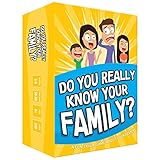
Overview: This card game transforms family game night into a bonding session through personalized questions and lighthearted challenges. Players answer prompts about each other (“What’s Mom’s favorite childhood snack?”) or perform silly tasks, sparking laughter and revealing hidden quirks across generations. What Makes It Stand Out: Unlike trivia-based games, it focuses exclusively on family-specific knowledge and interactions. The blend of reflective questions (“When did you feel proudest of a sibling?”) and playful dares (“Do your best impression of Dad”) creates organic, memorable moments that deepen connections beyond superficial fun. Value for Money: An affordable investment for meaningful family time, it eliminates screen distractions and fosters genuine communication. While lacking physical components beyond cards, its replayability through evolving family dynamics and customizable challenges offers superior long-term value over generic trivia sets. Strengths and Weaknesses: Strengths: Promotes emotional connection; simple rules for all ages; encourages active listening; adaptable for shy or energetic groups. Weaknesses: Limited replay value once questions are memorized; less engaging for very young children (under 8); minimal strategic depth for competitive players. Bottom Line: An essential tool for families craving authentic interaction, this game excels at turning ordinary nights into laughter-filled bonding experiences. Highly recommended for households prioritizing connection over competition, despite modest longevity.
3. Taco Cat Goat Cheese Pizza Wildly Entertaining Card Game for Family and Group Game Night | Easy to Learn and Play with 10-15 Minute Rounds | Fun for Kids, Teens, Adults, and Families | 2-8 Players

Overview: Taco Cat Goat Cheese Pizza is a reflex-testing shouting-and-slapping game where players chant “Taco, Cat, Goat, Cheese, Pizza” while flipping cards. Matching the spoken word to the card triggers a frantic pile-slap—the slowest player collects the deck, creating chaotic, laughter-filled rounds. What Makes It Stand Out: Its genius lies in the seamless blend of pattern recognition, rapid reflexes, and physical comedy. Surprise action cards (like “No Touching!”) escalate chaos, while the 10–15 minute runtime and 2–8 player capacity make it universally accessible. The absurd theme lowers barriers, inviting all ages to participate equally. Value for Money: Exceptional for the price, this game delivers consistent, high-energy entertainment without complex rules or setup. It outperforms similarly priced party games through sheer re-playability and broad age appeal (7+), justifying its cost as a staple for gatherings. Strengths and Weaknesses: Strengths: Instant engagement; inclusive for mixed-age groups; portable; enhances focus and reflexes; minimal rules explanation needed. Weaknesses: Can become overwhelming for noise-sensitive players; physical slapping may concern some parents; limited strategic depth. Bottom Line: A near-perfect party game that guarantees uproarious fun in minutes. Its simplicity, inclusivity, and relentless energy make it a must-buy for families and social hosts seeking instant crowd-pleasing action.
4. Regal Games Card Games for Kids - Go Fish, Crazy 8’s, Old Maid, Slap Jack, Garbage Monster, War - Simple & Fun Classic Family Table Games - Games May Vary (6 Set)

Overview: This 6-in-1 set compiles kid-friendly versions of timeless card games like Go Fish, Old Maid, and Slap Jack. Featuring oversized, brightly illustrated cards, it’s designed for 2–6 players aged 4+, turning foundational gameplay into accessible, educational fun. What Makes It Stand Out: The oversized cards (3.5x2.5 inches) are ideal for small hands, while vibrant, thematic art (e.g., “Garbage Monster” memory match) captivates children. Bundling six classics into one portable set offers unmatched variety for young learners without overwhelming complexity. Value for Money: A superb value proposition—comparable to one standard game—yet delivering diverse gameplay that grows with kids. The educational focus (counting, color matching, memory) provides tangible developmental benefits, making it more cost-effective than single-game alternatives. Strengths and Weaknesses: Strengths: Durable, child-scaled cards; builds cognitive/social skills; travel-friendly; broad age range (4+); eliminates need to buy separate decks. Weaknesses: Basic card stock; “Garbage Monster” may not resonate with all; lacks advanced strategy for older kids. Bottom Line: An indispensable starter kit for family game nights, seamlessly blending education and entertainment. Ideal for preschoolers to early elementary kids, this set earns its place as a practical, joyful investment in screen-free play.
5. Mattel Games UNO Card Game in Travel & Storage Tin for Kid, Adult & Family Nights & Parties, Color Blind Accessible & Customizable Deck (Amazon Exclusive)

Overview: This Amazon-exclusive UNO edition reimagines the classic matching game with a durable metal travel tin, color-blind accessibility features, and customizable blank Wild cards. Players race to discard cards by matching colors or numbers while leveraging iconic Action cards like Skip and Reverse. What Makes It Stand Out: The standout features are its color-blind-friendly symbols (e.g., stripes for red) and three erasable Wild cards for house rules—transforming static gameplay into dynamic, player-driven experiences. The compact tin solves UNO’s perennial storage and portability issues. Value for Money: Priced slightly above standard UNO decks, the added value justifies the cost: the reusable tin protects cards during travel, accessibility inclusivity broadens its audience, and customizable rules extend replayability far beyond traditional sets. Strengths and Weaknesses: Strengths: Essential accessibility upgrades; durable, portable tin; innovative customizable rules; universally familiar gameplay. Weaknesses: Limited to 2–10 players (like standard UNO); tin adds minor bulk; blank cards require preparation for customization. Bottom Line: A thoughtful evolution of a timeless game, this UNO edition is the definitive version for modern families. Its inclusivity, portability, and creative flexibility make it a worthwhile upgrade for both new players and lifelong fans.
6. Mattel Card Game Set (Skip Bo, Uno & Phase 10)

Overview: This trio bundles three beloved Mattel card games—Skip-Bo, Uno, and Phase 10—into one value-packed set. Skip-Bo emphasizes sequencing, Uno focuses on quick matching and action cards, and Phase 10 challenges players with progressive rummy-style phases. Ideal for households seeking versatile game night options without purchasing each title separately.
What Makes It Stand Out: The set’s diversity is unmatched: Skip-Bo’s pure sequencing strategy, Uno’s chaotic accessibility, and Phase 10’s structured progression cater to varied skill levels and group dynamics. Combining competitive, cooperative, and fast-paced elements in one package maximizes replayability and group engagement.
Value for Money: Priced competitively against buying individual games, this set offers exceptional savings. It eliminates the guesswork of choosing one title, providing years of entertainment for families or casual gamers at a fraction of the cost of three standalone purchases.
Strengths and Weaknesses:
Strengths: Huge replay value; accommodates large groups (2–10+ players across games); easy to learn rules; durable cards.
Weaknesses: Storage isn’t consolidated (separate boxes); Phase 10’s complexity may overwhelm young kids; Skip-Bo lacks the luck-based excitement of Uno.
Bottom Line: A must-buy for new game collectors or families wanting variety. While not perfectly streamlined, the trio’s combined strengths and savings make it an unbeatable starter bundle for endless card-game fun.
7. Mattel Games Phase 10 Card Game with 108 Cards, Great Game for Kids, Family or Adult Game Night, Ages 7 Years and Older
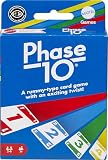
Overview: Phase 10 is a strategic rummy variant where players race to complete 10 increasingly complex card sequences (phases), such as sets or runs. The 108-card deck includes Wild and Skip cards to disrupt opponents, targeting families and casual gamers seeking structured yet dynamic competition.
What Makes It Stand Out: Its progressive phase system creates tangible achievement—completing a phase feels rewarding and pushes players forward. The color-blind accessible design (using symbols alongside colors) is a thoughtful, inclusive touch rare in mass-market card games, ensuring wider accessibility.
Value for Money: At standard retail pricing, it delivers robust replayability for its cost. Compared to similar strategy card games, Phase 10’s depth-to-price ratio excels, especially for groups valuing skill development over pure luck.
Strengths and Weaknesses:
Strengths: Highly replayable due to phased progression; inclusive color-blind design; simple core rules with strategic depth; accommodates 2–6 players.
Weaknesses: Early phases can feel repetitive; luck-dependent with Wild/Skip cards; storage tin not included (basic box).
Bottom Line: An excellent choice for families and strategy enthusiasts. The inclusive design and engaging phase mechanics justify its price, making it a top-tier pick for game nights focused on incremental challenges.
8. Five Crowns – Card Game for Kids and Adults, Travel and Family Game Night Favorite, The Game isn’t Over Until the Kings Go Wild, 5 Suited Rummy Style Card Game, 1-7 Players, Ages 8+

Overview: Five Crowns reinvents rummy with a fifth suit (stars) and rotating wild cards, challenging players to form sets and runs across 11 progressively harder rounds. Designed for 1–7 players, it shines as a portable, award-winning game suitable for ages 8+ and ideal for travel or family gatherings.
What Makes It Stand Out: The unique fifth suit and rotating wild cards (e.g., 3s wild in round 3) inject constant unpredictability, preventing repetitive gameplay. Its compact size and straightforward “books and runs” mechanics make it exceptionally travel-friendly without sacrificing strategic depth.
Value for Money: Priced affordably, it offers remarkable versatility—working for solitaire, couples, or large groups. Few card games match its adaptability across player counts and settings, especially at this price point.
Strengths and Weaknesses:
Strengths: Highly adaptable player count (1–7); innovative rotating wilds; superb portability; easy to learn but strategic.
Weaknesses: Packaging isn’t ultra-durable for heavy travel; star suit may confuse beginners initially; lacks advanced variants for experts.
Bottom Line: A near-perfect travel and family game. Five Crowns’ creativity, accessibility, and robust replayability deliver outstanding value, earning its status as a modern classic for all ages.
9. Mattel Games Phase 10 Card Game with 108 Cards, Makes a Great Gift for Kids, Family or Adult Game Night, Ages 7 Years and Older (Amazon Exclusive)

Overview: This Amazon-exclusive Phase 10 edition includes the same strategic 108-card rummy gameplay—where players race through 10 sequence-based phases—but features a vibrant, durable storage tin for portability. It retains all core mechanics, including Wild/Skip cards and color-blind accessibility.
What Makes It Stand Out: The standout feature is the sturdy, illustrated tin, which protects cards during travel and enhances shelf appeal as a gift. Combined with the game’s inherent color-blind symbols, this edition prioritizes both practicality and inclusivity in a way standard versions don’t.
Value for Money: Priced slightly higher than the standard box edition, the tin justifies the premium for frequent travelers or gift-givers. It’s a smarter long-term investment than flimsy boxes, especially for families on the go.
Strengths and Weaknesses:
Strengths: Premium tin ensures card longevity; retains color-blind accessibility; identical engaging gameplay; excellent gift presentation.
Weaknesses: Minimal gameplay difference from standard edition; tin slightly bulkier than a box; niche availability (Amazon-only).
Bottom Line: Opt for this if portability or gifting matters. The tin elevates a proven game into a travel-ready treasure, making the modest price bump worthwhile for on-the-move gamers.
10. Hasbro Gaming 5 Alive Card Game, Fast-Paced Game for Kids and Families, Easy to Learn, 2 to 6 Players, Fun Summer Activities, Vacation Travel Essentials, Ages 8+

Overview: 5 Alive is a high-energy card game where players add card values to a shared pile, aiming to stay under 21. Exceeding 21 flips an “Alive” card, and losing five lives eliminates you. Wild cards enable dramatic saves or sabotage, creating constant tension for 2–6 players.
What Makes It Stand Out: The under-21 mechanic blends luck and risk-taking uniquely, fostering frantic, interactive play. Wild cards that “zap” opponents or save lives inject chaos, ensuring no two rounds play alike—perfect for lively game nights or travel.
Value for Money: Budget-friendly and endlessly replayable, it outshines generic card decks with its specialized, fast-paced design. Comparable games often lack its balance of simplicity and nail-biting stakes at this price.
Strengths and Weaknesses:
Strengths: Thrilling, rapid gameplay; simple rules for quick setup; wild cards create memorable moments; ultra-portable.
Weaknesses: Highly luck-dependent; short rounds may feel shallow for strategy seekers; limited depth for repeated plays.
Bottom Line: An ideal pick for casual, high-energy fun. While not deep, 5 Alive’s accessibility and heart-pounding moments make it a stellar value for family vacations or quick game-night bursts.
Understanding Your Family’s Game Night Needs
Before you even glance at a box, pause and consider what your family truly needs from a card game. This foundational step prevents frustration and sets the stage for lasting enjoyment. It’s not about what’s trendy; it’s about what resonates with your group’s energy, attention spans, and shared goals for the evening.
Assessing Age Range and Cognitive Development
The age spread around your table is non-negotiable. A game requiring complex resource management will overwhelm young children, while overly simplistic matching games will bore teenagers. Look for mechanics that scale: some games offer “junior” rules for younger players or naturally allow for varying levels of strategic depth within the same framework. Consider attention spans too—games with quick, decisive turns often work better for mixed ages than those with long, contemplative phases where others disengage.
Determining Player Count Flexibility
How many people typically gather? Games designed strictly for 4 players often fall flat with 3 or 5. Prioritize games with clear rules for variable player counts (e.g., 2-5 players) or those that use modular decks/rules to adjust. Some excel with large groups through team play or simultaneous actions, while others create an intimate, focused experience perfect for duos. Knowing your usual crowd size eliminates half the potential mismatches right away.
Identifying Desired Interaction Level
Family dynamics vary greatly. Do you crave lighthearted negotiation and playful alliances, or prefer cooperative challenges where everyone works together against the game itself? Maybe you want minimal direct conflict to keep the peace, or enjoy the strategic tension of gentle “take-that” mechanics. Understanding whether your family thrives on collaboration, competition, or a specific blend guides you toward mechanics that foster positive vibes, not frustration.
Key Gameplay Mechanics to Explore
The heart of any great card game lies in its core mechanics—the fundamental ways players interact with the cards and each other. Familiarizing yourself with common types helps you pinpoint what creates that “just one more round” magic for your family.
Trick-Taking Fundamentals
This classic structure, where players follow a suit and aim to win specific “tricks,” offers deep strategy and requires thoughtful play. Modern interpretations often streamline traditional rules, making them more accessible. Look for versions with intuitive scoring or thematic twists that reduce the intimidation factor while preserving the satisfying challenge of planning several moves ahead and reading opponents’ intentions.
Set Collection and Pattern Matching
The simple joy of collecting matching cards or completing specific sequences has universal appeal. These mechanics are often easy to grasp, making them ideal for younger players or mixed groups. The best examples layer in strategic choices—do you go for a quick small set or risk holding cards for a bigger, more valuable combination? This creates accessible tension perfect for keeping everyone engaged without a steep learning curve.
Deck-Building Dynamics
Start with a basic deck and gradually acquire more powerful cards during play to enhance your strategy. This meta-game layer provides immense satisfaction as your personal deck evolves turn by turn. While some deck-builders are complex, many family-friendly versions focus on straightforward card acquisition and immediate impact, offering a tangible sense of progression and personalized strategy that players of varying skill levels can appreciate.
Cooperative and Team-Based Play
When the game itself is the opponent, it fosters fantastic teamwork and shared triumph. Cooperative card games encourage discussion, collective problem-solving, and celebrating wins as a unit—ideal for reducing competitive friction. Team-based variants (like partnerships in trick-taking) also build camaraderie. These structures are invaluable for creating inclusive experiences where everyone feels invested in the outcome, regardless of individual skill.
Evaluating Practical Considerations
Beyond the fun factor, practical aspects significantly impact whether a game gets regular playtime or gathers dust on the shelf. These often-overlooked elements are crucial for seamless integration into your family routine.
Playtime Duration and Pacing
Be brutally honest about your family’s capacity. A promised “20-minute game” that routinely stretches to 45 minutes due to analysis paralysis or complex setup is a recipe for abandonment. Prioritize games with tight, predictable runtimes that match your available window. Fast-paced games with simultaneous actions or strict turn timers often maintain energy better than those with long, sequential decision phases, especially with larger groups.
Setup and Cleanup Efficiency
The barrier to starting a game is often higher than we admit. Games requiring extensive shuffling of multiple decks, fiddly components, or lengthy rule explanations before the first card is played lose points fast. Opt for games where setup is literally “open the box, shuffle, deal.” Similarly, cleanup should be a 10-second process—no hunting for lost tokens or sorting cards into seven different piles. Lower friction means more frequent play.
Storage and Portability
Will this game live in the living room, or do you need something sturdy enough for grandparents’ houses or vacations? Assess the box quality and card sleeve necessity. Games in durable tuck boxes are inherently more portable than those requiring a full shelf. Consider if the deck size and component count make it easy to toss in a bag without worrying about damage—portability directly influences how often spontaneous game sessions happen.
Ensuring Long-Term Replayability
The true mark of a stellar family game isn’t just the first play, but the fiftieth. Games that offer enduring appeal save you from constantly hunting for the next shiny new thing, providing consistent value and becoming beloved traditions.
Variable Setup and Scenarios
Games that randomize key elements (starting hands, objectives, card distributions) or offer multiple distinct scenarios prevent predictability. This means no two games feel identical, forcing players to adapt strategies rather than rely on memorized patterns. Look for mechanisms like modular decks, shuffled goal cards, or branching narrative paths that create fresh challenges every single time you sit down.
Strategic Depth and Player Agency
Replayability thrives when players feel their choices genuinely matter. Games offering meaningful decisions—not just luck of the draw—where different approaches can lead to victory, encourage repeated plays to test new tactics. The best family games provide enough depth for experienced players to refine strategies while remaining accessible enough that newcomers aren’t hopelessly outmatched on their first attempt.
Community and Expandability
While avoiding specific products, note that some game systems have vibrant communities creating free house rules, variants, or printable expansions. Others might have official expansions that significantly alter gameplay without replacing the core set. Consider if the game’s structure lends itself to easy modification by your family—can you invent simple new rules or objectives to keep it feeling fresh years later? This organic adaptability is priceless.
Balancing Skill, Luck, and Inclusivity
The magic happens when a game feels fair and engaging for players with vastly different experience levels. Mastering this balance is essential for true family harmony around the card table.
Mitigating Luck vs. Skill
Pure luck games (like War) can frustrate older players, while pure strategy can intimidate beginners. Seek games with a thoughtful blend: perhaps luck influences starting conditions or available options, but skill determines how effectively players leverage those opportunities. Mechanisms like hand management, set collection choices, or tactical card play allow skilled players to shine consistently without making victory impossible for newcomers through smart design.
Handicapping and Learning Curves
The best inclusive games have natural built-in balancing. This might mean the player starting the game has a slight disadvantage, or rules that subtly help trailing players catch up (without feeling patronizing). Consider how steep the initial learning cliff is—can core rules be explained in under 5 minutes, with advanced tactics learned organically over plays? Games where understanding deepens gradually keep new players from feeling lost while offering veterans room to grow.
Encouraging Positive Interaction
Mechanics matter, but so does the feel. Does the game foster laughter and friendly banter, or sour competitiveness and blame? Look for interactions that are playful (“Oh no, you stole my perfect set!”) rather than punitive (“You ruined my entire strategy!”). Cooperative elements, shared goals, or mechanics where “attacking” is clearly thematic (like playful creature battles) help maintain a joyful atmosphere where losing feels like part of the fun, not a reason to quit.
Integrating Games into Your Routine
Finding the perfect game is only half the battle; making game night a sustainable habit is where the real magic happens. Thoughtful integration ensures card games become a cherished ritual, not a forgotten obligation.
Creating a Dedicated Game Night Ritual
Consistency breeds anticipation. Set a regular time—even if it’s just “first Friday of the month”—so everyone expects and looks forward to it. Simple rituals build excitement: a special snack, dimming the lights, or always starting with a quick warm-up game. This isn’t just about playing; it’s about marking time as special, screen-free connection. The predictability makes it easier to prioritize amidst busy schedules.
Involving Everyone in the Selection Process
Rotate who chooses the game each week. Give younger family members age-appropriate options to pick from, fostering ownership and investment. Briefly discuss why someone chose a particular game (“I picked this because it’s quick and has funny art!”). This involvement ensures diverse preferences are heard and prevents one person from dominating the game library, making everyone feel valued.
Managing Expectations and Graceful Play
Gently set the tone that game night is about connection first, winning second. Agree on lighthearted house rules for disputes (“rock-paper-scissors for unclear rules”) and emphasize good-natured sportsmanship. If a game consistently causes arguments, retire it—it’s not worth the friction. Remember, the goal is shared enjoyment; the specific outcome of any single game is irrelevant to the larger purpose of strengthening bonds.
Frequently Asked Questions
Frequently Asked Questions
How do I know if a card game is truly suitable for young children? Focus on games with large, durable cards, extremely simple core rules (match colors, collect pairs), and short playtimes under 15 minutes. Avoid games relying heavily on reading complex text or intricate strategy. Look for clear visual cues and themes that resonate with them.
What’s the ideal number of players for most family card games? The sweet spot is typically 3-5 players. Many excellent family games scale well within this range. Games for exactly 2 players or large groups (6+) are less common, so check player count specifics carefully if your group falls outside the 3-5 norm.
Can card games really be educational without feeling like homework? Absolutely. Games naturally develop critical thinking, pattern recognition, basic math (counting, set values), strategic planning, and social skills like communication and turn-taking. When the learning is embedded in fun mechanics and engaging themes, it never feels like a lesson.
How important are the physical components (card quality, art)? Very. Thinner cards bend and wear out quickly, especially with kids. Look for sturdy stock with a smooth finish for easy shuffling. Appealing, clear artwork aids gameplay comprehension and makes the game more inviting. Poor components can ruin the experience regardless of great mechanics.
My family argues a lot during competitive games. What should I look for instead? Prioritize cooperative games where everyone works together against the game, or semi-cooperative games with shared goals. Light “take-that” mechanics can be fun, but if arguments are frequent, focus on games with minimal direct player conflict and positive interaction styles.
How can I prevent game night from dragging on too long? Strictly enforce turn timers (even just verbally: “30 seconds to decide!”), choose games with advertised playtimes matching your schedule, and avoid games known for “analysis paralysis.” Games with simultaneous actions or simple, quick turns are your best bet for keeping energy high.
Is it worth getting card sleeves for family games? For games played frequently, especially with children, sleeves significantly extend the life of the cards by preventing bends, stains, and wear. Opt for non-slip, standard-size sleeves. The investment pays off in longevity and smoother shuffling, making the game more pleasant to play repeatedly.
How do I handle a family member who always wins and dominates the game? Introduce cooperative games to shift focus. For competitive games, look for systems with built-in catch-up mechanics. You can also gently suggest rotating start players or using unofficial handicaps (like giving newer players a slight resource boost) to keep it fun for all skill levels.
What’s the best way to learn the rules quickly without frustration? Watch a single, concise “how to play” video (5-10 mins max) after reading the rulebook overview. Start playing immediately with simplified rules, filling in nuances as questions arise during the first game. Don’t aim for perfection in the first play—focus on core flow.
Can card games accommodate large family gatherings effectively? Yes, but look specifically for party-style card games designed for 6+ players. These often feature simultaneous play, team formats, or simple, scalable mechanics that keep everyone involved without excessive downtime. Avoid traditional trick-taking or complex strategy games for very large groups.
See Also
- How to Choose the Best Family Card Games for Game Night in 2026
- 10 Best Value Adult Card Games for Game Night in 2026
- How to Solve Game Night Monotony with the 10 Best Dedicated Deck Card Games in 2026
- Top 10 Best Deck Building Games for Family Game Night in 2026
- 10 Card Games Recommendations for Game Night Hosts in 2026