Table of Contents
Watching tiny hands grasp their first game pieces is pure magic – that moment when a toddler realizes they can make choices, follow simple rules, and maybe even “win” (with your enthusiastic help, of course!). For parents navigating the overwhelming world of early childhood toys, board games often seem like an impossible dream. Aren’t toddlers just prone to throwing pieces and declaring, “All done!”? Absolutely, sometimes. But the right early board games are far less about complex strategy and far more about building foundational skills through joyful interaction. They transform playtime into a powerful, shared experience where giggles replace frustration and tiny victories build huge confidence.
Think beyond the traditional idea of a board game. For toddlers, these aren’t about cutthroat competition; they’re vibrant, tactile tools for discovery. They nurture crucial early development – recognizing colors and shapes, understanding cause and effect, taking turns (a monumental skill!), and expressing big emotions in a safe space. The real win isn’t crossing a finish line; it’s seeing your child beam with pride after matching a picture, carefully placing a chunky piece, or finally waiting their turn without melting down. Choosing games that align with their rapidly evolving abilities turns potential chaos into cherished moments of connection and growth, making them an essential, often overlooked, part of your playroom toolkit.
Top 10 Board Games for Kids
Detailed Product Reviews
1. Hasbro Gaming Candy Land Kingdom of Sweet Adventures Board Game for Kids, Easter Gifts for Boys and Girls, Ages 3 & Up (Amazon Exclusive)

Overview:
Candy Land remains a timeless introduction to board gaming for preschoolers. This Amazon-exclusive version features vibrant, sweet-themed artwork and a simple race-to-the-castle format where players draw colored cards to advance their gingerbread pawns along a winding path.
What Makes It Stand Out:
Its greatest strength is accessibility: absolutely no reading or counting skills are required, making it ideal for ages 3+. The whimsical candy-coated board and familiar characters (like King Kandy) captivate young imaginations, while the luck-based gameplay ensures quick, stress-free rounds perfect for short attention spans.
Value for Money:
Priced affordably as an entry-level game, it offers exceptional value for parents seeking screen-free entertainment. While simpler than modern strategy games, its durability and universal appeal surpass comparable preschool titles, especially as an Easter gift or holiday staple.
Strengths and Weaknesses:
Strengths: Effortless setup and rules; promotes color recognition; highly durable components; fosters turn-taking. Weaknesses: Zero strategic depth; outcomes rely entirely on luck; limited replayability for older children; small pieces pose a choking hazard for under-3s.
Bottom Line:
An unbeatable starter game for toddlers. Its simplicity and charm make it a must-have for early childhood development, though older kids will outgrow it quickly. Highly recommended for parents introducing board games.
2. Hasbro Twister Party Classic Board Game for 2 or More Players,Indoor and Outdoor Game for Kids 6 and Up,Packaging May Vary

Overview:
Twister delivers iconic physical comedy as players contort their bodies to place hands and feet on colored mat circles. This classic requires a spinner, a large mat, and at least two flexible participants, making it a staple for active indoor or outdoor gatherings.
What Makes It Stand Out:
The spinner-driven randomness creates hilarious, unpredictable challenges (“Left hand blue!”) that test balance and flexibility. Its adaptability for teams or solo play, coupled with generational nostalgia, ensures it remains a party favorite for breaking the ice and burning energy.
Value for Money:
At a mid-range price point, Twister offers immense entertainment per dollar. The durable mat withstands years of use, outperforming cheaper knockoffs that tear easily. While space-intensive, its replayability for groups justifies the cost compared to single-use party kits.
Strengths and Weaknesses:
Strengths: Encourages physical activity; scales seamlessly from 2 to large groups; timeless fun; minimal setup. Weaknesses: Requires significant floor space; unsuitable for those with mobility issues; mat can slip on smooth surfaces; spinner mechanism occasionally jams.
Bottom Line:
A near-essential addition to any game collection for active families or parties. Its unique physical engagement and enduring popularity make it worth every penny for ages 6+, despite space requirements.
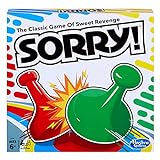
3. Sorry! Board Game for Kids Ages 6 and Up; Classic Hasbro Board Game; Each Player Gets 4 Pawns; Family Game
Overview:
Sorry! blends luck and light strategy as players race four pawns from start to home, using drawn cards to advance, slide, or send opponents backward. This vibrant Hasbro classic emphasizes “sweet revenge” through tactical collisions on a colorful, path-based board.
What Makes It Stand Out:
The high-stakes card mechanics—like “Sorry!” cards that bump rivals to start—create exhilarating moments of comeback potential. Its balance of simplicity (easy for kids 6+) and strategic depth (planning slides or blocking paths) fosters genuine family competition without overwhelming rules.
Value for Money:
Priced competitively among strategy-lite board games, it delivers decades of replayability. The sturdy board and pawns outlast flimsier alternatives, and its enduring appeal across generations offers superior long-term value versus trend-driven games.
Strengths and Weaknesses:
Strengths: Engaging risk-reward gameplay; accommodates 2–4 players; quick rounds (20–30 mins); promotes basic math and planning. Weaknesses: High luck dependency can frustrate competitive players; limited depth for teens/adults; small pawns may get lost.
Bottom Line:
A near-perfect family game night choice for school-aged children. Its mix of chaos and strategy creates memorable moments, earning it a strong recommendation despite occasional luck-driven outcomes.
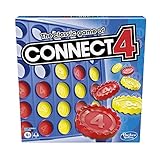
4. Hasbro Gaming Connect 4 Classic Grid,4 in a Row Game,Strategy Board Games for Kids,2 Player .for Family and Kids,Ages 6 and Up
Overview:
Connect 4 challenges two players to strategically drop colored discs into a vertical grid, aiming to align four in a row horizontally, vertically, or diagonally. This sleek modern edition refines the beloved classic with contemporary aesthetics and versatile play modes.
What Makes It Stand Out:
The ingenious pop-out feature (allowing disc removal) and Frenzy variant add refreshing twists to the core gameplay. Its compact design, modern color scheme, and emphasis on spatial reasoning make it stand out from basic grid games, appealing to both kids and adults.
Value for Money:
An excellent investment for strategy beginners. Its durable construction and multiple game modes (classic, Frenzy, pop-out) provide lasting value far beyond cheaper, single-mechanic alternatives. Ideal for developing critical thinking at a budget-friendly price.
Strengths and Weaknesses:
Strengths: Easy to learn but challenging to master; portable and space-efficient; encourages forward planning; durable plastic grid. Weaknesses: Strictly two-player only; discs can jam if inserted carelessly; limited appeal for very young children under 6.
Bottom Line:
A must-have for households seeking quick, brain-teasing duels. Its timeless strategy and modern enhancements make it highly recommended for ages 6+ as a foundational logic game.
5. HUES and CUES - Vibrant Color Guessing Board Game for 3-10 Players Ages 8+, Connect Clues and Guess from 480 Color Squares

Overview:
HUES and CUES reimagines color-based gameplay by challenging players to give one- or two-word clues (e.g., “sunset,” “toxic”) to guide teammates toward selecting the correct hue from a 480-color grid. This social deduction game thrives on creative communication and visual perception.
What Makes It Stand Out:
Its innovative color-wheel mechanic and emphasis on associative thinking create a uniquely collaborative experience. With no reading required and adaptable clue complexity, it bridges age gaps effortlessly—kids guess based on intuition while adults craft nuanced hints.
Value for Money:
Priced mid-to-high for a party game, it justifies cost through exceptional replayability (480 colors ensure near-infinite combinations) and broad demographic appeal. Far more engaging than generic charades sets, it excels as a conversation catalyst for diverse groups.
Strengths and Weaknesses:
Strengths: Incredibly inclusive for mixed ages; sparks creativity; rapid setup and play; high-quality color spectrum. Weaknesses: Colorblind players may struggle; clue-givers can feel constrained by word limits; less structured than competitive games.
Bottom Line:
A revelation for family gatherings or team-building events. Its originality and social magic make it a top-tier recommendation for creative, screen-free fun—just verify color accessibility for all players.
6. Hasbro Gaming Hungry Hungry Hippos Game for Preschoolers | Instant Marble Relaunch, Easy Set-Up & Storage| Ages 4 and Up | 2 to 4 Players | Kids Games

Overview:
This refreshed Hungry Hungry Hippos edition revitalizes the beloved marble-chomping classic for preschoolers, focusing on seamless play and storage. Designed for ages 4+, it retains the frantic fun of racing hippos gobbling marbles while addressing common pain points like scattered pieces.
What Makes It Stand Out:
The standout feature is the instant marble reload system—chomped marbles cycle directly into the hippo’s trough for immediate reuse, eliminating downtime between rounds. Combined with its clever one-motion storage (hippos collapse vertically to corral all marbles neatly in the box), it solves the perennial issue of lost components, making it ideal for quick setups and on-the-go play.
Value for Money:
Priced competitively for a durable, well-engineered preschool game, it offers exceptional value. The instant-reload mechanism and sturdy construction justify its cost over cheaper knockoffs that lack thoughtful design, ensuring longevity through repeated use.
Strengths and Weaknesses:
Strengths: Effortless setup/storage; non-stop gameplay; perfectly scaled for young kids; encourages hand-eye coordination. Weaknesses: Limited strategic depth (pure luck-based); marbles may still eject if hippos are overfilled; smaller play area than vintage versions.
Bottom Line:
An essential upgrade to the classic, this Hungry Hungry Hippos set is a must-buy for preschoolers. Its innovative reload system and tidy storage make it the most practical, frustration-free version yet—ideal for family game nights or playdates.
7. zeyce Tic Tac Toe Board Game,Tic Tac Toe Family Game, Classic Board Game, Classical Family Board Game,Children’s Tic Tac Toe Game, Plastic tic tac Toe Game, Board Size 15 X 15 cm

Overview:
This compact zeyce Tic Tac Toe set delivers the timeless noughts-and-crosses experience in a portable, plastic format. Targeted at families and young children, it emphasizes convenience and basic cognitive development through its simple design.
What Makes It Stand Out:
Its ultra-portable 15x15cm size and lightweight resin construction make it uniquely travel-friendly—perfect for cars, restaurants, or parties. The vibrant colors and distinct shapes (circles vs. crosses) subtly enhance color/shape recognition for toddlers, adding educational value beyond standard sets.
Value for Money:
While inexpensive, its value is niche. It excels as a budget-friendly stocking stuffer or party favor but lacks premium materials or expandable gameplay. Cheaper than wooden alternatives, yet less durable for heavy use—ideal for occasional play.
Strengths and Weaknesses:
Strengths: Highly portable; eco-friendly plastic; visually engaging for kids; effortless to learn; doubles as a teaching tool for shapes/colors. Weaknesses: Minimal strategic depth; plastic feels flimsy; no storage compartment risks lost pieces; limited replay value for older players.
Bottom Line:
A solid entry-level Tic Tac Toe set for toddlers and travel, but not a standout for serious players. Best suited as a low-cost gift for young children—it fulfills its purpose but offers little beyond basic functionality.
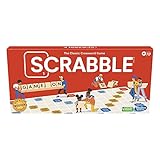
8. Hasbro Gaming Scrabble Board Game, Classic Word Games for Kids Ages 8 and Up, Fun Family Game for 2-4 Players, The Classic Crossword Game
Overview:
Hasbro’s Scrabble remains the gold standard for word-game enthusiasts, blending vocabulary-building with strategic depth. This edition targets families with kids aged 8+, featuring premium materials to elevate the classic crossword gameplay.
What Makes It Stand Out:
The inclusion of wooden tiles and racks—uncommon in budget sets—provides tactile satisfaction and durability. The textured board prevents slips, while expert tips in the guide help newcomers grasp 2-letter words and scoring nuances, making complex strategy accessible.
Value for Money:
Worth every penny for word-game fans. The wooden components significantly outlast plastic alternatives, and the timeless gameplay ensures decades of use. It’s pricier than digital versions but fosters genuine social interaction, justifying the investment for family libraries.
Strengths and Weaknesses:
Strengths: High-quality wooden pieces; promotes literacy and strategy; inclusive team-play options; intergenerational appeal. Weaknesses: Steep learning curve for young kids; setup requires space; scoring can feel intimidating for beginners; no digital aids.
Bottom Line:
An indispensable classic for language-loving families. This Scrabble edition’s premium build and enduring gameplay make it a worthy heirloom—highly recommended for fostering cognitive skills and quality screen-free bonding.
9. Hasbro Gaming Chutes and Ladders Board Game | 2 to 4 Players | Back to School Gifts for Kids | Preschool Classroom Games | Ages 3+ (Amazon Exclusive)

Overview:
A staple for early learners, this Chutes and Ladders edition simplifies board gaming for preschoolers. With its luck-based racing mechanics and vibrant board, it’s engineered to teach foundational skills without reading requirements.
What Makes It Stand Out:
Its brilliance lies in absolute accessibility: the spinner-driven movement and visual “good deed” ladders/chutes eliminate literacy barriers, letting 3-year-olds play immediately. The Amazon-exclusive packaging often includes classroom-friendly extras, enhancing its educational utility.
Value for Money:
Exceptional for the price. As one of the most durable, no-fuss preschool games, it outperforms cheaper imitations that fade or break. Schools and parents get years of use from its sturdy board, making it a cost-effective developmental tool.
Strengths and Weaknesses:
Strengths: Zero reading needed; reinforces counting/number recognition; quick rounds maintain short attention spans; positive/negative consequence visuals teach cause-effect. Weaknesses: Pure luck (no strategy); high frustration when sliding down chutes; limited replay depth for older kids.
Bottom Line:
The definitive first board game for toddlers. Its seamless blend of education and entertainment makes it a top-tier back-to-school gift—perfect for classrooms or homes seeking stress-free, skill-building play.
10. Official Hasbro Games Jenga Game | Digital Die for 6 More Ways to Play | Original Wood Block Game | Stacking Tower | Ages 6+ | 1+ Players | Party Games

Overview:
Hasbro’s Jenga redefines the tension-filled block-stacking classic with digital innovation. While retaining the core “pull-and-stack” gameplay, it introduces app-driven challenges to elevate parties or solo practice.
What Makes It Stand Out:
The digital die—a free app accessed via QR code—is revolutionary. It introduces six dynamic modes (e.g., “thumbs only,” team-guided moves) that transform predictable play into unpredictable chaos, adding replayability absent in traditional sets.
Value for Money:
Slightly pricier than basic Jenga, but the digital expansion justifies it. Genuine wood blocks ensure stability, and the app’s free challenges eliminate the need for additional purchases, offering sustained engagement unmatched by generic sets.
Strengths and Weaknesses:
Strengths: Innovative app integration; premium wood construction; solo-play viability; inclusive for all ages; hilarious team modes. Weaknesses: Requires smartphone (potential distraction); app modes may confuse purists; blocks can warp in humidity.
Bottom Line:
A must-have evolution of Jenga for modern gamers. The digital die injects fresh energy into the classic, making it the ultimate party upgrade—highly recommended for groups seeking laughter and unpredictability.
Understanding Toddler Development and Game Readiness
Recognizing Key Developmental Milestones
Before diving into features, it’s crucial to understand what toddlers are actually capable of at different ages. Between 18 months and 3 years, cognitive, physical, and social skills explode. Early on, games might simply involve matching a picture to a real object or pushing a piece along a path. By age three, many can grasp simple turn-taking and follow basic cause-and-effect rules. Matching games often come before true “board” games with paths. Observing your child’s current abilities – can they sit for 5 minutes? Do they understand “my turn/your turn”? – is more important than strictly adhering to an age label on the box.
The Critical Role of Short Attention Spans
Forget marathon gaming sessions. Toddler attention spans are measured in minutes, not hours. Games designed for this age group should have extremely short playtimes – ideally 5-10 minutes, sometimes even less. The goal isn’t to finish the entire game every single time; it’s about engaging in the process. If your child walks away after two turns, that’s a success! Forcing completion leads to tears. Look for games where the core activity (like matching or simple movement) can be completed quickly, allowing for natural stopping points.
Emotional Regulation as a Core Gameplay Element
Toddlers are still learning to manage big feelings. Games inherently involve potential frustration – waiting, “losing,” or not understanding. The best toddler games subtly incorporate emotional learning. Features like cooperative play (working together towards a common goal instead of against each other), immediate positive reinforcement (a bell rings when you match!), or very simple, predictable outcomes help minimize meltdowns. Games shouldn’t be a battleground for emotional control; they should be a safe space to practice handling small disappointments with your supportive guidance.
Essential Physical Features for Toddler-Friendly Games
Oversized, Chunky, and Easy-to-Grip Pieces
Tiny dice and minuscule tokens are a safety hazard and a frustration magnet. Toddler games demand pieces that are large enough to be safe (no choking hazards!), easy for small, uncoordinated hands to pick up, and satisfying to manipulate. Think thick, durable cardboard tiles, large wooden figures, or chunky plastic spinners. Pieces should have a substantial feel – they shouldn’t slip easily or require fine motor precision toddlers simply don’t possess yet. The tactile experience of holding and moving these pieces is a big part of the fun and learning.
Durable Construction for Rough Handling
Let’s be real: toddlers are not gentle with toys. Games will be dropped, thrown (sometimes intentionally), chewed (especially by younger toddlers), and dragged across the floor. Cardboard must be thick and laminated. Plastic components need to be sturdy, not brittle. Wooden pieces should be smooth and well-finished. Flimsy boxes won’t survive. Prioritize games made with robust materials that can withstand daily toddler “play.” Replacement parts are rarely available, so durability isn’t just nice-to-have; it’s essential for longevity and safety.
Clear, Uncluttered Visuals and Bright, Bold Colors
Toddler vision is still developing, and their brains are easily overwhelmed by complexity. Game boards and pieces should feature high-contrast, bright colors and simple, uncluttered illustrations. Realistic, detailed images are less effective than bold, cartoonish representations of familiar objects (apples, dogs, balls) or basic shapes. Avoid busy backgrounds or tiny details. Clear visual cues (like a single, prominent color on a matching card) help toddlers focus on the task without sensory overload. Simplicity is key to comprehension and engagement.
Gameplay Mechanics That Actually Work for Toddlers
Cooperative Play Over Competition
Head-to-head competition is developmentally inappropriate and often disastrous for toddlers. Games where players work together towards a common goal (like collecting all the fruit before the basket overflows or helping a character reach home) eliminate the sting of “losing” and foster teamwork. Everyone wins or loses together, reducing anxiety and making the focus on shared accomplishment rather than individual victory. This collaborative spirit aligns perfectly with how toddlers naturally learn through social interaction.
Simple Cause-and-Effect Actions
Toddlers are fascinated by how their actions create results. Games incorporating clear, immediate cause-and-effect are incredibly engaging. Spinning a large, easy-to-turn spinner and seeing where it lands, pushing a piece down a track to make a bell ring, or placing a token on a matching picture to reveal a hidden character – these provide instant, understandable feedback. This reinforces their understanding of agency (“I did that!”) and makes the gameplay loop intuitive and rewarding without complex rules.
Minimal Rules with Maximum Predictability
The fewer rules, the better. Ideally, a toddler game should have one or two core actions that are repeated. “Spin, move that many,” or “Find the matching picture” are sufficient. Rules need to be predictable and consistent every time you play. Avoid games with special cards, variable actions, or exceptions – toddlers thrive on routine and repetition. The predictability allows them to anticipate what comes next, building confidence and reducing confusion. Complexity is the enemy of toddler engagement.
Incorporating Physical Movement and Sensory Elements
Sitting perfectly still isn’t realistic (or fun!) for most toddlers. Games that incorporate gentle physical movement or sensory input can be a game-changer. This might include hopping to a space on the board, making a silly noise when landing on a spot, feeling textured pieces, or using pieces that light up or make simple sounds. These elements channel their natural energy into the gameplay, hold attention longer, and provide additional sensory pathways for learning and enjoyment.
Choosing Games Aligned with Core Learning Goals
Building Early Cognitive Foundations
The best toddler games subtly target essential cognitive skills. Simple matching (picture to picture, color to color) reinforces visual discrimination and memory. Games involving sorting objects by color or type introduce early categorization. Following a short path on a board develops sequencing and basic spatial reasoning. Identifying basic shapes or counting one or two items integrates early math concepts. Look for games where these skills are the primary activity, not buried under complex mechanics.
Fostering Language Development Opportunities
Games provide a natural, low-pressure context for rich language exposure. As you play, narrate actions (“You SPIN the spinner! It landed on RED! Now we find the RED apple!”), ask simple questions (“Where is the doggy? Can you show me?”), and encourage your child to name objects or describe what they see. Games with clear, labeled pictures of familiar objects (animals, vehicles, food) are excellent vocabulary builders. The shared focus creates perfect moments for meaningful conversation and new word learning.
Encouraging Social-Emotional Growth
Beyond taking turns (a huge social skill!), games offer practice for recognizing emotions, empathy, and handling small frustrations. Cooperative games inherently teach helping and shared goals. Games with characters expressing different feelings (happy, sad, surprised) provide opportunities to label emotions (“Oh no, the bear is sad! Let’s help him find his honey!”). Playing alongside siblings or peers, even with simple parallel play initially, builds foundational social awareness. Your calm modeling of reactions to “unlucky” spins is powerful emotional coaching.
Developing Fine and Gross Motor Skills
The physical act of playing is exercise for little muscles. Picking up and placing chunky pieces improves pincer grasp and hand-eye coordination. Pushing a piece along a track refines motor control. Spinning a large dial uses shoulder stability. Games encouraging standing up to reach a spinner or moving to different spots on a large floor mat incorporate larger movements. Every interaction with the game components is subtly building the physical skills needed for writing, self-care, and play.
Practical Considerations for Parents and Caregivers
Realistic Expectations for “Playing the Game”
Let go of the idea that your toddler will play by the “official” rules right away, or even ever in the traditional sense. Early interactions might involve just sorting the pieces, lining them up, or flipping cards over. That’s perfectly valid play and often the necessary first step. Your role is to follow their lead, scaffold the activity (“Let’s put the red car here!”), and keep it joyful. The “game” is the interaction, not adhering strictly to instructions. Celebrate any attempt to engage, however small.
Managing Game Storage and Setup Time
If setting up a game feels like a chore, you won’t play it. Opt for games with minimal components that are easy to sort and store. Look for boxes with compartments, bags for pieces, or games where the board folds flat without tons of loose bits. Games that can be set up in under a minute are gold. Consider how easily pieces can be lost (magnetic pieces? Too risky!) and whether storage integrates smoothly into your existing toy organization system. Low setup frustration = higher likelihood of actual play.
Navigating Multiple Children and Age Gaps
Playing with toddlers often means involving slightly older siblings. Look for games with adaptable difficulty – perhaps simpler rules for the toddler and slightly more complex options for a preschooler. Cooperative games shine here, as everyone works together regardless of skill level. Ensure pieces are safe for the youngest participant (no small parts near a 1-year-old!). Sometimes, parallel play (each child doing their own simple matching task on the same board) is the most realistic dynamic for mixed-age groups.
Integrating Games into Daily Routines
Don’t save games for special occasions. Weave them into natural transitions: a quick matching game while waiting for breakfast, a simple cooperative activity during calm downtime after lunch, or a movement-based game to get energy out before bath time. Short, frequent exposures are more effective than rare, forced sessions. Linking game time to existing routines (e.g., after putting pajamas on) makes it a predictable and anticipated part of the day, reducing resistance.
Evaluating Value Beyond the Initial Play
A great toddler game grows with your child. Consider how the core components might be used for other play long after the “official” game mechanics are outgrown. Chunky pieces become storytelling props or sorting objects. A simple board might be used for imaginative play with toy cars. Durable, versatile components offer more long-term value than games with highly specific, single-use parts. Think about the open-ended play potential beyond the rulebook.
Frequently Asked Questions
How do I know if my toddler is ready for board games?
Look for signs like showing interest in simple matching activities, being able to sit with you for short periods (3-5 minutes), understanding very basic instructions (“put it here”), and showing curiosity about what others are doing. Start with extremely simple activities like sorting pieces by color or pushing a single piece along a path – that’s the foundation!
What’s the biggest mistake parents make when introducing board games?
Forcing too much complexity or duration. Starting with games that have too many rules, too many pieces, or expecting play sessions longer than 5-10 minutes. Begin with just one core action (like spinning and moving one piece) and stop when your child shows disinterest – ending on a positive note is crucial.
Are cooperative games really better than competitive ones for toddlers?
Absolutely, for this age group. Competition introduces frustration and confusion toddlers aren’t equipped to handle. Cooperative play focuses on shared success, reduces anxiety about “winning,” and fosters teamwork and positive interaction, making the experience enjoyable and sustainable.
How can I keep my toddler from throwing game pieces or walking away?
Keep sessions very short, match the game’s complexity to their current ability, and focus on positive reinforcement for any engagement. If pieces are thrown, calmly say “Pieces stay on the table” and gently return them. If they walk away, let it go – forcing continuation breeds negativity. Try again later, perhaps simplifying the activity.
What should I do if my toddler doesn’t seem interested in any board games?
Don’t force it! Try integrating game elements into play they already enjoy. Use matching cards during snack time (“Find the red apple!”), create a simple path on the floor with tape for toy cars, or incorporate a spinner into building blocks. Follow their lead and make it playful, not structured.
How important is the theme of the game (animals, vehicles, etc.)?
Themes they love (dinosaurs, trucks, favorite characters) can boost initial interest, but the core mechanics and physical design are far more important for actual playability and longevity. A simple, well-designed matching game with trucks will work better than a complex game with a beloved theme but fiddly pieces.
Can board games help if my toddler struggles with taking turns?
Yes, but start very simply! Practice turn-taking outside the game first (“You hand me the block, now I hand it back”). Then, use games with clear, physical turn indicators (like a “turn token”) and pair it with verbal cues (“My turn to spin! Now YOUR turn!”). Celebrate successful waits enthusiastically, even if it’s just a few seconds.
How do I handle it when the game reveals my toddler doesn’t know colors or shapes yet?
This is normal and expected! Games are learning tools, not tests. Gently label during play (“You found BLUE!”), offer choices (“Is it RED or YELLOW?”), and focus on one concept at a time. Never correct harshly; model the correct answer positively. The goal is exposure and fun, not perfect performance.
Are electronic or app-based toddler games a good alternative?
Physical games offer irreplaceable benefits: tactile feedback, spatial understanding, shared physical presence, and freedom from screens. While some simple apps might have matching elements, they lack the crucial social interaction and hands-on manipulation that make traditional toddler board games so developmentally valuable.
What’s the single most important feature to look for in a toddler board game?
Chunky, durable pieces combined with a single, simple, repeatable action (like matching or spinning/moving). If the physical components are safe, easy to handle, and the core activity is intuitive and quick, you’ve got the foundation for a successful toddler game experience.