Table of Contents
Watching your little one take those first wobbly steps into the world of structured play is pure magic. Remember the sheer delight when they successfully matched their first shape or proudly placed a chunky piece exactly where it belongs? Board games aren’t just about fun (though that’s a huge part!); they’re secret developmental powerhouses disguised as colorful boxes. For toddlers, whose world revolves around sensory exploration and discovering cause-and-effect, the right game transforms playtime into a vibrant classroom, building foundational skills without them ever realizing they’re “learning.” It’s about those precious moments of shared laughter, the gentle guidance as tiny hands learn coordination, and the quiet pride in their eyes when they “win” – even if the rules were… creatively interpreted.
Yet, navigating the toy aisle or online marketplace for the perfect toddler game can feel overwhelming. Is it safe? Will it hold their fleeting attention span? Does it actually match where they are developmentally, not just the age on the box? So many options promise engagement but end up gathering dust while your child prefers the cardboard box it came in. The truth is, the best toddler games are less about complex strategy and far more about simplicity, sensory appeal, and fostering connection. They meet your child exactly where they are – embracing short attention spans, celebrating small victories, and prioritizing interaction over competition. Choosing wisely means investing in tools that nurture growing minds and create warm, shared memories, one simple turn at a time.
Top 10 Board Games for Toddlers
Detailed Product Reviews
1. Hasbro Gaming Hungry Hungry Hippos Game for Preschoolers | Instant Marble Relaunch, Easy Set-Up & Storage| Ages 4 and Up | 2 to 4 Players | Kids Games

Overview: This relaunched classic brings frenetic marble-chomping fun to preschoolers. Players control colorful hippos, launching marbles into a central pond and frantically pumping levers to “gobble” as many as possible. Designed for ages 4+, it emphasizes quick setup and seamless storage, reviving a beloved family game night staple for a new generation.
What Makes It Stand Out: The instant marble reload system is a game-changer—chomped marbles automatically return to each hippo’s trough, eliminating downtime between rounds. The integrated storage compartment corrals marbles securely, and the hippos’ collapsible design ensures compact packing. This focus on continuous play and hassle-free cleanup addresses common pain points of the original version.
Value for Money: Priced competitively for a durable, plastic-based game, it offers exceptional replay value through nonstop action. While generic marble-munching sets exist cheaper, Hasbro’s refined mechanics and brand reliability justify the cost, especially for families seeking a long-lasting, travel-friendly option.
Strengths and Weaknesses: Strengths: Effortless setup/storage, promotes hand-eye coordination and fast reactions, perfect for short attention spans. Weaknesses: Marbles pose a minor choking hazard for under-3s; the pond mechanism can occasionally jam if marbles aren’t aligned.
Bottom Line: A brilliantly refreshed classic that solves storage frustrations while amplifying the chaotic fun. Highly recommended for energetic preschoolers and family game nights needing quick, engaging play (228 words).
2. Let’s Go Fishin’ Game by Pressman - The Original Fast-Action Fishing Game!, 1-4 players

Overview: Pressman’s authentic revival of the iconic 1960s fishing game tasks players with using miniature rods to snag magnetic fish from a rotating pond. Tailored for ages 4+, this 1-4 player game blends nostalgia with simple, dexterity-focused gameplay ideal for young children developing fine motor skills.
What Makes It Stand Out: Its rotating pond base and fish with spring-loaded mouths create dynamic, unpredictable action—fish snap shut if not reeled in swiftly. As the original version, it boasts superior build quality over knockoffs, with sturdy rods and vibrant, durable fish. The rotation mechanic ensures no two catches feel identical.
Value for Money: Slightly pricier than budget alternatives, but the authentic design, smooth rotation, and robust materials provide lasting durability. It’s a worthwhile investment for parents prioritizing heirloom-quality toys over disposable options, especially given its multi-generational appeal.
Strengths and Weaknesses: Strengths: Excellent hand-eye coordination builder, authentically replicates the vintage experience, compact and portable. Weaknesses: Requires precise rod control (frustrating for very young kids); pond rotation can slow if not maintained.
Bottom Line: A faithful, high-quality rendition of a timeless dexterity game that bridges generations. Ideal for fostering patience and coordination, though best suited for kids with basic motor control (224 words).
3. Hasbro Gaming Candy Land Kingdom of Sweet Adventures Board Game for Kids, Ages 3 & Up (Amazon Exclusive)

Overview: This Amazon-exclusive Candy Land edition transports players through a sugary kingdom via color-matched cards, racing gingerbread pawns to a candy castle. Designed for ages 3+, it requires zero reading, making it a perfect first board game for toddlers learning turn-taking and color recognition.
What Makes It Stand Out: Vibrant, whimsical illustrations of gumdrop mountains and lollipop forests captivate young imaginations. The oversized cards and chunky pawns are toddler-friendly, while the “Sweet Adventures” theme adds narrative depth beyond the classic version. Its no-reading rule lowers barriers for pre-readers.
Value for Money: Priced modestly, it delivers immense educational value for its target age group. Though simpler than strategy-based games, its role in teaching colors, patience, and social skills justifies the cost as a foundational preschool tool.
Strengths and Weaknesses: Strengths: Effortless setup/rules, stunning visuals for young kids, builds early cognitive skills. Weaknesses: Pure luck-based play may bore older siblings; cardboard quality is functional but not luxurious.
Bottom Line: An enchanting, accessible gateway into board gaming for toddlers. While lacking strategic depth, its charm and simplicity make it an essential starter game for ages 3–5 (218 words).
4. Hasbro® Don’t Break The Ice Game, Classic Version for Ages 3+ Years, 2-4 Players
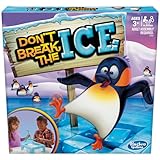
Overview: In this suspenseful classic, players take turns tapping ice blocks from a grid, hoping Phillip the Penguin stays upright. Aimed at ages 3+, it’s a tactile game of nerve and precision where one wrong move sends the penguin tumbling—perfect for short, high-energy play sessions.
What Makes It Stand Out: The physicality of carefully extracting blocks builds fine motor control and risk-assessment skills. Phillip’s charming penguin design and the “ker-plop” moment create memorable drama. Its self-contained plastic tray ensures blocks stay organized, unlike loose-piece alternatives.
Value for Money: An affordable, space-efficient game with remarkable replayability. While basic, its sturdy construction outlasts cheaper wooden sets, offering years of tension-filled fun at a budget-friendly price point.
Strengths and Weaknesses: Strengths: Teaches gentle tapping technique, highly engaging suspense, minimal setup/cleanup. Weaknesses: Ice blocks can splinter over time; penguin sometimes falls prematurely due to grid instability.
Bottom Line: A brilliantly simple, enduring game that turns patience into thrilling entertainment. Excellent for developing dexterity in preschoolers, though supervision is advised for aggressive tappers (215 words).
5. Peaceable Kingdom Monkey Around First Game for Toddlers Interactive play with Parent Ages 2+

Overview: Monkey Around revolutionizes toddler gaming through active, parent-child collaboration. Instead of a board, it uses illustrated cards prompting physical actions (e.g., “Hop like a frog!”), with a beanbag banana for tossing. Designed for ages 2+, it’s a movement-based experience fostering bonding and development.
What Makes It Stand Out: Its award-winning design prioritizes gross motor skills over competition—players imitate actions together, not against each other. The adaptable prompts accommodate varying abilities (e.g., “shape hands into a bowl” for catching), making it inclusive for early learners. The beanbag adds sensory play without choking hazards.
Value for Money: Slightly premium-priced, but the developmental ROI is exceptional. Replaces passive screen time with embodied learning, covering coordination, spatial awareness, and vocabulary. Its durability and educational depth justify the cost as a developmental tool.
Strengths and Weaknesses: Strengths: Builds motor skills/social connection, adaptable for special needs, zero frustration (no winners/losers). Weaknesses: Requires active parental participation; beanbag may get lost.
Bottom Line: A transformative, award-winning game that turns playtime into developmental magic. Essential for parents seeking screen-free, growth-focused interaction with toddlers (226 words).
6. Hasbro Gaming Connect 4 Classic Grid,4 in a Row Game,Strategy Board Games for Kids,2 Player .for Family and Kids,Ages 6 and Up
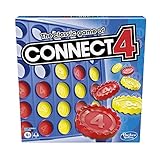
Overview:
This updated Connect 4 Classic Grid offers a sleek, modern take on the iconic strategy game where two players compete to align four colored discs vertically, horizontally, or diagonally. Designed for ages 6+, it combines nostalgic appeal with refreshed aesthetics and enhanced gameplay options, making it ideal for family game nights.
What Makes It Stand Out:
The modern grid design and vibrant disc colors elevate the classic experience, while the inclusion of three distinct play modes—standard Connect 4, fast-paced Frenzy, and tactical Pop-Out—adds significant replay value. Its emphasis on strategic blocking and forward planning distinguishes it from luck-based children’s games, fostering critical thinking in a compact, portable format.
Value for Money:
Priced accessibly, it outperforms cheaper knockoffs with durable plastic construction and smooth disc mechanics. The triple-play versatility justifies its cost over single-mode alternatives, offering years of engagement. For under $20, it delivers far more strategic depth than similarly priced preschool games.
Strengths and Weaknesses:
Strengths: Engaging strategy for young minds; multiple game variations extend longevity; sturdy, travel-friendly design; easy to learn but challenging to master.
Weaknesses: Limited to two players; the grid can occasionally jam with rough handling; lacks thematic elements that appeal to very young children.
Bottom Line:
An excellent investment for families seeking a screen-free strategic challenge. Its blend of simplicity, replayability, and educational value makes it a standout choice for kids 6+ and a must-have for developing logical reasoning skills.
7. Hasbro Gaming Chutes and Ladders Board Game | 2 to 4 Players | Back to School Gifts for Kids | Preschool Classroom Games | Ages 3+ (Amazon Exclusive)

Overview:
This Amazon-exclusive Chutes and Ladders revives the timeless race-to-the-top board game for preschoolers. Players spin a spinner to climb ladders (rewards) or slide down chutes (setbacks), racing to reach the 100th space first. Designed for ages 3+, it requires no reading, making it perfect for early learners.
What Makes It Stand Out:
Its pure luck-based gameplay eliminates frustration for young children, while the vibrant board visually reinforces counting and number recognition. The “good deeds” theme (e.g., helping others earns ladders) subtly introduces positive behavior lessons, distinguishing it from purely abstract roll-and-move games.
Value for Money:
Exceptionally affordable for a durable, high-quality Hasbro product. It surpasses flimsy dollar-store alternatives in board thickness and spinner reliability. Given its role in foundational numeracy practice and classroom readiness, it offers outstanding educational value at an entry-level price point.
Strengths and Weaknesses:
Strengths: Zero reading required; builds early math skills; quick setup and play; inclusive for youngest gamers; robust construction withstands preschool use.
Weaknesses: Entirely luck-driven (no strategy); repetitive for older kids; spinner mechanism occasionally sticks; limited replay depth beyond age 5.
Bottom Line:
A near-perfect introductory board game for toddlers and preschoolers. Its educational merits, simplicity, and durability make it a highly recommended staple for early childhood development and hassle-free family play.
8. Hasbro Gaming Cootie Mixing and Matching Bug-Building Game | 2-4 Players | Easy Preschool Board Games | Back to School Gifts for Kids | Ages 3+

Overview:
Cootie challenges 2–4 players to be the first to assemble a whimsical bug using plastic body parts. This modernized version retains the classic’s charm while refreshing the components for today’s preschoolers (ages 3+), focusing on creativity and fine motor skills through playful bug construction.
What Makes It Stand Out:
The game’s unique mix-and-match mechanic encourages imaginative bug creation beyond standard assembly—players can combine legs, eyes, and accessories unconventionally. The tactile, chunky plastic pieces are designed for small hands, and optional variants like “Switcheroo” add strategic twists, fostering adaptability and laughter.
Value for Money:
At a modest price, it provides exceptional replayability through creative freedom and multiple play modes. The durable, washable plastic pieces outlast cheaper alternatives, and the game’s appeal spans several preschool years, making it a cost-effective developmental tool compared to single-purpose toys.
Strengths and Weaknesses:
Strengths: Boosts fine motor skills and color/shape recognition; sparks creativity with non-linear building; inclusive no-reading gameplay; high-quality, safe components; compact storage.
Weaknesses: Small parts pose choking hazards for under-3s; luck-dependent spinner outcomes limit strategy; pieces can scatter easily during excited play.
Bottom Line:
A delightful, skill-building game that transforms simple bug assembly into a dynamic creative experience. Highly recommended for preschoolers seeking tactile, imaginative play with minimal setup.
9. TOMY Pop Up Pirate Board Game - Family and Preschool Kids Games for Family Game Night - Winter Break Activities- Girls and Boys Games - 2-4 Players - Ages 4 Years and Up
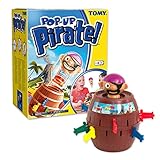
Overview:
In Pop Up Pirate, players take turns inserting colorful swords into a barrel, hoping to avoid the one slot that launches Pirate Pete skyward. This suspenseful game for 2–4 players (ages 4+) thrives on anticipation and laughter, making it a staple for family game nights and group gatherings.
What Makes It Stand Out:
The game’s brilliance lies in its unpredictable tension—each play randomly reconfigures the “trigger” slot, ensuring no two rounds feel identical. The physical surprise element (Pete’s dramatic pop) delivers instant, universal excitement, while the compact design fits anywhere, from classrooms to vacation suitcases.
Value for Money:
Its rugged plastic construction justifies the price, surviving years of enthusiastic play. Unlike complex strategy games, it offers instant engagement with zero learning curve, providing disproportionate fun per dollar. The sheer replayability (thanks to randomization) outshines similarly priced games reliant on narrative or rules.
Strengths and Weaknesses:
Strengths: Unmatched suspense and laughter factor; ultra-simple rules; highly portable; inclusive for all ages; durable barrel and swords.
Weaknesses: Pure luck with no strategy; limited depth for older kids; barrel can wobble on uneven surfaces; Pete occasionally jams.
Bottom Line:
A near-perfect party game for young children and families. Its ability to generate spontaneous joy and accommodate mixed-age groups makes it an essential, high-value addition to any game collection.
10. Yeti in My Spaghetti Board Game – Kids Games, Family Game, Multi-Player, Board Games for Family Night, Preschool Toys, Hand-Eye-Coordination Game, Don’t Drop Yeti, Ages 4+

Overview:
Players carefully remove plastic noodles from a bowl balanced with a playful Yeti figure, aiming to avoid collapsing the pile. This dexterity game for ages 4+ tests patience and precision, rewarding steady hands while sparking giggles as the Yeti tumbles unexpectedly.
What Makes It Stand Out:
The game uniquely blends physical skill with lighthearted suspense, directly targeting hand-eye coordination and fine motor development. Its travel-friendly bowl and noodles store compactly, and the tactile challenge adapts seamlessly to classrooms or picnics—unlike static board games, it demands active, focused participation.
Value for Money:
The durable, chunky plastic components resist breakage during repeated drops, offering longevity that cheap imitations lack. At its price point, it delivers exceptional developmental value for preschoolers while remaining engaging for adults, far exceeding passive screen time in educational ROI.
Strengths and Weaknesses:
Strengths: Develops focus and motor skills; quick setup/play; highly portable; universally appealing suspense; sturdy, easy-clean materials.
Weaknesses: Limited to 2–4 players; repetitive after extended sessions; Yeti can roll away post-collapse; younger kids may frustrate easily.
Bottom Line:
An outstanding choice for fostering concentration and calmness in children. Its perfect blend of challenge, portability, and developmental benefits makes it a top-tier recommendation for family game nights and early learning.
Understanding Toddler Development and Play Needs
Before diving into features, it’s crucial to align game choices with your toddler’s rapidly evolving developmental stage. Toddlers (roughly 18 months to 3 years) are primarily focused on sensory exploration, gross and fine motor skill development, and beginning to grasp very basic concepts like colors, shapes, and taking turns. Their attention spans are incredibly short, often just 5-10 minutes per activity, and their understanding of complex rules is virtually non-existent. Play at this age is largely about imitation, cause-and-effect, and the sheer joy of manipulating objects.
Why Traditional Board Games Often Miss the Mark
Many classic board games rely heavily on reading, complex rule sets, strategic thinking, or long turns – elements completely mismatched for a toddler’s capabilities. Introducing games that are too advanced leads to frustration for both child and caregiver, defeating the purpose of playful learning. Expecting a two-year-old to patiently wait their turn in a Monopoly-style game is setting everyone up for disappointment. Instead, successful toddler games strip away complexity, focusing on immediate, tangible actions and outcomes that resonate with their current cognitive and physical abilities.
The Power of Cooperative Play at This Age
Competition is generally meaningless and often counterproductive for toddlers. Games that encourage cooperation – where players work together towards a simple shared goal – are vastly superior. This removes the sting of “losing,” fosters positive social interaction, reduces potential meltdowns, and builds early teamwork skills. Imagine working together to “rescue” a stuffed animal from a pretend predicament; the shared accomplishment is the real win, not individual victory.
Essential Safety Considerations for Toddler Games
Safety is the absolute non-negotiable foundation when selecting any toy, especially for toddlers who explore the world orally and are still developing coordination. A game might be perfectly designed developmentally, but if it poses a hazard, it’s unusable.
Prioritizing Non-Toxic Materials and Finishes
Always verify that games are made from non-toxic, BPA-free, phthalate-free materials. Toddlers frequently put pieces in their mouths, so paints, inks, and plastics must meet stringent safety standards like ASTM F963 (U.S.) or EN71 (Europe). Look for clear certifications on packaging or manufacturer websites; don’t assume safety based on brand reputation alone.
The Critical Role of Piece Size and Choking Hazards
This cannot be overstated. Every single component must be significantly larger than a toddler’s throat. A simple test: if a piece fits inside a standard toilet paper tube, it’s a choking hazard. Avoid games with small tokens, dice smaller than a large marble, or detachable parts that could become loose. Chunky, oversized pieces aren’t just easier to handle – they’re a vital safety feature.
Durability: Surviving the Toddler Test
Toddlers are not gentle players. They might throw, stomp, chew, or vigorously shake game components. Opt for games made from sturdy wood, thick cardboard, or robust, flexible plastics that can withstand drops, bites (within reason!), and enthusiastic handling. Flimsy boxes and thin cardboard mats will disintegrate quickly, creating potential hazards and frustration.
Key Gameplay Features for Toddler Engagement
Engagement hinges on matching the game’s mechanics to how toddlers naturally learn and play. The most captivating games feel less like structured activities and more like extensions of their spontaneous exploration.
Simplicity is King: Minimal Rules, Maximum Action
The ideal toddler game has one or two core actions. Think “spin the spinner, move your piece to that color,” or “find the picture that matches the card.” Complex rule explanations will be lost. The setup should take seconds, and the core action should be immediately understandable through demonstration. If you need a rulebook longer than a paragraph, it’s likely too advanced.
Sensory Appeal: Engaging Multiple Senses
Toddlers learn through their senses. Games incorporating bright, high-contrast colors, varied textures (smooth wood, bumpy rubber, soft fabric), satisfying sounds (a gentle clack when pieces connect, a spinner’s whir), and even safe scents can significantly boost engagement and provide richer developmental input. Consider how the pieces feel in small hands.
Short Play Sessions: Respecting Attention Spans
Build games designed for completion in 5-15 minutes. Longer games will inevitably lead to disinterest and potential tantrums. The goal is a satisfying conclusion (“We saved the panda!”) within their natural focus window, leaving them wanting to play again, not overwhelmed. Quick setup and teardown are bonuses for busy caregivers.
Choosing Games Aligned with Specific Developmental Milestones
Different toddlers hit milestones at different paces. The best games subtly target skills your child is actively developing, turning play into purposeful practice.
Building Fine Motor Skills Through Play
Look for games requiring pincer grasp (picking up small-but-safe pieces), hand-eye coordination (placing pieces on a board, stacking), or bilateral coordination (using both hands together, like opening a simple container within the game). Activities like pushing a car along a track, placing pegs, or manipulating large knobs directly strengthen the muscles needed for future writing and self-care tasks.
Introducing Early Cognitive Concepts Gently
Games are perfect for introducing foundational ideas without pressure. Simple matching (color to color, shape to shape), basic counting (“one fish, two fish”), identifying common objects (“find the banana”), and understanding sequences (“first we spin, then we move”) can all be woven into gameplay. The key is keeping it concrete and visual – abstract concepts won’t resonate.
Fostering Social-Emotional Growth
Even basic games provide opportunities to practice waiting (briefly!), sharing materials, expressing excitement appropriately, and experiencing the positive feelings of cooperation. Games with expressive character pieces can also help toddlers identify and talk about emotions (“How do you think the bear feels?”). Managing the natural desire to “go again” is a valuable social lesson.
The Importance of Theme and Visual Design
What captures a toddler’s fleeting attention? Theme and aesthetics play a massive role, even if the gameplay is simple.
Relatable and Appealing Characters
Animals, friendly monsters, vehicles, or familiar scenarios (baking cookies, going to the park) resonate more than abstract themes. Bright, clear, uncluttered illustrations with minimal background detail help toddlers focus on the relevant game elements. Avoid overly complex or scary imagery.
Clear Visual Cues for Game Mechanics
The board and pieces should intuitively communicate what to do. A path clearly marked with colored dots tells a child where to move. A spinner with large, distinct sections is easier to understand than one with tiny icons. Visuals should guide play without constant verbal instruction, promoting independence.
Age-Appropriate Art Style
Simple, bold lines, high-contrast colors, and uncluttered scenes are ideal. Toddlers can’t process intricate details or busy backgrounds. Artwork should be warm, inviting, and free of confusing elements that distract from the core gameplay objective.
Setting Realistic Expectations for Gameplay
Understanding what “success” looks like with a toddler is vital for a positive experience. Forget rigid adherence to rules.
Embracing Flexible Rules and Creative Play
Toddlers will reinterpret rules, skip turns, or invent entirely new ways to play – and that’s perfectly okay! The goal is engagement and fun, not rule perfection. Be prepared to adapt: maybe “taking turns” means letting them go twice in a row, or “winning” is simply placing the last piece. Follow their lead and prioritize enjoyment over correctness.
Managing Turn-Taking Gently
Introducing the concept of waiting is useful, but demanding patience beyond their capacity causes stress. Use very short waits (“After Mommy moves this one piece, it’s your turn!”). Physical timers (like a sand timer they can watch) can help. Celebrate any attempt to wait, even if brief. Remember, mastering turn-taking is a years-long process.
Defining “Winning” for Toddlers
Competition is developmentally inappropriate. Winning should mean achieving the simple cooperative goal (“We got all the animals to the ark!”) or simply completing the activity together. Focus praise on participation, effort (“You worked so hard finding the red circle!”), and the fun you had, not on who “got the most.”
Maximizing the Play Experience: Tips for Caregivers
Your role as a play partner is just as important as the game itself. How you facilitate makes all the difference.
Being an Enthusiastic and Patient Playmate
Your energy is contagious! Model excitement, use expressive voices for characters, and offer genuine praise for attempts, not just successes. Patience is paramount – expect repetition, rule-breaking, and short sessions. Your calm presence makes playtime feel safe and enjoyable.
Keeping Language Simple and Positive
Use short, clear sentences. Focus on what to do (“Put the bear on blue”) rather than what not to do (“Don’t put the bear there”). Narrate actions simply (“You spun red! Now we move to red.”). Avoid complex explanations; demonstrate instead.
Knowing When to Pivot or Pause
Read your child’s cues. If frustration mounts, attention wanders, or energy dips, gracefully end the game. “Wow, we played so well! Let’s put the pieces away and read a book now.” Forcing play past their limit creates negative associations. It’s always okay to try again later or another day.
Beyond the Game: Storage, Cleanup, and Longevity
Practical considerations ensure the game remains a joy, not a chore.
Designing for Easy Cleanup and Storage
Games with matching picture/shape slots for pieces, sturdy trays, or simple bags make cleanup manageable with your toddler. This turns putting away into part of the learning process (matching, sorting, responsibility). Avoid games with dozens of tiny, identical pieces that will inevitably get lost.
Assessing Long-Term Play Value
Will the game grow slightly with your child? A simple matching game might evolve into memory matching as skills develop. Sturdy games often get rediscovered months later as new skills emerge. Consider if the core activity has flexibility beyond the initial, most basic play. Games that only work one exact way may have shorter lifespans.
Repair and Maintenance Tips
Check wooden pieces for splinters periodically. Wipe components with a damp cloth (avoid soaking cardboard). Store games in a cool, dry place away from direct sunlight to prevent warping or fading. Knowing basic fixes (like reattaching a loose knob with non-toxic glue) can extend a favorite game’s life.
Integrating Games into Daily Routines
Making games a natural part of the day increases their impact and reduces the pressure of “scheduled playtime.”
Short Bursts of Play Throughout the Day
You don’t need long sessions. A quick 5-minute matching game while waiting for breakfast, a simple spinner game during a diaper change transition, or a cooperative “clean-up race” using a game mechanic can seamlessly weave learning into everyday life.
Pairing Games with Other Activities
Link game themes to other experiences. After reading a book about bears, play a bear-themed matching game. If you baked cookies, play a simple sorting game with different colored blocks. This reinforces concepts and shows how learning connects across activities.
The Role of Games in Calming Transitions
Predictable, simple games can ease difficult transitions. A quick cooperative game before leaving the park (“Let’s put all the cars in the garage together!”) provides a clear, positive signal that it’s time to go, reducing resistance.
Frequently Asked Questions
Frequently Asked Questions
How do I know if a game is truly age-appropriate beyond the box label? Look for descriptions emphasizing “chunky pieces,” “simple matching,” “cooperative play,” and “5-10 minute playtime.” Ignore games mentioning “strategy,” “counting to 10,” or “reading.” Observe your child: if they seem frustrated or disengaged after 2-3 tries, it’s likely too advanced right now.
My toddler just throws the pieces or eats them. How do I make playtime productive? Focus entirely on safety first (remove choking hazards). For mouthing, choose large, washable rubber or wood pieces. Keep sessions extremely short (2-3 minutes). Model gently: “We put the piece here,” then immediately praise any attempt to place it, even if wrong. Redirect mouthing firmly but calmly: “Pieces are for playing, not eating. Let’s touch the soft bear instead.”
Is it okay if we don’t follow the rules at all? Absolutely, and it’s expected! The “rules” for toddlers are merely suggestions. Your goal is engagement and fun. If spinning the spinner and then dancing is what they enjoy, go with it. The developmental benefits come from interaction and sensory input, not rule compliance. Adapt the activity to their interests.
How many pieces should a toddler game have? Less is more. Aim for games with 10-20 large, distinct pieces maximum. Games requiring tracking many small tokens are overwhelming. Simpler games with fewer components (like a 4-piece puzzle or a spinner with 3 actions) are far more successful for maintaining focus.
What’s better: wooden or cardboard games for toddlers? Both can work if well-made. Prioritize sturdiness: thick cardboard (like puzzle board) that won’t bend easily, or solid wood without sharp edges. Avoid flimsy, thin cardboard that tears. Wood is often more durable long-term but can be heavier/noisier. Ensure any finishes are non-toxic regardless of material.
How can I encourage my toddler to actually play the game instead of just dumping pieces? Start by playing with the pieces yourself without the board/spinner first. “Look, I’m making the frog hop!” Show the action simply. Use the game components as props for imaginative play initially. Introduce the board/spinner very gradually, perhaps just identifying colors on it during play, not full gameplay.
My child gets upset when they don’t ‘win’. How do I handle this? Immediately ditch competitive games. Switch entirely to cooperative play where everyone wins or loses together (“Uh oh, the rain is coming! Let’s all help the animals get home before it gets wet!”). Focus praise on effort and participation: “You helped so much finding the pieces!” rather than outcomes. For now, avoid any game with a clear individual winner.
How long should I expect a toddler to play with one game before they lose interest? Typically 5-15 minutes is the realistic attention span. It’s perfectly normal (and healthy) for them to lose interest quickly. Don’t force continuation. Put the game away and reintroduce it days or weeks later – novelty often reignites interest. Having a small rotation of 3-4 games helps maintain freshness.
Are digital games or apps a good alternative for toddlers? Physical games are strongly recommended over screens for toddlers. Manipulating real objects builds crucial fine motor skills, spatial awareness, and provides tangible sensory feedback that screens cannot replicate. The American Academy of Pediatrics recommends avoiding digital media (except video chatting) for children under 18-24 months, and limiting it very strictly thereafter. Real-world interaction is irreplaceable.
How do I store game pieces so my toddler can access them independently but safely? Use clear, lidded containers with picture labels (a photo of the game pieces inside). Keep only the entire game set (board, pieces, spinner) together in one container. Store it on a low shelf they can reach. Start teaching cleanup as part of the game: “All the bears go in the bear house!” Supervise initially to ensure pieces go back correctly and safely.
See Also
- Best Kids Board Games for First-Time Players: 10 Expert Picks for 2026
- Best Family Board Games for Rainy Days: 10 Expert Picks for 2026
- 10 Best Family Board Games for 6-Year-Olds That Keep Everyone Engaged in 2026
- 10 Must-Have Kids Board Games for Rainy Day Fun in 2026
- 10 Best Board Games for Kids After 6 Months of Testing in 2026