Table of Contents
There’s something undeniably electric about the tension of a high-stakes bidding war. It’s not just about the chips or the play money; it’s the palpable shift in the room when someone drops a decisive bid, the collective intake of breath as the auctioneer’s gavel hangs in the balance, and the strategic dance of reading opponents while guarding your own intentions. Auction and bidding games masterfully transform game nights into unforgettable social experiences, weaving economics, psychology, and pure nerve into every round. They demand more than luck; they require cunning, adaptability, and the courage to push your luck just a little further than anyone expects.
Forget passive gameplay. These mechanics thrust every participant into the driver’s seat, forcing constant engagement and meaningful decisions from the very first chip placed. Whether you’re vying for a crucial resource, a powerful artifact, or the right to take a pivotal action, the auction table becomes the stage where alliances form, bluffs are called, and reputations are made or shattered. For groups seeking game nights charged with interaction, negotiation, and genuine suspense—where every player feels the weight of their choices—understanding what makes these games tick is the first bid towards an epic evening. It’s time to move beyond luck of the draw and embrace the calculated risk.
Top 10 Auction and Bidding Games
Detailed Product Reviews
1. Allplay QE (Quantitative Easing) Board Game | Economic Auction Bidding Game for Families & Adults | 3-5 Players, 30 Min Playtime, Strategy Party Game with Unlimited Bidding

Overview:
Allplay QE delivers a dynamic economic auction experience where players simulate high-stakes financial strategy through unrestricted bidding. Designed for 3–5 participants, this 30-minute game merges accessibility with strategic depth, using dry-erase boards for reusable bidding. It targets families and adult groups seeking a fast-paced, socially engaging party game rooted in economic principles.
What Makes It Stand Out:
The “unlimited bidding” mechanic is revolutionary—players write any bid value without caps, creating intense risk-reward tension. Premium dry-erase components ensure longevity, while variable industries and shifting demand guarantee high replayability. Its 30-minute runtime fits seamlessly into game nights without sacrificing strategic complexity.
Value for Money:
Priced competitively against strategy games, QE justifies its cost with durable, reusable materials and endless replay value. Unlike capped-bid alternatives, its open-ended system offers unique depth, making it a smarter investment than disposable card games with fixed outcomes.
Strengths and Weaknesses:
Strengths: Brilliant risk/reward balance; exceptional component quality; easy to learn yet deeply strategic; perfect session length.
Weaknesses: Dry-erase markers may smudge if mishandled; minimal theme integration might deter narrative-focused players.
Bottom Line:
A must-have for strategy enthusiasts seeking a fresh, replayable auction game. Its bold mechanics and premium build make it worth every penny for families and game-night regulars.
2. Sharks of Wall Street Auction Core Bidding Card Game – Portable, Quick, Entertaining, Easy To Learn - for Adults and Teens - Party, Travel and Family Game Night - 20-40 Min, Age 14+, 2-6 Players

Overview:
Sharks of Wall Street is a compact card game capturing Wall Street’s high-risk bidding frenzy. For 2–6 players aged 14+, it condenses strategic auctions into 20–40 minutes of portable fun. Its travel-friendly design and simple rules target teens and adults craving quick, competitive gameplay during commutes or gatherings.
What Makes It Stand Out:
Extreme portability sets it apart—fits in pockets yet delivers intense “bid high or fold” decisions. The market-fluctuation mechanic forces dynamic strategy shifts, while its quick setup (under 60 seconds) ensures immediate engagement. Ideal for impromptu game sessions anywhere.
Value for Money:
An outstanding budget-friendly option: the slim card deck costs less than premium board games but offers comparable strategic depth. Its durability and reusability outshine single-session party games, especially for frequent travelers.
Strengths and Weaknesses:
Strengths: Unbeatable portability; lightning-fast setup; scalable for 2–6 players; intuitive risk/reward tension.
Weaknesses: Card stock quality feels thin; limited replayability compared to board-based auction games; minimal thematic immersion.
Bottom Line:
A superb travel companion for casual strategists. While not for hardcore gamers, its ease and excitement make it a top pick for quick group fun.
3. GRRRE GAMES Nidavellir - Dwarven Auction and Bidding Game | Dice Tower Top 10 Game of All Time | Best Strategy Card Game for Kids, Teens, and Adults | 2 to 5 Players | Ages 10+ | 45 Minutes

Overview:
Nidavellir, an internationally acclaimed dwarven-themed strategy game, marries auction mechanics with fantasy lore. For 2–5 players aged 10+, it spans 45 minutes as participants bid coins for turn order, recruit colored dwarves, and claim heroes. Its award-winning design blends accessibility with profound tactical depth.
What Makes It Stand Out:
Unique 3D Royal Treasure stand for upgraded coins and vertical hero displays elevate physical engagement. The multi-path scoring—via dwarf colors and hero powers—creates near-infinite strategic variety. Consistently ranked among top board games for its elegant mechanics.
Value for Money:
Premium components (plastic stands, detailed art) justify its higher price point. Unlike simpler auction games, Nidavellir’s depth ensures years of replayability, outperforming cheaper alternatives that lack thematic richness.
Strengths and Weaknesses:
Strengths: Exceptional replay value; immersive theme; innovative 3D components; smooth learning curve for ages 10+.
Weaknesses: 45-minute runtime may feel long for casual groups; coin management can overwhelm new players initially.
Bottom Line:
A near-perfect strategy game for families and hobbyists. Its awards are well-earned—invest in this for enduring, high-quality game nights.
4. ZPOYOT 18Pcs Dry Erase Answer Paddles with Markers Thickened Handheld Double Sided Paddles Mini White Boards Small Dry Erase Signs Auction Paddles for Students Classroom Bidding Voting Games

Overview:
This ZPOYOT set provides 10 double-sided answer paddles and 8 markers for classroom interaction. Designed for quick student responses, the mini whiteboards (8.66" long) feature a 5.12" writing area. It’s a practical tool for teachers managing assessments, voting, or game-based learning with small groups.
What Makes It Stand Out:
The thickened paper construction resists tearing better than flimsy alternatives, while the ergonomic grip ensures comfort during frequent use. Double-sided design doubles utility without added bulk, ideal for rapid-turnaround activities like auctions or quizzes.
Value for Money:
Cost-effective for small classrooms (under 10 students). Though markers are basic, the paddles’ reusability eliminates paper waste. Cheaper than individual mini-whiteboards but less durable than melamine-based sets.
Strengths and Weaknesses:
Strengths: Budget-friendly; tear-resistant paper; compact size for easy storage; double-sided functionality.
Weaknesses: Markers lack caps (risk drying out); paper surface may ghost over time; quantity too low for large classes.
Bottom Line:
A solid choice for small-group educators prioritizing affordability. Best for occasional use—upsize to Product 5 for larger classes.
5. ZPOYOT 33Pcs Dry Erase Answer Paddles with Markers Thickened Handheld Double Sided Paddles Mini White Boards Small Dry Erase Signs Auction Paddles for Students Classroom Bidding Voting Games

Overview:
ZPOYOT’s expanded set includes 25 paddles and 8 markers, targeting larger classrooms or frequent group activities. Identical in size (8.66" long) and material to Product 4, it scales the same ergonomic, double-sided design for 20+ participants, suiting teachers, trainers, or game-night hosts.
What Makes It Stand Out:
The 25-paddle quantity solves a critical classroom pain point—enough for most elementary classes without repurchasing. The thickened paper maintains durability during daily erasing, and the compact size simplifies distribution in tight spaces like remote meeting setups.
Value for Money:
Superior bulk value: nearly triple the paddles of Product 4 for a modest price increase. Ideal for schools investing long-term—replaces disposable response cards and supports diverse applications from assessments to family game nights.
Strengths and Weaknesses:
Strengths: Perfect quantity for classrooms; cost-efficient per unit; reusable and eco-friendly; versatile for education or games.
Weaknesses: Same marker limitations as Product 4; paper surface less resilient than plastic alternatives.
Bottom Line:
The definitive choice for educators needing reliable, scalable response tools. Skip Product 4 and invest in this for hassle-free group engagement.
6. Mighty Boards: Art Society - Collection Board Game, Bid At Auctions, Collect & Display Your Art, Ages 10+, 2-4 Players, 30-60 Min

Overview:
Mighty Boards: Art Society casts players as art collectors vying for prestige through strategic auction bidding and dynamic gallery curation. Players bid on rotating art lots, then arrange acquisitions on their personal display boards, where positioning influences trend-based scoring. The game balances short-term auction tactics with long-term spatial planning, targeting families and casual gamers seeking accessible yet engaging strategy.
What Makes It Stand Out:
Its unique “trend prediction” mechanic sets it apart: paintings gain or lose value based on adjacent pieces, forcing players to anticipate shifting aesthetics. The modular gallery boards encourage creative spatial reasoning, while the 30-60 minute runtime ensures brisk, replayable sessions. The theme integrates seamlessly with mechanics—collecting isn’t just about ownership but curating influence.
Value for Money:
Priced competitively for a niche strategy game, it offers exceptional replayability through variable art sets and player-driven trends. While lacking the polish of premium board games, its focused design justifies the cost for families wanting depth without overwhelming complexity, outperforming simpler card games in strategic richness.
Strengths and Weaknesses:
Strengths: Intuitive auction rules; clever trend-scoring system; high player interaction; vibrant art; scales well for 2-4 players.
Weaknesses: Limited art variety in base set; trend mechanics may confuse younger players; components feel lightweight for the price point.
Bottom Line:
A refreshing blend of spatial puzzle and auction tactics that elevates beyond typical collection games. Highly recommended for families and casual gamers seeking strategic depth with approachable rules, though seasoned strategists might crave more complexity.
7. STOBOK Handheld Dry Erase Answer Paddles, Double Sided White Board for Classroom and Students, Portable Mini Writing Signs for Auction Bidding and Games, Small Eraseable Boards

Overview:
The STOBOK paddles are double-sided, handheld dry-erase boards designed for classrooms, auctions, and games. Featuring ergonomic handles and rounded safety corners, these portable mini-whiteboards enable silent group participation. Their reusable surface replaces paper scraps for quizzes, voting, or quick notes, targeting educators and event organizers prioritizing efficiency and eco-friendliness.
What Makes It Stand Out:
The double-sided design doubles writing space without added bulk, while the smooth, ghost-free surface outperforms cheaper alternatives. The comfortable handle—rare in budget paddles—and safety-focused rounded corners make it ideal for young students. Its versatility spans classrooms (instant answer checks), game nights (score tracking), and auctions (bidding).
Value for Money:
Though pricier than single-sided sets, the durability and dual functionality justify the investment. Schools save long-term on paper waste, while families gain a multi-use tool for trivia or crafts. Competitors often sacrifice grip or erasability; STOBOK’s resilience ensures consistent performance, offering superior cost-per-use.
Strengths and Weaknesses:
Strengths: Exceptional erasability; comfortable, secure grip; safe rounded edges; bright, legible surface; versatile for diverse settings.
Weaknesses: Higher price than basic sets; markers not included; slightly heavier than ultra-thin alternatives.
Bottom Line:
An indispensable, eco-friendly upgrade for classrooms and interactive gatherings. Worth the premium for educators and frequent users who value durability and thoughtful design over bare-minimum functionality.
8. Dry Erase Paddles for Auction Bidding and Classroom Voting and Answers - 12 Pieces

Overview:
This budget-friendly 12-pack of pressboard dry-erase paddles delivers no-frills functionality for classrooms and auctions. Measuring 5.25" x 8.75", these single-sided boards allow quick written responses during quizzes or silent bidding. Targeted at cost-conscious schools or event planners, they prioritize simplicity and volume over premium features.
What Makes It Stand Out:
The ultra-affordable bulk pricing makes it ideal for large classrooms or one-time events. Pressboard construction keeps costs low while providing adequate rigidity, and the compact size ensures easy handling. Though basic, the customization option (one side only) adds slight personalization potential for group activities.
Value for Money:
Unbeatable for high-volume needs where durability isn’t critical. Schools replacing worn-out sets or organizers running short-term auctions will appreciate the low entry cost. However, frequent use exposes limitations: thinner than competitors, leading to quicker wear. Best for intermittent use where $10-$15 justifies disposability.
Strengths and Weaknesses:
Strengths: Extremely low cost per unit; lightweight; sufficient size for numbers/short answers; ideal for large groups.
Weaknesses: Single-sided only; prone to ghosting over time; less durable pressboard; no ergonomic handle; corners less rounded than premium options.
Bottom Line:
A practical, economical choice for schools or events needing disposable-style paddles in bulk. Avoid if longevity or frequent erasing is required, but perfect for budget-limited, high-turnover scenarios.
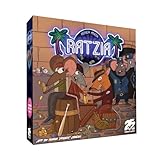
9. 25th Century Games Ratzia – Auction & Gangster Card Game by Reiner Knizia Ages 12+ | 2–5 Players | 45 Min
Overview:
Ratzia immerses players in Reiner Knizia’s signature auction mechanics, cast within a gritty rat-gangster theme. Compete to control the black market by bidding on gangsters, loot, and businesses using limited card resources. With police raids disrupting auctions, it masterfully blends tension and strategy for 2-5 players in 45 minutes.
What Makes It Stand Out:
Knizia’s legendary design shines through its elegant risk-reward system: bidding cards double as currency and action limiters, forcing agonizing choices. The police mechanic injects thrilling unpredictability, while 141 cards ensure high replayability. The theme isn’t superficial—gangster hierarchies directly impact scoring, deepening engagement beyond abstract bidding.
Value for Money:
Priced mid-range for a card-driven auction game, it delivers exceptional depth for the cost. Compared to Knizia’s classics like Modern Art, Ratzia offers more thematic flavor and player interaction at a similar price point. The robust components and replay value make it a standout investment for strategy enthusiasts.
Strengths and Weaknesses:
Strengths: Brilliant, tense auction system; seamless theme integration; highly replayable; scales perfectly for 2-5 players; Knizia’s polished design.
Weaknesses: Niche rat-gangster theme may not appeal broadly; card-only setup lacks tactile components; steep learning curve for casual gamers.
Bottom Line:
A must-have for auction-game connoisseurs and Knizia fans. Its strategic brilliance and relentless tension justify the price, though theme-sensitive players might prefer more universal settings.
10. Modern Art Abstract Board Game

Overview:
Modern Art revives Reiner Knizia’s 1992 masterpiece, casting players as museum owners bidding on five artists’ volatile works. Through dynamic open, sealed, and Dutch auctions, players buy low and sell high across four rounds, betting on which artists will trend. This refined reprint targets strategy gamers seeking cutthroat economic gameplay.
What Makes It Stand Out:
Its genius lies in the five distinct auction types, each demanding unique tactics—from psychological bluffing in closed bids to rapid-fire Dutch auctions. The market-driven scoring creates organic player rivalry, as flooding the market with an artist can tank their value. The abstract art aesthetic enhances the theme while avoiding dated visuals.
Value for Money:
As a reprint of a genre-defining classic, it offers immense strategic depth for its price. Newer auction games often add complexity without improving elegance; Modern Art’s pure focus on bidding psychology provides better long-term value than many modern alternatives, especially for 3-5 player groups.
Strengths and Weaknesses:
Strengths: Unmatched auction variety; deeply engaging player interaction; timeless strategic depth; sleek abstract art; replayable with consistent pacing.
Weaknesses: Minimal theme immersion; abstract art won’t resonate with all; limited appeal for non-strategy gamers; component quality feels functional rather than premium.
Bottom Line:
An essential acquisition for strategy game libraries. While not flashy, its razor-sharp mechanics and endless tactical possibilities make it the gold standard for auction-based gaming, justifying every penny for serious hobbyists.
Understanding Auction Game Mechanics
Core Auction Types Explained
Auction mechanics come in several fundamental forms, each shaping the player experience differently. Open outcry (ascending bid) creates immediate, fast-paced tension as players call out bids in real-time, demanding quick reactions and strong nerves. Sealed bid auctions, where players submit hidden offers simultaneously, emphasize careful calculation and predicting opponents’ valuations, often reducing direct confrontation but increasing strategic depth. Then there are unique variations like “once-around” auctions, where bidding proceeds in turn order with only one chance to bid, or action drafting through bidding, where the bid determines both cost and turn order. Recognizing these structures helps anticipate the game’s flow and demands.
The Critical Role of Valuation
At the heart of every successful bid lies accurate valuation. Players must constantly assess not just the intrinsic worth of the item or action being auctioned to them, but also its potential value to others and its strategic impact on the overall game state. This dynamic calculation evolves throughout the game as resources dwindle, opportunities arise, and player positions shift. Games that excel provide clear enough information for reasoned valuation while retaining enough uncertainty to keep bidding unpredictable and engaging, preventing bids from becoming purely mathematical exercises.
Hidden Information and Bluffing Dynamics
Many compelling auction games introduce elements of hidden information, significantly deepening the psychological layer. This could be secret objectives influencing a player’s true valuation, hidden resources affecting bidding power, or concealed information about the item’s actual worth. Bluffing becomes a powerful tool – overbidding to scare off competition for a moderately valuable item, or underbidding to lure others into a costly trap. The interplay between knowing your own value and guessing others’ creates the thrilling mind games that define high-stakes sessions.
Assessing Player Experience Factors
Managing Player Interaction and Tension
The best auction games generate healthy, exciting tension without fostering resentment. Look for mechanics that encourage direct negotiation, strategic blocking, or targeted bidding wars, but also include safeguards against kingmaking or excessive targeting of a single player. Games that allow players to recover from a lost auction through alternative paths or subsequent opportunities maintain engagement even for those not winning every bid, ensuring the entire table remains invested until the final round.
Balancing Luck and Skill
While auctions inherently involve some uncertainty, the finest designs minimize pure randomness in favor of skillful decision-making. Consider how much outcome relies on calculated bids versus dice rolls or card draws during the auction phase itself. Games where player choices and strategic valuation are the primary drivers offer more satisfying long-term replayability for competitive groups. The luck factor should heighten excitement, not overshadow strategic depth.
Mitigating Analysis Paralysis
High-stakes decisions can lead to lengthy deliberation. Be mindful of games that impose reasonable time limits on bids (either through mechanics or group norms) or structure auctions in ways that simplify choices. Simultaneous action selection for bids or limited bid ranges can significantly speed up play. For game nights with larger groups, prioritize designs that keep downtime between active bidding moments minimal to maintain energy and prevent disengagement.
Evaluating Component Quality and Setup
The Importance of Clear Bidding Tokens
Physical components are crucial for smooth auction gameplay. Bidding tokens or chips must be substantial enough to handle, visually distinct in value (clear color-coding or large, legible denominations), and easy to manipulate quickly during heated moments. Flimsy cardboard chits or confusingly similar denominations can derail the pacing and cause frustration. Consider how easily tokens can be stacked, hidden, or revealed according to the game’s specific mechanics.
Auction Track and Display Design
How the auction process is visualized matters immensely. An intuitive auction track, clear player screens for hidden bids, or a well-designed central display for the item being bid on significantly enhances usability. Poorly designed displays lead to constant rule referencing, miscommunication about current bids, and arguments over bid sequence. Look for components that make the current state of the auction immediately obvious to all players without obstruction.
Durability for Repeated High-Energy Play
Game nights with intense bidding can be hard on components. Prioritize games with sturdy boards, thick cardstock tokens, and well-constructed player aids. Consider the practicality of setup and teardown – complex setups with numerous small pieces can eat into precious game time, while components that tangle or are easily knocked over disrupt the flow. Durability ensures the game withstands the enthusiasm of repeated high-stakes sessions.
Theme Integration and Immersion
When Theme Enhances the Mechanic
The most memorable auction games weave theme and mechanics together seamlessly. Does the theme logically explain why an auction is happening? Is bidding for medieval artifacts feel fundamentally different (and more engaging) than bidding for stock shares because the theme informs the valuation and risks? Strong thematic integration makes the bidding decisions feel meaningful within the game’s world, elevating it beyond an abstract exercise.
Avoiding Thematic Dissonance
Conversely, beware of games where the auction mechanic feels pasted onto a disconnected theme. If the narrative doesn’t support the constant competitive bidding, it can create cognitive dissonance and weaken immersion. The theme should provide context that makes the high-stakes tension feel natural and exciting, not forced or arbitrary. A cohesive theme helps players buy into the emotional weight of each bid.
Narrative Through Bidding Actions
Consider how the bidding process itself can drive a mini-narrative. Does winning certain auctions visibly shift player standings or unlock new story elements? Do the items being bid on have thematic significance that changes their perceived value beyond pure points? Games that allow the auction outcomes to visibly shape the unfolding scenario create a richer, more dynamic experience where each bid contributes to a larger story.
Psychological Elements and Player Dynamics
Reading Opponents and Table Talk
Successful bidding often hinges on reading opponents’ tells, interpreting their hesitation, or understanding their likely strategies based on previous rounds. Games that encourage (or strategically allow) limited table talk during bidding phases add a rich layer of negotiation and bluffing. Assess how much the game relies on social deduction and player psychology versus pure numerical calculation – this significantly impacts the group dynamic and required social skill level.
Managing Ego and Competitive Spirit
High-stakes auctions can tap into strong competitive instincts. Consider the maturity and dynamics of your regular game group. Some designs intentionally foster cutthroat competition, which can be exhilarating for certain groups but potentially divisive for others. Look for games with mechanics that either channel competition constructively (e.g., multiple paths to victory, where losing an auction isn’t catastrophic) or include elements that force temporary cooperation, balancing the inherent rivalry.
The Thrill of the Overbid and Sunk Cost Fallacy
The psychological trap of the sunk cost fallacy – where players continue bidding to “win back” previous investments – is a potent force in auction games. The best designs acknowledge this and either use it as a core tension point (making overbidding a risky but sometimes necessary tactic) or include mechanics to mitigate its negative effects (like allowing players to gracefully drop out). Understanding how a game handles this inherent human bias is key to predicting the emotional tenor of your game night.
Ensuring Long-Term Replayability
Variable Setup and Scenario Depth
Static setups quickly lead to predictable bidding patterns. Games offering significant variability through different starting conditions, modular boards, randomized objectives, or scenario-based play dramatically increase longevity. Look for designs where the core auction mechanics interact with changing environmental factors, forcing players to adapt their valuation strategies each time, rather than relying on memorized optimal bids.
Evolving Strategies and Meta-Game
True replayability comes from the ability to employ diverse strategies that shift based on opponents’ playstyles and the game’s state. Does the game support aggressive bidding dominance, careful resource hoarding, opportunistic sniping, or alliance-based bidding? Games where the “best” strategy isn’t fixed, but emerges dynamically from the group’s interactions, offer near-infinite depth. Consider how player count affects viable strategies – does the game play significantly differently with 3 versus 6 players?
Player-Driven Narrative Variation
The most replayable auction games generate unique stories each session based entirely on player choices during the auctions. Did one player’s bold early overbid set the tone for the entire game? Did a crucial item get ignored, altering the strategic landscape? Games where the auction outcomes fundamentally shape the unique narrative arc of that specific playthrough ensure no two game nights feel exactly alike, keeping the experience fresh.
Considering Group Size and Accessibility
Optimal Player Count Ranges
Auction dynamics shift dramatically with player count. Some mechanics shine with 3-4 intense, personal confrontations, while others require 5-6 players to create the critical mass of competition and diverse bidding strategies needed for the system to function well. Pay close attention to the publisher’s recommended range and read detailed player count analyses; playing outside the sweet spot often leads to frustrating experiences like excessive downtime or diluted competition.
Learning Curve for Newcomers
Introducing complex auction games to new players requires careful consideration. Look for designs with a clear, teachable core auction mechanic that newcomers can grasp quickly, even if deeper strategic layers unfold over multiple plays. Games that allow new players to make meaningful (if suboptimal) decisions from the first round without constant rule-checking are essential for inclusive game nights. Steep learning curves can alienate guests and slow down the high-energy vibe.
Accommodating Different Play Styles
Your group likely has a mix of analytical thinkers, social bluffers, and casual players. The ideal auction game for your high-stakes night should offer meaningful engagement for all. Does it provide enough clear strategic paths for the number-crunchers? Does it allow room for negotiation and personality-driven play for the social gamers? Avoid designs that heavily favor one specific play style to the exclusion of others, ensuring everyone at the table feels they have a fair shot to win through their strengths.
Making Your Selection for the Perfect Game Night
Aligning with Your Group’s Competitive Level
Honesty about your group’s temperament is crucial. Are you seeking cutthroat competition where every bid is a psychological duel, or a more collaborative-adjacent experience where bidding is intense but not personally destructive? Match the game’s inherent competitiveness – reflected in mechanics like direct sabotage potential or winner-takes-all outcomes – to your group’s desired intensity level. Choosing a game significantly more or less cutthroat than your group enjoys guarantees disappointment.
Time Commitment and Session Flow
High-stakes auctions can sometimes lead to longer playtimes due to deliberation. Be realistic about your group’s available time and attention span. Consider the average auction duration per round and the total number of auction phases. A game with many quick, tense auctions might fit better than one with fewer, marathon bidding sessions. Also, think about the game’s pacing: does the tension build steadily, or does it have lulls between critical bidding moments? Match the rhythm to your group’s energy.
Future-Proofing Your Game Library
Invest in games that offer depth beyond the initial thrill. Look for designs with expansions that add meaningful new mechanics or scenarios (without being essential), strong community-created variants, or inherent flexibility that allows experienced groups to tweak rules for increased challenge. A game that grows with your group, revealing new strategic nuances over dozens of plays, provides far better long-term value than one that feels solved after a few sessions, no matter how exciting the first play is.
Frequently Asked Questions
How do I know if an auction game is too complex for my group?
Start by examining the core auction mechanic itself – is it a simple open bid or a more intricate system with multiple bid types or hidden elements? Look for games where the basic bidding rules can be explained in under 5 minutes. Check reviews specifically mentioning “ease of teaching” or “new player experience.” A good indicator is whether new players can grasp how to bid immediately, even if mastering when and how much takes practice.
What’s the ideal player count for most high-stakes auction games?
While specifics vary, the sweet spot for intense, interactive bidding is often 4-5 players. This provides enough competition to drive up bids significantly without creating excessive downtime between turns. Three-player games can feel tight and personal, while six players often maximizes chaotic energy but requires mechanics specifically designed to handle larger groups efficiently to avoid long waits.
Can auction games work well with a mix of experienced and new players?
Yes, but choose carefully. Opt for games with a simple, intuitive core auction loop that newcomers can engage with immediately (like straightforward open bidding), even if deeper strategies exist. Avoid games reliant heavily on meta-knowledge of opponent tendencies or complex hidden valuations that new players can’t access. Games where losing an auction isn’t catastrophic allow newcomers to learn without feeling eliminated early.
How important are physical components like bidding chips?
Critically important. Poorly designed components directly hinder the auction experience. Chips must be easy to handle quickly, clearly distinguishable by value at a glance (large numbers, distinct colors), and substantial enough not to feel flimsy during heated moments. Screens for hidden bids need to be effective. Subpar components lead to arguments, slow play, and frustration, undermining the game’s core tension.
Do auction games tend to have longer playtimes than other genres?
Not inherently, but the potential for deliberation can extend them. Games with simultaneous bidding or strict time limits often play quite quickly. However, games encouraging deep valuation calculation or negotiation can run longer. Always check the realistic playtime from multiple reviews, not just the box estimate, and consider your group’s tendency towards analysis paralysis.
Are auction mechanics suitable for family game nights with kids?
Selectivity is key. Younger children may struggle with the abstract valuation and strategic sacrifice required. Look for family-weight games using simpler auction types (like “I bid X, do you bid more?”) with clear, immediate value (e.g., bidding for cards that directly give points or actions). Avoid games with heavy bluffing, complex hidden information, or where losing an auction severely hampers a player. Games with shorter rounds and visible consequences work best.
How can I prevent bidding wars from causing arguments in my group?
Choose games with clear resolution mechanics and minimal subjectivity in valuation. Games where the “winner” of an auction is unambiguous and the cost is paid immediately reduce disputes. Establish group norms beforehand: no take-backs on bids, a gentle time limit for decisions, and agreeing that aggressive bidding is part of the fun, not personal. Games offering multiple paths to victory also lessen the sting of losing a single auction.
What makes an auction game feel ‘high-stakes’ beyond just the theme?
True high-stakes tension comes from meaningful consequences. Each auction should feel impactful – winning must grant a significant advantage or crucial resource, while losing should create a tangible setback or force a difficult strategic pivot. Games where auctions are frequent, the items have variable but clear high value, and player fortunes can shift dramatically based on a single bid create the authentic high-stakes pressure.
Can solo modes effectively replicate the auction experience?
It’s extremely challenging. The core thrill of auctions is the dynamic human interaction, reading opponents, and adaptive bidding. While some solo modes use AI decks or algorithms to simulate opponents, they often lack the unpredictability and psychological depth of real people. Solo modes in auction games are generally best viewed as a way to learn the rules, not as a replacement for the social, high-stakes experience the genre is known for.
How do I introduce bidding strategies to new players without overwhelming them?
Focus first on the process: “Here’s how we bid, here’s how you pay, here’s how we resolve it.” Avoid deep strategy talk initially. After the first round, highlight one simple, observable tactic: “Notice how Player A waited to see others’ bids before jumping in?” or “See how winning that card gave Player B a quick point boost?” Let deeper strategies emerge naturally through gameplay rather than front-loading complex theory.
See Also
- 10 Essential Auction and Bidding Games for Strategic Thinkers in 2026
- 10 Best Auction and Bidding Games for Strategic Thinkers in 2026
- Stop Boring Game Nights with the 10 Best Timer-Based Board Games in 2026
- 10 Expert-Recommended Auction and Bidding Games for Smart Gamers in 2026
- 10 Expert-Recommended Auction and Bidding Games for Psychology Lovers in 2026