Table of Contents
There’s something uniquely magical about the tension of a well-played bluff. In an age saturated with digital interactions and predictable algorithms, the raw, human unpredictability of a game night centered around deception feels like a breath of fresh air. It cuts through the noise, demanding genuine presence, sharp observation, and a healthy dose of nerve. As we navigate increasingly virtual worlds, the shared laughter, nervous glances, and triumphant reveals around a physical table become more than just entertainment—they forge real connection, testing our ability to read others and project confidence, even when holding a disastrous hand. It’s social interaction distilled to its most thrilling essence.
Choosing the right bluffing game, however, is far more nuanced than simply grabbing the shiniest box off the shelf. The perfect game for a rowdy group of ten seasoned players might completely fall flat with a quiet duo seeking strategic depth. What truly elevates a bluffing experience from a chaotic mess to an unforgettable night? It’s about understanding the subtle interplay of group dynamics, the desired level of complexity, the precious commodity of setup time, and how much room the game allows for genuine personality to shine through the deception. This guide cuts through the hype to focus on the universal principles that make any bluffing game shine in 2026, empowering you to select the ideal catalyst for your next gathering of friends, family, or colleagues.
Top 10 Bluffing Games
Detailed Product Reviews
1. The Chameleon: Award-Winning Bluffing Board Game for Family, Adults & Friends | Includes 80 Extra Secret Words | Who is The Imposter?

Overview: The Chameleon is a compact, fast-paced social deduction game where one player secretly holds the “Chameleon” card, unaware of the round’s secret word known to all others. Players take turns giving coded clues to identify the imposter before they escape. Designed for 3-8 players aged 14+, it delivers quick 15-minute rounds ideal for casual gatherings.
What Makes It Stand Out: Its brilliance lies in the hidden word mechanic—everyone except the Chameleon knows the topic, creating immediate tension. The included 80 extra secret words vastly extend replayability beyond the base set. Winning multiple awards (including “Best Party Game” at UK Games Expo) validates its seamless blend of simplicity and strategic depth, where subtle word choices and body language become critical tools.
Value for Money: Priced competitively for a party game, the extensive word pack and durable components offer exceptional longevity. It outperforms similarly priced games by avoiding complex rules, ensuring more playtime and less setup. While niche bluffing games exist, The Chameleon’s universal appeal for teens and adults justifies its cost as a long-term investment.
Strengths and Weaknesses:
Strengths: Extremely easy to learn; high replayability with extra words; fosters hilarious social interaction; portable and quick to set up.
Weaknesses: Limited strategic depth for hardcore gamers; effectiveness dips below 4 players; Chameleon role can feel passive if players aren’t observant.
Bottom Line: A near-perfect party game that excels in accessibility and replay value. Highly recommended for families and groups seeking lighthearted, engaging fun without rulebook headaches.
2. Big Potato Sounds Fishy Board Game: The Bluffing Family Game for Kids 10+ - Best New Family Quiz Games, Trivia Games for Groups of People
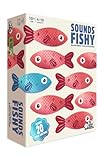
Overview: Sounds Fishy flips traditional trivia on its head: players invent absurdly plausible fake answers to real questions, then convince others their made-up response is correct. Designed for 4+ players aged 10+, it transforms creativity into the core mechanic, making it ideal for family game nights or casual group play.
What Makes It Stand Out: The game eliminates trivia knowledge barriers—since you invent answers, expertise isn’t needed. Its genius lies in the “guessing” phase, where players must discern truth from fabricated wit. The included diverse question cards ensure broad appeal, while the “push your luck” betting element adds strategic tension absent in many bluffing games.
Value for Money: With a robust card deck and intuitive rules, it offers remarkable replayability at its price point. Compared to trivia games requiring encyclopedic knowledge (like Trivial Pursuit), Sounds Fishy delivers more consistent laughter and inclusivity, making it a smarter buy for mixed-age groups seeking accessible fun.
Strengths and Weaknesses:
Strengths: Zero trivia knowledge required; sparks creativity and laughter; scales perfectly for large groups; quick to learn.
Weaknesses: Humor relies heavily on player personality (can fall flat with shy groups); answer sheets wear out with heavy use; less strategic than deduction-focused games like Coup.
Bottom Line: An outstanding choice for families and social groups prioritizing creativity over competition. Its unique twist on trivia makes it a must-have for lighthearted, inclusive game nights.
3. Coup Card Game by Indie Boards & Cards | Fast Bluffing and Social Deduction Strategy | Hidden Roles, Deception, and Player Interaction | Quick 15-Minute Game for 2–6 Players | Adults, Teens, Families

Overview: Coup is a minimalist card game of deception where players use hidden role cards (like Captain or Ambassador) to manipulate income, steal, or block actions—all while bluffing about their capabilities. With only 15 cards and a 15-minute runtime, it packs intense social strategy into a tiny box for 2-6 players.
What Makes It Stand Out: Its razor-sharp focus on player interaction sets it apart. The challenge mechanic—calling bluffs by revealing cards—creates constant tension and dramatic moments. Despite simple rules, the psychological depth grows with experience, enabling complex mind games. The compact design belies its capacity for fierce, repeatable confrontations.
Value for Money: Exceptional value due to its durability, portability, and near-limitless replayability. At a lower price than most board games, it outlasts pricier alternatives through sheer strategic variability. While expansion decks exist, the base game alone provides years of entertainment, making it a benchmark for budget-conscious strategists.
Strengths and Weaknesses:
Strengths: Deep strategic potential in simple framework; highly portable; fast setup/play; thrives with competitive groups.
Weaknesses: Can encourage cutthroat play; new players may feel targeted; limited appeal for those disliking confrontation.
Bottom Line: A masterclass in efficient game design. Essential for fans of social deduction who crave high-stakes bluffing in a travel-friendly package.
4. Gullible: The Hilarious Team Game of Creativity, Bluffing and Astonishing Facts. Will You Fool Your Family and Friends or Believe The Unbelievable? (Gullible - Same Game, Smaller Box) (New Edition)

Overview: Gullible challenges teams to invent two fake but plausible answers to bizarre real-world questions (e.g., “What’s a baby platypus called?”), betting chips on which answer is true. This team-based bluffing game accommodates 2-10 players, emphasizing creativity over trivia knowledge for family-friendly chaos.
What Makes It Stand Out: The team dynamic fosters collaboration rarely seen in bluffing games, while the “betting” mechanic adds strategic layers. Its eco-conscious ethos—donating 10% of profits to charity, planting trees, and using sustainable materials—distinguishes it ethically. The questions’ sheer absurdity (“Can penguins fly?”) guarantees laughter and surprises.
Value for Money: Justifies its cost through high-quality components, reusability, and meaningful social impact. Compared to similar party games, the team format accommodates larger groups more effectively, and the charitable angle enhances perceived value. The smaller “New Edition” box maintains content without sacrificing play experience.
Strengths and Weaknesses:
Strengths: Strong team interaction; inclusive for all knowledge levels; eco-friendly production; wildly entertaining questions.
Weaknesses: Team play may slow pace; answer sheets require replacement; less intense than competitive 1v1 bluffing games.
Bottom Line: A joyful, purpose-driven party game that’s perfect for cooperative fun. Highly recommended for socially conscious families seeking meaningful entertainment.
5. Bamboozled - A Hilariously Fun Bluffing Dice & Card Game. Family-Friendly Party Game for Kids, Teens & Adults. Fast and Easy to Learn

Overview: Bamboozled merges dice and cards in a rapid bluffing showdown where players declare their dice roll totals, daring others to call their bluff. Designed for ages 8+, it combines luck and deception in 10-15 minute rounds, fitting 2-6 players for spontaneous family or party action.
What Makes It Stand Out: Its tactile blend of dice rolling and card-based challenges creates dynamic moments—like using “Peek” cards to spy on opponents. The portable tin and 15-second setup make it uniquely travel-friendly, while rounded dice and vibrant artwork enhance the sensory experience. Accessibility for younger players (unlike Coup’s age restriction) broadens its audience significantly.
Value for Money: Offers solid durability and replayability at a mid-range price. While expansion packs deepen strategy, the core game provides exceptional bang for buck compared to bulkier party games. The tin doubles as storage, eliminating lost pieces—a practical advantage over games like The Chameleon.
Strengths and Weaknesses:
Strengths: Ultra-portable design; kid-friendly rules; high-quality tactile components; quick to teach.
Weaknesses: Limited strategic depth for adults; replayability hinges on player creativity; dice rolls can feel overly luck-dependent.
Bottom Line: An excellent entry-point bluffing game for families with younger children. Prioritize it for travel or casual play, but seek Coup for deeper strategy.
6. Little Secret | Bluffing Board Game for Family and Friends | an Exploding Kittens Card Game Collaboration | Award-Winning Board Game for 4-8 Players

Overview:
Little Secret, a collaboration with Exploding Kittens, delivers a fast-paced word-association bluffing game where players share a hidden password and must identify impostors holding different words. Designed for 4-8 players aged 10+, it promises quick 20-minute rounds of deduction and deception, leveraging the chaotic charm of its partner brand.
What Makes It Stand Out:
Its intuitive password-unmasking mechanic simplifies bluffing for casual players, while the 700+ word deck ensures high replayability. The Exploding Kittens partnership injects humor and trust-breaking dynamics, making it ideal for social gatherings. The compact design and minimal setup contrast with complex strategy games, prioritizing accessible fun.
Value for Money:
Priced competitively for a specialty card game, it outshines generic party sets with its unique theme and production quality. Though alternatives like Codenames exist, Little Secret’s focus on individual deception (rather than team play) and Exploding Kittens’ cult appeal justify its cost for fans seeking fresh, laugh-driven interactions.
Strengths and Weaknesses:
Strengths: Effortless rules, high engagement for mixed-age groups, exceptional replay value, and seamless integration of humor.
Weaknesses: Limited strategic depth for hardcore gamers; password confusion can arise with non-native speakers. Player count below 4 diminishes the experience.
Bottom Line:
A stellar choice for families and Exploding Kittens enthusiasts craving lighthearted betrayal. Its simplicity and consistent laughs make it a versatile game-night staple, though strategy purists may prefer deeper alternatives.
7. Mattel Games Liar’s UNO Card Game in Travel & Storage Tin for Adults, Kids, Families, Parties & Game Nights, Outwit Other Players with Bluffing & Trickery (Amazon Exclusive)
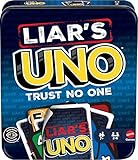
Overview:
Liar’s UNO reimagines the classic card game by weaving bluffing into its core mechanics. Players announce cards they play face-down, risking draws if lies are called—or if accusations backfire. Packaged in a portable tin, it targets 2+ players seeking chaotic fun in 15-20 minutes, with color-blind-friendly symbols.
What Makes It Stand Out:
The genius twist of mandatory lying transforms UNO’s familiarity into unpredictable social deduction. Color-accessible card symbols broaden inclusivity, while the compact tin enhances portability. The “UNO!” shout requirement at one card preserves nostalgic tension amid deception.
Value for Money:
As an Amazon-exclusive, it offers novelty at a standard UNO price point. While cheaper than strategy-heavy games, its limited replay depth (vs. dedicated bluffing titles like Skull) may disappoint. However, UNO fans get a fresh, accessible spin worth the investment for variety.
Strengths and Weaknesses:
Strengths: Instantly learnable, inclusive design, portable, and brilliantly leverages UNO’s recognition for broader appeal.
Weaknesses: Shallow long-term strategy; lying mechanics feel gimmicky after repeated plays. Exclusivity restricts purchase options.
Bottom Line:
A fun, accessible gateway into bluffing for UNO loyalists and casual groups. Best for short bursts of laughter, though dedicated bluffing aficionados will crave more complexity.
8. PLAYVIEW 21 Bluff – The Ultimate Bluffing & Strategy Card Game for Family Game Night–Fast-Paced & Hilarious Party Game – Outsmart & Outbluff to Win – Includes 4 Custom Decks & Gift Box
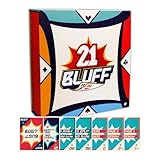
Overview:
21 Bluff merges blackjack-inspired number racing with high-stakes deception. Players aim to reach 21 while bluffing about their hand value, using Power Cards to disrupt opponents. Designed for 2-4 players, it emphasizes quick rounds (10-15 mins) and includes four themed decks in a gift-ready box.
What Makes It Stand Out:
The dual focus on numerical strategy and audacious bluffing creates dynamic tension. Power Cards introduce chaotic twists, while the multi-deck setup encourages customization. Its niche bridges casual party games (like BS?) and strategic card play, appealing to fans of both.
Value for Money:
The four-deck set and premium box elevate it beyond budget games, justifying a mid-tier price. Though pricier than single-deck alternatives, the replay variety and giftable packaging deliver solid value for regular game nights. Lacks scalability for larger groups (max 4 players).
Strengths and Weaknesses:
Strengths: Addictive risk-reward balance, rapid gameplay, versatile for trips/gifts, and Power Cards prevent predictability.
Weaknesses: Narrow player range; strategy can feel luck-dependent. Overhyped “ultimate” claim oversells depth.
Bottom Line:
An excellent pick for small groups wanting fast, strategic fun with comedic moments. Ideal as a gift, but larger parties should consider alternatives like Little Secret.
9. SAVANA Traitors Aboard - Award Winning Secret Identity Party Game - Fun, Bluffing and Betrayal | Easy to Learn, 15-Minute Round | Popular Games for 3-8 Players - Ages 10+

Overview:
Traitors Aboard casts players as pirates—loyal crew or saboteur mutineers—competing to fill a gold chest while hiding identities. This 15-30 minute game for 3-8 players blends deduction, alliance-building, and betrayal in a compact travel-friendly package.
What Makes It Stand Out:
The asymmetric pirate/mutineer roles create organic tension, while the chest-filling objective encourages subtle teamwork over outright deception. Its accessibility for ages 10+ and portability distinguish it from heavier strategy games, emphasizing social interaction over rules complexity.
Value for Money:
Offers exceptional bang-for-buck with high-quality components and award-winning design at an affordable price. Surpasses similar games (e.g., Secret Hitler) in approachability for families, though replay depth lags behind premium titles like Blood on the Clocktower.
Strengths and Weaknesses:
Strengths: Streamlined rules, inclusive player count (min 3), strong theme integration, and perfect for travel.
Weaknesses: Mutineers can dominate with aggressive play; minimal strategic nuance in short rounds.
Bottom Line:
A near-perfect entry-point for secret-identity games, especially for families. Its simplicity and portability make it a must-buy for casual gamers, despite limited depth for veterans.
10. Asmodee Skull Party Game - Bluffing and Strategy Game, Family Fun for Kids & Adults, Ages 13+, 3-6 Players, 30 Minute Playtime

Overview:
Skull Party distills bluffing into its purest form: players place rose and skull tokens face-down, then bid to flip cards without revealing a skull. This minimalist 3-6 player game challenges poker faces through escalating risks, with updated art and rules enhancing the classic experience.
What Makes It Stand Out:
Its elegant simplicity—using only four cards per player—creates profound psychological depth. The compact box and refined components exemplify “easy to learn, hard to master” design. The rose/skull motif balances beauty and menace, elevating it beyond typical party fare.
Value for Money:
Priced modestly for a premium Asmodee release, it delivers unmatched strategic richness per dollar. Outclasses flashier games with timeless mechanics, though the 30-minute playtime may feel short. Ideal as a cornerstone for any game library.
Strengths and Weaknesses:
Strengths: Profound strategic depth, stunning components, highly portable, and endlessly replayable.
Weaknesses: Steep learning curve for absolute beginners; downtime between turns with max players.
Bottom Line:
A masterpiece of minimalist design that belongs in every serious gamer’s collection. Worthwhile for teens/adults seeking intellectually satisfying bluffing—skip if you prefer lighthearted chaos over cerebral tension.
Understanding the Core Appeal of Bluffing Mechanics
Bluffing games tap into fundamental human psychology, creating experiences that resonate deeply beyond simple gameplay. They transform the table into a stage for social interaction where every decision carries weight beyond the game state.
The Psychology of Deception and Trust
At its heart, bluffing leverages our innate ability to interpret social cues and project intention. Successfully deceiving others triggers a unique cognitive and emotional high, while correctly calling a bluff provides immense satisfaction. These games create a safe space to explore the delicate balance between honesty and manipulation, fostering a heightened awareness of non-verbal communication and the subtle art of persuasion that permeates everyday life.
Why Bluffing Games Foster Connection
Unlike purely strategic or luck-based games, bluffing inherently requires engagement with other players. You must pay attention to their behavior, betting patterns, and reactions. This constant social feedback loop breaks down barriers, encourages playful interaction, and builds camaraderie through shared moments of triumph and hilarious defeat. The vulnerability of being caught in a lie or the triumph of a successful ruse creates bonds that purely cooperative or competitive games often miss.
Distinguishing Bluffing from Pure Chance
While luck often plays a role in the cards or dice you draw, the core skill in bluffing games lies in decision-making under uncertainty. It’s not random guessing; it’s calculated risk assessment based on incomplete information, opponent analysis, and understanding the game’s specific deception framework. This blend of luck and skill creates accessible entry points while offering deep strategic layers for experienced players.
Key Factors for Selecting Your Perfect Game Night Bluffer
Choosing wisely ensures your game night is remembered for the right reasons. Overlooking these critical elements can lead to frustration, disengagement, or simply a game that never gets pulled off the shelf again. Consider these aspects carefully before your next purchase.
Assessing Your Typical Player Count and Group Dynamics
Honesty about your usual gathering size is paramount. Some games explode with energy at 6+ players but become tedious with only 3. Others are intimate masterpieces designed for exactly 4. Equally important is understanding your group’s personality: Are they loud and chaotic? Quiet and analytical? Do they enjoy high-pressure moments or prefer lighter, more whimsical deception? Matching the game’s social intensity to your crew is non-negotiable for success.
Evaluating Complexity and Learning Curve
Bluffing games span a vast spectrum, from instantly graspable party games requiring minimal rules explanation to intricate strategic beasts with layered mechanics. Be brutally realistic about your group’s patience and experience. A game with deep strategic bluffing potential might intimidate newcomers, while an overly simple game could bore veterans. The sweet spot often lies in games with easy-to-learn core rules but significant depth in execution and player interaction.
Considering Setup Time and Session Length
In the modern era of packed schedules, how long it takes to get the game started is crucial. Games requiring complex board setups or lengthy rule explanations eat into precious social time. Similarly, be mindful of the expected playtime. A 90-minute strategic bluffing epic might be perfect for a dedicated game group but disastrous for a casual Friday night where people expect to wrap up by 10 PM. Prioritize smooth, rapid setup for most social settings.
Essential Bluffing Game Mechanics to Look For
Not all deception is created equal. Different mechanical frameworks create vastly different experiences. Understanding these core structures helps you pinpoint what kind of bluffing thrill you’re seeking.
Hidden Information: The Foundation of Deception
The bedrock of bluffing is asymmetric knowledge. Whether it’s secret roles (like a hidden traitor), concealed cards, or private objectives, players must possess information others lack. This creates the fertile ground where lies can take root and suspicion can flourish. The quality of the hidden information system determines how meaningful and varied the deception opportunities become.
Betting and Risk Assessment Systems
Many bluffing games incorporate explicit betting mechanics (using chips, points, or in-game resources) to escalate tension. These systems force players to quantify their confidence, turning abstract deception into concrete risk. Analyzing how bets influence the game flow—do they create paralyzing pressure or exciting momentum?—is key. Look for systems where betting feels meaningful and integrated, not tacked on.
Player Interaction and Targeting Mechanics
True bluffing thrives on direct confrontation and targeted deception. Games where you can specifically challenge another player’s claim, force them to reveal information, or directly influence their decisions through your actions create the most dynamic and engaging experiences. Passive bluffing, where deception happens indirectly, often lacks the visceral thrill of locking eyes across the table during a high-stakes call.
Optimizing for Replayability and Long-Term Engagement
The true mark of a great bluffing game isn’t just the first play, but whether it keeps drawing your group back week after week. Several elements contribute to lasting appeal beyond the initial novelty.
Variable Player Powers and Asymmetric Roles
Games where players take on distinct roles or abilities at the start inject immense variety. Each role might have unique bluffing opportunities, vulnerabilities, or win conditions, ensuring no two games play identically. This asymmetry forces players to adapt their strategies constantly, transforming the game from a static puzzle into a dynamic social experiment that evolves with every session.
Modular Components and Scenario Play
Boards that change layout, decks with scenario cards, or variable setup rules significantly boost replay value. Knowing that the map, objectives, or initial conditions will shift next time prevents the game from becoming predictable. This modularity combats analysis paralysis that can sometimes plague pure strategy games, keeping the focus on emergent, in-the-moment deception.
The Role of Player Skill Development Over Time
The most enduring bluffing games reward players who hone their skills. This could mean getting better at reading physical tells, mastering probabilistic thinking to assess the likelihood of a bluff, or developing sophisticated meta-strategies based on group history. Games where experience genuinely leads to improved performance (beyond just knowing the rules) create a compelling reason to return and test your growing prowess.
Adapting Bluffing Games for Modern Game Nights
The landscape of social gaming continues to evolve. Understanding how contemporary trends impact bluffing game selection ensures your choices remain relevant and accessible.
Hybrid Physical/Digital Experiences
While the core magic of bluffing is undeniably face-to-face, some modern games cleverly integrate companion apps. These might handle complex scoring, randomize scenarios, manage hidden information electronically (reducing setup), or even facilitate asynchronous play elements. The best integrations enhance the physical experience without replacing the crucial human interaction at the game’s heart—never letting a screen become the focal point.
Accessibility Considerations for Diverse Groups
Truly great bluffing games are inclusive. Consider components: Are symbols clear for colorblind players? Are text sizes readable? Does the game rely heavily on physical dexterity, or can it be played comfortably by someone with limited mobility? Crucially, evaluate the social demands: Does the game penalize quiet players unfairly? Can someone with social anxiety participate meaningfully without feeling constantly targeted? Prioritizing accessibility broadens your game night’s appeal.
Managing the Social Pressure Factor
Bluffing inherently involves social pressure, but the level varies drastically. Some groups thrive on the high-stakes tension of constant challenges, while others prefer a lighter atmosphere where being caught in a lie is humorous, not mortifying. Be mindful of games that might inadvertently create uncomfortable power dynamics or excessively target specific players. The goal is enjoyable tension, not genuine distress.
Mastering the Art: Tips for Playing (and Hosting) Bluffing Games
Knowing what game to choose is only half the battle. Elevating the experience requires thoughtful play and hosting to maximize fun and minimize friction.
Creating the Right Atmosphere for Deception
Lighting, seating arrangement, and even background noise subtly influence bluffing dynamics. Ensure players can see each other clearly—dim lighting might seem atmospheric but hinders reading tells. A circular table fosters better interaction than rows. Avoid overly loud music that drowns out conversation. A relaxed but focused environment allows the natural tension of the game to shine without artificial distractions.
Reading Tells vs. Avoiding Stereotypes
While identifying physical or verbal “tells” (nervous habits, speech patterns) is part of the fun, skilled players avoid relying on crude stereotypes. Effective bluffing and calling involve observing changes in behavior relative to a player’s baseline, not assuming someone is lying because they avoid eye contact (which could stem from shyness, not deception). Encourage observation of context and consistency over simplistic cues.
Handling Disputes and Maintaining Game Flow
Disagreements about rules or the validity of a bluff are inevitable. The host should have a clear, pre-agreed method for resolving disputes quickly (e.g., majority vote, designated rule-reader, brief discussion capped at 30 seconds). Crucially, keep the game moving. Lingering debates kill momentum. Prioritize fun and flow over absolute rule precision for minor points—reserve deep dives for after the game concludes.
Frequently Asked Questions
Frequently Asked Questions
How many players is ideal for most bluffing games? Most bluffing games shine with 4-8 players. Smaller groups (3-4) often favor deeper strategic bluffing, while larger groups (6-10) excel with lighter, faster-paced party-style deception. Always check the specific player count range on the box for optimal experience.
Can bluffing games work well with children? Yes, but choose age-appropriately. Look for games with simpler rules, lower social pressure, and a focus on fun over cutthroat tactics. Games involving silly actions or visual cues often work better for younger kids than those relying heavily on complex betting or subtle psychological manipulation.
How important is physical presence versus playing online? Physical presence is vastly superior for traditional bluffing games. Reading genuine facial expressions, body language, and subtle shifts in energy is core to the experience. While video calls can work, lag, limited camera angles, and the absence of shared physical space significantly diminish the deception dynamics and social connection.
What’s the biggest mistake new players make in bluffing games? Over-bluffing, especially early on. New players often try to be “too clever,” bluffing constantly without establishing credibility. Successful bluffing relies on building a pattern of truthful play so that occasional lies are believable. Starting conservatively and bluffing strategically is usually more effective.
How do I handle a player who is terrible at bluffing or calling bluffs? Focus on making it fun, not punitive. For poor bluffers, gently point out obvious tells in a lighthearted way after the game. For those who rarely call bluffs, remind them that challenging is part of the fun! Adjust game choice if one person consistently dominates or feels excluded due to skill disparity.
Are there bluffing games suitable for serious strategy gamers? Absolutely. Many games blend deep strategic decision-making with bluffing elements. Look for titles emphasizing probabilistic reasoning, long-term planning, hidden objectives, and player-driven economies where deception is one tool among many in a complex strategic landscape.
How long should I expect to spend learning a new bluffing game? Aim for games where the core bluffing mechanic can be explained in 5-10 minutes for social settings. Strategic bluffing games might take 15-20 minutes for a full rules run-through. If setup and explanation exceed 30 minutes before the first turn, it’s likely too complex for casual game nights.
What makes a bluffing game replayable long-term? Key factors include high player interaction variability (different opponents yield different experiences), strategic depth allowing for evolving tactics, modular setup options, and asymmetrical roles. Games where outcomes feel driven by player decisions and interactions, not just luck, maintain interest far longer.
Can bluffing games be played effectively with remote participants? It’s challenging but possible with the right tools. Dedicated online platforms for specific games often work best. Video calls are a poor substitute for physical play due to technical limitations and the loss of nuanced physical cues. Prioritize bringing remote players physically together for the best bluffing experience.
How do I introduce bluffing to a group unfamiliar with the concept? Start with extremely simple, high-luck, low-pressure games focused on fun reveals rather than intense deception. Use games with physical components (like dice cups) that make the bluffing action tangible. Emphasize the humor in failed bluffs and celebrate clever calls to create a positive association with the mechanic.
See Also
- How to Choose the 10 Best Word Board Games for Game Night in 2026
- 10 Tips for Finding the Perfect Trivia Games for Game Night in 2026
- How to Choose the 10 Best Trivia Board Games for Game Night in 2026
- How to Solve Game Night Slumps with the 10 Best Card-Based Trivia Games in 2026
- How to Solve Boring Game Nights with the 10 Best Word Puzzle Games in 2026