Table of Contents
The tabletop renaissance shows no signs of slowing as we plunge deeper into 2026, with role-playing games transforming from niche hobby into mainstream entertainment. Starter sets have evolved far beyond their humble beginnings as simple rulebook-and-dice collections. Today’s revolutionary entry points serve as complete experiential gateways, blending physical components with digital innovation, narrative sophistication, and unprecedented accessibility features that welcome everyone from curious newcomers to veteran players seeking fresh mechanics.
What makes this moment particularly exciting is how publishers have finally cracked the code on the perfect onboarding experience. Rather than dumping overwhelming rulebooks on kitchen tables, modern starter sets function as curated journeys—sometimes spanning months of play—while teaching mechanics organically through story. The focus has shifted from “how do we simplify our system?” to “how do we create an unforgettable first adventure that happens to teach the rules?” This paradigm shift means buyers face more compelling options than ever, but also more complexity in choosing the right entry point for their specific needs.
Top 10 Role-Playing Game Starter Sets
Detailed Product Reviews
1. Dungeons & Dragons - Starter Set: Heroes of The Borderlands

Overview:
The Dungeons & Dragons Starter Set: Heroes of the Borderlands represents Wizards of the Coast’s latest gateway into the world’s most popular tabletop RPG. Designed specifically for newcomers, this set streamlines the traditional D&D experience into digestible, hour-long sessions that fit modern schedules. It includes everything needed to begin your fantasy adventure journey without overwhelming complexity.
What Makes It Stand Out:
Unlike its predecessor, this set emphasizes speed and accessibility with its learn-as-you-play approach and three compact adventure booklets offering diverse encounters. The standout feature is its genuine focus on player agency—each scenario presents multiple solutions (combat, negotiation, stealth) that teach core RPG principles through actual play rather than dense rulebooks. The bite-sized session structure makes it perfect for families and busy adults who want quality gaming without all-day commitments.
Value for Money:
Priced competitively with other entry-level RPG sets, it delivers substantial content through three distinct adventures and streamlined rules. While veteran players might find it basic, the value proposition shines for beginners who get a complete, non-intimidating introduction to D&D that would otherwise require purchasing multiple books. It’s essentially a guided tour of roleplaying fundamentals.
Strengths and Weaknesses:
Strengths include incredibly fast setup, family-friendly content, flexible playtime, and genuine approachability. The quick-start guide eliminates traditional barriers to entry. Weaknesses include limited depth for experienced players, restricted character advancement options, and content that may feel brief once the initial three adventures conclude.
Bottom Line:
This is the ideal starting point for absolute beginners, families with teens, or anyone intimidated by D&D’s usual complexity. Veterans should look elsewhere, but as an onboarding tool, it’s nearly perfect.
2. Fallout: The Roleplaying Game Starter Set - Tabletop RPG Game
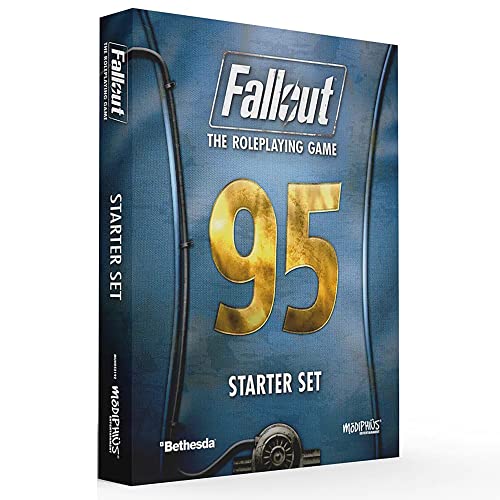
Overview:
The Fallout: The Roleplaying Game Starter Set transports the iconic video game franchise to tabletop using Modiphius’s 2d20 system. Set in the irradiated Commonwealth around Boston, this package provides a complete wasteland experience in a single box, allowing fans to create their own vault dwellers and navigate post-nuclear survival without needing prior RPG experience.
What Makes It Stand Out:
The authentic Fallout atmosphere shines through detailed lore, familiar factions, and the specialized 2d20 mechanics designed specifically for wasteland adventures. The system captures the video game’s V.A.T.S. feel through its action point economy and critical hit mechanics. The included quest book provides structured scenarios while leaving room for GM improvisation, perfectly mirroring the open-world exploration that defines the franchise.
Value for Money:
For Fallout enthusiasts, this set delivers exceptional value by translating beloved setting elements into playable tabletop mechanics. The complete package—including dice, rulebook, and adventure—eliminates additional purchases. Compared to generic post-apocalyptic RPGs, you’re paying for premium IP integration that resonates with fans, making it worth the investment for those already invested in the Fallout universe.
Strengths and Weaknesses:
Strengths include faithful setting adaptation, complete starter components, and mechanics that evoke the video game experience. The 2d20 system offers cinematic action. Weaknesses include a potentially steep learning curve for RPG newcomers unfamiliar with the 2d20 engine, and limited appeal for those not already Fallout fans. Some may find the mechanics crunchier than narrative-focused alternatives.
Bottom Line:
A must-buy for Fallout fans eager to bring the wasteland to their tabletop. For general RPG players, it’s a solid but specialized post-apocalyptic option best suited for those who love the source material.
3. Asmodee Dungeons and Kittens Roleplaying Game Starter Set - Animal Fantasy RPG in a Wholesome Post-Apocalyptic Medieval World, Family Fun for Kids & Adults, Ages 8+, 2-6 Players, 90 Min Playtime

Overview:
Dungeons and Kittens offers a whimsical twist on tabletop RPGs, casting players as magical feline adventurers in a post-apocalyptic medieval world. This Asmodee production prioritizes accessibility and family-friendly storytelling, making it an ideal entry point for children ages eight and up while retaining enough charm to engage adult participants in lighter gaming sessions.
What Makes It Stand Out:
The irresistible premise combines “meowgic” and ancient technology in a genuinely creative setting that immediately captures imagination. The game excels at teaching RPG fundamentals through its kitten protagonists, using familiar animal behaviors and wholesome narratives to introduce concepts like teamwork, problem-solving, and creative thinking. The 90-minute playtime perfectly matches younger attention spans while delivering satisfying narrative arcs.
Value for Money:
As a complete starter set designed for families, it eliminates the need for multiple purchases and provides immediate out-of-box playability. Compared to simplified RPGs like No Thank You, Evil!, it offers comparable value with a more universally appealing theme. The components support repeated playthroughs, and the gentle learning curve means parents can guide sessions without extensive prep time, maximizing family entertainment value.
Strengths and Weaknesses:
Strengths include adorable theme, exceptional accessibility, safe content for all ages, and genuine educational value. The rulebook’s step-by-step instructions are outstanding. Weaknesses include limited appeal for serious adult gaming groups seeking complexity, and the whimsical tone may not suit every player’s taste. Experienced roleplayers will find mechanics simplistic.
Bottom Line:
Perfect for families with children or adult friend groups seeking lighthearted fun. It successfully opens tabletop gaming to younger audiences while remaining entertaining for parents. Hardcore gamers should skip it, but as a family gateway RPG, it’s exceptional.
4. Daggerheart Core Set

Overview:
Daggerheart is a fresh fantasy tabletop RPG from Darrington Press, the publishing arm of Critical Role’s creators. Built for narrative-driven play, this core set introduces a unique d12-based system emphasizing character relationships, community building, and emotional stakes alongside traditional adventuring, positioning itself as an alternative to more tactical-heavy games.
What Makes It Stand Out:
The innovative Hope and Fear mechanics fundamentally change how consequences work, creating dramatic tension that evolves characters beyond simple stat progression. The community-focused gameplay encourages players to invest in world-building collectively, while the flexible class system allows for deep customization without overwhelming complexity. Its open beta development process has created a system refined by extensive community feedback.
Value for Money:
As a complete core set, it provides everything needed for long-term campaigns rather than just introductory adventures. While priced higher than basic starter sets, it competes directly with full rulebooks like the D&D Player’s Handbook, offering comparable content with modern design sensibilities. The included components support ongoing play without immediate additional investment, making it cost-effective for groups seeking a new primary system.
Strengths and Weaknesses:
Strengths include innovative narrative mechanics, flexible character creation, and production quality that rivals established systems. The Hope/Fear system creates memorable moments. Weaknesses include being a new, unproven system with limited published adventures compared to D&D’s vast library. Some groups may find the narrative focus less satisfying than tactical combat systems. The learning curve exists despite streamlined design.
Bottom Line:
Ideal for story-focused groups wanting modern mechanics and those burned out on traditional fantasy RPGs. Critical Role fans will appreciate the design philosophy, but tactical combat enthusiasts should consider alternatives.
5. Cosmere RPG - Stormlight Starter Set, Complete Tabletop RPG Kit by Brotherwise Games | Ages 13+ | 1-6 Players | Complete Beginner-Friendly Introduction to Roshar

Overview:
The Cosmere RPG Stormlight Starter Set brings Brandon Sanderson’s epic fantasy universe to tabletop gaming. This comprehensive kit introduces the unique magic systems and world of Roshar through a condensed 60-page rulebook and the “Bridge Nine” adventure, designed specifically for newcomers to both the Cosmere and tabletop RPGs.
What Makes It Stand Out:
The set excels at translating Sanderson’s intricate magic systems into playable mechanics without sacrificing narrative flow. The included battlemaps and tokens for every creature demonstrate exceptional production value rarely seen in starter sets. The pregenerated characters represent different Radiant orders, immediately showcasing the setting’s unique power systems. The custom plot die adds an innovative narrative twist that reflects the unpredictable nature of Shard-driven magic.
Value for Money:
For Cosmere fans, this is an essential purchase that faithfully adapts beloved lore into interactive form. The component quality—full-color maps, sturdy tokens, custom dice—justifies the price point, matching premium RPG releases. Compared to licensed RPGs like the Lord of the Rings systems, it offers superior physical components and better newcomer guidance, though its appeal is narrower without Cosmere knowledge.
Strengths and Weaknesses:
Strengths include faithful lore adaptation, outstanding component quality, and mechanics that capture Stormlight’s essence. The Bridge Nine adventure provides a strong narrative hook. Weaknesses include steep lore prerequisites that may alienate non-fans, and the condensed rulebook lacks long-term campaign support. The specialized setting limits versatility compared to generic fantasy systems.
Bottom Line:
An absolute must-have for Sanderson devotees. For others, it’s a polished but niche product best appreciated after reading at least one Stormlight novel. Perfect for introducing existing fans to tabletop gaming.
6. Chaosium Inc Call of Cthulhu Starter Set

Overview:
The Call of Cthulhu Starter Set delivers the quintessential cosmic horror roleplaying experience from Chaosium. This boxed introduction plunges players into the 1920s as investigators confronting Lovecraftian terrors. Perfect for 2-6 players, it emphasizes collaborative storytelling where mystery and atmospheric dread take center stage over combat. The set provides streamlined rules, dice, and introductory scenarios that capture the genre’s signature tension between knowledge and madness.
What Makes It Stand Out:
Unlike heroic fantasy RPGs, Call of Cthulhu’s sanity mechanic fundamentally changes gameplay—characters grow weaker as they uncover truths, creating genuine horror. The system prioritizes investigation and research over combat, with dice determining narrative outcomes rather than tactical superiority. This starter includes the iconic “Paper Chase” adventure and quick-start rules that distill decades of refined horror gaming into an accessible package.
Value for Money:
Retailing around $30, this set offers exceptional entry-point value compared to the $60 core rulebook. It includes essential dice, character sheets, and three complete scenarios providing 15-20 hours of gameplay. For groups uncertain about committing to cosmic horror, this represents a low-risk investment in a premium horror system.
Strengths and Weaknesses:
Strengths include atmospheric writing, intuitive percentile-based mechanics, and rich scenario design. The sanity system creates unique, memorable moments. Weaknesses: the grim tone and character mortality may frustrate players expecting heroic adventures. The 1920s setting requires historical buy-in, and included scenarios lack long-term campaign potential.
Bottom Line:
An essential purchase for horror enthusiasts seeking narrative depth over tactical combat. It delivers an authentic Lovecraftian experience unmatched in tabletop gaming, though its specialized appeal isn’t universal.
7. Free League The One Ring™ Over Hill and Under Hill Starter Set - Beginner RPG Adventure in Eriador

Overview:
Free League’s The One Ring Starter Set transports players to Middle-earth with remarkable authenticity. This complete package introduces the award-winning system set between The Hobbit and The Lord of the Rings, where players become heroes fighting the Shadow. Designed for 2-6 players, it emphasizes journey, fellowship, and hope amid encroaching darkness. The streamlined rules capture Tolkien’s themes without overwhelming newcomers.
What Makes It Stand Out:
The proprietary dice system featuring D12 Feat Dice with Gandalf runes and the Eye of Sauron creates thematic tension in every roll. Unique mechanics for journeys, fellowship phases, and corruption brilliantly mirror the source material’s structure. The set includes pre-generated characters, custom dice, detailed maps, and cardboard standees that elevate production value far beyond typical starter sets.
Value for Money:
At approximately $45-50, the premium components and award-winning design justify the higher price point. Comparable to buying the core rules alone, yet includes physical dice, maps, and standees worth $20+ separately. For Tolkien fans, the immersive quality outweighs cost considerations.
Strengths and Weaknesses:
Strengths include stunning artwork, mechanics that perfectly evoke Middle-earth, and beginner-friendly structure. The journey system creates compelling travel narratives. Weaknesses: the specialized setting limits broader appeal, and the unique dice aren’t standard polyhedral. Some rules nuances may confuse absolute beginners despite streamlining.
Bottom Line:
The definitive entry point for Tolkien roleplaying. While pricier than some alternatives, its production quality and thematic fidelity make it indispensable for Middle-earth enthusiasts seeking an authentic narrative experience.
8. CMON Marvel Multiverse RPG: Escape from Planet Hulk Starter Set - Action-Packed Superhero Roleplaying Game, Strategy Game for Kids & Adults, Ages 12+, 2-7 Players, 4 Hour Playtime

Overview:
CMON’s Marvel Multiverse RPG Starter Set thrusts players into blockbuster superhero action. This set launches the Marvel Universe onto the tabletop with iconic heroes like Captain America, Black Widow, and Miles Morales Spider-Man. Designed for 2-7 players aged 12+, it delivers approximately four hours of cinematic gameplay per session. The streamlined system emphasizes narrative drama and heroic choices over complex simulation.
What Makes It Stand Out:
Featuring artwork by Marvel Studios artist Marco Checchetto, the components achieve cinematic authenticity. The narrative-driven system uses custom dice and power references that let players focus on storytelling rather than rule memorization. The “Escape from Planet Hulk” scenario provides immediate, high-stakes action with pre-generated characters that capture each hero’s essence.
Value for Money:
Priced around $35-40, it includes high-quality standees, a double-sided map, and six character folios. While cheaper than the $50 core rulebook, experienced groups may find the limited character creation options restrictive. Excellent value for casual fans but less so for long-term campaigns.
Strengths and Weaknesses:
Strengths include gorgeous Marvel-authentic art, accessible rules, and immediate playability. The scenario delivers genuine superhero spectacle. Weaknesses: the adventure is relatively linear with limited replayability. Character options are restricted to six heroes, and the system lacks the depth of more established superhero RPGs for extended campaigns.
Bottom Line:
Perfect for Marvel fans and casual gaming groups seeking accessible superhero action. It captures the MCU’s spirit brilliantly, though dedicated superhero gamers may eventually outgrow its streamlined approach.
9. The Walking Dead Universe RPG: Starter Set - Boxed Set - Everything You Need To Get Started, Roleplaying, Horror, Free League Publishing

Overview:
The Walking Dead Universe RPG Starter Set brings Free League’s Year Zero Engine to Robert Kirkman’s grim zombie apocalypse. This boxed set delivers survival horror where players face both undead hordes and human treachery. Including a condensed rulebook and “The Wolves’ Den” scenario, it supports 2-6 players in navigating moral ambiguity and resource scarcity. The system emphasizes psychological strain and community survival over combat heroics.
What Makes It Stand Out:
Custom Base Dice and Stress Dice with a physical Threat Meter create tangible rising tension. Players can embody TV series favorites like Michonne and Glenn or original survivors. The Year Zero Engine’s push mechanic, adapted for Walking Dead’s relentless pressure, forces hard choices between risking calamity and guaranteeing failure. Maps of Georgia and Virginia locations ground the experience in familiar geography.
Value for Money:
At $35-40, it matches the core rulebook’s price but includes dice, maps, and an introductory scenario. For Walking Dead devotees, the ability to play canon characters justifies the cost. However, the grim premise may limit replayability compared to more optimistic settings.
Strengths and Weaknesses:
Strengths include authentic Walking Dead atmosphere, intuitive percentile mechanics, and the innovative Threat system. Playing established characters provides immediate investment. Weaknesses: the oppressive tone can exhaust players. Limited to one scenario, and character mortality may frustrate those unprepared for the source material’s brutality. The Stress mechanic requires careful group management.
Bottom Line:
An excellent adaptation for Walking Dead fans seeking narrative-driven survival horror. Its authentic tone and mechanics shine, though the unrelenting grimness makes it suitable for specific groups rather than general audiences.
10. Dungeons & Dragons Starter Set

Overview:
The Dungeons & Dragons Starter Set remains the definitive gateway to tabletop roleplaying. Designed for 4-6 players, this iconic red box contains everything needed to begin fantasy adventures: basic rules, pre-generated characters, dice, and the legendary “Lost Mine of Phandelver” adventure. As the world’s most popular RPG, it benefits from unparalleled community support and decades of refinement, making it the safest entry point for newcomers.
What Makes It Stand Out:
The included adventure, Lost Mine of Phandelver, is widely considered the best introductory scenario ever published—offering 20+ hours of open-ended exploration, combat, and roleplaying. The 5th Edition rules strike an elegant balance between accessibility and depth. Free basic rules available online complement the physical set, while the massive D&D community provides endless resources.
Value for Money:
At $20-25, this represents unbeatable value. The adventure alone justifies the price, with comparable third-party modules costing $15-30. Dice and basic rules included make it the most cost-effective introduction to hobby gaming. No other starter set delivers this much content for the price.
Strengths and Weaknesses:
Strengths include unmatched value, superb introductory adventure, intuitive mechanics, and vast support ecosystem. The heroic fantasy theme has broad appeal. Weaknesses: the basic rules lack character creation and advanced options, requiring eventual core book purchases. The Dungeon Master role demands preparation and comfort with improvisation.
Bottom Line:
The essential first purchase for anyone curious about tabletop RPGs. Its combination of value, quality, and support makes it the undisputed champion of starter sets, though groups will eventually need the full rules for extended campaigns.
What Makes a Starter Set “Revolutionary” in 2026
Digital-Physical Hybrid Integration
The most groundbreaking starter sets now seamlessly blend tactile components with companion apps that don’t just replicate rules but enhance the physical experience. QR codes embedded in encounter cards might trigger dynamic soundscapes, while character sheets sync across devices to auto-calculate complex status effects. This isn’t about replacing the tabletop experience—it’s about eliminating the tedious bookkeeping that historically created barriers for new players. The revolution lies in how these digital tools fade into the background, becoming invisible assistants rather than dominant interfaces.
Narrative Innovation and Player Agency
Gone are the days of railroaded introductory adventures that force players down predetermined paths. Revolutionary starter sets now employ branching narrative engines where player choices in session one ripple through a 20-hour campaign. Some incorporate “memory systems” where the box itself tracks decisions using simple physical tokens or app integration, creating genuine consequence without requiring a human Game Master to memorize everything. This transforms the starter set from a scripted demo into a truly responsive story that feels personally tailored to each group’s decisions.
Accessibility and Inclusivity Features
The 2026 standard demands starter sets designed for diverse cognitive abilities, sensory needs, and experience levels. This means color-blind friendly palettes, dyslexia-friendly fonts, tactile components for visually impaired players, and rule explanations that account for different learning styles. Many now include “complexity dials”—optional modular rules that groups can add gradually rather than confronting a wall of mechanics upfront. The revolution is in treating accessibility not as an add-on but as a core design principle that improves the experience for everyone.
Production Quality and Component Design
Modern starter sets have become boutique-quality productions with custom-molded miniatures, linen-finished cards, and spiral-bound GM screens with dry-erase surfaces. But the real innovation is functional: components that teach through use rather than explanation. Dice that color-code difficulty levels, status rings that stack intuitively, and location tiles that lock together to demonstrate movement rules. These aren’t just nicer versions of old components—they’re pedagogical tools that make the learning process tactile and immediate.
Key Features to Evaluate in Modern Starter Sets
Learning Curve and Tutorial Systems
The best 2026 starter sets treat rule acquisition as a designed experience rather than a necessary evil. Look for sets that parcel out mechanics across multiple sessions, introducing core concepts through “learn as you play” scenarios. Some employ ingenious “tutorial encounters” where the first combat teaches action economy through a simple card-driven system before revealing the full tactical rules later. Evaluate whether the set provides a smooth ramp or a cliff—does it offer solo learning modes for the prospective GM? Are there video tutorials integrated via QR codes? The presence of a well-designed learning arc often matters more than the complexity of the full system.
Scalability and Campaign Potential
A revolutionary starter set should offer more than a one-shot experience. The value proposition has shifted toward boxes that can sustain 20-40 hours of gameplay, often including level progression that carries characters well into intermediate tiers. Check whether the included adventure scales for 2-6 players effectively, and whether it provides clear “off-ramps” to continue into full rulebooks or “on-ramps” for additional content. The best sets now include “campaign seeds”—brief outlines for extending the story beyond the included materials, giving groups a clear path forward without forcing an immediate second purchase.
Replayability and Modular Design
Forward-thinking starter sets recognize that groups might fail, restart, or want to experience the content with different characters. Look for modular encounter design that allows for different party compositions to face meaningfully different challenges. Some sets include “dynamic encounter generators” that remix enemy placements and objectives based on player choices. Others offer alternate story paths that unlock on subsequent playthroughs. This isn’t about randomization for its own sake—it’s about respecting the player’s investment by ensuring the box remains useful beyond a single campaign.
Community and Support Ecosystem
The starter set itself is just the beginning. Revolutionary products launch with robust online support: official forums with designer participation, community-created content platforms, and organized play events at local game stores. Check whether the publisher offers free downloadable expansions, errata documents that improve rather than just fix the game, and a content creator policy that encourages actual plays and tutorials. A thriving ecosystem means your starter set purchase gains value over time rather than depreciating.
The Evolution of RPG Starter Sets
From Basic Rulebooks to Immersive Experiences
The trajectory from 2010’s slim pamphlets to today’s experiential boxes reflects a fundamental shift in how we onboard new hobbyists. Early starter sets were essentially loss leaders—stripped-down rules designed to upsell the core books. Modern sets are self-contained entertainment products that might be all a casual group ever needs. They’ve grown from 20-page booklets to 100+ page campaign guides plus accessories, but more importantly, they’ve shifted from telling you how to play to actively playing with you. This evolution mirrors how video game tutorials changed from text overlays to integrated design.
The Rise of Solo and Duo Play Options
Recognizing that finding a full group is often the biggest barrier, 2026’s most innovative sets include robust solo modes that aren’t just “play multiple characters yourself.” These feature choose-your-own-adventure style solo campaigns, GM-emulator systems, or even competitive solo scenarios with AI-driven antagonists. Duo play has received similar attention, with mechanics designed specifically for one GM and one player that don’t feel like watered-down group experiences. This democratization of player count means you can learn the system and enjoy the content regardless of your local gaming community’s size.
Environmental Sustainability in Game Production
Revolutionary isn’t just about digital features—it’s about responsibility. Leading publishers now use FSC-certified paper, soy-based inks, and plastic-free packaging. Some have introduced “digital-first” starter sets where the physical components are minimal and recyclable, with most assets accessed through apps or print-at-home PDFs. Others use modular component design so groups only purchase and keep what they’ll actually use. This shift reflects a maturing market where environmental consciousness is a purchasing factor, not an afterthought.
The Impact of AI-Assisted Game Mastering
While full AI GMs remain controversial, starter sets are leveraging artificial intelligence in subtle, helpful ways. Some include access to “GM Assistants” that can generate NPC names and personalities on the fly, adjust encounter difficulty based on party performance, or answer rules questions through natural language processing. The key is that these tools augment rather than replace the human GM, handling administrative tasks so the person can focus on storytelling and player engagement. For new GMs, this safety net can be the difference between a daunting experience and a confident first session.
Understanding Different RPG Genres in Starter Format
Fantasy Renaissance and New Mechanics
Fantasy remains the dominant genre, but 2026’s offerings have moved beyond Tolkien pastiche. Look for sets that reimagine magic systems—perhaps where spells are crafted through card combinations, or where magical corruption is a tangible mechanic tracked with physical components. Some integrate domain management from the start, letting players control not just characters but evolving strongholds. The revolution is in using the starter set format to showcase what makes a system’s approach to fantasy unique, rather than just offering a generic dungeon crawl.
Sci-Fi Exploration and Hard Science Elements
Science fiction starter sets have matured from space opera reskins to genuine explorations of speculative concepts. The most innovative include realistic astrophysics tools, language-learning minigames for first contact scenarios, or ethical dilemma engines for exploring alien cultures. Some provide “research mechanics” where players actually solve simplified scientific puzzles to advance the plot. These sets succeed by making the sci-fi elements integral to the gameplay loop rather than window dressing on combat rules.
Horror and Psychological Thriller Systems
Horror starter sets have become masterclasses in atmospheric design, using components to build tension physically. Think decks of “dread cards” that players physically draw from a sealed envelope, or sound design apps that respond to in-game choices with escalating ambient horror. The best don’t rely on jump scares but create systems where player paranoia and mistrust are mechanically reinforced. They teach groups how to sustain mood over multiple sessions, a notoriously difficult skill even for veteran horror GMs.
Historical and Alt-History Settings
These niche but growing starter sets face the challenge of teaching both rules and historical context. Revolutionary ones use “fact cards” that provide period detail without overwhelming, or include mechanic prompts that encourage historically-informed decision making. Alt-history sets often provide “divergence points” where players can explore how small changes cascade into radically different worlds. The educational potential here is enormous, with some sets designed specifically for classroom use while remaining engaging for hobbyists.
What to Look for When Choosing Your First Starter Set
Group Size and Play Style Compatibility
Before purchasing, honestly assess your group’s dynamics. Do you have 2 players or 6? Are they narrative-first storytellers or tactical combat enthusiasts? The most revolutionary sets now include “play style sliders”—ways to adjust the campaign’s focus between combat, exploration, and social interaction. Look for sets that explicitly state their optimal player range and provide mechanical adjustments for running outside that range. Some include “observer roles” for larger groups where extra players can participate without overwhelming the core mechanics.
Time Commitment and Session Length
Starter sets now cater to various schedules, from “one-shot in a box” products designed for 3-4 hour convention slots to sprawling campaigns requiring 40+ hours. Check the estimated session count and length—does it fit your group’s availability? Some innovative sets use “session zero” materials that help groups collaboratively establish expectations about pacing and commitment before the first adventure begins. Others include “pause points” where the story naturally breaks if your group can only meet monthly. Matching the product to your real-world constraints prevents the set from gathering dust.
Age Appropriateness and Content Warnings
The modern standard demands clear content labeling beyond simple age ranges. Revolutionary sets provide detailed content warnings for themes like body horror, psychological manipulation, or real-world sensitive topics. Many include “family play” modes that adjust tone and complexity for younger players without dumbing down the core experience. Look for sets that offer session-by-session content guides so GMs can prep appropriately and communicate with players about boundaries. This transparency isn’t just ethical—it’s practical, preventing awkward mid-campaign disruptions.
Budget Considerations and Value Proposition
With premium starter sets now ranging from $30 to $80, evaluating value requires looking beyond page count. Calculate the cost per hour of entertainment—how does it compare to a video game or movie tickets? Revolutionary sets justify higher price points through component quality and replayability. Some offer “upgrade paths” where your initial purchase is credited toward the core rulebook purchase later. Others include voucher codes for digital tool subscriptions. Consider whether the set requires additional purchases to function—does it need special dice, or will standard sets work? Transparent pricing without hidden costs is a hallmark of consumer-friendly design.
Advanced Features Revolutionizing 2026 Starter Sets
AR/VR Integration Possibilities
While not ubiquitous, cutting-edge starter sets are experimenting with augmented reality that overlays digital effects onto physical play spaces. Point your phone at the battle map and see spell effects animate, or use AR to reveal hidden clues on physical handouts. Virtual reality is finding its niche in “GM prep modes” where you can walk through locations before describing them to players. The key advancement is that these technologies are optional enhancements, not requirements—groups can enjoy the full experience without downloading a single app, but tech-savvy tables can layer on additional immersion.
Cross-Platform Character Persistence
Some revolutionary sets now include codes that let you port characters into digital versions of the game, or into completely different but compatible systems. Your starter set hero might become a playable character in a video game adaptation, or transfer into the full tabletop RPG’s digital character builder with all progress intact. This cross-media persistence makes the starter set feel like the beginning of a larger journey rather than a dead-end demo. It also allows groups to continue playing digitally when they can’t meet in person, maintaining campaign momentum.
Dynamic World-Building Tools
Rather than presenting a static setting, innovative starter sets include systems where the world evolves based on player actions. This might be a simple legacy component where stickers permanently alter the map, or a digital tool that tracks regional changes and generates new plot hooks. These tools teach new GMs how to think reactively, showing them how player choices should reshape the narrative landscape. The physical or digital artifacts created become cherished records of the group’s unique story, making the starter set a keepsake rather than disposable training wheels.
Integrated Soundscape and Atmosphere Design
Audio design has moved from optional Spotify playlists to integrated soundscape engines that respond to gameplay. Ambient tracks might shift based on character stress levels (tracked physically on the table), or important NPCs could have signature sounds that play when they appear. Some sets include “audio handouts”—sounds or voices that players listen to through the app at key moments. This creates shared sensory experiences that are impossible to replicate through description alone, lowering the GM’s performance pressure while raising immersion.
The Role of Community in Starter Set Success
Official vs. Third-Party Support
A starter set’s longevity often depends on the ecosystem that grows around it. Official support means regular errata, designer notes, and sanctioned expansions. But third-party content—actual plays, fan-made adventures, rules hacks—can be equally valuable. Revolutionary publishers actively encourage this by providing content creator kits, liberal licensing, and platforms for sharing community creations. Look for sets with dedicated subreddits or Discord servers where the designers participate. This two-tiered support system ensures your purchase remains relevant long after you’ve exhausted the included materials.
Organized Play and Convention Presence
Many starter sets now tie into organized play programs where you can take your characters to local game stores or conventions and continue their stories in official events. This creates a bridge from home play to community engagement, solving the “what do we do after we finish the box?” question. Check whether the set includes “organized play legal” character options and if the publisher runs intro events at major conventions. This infrastructure transforms the starter set from a product into a passport for broader hobby participation.
Online Resources and Digital Companions
Beyond simple PDFs, expect video tutorials from the designers, interactive rulebooks that highlight relevant sections based on your campaign progress, and searchable databases of rules examples. Some sets offer “GM mentoring” programs where experienced players volunteer to coach new GMs through their first campaign. The quality and accessibility of these resources often determines whether a group finishes the starter adventure or abandons it due to confusion. Revolutionary publishers treat these resources as core parts of the product, not afterthoughts.
Fan Content and Modding Communities
The most successful starter sets inspire players to create their own content. Look for products that explicitly license fan creations under permissive terms, provide templates for custom content, or even include “design your own” workshops in the box. Some publishers host contests for best fan-made encounter or character, with winning entries becoming official expansions. This transforms consumers into co-creators, building investment in the system and ensuring a constant stream of fresh content that keeps the community engaged.
Common Mistakes to Avoid When Buying Starter Sets
Overlooking the “Full Game” Experience
Don’t assume the starter set represents the complete system. Research what the full game offers and whether the starter set is a true subset or a simplified version that teaches different mechanics. Some revolutionary sets are actually complete games in themselves, while others are carefully curated demos. Check reviews that compare starter rules to core rules to avoid learning a system you’ll need to unlearn later. The best sets evolve naturally into the full game, with mechanics that layer on additional complexity rather than replacing starter set rules entirely.
Ignoring Component Quality
A starter set with flimsy cards, poorly molded miniatures, or cheap dice can sour the experience regardless of rules quality. In 2026, component quality varies wildly even at similar price points. Look for unboxing videos that show components in detail, and read reviews that specifically address durability. Revolutionary sets use component quality as a teaching tool—well-designed tokens that make rules intuitive are worth more than twice the number of cheap pieces. Remember, these components often become keepsakes that introduce new players to the hobby; their quality reflects on the experience itself.
Misjudging Complexity Levels
Publishers often mislabel complexity, calling systems “beginner friendly” when they merely have fewer rules rather than better-designed learning curves. A truly revolutionary starter set might be for a complex system but teach it brilliantly, while a simple system with poor pedagogy can be frustrating. Look for reviews from actual new players, not just veteran gamers. Check whether the set includes “complexity ratings” for individual sessions, helping GMs pace the learning experience. The goal is finding a set that matches your group’s appetite for mechanical depth, not just the simplest possible rules.
Forgetting About Long-Term Engagement
A starter set that teaches brilliantly but ends abruptly can leave groups hanging. Evaluate whether the set provides clear next steps: does it include a preview of the full rules? Are there obvious adventure hooks for continuing beyond the box? Some revolutionary sets now include “campaign frameworks” that outline how the starter story could expand into a full year-long campaign, even if you need the core books to execute it. This forward-looking design helps groups transition smoothly from learning to mastery without losing narrative momentum.
The Future Beyond 2026
Emerging Technologies on the Horizon
Looking past 2026, we see hints of voice-activated GM assistants, holographic battle maps, and AI that can generate NPC voices in real-time. But the most promising innovations are subtler: machine learning that analyzes your group’s play style and suggests mechanical adjustments, or blockchain-verified character sheets that can be used across multiple compatible games. The future isn’t about replacing human creativity but about removing friction. Revolutionary starter sets will increasingly feel like collaborative partners in storytelling rather than rulebooks to master.
The Democratization of Game Design
Starter sets are becoming so sophisticated that they double as game design education tools. By experiencing expertly crafted learning curves, new GMs intuitively understand pacing, tension, and mechanical introduction. Some sets now include “designer commentary” booklets that explain why choices were made. This is creating a generation of players who understand game design fundamentals, leading to an explosion of indie creations. The starter set becomes not just an entry to playing but to creating, fueling the hobby’s growth from both ends.
Educational and Therapeutic Applications
The pedagogical sophistication of modern starter sets has opened doors in education and therapy. Sets designed for social skills development, historical education, or trauma processing use the same mechanical innovations as entertainment products. In 2026, we’re seeing starter sets explicitly marketed to therapists, teachers, and corporate team-building facilitators. This cross-pollination is elevating the entire industry, as the demands of these fields push design toward greater clarity, accessibility, and evidence-based engagement strategies.
The Blurring Lines Between RPGs and Other Media
The ultimate revolution may be the dissolution of boundaries between RPG starter sets, immersive theater, alternate reality games, and interactive fiction. A starter set might arrive as a mysterious package with no overt game branding, unfolding through mail deliveries, phone calls, and physical artifacts that lead to the eventual tabletop reveal. Others might connect to streaming series where audience choices influence official campaign settings. This transmedia approach makes the starter set just one node in a larger storytelling network, transforming the purchase into an initiation into a multi-platform narrative universe.
Frequently Asked Questions
How do I know if my group is ready for a 2026 starter set versus a simpler family game?
Assess your group’s comfort with reading comprehension, rule retention, and collaborative storytelling. 2026 starter sets assume players can manage moderate complexity and are willing to learn specialized vocabulary. If your group prefers games that explain everything in 5 minutes, look for sets explicitly marketed as “gateway” or “family” products that use simpler mechanical frameworks. The presence of a tutorial campaign is a good indicator of beginner-friendliness regardless of overall system complexity.
What’s the typical shelf life of a modern starter set before we need to buy more content?
Most revolutionary sets provide 20-40 hours of gameplay, which for a weekly group means 3-6 months of entertainment. Many are designed as complete experiences that you may never need to expand upon. However, if you want to continue with the same characters and system, you’ll typically need the core rulebook after completing the starter campaign. Some sets include discount codes for this transition, making the starter set essentially a paid demo that credits toward the full game purchase.
Are digital components required, or can we play purely offline?
The best 2026 starter sets treat digital tools as optional enhancements. You should be able to play the complete experience with just the physical components. Digital companions typically handle administrative tasks like tracking complex status effects or generating random content, but the core gameplay loop remains analog. Always check product descriptions for phrases like “fully playable offline” or “digital tools optional” to ensure you’re not locked into app-dependent gameplay that could become unsupported.
How do I evaluate component quality before purchasing?
Search for unboxing videos from reputable reviewers and check forums for posts about component wear after several sessions. Look for specific mentions of card thickness (measured in points), miniatures material (resin versus plastic), and dice readability. Revolutionary sets often highlight component quality in their marketing, but independent verification is crucial. Pay attention to whether reviewers mention components that facilitate gameplay versus mere aesthetic improvements.
Can starter sets be used for convention play or with rotating players?
Many now include “convention mode” rules for one-shot play with pre-generated characters and self-contained scenarios. Look for sets with modular encounter design that allows dropping in new players mid-campaign. Some provide “guest character” rules where new players take control of NPCs for a session. The presence of organized play support is a strong indicator that the set accommodates irregular attendance and rotating casts.
What’s the difference between a starter set and an “essential kit” or “beginner box”?
Terminology varies by publisher, but generally: “starter sets” are complete games with everything needed to play; “essential kits” might assume you have basic dice and provide stripped-down rules; “beginner boxes” often focus on a single introductory adventure. In 2026, “starter set” has become the premium term for a product that could be your entire RPG experience, while other terms suggest stepping stones to a larger purchase. Always read the component list carefully regardless of naming.
How important is the included adventure’s quality versus the rule system’s quality?
For a starter set, the adventure is arguably more important than the underlying system. A brilliant system with a boring tutorial campaign will never get played, while a great adventure can teach mediocre rules effectively. Revolutionary sets invest heavily in the included campaign, often hiring novelists and playwrights to craft the narrative. Look for reviews that specifically address whether the adventure creates memorable moments and teaches mechanics organically, not just whether the system has innovative dice mechanics.
Should I buy multiple starter sets to compare systems before committing?
This can be a cost-effective way to find your group’s preferences, especially since many starter sets are self-contained experiences. Consider buying 2-3 from different genres or complexity levels and running each for 2-3 sessions as a “system tour.” Some groups even make this a regular practice, playing starter set campaigns as palate cleansers between longer campaigns. Just ensure you have storage space and that your group is willing to learn new systems repeatedly.
How do I handle rules disputes when learning a new system from a starter set?
Most 2026 sets include quick-reference guides or QR codes linking to searchable rules databases. Use the “rule of cool” for your first few sessions—make a temporary ruling and look it up later to avoid bogging down play. Some sets have official “rules hotlines” or Discord channels where you can ask questions. Document recurring questions to research between sessions. Remember, the goal is fun and learning, not perfect rules mastery in session one. Many groups find that discussing disputed rules after the session deepens everyone’s understanding.
Are there starter sets designed specifically for solo play before group commitment?
Yes, this is one of 2026’s biggest growth areas. These sets include solo campaigns that teach the system while providing 10-15 hours of individual entertainment. They’re perfect for a prospective GM to learn the rules before teaching the group, or for players to test-drive character creation options. Some even include “solo to group” transition guides where your solo character can be integrated into a group campaign later. Look for sets with solo modes that don’t feel like compromises—these often represent the most innovative design work in the industry.
See Also
- 10 Top-Rated Role-Playing Game Starter Sets According to Experts in 2026
- How to Solve Table Clutter with the 10 Best Role-Playing Game Dice Sets in 2026
- 10 Role-Playing Game Dice Sets That Solve Roll Inconsistency in 2026
- 10 Most Durable Role-Playing Game Dice Sets Based on Real User Reviews in 2026
- The 10 Most Revolutionary Role-Playing Game Core Rulebooks of 2026

