Table of Contents
Word games have always held a special magic, transforming the building blocks of language into exhilarating mental playgrounds. For those who delight in the rhythm of a well-turned phrase, the thrill of discovering a obscure synonym, or the sheer joy of linguistic precision, board games offer a uniquely social and tactile way to engage with words. In an increasingly digital world, the physicality of shuffling cards, placing tiles, or scribbling furiously on a pad provides a grounding counterpoint to screen-based interactions, fostering deeper connection and focused cognitive engagement among players. There’s something profoundly satisfying about the shared tension of a timed round or the collaborative triumph of cracking a particularly tricky clue.
The landscape of word-based board gaming is vibrant and constantly evolving, moving far beyond the classics many grew up with. Today’s market offers a rich tapestry of mechanics designed to challenge vocabulary, stretch definition skills, enhance spelling agility, and even explore the etymological roots of language itself. Whether you’re a casual player looking for lighthearted fun with friends, a competitive strategist seeking the ultimate lexical duel, or an educator aiming to make language learning dynamic, understanding the core features and considerations of these games is the key to unlocking the perfect linguistic adventure for your group. Choosing the right game isn’t just about the box; it’s about matching the experience to your specific love of language and the dynamics of your playing circle.
Top 10 Word Board Games
Detailed Product Reviews
1. USAOPOLY The Original TAPPLE, The Fast-Paced Family Board Game,Choose a Category & Race Against The Timer to be The Last Player,Learning Word Game for Ages 8 & Up, 2-8 Players, 15-20 Minute Play Time

Overview:
TAPPLE delivers high-energy wordplay where players race against a built-in timer to shout words matching a category and starting letter. Designed for quick sessions (15-20 minutes), it accommodates 2-8 players and emphasizes speed over vocabulary depth, making it ideal for family game nights seeking adrenaline-fueled fun.
What Makes It Stand Out:
Its standout feature is the relentless timer pressure combined with the physical Tapple wheel that stores 144 categories across 36 cards. The tactile letter tabs—pressed after each word—create satisfying urgency. Portability is a major plus, as the self-contained wheel eliminates loose pieces, perfect for travel or spontaneous play.
Value for Money:
Priced competitively against other party games, TAPPLE justifies its cost through replayability (endless category combinations) and group inclusivity. While lacking Scrabble’s strategic depth, it offers unmatched pacing for large groups, outperforming similar timed games in simplicity and engagement per dollar.
Strengths and Weaknesses:
Strengths: Incredibly easy to learn; thrives with big groups; portable design; timer prevents downtime.
Weaknesses: Limited strategic depth; timer may frustrate younger players; categories can feel repetitive over time.
Bottom Line:
A superb choice for lively, fast-paced gatherings where simplicity and excitement trump complexity. Highly recommended for families with older kids or casual game nights craving quick, inclusive fun—just ensure players enjoy pressure-cooker gameplay.
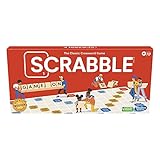
2. Hasbro Gaming Scrabble Board Game, Classic Word Games for Kids Ages 8 and Up, Fun Family Game for 2-4 Players, The Classic Crossword Game
Overview:
Scrabble remains the gold standard for crossword-based word games, challenging 2-4 players to build high-scoring words on a premium board using 100 wooden tiles. Its blend of vocabulary skill and tactical placement has cemented it as a timeless family favorite since 1948.
What Makes It Stand Out:
Authenticity defines Scrabble: the tactile wooden tiles and racks, textured board preventing slips, and strategic depth from double/triple-letter scores. Unlike newer hybrids, it prioritizes linguistic precision and long-term planning, offering near-infinite replayability through evolving player skill.
Value for Money:
As a durable, legacy product, Scrabble’s investment pays off through decades of play. While pricier than disposable games, its heirloom-quality materials and universal appeal make it cost-effective versus fleeting alternatives. Educational value for kids further bolsters its worth.
Strengths and Weaknesses:
Strengths: Unmatched strategic depth; high-quality wooden components; proven educational benefits; intergenerational appeal.
Weaknesses: Slower pace frustrates some; steep learning curve for young children; 2–4 player limit restricts large groups.
Bottom Line:
An essential addition to any game shelf for word enthusiasts. Despite its age, Scrabble’s intellectual challenge and craftsmanship remain unrivaled—ideal for families prioritizing skill development over speed, though less suited for high-energy group sessions.
3. Winning Moves Yahtzee Words Games USA, Family Word Game Version for 2 or More Players, Ages 8+

Overview:
Yahtzee Words revitalizes the dice-rolling classic by replacing numbers with letters, challenging players to form words from seven letter dice. Targeting ages 8+, it merges Yahtzee’s familiar scoring system with wordplay, creating a unique hybrid for casual and competitive players.
What Makes It Stand Out:
The innovative twist lies in its dual focus: crafting 2–7 letter words and chasing Yahtzee-style combos like “All Vowels” or the elusive “7-letter Yahtzee.” The structured scoresheet (Upper/Lower sections) provides clear goals, while its accessibility welcomes non-experts—a rarity in word games.
Value for Money:
Offering fresh mechanics at a modest price, it delivers exceptional replayability through ever-changing dice rolls. Cheaper than Scrabble but equally engaging for quick sessions, it’s a smart buy for Yahtzee fans seeking linguistic variety without sacrificing strategic nuance.
Strengths and Weaknesses:
Strengths: Brilliant dice-to-words adaptation; easy to learn; scoresheet adds strategic layers; great for vocabulary building.
Weaknesses: Luck-dependent outcomes; limited depth for hardcore word gamers; dice storage could be improved.
Bottom Line:
A clever, refreshing spin on two classics that excels in portability and quick setup. Highly recommended for families wanting light strategy with wordplay—best for groups valuing fun over pure linguistic rigor.
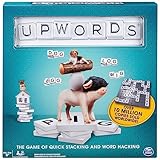
4. Spin Master Games, Upwords, Classic Word Game with Stackable Letter Tiles, Family Board Game, Crossword Activity, 1-4 Players, for Ages 8 & Up
Overview:
Upwords reinvents crossword gameplay by allowing players to stack tiles vertically on the board, transforming existing words into higher-scoring terms. Designed for 1–4 players, it emphasizes spatial strategy over vocabulary breadth, lowering barriers for younger participants.
What Makes It Stand Out:
The stackable tile system is revolutionary—building upward changes words (e.g., “CAT” becomes “BATS” with a “B” on top), while the rotating lazy Susan board ensures smooth turns. This mechanic rewards tactical placement over obscure words, making it uniquely accessible yet deeply strategic.
Value for Money:
Priced similarly to Scrabble, Upwords offers superior replayability through dynamic board evolution. Its inclusive design accommodates varied skill levels without handicaps, justifying the cost for families seeking a modern alternative where novices can genuinely compete.
Strengths and Weaknesses:
Strengths: Innovative stacking mechanic; rotating board enhances playability; levels the playing field for all ages; quick setup.
Weaknesses: Stacked tiles can become unstable; less vocabulary-focused than Scrabble; storage for tiles is basic.
Bottom Line:
A standout choice for families wanting interactive, visually engaging wordplay. Its clever design fosters genuine competition among mixed-age groups—highly recommended for those tired of traditional crossword rigidity.
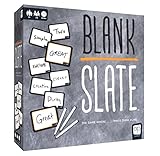
5. USAOPOLY BLANK SLATE, Where Great Minds Think Alike, Fun Family-Friendly Board Game, Word Association Party Game, Easy to Learn, Fun to Play Family Game Night, 3-8 Players, Ages 8+
Overview:
Blank Slate is a social deduction game where players predict others’ word associations. Given phrase prompts (e.g., “______ minds think alike”), players secretly write matching words on slates, aiming to pair anonymously with one other person—no hints allowed.
What Makes It Stand Out:
The game thrives on psychology over lexicon, as players anticipate common responses rather than showcasing vocabulary. Its 250 double-sided cue cards and dry-erase slates enable hilarious mismatches and “aha!” moments, while supporting 3–8 players ensures broad group compatibility.
Value for Money:
At its price point, Blank Slate delivers exceptional value through sheer replayability and group cohesion. Unlike word-centric games, it fosters laughter and connection with minimal rules, outperforming trivia games in engagement per session for larger gatherings.
Strengths and Weaknesses:
Strengths: Effortless setup; thrives with big groups; sparks hilarious social dynamics; highly replayable.
Weaknesses: Limited strategic depth; repetitive if overplayed; less educational than pure word games.
Bottom Line:
A must-have for social butterflies and family reunions seeking lighthearted bonding. Prioritize this over traditional word games if your goal is laughter and group synergy—but skip if you prefer linguistic challenges.
6. CGE Codenames Board Game (2nd Edition) The Top Secret Word Association Party Game for Friends & Family Game Nights, 4+ Players

Overview: CGE’s Codenames 2nd Edition is a brilliantly tense word-association party game where two rival spy teams race to contact their hidden agents on a 5x5 grid. One player per team acts as the spymaster, giving cryptic one-word clues linked to multiple codenames, while teammates deduce the correct words to identify their agents. What Makes It Stand Out: The game shines through its elegant blend of creative clue-giving and risky deduction. The high-stakes assassin mechanic (instant loss if revealed) injects palpable tension, while the flexible guessing rule (clue number +1) allows for bold strategic plays. Its simple rules enable quick setup but foster deep, collaborative thinking. Value for Money: Priced competitively for a premium party game, it offers exceptional replayability with included key cards and variable grid setups. Compared to similar deduction games, its compact design, high-quality components, and ability to accommodate 4-8+ players make it a standout investment for regular game nights. Strengths and Weaknesses: Strengths: Highly engaging for groups, encourages creative language use, scales perfectly for large parties, minimal setup. Weaknesses: Can suffer from “spymaster imbalance” if one clue-giver is significantly stronger, occasional frustrating grid layouts, requires at least 4 players for optimal experience. Bottom Line: Codenames remains a near-perfect party game, masterfully balancing simplicity with strategic depth. Its thrilling tension and universal appeal make it an essential addition to any game library, easily justifying its price for years of spy-filled fun.
7. Ransom Notes - The Ridiculous Word Magnet Party Game, 3+ Players

Overview: Ransom Notes delivers instant comedic chaos as players use magnetic word tiles to craft absurd responses to outrageous prompts like “Tell someone you’ve clogged their toilet.” Designed for quick, laughter-filled rounds, it leverages physical word magnets for tangible, creative mischief. What Makes It Stand Out: The game’s genius lies in its sheer unpredictability and physical magnet mechanic. With 840 magnets and 250 prompts, combinations are nearly infinite, ensuring fresh humor every game. The ultra-simple, sub-one-minute learn time breaks the ice effortlessly, even for shy players. Value for Money: While the component count justifies the price, the real value is in the relentless laughs per minute. Compared to prompt-based games like Cards Against Humanity, it feels less repetitive due to the magnet pool’s variability. However, the need to filter ~25% of prompts for family play slightly diminishes utility for some households. Strengths and Weaknesses: Strengths: Incredibly easy to learn, generates constant laughter, magnets encourage tactile play, highly portable. Weaknesses: Some prompts require removal for family settings, magnet quality can feel flimsy, replay value hinges on prompt diversity (may exhaust favorites quickly). Bottom Line: Ransom Notes is a hilarious, accessible party staple that excels at sparking spontaneous fun. Despite minor content caveats, its innovative magnet system and rapid gameplay make it a superb gift and a guaranteed hit for casual gatherings.
8. Shenanigrams! – The Mega-Mischievous Word Game! A Super Fun & Fast Family Party Game for Kids, Teens & Adults - Great for Travel, Couples & Family Board Games Night

Overview: Shenanigrams! is a fast-paced, tile-stealing word game where players build a shared crossword grid, then mischievously “steal” opponents’ completed words by altering them. Designed for 2-6 players aged 8+, it combines spelling challenges with laugh-out-loud tactical tricks. What Makes It Stand Out: The game’s unique “word theft” mechanic—adding, inserting, or replacing letters to hijack tagged words—creates constant, playful chaos. Its award-winning educational value (spelling/vocabulary) seamlessly blends with family-friendly mischief, while the compact tin ensures travel readiness without sacrificing fun. Value for Money: Priced fairly for its durable components and multi-award pedigree (including Creative Child’s 2024 Game of the Year), it outshines many educational games by maintaining thrilling momentum. The reusable tiles and simple rules offer far more replayability than comparable literacy games. Strengths and Weaknesses: Strengths: Highly engaging theft mechanic, strong educational benefits, portable design, quick rounds (15-20 mins), true all-ages appeal. Weaknesses: Can become chaotic with 6 players, limited strategy depth for hardcore gamers, tile scarcity may frustrate younger spellers. Bottom Line: Shenanigrams! brilliantly merges learning with laughter, making it an exceptional choice for families and educators. Its innovative gameplay and portability earn it a top recommendation for guilt-free, screen-free fun.
9. Winning Moves Big Boggle with 5x5 Grid and 25 Letter Cubes Games USA, Thought Provoking Word Game Bigger Than The Original, for 2 or More Players, Ages 8+ (1147)

Overview: Winning Moves’ Big Boggle expands the classic word-search experience with a larger 5x5 grid and 25 letter cubes, challenging players to find longer, more complex words within a frantic three-minute timer. It retains the core scramble-and-scribble excitement of the original while amplifying the challenge. What Makes It Stand Out: The expanded grid is the star, enabling significantly longer words (7+ letters) and reducing grid “dead zones” common in the 4x4 version. The unique scoring—where shared words earn zero points—forces players to hunt obscure vocabulary, adding strategic depth beyond simple speed. Value for Money: As a well-executed modern reissue of the 1979 classic, it offers excellent value. The sturdy shaker base and clear rules justify its price point, especially compared to digital alternatives. While pricier than vintage editions, the premium components ensure longevity for frequent play. Strengths and Weaknesses: Strengths: Encourages advanced vocabulary, thrilling time pressure, highly replayable with random grids, intuitive for all ages. Weaknesses: Can feel overwhelming for young children, prone to “corner fighting” in multi-player games, scoring disputes over word validity. Bottom Line: Big Boggle is the definitive word-search party game, delivering intense, brain-teasing fun that surpasses its smaller counterpart. Its timeless design and strategic scoring make it a worthwhile investment for word enthusiasts.
10. Monopoly Scrabble Game, Play in Under ONE Hour, Score Your Scrabble Word - Move Your Token, by Winning Moves Games USA, Mash-Up of 2 of The World’s Greatest Games, 2 to 4 Players Ages 8+ (1250)

Overview: This innovative hybrid fuses Monopoly’s property acquisition with Scrabble’s word-building, challenging players to form words on a central board where premium squares award Monopoly color groups. Crucially, it promises a full game in under 60 minutes—addressing classic Monopoly’s biggest flaw. What Makes It Stand Out: The core twist—replacing dice rolls with Scrabble scores to move tokens—creates clever synergy. Covering premium squares to claim color groups while building high-scoring words demands dual strategic focus. The “last tile played” end condition ensures a brisk pace. Value for Money: At a price point similar to standalone Monopoly or Scrabble, it offers exceptional novelty. For fans of either game, the mashup provides fresh mechanics without complex rules. However, purists of both originals may find compromises in depth, limiting long-term replay for some. Strengths and Weaknesses: Strengths: Dramatically shorter playtime, clever integration of both games’ best elements, maintains strategic depth, accessible for ages 8+. Weaknesses: Monopoly board feels underutilized compared to word grid, limited tile racks restrict word options, may frustrate Scrabble purists. Bottom Line: Monopoly Scrabble successfully marries two icons into a faster, more engaging experience. While not replacing the originals, its inventive gameplay and time efficiency make it a highly recommended experiment for casual game nights.
Understanding Your Linguistic Playstyle
Before diving into mechanics or components, the most crucial step is honestly assessing why you and your group want to play. This foundational understanding guides every subsequent choice and ensures the game resonates deeply with your collective interests.
Defining Your Core Motivation
What truly drives your enjoyment? Is it the competitive rush of outmaneuvering opponents with superior vocabulary? The collaborative satisfaction of solving complex linguistic puzzles together? The pure, playful exploration of language quirks and word origins? Or perhaps the desire for a structured, low-stress activity that subtly builds language skills over time? Pinpointing your primary motivation – competition, cooperation, education, or pure whimsy – is essential for filtering the vast array of options.
Assessing Group Dynamics and Size
Consider the typical number of players and their compatibility. Does your group thrive on cutthroat competition, or do they prefer supportive, collaborative challenges? Are players generally patient with learning complex rules, or is quick setup and immediate play paramount? How diverse are the language skill levels? A game demanding extensive vocabulary might frustrate beginners in a mixed group, while overly simplistic mechanics could bore seasoned word enthusiasts. Honesty about group chemistry prevents mismatched experiences.
Evaluating Time Commitment and Pacing
Be realistic about the time your group can consistently dedicate. Some word games are lightning-fast, offering satisfying rounds in 15-20 minutes, perfect for casual get-togethers or game nights with limited time. Others unfold over longer strategic sessions, demanding 45 minutes to an hour or more, ideal for dedicated game nights where deep engagement is the goal. Consider whether your group enjoys the tension of real-time play or prefers the thoughtful deliberation of turn-based mechanics.
Essential Gameplay Mechanics to Explore
The heart of any word game lies in its core mechanics – how players interact with the language elements. Different mechanics create vastly different experiences, appealing to distinct aspects of linguistic enjoyment.
Anagramming and Letter Manipulation
Games centered on rearranging letter tiles or cards to form new words test agility and pattern recognition. Look for variations: some emphasize speed, others strategic placement on a board, and some incorporate constraints like minimum word lengths or specific letter requirements. This mechanic is fantastic for building spelling confidence and recognizing word structures quickly.
Definition and Meaning Challenges
Moving beyond mere spelling, these games focus on understanding and utilizing word meanings. Players might guess words from clues, match definitions to terms, craft plausible fake definitions, or identify subtle nuances between synonyms. This is where vocabulary depth and conceptual understanding truly shine, making it ideal for those who love semantics and precise communication.
Narrative and Creative Construction
Some games leverage language to build stories, phrases, or even poetry. Players might combine word cards to create evocative sentences, chain words based on thematic associations, or collaboratively craft narratives under specific constraints. This appeals to the creative linguist who enjoys the expressive, artistic potential of language beyond dictionary definitions.
Strategic Placement and Spatial Reasoning
Incorporating board elements where word placement affects scoring adds a significant strategic layer. Think crossword-style grids where word intersections multiply points, or spatial arrangements where word length or position influences bonuses. This blends linguistic skill with spatial planning, satisfying players who enjoy multi-layered strategic depth alongside their wordplay.
Critical Features Impacting the Experience
Beyond the core mechanics, numerous features significantly shape the gameplay feel, replayability, and overall satisfaction for language lovers.
Component Quality and Tactility
The physical feel of the game matters immensely. High-quality, thick cardstock tiles or cards that shuffle and handle well enhance the experience. Consider the weight and texture of components – do they feel substantial and pleasant to manipulate? Clear, readable fonts are non-negotiable for smooth gameplay. A well-made game invites interaction and withstands repeated plays.
Replayability Through Variety
How does the game avoid becoming stale? Look for robust mechanisms ensuring no two games feel identical. This could come from extensive card decks offering near-infinite combinations, modular board setups, variable player powers affecting word creation, or mechanics that inherently encourage diverse linguistic approaches each round. High replayability is crucial for maximizing value and sustained engagement.
Scalability for Different Player Counts
Does the game genuinely work well across its stated player range? Some mechanics falter with only two players, becoming too simplistic, while others bog down or create excessive downtime with larger groups. Investigate how rules adapt (if at all) for different numbers. A game that scales smoothly offers more flexibility for your specific social gatherings.
Learning Curve and Accessibility
Consider the balance between depth and ease of entry. A game with intricate rules might offer immense strategic depth but could alienate casual players or those less familiar with board games. Conversely, a game that’s too simplistic might lack the challenge seasoned word lovers crave. Look for clear rulebooks, intuitive iconography, and a progression that allows players to grasp basics quickly while discovering deeper strategies over time.
Thematic Integration (When Present)
While pure wordplay is often the star, some games weave in light or strong themes (historical, fantastical, occupational). Assess whether the theme enhances the linguistic experience or feels tacked on. A well-integrated theme can provide helpful context for word usage or add an extra layer of immersion, making the language practice feel more organic and engaging.
Maximizing Educational Value Through Play
For many language lovers, especially educators or parents, the potential for skill development is a major draw. Understanding how games facilitate learning helps select options that deliver on this front organically.
Vocabulary Acquisition in Context
Effective games don’t just test rote memorization; they encourage encountering and using new words within the gameplay context. Look for mechanics that naturally expose players to unfamiliar terms through clues, definitions, or required word categories, prompting curiosity and incidental learning without feeling like a chore.
Spelling and Morphology Reinforcement
Games focused on constructing words from letters inherently reinforce spelling patterns and morphological rules (prefixes, suffixes, root words). Pay attention to whether the game mechanics actively reward correct spelling and understanding of word structure, turning practice into a core part of the fun rather than a separate exercise.
Critical Thinking and Semantic Precision
Moving beyond simple recognition, strong word games demand higher-order thinking: comparing nuances between near-synonyms, deducing meanings from context clues, identifying logical fallacies in arguments (in debate-style word games), or strategizing optimal word placements based on multiple criteria. This builds vital analytical language skills.
Social Language Skills Development
The interactive nature of board games fosters crucial social language competencies. Players practice clear communication when giving clues or explaining reasoning, active listening to understand opponents’ moves or clues, respectful debate during scoring disputes, and collaborative problem-solving in team-based variants. These are invaluable real-world language applications.
Practical Considerations for Long-Term Enjoyment
Beyond the initial thrill, practical aspects determine whether a game earns a permanent spot on your shelf or gathers dust after a few plays.
Storage and Portability
Evaluate the game’s physical footprint. Does it come with a well-designed box that securely holds all components, even after repeated plays? Are the pieces compact enough to travel easily for game nights elsewhere or vacations? Poor storage leads to lost pieces and frustration, diminishing the experience significantly over time.
Rule Clarity and Reference Materials
A clear, well-organized rulebook is paramount. Look for editions with good examples, illustrated guides, and perhaps a quick-reference sheet for common terms or scoring. Ambiguous rules lead to arguments and detract from the linguistic fun. Good reference materials keep the game flowing smoothly session after session.
Expansion Potential and Community Support
Consider if the game has a history of well-received expansions that add fresh vocabulary, mechanics, or themes, extending its lifespan. Additionally, check for an active player community online – forums, dedicated subreddits, or social media groups often share house rules, variant ideas, and solutions to common ambiguities, enriching the overall experience.
Frequently Asked Questions
How do I choose the right word game for a mixed-skill group?
Focus on games with adjustable difficulty, like those allowing “house rules” for beginners (e.g., shorter time limits, simpler word requirements) or cooperative modes where players work together against the game itself, leveling the playing field naturally.
Can word board games genuinely improve my vocabulary long-term?
Yes, when played consistently. Games that expose you to new words in context and require active usage (not just recognition) are particularly effective, as the engagement and repetition during play aid retention far better than passive studying.
Are there word games better suited for two players specifically?
Absolutely. Look for duel-focused mechanics like head-to-head anagram races, strategic crossword builders designed for two, or games emphasizing direct clue-giving and deduction between partners, avoiding those reliant on larger group dynamics.
How important is speed in most modern word games?
It varies greatly. While some thrive on real-time pressure, many contemporary designs emphasize thoughtful strategy over pure speed, using turn-based play or simultaneous writing phases with no timers, catering to players who prefer deliberation.
What makes a word game replayable year after year?
Key factors include near-infinite component combinations (huge card decks, variable setups), mechanics that encourage diverse linguistic strategies, high scalability across player counts, and the potential for organic rule evolution through community-shared variants.
Are there word games that focus on specific aspects of language, like etymology or grammar?
Yes, though less common. Some delve into word origins through thematic cards or definition mechanics, while others subtly reinforce grammar through sentence-building challenges or parts-of-speech categorization requirements within their core play.
How can I prevent arguments over obscure words or definitions during play?
Establish a single, agreed-upon dictionary source before starting. Many games include specific dictionary guidelines in their rules; adhering strictly to these (e.g., only single-word entries, no proper nouns) prevents disputes and keeps the game flowing.
Do complex word games require significant setup time?
Not necessarily. While some strategic games have intricate boards, many modern designs prioritize quick setup – shuffling a deck, dealing cards, or placing a simple grid – ensuring you spend maximum time playing words, not preparing.
Can these games be effectively used in classroom or tutoring settings?
Definitely. Games emphasizing collaboration, clear definition work, or specific vocabulary sets are excellent educational tools, making language practice engaging and reducing the anxiety often associated with traditional drills.
How do I know if a game’s theme genuinely enhances the wordplay?
The theme should provide logical context for the words or mechanics (e.g., a historical theme using period-appropriate vocabulary, a storytelling game where word choices directly shape the narrative). If the theme feels irrelevant or forces unnatural word usage, it’s likely superficial.
See Also
- The 10 Ultimate Best Word Board Games for Language Nerds in 2026
- The 10 Ultimate Best Word Games for Language Lovers in 2026
- 10 Must-Have Word Building Games for Language Lovers in 2026
- 10 Top-Rated Word Games According to Experts in 2026 for Language Lovers
- The 10 Ultimate Best Crossword Board Games for Puzzle Lovers in 2026