Table of Contents
There’s something magical about that moment when a few familiar notes play and the lyrics come rushing back—every word, every pause, every emotional inflection. For true music fans, lyrics aren’t just words set to melody; they’re poetry, storytelling, and personal soundtracks wrapped into one. In 2026, the world of music trivia has evolved far beyond simple “name that tune” challenges, embracing the deep, nerdy passion of lyric enthusiasts who can recite entire albums from memory. Whether you’re the friend who always corrects everyone during karaoke or someone who finds joy in decoding cryptic verses, the right trivia game transforms your knowledge into pure entertainment.
The landscape of music trivia games has exploded with innovative formats that cater specifically to lyric lovers. From apps that test your ability to fill in missing verses to party games that challenge you to identify songs from just a single line, there’s never been a better time to put your musical memory to the test. But with so many options available, finding the perfect game that matches your expertise, group size, and favorite genres requires more than just a quick search. This guide breaks down everything you need to know about selecting music trivia games that celebrate the art of lyrics without ever compromising on fun.
Top 10 Music Trivia Games
Detailed Product Reviews
1. SongFest! The New Music Trivia Game | 1000 Questions, 4 Categories and 5+ Decades | QR Song Hints Play The Music You Remember

Overview:
SongFest! transforms music trivia into an immersive time machine, spanning five decades with 1,000 curated questions across four dynamic categories. Designed for 2-12 players, this game leverages QR codes to connect directly with Spotify, letting you hear hints and trigger memories instantly. The customizable format allows you to focus on specific eras, making it versatile for different age groups and musical tastes at any gathering.
What Makes It Stand Out:
The integration of QR codes that pull actual music clips from Spotify is a game-changer, elevating it beyond traditional text-based trivia. The sheer volume of 1,000 questions ensures exceptional replay value, while the decades die and categories die create unpredictable, fresh experiences every session. Its emphasis on storytelling and shared musical memories fosters genuine connection and lively conversations among players.
Value for Money:
Priced competitively against premium trivia games, SongFest! delivers substantial value through its massive content library and tech-forward design. The Spotify integration essentially provides a free, ever-updating music database, eliminating the need for separate audio purchases. Compared to games requiring proprietary components, this offers long-term savings and continued relevance without subscription fees.
Strengths and Weaknesses:
Strengths:
- 1,000 questions provide extensive replayability
- Spotify QR integration offers authentic audio hints
- Customizable decade selection broadens appeal
- Accommodates large groups (2-12 players)
Weaknesses: - Requires smartphones and Spotify access
- May overwhelm casual players with sheer volume
- Audio quality depends on internet connection
Bottom Line:
SongFest! is ideal for music enthusiasts seeking an interactive, technology-enhanced trivia experience that bridges generations through shared sonic memories.
2. Jumbo Hitster - The Music Fun Party Quiz Card Game, 2-10 Players - 300 Plus Iconic Music Hits - Great for Adult and Family Game Night

Overview:
Hitster positions itself as the ultimate party catalyst, delivering over 300 iconic music hits spanning the last century in a compact card game format. Designed for 2-10 players, it combines physical cards with a dedicated app to create an electrifying, multi-sensory experience. The inclusion of 37 strategy tokens adds a layer of tactical gameplay that elevates it beyond simple Q&A mechanics.
What Makes It Stand Out:
The proprietary app integration streamlines setup and offers multiple game modes—competitive, cooperative, and solo—catering to diverse group dynamics. The token system introduces risk-reward mechanics, allowing players to gamble points for greater rewards. Its quick-start design means you can launch a game in under two minutes, perfect for spontaneous gatherings and maintaining party momentum.
Value for Money:
While containing fewer questions than some competitors, Hitster’s value lies in its polished execution and versatility. The free app provides continuous updates and new features without subscription fees. The chip components and premium card quality justify its mid-range price point, offering a complete party package rather than just a basic trivia set.
Strengths and Weaknesses:
Strengths:
- Multiple gameplay modes increase versatility
- Quick setup ideal for parties
- Token system adds strategic depth
- App provides seamless music integration
Weaknesses: - Fewer questions (300+) than some rivals
- App dependency could be problematic offline
- Limited demographic appeal for non-party settings
Bottom Line:
Perfect for party hosts who prioritize fast-paced, interactive entertainment with strategic elements over sheer content volume.
3. Ultimate Music Trivia | 300 Questions

Overview:
Ultimate Music Trivia strips away technological complexity to deliver a pure, question-and-answer experience centered on 300 music questions across three categories: Timeless Tunes, Music Legends, and Big Hits. Targeting ages 12 and up, this game embraces traditional trivia mechanics without requiring apps, devices, or internet connectivity—just open the box and start playing immediately with any group.
What Makes It Stand Out:
Its elegance lies in simplicity. By focusing solely on well-crafted questions spanning genres from Adele to ZZ Top, it eliminates barriers to entry for technophobic players or settings with limited connectivity. The three distinct categories provide clear structure while covering the entire music spectrum, making it accessible yet appropriately challenging for mixed-age groups.
Value for Money:
As a budget-friendly option, it offers solid value for families and casual gamers who don’t need digital frills. While 300 questions provide fewer sessions than premium alternatives, the lower price point makes it an excellent entry-level music trivia game. Its no-tech approach means zero ongoing costs or compatibility issues across different households.
Strengths and Weaknesses:
Strengths:
- Zero setup or technology required
- Accessible to all age groups 12+
- Portable and durable card format
- Straightforward, easy-to-learn rules
Weaknesses: - No audio playback limits immersion
- Limited replayability with only 300 questions
- Lacks interactive or strategic elements
Bottom Line:
A reliable choice for traditionalists seeking uncomplicated, device-free entertainment that focuses purely on trivia knowledge.
4. FAFO GAMES The Gen-X Challenge - 80s and 90s Trivia Card Game with 600 Trivia Cards - Pop Culture Trivia Game with Movies, Music, TV Shows - Ideal for Game Night, Christmas, Birthday, or Gift

Overview:
The Gen-X Challenge is a meticulously crafted nostalgia bomb targeting adults in their 40s and 50s. With 600 high-quality cards covering 80s and 90s pop culture—including movies, music, TV, toys, and arcade games—it transcends pure music trivia to capture an entire era. Packaged in a durable keepsake box, it’s designed as both a game and a cultural time capsule for reliving shared memories.
What Makes It Stand Out:
Unlike music-only competitors, this game delivers comprehensive pop culture immersion, sparking conversations about parachute pants, Blockbuster rentals, and quarter-eating arcades. The card quality is exceptional, built to withstand countless game nights. Its narrow demographic focus creates a powerfully resonant experience for Gen Xers that broader games simply cannot replicate with the same authenticity.
Value for Money:
The 600-card count and multi-category breadth provide excellent replay value for the target audience. While less versatile for mixed-age groups, its specialized content justifies the price as a premium nostalgia product. It functions equally well as a gift item and a recurring entertainment centerpiece, offering strong ROI for Gen X households that value cultural specificity.
Strengths and Weaknesses:
Strengths:
- Exceptional card quality and durability
- Comprehensive pop culture coverage beyond music
- Perfectly targeted nostalgia for 40s/50s demographic
- Beautiful keepsake packaging
Weaknesses: - Extremely limited appeal outside target age group
- No audio or digital components
- Niche focus reduces versatility for diverse groups
Bottom Line:
An essential purchase for Gen Xers seeking to relive their childhood through robust, high-quality trivia that captures their entire cultural landscape.
5. Lyrically Correct ’90s & 2000s Music Trivia Card Game - Hip Hop and R&B Edition - Finish The Lyrics Challenge, Fun for Adults, Party or Family Night

Overview:
Lyrically Correct carves out a unique niche by focusing exclusively on Hip Hop and R&B lyrics from the 1990s and 2000s. This 150-card game challenges players to complete iconic lines from the genre’s golden age, transforming passive trivia into active performance. Designed for 2+ players, it demands participants rap or sing their answers, creating an inherently interactive and often hilarious experience that energizes any gathering.
What Makes It Stand Out:
The specialized genre focus and “finish the lyrics” mechanic differentiate it dramatically from broader music trivia. It rewards not just knowledge but performance confidence, naturally energizing parties and family gatherings. The compact card set is highly portable, while the challenge cards introduce unpredictable twists that keep veteran players engaged and create memorable moments.
Value for Money:
With fewer cards than competitors, its value hinges on your passion for 90s/00s Hip Hop and R&B. For fans of these genres, the depth and authenticity of lyric selections justify the price. However, those seeking broader musical variety will find limited replay value. It excels as a complementary game rather than a primary trivia collection for diverse music tastes.
Strengths and Weaknesses:
Strengths:
- Unique lyric-completion gameplay
- Perfectly curated genre-specific content
- Encourages active participation and performance
- Highly portable and party-friendly
Weaknesses: - Extremely narrow musical scope
- Requires confidence to sing/rap aloud
- Limited replayability with 150 cards
- Excludes players unfamiliar with the genre
Bottom Line:
A must-have for Hip Hop and R&B enthusiasts who enjoy performing, but too specialized for general music trivia fans.
6. Q The Music – Music Lyric Party Trivia Quiz Card Game for Adult and Family Game Nights, 2-10 Players, Scan, Listen to Iconic Hits, and Answer Trivia – Adult Games for Parties
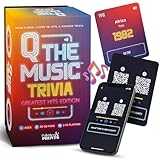
Overview: Q The Music revolutionizes traditional music trivia by integrating QR code technology with a vast catalog of iconic songs spanning the last century. Players scan codes to hear 30-second clips before answering questions about lyrics, artists, and musical history, creating an immersive audio-visual experience that goes beyond standard card games.
What Makes It Stand Out: The game’s seamless QR code integration sets it apart, eliminating the need for separate music sources or apps. With 312 carefully curated hits from the 70s through today, it offers unprecedented breadth. The flexible 2-10 player format accommodates intimate date nights or large party gatherings, while the adjustable playtime (30 minutes to hours) adapts to any schedule.
Value for Money: Compared to digital subscription services or multiple specialized trivia sets, Q The Music delivers exceptional value. A single purchase provides access to a century’s worth of music content that would otherwise require extensive personal libraries or streaming accounts. The reusable QR codes ensure lasting entertainment without ongoing costs.
Strengths and Weaknesses:
- Strengths: Innovative QR technology; extensive 312-song library; scalable player count; cross-generational appeal; no repeat subscription fees.
- Weaknesses: Requires smartphones with scanning capability; may exclude less tech-savvy older players; song selection might not satisfy extreme niche tastes.
Bottom Line: Q The Music is the definitive choice for modern game nights, brilliantly merging technology with nostalgic fun. Perfect for music lovers seeking an interactive, hassle-free trivia experience that grows with your group.
7. After Dinner Amusements: Name That Tune!: 50 Music Trivia Questions and Challenges (Family Friendly Trivia Card Game, Portable Camping and Holiday Games)

Overview: This pocket-sized trivia tin delivers concentrated musical fun through 50 carefully crafted questions spanning multiple eras. Designed as part of the acclaimed After Dinner Amusements series, it transforms idle moments into engaging family-friendly entertainment without complex setup or lengthy rulebooks.
What Makes It Stand Out: The game’s remarkable portability makes it an outlier in the trivia market. At just a few ounces, it slips effortlessly into purses, backpacks, or carry-on luggage, making it ideal for camping trips, holiday gatherings, or restaurant waiting periods. Its family-friendly design ensures inclusive play across age groups.
Value for Money: While containing fewer questions than bulkier competitors, the premium here is convenience and quality over quantity. The durable tin packaging protects cards for years, and the curated questions avoid obscure filler. It’s priced appropriately for a specialized travel game rather than a primary party centerpiece.
Strengths and Weaknesses:
- Strengths: Ultra-portable design; sturdy metal tin; cross-generational appeal; part of larger collectible series; zero setup time.
- Weaknesses: Limited 50-question pool reduces replayability; question difficulty may be inconsistent; lacks audio enhancement.
Bottom Line: An excellent supplementary trivia option for families and travelers prioritizing convenience. Best purchased as part of the broader series rather than a standalone primary game.
8. You Gotta Know Rock - Trivia Game

Overview: You Gotta Know Rock serves as a comprehensive tribute to rock music’s golden era, packaging 500 questions across 125 cards into a distinctive metal tin. Covering four decades from the 1960s through the 1990s, it offers a deep dive into rock history for purists and casual fans alike.
What Makes It Stand Out: The “Race to 21” scoring system creates a dynamic, competitive rhythm that prevents gameplay from stagnating. Unlike open-ended trivia games, this structured approach builds tension and momentum. The metal tin packaging exudes quality and makes an impressive gift presentation.
Value for Money: With four questions per card, the 500-question reservoir provides substantial replayability at a mid-range price point. The rock-specific focus delivers targeted value for genre enthusiasts who might otherwise sift through general music trivia to find relevant content. The durable tin ensures longevity.
Strengths and Weaknesses:
- Strengths: Massive 500-question database; focused rock genre expertise; elegant metal packaging; simple, competitive scoring; educational component.
- Weaknesses: Excludes post-2000s rock and other genres; may alienate younger players unfamiliar with older acts; no audio enhancement.
Bottom Line: A must-have for rock aficionados seeking a no-frills, content-rich trivia experience. Its specialized focus is its greatest strength, though it limits universal appeal.
9. Lucky Egg The Original Misheard Music – Guess The Song or Artist with 500 Lyrical Nonsense Cards – Hilarious Music Games for Adults & Teens – Fun Family Card Games for Karaoke & Party Entertainment

Overview: Lucky Egg transforms embarrassing lyrical mistakes into riotous party entertainment with 500 misheard lyric cards challenging players to decipher actual songs and artists. The frantic 30-second timer injects adrenaline into every round, creating a high-stakes atmosphere where quick thinking trumps perfect pitch.
What Makes It Stand Out: The sheer volume of 500 unique cards ensures virtually endless replayability, while the misheard lyric premise offers universal comedic appeal. The inclusion of a dedicated jukebox card holder and timer demonstrates thoughtful design, elevating it beyond basic card-dumping games.
Value for Money: At a competitive price point for party games, the extensive card count and included accessories deliver substantial value. The game essentially combines two experiences—music trivia and improv comedy—into one package, eliminating the need for separate entertainment purchases.
Strengths and Weaknesses:
- Strengths: Hilarious, unique premise; massive 500-card deck; inclusive adult/teen/family design; high-energy timer mechanic; excellent replayability.
- Weaknesses: Timer may stress anxious players; requires familiarity with popular music; some misheard lyrics may be too obscure.
Bottom Line: The ultimate icebreaker for boisterous gatherings. Lucky Egg’s clever concept and generous content make it a standout party game that guarantees memorable, laughter-filled moments.
10. Lyrically Correct ’90s & 2000s Music Trivia Card Game - Pop Edition - Finish The Lyrics Challenge, Fun for Adults, Party or Family Night

Overview: Lyrically Correct zeroes in on millennial nostalgia with 140 pop-focused trivia cards plus 10 special challenge cards spanning the 1990s and 2000s. Players complete lyrics from era-defining hits, triggering sing-alongs and competitive bragging rights among those who came of age during these decades.
What Makes It Stand Out: The laser focus on two specific decades creates an intensely targeted experience that broader trivia games cannot replicate. Challenge cards add unpredictable twists, while the “finish the lyrics” mechanic naturally encourages performative, karaoke-style moments that amplify party energy.
Value for Money: For fans of this era, the specialized content justifies the price premium over generic trivia sets. Each card represents a cultural touchstone rather than filler, maximizing emotional resonance. However, narrow scope limits audience size compared to comprehensive music games.
Strengths and Weaknesses:
- Strengths: Nostalgic, targeted content; challenge variety; encourages performance; perfect for themed parties; compact packaging.
- Weaknesses: Restricted to two decades; alienates younger/older players; limited 150 total cards; no audio component.
Bottom Line: Essential for ’90s and 2000s pop devotees planning themed gatherings. Its narrow focus is a feature, not a bug, though it won’t suit diverse age groups or musical tastes.
Why Lyric-Focused Music Trivia Games Are Booming in 2026
The resurgence of vinyl culture and the streaming wars have created a perfect storm for deep music appreciation. Fans aren’t just passive listeners anymore—they’re active participants in music discovery and analysis. Lyric-focused trivia games tap into this cultural shift by rewarding the kind of obsessive listening that turns casual fans into connoisseurs. Social media platforms have amplified this trend, with lyric challenge videos racking up millions of views and creating communities where word-perfect recitation is a badge of honor.
Developers have responded by designing games that go beyond surface-level recognition. Modern music trivia now includes features like line-by-line analysis, thematic connections between songs, and challenges that test your understanding of narrative arcs across entire albums. The integration of AI-powered hint systems and adaptive difficulty means these games grow with you, always providing the sweet spot between frustration and triumph.
Key Features to Look for in Music Trivia Games
Lyric Accuracy and Source Material
The foundation of any great lyric trivia game lies in its textual precision. Look for games that source their lyrics from official databases or licensed content rather than crowd-sourced platforms where errors propagate. The best games include annotations about alternate versions, live performance variations, and explicit vs. clean edits. This attention to detail matters when you’re debating whether that one line says “baby” or “maybe”—a difference that can make or break a competitive round.
Decade Coverage and Era Representation
A truly satisfying game balances nostalgia with discovery. The breadth of eras covered determines how many players can participate meaningfully. Games that span from classic rock and Motown through ’90s hip-hop and today’s hyperpop give everyone moments to shine while exposing players to lyrical traditions they might have missed. Check whether the game weights recent hits heavily or gives equal love to every generation of word-smiths.
Gameplay Mechanics and Scoring Systems
The structure of play can elevate or sink a trivia game. Point bonuses for speed should be balanced with penalties for incorrect guesses to prevent reckless button-mashing. Some games award multipliers for streaks of correct answers, while others use bidding systems where you wager points based on confidence. The most engaging formats include “challenge” mechanics where you can force opponents to answer particularly tricky verses, adding a strategic layer beyond pure knowledge.
Audio Integration Quality
While the focus is lyrics, audio elements enhance immersion dramatically. Games that play the exact lyrical snippet you’re being tested on—rather than just reading it—create a more authentic experience. Pay attention to whether the game includes instrumental breaks, background vocals, or just the isolated vocal track. High-quality audio samples that capture the original recording’s nuance separate premium experiences from mediocre ones.
Different Game Formats for Lyric Enthusiasts
Card-Based Challenges
Physical card games remain beloved for their tactile nature and screen-free social interaction. These typically feature lyric quotes on one side and song identification details on the other. The best card sets organize questions by difficulty, genre, or era using color-coding or symbols. Some include “wild cards” with multiple-choice options or fill-in-the-blank formats that let you earn partial credit. Look for durable cardstock and clear typography since these games often circulate through many hands at parties.
Digital App Experiences
Mobile and web-based platforms offer dynamic content updates and personalized challenges. These apps track your progress, identify your weak spots, and generate custom quizzes based on your listening history. Many feature daily challenges, leaderboards, and asynchronous multiplayer that lets you compete with friends across time zones. The premium apps offer offline modes for road trips and airplane entertainment, syncing your progress once you’re back online.
Board Game Variations
For dedicated game nights, board game formats provide structure and progression. These often combine lyric trivia with movement across a board, collecting tokens, or unlocking new challenge categories. The physical components—game pieces, boards, and spinner wheels—add ceremonial weight to each question. Many include expansion packs that introduce new genres or decades, keeping the base game fresh for years of play.
Interactive Streaming Options
The newest format leverages smart TVs and streaming devices to create a communal experience. These platforms display lyrics on screen while players use their phones as buzzers, eliminating the need for a single “host” to manage everything. Some integrate with music streaming services to pull from your actual playlists, making each round deeply personal. The social features let you share highlight reels of your most impressive (or hilarious) wrong answers.
Digital vs Physical Music Trivia Games
Pros and Cons of Digital Platforms
Digital games shine in their infinite content libraries and instant updates. They can add new songs the moment they chart and remove questions about artists who’ve become controversial. The adaptive algorithms ensure you’re always appropriately challenged, and the data tracking shows your improvement over time. However, they require devices, internet connectivity, and can feel isolating if everyone stares at their own screen. Battery life and app crashes also pose risks during crucial moments.
Benefits of Tangible Card and Board Games
Physical games create undeniable social energy. There’s something about passing cards, slamming down answers, and physically moving pieces that digital can’t replicate. They work anywhere without WiFi and never need updates or subscriptions. The limitation is content depth—once you’ve cycled through the included cards, you know the answers. However, this limitation encourages trading games with friends or seeking expansion packs, building a collector’s community around favorite sets.
Genre-Specific Considerations
Pop and Mainstream Hits
Games focusing on chart-toppers should include both ubiquitous choruses and those sneaky verses everyone mumbles through. The challenge lies in distinguishing between similar-sounding Top 40 tracks and identifying one-hit wonders from their signature lines. Quality pop trivia games also cover international hits, recognizing that lyric lovers often follow multiple countries’ charts.
Rock and Alternative Deep Cuts
For genres where storytelling and complex metaphors reign, the best games test knowledge beyond radio singles. They might ask about narrative concept albums, B-sides with cult followings, or live bootleg recordings with alternate lyrics. These games reward crate-diggers and fans who’ve read every album liner note. Look for questions that explore lyrical themes across an artist’s discography or connect songs to literary influences.
Hip-Hop and Rap Lyric Complexity
Rap trivia must honor wordplay, internal rhyme schemes, and cultural references. Games should test your grasp of double meanings, sampled lyrics, and call-and-response traditions. The difficulty ramps up when questions cover freestyle verses, guest features, or regional slang. Great hip-hop trivia games also acknowledge the genre’s evolution, contrasting old school simplicity with modern technical wizardry.
Group Size and Party Dynamics
Intimate Gatherings of 2-4 Players
Small group games should emphasize depth over breadth, allowing for longer discussions about lyrical interpretation. Cooperative modes where you work together to reconstruct entire verses from memory create bonding moments. Look for games with team variants or “duet” challenges where two players must answer in unison. The pacing can be slower, letting you savor tricky questions without pressure from a large crowd.
Medium Groups of 5-8 Participants
This sweet spot allows for team formation and healthy competition. Games should include “steal” mechanics where opposing teams can poach unanswered questions, keeping everyone engaged even when it’s not their turn. Rotating team captains or designated “lyric specialists” for different genres prevents one knowledgeable player from dominating. The best formats for this size include tournament structures with multiple rounds.
Large Party Configurations
When you’re entertaining ten or more people, speed and simplicity become crucial. Games should have parallel tracks so multiple questions can be active simultaneously. Consider formats where players vote on answers rather than individuals bearing sole responsibility. Digital platforms with phone-based buzzers prevent chaos, while physical games might use station-based rotation where groups move between lyric challenges. The key is minimizing downtime so nobody gets bored waiting for their turn.
Skill Level and Difficulty Scaling
Beginner-Friendly Options
Entry-level games should celebrate participation over perfection. They might provide the song title as a hint or use multiple-choice formats for tricky verses. Look for games that define archaic terms or explain cultural references in the answer key. The best beginner games include “fun fact” snippets that teach while you play, turning each round into a mini music history lesson. These games build confidence and often spark deeper exploration of artists players discover.
Intermediate Challenges
For fans with solid musical knowledge, games should mix familiar lyrics with strategic curveballs. This might involve identifying songs from just their bridge or recognizing misquoted lines in otherwise perfect verses. Intermediate games often introduce time pressure and negative scoring for wrong answers, raising the stakes. They reward breadth of knowledge across decades while still allowing specialists to shine in their favorite genres.
Expert-Level Lyric Mastery
Hardcore trivia games assume you’ve memorized entire catalogs. They test B-sides, demo versions, and lyrics that were changed between album and radio edits. These might include “complete the verse” challenges with no word bank or identify-the-song from a single misheard mondegreen. Expert games often incorporate meta-knowledge: which artist wrote which lyrics for other performers, or how legal disputes altered official lyrics. For these players, the game is less about guessing and more about precise recall under pressure.
Price Ranges and Value Propositions
Budget-Friendly Picks Under $20
Affordable games typically come as card decks or basic apps with limited song libraries. Don’t dismiss these—many pack tremendous value into small packages. Look for games with high replayability through randomization or player-generated content features. The best budget options include expansion potential, letting you invest more later if you love the base mechanics. Digital subscriptions often have free tiers with daily challenges that provide endless entertainment without spending a dime.
Mid-Range Investments ($20-40)
This price bracket includes most quality board games and premium app subscriptions. You should expect durable components, extensive content libraries (often 500+ questions), and sophisticated scoring systems. Many mid-range games include expansion slots or connect to online communities for additional challenges. The value here lies in longevity—well-designed games in this range stay fresh for dozens of play sessions and often become party staples.
Premium Experiences Over $40
High-end trivia games justify their cost through licensed content, celebrity voiceovers, or integration with live music databases. These might include collectible components, custom artwork, or access to exclusive online tournaments. Premium digital platforms use AI to generate infinite questions based on your music library, essentially creating a personalized game that evolves forever. While the upfront cost stings, the per-hour entertainment value often surpasses other forms of media consumption.
Where to Find the Best Music Trivia Games
Specialty Game Retailers
Local board game shops employ passionate staff who’ve actually played the games they recommend. They often host demo nights where you can try before buying. These retailers curate their inventory, avoiding knockoffs and poorly produced games. Building a relationship with shop owners can lead to early access when new music trivia games drop. Plus, supporting local businesses keeps your community’s game scene vibrant.
Online Marketplaces
Major e-commerce platforms offer unparalleled selection and user reviews from verified purchasers. Sorting by “most recent” reviews reveals how games hold up after the honeymoon period. Look for detailed feedback about lyric accuracy and content freshness. Be wary of sponsored reviews and focus on comments that mention specific gameplay moments. Many online sellers bundle games with expansion packs, saving money while ensuring you won’t run out of content quickly.
Direct from Creators
Purchasing from independent game designers through platforms like Kickstarter or their own websites often gets you first-edition components and direct communication with developers. These creators frequently release digital updates and errata for physical games, showing commitment to quality. Following them on social media provides sneak peeks at upcoming expansions and lets you join beta testing for new features. The community aspect here is unmatched—you’re not just buying a game, you’re joining a fanbase.
Building Your Own Lyric Trivia Night
Creating Custom Question Banks
Start by mining your own playlists for memorable lines, obscure bridges, and signature ad-libs. Use lyric databases to verify accuracy and find interesting variations. Organize questions by difficulty: easy (iconic choruses), medium (recognizable verses), and hard (deep cuts or misheard lines). Include variety—identify the song, fill in the blank, spot the error, or name the next line. Aim for at least 100 questions per planned hour of gameplay to avoid repeats.
Setting Up the Perfect Game Environment
Acoustics matter more than you’d think. Minimize background noise so players can hear audio clips clearly. Create comfortable seating where everyone can see any visual components without craning necks. Lighting should be bright enough to read cards but dim enough to feel like an event. Consider theming snacks and drinks around musical decades or artists featured in your questions. Have backup playlists ready for between rounds to maintain energy.
Scoring and Prize Ideas
Beyond simple point accumulation, create achievement badges for specific feats: “Perfect Verse” for nailing a hard question, “Genre Jumper” for answering across five different styles, or “Speed Demon” for fastest correct answer. Prizes can be music-themed: vinyl records, concert posters, or custom playlists. For competitive groups, consider a trophy that gets passed between winners. The ultimate prize? Bragging rights and getting to choose the music for the next gathering.
Frequently Asked Questions
What makes a music trivia game “lyric-focused” rather than just general music trivia?
Lyric-focused games specifically test your knowledge of words, phrases, and lyrical structure rather than just artist names or song titles. They ask you to complete lines, identify songs from obscure verses, spot misquoted lyrics, or explain lyrical themes and storytelling techniques. While general music trivia might ask “Who sang ‘Bohemian Rhapsody’?”, lyric trivia asks you to recite the Galileo section or identify which line follows “Scaramouche, Scaramouche.”
How many players do I need for a good music trivia game?
Most games work well with 2-8 players, but many scale up for larger parties. The key is choosing a format that matches your group size. Intimate games for 2-4 players can be cooperative and conversational, while larger groups need team-based or rapid-fire formats to keep everyone engaged. Solo play options are increasingly common in digital apps if you want to practice before a party.
Are digital music trivia games better than physical ones?
Neither is inherently better—they serve different purposes. Digital games offer infinite content, automatic scoring, and adaptive difficulty, making them ideal for solo practice or remote play with friends. Physical games create better social interaction and work without internet or devices. Many enthusiasts own both, using apps for daily challenges and board games for hosting parties.
How do I know if a game’s difficulty level is right for my group?
Check the product description for age ranges and player testimonials. Look for games with adjustable difficulty settings or tiered question sets. Many premium games include “easy,” “medium,” and “hard” cards that you can mix based on the players’ confidence. When in doubt, start with beginner-friendly options that include hints or multiple-choice formats—you can always remove aids later as the group improves.
Can I find music trivia games for specific genres like K-pop or heavy metal?
Absolutely. The market has fragmented into highly specialized niches. You can find games dedicated to individual artists, specific decades, or narrow genres like underground hip-hop or progressive rock. These specialized games often have smaller print runs but deeper content for true fans. Online marketplaces and specialty retailers are your best bet for finding these gems.
What should I do if players disagree about a lyric answer?
Always keep a trusted lyric database or official album liner notes on hand for disputes. Many digital games have built-in dispute resolution that lets you report questionable questions. For physical games, establish a house rule: if the group can’t reach consensus within 60 seconds, the question gets set aside and researched after the game. Consider awarding a small bonus to whoever correctly identified the error—this turns disputes into part of the fun.
How often should trivia game content be updated?
For digital games, look for platforms that promise monthly or quarterly updates to reflect new releases. Physical games can’t be updated, but the best ones include 500+ questions, which provides dozens of playthroughs before repeats become problematic. Some physical games offer expansion packs annually. If you’re building your own trivia bank, refresh it every 3-4 months to stay current.
Are there music trivia games that work for families with kids?
Yes, many games offer “family editions” with clean lyrics and age-appropriate content spanning Disney soundtracks, pop hits, and classic rock anthems that kids learn in movies. Look for cooperative modes where parents and children work together, and avoid games with time pressure that might frustrate younger players. Some educational games even teach vocabulary and history through song lyrics.
What’s the best way to store and organize multiple trivia games?
Use labeled storage boxes sorted by genre or difficulty. For card games, consider binder pages with pockets so you can flip through questions like a catalog. Digital games should be organized into folders on your devices, with your favorites bookmarked. Keep a master list of what you own and which expansion packs you’ve purchased to avoid duplicates. Many collectors display their games on shelves like vinyl records—both functional and decorative.
Can music trivia games improve my actual songwriting or lyrical analysis skills?
Surprisingly, yes. Regular exposure to diverse lyrical structures, rhyme schemes, and storytelling techniques builds your mental library of possibilities. Analyzing why certain lines are memorable helps you understand craft. Many players report that trivia games have introduced them to songwriters whose techniques influenced their own creative work. Some educators even use lyric trivia to teach poetic devices and literary analysis in engaging ways.
See Also
- 10 Best Music Trivia Games for Karaoke Night Fans in 2026
- 10 Best Sports Trivia Games for Weekend Fans and Fantasy Leagues in 2026
- 10 Best Movie Trivia Games for Film Buffs Who Know Their Blockbusters in 2026
- 10 Best Trivia Games for Adults Who Love Challenging Questions in 2026
- 10 Game-Changing Music Trivia Games for Karaoke Lovers in 2026