Table of Contents
Picture this: the holiday table is cleared, laughter echoes through the room, and for once, every phone is face-down. Instead of the usual post-dinner lull or screen-induced silence, your family is leaning in, eyes sparkling with friendly competition over a simple deck of cards. Card games possess a unique magic—they’re compact, affordable, and effortlessly bridge generations, turning scattered relatives into a united team or spirited rivals. In our increasingly digital world, the tactile joy of shuffling, dealing, and the satisfying thwack of a card slapped down creates authentic connection that apps simply can’t replicate. Whether it’s grandparents, toddlers, or teens, the right card game becomes the unexpected glue holding your gathering together.
But let’s be honest: choosing the wrong game can backfire spectacularly. Ever seen a teenager’s soul leave their body during a game of Go Fish? Or witnessed a friendly rivalry escalate into a full-blown Uno revolt? The stakes feel higher now—attention spans are shorter, age gaps wider, and the pressure to “get it right” intensifies when everyone’s only together once a year. The secret isn’t hunting for a mythical “perfect” game; it’s understanding why certain games resonate across ages and dynamics. Forget chasing viral TikTok trends; timeless appeal comes from smart design principles that prioritize inclusion, simplicity, and pure, unscripted fun. Let’s unpack exactly what makes a card game shine when the whole crew is watching.
Top 10 Card Games
Detailed Product Reviews
1. USAOPOLY Flip 7, The Ultimate Blend of Press Your Luck & Strategy, Fast-Paced Addictive Card Game,Quick to Learn & Easy to Teach,Perfect for Game Nights, 3+ Players, Ages 8 & Up, 20 Minutes Play Time

Overview: Flip 7 is a dynamic press-your-luck card game where players strategically reveal numbered cards, aiming to accumulate points without drawing duplicates that cause a “bust.” Designed for quick setup and play, it targets family game nights with its accessible rules and 20-minute runtime. What Makes It Stand Out: Its uniquely weighted deck—featuring twelve 12s down to one 1—creates intentional tension, while action cards like Flip Three and Second Chance inject unpredictable twists. The blend of risk assessment and short playtime fosters intense, replayable rounds where strategy battles pure luck. Value for Money: Priced competitively for a specialty card game, Flip 7 offers exceptional replay value through its clever mechanics and included action cards. It undercuts longer board games while delivering comparable excitement, making it a smarter investment than generic card decks for dedicated game nights. Strengths and Weaknesses: Strengths: Highly engaging risk/reward loop; easy to learn but strategically deep; excellent pacing; durable cards. Weaknesses: High luck factor may frustrate strategy-focused players; duplicate busts can feel punishing; limited player interaction beyond indirect competition. Bottom Line: Flip 7 excels as a thrilling, accessible game night staple. Its innovative deck design and tense gameplay justify the price, though patience with luck elements is required. Highly recommended for families and casual gamers seeking quick, strategic fun.
2. Play Nine The Card Game of Golf

Overview: Play Nine translates golf’s low-score-wins objective into a straightforward card game. Players aim to minimize the value of their eight-card hand through draws, discards, and swaps, mirroring golf’s strategic hole-by-hole approach in a compact, family-friendly format. What Makes It Stand Out: The clever golf analogy makes scoring intuitive, while the simple draw/discard mechanic ensures immediate accessibility. Its focus on minimizing card values (vs. accumulating points) offers a refreshing twist on traditional card games, ideal for teaching strategic thinking. Value for Money: This budget-friendly set delivers solid value as a durable, multi-game solution. While lacking complex features, its simplicity and broad age appeal (8+) make it a cost-effective alternative to pricier strategy games for casual or frequent family play. Strengths and Weaknesses: Strengths: Extremely easy to learn; quick setup and play; promotes numerical reasoning; portable; excellent for multi-generational play. Weaknesses: Limited strategic depth; minimal player interaction; repetitive after extended play; lacks thematic engagement beyond basic golf motif. Bottom Line: Play Nine shines as an affordable, accessible gateway game for families. Its simplicity is both its strength and limitation—it’s perfect for young players or relaxed gatherings but may bore veteran gamers. A worthwhile buy for its target audience.
3. Bicycle Jumbo Index Playing Cards , 2 Pack Large Print Poker Size Deck of Cards for Easy Reading, Family Card Games, and Casino Play
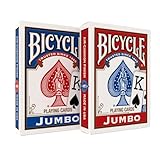
Overview: Bicycle’s Jumbo Index set offers two standard poker-sized decks featuring enlarged numbers and symbols, prioritizing readability without sacrificing traditional card dimensions. Crafted for universal accessibility, it caters to seniors, children, and anyone needing clearer visuals during gameplay. What Makes It Stand Out: The genuine Bicycle Air Cushion Finish ensures smooth shuffling and durability expected from the brand, while the jumbo index maintains poker-size practicality. Being Made in USA adds trust, and the dual-pack provides instant redundancy for game nights or travel. Value for Money: At a slight premium over standard decks, the pack justifies its cost through superior readability, brand reliability, and doubled quantity. It’s significantly more valuable than single cheap decks, especially for households needing accessible or backup cards. Strengths and Weaknesses: Strengths: Exceptional clarity for all ages; authentic Bicycle handling/durability; versatile for countless games; two decks included; eco-conscious packaging. Weaknesses: Slightly higher price than basic decks; jumbo print may feel “clunky” to purists used to standard indices; no unique game variants included. Bottom Line: An essential upgrade for any card-playing household. Bicycle’s quality and the jumbo index’s functionality make this pack indispensable for inclusive, frustration-free gaming. Highly recommended for families, seniors, and serious casual players.
4. Regal Games Card Games for Kids - Go Fish, Crazy 8’s, Old Maid, Slap Jack, Garbage Monster, War - Simple & Fun Classic Family Table Games - Games May Vary (6 Set)

Overview: This vibrant 6-deck set compiles six classic children’s card games (Go Fish, Crazy 8s, etc.) into one portable package. Designed for ages 4+, it uses oversized, brightly illustrated cards to simplify learning and maximize engagement for young players. What Makes It Stand Out: The inclusion of diverse, skill-building games in one affordable bundle is unmatched. Oversized cards fit small hands perfectly, while themes like “Silly Monster Memory Match” transform foundational games into captivating adventures that teach colors, numbers, and matching. Value for Money: Offering six distinct game experiences at a mid-range price, this set delivers outstanding value. It’s far more economical than buying individual games and provides years of developmental play, outperforming single-game alternatives for growing families. Strengths and Weaknesses: Strengths: Massive variety sparks long-term interest; excellent educational value; durable oversized cards; highly portable; inclusive for mixed-age groups. Weaknesses: Art styles vary slightly between decks; “Garbage Monster” rules may confuse very young kids; storage box not included. Bottom Line: A near-perfect starter kit for young children. Its educational depth, physical design, and game diversity make it a superb investment for parents seeking screen-free, skill-building fun. Essential for homes with preschoolers and early elementary kids.
5. PlayMonster Five Crowns — The Game Isn’t Over Until the Kings Go Wild! — 5 Suited Rummy-Style Card Game — For Ages 8+

Overview: Five Crowns reimagines rummy with a fifth suit (stars) and rotating wild cards, challenging players to form books and runs across eleven progressively complex hands. Designed for 2–7 players, it blends familiar mechanics with fresh strategic layers for family or travel play. What Makes It Stand Out: The rotating wild card (changing each round from 3s to Kings) creates dynamic strategy shifts, while the fifth suit increases combo possibilities. Its scalability—from 2 to 7 players—and compact design make it uniquely adaptable for varied group sizes and settings. Value for Money: As a specialty rummy variant, it offers excellent replayability per dollar. The durable cards and rulebook justify the price, especially compared to generic decks requiring additional purchases for similar complexity. Ideal for frequent family gamers. Strengths and Weaknesses: Strengths: Deep yet learnable strategy; exceptional player-count flexibility; high replay value; travel-friendly; award-winning design. Weaknesses: Initial rules complexity for rummy novices; wild card rotation can frustrate new players; star suit icons may confuse young kids. Bottom Line: Five Crowns is a masterclass in modernizing classic card games. Its ingenious mechanics and versatility make it a top-tier choice for families and card enthusiasts, easily earning its place as a game-night essential. Highly recommended.
6. Taco Cat Goat Cheese Pizza Wildly Entertaining Card Game for Family and Group Game Night | Easy to Learn and Play with 10-15 Minute Rounds | Fun for Kids, Teens, Adults, and Families | 2-8 Players

Overview: Taco Cat Goat Cheese Pizza is a high-energy, slap-style card game where players simultaneously chant words while matching cards to those words. Designed for 2-8 players aged 7+, it delivers frantic 10-15 minute rounds focused on reflexes and quick thinking, making it ideal for family game nights or travel. What Makes It Stand Out: Its genius lies in the seamless blend of simplicity and chaos. The core mechanic—slapping the pile when word and card match—is instantly graspable, yet the inclusion of surprise action cards (like “No Slap” or “Reverse”) creates unpredictable, laughter-filled moments. The game brilliantly eliminates downtime, ensuring constant engagement for large groups. Value for Money: Priced competitively for a specialized party game, it offers exceptional replayability through pure social interaction. While not a strategy game, its ability to energize diverse age groups (kids to adults) and replace screen time justifies the cost, especially compared to pricier board games with similar player counts. Strengths and Weaknesses: Strengths: Incredibly easy setup/learning; perfect for large groups; superb physical engagement; travel-friendly; builds reflexes. Weaknesses: Can become noisy/chaotic; requires a clear central space; limited strategic depth; not suitable for very young children or quiet settings. Bottom Line: An outstanding choice for families and groups seeking quick, screen-free fun that guarantees laughs and energetic interaction. Its minor flaws are overshadowed by its universal appeal and ability to create memorable moments, earning a strong recommendation for game nights.
7. Bicycle Rider Back Playing Cards, Standard Poker Size Deck of Cards, Red & Blue (2 Pack), Classic Cards for Poker, Blackjack, Family Game Night & Card Games, Fun for All Ages

Overview: This 2-pack delivers the iconic Bicycle Rider Back playing cards in standard poker size—one red deck, one blue. Renowned for over 140 years, these cards are the gold standard for durability and smooth handling, suitable for everything from serious poker to casual family rummy. What Makes It Stand Out: The legendary Air Cushion Finish ensures effortless shuffling and dealing, providing a consistent, professional feel unmatched by cheap alternatives. The timeless Rider Back design is instantly recognizable, and the dual-color decks prevent confusion during multi-deck games like Canasta or competitive tournaments. Value for Money: Exceptional value as a foundational game accessory. The two-deck bundle offers longevity (when one wears out, you have a backup) and versatility across countless games. For frequent players, the investment in quality prevents constant replacement, far outperforming flimsy store-bought decks. Strengths and Weaknesses: Strengths: Unbeatable durability and shuffle feel; classic, non-distracting design; essential for serious card players; ideal gift. Weaknesses: Pure utility item—lacks unique game rules; minimal visual flair compared to novelty decks; overkill for very occasional use. Bottom Line: A must-have staple for any card enthusiast or household. These decks deliver professional performance for every card game imaginable, making them indispensable for family game nights, poker tournaments, or travel. Highly recommended as the reliable workhorse of the card game world.
8. Spoons Games - Card Game, Deck of Cards, Fun Family Game for Kids and Adults, 3-5 Player Card Game, Ages 7+, Red, Yellow, Green, Blue

Overview: Spoons is a fast-paced, physical card game where 3-5 players pass cards trying to collect four-of-a-kind, then race to grab one of four included colorful spoons. The last player left spoonless is out, creating simple, high-stakes fun for ages 7+. What Makes It Stand Out: The inclusion of actual spoons eliminates the need to scavenge household items, and the vibrant, durable plastic spoons are travel-ready. Its brilliance is in the tension between subtle card passing and the sudden, chaotic scramble for spoons—a perfect mix of strategy and reflexes that’s easy for kids to grasp. Value for Money: Excellent for its niche. The complete set (cards + spoons + rules) justifies the price, especially compared to buying cards separately and risking broken utensils. It offers unique, screen-free excitement that’s hard to replicate with other compact games at this cost. Strengths and Weaknesses: Strengths: Super quick setup/learning; thrilling physical element; portable with included spoons; great for small groups; durable components. Weaknesses: Limited to 3-5 players; spoons can be noisy or knocked over; minimal replay depth beyond the core mechanic; spoons might not fit all table setups. Bottom Line: A near-perfect party game for small gatherings, delivering consistent laughs and adrenaline in under 10 minutes. While player count is restrictive, its portability and included components make it a top pick for camping trips, dinners, or quick family fun. Highly recommended within its scope.
9. Mattel Games Phase 10 Card Game with 108 Cards, Great Game for Kids, Family or Adult Game Night, Ages 7 Years and Older
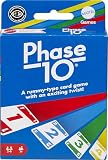
Overview: Phase 10 is a strategic rummy-style card game where players aim to complete 10 progressively challenging phases (like sets or runs) over multiple hands. With 108 cards, wild/skip cards, and color-blind accessible symbols, it supports 2-6 players aged 7+ for engaging 45-minute sessions. What Makes It Stand Out: Its phased progression system creates clear short-term goals, fostering strategic planning beyond simple luck. The color-blind accessibility (using symbols alongside colors) is a standout, inclusive feature. Wild and Skip cards inject constant tension, as leading players can be derailed instantly. Value for Money: Highly competitive for a dedicated card game. The durable cards and reusable objective system offer far more depth per play than many party games, justifying its price against generic decks. It bridges the gap between children’s games and complex strategy titles, appealing to wide age ranges. Strengths and Weaknesses: Strengths: Engaging strategic depth; inclusive color-blind design; scalable difficulty; accommodates up to 6 players; durable components. Weaknesses: Longer playtime than slap games; initial phase learning curve; luck-dependent with wild cards; less physical engagement for energetic players. Bottom Line: An excellent choice for families seeking a thoughtful yet accessible card game that grows with players. Its balance of strategy, accessibility, and replayability makes it a superior investment for regular game nights, earning a strong recommendation over purely luck-based alternatives.
Understanding the Heart of Family Game Nights
Why Card Games Outshine Other Options
Card games win for family gatherings through unmatched practicality and emotional resonance. They’re inherently portable—slipping into a purse or pocket—and require zero setup beyond shuffling. Unlike board games demanding table space or video games needing consoles and accounts, cards create instant accessibility. Crucially, they foster direct eye contact and conversation, dissolving digital barriers. The physical act of dealing and playing together builds shared rhythm and anticipation, turning passive observers into active participants. This simplicity removes friction, letting the focus stay firmly on connection, not complicated rules.
The Non-Negotiable: Inclusivity as the Core Principle
A truly successful family card game must erase generational barriers. This means mechanics simple enough for an 8-year-old to grasp after one demo, yet layered enough to keep a strategic adult engaged. Look for games where younger players aren’t just “going through the motions” but have genuine paths to contribute or win. Avoid heavy text reliance or tiny icons; clear visual cues and intuitive actions (like matching colors or numbers) are essential. The goal is zero eye-rolling from teens and zero confusion from grandparents—everyone should feel equally capable and included from round one.
Balancing Competition and Camaraderie
The sweet spot lies between cutthroat rivalry and bland cooperation. Pure competition can alienate less-skilled players (looking at you, intense Uno matches), while 100% teamwork often bores independent thinkers. Ideal family games blend both: perhaps temporary alliances that shift each round, or individual goals within a cooperative framework. The laughter should come from playful teasing, not frustration. Watch for mechanics that encourage cheering for others’ successes (“Yes! You drew the wild card!”) and minimize direct “take-that” moves that feel personal. The game should strengthen bonds, not test them.
Key Features to Prioritize When Choosing
Age Range Flexibility: Beyond the Box Numbers
Manufacturer age ranges are often misleadingly narrow. Instead, assess why a game suits certain ages. Can rules be effortlessly simplified for younger kids (e.g., skipping complex scoring) while retaining depth for adults? Does it avoid dexterity challenges that frustrate arthritic hands or fine motor skill demands that stump preschoolers? Seek games where strategy emerges organically from simple actions—like pattern recognition or quick matching—so a 6-year-old can play meaningfully alongside a 60-year-old without feeling patronized or overwhelmed.
Rule Simplicity vs. Strategic Depth
This is the golden paradox. Rules must be explainable in under two minutes (“You match colors or numbers; the first to empty their hand wins!”). Yet within those simple actions, there should be room for clever plays, risk assessment, and light strategy—like holding a powerful card for the perfect moment. Avoid games requiring memorization of exceptions or complex turn structures. The best designs make the learning curve gentle but the mastery curve engaging; players feel smart for discovering nuances on their own after a few rounds.
Playtime Realism for Gatherings
Resist the allure of “20-minute games” listed on boxes. In reality, with rule explanations, bathroom breaks, and post-round chatter, a 20-minute game often stretches to 40. Prioritize games with adjustable rounds or natural stopping points (“Let’s play until someone hits 500 points!”). For multi-generational groups, cap actual playtime at 25-35 minutes. Games that drag past 45 minutes risk losing younger players or inviting disengagement—shorter, punchier rounds with clear endings maintain energy and allow switching games if needed.
Physical Design Matters More Than You Think
Flimsy cards that bend or stick together ruin immersion. Opt for durable, linen-finished cards that shuffle smoothly and resist spills (a common dinner-table hazard). Clear, bold iconography and high-contrast colors are non-negotiable for readability across generations—avoid tiny text or low-contrast symbols. Compact box size ensures it’s always within reach, not buried in a closet. Consider eco-materials too; sustainability resonates with modern families and reflects thoughtful design.
Tailoring Games to Your Unique Family Mix
Navigating Wide Age Gaps Successfully
When kids as young as 5 mingle with seniors over 70, prioritize cooperative or team-based play. Pair younger players with adults as “partners” in strategy, turning potential frustration into mentorship moments (“What color should we play next, buddy?”). Avoid elimination—nobody wants to sit out while others continue. Games with variable player powers (e.g., one role is “skip a turn,” another is “draw extra cards”) let you assign simpler roles to kids and complex ones to adults, balancing the field naturally.
Engaging the “Too Cool for Games” Teens
Teens disengage with overly childish themes or luck-heavy gameplay. Seek games with subtle strategy, quick decisions, and a touch of humor or attitude. Mechanics like bluffing, light deduction, or rapid pattern spotting feel more “grown-up.” Framing matters too—present it as “Let’s test this new game I heard is tricky” rather than “Time for family fun!” Avoid condescension; acknowledge when a teen makes a clever move. Cooperative games where everyone wins or loses together also reduce pressure on individual performance.
Accommodating Different Energy Levels
Not every family member thrives in high-energy shouting matches. Have a quieter alternative ready—perhaps a two-player trick-taking game for introverted relatives while the main group plays something boisterous. Ensure games offer both active participation (slapping cards, calling out matches) and observational roles (keeping score, advising partners). The key is providing multiple ways to engage so no one feels forced into an uncomfortable spotlight.
Optimizing Group Dynamics and Flow
Managing Group Size Without Chaos
Most card games peak at 4-6 players. For larger gatherings (8+), split into smaller tables with identical or complementary games. Avoid complex games where players must track others’ actions across the table; focus on localized interactions (e.g., playing only to the person on your left). Games with simultaneous play (“Everyone reveal a card at once!”) prevent downtime boredom that kills momentum in big groups.
Preventing Dominant Personalities from Taking Over
Designate a neutral “rules referee” (not the most competitive player!) to handle disputes. Choose games where turn order rotates frequently or where leadership roles shift organically. In cooperative games, explicitly state that everyone must contribute an idea before a group decision is made. For competitive games, avoid kingmaking (“You have to play that card to stop Aunt Carol!”). The goal is distributed engagement, not one person running the show.
Creating Natural Break Points and Transitions
Family gatherings have natural ebbs and flows—someone needs coffee, the dog demands attention. Games with clear round structures (e.g., “Play 5 hands”) or cumulative scoring allow graceful pauses. Avoid games with long, uninterrupted phases. A quick 3-minute game is perfect for filling a lull while waiting for dessert; have it ready to deploy. Smooth transitions keep the vibe energetic without forcing continuous play.
Future-Proofing Your Game Selection
Recognizing Timeless Design Over Trends
Ignore flashy components or pop-culture tie-ins that date quickly. Focus on elegant mechanics proven over decades: set collection, trick-taking, or cooperative pattern building. Games relying on universal human behaviors—like predicting others’ moves or spotting sequences—stay relevant regardless of tech shifts. Ask: “Will this still feel fresh and fun in 2030?” If it depends on current memes or apps, skip it.
Sustainability and Long-Term Value
High-quality, repairable components (like replaceable card decks) ensure longevity beyond a single holiday. Support brands using recycled materials and ethical manufacturing—this resonates with eco-conscious families and teaches kids responsibility. A durable game used for 10 years delivers far more value (and joy) than five flimsy ones abandoned after one season. It’s an investment in future memories.
Frequently Asked Questions
How do I handle a family member who always cheats?
Address it lightly but firmly: “Whoops, I think you missed the rule about drawing two cards after skipping!” Make corrections part of the fun, not a lecture. For chronic offenders, choose cooperative games where cheating undermines everyone, or assign them a non-competitive role like scorekeeper.
What if we have players with visual impairments?
Prioritize games with high-contrast colors, large symbols, and textured cards. Avoid color-only distinctions (use shapes too). Games relying on sound or touch (like slapping cards) can be inclusive. Always ask the player how they’d like to adapt—never assume.
Can very young children (under 5) join in meaningfully?
Yes, with adaptations. Simplify rules drastically (e.g., “Just match any color!”), let them team up with an adult, or use games with large, durable cards they can handle. Focus on participation over winning—cheer their smallest successes.
How do I choose between competitive and cooperative games?
Assess your family’s vibe. If tensions run high, start with cooperative play to build unity. For groups that thrive on friendly rivalry, choose competitive games with low player elimination and clear “get back in” mechanics. You can even alternate types throughout the night.
What’s the biggest mistake people make when picking family games?
Overestimating complexity tolerance. Families crave relaxation, not mental marathons. If explaining rules takes longer than playing a round, it’s too complicated. Prioritize instant accessibility over perceived depth.
How many different games should I bring to one gathering?
Two to three is ideal. Have one ultra-simple icebreaker, one core game for the main group, and one quick filler for transitions. Too many choices cause decision fatigue; too few risks boredom if one game flops.
Are digital card games ever appropriate for family gatherings?
Rarely. They isolate players behind screens and lack shared physical interaction. Save apps for solo play. Real cards create the eye contact and spontaneous moments that define family connection.
How do I politely end a game that’s dragging on?
Set expectations upfront: “Let’s play to 300 points and call it there!” For cooperative games, declare a “victory condition” (“We win if we finish before the timer!”). If energy dips, cheerfully say, “Great round—let’s wrap here and try something new!”
What if someone gets overly competitive and ruins the fun?
Gently redirect: “Remember, the goal is laughing together!” Switch to a cooperative game immediately to reset the mood. If it’s a recurring issue, have a quiet word beforehand about keeping it light-hearted.
Can card games really help distant relatives bond?
Absolutely. Shared playful challenge breaks the ice faster than small talk. Games create neutral territory for interaction—teaming up against the game itself builds camaraderie. Start with simple, silly games to dissolve formality before diving into strategy.
See Also
- The 10 Ultimate Best Card Games for Quick Play Sessions in 2026
- 10 Most Durable Family Card Games Based on Real User Reviews in 2026
- How to Choose the Best Family Card Games for Game Night in 2026
- The 10 Ultimate Best Solitaire Card Games for Quiet Evenings in 2026
- The 10 Ultimate Best Portable Card Games for Deck Building on the Go in 2026