Table of Contents
If you’ve ever felt that rush of adrenaline when the final lock clicks open with seconds to spare, you know escape rooms offer something special that traditional entertainment simply can’t match. That same pulse-pounding excitement, collaborative problem-solving, and immersive storytelling has found a new home on your tabletop. Adventure board games have evolved dramatically, capturing the essence of what makes escape rooms so addictive while adding layers of depth that can be enjoyed again and again from the comfort of your living room.
As we look toward 2026, the landscape of adventure gaming continues to expand with innovative mechanics, richer narratives, and increasingly sophisticated puzzle designs that speak directly to the escape room enthusiast’s soul. Whether you’re seeking to recreate that cooperative intensity for family game night or want to dive deeper into complex mysteries that unfold over multiple sessions, understanding what to look for in these games will transform your collection from simple pastimes into gateway experiences. This comprehensive guide explores the essential features, mechanics, and considerations that will help you identify the perfect adventure board games to satisfy your puzzle-solving cravings.
Top 10 Adventure Board Games for Escape Room
Detailed Product Reviews
1. Unlock! Game Adventures Card Game - Escape Room-Inspired Cooperative Adventure, Fun Family Game for Kids and Adults, Ages 10+, 1-6 Players, 1 Hour Playtime, Made by Space Cowboys

Overview:
Unlock! Game Adventures transforms your tabletop into an escape room, offering three scenarios set within beloved board game universes. This cooperative card game challenges 1-6 players to solve puzzles, combine objects, and crack codes within a 60-minute timeframe. The integration of Mysterium, Ticket to Ride, and Pandemic themes creates a unique meta-gaming experience that bridges familiar franchises with escape room mechanics.
What Makes It Stand Out:
The crossover appeal distinguishes this set. Fans gain fresh narratives in universes they already love—decoding ghostly visions in Mysterium, managing railway logistics in Ticket to Ride, or containing outbreaks in Pandemic. The companion app provides seamless hint delivery and code verification without internet dependency, maintaining immersion while eliminating tedious rulebook consultations.
Value for Money:
Priced similarly to other Unlock! titles, this delivers three distinct experiences for roughly $15-20—far cheaper than physical escape rooms. While cards can’t be replayed once solved, the memories and collaborative engagement justify the cost. Board game enthusiasts get added value through thematic familiarity that enhances narrative investment.
Strengths and Weaknesses:
Strengths include ingenious thematic integration, scalable difficulty, and polished app support. The one-hour runtime fits modern schedules perfectly. Weaknesses mirror the series’ limitations: single-use components limit replayability, and some puzzles feel linear. App dependency may deter traditionalists, though it streamlines gameplay significantly.
Bottom Line:
An essential purchase for board game fans seeking entry into escape room games. The recognizable themes lower the barrier while delivering satisfying puzzles. Accept the single-use nature and enjoy the collaborative thrill.
2. UNLOCK! Escape Adventures Card Game - Escape Room-Inspired Cooperative Adventure, Fun Family Game for Kids and Adults, Ages 10+, 1-6 Players, 1 Hour Playtime, Made by Space Cowboys

Overview:
UNLOCK! Escape Adventures serves as an ideal entry point into tabletop escape rooms, packaging three distinct scenarios into a cooperative card game for 1-6 players. The set includes “The Formula,” “Squeek & Sausage,” and “The Island of Doctor Goorse,” each offering 60 minutes of puzzle-solving gameplay. A ten-card tutorial accelerates learning, making this particularly accessible for newcomers.
What Makes It Stand Out:
The integrated tutorial system eliminates the steep learning curve typical of puzzle games. Each scenario presents wildly different tones—spy thriller, cartoon caper, and island survival—showcasing the system’s versatility. The companion app’s offline functionality provides graceful hint progression and instant code validation, preventing frustration while preserving challenge.
Value for Money:
At standard Unlock! pricing, this starter set delivers exceptional educational value. The tutorial alone saves 30 minutes of rule-reading. Three varied adventures provide approximately three hours of entertainment, making it comparable to a movie night at a fraction of the cost. The difficulty range suits mixed-experience groups perfectly.
Strengths and Weaknesses:
Strengths include the gentle learning curve, scenario diversity, and robust app integration. The hint system scales appropriately. Weaknesses involve occasional logic leaps in puzzles and cards that can’t be reused. Some groups may find “Squeek & Sausage” too whimsical compared to the others. Component quality is adequate but not luxurious.
Bottom Line:
The definitive starting point for escape room card games. The tutorial and varied scenarios provide a comprehensive introduction. Accept the single-use design and enjoy three distinct cooperative experiences that grow with your skills.
3. EXIT: The Game - Adventures on Catan | Interactive Escape Room Experience| Cooperative | 1-4 Players | 10+ | Kosmos | Game for Kids and Adults

Overview:
EXIT: Adventures on Catan merges the resource-trading classic with escape room puzzles, creating a hybrid experience for 1-4 players. This unique entry in the EXIT series transforms Catan’s familiar hexagonal landscape into a mystery-solving playground. With a 1-2 hour runtime, it offers deeper exploration than typical escape games, tasking players with discovering island pieces and trading resources while unraveling narrative threads.
What Makes It Stand Out:
The integration of Catan’s core mechanics—resource collection and trading—into puzzle-solving creates unprecedented depth. Players physically build the island as they progress, blending tactile board game elements with escape room logic. This thematic fidelity extends beyond branding, offering genuine Catan gameplay woven into each challenge, appealing to fans seeking narrative context for the classic.
Value for Money:
Priced slightly higher than standard EXIT games, this premium experience justifies the cost through extended playtime and component quality. The hybrid design essentially provides two games in one: a Catan variant and an escape room. For Catan enthusiasts, this narrative expansion offers unique value unavailable elsewhere, though casual players may prefer simpler EXIT titles.
Strengths and Weaknesses:
Strengths include innovative mechanics fusion, high-quality components, and satisfying narrative payoff. The longer playtime suits strategic thinkers. Weaknesses involve a steeper learning curve for non-Catan players and limited replayability. The 1-4 player range feels restrictive compared to Unlock!’s 1-6 capacity. Some puzzles require specific Catan knowledge, potentially alienating newcomers.
Bottom Line:
A must-own for Catan devotees seeking narrative depth. The hybrid design succeeds brilliantly, though it demands familiarity with the source material. Others should start with more accessible EXIT titles before tackling this specialized entry.
4. EXIT: The Game - Family - 2 Escape Adventures, at-Home Escape Room, Co-Operative Game, Family Activity, Brainteasers, 2-4 Players

Overview:
EXIT Family condenses two kid-friendly escape adventures into one package, targeting younger players and families. “The Mystery at Meanstone Manor” and “The Caper at Candy Castle” deliver cooperative puzzle-solving for 2-4 players through a simplified lens. The design encourages physical interaction with components—ripping, folding, and manipulating materials—to progress stories with whimsical, lighthearted themes.
What Makes It Stand Out:
The deliberate family-focused design balances challenge and accessibility, bridging EXIT Kids and the main series. Silly themes maintain engagement without dark overtones. The destructive component mechanic becomes more playful here, as younger players delight in physically altering game pieces. Two complete adventures in one box double the value for family game nights.
Value for Money:
Offering two adventures at standard EXIT pricing provides excellent family entertainment value. Each scenario runs 45-60 minutes, delivering 1.5-2 hours of cooperative play. Compared to separate kids’ titles, this compilation saves money while providing progression opportunities. The accessible difficulty prevents frustration, ensuring successful family experiences that encourage repeat purchases.
Strengths and Weaknesses:
Strengths include age-appropriate puzzles, cheerful themes, and true cooperative design. The dual-adventure format offers variety. Weaknesses involve simplicity that may bore adult-only groups. The destructive nature means no replay or resale value. The 2-4 player range excludes solo play, unlike competitors. Puzzles occasionally sacrifice complexity for accessibility.
Bottom Line:
The ideal gateway for families with children ages 8-12. Whimsical themes and accessible puzzles create positive first experiences with escape rooms. Accept the simplicity and destruction as features designed for younger audiences, not limitations.
5. UNLOCK! Secret Adventures Card Game - Escape Room-Inspired Cooperative Adventure, Fun Family Game for Kids and Adults, Ages 10+, 1-6 Players, 1 Hour Playtime, Made by Space Cowboys

Overview:
UNLOCK! Secret Adventures delivers three new scenarios—“A Noside Story,” “Tombstone Express,” and “The Adventurers of Oz”—continuing the series’ tradition of app-enhanced escape rooms. Supporting 1-6 players with 60-minute playtimes, this set maintains the franchise’s cooperative puzzle-solving core while exploring Western, mystery, and fantasy themes through card-based challenges and digital integration.
What Makes It Stand Out:
“A Noside Story” continues the popular Noside narrative, rewarding series veterans. The scenario diversity impresses: a Wild West train heist, a detective mystery, and an Oz-themed adventure offer distinct tones and mechanics. The companion app’s refined interface provides granular hint control and atmospheric soundtracks, enhancing immersion beyond basic code-checking.
Value for Money:
Positioned at standard Unlock! pricing, this set offers reliable value for established fans. Three scenarios provide consistent quality and variety, though newcomers should start with Escape Adventures. For collectors, the Noside continuation justifies purchase. The app adds ongoing value through updates, unlike static EXIT components. Replayability remains the standard limitation.
Strengths and Weaknesses:
Strengths include narrative continuity, scenario variety, and polished app integration. The difficulty curve suits mixed groups. Weaknesses follow series conventions: cards are single-use, and app dependency may alienate purists. Some puzzles in “Tombstone Express” feel derivative. Component quality remains functional but unremarkable. The Oz theme may not resonate with all players.
Bottom Line:
A solid mid-series entry for Unlock! enthusiasts. The Noside continuation and scenario diversity deliver exactly what fans expect. Newcomers should begin elsewhere, but collectors will appreciate the narrative expansion and reliable puzzle quality.
6. UNLOCK! Timeless Adventures Card Game - Escape Room-Inspired Cooperative Adventure, Fun Family Game for Kids and Adults, Ages 10+, 1-6 Players, 1 Hour Playtime, Made by Space Cowboys

Overview: UNLOCK! Timeless Adventures transforms escape room excitement into a portable card game format. This cooperative experience includes three distinct scenarios—“The Noside Show,” “Arsène Lupin and the Great White Diamond,” and “Lost in the ChronoWarp”—accommodating 1-6 players aged 10 and up. The integrated companion app manages timing, provides hints, and verifies solutions without requiring internet connectivity, making it truly portable.
What Makes It Stand Out: The app-driven system eliminates the need for a game master while maintaining immersion. Each scenario offers radically different themes, from circus mysteries to time travel, ensuring varied experiences. The no-internet-required app is a significant advantage for travel or areas with poor connectivity. The cooperative puzzle-solving mechanism scales well across player counts.
Value for Money: Priced competitively against other tabletop escape games, it delivers three hour-long adventures for roughly the cost of a single real-world escape room ticket. While scenarios are single-use, the components remain high-quality, and the experience can be shared with multiple players, dividing the per-person cost significantly.
Strengths and Weaknesses: Strengths include excellent portability, strong app integration, family-friendly complexity, and diverse storytelling. Weaknesses involve inherent single-use nature of puzzles, occasional app dependency frustrations, and some scenarios may feel too linear for experienced puzzlers. The 10+ age rating is accurate, though younger players may need adult guidance.
Bottom Line: UNLOCK! Timeless Adventures offers exceptional value for families and casual gamers seeking accessible escape room thrills at home. The three-scenario variety and robust app make it a standout choice, despite the one-time-play limitation.
7. Asmodee Star Wars UNLOCK! The Escape Game - Embark on Epic Escape Room Adventures in a Galaxy Far, Far Away, Cooperative Game for Kids & Adults, Ages 10+, 1-6 Players, 1 Hour Playtime

Overview: Asmodee Star Wars UNLOCK! merges the proven escape room card game system with the iconic galaxy far, far away. This cooperative adventure offers three missions—“Smuggler’s Rescue,” “Ice Planet Patrol,” and “Jedha Infiltration”—supporting 1-6 players aged 10+ in 60-minute sessions. Players join the Rebel Alliance through scenarios involving daring rescues, frozen planet exploration, and undercover espionage.
What Makes It Stand Out: The official Star Wars license elevates this beyond generic escape games. Each mission authentically captures the franchise’s essence through thematic puzzles, familiar settings, and narrative elements. The variety is impressive: space smuggler action, Hoth survival, and Imperial spy intrigue. The app integration provides sound effects and story beats that enhance the cinematic feel.
Value for Money: Star Wars branding commands a slight premium over standard UNLOCK! titles, but fans will find the thematic immersion worth the extra cost. Three adventures for the price of one movie ticket split among players represents solid value, though non-fans might prefer the more affordable base sets with similar mechanics.
Strengths and Weaknesses: Strengths include authentic Star Wars atmosphere, diverse mission types, and the same reliable app-driven system. Weaknesses mirror the base system: single-use puzzles and occasional logic leaps. The theme may alienate non-Star Wars fans, and some puzzles lean heavily on franchise knowledge.
Bottom Line: Essential for Star Wars enthusiasts seeking interactive storytelling. While mechanically identical to other UNLOCK! games, the thematic execution makes this a galaxy-worthy addition to any fan’s collection.
8. Escape Room The Game, Version 2 - with 4 Thrilling Escape Rooms | Solve The Mystery Board Game for Adults and Teens
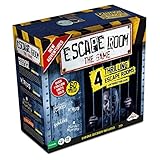
Overview: Escape Room The Game Version 2 delivers a physical escape room experience with its signature Chrono Decoder device. Designed for 3-5 players aged 16+, this set includes four distinct adventures, each structured in three escalating parts. The electronic decoder provides a 60-minute countdown with audio feedback, while a companion app supplies thematic soundtracks, creating an immersive atmosphere.
What Makes It Stand Out: The tangible Chrono Decoder distinguishes this from app-only games, providing satisfying physical interaction when entering keys. The four adventures increase in difficulty, offering a clear progression path. Expansion packs extend longevity, making this a platform rather than a one-shot experience. The 16+ age rating allows for more sophisticated, tension-filled narratives.
Value for Money: Higher price point is justified by electronic components and four full adventures. Compared to single-use card games, the decoder’s reusability with expansions improves long-term value. For groups seeking authentic escape room pressure, this rivals commercial venues at a fraction of per-session cost.
Strengths and Weaknesses: Strengths include immersive props, progressive difficulty curve, expansion ecosystem, and atmospheric audio design. Weaknesses involve limited player range (3-5), higher cost of entry, and the 16+ restriction excludes younger families. Some puzzles may feel dated compared to newer systems.
Bottom Line: Ideal for dedicated escape room fans wanting physical components and replayable platform potential. The Chrono Decoder’s tactile satisfaction and expansion support make this a premium choice for adult game groups.
9. Escape Room: Puzzle Adventures - Secret of The Scientist Jigsaw Puzzle & Escape Room Board | 1-2 Players - Games for Family Game Night | for Kids and Adults Ages 16+ | English Version

Overview: Escape Room: Puzzle Adventures uniquely fuses jigsaw puzzles with escape room mechanics in a solo-to-two-player experience. Housed in advent calendar-style packaging, players solve riddles to earn puzzle pieces that gradually reveal a mansion comprised of five interconnected room puzzles. Designed for ages 16+, it offers flexible timing—play with or without the pressure of a clock.
What Makes It Stand Out: The hybrid puzzle-board game format creates a meditative, tactile experience absent in digital-app games. The advent calendar structure provides natural pacing and anticipation. No app dependency means uninterrupted, screen-free gameplay. The ability to control time pressure accommodates both casual puzzlers and hardcore enthusiasts seeking challenge.
Value for Money: Positioned as a premium puzzle product, its value hinges on appreciation for the unique format. Traditional puzzlers gain narrative depth; escape room fans get tangible completion satisfaction. Limited player count and single-use nature constrain value compared to multi-scenario sets, but the dual-format innovation justifies the cost for the right audience.
Strengths and Weaknesses: Strengths include innovative format, screen-free experience, adjustable difficulty, and strong narrative integration. Weaknesses involve restrictive 1-2 player range, higher age requirement, and potential frustration for those expecting rapid-fire puzzles. The jigsaw element may deter pure escape room purists.
Bottom Line: Perfect for puzzle aficionados seeking narrative-driven solo play. The unique jigsaw integration and flexible pacing make this a refreshing alternative to app-based escape games, despite its niche appeal.
10. Asmodee Unlock! Short Adventures 10: Inside The Mind of Sherlock Holmes - Immersive Escape Room Card Game for Kids and Adults, Ages 10+, 1-6 Players, 45 Minute Playtime
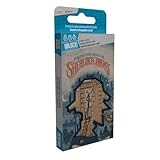
Overview: Asmodee Unlock! Short Adventures 10: Inside The Mind of Sherlock Holmes condenses the escape room experience into a brisk 45-minute session. Part of the Short Adventures series, this card-based game for 1-6 players aged 10+ takes a graphic novel-inspired approach to the legendary detective’s investigative process. The cooperative gameplay follows the established UNLOCK! formula of exploring scenes, solving puzzles, and racing against time.
What Makes It Stand Out: The reduced playtime distinguishes this from standard UNLOCK! titles, making it ideal for tighter schedules or introductory sessions. The graphic novel aesthetic provides visual storytelling that enhances the Sherlock Holmes immersion. Exploring the detective’s thought process offers a fresh narrative perspective. The shorter format maintains full puzzle complexity while respecting time constraints.
Value for Money: As a single scenario, its value depends on whether you prioritize brevity over content volume. Priced lower than three-scenario sets, it’s an affordable entry point to the UNLOCK! system. For collectors and Holmes fans, the thematic novelty justifies the purchase, though budget-conscious buyers may prefer larger compilations.
Strengths and Weaknesses: Strengths include manageable time commitment, strong thematic execution, accessible complexity, and family-friendly content. Weaknesses involve the inherent single-use limitation and reduced epic scope compared to longer adventures. The Sherlock theme may not appeal to all players.
Bottom Line: An excellent gateway to UNLOCK! for newcomers or a worthy addition for completists. The 45-minute format delivers concentrated puzzle satisfaction, perfect for weeknight entertainment or introducing the system to skeptical friends.
Understanding the Appeal: What Escape Room Fans Seek in Board Games
The Thrill of Puzzle-Solving Under Pressure
Escape rooms thrive on that delicate balance between challenge and achievability, where every solved puzzle propels you forward while the clock ticks relentlessly. The best adventure board games replicate this pressure-cooker environment through various mechanical implementations. Look for games that incorporate timed elements, escalating difficulty curves, or narrative urgency that creates psychological tension without feeling arbitrary. The key is finding titles where time pressure enhances rather than detracts from the strategic thinking required, allowing your group to experience those same heart-racing moments when a solution suddenly crystallizes.
Narrative Immersion and Story-Driven Gameplay
What separates a simple puzzle collection from a truly engaging adventure game is the narrative framework that gives meaning to every solved riddle. Escape room enthusiasts crave context—the feeling that each decoded message or discovered clue serves a larger story. Prioritize games where puzzles integrate seamlessly into the plot rather than feeling like isolated brain teasers tacked onto a theme. The most compelling experiences feature branching storylines, character development, and consequences for your decisions that make subsequent playthroughs feel like entirely new adventures.
Cooperative Team Dynamics
The shared victory of an escape room comes from leveraging diverse thinking styles and skill sets within your group. Effective adventure board games mirror this by designing puzzles that require multiple perspectives to solve. Seek out experiences that naturally encourage role specialization, where one player might excel at pattern recognition while another dominates linguistic puzzles. The ideal game prevents alpha gaming—where one dominant player solves everything—by distributing information asymmetrically or creating simultaneous challenges that require parallel processing.
The Satisfaction of Unlocking Secrets
That tangible moment when a hidden compartment reveals itself or a cryptic message suddenly makes sense forms the core memory of any great escape room. Board games recreate this through physical components like sealed envelopes, hidden compartments in game boxes, or layered discovery systems where each solution reveals new layers of mystery. Pay attention to games that offer progressive revelation mechanics, where the board itself transforms as you play, unveiling new areas, characters, or plot twists that maintain engagement from start to finish.
Key Features to Consider When Choosing Your Next Game
Complexity Levels and Learning Curves
Adventure games span a vast spectrum from casual 30-minute experiences to marathon campaigns requiring dozens of hours. Before purchasing, honestly assess your group’s patience for rulebooks and setup time. Entry-level options often feature intuitive iconography and tutorial scenarios that teach mechanics as you play, while advanced titles might require a dedicated “rules guru” to study beforehand. Consider starting with games offering scalable complexity—where core rules remain simple but optional layers add depth for experienced players.
Game Duration and Session Length
Your available play time dramatically influences which games will actually hit your table. Many escape room-style board games offer scenarios designed for single 60-90 minute sessions, perfect for weeknight gaming. Others feature sprawling campaigns where each episode takes 2-3 hours, requiring regular scheduling commitment. Think about your group’s gaming habits: do you prefer complete experiences in one sitting, or do you enjoy ongoing narratives that give you something to look forward to each month? Some games offer the best of both worlds with modular scenarios that can be played independently or linked into larger stories.
Player Count Flexibility
While escape rooms typically accommodate 4-6 players, your board game collection needs to adapt to varying group sizes. The most versatile adventure games scale elegantly from solo play to 6+ participants without diluting the experience. Investigate how a game handles different player counts—does it add new puzzles for larger groups, or simply divide responsibilities? Solo modes are particularly valuable, allowing you to preview content or enjoy puzzle-solving when you can’t gather your full team. Games with robust two-player options also deserve consideration for couples who game together regularly.
Replayability and Legacy Elements
One inherent challenge of puzzle-based games is the “spoiler problem”—once you’ve solved the mystery, replay value diminishes. Modern adventure games address this through several approaches. Some offer procedurally generated puzzles or variable setup configurations that create different solutions each playthrough. Legacy games provide permanent, campaign-based experiences where you physically alter components, creating a unique story that belongs to your group alone. Other titles focus on expansive content libraries with dozens of scenarios, ensuring months of fresh challenges. Consider whether you value a single unforgettable journey or repeated plays with different groups.
Physical Components and Tactile Experiences
Escape rooms engage multiple senses, and the best board game adaptations understand this. Evaluate games based on their production quality—thick cardboard, detailed miniatures, and custom components that feel substantial. Some titles include 3D structures, UV-reactive inks, or augmented reality elements that blur the line between physical and digital. These tactile elements aren’t just aesthetic; they enhance immersion and make discoveries feel more impactful. However, balance this against practical concerns like storage space and table footprint, especially if you game in smaller areas.
Popular Mechanics That Mirror Escape Room Experiences
Deduction and Logical Reasoning Systems
At the heart of every escape room lies deductive reasoning—connecting disparate clues to form coherent conclusions. Board games implement this through logic grids, process of elimination puzzles, and information synthesis challenges. The most satisfying deduction mechanics give players incomplete information that must be cross-referenced across multiple sources. Look for games where you gradually build a mental model of the solution space, experiencing that “aha!” moment when contradictory possibilities collapse into a single answer. Effective implementations avoid pure guesswork, instead rewarding systematic thinking and careful note-taking.
Code-Breaking and Cipher Mechanics
Ciphers represent the quintessential escape room puzzle, and board games have become incredibly creative in their implementation. From simple substitution codes to complex polyalphabetic systems, these mechanics test pattern recognition and algorithmic thinking. Modern games often provide cipher wheels, decoder tools, or app integration that handles the heavy lifting while preserving the thrill of cracking the code. The key is finding implementations where the cipher itself tells a story—perhaps the encoding method reflects the villain’s personality or the solution reveals narrative context beyond just a password.
Tile-Laying and Map Revelation
Physical exploration drives escape room excitement, and tile-laying mechanics recreate this spatial discovery process. As you place tiles to reveal rooms, corridors, or outdoor locations, the game board becomes a puzzle itself. Advanced systems incorporate hidden information on tile backs, so placement decisions involve risk assessment and resource management. Some games use double-sided tiles or layered boards where removing upper layers exposes deeper mysteries. This mechanic excels at creating non-linear exploration, allowing your group to choose which paths to pursue and in what order, much like navigating a physical escape room.
Time-Based Challenges and Pressure Mechanics
The ticking clock is escape room iconography, but not all board games benefit from literal timers. Effective pressure mechanics create urgency through resource depletion, advancing threat tracks, or narrative countdowns. Some games use sand timers for specific puzzles, creating focused bursts of tension. Others implement “real-time” phases where all players act simultaneously against a soundtrack or app-based countdown. The best systems make time pressure a strategic element rather than a source of pure anxiety, forcing tough decisions about which leads to pursue before opportunities vanish.
Hidden Information and Discovery Elements
Escape rooms delight in making you feel like an archaeologist unearthing secrets. Board games achieve this through envelopes sealed until certain conditions are met, card decks where each draw reveals new plot points, or legacy-style boxes containing unknown components. Asymmetric information—where different players know different pieces of the puzzle—creates natural communication challenges that mirror real escape room dynamics. Seek games where discoveries feel earned rather than random, requiring you to connect clues or achieve objectives before the next layer of content unlocks.
Thematic Genres That Resonate with Escape Room Enthusiasts
Mystery and Detective Stories
Classic whodunit narratives translate perfectly to the escape room format, tasking players with solving crimes through evidence analysis, suspect interrogation, and timeline reconstruction. These games often feature case files, witness statements, and forensic puzzles that demand attention to detail. The best detective games avoid simple “roll dice to succeed” mechanics, instead requiring genuine deduction where your conclusions can be wrong. Look for titles that provide that same satisfaction as escaping a room—piecing together the final revelation that makes all previous clues snap into focus.
Archaeological Expeditions and Lost Civilizations
Raiders of lost tombs and decoders of ancient languages tap into the adventure fantasy that many escape rooms exploit. These themes justify elaborate puzzles—hieroglyphic translations, artifact assembly, and trap disarmament feel natural within the narrative. Games in this genre often feature exploration maps, civilization-building elements, and historical mysteries that blend real-world knowledge with fictional intrigue. The theme supports non-linear puzzle design, where you might choose which dig site to excavate or which temple chamber to explore first, creating player agency within a structured mystery.
Sci-Fi Exploration and Alien Encounters
Futuristic settings allow game designers to invent their own logic systems, creating puzzles unbound by real-world constraints. Sci-fi adventure games might feature alien languages to decode, spaceship systems to repair, or interdimensional anomalies to understand. These themes excel at introducing novel mechanics that players must learn from scratch, mirroring the “figure it out as you go” nature of escape rooms. Look for games where technology itself becomes a puzzle—perhaps you’re hacking security systems or reverse-engineering extraterrestrial technology through pattern matching and logical sequences.
Horror and Supernatural Investigations
Psychological tension amplifies puzzle-solving pressure, making horror themes a natural fit for escape room fans. These games create atmosphere through narrative dread, limited resources, and moral dilemmas where wrong choices have lasting consequences. Puzzle design often involves occult symbolism, ritual components, or sanity mechanics that affect what information players can trust. The best horror adventure games build tension gradually, using the board game medium to create jump scares through unexpected component reveals or narrative twists that change the rules mid-game.
Historical Conspiracies and Alternate History
Secret societies, government cover-ups, and rewritten histories provide rich ground for multi-layered puzzles. These themes justify complex codes, hidden messages in historical documents, and conspiratorial networks to unravel. Games might task you with preventing (or causing) pivotal historical events through time manipulation or exposing truths that powerful entities want buried. This genre excels at meta-puzzles that span multiple scenarios, where each solved mystery reveals a larger conspiracy, creating the campaign-style engagement many escape room fans crave.
Setting Up for Success: Group Dynamics and Play Styles
Matching Games to Your Play Group’s Experience Level
Your gaming circle’s familiarity with modern board games should heavily influence your selection. For groups new to hobby gaming, choose titles with streamlined rules and strong tutorial scenarios that teach concepts gradually. Experienced gamers might appreciate heavier titles with intricate systems and minimal hand-holding. Consider designating a “game captain” who learns rules beforehand and facilitates teaching. Many adventure games benefit from a “learning game” mentality where the first playthrough focuses on understanding mechanics rather than optimal play, especially for narrative-driven titles where story surprises matter.
Balancing Competitive vs. Cooperative Preferences
While escape rooms are purely cooperative, some board game adaptations introduce competitive elements that can create interesting dynamics. Semi-cooperative games might have players working toward a common goal while pursuing individual secret objectives. Hidden traitor mechanics add social deduction layers, where one player secretly works against the group. Pure cooperative games eliminate this tension but risk quarterbacking. Discuss your group’s preferences openly—some players love the added complexity of hidden agendas, while others prefer the pure collaborative high of shared victory. Many games offer variant rules to toggle between these modes.
Integrating Games into Game Night Rotations
Adventure board games often require more setup and commitment than typical party games. To ensure they actually get played, treat them as featured experiences rather than quick fillers. Schedule dedicated “adventure nights” where everyone arrives knowing a 2-3 hour experience awaits. Keep a digital photo diary of component layouts to speed future setups, or invest in organizer inserts that reduce preparation time. For campaign games, maintain a group chat to discuss theories between sessions, keeping engagement high. Consider rotating who “hosts” each session to distribute ownership and maintain collective investment in the narrative.
Solo Play Options for Independent Puzzle Solving
Sometimes you want that puzzle-solving fix without coordinating schedules. Many modern adventure games include robust solo modes that adjust difficulty and mechanics for single players. These often involve controlling multiple characters or streamlining actions to maintain puzzle complexity while reducing overhead. Solo play serves as excellent preparation for group sessions, letting you preview content and develop strategies. It also allows you to experience games your regular group might not enjoy, expanding your personal collection’s utility. When evaluating solo modes, look for whether they preserve the core puzzle experience or feel like a diluted afterthought.
Advanced Considerations for Seasoned Players
Expansion Content and Campaign Play
Once you’re hooked on a particular adventure game system, expansions can dramatically extend its lifespan. Quality expansions add new scenarios, mechanics, and narrative branches rather than just more of the same. Campaign games that connect multiple sessions through persistent changes create uniquely personal stories. Consider whether expansions require the base game or function as standalone experiences—this affects both cost and storage. Also investigate if expansions are “must-have” for full enjoyment or optional enhancements. Some games offer “season passes” that deliver new content quarterly, mimicking the episodic nature of escape room subscription boxes.
Digital Integration and App-Assisted Gameplay
Companion apps have become increasingly common, handling everything from timed events and soundtracks to puzzle verification and hidden content delivery. Well-implemented apps reduce setup time, eliminate tedious bookkeeping, and enable dynamic storytelling impossible with physical components alone. However, consider the trade-offs: app dependency means you can’t play during internet outages, and some players prefer purely analog experiences. Evaluate whether the app adds genuine value or simply digitizes components that could exist physically. The best integrations use technology to enhance immersion—perhaps through atmospheric audio or complex algorithmic puzzles—while keeping core gameplay tactile.
Storage and Organization Solutions
Adventure games often contain hundreds of cards, tokens, and unique components that can become overwhelming. Before purchasing, research the game’s organization system—does it include adequate storage, or will you need third-party solutions? Many enthusiasts use plano boxes, binder systems for cards, or custom foamcore inserts. Consider the “footprint” of organized storage versus gameplay setup. Some games require significant table space when fully deployed, which might challenge smaller gaming areas. Digital inventory apps or component checklists can streamline setup and teardown, reducing friction that might prevent the game from hitting your table regularly.
Community and Online Resources
The adventure board game community has created robust online ecosystems that can enhance your experience. Official forums, Discord servers, and subreddits offer rules clarifications, fan-created content, and strategy discussions. Some games have dedicated wikis that catalog puzzle solutions and narrative branches—useful when you’re truly stuck but want to avoid complete spoilers. User-generated scenarios can breathe new life into completed games, while online tools might help with puzzle tracking or campaign management. Before buying, check if the publisher actively supports the community or if the fan base has created unofficial but essential resources that address known issues or expand gameplay possibilities.
Frequently Asked Questions
What makes a board game feel like an escape room experience?
The core elements are cooperative puzzle-solving, narrative progression, and the thrill of discovery. Look for games where puzzles serve the story rather than existing as isolated challenges, and where components physically transform as you play, revealing new information that builds toward a climactic revelation.
How do I choose between a one-shot adventure and a campaign game?
Consider your group’s scheduling consistency and appetite for ongoing commitment. One-shot games work perfectly for irregular gatherings and offer complete satisfaction in a single session. Campaign games reward consistent groups with evolving stories and persistent consequences but require regular meetups to maintain narrative momentum.
Are app-based adventure games worth it for traditional board gamers?
App integration excels at handling complex timing, atmospheric audio, and hidden content delivery that would be cumbersome with pure physical components. If you enjoy the tactile nature of board games, look for titles that use apps to enhance rather than replace physical puzzles, maintaining that satisfying component interaction while leveraging technology for elements impossible to replicate analog.
Can adventure board games be replayed after solving the puzzles?
Replayability varies dramatically. Some games feature procedural generation or variable setups that create different solutions each time. Legacy games offer one unforgettable campaign but have limited replay value. Many titles fall between, where the narrative surprises are gone but you might replay to experience different story branches or introduce new players to the mystery.
What’s the ideal player count for escape room-style board games?
Most games shine at 3-4 players, providing enough diverse perspectives for collaborative problem-solving without excessive downtime. However, many modern titles scale excellently from solo to 6+ players through mechanisms like parallel puzzle tracks or limited communication rules that prevent overcrowding.
How do I avoid “quarterbacking” where one player dominates the puzzles?
Seek games with hidden information mechanics, simultaneous action requirements, or individual objectives that force players to contribute uniquely. Rotating who reads narrative sections aloud and establishing house rules about suggesting rather than commanding solutions can also distribute agency more evenly.
What should I expect to spend on a quality adventure board game?
Entry-level titles typically range from $30-50, while premium experiences with extensive components and campaign content can cost $80-120. Consider cost-per-play rather than upfront price—a $100 game you play 20 times delivers better value than a $40 game played twice. Expansions generally cost $25-40 and can significantly extend a game’s lifespan.
How much table space do these games typically require?
Space needs vary from modest card-table setups to sprawling epicenters covering 4x6 feet. Research specific dimensions before buying, especially if you game in small apartments. Many games offer vertical component organizers or compact “travel” modes, but complex puzzles with many moving parts inevitably demand substantial real estate.
Are these games suitable for family play with children?
Many adventure games offer family-friendly themes and adjustable difficulty levels suitable for ages 10+. Look for titles with strong parental guidance recommendations and cooperative structures that let adults facilitate while children contribute to pattern recognition and simple puzzles. Some games specifically design separate “kids” scenarios that introduce concepts gradually.
How do I store games with lots of spoilers and sealed content?
Use opaque storage containers or designate a specific shelf for “unplayed content” to prevent accidental discovery. Some players create “save systems” using photo documentation and carefully repackaging sealed components to reset campaigns. For legacy games, consider whether you value the permanent experience over potential resale, as altered components typically reduce secondary market value.
See Also
- 10 Must-Have Themed Board Games for Escape Room Lovers in 2026
- The 10 Ultimate Best Escape Room Board Games for Intense Puzzle Solving in 2026
- 10 Must-Have Puzzle Board Games for Escape Room Lovers in 2026
- How to Choose the 10 Best Strategy Board Games for Escape Room Lovers in 2026
- The 10 Ultimate Best Adventure Cooperative Board Games for Explorers in 2026