Table of Contents
The thrill of racing against the clock, the satisfaction of solving that final puzzle, the collective gasp when a hidden compartment clicks open—escape rooms have captured our collective imagination for good reason. But what happens when the nearest physical location is two hours away, booked solid for months, or simply doesn’t exist in your town? You’re left with that craving for cerebral challenge and collaborative adventure with no way to satisfy it. This geographical gap has sparked a brilliant evolution in tabletop gaming, transforming living rooms into mysterious laboratories, ancient temples, and spy headquarters.
Enter the world of escape room board games, where intricate puzzles, narrative depth, and tactile components recreate that adrenaline-pumping experience without requiring a car ride or reservation. These games have matured from simple card-based riddles to sophisticated systems with multiple storylines, destructible elements, and app integration that would make any tech-savvy puzzler giddy. Whether you’re a seasoned escapologist or someone who’s only dreamed of trying a real room, the modern crop of at-home adventures offers something revolutionary: the power to host your own escape room experience whenever inspiration strikes.
Top 10 Escape Room Board Games
Detailed Product Reviews
1. Exit: The Abandoned Cabin - Kennerspiel Des Jahres Winner, Card-Based Family Escape Room Game for 1-4 Players, Ages 12+, Blue

Overview: The Exit series revolutionized at-home escape rooms, and this Kennerspiel des Jahres winner delivers a compact puzzle experience for 1-4 players. Set in a mysterious abandoned cabin, this card-driven adventure tasks players with solving interconnected riddles within 1-2 hours. This single-use game requires marking, folding, and tearing components throughout play, creating a satisfyingly destructive progression.
What Makes It Stand Out: Its tactile, destructive nature distinguishes it from digital alternatives. The award-winning design creates satisfying “aha!” moments as physical manipulation reveals hidden solutions. A graduated clue system provides hints without spoiling puzzles, preventing frustrating dead-ends. The portable, battery-free format works anywhere—ideal for travel or spontaneous game nights without technology dependencies.
Value for Money: At approximately $15, it compares favorably to entertainment alternatives like cinema tickets. While single-use, the 90-minute experience delivers premium puzzle design that justifies the cost. It’s an affordable entry point before investing in more expensive systems. Consider it a consumable experience rather than a permanent collection piece, offering focused quality over quantity.
Strengths and Weaknesses: Strengths include award-winning puzzle logic, tangible interactivity, and strong thematic immersion. The hint system accommodates different skill levels. Weaknesses: single-use only, limited to four players, and experienced puzzlers may find moderate difficulty slightly easy. Some puzzles require precise cutting that can’t be undone, potentially causing hesitation.
Bottom Line: An essential purchase for puzzle fans seeking tactile gameplay. Ideal for date nights or small family gatherings where disposable entertainment is acceptable and quality trumps replayability.
2. Clue Escape: The Midnight Hotel Board Game, Clue Escape Room Game, 1-Time Solve Mystery Games, Family Games for Ages 10+, 1-6 Players, 90 Mins. Avg.

Overview: This innovative hybrid merges classic Clue’s deduction mechanics with escape room puzzle-solving for 1-6 players. Continuing the Clue narrative after Mr. Boddy’s murder, players must identify who stole the blackmail files while escaping a haunted hotel. The 90-minute cooperative experience combines thematic storytelling with progressive puzzle reveals, making it accessible to ages 10 and up.
What Makes It Stand Out: The dynamic 3D gameboard physically evolves as puzzles are solved, revealing new rooms and clues—creating genuine suspense through tangible transformation. Unlike pure escape games, it layers classic Clue’s “who, where, with what” deduction atop puzzle-solving. The cooperative nature transforms competitive Clue into a team-based mystery, while the flexible 1-6 player count accommodates various group sizes.
Value for Money: Positioned around $20-25, it offers reasonable value for a hybrid experience. While single-use limits replayability, the dual gameplay mechanics provide two games in one feel. The 3D components add production value absent in flat card-based alternatives. For Clue fans, the narrative continuation adds sentimental worth beyond pure puzzle value, justifying the premium.
Strengths and Weaknesses: Strengths include innovative board construction, strong thematic integration with the Clue universe, and flexible player counts. The puzzle-deduction hybrid feels fresh. Weaknesses: one-time playthrough, some puzzles may feel straightforward for veterans, and the Clue theme might not resonate with non-fans. Setup time is slightly longer than card-only games.
Bottom Line: Excellent for families and Clue enthusiasts seeking narrative-driven escape rooms. The evolving board creates memorable moments, making it worth the single-use investment for cooperative mystery fans wanting a story-rich experience.
3. Escape Room The Game, Version 2 - with 4 Thrilling Escape Rooms | Solve The Mystery Board Game for Adults and Teens
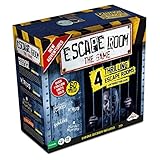
Overview: This comprehensive kit delivers four distinct escape room adventures, each structured in three escalating parts. Designed for 3-5 players aged 16+, the game centers around the Chrono Decoder—a physical timer that counts down 60 minutes while providing audio feedback. Unlike disposable alternatives, the decoder and core components remain reusable, with expansion packs available for extended play.
What Makes It Stand Out: The electronic Chrono Decoder creates authentic pressure with sound effects and visual feedback, while the companion app adds atmospheric soundtracks. Each adventure increases in difficulty, providing a natural learning curve. The reusable hardware justifies the higher initial investment, and the four included scenarios offer 4-6 hours of total gameplay—substantially more than single-experience competitors.
Value for Money: At $40-50, the upfront cost is higher, but amortized across four adventures, it’s roughly $10-12 per experience. The reusable decoder and potential for expansion packs create long-term value. For committed groups, this delivers authentic escape room atmosphere at a fraction of real-world venue costs, making it economical for regular play.
Strengths and Weaknesses: Strengths include technological immersion, progressive difficulty, reusable components, and expansion availability. The 60-minute structure matches professional escape rooms. Weaknesses: higher price barrier, app dependency may alienate tech-averse players, and the 16+ age rating limits family accessibility. Some puzzles require precise timing that can frustrate newcomers.
Bottom Line: The premier choice for serious enthusiasts seeking authentic, repeatable escape room experiences. Worth the investment for groups planning multiple sessions and wanting professional-grade tension.
4. Thames & Kosmos EXIT: The Enchanted Forest| A Kosmos Escape Room Game in a Box| Family Friendly, Card-Based at-Home Escape Room Experience for 1 to 4 Players, Ages 12+ , Black

Overview: Part of the acclaimed EXIT series, this fairy tale-themed adventure plunges players into a mysterious forest encounter with strange creatures. Designed for 1-4 players ages 12+, this card-based escape room delivers 1-2 hours of puzzle-solving. Like its series counterparts, this single-use experience requires marking and manipulating materials that cannot be reused, creating a committed, immersive journey.
What Makes It Stand Out: The whimsical fantasy theme distinguishes it from more sinister escape room narratives, making it ideal for families. The integrated clue card system provides perfectly-timed hints, ensuring players never feel abandoned. As a 2017 Kennerspiel des Jahres series winner, it maintains the series’ reputation for clever puzzles that require lateral thinking and creative material manipulation, all while maintaining a lighter, storybook atmosphere.
Value for Money: At $15-18, it aligns with other EXIT titles, offering comparable value. The single-use format trades replayability for focused design. For families seeking a non-threatening introduction to escape rooms, the fairy tale theme provides unique value. It’s an affordable alternative to digital entertainment that encourages face-to-face cooperation and problem-solving.
Strengths and Weaknesses: Strengths include accessible fantasy theming, robust hint system, award-winning puzzle design, and portable simplicity. The difficulty suits both newcomers and intermediate puzzlers. Weaknesses: single-use limitation, four-player maximum, and the whimsical theme may not satisfy horror/thriller seekers. Some puzzles require precise folding that younger players might struggle with.
Bottom Line: A charming entry in the EXIT series perfect for families and fantasy enthusiasts. The hint system makes it approachable without sacrificing challenge, serving as an ideal gateway to escape room gaming.
5. ThinkFun Escape The Room Stargazer’s Manor - A Thrilling Escape Room Game in a Box for Ages 10 and Up | Enhances Logical Reasoning | Perfect for Family Game Night | Ideal Gift for Puzzle Lovers

Overview: ThinkFun’s Stargazer’s Manor accommodates 3-8 players ages 10+ in a celestial mystery adventure. This kit includes a scenic card, five sealed envelopes, a solution wheel, and comprehensive instructions. The narrative-driven puzzles emphasize logical reasoning and deductive skills across 90 minutes of gameplay. As a single-use experience, players progressively open envelopes to reveal new challenges and story elements.
What Makes It Stand Out: The impressive 3-8 player capacity makes it ideal for large family gatherings or parties where most escape rooms top out at 4-6 players. The solution wheel mechanic provides tactile feedback without requiring apps or electronics. ThinkFun’s educational pedigree ensures puzzles develop critical thinking skills, making it defensible as a learning tool. The sealed envelope structure creates natural dramatic reveals.
Value for Money: Priced competitively around $18-22, it offers excellent per-player value for large groups. While single-use, the scalable player count means more participants can share the cost. ThinkFun’s reputation for quality components ensures durability during play. For educators or party hosts, the high capacity maximizes utility and return on investment.
Strengths and Weaknesses: Strengths include exceptional player scalability, no technology requirements, educational value, and straightforward setup. The solution wheel is intuitive for all ages. Weaknesses: single-use nature, less atmospheric immersion without audio/visual tech, and puzzles may feel moderate for advanced enthusiasts. The narrative is less complex than franchise-based alternatives.
Bottom Line: The top choice for large groups and families prioritizing accessibility and educational value over technological flash. Reliable, well-designed, and highly shareable for classrooms and parties.
6. EXIT: The Game - Adventures on Catan | Interactive Escape Room Experience| Cooperative | 1-4 Players | 10+ | Kosmos | Game for Kids and Adults

Overview:
EXIT: The Game - Adventures on Catan merges the acclaimed escape room series with the beloved board game franchise. Players leave their mundane village life to explore and settle the mysterious island of Catan through interconnected puzzles. This cooperative experience tasks 1-4 players with solving escape room-style challenges while discovering Catan pieces to build the island and collect resources, all within a 1-2 hour timeframe.
What Makes It Stand Out:
The official Catan license elevates this beyond typical EXIT titles, incorporating resource trading mechanics and physical island-building components. Players encounter familiar Catan residents for trading opportunities while tackling puzzles, creating a unique hybrid experience that honors both franchises. The integration of thematic elements from the Catan universe into escape room-style challenges feels organic rather than forced.
Value for Money:
Positioned similarly to premium EXIT titles, this crossover justifies its price point for fans of both series. While standard EXIT games offer standalone puzzles, the Catan integration adds tangible value through recognizable IP and enhanced components. Compared to purchasing a Catan expansion plus an EXIT game separately, this hybrid delivers a novel experience that justifies the investment for enthusiasts.
Strengths and Weaknesses:
Strengths include seamless franchise integration, high-quality components, and accessible cooperative gameplay. The familiar Catan setting provides immediate immersion. Weaknesses involve potential alienation of EXIT purists seeking traditional experiences and the inherent single-use nature of escape room games. The complexity may feel diluted for hardcore puzzle enthusiasts.
Bottom Line:
This crossover succeeds as a love letter to both franchises. Perfect for board game groups already fond of Catan and ready for a puzzle-solving twist, though less essential for those seeking hardcore escape room challenges.
7. Escape From the Museum Escape Room Game

Overview:
Escape From the Museum from Professor Puzzle’s Escape Room Collection delivers a compact escape room experience where players find themselves locked in a museum after hours. This mini escape room game challenges 1-4 players to decipher clues and solve a series of brain-busting puzzles to secure their freedom, making it an accessible addition to any game night rotation.
What Makes It Stand Out:
The museum setting provides a naturally immersive backdrop for puzzle-solving, with exhibits and artifacts serving as logical puzzle components. As part of an established collection, it benefits from Professor Puzzle’s refined design philosophy. The compact packaging makes it highly portable while maintaining the tension and excitement of a full-scale escape room experience.
Value for Money:
This mini format offers an affordable entry point into escape room games, typically priced lower than flagship titles. For casual gamers or those building a collection, it provides solid entertainment without the premium cost. Compared to digital escape rooms or physical venue visits, it delivers multiple sessions of entertainment for the price of a single admission ticket.
Strengths and Weaknesses:
Strengths include accessible difficulty for beginners, quick setup, and proven puzzle design from a reputable brand. The compact size makes storage easy. Weaknesses involve potentially limited complexity for seasoned escape room veterans, fewer components than larger titles, and a shorter overall experience that may leave enthusiasts wanting more.
Bottom Line:
An excellent gateway escape room game for families and casual gamers. While experienced puzzlers might find it straightforward, it serves as a perfect introduction to the genre or a light filler game for established groups.
8. Clue Escape: The Illusionist’s Club Board Game | Escape Room Family Game | 1-Time Solve Mystery | Ages 10+ | 1-6 Players | Difficulty 4 | 90-120 Mins. (Amazon Exclusive)

Overview:
Clue Escape: The Illusionist’s Club reimagines the classic deduction game as a cinematic escape room experience. Players enter a magic club where a famous magician has been sabotaged, requiring them to first escape the club then solve the mystery. This Amazon-exclusive cooperative game supports 1-6 players and features a 90-120 minute playtime with a difficulty rating of 4 out of 5.
What Makes It Stand Out:
The dynamic gameboard physically transforms to reveal new rooms and secrets as players progress, creating a sense of discovery absent in static games. A secret “magical” tool adds tangible interaction with puzzles inspired by actual magic tricks. The two-phase structure—escape first, then solve—distinguishes it from standard escape rooms or traditional Clue.
Value for Money:
As an exclusive with premium components and unique mechanics, it commands a mid-to-high price point. The 1-6 player range offers excellent per-player value for larger groups. While single-use like most escape rooms, the extended playtime and dual objectives provide more content than many competitors, justifying the cost for mystery enthusiasts.
Strengths and Weaknesses:
Strengths include innovative dynamic board, strong thematic integration of magic elements, and flexible player count. The Clue brand provides familiar entry point. Weaknesses involve the one-time play limitation and difficulty that may frustrate younger players or casual gamers. Some puzzles rely heavily on the secret tool, which could be misplaced.
Bottom Line:
A must-have for Clue fans seeking deeper engagement and escape room enthusiasts wanting narrative variety. The dynamic board alone makes it memorable, though the difficulty demands committed participants.
9. Hunt A Killer: Death At The Dive Bar, Solve a Murder at Old Scratch Tavern, Immersive Murder Mystery Game, Play Detective in Unsolved Mysteries, Great Gift For True Crime Fans, Designed for Ages 14+

Overview:
Hunt A Killer: Death At The Dive Bar immerses players in a true crime investigation at Old Scratch Tavern, where bar owner Nick Webster’s fatal fall may not have been accidental. Designed for ages 14+, this standalone case tasks players with examining forensic files, eliminating suspects, and piecing together evidence to determine if murder occurred.
What Makes It Stand Out:
The true crime authenticity sets this apart from fictional mystery games. Realistic forensic documents, witness statements, and physical evidence create a genuinely investigative experience. The narrative depth and grounded storytelling appeal directly to true crime podcast and documentary fans, offering a hands-on alternative to passive consumption.
Value for Money:
Positioned as an entry-level Hunt A Killer product, it offers a complete investigation at a lower price point than their subscription boxes. The 45-60 minute runtime provides a focused experience without overwhelming commitment. For true crime enthusiasts, it delivers immersive entertainment comparable to a premium board game but with unique realism.
Strengths and Weaknesses:
Strengths include compelling realistic narrative, accessible 1/5 difficulty perfect for beginners, and high-quality physical evidence. The solo or group flexibility enhances value. Weaknesses involve mature content unsuitable for younger audiences, relatively short playtime for the price, and simplicity that may disappoint experienced mystery solvers seeking complex puzzles.
Bottom Line:
An ideal entry point into narrative-driven mystery games for true crime fans. While veteran puzzlers may find it straightforward, its authentic approach and compelling story deliver a satisfying investigation that feels distinct from traditional board games.
10. EXIT: The Game - Family - 2 Escape Adventures, at-Home Escape Room, Co-Operative Game, Family Activity, Brainteasers, 2-4 Players

Overview:
EXIT: The Game - Family Edition packages two complete escape adventures—The Mystery at Meanstone Manor and The Caper at Candy Castle—into one family-friendly box. Tailored as a bridge between EXIT Kids and classic EXIT titles, this cooperative experience allows 2-4 players to work together solving puzzles through ripping, folding, and discovering components integrated into the storylines.
What Makes It Stand Out:
Offering two distinct adventures in one package provides exceptional value, with silly themes specifically designed to engage younger players while remaining entertaining for adults. The family-focused puzzle design encourages collaboration rather than competition, with accessible challenges that don’t condescend to adult participants.
Value for Money:
Two full EXIT games for roughly the price of one standard title makes this an outstanding value proposition for families. Compared to purchasing individual family entertainment, it delivers hours of cooperative play. The replay limitation is mitigated by the dual-game structure, effectively halving the per-game cost.
Strengths and Weaknesses:
Strengths include perfect difficulty calibration for mixed-age groups, high replay value within the box through two complete stories, and the trusted EXIT puzzle design adapted for accessibility. The thematic integration is charming. Weaknesses involve puzzles that may feel too simple for adult-only groups, and the single-use nature means families seeking longevity must purchase additional titles.
Bottom Line:
The definitive entry point for families into escape room gaming. Successfully bridges age gaps while maintaining the EXIT series’ quality. A smart purchase for parents introducing children to puzzle-solving games.
Why Escape Room Board Games Are Booming in 2026
The landscape of social gaming has shifted dramatically in recent years, with players seeking more meaningful, immersive experiences over passive entertainment. Escape room board games have stepped into this void perfectly, offering a hybrid of storytelling, problem-solving, and hands-on activity that screens simply can’t replicate. The market has responded with unprecedented creativity, delivering games that rival their physical counterparts in complexity and emotional payoff.
The Accessibility Revolution
Remote towns, suburban neighborhoods, and busy urban schedules no longer limit your access to high-quality puzzle experiences. Modern games ship with everything needed to transform any table into a puzzle chamber. This democratization means that whether you’re in a bustling metropolis or a quiet rural community, the adventure comes to you. The cost-per-play also dramatically undercuts physical rooms, making regular puzzle nights financially sustainable for families and friend groups.
Technological Integration Enhances Realism
Gone are the days when a board game meant just cards and dice. Today’s escape room games leverage companion apps for countdown timers, ambient soundtracks, hint systems, and even augmented reality elements. This fusion of physical and digital creates multi-sensory immersion that transports players directly into the narrative. The technology also allows for branching storylines and dynamic difficulty adjustments that static components alone could never achieve.
Key Features That Define Quality Escape Room Games
Not all puzzle games are created equal, and understanding what separates a memorable experience from a frustrating one will save you time and money. The best titles share several non-negotiable characteristics that elevate them beyond simple riddle collections.
Narrative Cohesion and World-Building
A superior game weaves puzzles directly into its story rather than tacking them on as disconnected challenges. Each cipher, locked box, and hidden message should feel like a natural part of the world you’re investigating. Look for games where solving a puzzle reveals plot points, character motivations, or environmental details that make the fictional setting feel alive and worth saving. This narrative integration transforms mechanical problem-solving into genuine storytelling participation.
Component Quality and Tactile Satisfaction
The physicality of escape rooms is half the magic—the weight of a metal key, the texture of aged parchment, the click of a mechanism releasing. Top-tier board games replicate this through thick cardstock, wooden components, custom-molded pieces, and sometimes even electrical elements. These tangible items make discoveries feel real rather than abstract. Pay attention to games that emphasize high-quality, unique components over generic pieces you could find in any standard board game.
Different Types of Escape Room Board Game Formats
The genre has splintered into several distinct formats, each offering a different approach to the core experience. Understanding these categories helps you match the game style to your group’s preferences and play habits.
Linear vs. Non-Linear Puzzle Chains
Linear games present puzzles that must be solved sequentially, with each solution providing the clue needed for the next challenge. This format mirrors traditional escape rooms and works beautifully for groups that prefer clear direction and steady momentum. Non-linear games, conversely, dump multiple puzzles on the table simultaneously, allowing teams to split up and tackle different challenges in any order. This sandbox approach suits larger groups and those who enjoy chaotic, parallel problem-solving.
Campaign-Based vs. Standalone Adventures
Standalone games offer a complete, self-contained story playable in a single 60-90 minute session—perfect for casual game nights or introducing new players. Campaign games, however, spread a larger narrative across multiple episodes, with each box representing a chapter in an overarching mystery. These serialized experiences create deeper investment and anticipation between sessions, though they require a more significant time commitment and consistent player group.
How to Choose the Right Game for Your Group
Selecting the perfect escape room game requires honest assessment of your players’ experience levels, interests, and group dynamics. A mismatch here can lead to boredom or overwhelming frustration rather than the sweet spot of challenged engagement.
Assessing Experience and Skill Levels
First-time players benefit from games with robust hint systems, clear instructions, and puzzles that teach fundamental concepts like cipher decoding and pattern recognition. Veteran puzzlers crave games with multiple layers, red herrings, and meta-puzzles that require connecting seemingly unrelated clues across different game components. Some games cleverly accommodate both by offering “expert mode” that removes hints for seasoned players while keeping them accessible for newcomers.
Matching Themes to Player Interests
A group of history buffs might light up when exploring an archaeological dig or wartime espionage plot, while sci-fi fans gravitate toward space station disasters or time travel paradoxes. Horror themes can be divisive—some players love the tension while others find it genuinely unsettling. Family groups should seek adventure or mystery themes without mature content. The right theme doesn’t just provide window dressing; it motivates players to push through challenging puzzles because they genuinely care about the story’s resolution.
Setting Up Your Home Escape Room Experience
Creating the right atmosphere amplifies immersion and transforms a simple game night into a memorable event. The setup process begins long before you open the first envelope.
Crafting the Perfect Environment
Dim the lights and supplement with thematic lighting—battery-powered candles for a Victorian mystery, colored LED strips for a sci-fi setting. Curate a soundtrack through the game’s app or your own music service to mask household noises and build tension. Remove digital distractions by having everyone silence phones and place them in another room. The physical space should be clear of clutter, giving you room to spread out components and allowing everyone to lean in during critical moments of discovery.
Establishing House Rules for Optimal Flow
Before starting, agree on how your group will handle hints. Will you take them only after a unanimous vote? Set a time limit per puzzle before automatically requesting help? Decide whether players can work on separate puzzles simultaneously or if the group must tackle challenges together. These ground rules prevent mid-game disagreements that can break immersion and cause friction. Also designate a “game master” role to track time, manage the app, and handle component organization.
Essential Components to Look For
The contents of the box determine how rich and varied your puzzle-solving experience will be. Savvy shoppers know which elements signal a thoughtfully designed game versus a cash grab.
Multi-Use and Destructible Elements
Premium games often include components you can write on, fold, tear, or cut—actions that feel thrillingly transgressive in our preservation-minded board game culture. These destructible elements create one-of-a-kind experiences but limit replayability and resale value. Some games cleverly offer both options: reusable components for those who want to pass the game along, and optional “destroy” versions for those seeking maximum immersion. Multi-use items that serve different purposes throughout the game demonstrate elegant design and provide satisfying “aha!” moments when you realize an earlier component has new relevance.
Digital Integration Done Right
The best companion apps serve the experience without becoming the experience. They should provide atmospheric audio, seamless hint delivery, and input verification without replacing the tactile joy of physical puzzles. Beware games where the app does all the heavy lifting while components become mere tokens. The sweet spot involves apps that handle logistics (timers, scoring) and deliver dynamic content while keeping the core puzzle-solving firmly in the physical realm.
Difficulty Levels and How to Navigate Them
Understanding difficulty ratings helps set expectations and prevents groups from hitting a wall that kills the fun. However, these ratings can be subjective and vary wildly between publishers.
Decoding Difficulty Metrics
Most games use a 1-5 or 1-10 scale, but these numbers rarely tell the full story. A “difficult” game might feature complex logic puzzles that a math-minded group solves quickly, while an “easy” game with visual puzzles stumps that same group. Look deeper at the types of puzzles featured: word puzzles, spatial reasoning, arithmetic, pattern recognition, or lateral thinking challenges. Match these to your group’s collective strengths for the best experience. Some publishers now provide detailed breakdowns of puzzle types, which proves invaluable for selection.
Dynamic Difficulty Through Hint Systems
A well-designed hint system acts as a built-in difficulty slider. Tiered hints that start vague and become increasingly specific allow groups to self-regulate challenge levels. The best systems offer contextual hints that nudge you forward without spoiling the solution entirely. Some advanced games even track your progress and automatically adjust puzzle complexity if you’re struggling, ensuring you reach the finale without excessive frustration.
Replay Value: Getting the Most From Your Games
The replayability question looms large for buyers, as most escape room games have a finite number of solutions. Smart design and creative player approaches can extend a game’s lifespan significantly.
Resettable vs. Legacy Experiences
Resettable games use reversible components or clever design that allows you to repack everything and pass it to friends. Legacy-style games embrace the one-way journey, encouraging you to physically alter components for a unique, unrepeatable narrative. Neither approach is inherently superior; it depends on your priorities. Collectors and serial puzzlers prefer resettable titles, while story-first players cherish the permanent impact of legacy games where their choices genuinely matter.
Community and Fan-Created Content
Many popular escape room games spawn passionate communities that create custom scenarios, alternative puzzle chains, and “what if” story branches using the same components. These fan creations breathe new life into completed games and often introduce wildly creative challenges that rival official content. Some publishers actively support this by releasing “blank” templates or puzzle creation guides, effectively turning players into designers.
Common Pitfalls and How to Avoid Them
Even the best games can fall flat if approached incorrectly. Awareness of typical stumbling blocks helps you steer clear of disappointment and maximize enjoyment.
The Destructible Component Dilemma
That moment when the instructions tell you to cut a card or tear a page can cause decision paralysis. Before making any irreversible move, check if the game offers a non-destructive alternative. Many include QR codes linking to printable versions of destroyable components. If not, consider taking high-quality photos or scans before proceeding. This preserves the option to reset the game later while still allowing you to experience it as intended.
Group Think and Puzzle Dominance
Strong personalities can accidentally hijack the experience by solving puzzles solo while others watch passively. Combat this by physically rotating who “owns” each puzzle component or implementing a rule where the person who discovers a clue cannot be the one to solve it—they must explain it to someone else. This ensures everyone contributes and experiences those breakthrough moments that make escape rooms special.
Building Your Collection Strategically
As you dive deeper into the hobby, curating a diverse collection prevents fatigue and keeps game nights fresh. Thoughtful acquisition beats blind purchasing every time.
Balancing Themes and Mechanics
A well-rounded library includes variety: a tense horror mystery, a lighthearted adventure, a cerebral sci-fi paradox, and a historical whodunit. Similarly, mix up puzzle types so consecutive games don’t all rely on similar mechanics. This variety accommodates different player moods and prevents the “we just did a cipher-heavy game” fatigue. Track which themes and mechanics resonate most with your group to inform future purchases.
The Expansion Ecosystem
Some base games offer expansion packs that introduce new puzzles using the same core components. These provide excellent value and extend the life of your initial investment. Before buying expansions, verify they offer genuinely new content rather than just recycled puzzles with different window dressing. The best expansions feel like natural continuations of the story while introducing novel mechanics that surprise veteran players.
The Social Benefits of At-Home Escape Rooms
Beyond entertainment, these games foster skills and relationships in ways that passive activities cannot replicate. The collaborative nature builds bonds through shared struggle and triumph.
Communication Skills Under Pressure
The ticking clock forces players to articulate observations clearly and concisely. You learn to summarize complex patterns, delegate tasks efficiently, and ask for help without shame. These skills transfer directly to workplace teamwork and family problem-solving. The debrief after a game—discussing what worked, what didn’t, and celebrating each person’s contributions—reinforces positive communication patterns.
Creating Multi-Generational Connections
Unlike video games that might alienate less tech-savvy family members, escape room board games level the playing field. Grandparents might spot a pattern the teens miss, while youngsters approach lateral thinking puzzles without the preconceptions that block adults. These games create rare moments where age becomes irrelevant, and everyone contributes uniquely valuable perspectives to the collective goal.
Integrating Technology in Modern Games
The marriage of analog and digital continues evolving, with 2026 seeing sophisticated tech integration that enhances rather than overshadows the physical experience.
Augmented Reality and Hidden Content
Point your phone at a seemingly blank card, and watch a hidden message materialize on screen. Scan a component to unlock a video flashback from a character. These AR elements create magical moments that feel like actual discovery. The technology works best when it reveals information that couldn’t exist physically, like animated sequences or audio recordings, rather than simply replacing what a well-designed card could convey.
Cloud-Based Content Updates
Some publishers now release free post-launch content that adds new puzzle layers or alternative endings to existing games. By entering a code into the companion app, you might unlock a “director’s cut” mode with additional challenges or a holiday-themed variant. This living-game approach means your purchase gains value over time, and revisiting a completed game months later can offer fresh surprises.
Storage and Organization Solutions
As your collection grows, keeping components organized becomes crucial for quick setup and preserving the unboxing experience for future plays.
The Component Labeling System
Invest in small resealable bags and a label maker. Sort components by act, puzzle number, or type (keys, ciphers, maps). This organization pays dividends when you return to a resettable game months later and need to find specific pieces quickly. For campaign games, store each episode separately to avoid spoilers. Some enthusiasts create “play kits” with just the components needed for a session, leaving the rest safely stored.
Digital Inventory Tracking
Photograph each component before your first play and maintain a simple spreadsheet tracking what’s been used or destroyed. For games with many pieces, this prevents mid-game panic when you can’t locate a specific item. It also helps when repacking—ensuring nothing gets lost between plays. Some communities share their inventory templates online, saving you setup time.
Troubleshooting Common Game Issues
Even perfectly designed games encounter real-world problems. Knowing how to handle these gracefully keeps the experience positive.
When Pieces Go Missing
Before declaring a puzzle unsolvable, thoroughly check if the missing component is actually required or just decorative. Many games include extra pieces or alternative solutions. Contact the publisher—most offer replacement part services, sometimes for free. In a pinch, search online forums; other players often share workarounds or printable alternatives they’ve created.
App Malfunctions and Workarounds
If the companion app crashes or your device isn’t compatible, don’t abandon the game. Most publishers provide web-based alternatives or PDF hint sheets as backups. The board game community is also quick to document full hint sequences online for popular titles. While not ideal, these backups ensure a faulty app doesn’t ruin your entire evening.
Future Trends in Escape Room Gaming
The genre continues evolving at breakneck speed, with emerging trends pointing toward even more immersive and personalized experiences on the horizon.
AI-Driven Dynamic Narratives
Early experiments with AI hint systems show promise for truly adaptive storytelling. Imagine a game that learns your group’s puzzle-solving strengths and weaknesses, adjusting future challenges in real-time. An AI game master could generate unique clues based on your specific stuck points, making every group’s journey through the same base game genuinely different. This technology could also enable infinite replayability with procedurally generated puzzle variations.
Subscription and Mystery Box Models
The success of serialized campaign games has spawned subscription services that mail monthly puzzle envelopes, each building toward a season-long mystery. These services create ongoing anticipation and community discussion as players worldwide work through the same clues simultaneously. The model also allows for real-world integration, where packages might include items that connect to local landmarks or require outside research, blurring the line between game and reality.
Frequently Asked Questions
What exactly is an escape room board game? An escape room board game is a tabletop experience that recreates the puzzle-solving, time-pressured adventure of a physical escape room. Players work cooperatively to solve interconnected puzzles, decode messages, and unlock new components to progress through a narrative, typically within a 60-90 minute time limit. These games combine physical components with storytelling and sometimes digital integration to create an immersive at-home adventure.
How many people do you need to play? Most games accommodate 1-6 players effectively, with the sweet spot being 3-4 participants. Solo play is possible but misses the collaborative magic. Larger groups can work by splitting into teams that tackle different puzzles simultaneously, though you’ll want games specifically designed for non-linear play to avoid bottlenecks where one person dominates the action.
Can children participate in escape room board games? Absolutely, though selecting age-appropriate themes and difficulty levels is crucial. Many publishers offer family-friendly lines with puzzles that emphasize observation and pattern recognition over complex logic. Kids as young as 8-10 can contribute meaningfully, often spotting visual clues adults overlook. For mixed-age groups, choose games with tiered hint systems and consider playing without the timer to reduce pressure.
What should we do if we get completely stuck? First, use the hint system—it’s designed to prevent frustration, not as a cheat. Take a 5-minute break; stepping away often reveals patterns you missed while hyper-focused. Try explaining the puzzle to someone who hasn’t been staring at it; the act of articulating often unlocks new perspectives. If all else fails, most games have online communities where players share non-spoiler guidance to nudge you forward without revealing full solutions.
Are these games replayable after we’ve solved them? It depends on the design. Resettable games allow you to reassemble components for another playthrough or to share with friends, though you’ll know the solutions. Legacy-style games involve destroying or altering components for a unique, one-time experience. Some hybrid games offer replay value through multiple endings, branching paths, or community-created content that uses the same components in new ways.
How do escape room board games compare to real escape rooms? Physical rooms offer unparalleled immersion through full-scale sets and environmental effects, but board games provide advantages: lower cost, no travel, replayability through sharing, and the comfort of playing at home. Modern board games increasingly close the gap with high-quality components and app integration. The best board games capture the essence of physical rooms while offering unique advantages like being able to pause, snack, and play in your pajamas.
What’s the typical price range for quality games? Expect to pay between $25-$50 for standalone games, with campaign boxes or premium titles featuring elaborate components reaching $60-$80. While pricier than standard board games, this represents excellent value compared to physical escape rooms, which cost $25-$40 per person for a single playthrough. When evaluated as cost-per-player-per-hour, board games often deliver entertainment value that rivals any hobby.
Do we need any special equipment or apps? Most games are self-contained, requiring only what’s in the box. However, many offer optional companion apps that enhance the experience with soundtracks, timers, and hint systems. These typically run on smartphones or tablets and require minimal storage space. A few advanced games incorporate flashlights, UV lights, or require internet access for content updates, but these requirements are always clearly stated on the packaging.
How long does setup usually take? First-time setup ranges from 5-15 minutes, involving organizing components and downloading apps. Some campaign games have longer initial setups as you prepare the “legacy” elements. Experienced groups can have subsequent sessions ready in under 5 minutes. The best games separate components by act or puzzle, making it easy to grab only what’s needed for your current session without spoiling future content.
Can we create our own escape room games using these as inspiration? Many enthusiasts become amateur designers after playing several commercial games. Start by deconstructing what makes puzzles satisfying: clear logic, thematic integration, and escalating difficulty. Use free online tools to create ciphers, design logic chains, and craft narratives. Some publishers even release “game master kits” with blank templates and puzzle frameworks. The community aspect of sharing homemade scenarios has become a vibrant subculture within the hobby.
See Also
- How to Solve Difficulty Confusion with the 10 Best Escape Room Board Games in 2026
- 10 Most Durable Escape Room Board Games Based on Real User Reviews in 2026
- The 10 Best Mystery Board Games That Feel Like Real Escape Rooms in 2026
- How to Solve Lack of Tension with the 10 Best Escape Room Board Games in 2026
- 10 Escape Room Board Games That Solve Replayability Issues in 2026