Table of Contents
Gathering the family around a table for some lighthearted competition is more than just fun—it’s a powerful way to build connections, spark laughter, and create memories that last long after the last card is played. In today’s fast-paced world, where screens often dominate downtime, the simple act of shuffling a deck and dealing hands offers a refreshing digital detox for both kids and adults. These moments aren’t just about winning or losing; they’re opportunities to teach patience, strategic thinking, and good sportsmanship in a low-pressure, joyful setting. Whether you’re navigating the chaos of toddler bedtime or seeking common ground with teenagers, the right card game can become a cherished family ritual.
Choosing the best card game for your crew, however, can feel surprisingly overwhelming. With countless options flooding the market—each promising fun, education, or both—it’s easy to end up with a box that gathers dust because the rules were too complex, the theme didn’t resonate, or the gameplay didn’t hold everyone’s attention. The key isn’t chasing the “hottest” new release, but finding a game that genuinely fits your family’s unique dynamics, ages, and energy levels. This guide cuts through the noise, focusing on the universal features that make card games truly shine for families, so you can invest in experiences that bring everyone back to the table, time and time again.
Top 10 Family Card Games
Detailed Product Reviews
1. USAOPOLY Flip 7, The Ultimate Blend of Press Your Luck & Strategy, Fast-Paced Addictive Card Game,Quick to Learn & Easy to Teach,Perfect for Game Nights, 3+ Players, Ages 8 & Up, 20 Minutes Play Time

Overview: Flip 7 is a dynamic press-your-luck card game where players strategically reveal cards to accumulate points without duplicating numbers, aiming for 200 points to win. Its unique deck structure and fast pace make it ideal for quick, engaging game nights with 3+ players aged 8 and up.
What Makes It Stand Out: The game’s standout feature is its ingeniously weighted deck, containing decreasing multiples of numbers (twelve 12s down to one 1), creating inherent tension. Special action cards like “Flip Three” and “Freeze” add strategic depth, forcing players to balance risk and reward in every round.
Value for Money: Priced competitively for a 200-point strategy game, Flip 7 offers exceptional replayability with minimal setup. It outshines cheaper luck-based alternatives by emphasizing skill, though premium cardstock could justify a slightly higher price point for durability.
Strengths and Weaknesses: Strengths: Highly addictive risk-reward loop; easy to teach; robust deck design prevents predictability; perfect 20-minute runtime. Weaknesses: High luck element early on; duplicate busts may frustrate younger players; limited strategic depth for hardcore gamers.
Bottom Line: Flip 7 delivers thrilling, accessible strategy that nails the press-your-luck genre. Despite minor reliance on chance, its clever mechanics and relentless pace make it a must-have for family game nights seeking quick, competitive fun. Highly recommended.
2. Taco Cat Goat Cheese Pizza Wildly Entertaining Card Game for Family and Group Game Night | Easy to Learn and Play with 10-15 Minute Rounds | Fun for Kids, Teens, Adults, and Families | 2-8 Players

Overview: Taco Cat Goat Cheese Pizza is a raucous slap game where players chant words while flipping cards, racing to slap the pile when a match occurs. Designed for 2–8 players (ages 7+), it delivers 10–15 minute bursts of physical comedy and reflex-based fun, ideal for family gatherings or travel.
What Makes It Stand Out: Its genius lies in the seamless fusion of verbal coordination (“Taco, Cat, Goat…”) and physical slapping, amplified by surprise action cards. The game thrives on universal accessibility—no reading required—and generates spontaneous laughter through sheer unpredictability and competitive urgency.
Value for Money: As an affordable, screen-free activity, it offers immense entertainment per dollar. Its compact size and durability justify the cost, outperforming pricier board games in pure engagement density for large groups, though component variety is modest.
Strengths and Weaknesses: Strengths: Incredibly easy to learn; fosters laughter and group bonding; portable; excellent for mixed-age groups; sharpens reflexes. Weaknesses: Can become chaotic with 8 players; potential for slap-related disputes; limited strategic depth; replay value hinges on group energy.
Bottom Line: A near-perfect party starter that transforms any space into a laughter-filled arena. While lacking complexity, its effortless fun and inclusivity make it an essential, budget-friendly pick for families seeking active, screen-free connection. Buy it.
3. Would You Rather? Family Card Game: Fun Questions, Hilarious Answers, Lively Conversations!

Overview: This classic conversation-starter game presents players with humorous or thought-provoking “Would You Rather?” dilemmas, sparking debates and revealing personalities. Tailored for families, it encourages laughter and connection through simple, open-ended questions suitable for all ages.
What Makes It Stand Out: Its strength is in fostering genuine interaction—unlike competitive games, it prioritizes storytelling and shared amusement over winning. Questions avoid edgy topics, focusing on lighthearted, family-friendly scenarios that uncover quirks and create memorable moments.
Value for Money: An economical choice for dialogue-driven fun, it outperforms digital alternatives in promoting face-to-face engagement. The replayability hinges on question variety, but frequent use may exhaust cards faster than strategy games, slightly dampening long-term value.
Strengths and Weaknesses: Strengths: Zero setup; builds communication skills; adaptable for any group size; non-competitive; excellent icebreaker. Weaknesses: Minimal structure can lead to rambling; question depth varies; less engaging for shy players; no tangible win condition may frustrate competitive types.
Bottom Line: A charming tool for heartfelt family conversations, ideal for quiet nights or travel. While not a high-energy party game, its ability to ignite laughter and understanding makes it a worthwhile addition for households prioritizing connection over competition.
4. Cards Against Humanity: Family Edition • Ages 8+ • A Party Game for Your Horrible Family

Overview: A sanitized version of the infamous adult game, Family Edition swaps crude humor for kid-safe absurdity (e.g., “butt spaghetti” and “Mom’s friend Donna”), targeting players aged 8+. It retains the core “fill-in-the-blank” format but ditches offensive content for toilet-themed giggles.
What Makes It Stand Out: Successfully walks the tightrope between irreverence and appropriateness, using 600 freshly written, family-friendly cards. The humor leans on universal kid logic (toilets, silly names) while preserving CAH’s signature dark-comedy spirit—just without the pee jokes about pee.
Value for Money: Priced similarly to the original, it delivers solid value for age-specific hilarity. However, the “not as fun as Xbox” disclaimer rings true; depth pales next to strategy games, though the sheer volume of cards extends playtime. Best as a supplement, not a centerpiece.
Strengths and Weaknesses: Strengths: Surprisingly witty for age 8+; encourages creative (if silly) thinking; maintains CAH’s social dynamic; tested with real families. Weaknesses: Humor feels watered-down for adults; limited replayability; lacks the original’s edge; may bore teens seeking edgier fun.
Bottom Line: A decent gateway to CAH’s format for younger crowds, but families should temper expectations. It’s chuckle-worthy, not laugh-until-you-pee worthy. Worthwhile for parents craving CAH-lite, but skip if expecting the original’s bite.
5. Do You Really Know Your Family? A Fun Family Game Filled with Conversation Starters and Challenges - Great for Kids, Teens and Adults
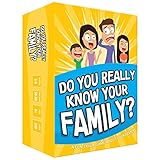
Overview: This game tests familial bonds through trivia questions about relatives and lighthearted challenges (“Sing a song about your sibling!”), designed to spark laughter and reveal hidden quirks. Aimed at families with kids 8+, it transforms game night into a personalized bonding experience.
What Makes It Stand Out: Its hyper-personalized approach—using your family’s inside jokes and history—creates uniquely meaningful moments. Unlike generic games, it leverages existing relationships, making trivia feel relevant and challenges delightfully awkward in the best way.
Value for Money: Excellent ROI for relationship-building; the emotional payoff outweighs the modest cost. While card count may seem low, customization (writing your own prompts) extends longevity, though it lacks the production polish of bigger brands.
Strengths and Weaknesses: Strengths: Deepens family connections; adaptable for any age mix; minimal rules; generates authentic laughter; challenges break routine. Weaknesses: Requires willing participants (shy members may disengage); replay value drops once questions are exhausted; less structured than competitive games.
Bottom Line: A heartfelt gem for families seeking meaningful interaction. It won’t replace strategy games, but as a tool to ignite conversations and create shared memories, it’s invaluable. Perfect for reunions or regular game nights—highly recommended for closeness-focused households.
6. Hasbro Gaming 5 Alive Card Game, Fast-Paced Game for Kids and Families, Easy to Learn, 2 to 6 Players, Fun Summer Activities, Vacation Travel Essentials, Ages 8+

Overview:
5 Alive is a high-energy card game where players race to shed cards while keeping a collective running total under 21. Exceeding 21 flips an “Alive” card, and losing five lives eliminates you. Designed for quick play, it’s ideal for family game nights or travel with 2–6 players aged 8+.
What Makes It Stand Out:
The game’s brilliance lies in its tension between strategy and luck. Wild cards add chaos—letting players save themselves or sabotage others—while the “under 21” math element subtly sharpens kids’ arithmetic skills. Its portability and 5–10 minute rounds make it perfect for vacations or impromptu play, standing out from slower-paced alternatives.
Value for Money:
Priced affordably under $15, 5 Alive delivers exceptional replayability for its cost. Unlike single-mechanic games, its blend of risk assessment and quick decisions offers lasting appeal, outperforming pricier sets with fewer dynamic features. The compact box justifies its spot as a travel essential.
Strengths and Weaknesses:
Strengths: Extremely easy to learn; encourages mental math; wild cards create hilarious moments; durable cards.
Weaknesses: Limited depth for older teens; replay value hinges on group energy; no solo-play option.
Bottom Line:
A stellar choice for families seeking accessible, adrenaline-fueled fun. Its educational undertones and portability make it a worthwhile investment for game nights or on-the-go entertainment.
7. What Do You Meme?Edition by Relatable, Now with Refreshed Content, Easter Family Games for Kids and Adults, Easter Basket Gift, The TikTok Viral Sensation, Includes 300 Caption Cards, 108 Photo Cards

Overview:
This family-friendly iteration of the viral meme game replaces edgy humor with wholesome, TikTok-popular content. Players pair caption cards with photo cards to create the funniest memes, judged by a rotating peer. Designed for ages 8+, it includes 408 cards and supports 3+ players.
What Makes It Stand Out:
The “Relatable” edition shines by curating age-appropriate, universally funny content—ideal for bridging generational gaps. Its rotating judge mechanic encourages social bonding, while the sheer volume of card combinations (300 captions × 108 photos) ensures near-limitless replayability, setting it apart from static party games.
Value for Money:
At $25–$30, it’s competitively priced against similar party games. The refreshed content avoids cringe-worthy moments in mixed-age groups, offering better family value than the original adult version. As a non-candy Easter basket stuffer or travel game, it maximizes utility per dollar.
Strengths and Weaknesses:
Strengths: Inclusive humor; massive card variety; simple rules; perfect for icebreakers.
Weaknesses: Humor may not land with all ages; requires 3+ players; storage box could be sturdier.
Bottom Line:
A must-have for family game nights seeking lighthearted, screen-free laughter. Its thoughtful refresh makes it the safest and most versatile meme game for all generations.
8. Dump The Skunk! Game | Family Card Game by Reiner Knizia | Ages 7 and Up | 2-6 Players | 20 Mins. | Easy to Learn Games for Kids, Teens, and Adults

Overview:
Dump The Skunk! challenges players to avoid high-point “skunk” cards in a fast 20-minute game. With simple draw-play mechanics, it’s a strategic point-avoidance game for 2–6 players aged 7+, inspired by the acclaimed Don’t L.L.A.M.A!
What Makes It Stand Out:
Reiner Knizia’s design genius transforms risk management into accessible fun. The skunk-themed twist (discard high-value cards to minimize points) creates constant tension, while the compact size and 20-minute playtime cater perfectly to short attention spans—ideal for road trips or quick family challenges.
Value for Money:
Priced around $15, it outshines bulkier strategy games by delivering deep decision-making in a pocket-sized box. Compared to Don’t L.L.A.M.A.’s similar gameplay, the fresh art and skunk motif justify choosing this version for families prioritizing theme engagement.
Strengths and Weaknesses:
Strengths: Teaches strategic foresight; ultra-portable; quick setup; charming theme.
Weaknesses: Limited player interaction; minimal luck element may deter casual gamers; skunk cards feel repetitive after many rounds.
Bottom Line:
An excellent, affordable gateway to strategic gaming for young players. Its blend of simplicity and depth makes it a top pick for travel or casual family fun.
9. Five Crowns – Card Game for Kids and Adults, Travel and Family Game Night Favorite, The Game isn’t Over Until the Kings Go Wild, 5 Suited Rummy Style Card Game, 1-7 Players, Ages 8+

Overview:
Five Crowns reinvents rummy with a fifth star suit and rotating wild cards. Players aim to form “books” (sets) and “runs” (sequences) across 11 increasingly complex rounds. This award-winning game accommodates 1–7 players and excels as a travel-friendly option.
What Makes It Stand Out:
The rotating wild cards (changing each round) and unique fifth suit create dynamic, unpredictable gameplay rarely seen in classic rummy variants. Its scalability—from solitaire to 7 players—and compact deck make it uniquely versatile for both competitive sessions and quiet solo play.
Value for Money:
At $12–$15, it offers extraordinary flexibility. Unlike single-mechanic travel games, Five Crowns replaces multiple decks while providing structured, skill-building challenges. It surpasses generic rummy sets with its innovative structure and durability.
Strengths and Weaknesses:
Strengths: Adaptable for solo/group play; enhances planning skills; compact design; high replay value.
Weaknesses: Steeper learning curve for young kids; setup confusion in early rounds; limited luck-based excitement.
Bottom Line:
A near-flawless rummy evolution for families wanting strategic depth. Its solo-play capability and portability cement it as a travel and game-night essential.
10. Mattel Card Game Set (Skip Bo, Uno & Phase 10)

Overview:
This trio bundles Mattel’s iconic card games: Skip Bo (sequencing), Uno (color-matching), and Phase 10 (rummy-style sets). Targeted at ages 7+, it supports 2–6 players per game and covers diverse mechanics in one box.
What Makes It Stand Out:
The set’s power lies in its variety—offering competitive, luck-based, and strategic playstyles. Uno’s universal recognition, Skip Bo’s tactile sequencing, and Phase 10’s multi-round challenges cater to all preferences, eliminating the need to buy separate games for different moods.
Value for Money:
Priced at $25–$30, it’s 30% cheaper than buying games individually. Families gain three distinct experiences: Uno for chaos, Skip Bo for focus, and Phase 10 for planning. No single game excels like standalone versions, but the collective utility is unmatched for casual households.
Strengths and Weaknesses:
Strengths: Massive replay diversity; familiar rules reduce learning time; space-efficient storage.
Weaknesses: Card quality thinner than individual sets; no game dominates competitively; Phase 10 rules can confuse newcomers.
Bottom Line:
An unbeatable starter pack for families wanting versatile, budget-friendly entertainment. Prioritize it for broad appeal over mastering any single game deeply.
Understanding Your Family’s Unique Needs
Age Range Compatibility
Matching the game’s complexity to your youngest and oldest players is non-negotiable. Games designed for early readers might rely heavily on symbols and quick reactions, while those for tweens and teens can incorporate deeper strategy or reading. Crucially, avoid games where younger kids feel lost or older ones are bored waiting for turns—look for adjustable rules or “family modes” that let everyone participate meaningfully. A game where a 6-year-old can compete fairly against a 12-year-old is pure gold.
Attention Span and Game Length
Realistically assess how long your family can stay engaged. For younger children or high-energy households, games lasting 10-15 minutes are often ideal, preventing frustration and meltdowns. As kids mature, 20-30 minute sessions become manageable. Always check the estimated playtime, but remember this is often based on experienced players—add 25% for first-time family plays. Shorter games also encourage “just one more round,” building positive associations.
Physical and Cognitive Abilities
Consider motor skills: younger children or players with dexterity challenges benefit from larger cards or simpler handling requirements. For cognitive differences, prioritize games with clear visual cues, minimal text, and straightforward turns. Cooperative games, where players work together against the game itself, can be especially inclusive, reducing pressure on any single participant and fostering teamwork.
Core Gameplay Mechanics That Matter
Simplicity of Rules vs. Strategic Depth
The sweet spot lies in games with easy-to-grasp core rules that unfold into surprising depth. Think “easy to learn, hard to master.” A game requiring more than five minutes to explain basic setup often loses younger players immediately. However, avoid games so simplistic they become repetitive after two plays. Look for mechanics that introduce subtle layers of choice—like resource management or risk assessment—that evolve as players gain confidence.
Player Interaction Level
Decide what kind of interaction energizes your family. Highly interactive games (constant trading, direct challenges) create buzz but can overwhelm sensitive players. Lightly interactive games (parallel play with occasional scoring) offer calmer experiences. Cooperative games shift focus from beating each other to solving puzzles together, which is fantastic for reducing sibling rivalry. Observe how your family naturally engages—do they thrive on banter or prefer focused concentration?
Luck vs. Skill Balance
Games dominated by luck (like pure draw-and-play matching) keep outcomes unpredictable, which is great for leveling the playing field between adults and children. However, too much randomness can frustrate older kids who want their decisions to matter. Games emphasizing skill (tactics, memory, deduction) reward practice but might discourage beginners. The most enduring family games strike a balance—luck opens the door, but skill guides the journey.
Educational and Developmental Benefits
Cognitive Skill Building
Beyond fun, quality card games stealthily develop critical thinking. Pattern recognition strengthens math readiness; memory matching boosts recall; set collection hones categorization skills. Games involving bidding or resource management teach basic economics and probability. Even simple turn-taking reinforces sequencing and patience. The best games make these skills feel like discoveries, not lessons.
Social-Emotional Learning Opportunities
Card games are microcosms of social dynamics. Players practice impulse control (waiting turns), emotional regulation (handling bad draws), and communication (explaining moves clearly). Negotiation in trading games builds diplomacy, while cooperative play fosters empathy and shared problem-solving. How a family navigates a lost round often reveals more about resilience than the game itself—use these moments to gently discuss grace in winning and losing.
Language and Literacy Enhancement
Many card games naturally expand vocabulary through thematic elements or rule explanations. Storytelling games encourage creative expression, while deduction games require precise questioning and listening. For emerging readers, symbol-heavy games build confidence, while text-based games in later years improve fluency. The shared context of gameplay makes language learning feel organic and low-stress.
Practical Considerations for Long-Term Use
Component Durability and Quality
Flimsy cards won’t survive enthusiastic play. Prioritize thick, laminated cards that resist bending, spills, and tiny fingers. Check if the box has a secure lid and internal compartment to prevent cards from scattering. While premium components cost more upfront, they save money (and frustration) by lasting through years of play. Consider water-resistant finishes if snacks are nearby!
Storage and Portability
Think about where and when you’ll play. Compact decks (standard-sized cards or smaller) fit easily in travel bags for vacations or visits. Larger boxes might stay home but should stack neatly on shelves. Avoid games requiring separate boards or numerous tiny pieces unless you have dedicated storage—lost components kill replayability. A good rule? If it can’t be set up and packed away in under two minutes, it might not get played often.
Replay Value and Expansion Potential
The true test of a family game is whether it stays in rotation after the novelty wears off. Games with variable setups, modular rules, or multiple scoring paths avoid predictability. Some offer official expansions that add new characters or mechanics, extending life significantly—but ensure the base game stands strong alone. Avoid games where the “win condition” becomes obvious after three plays; mystery and discovery keep interest alive.
Creating the Ideal Play Environment
Setting Realistic Expectations
Start small. Don’t expect a 45-minute complex game with a room full of young children on the first try. Begin with one quick round, focusing on fun over rules perfection. Announce clear time limits (“We’ll play until the timer dings!”) to prevent overstimulation. Celebrate effort and clever moves, not just victory—this reduces pressure and keeps everyone eager to return.
Involving Everyone in the Process
Let kids help choose the next game from a pre-vetted shortlist, fostering ownership. Rotate who reads the rules (great reading practice!) or sets up the cards. For cooperative games, assign special roles like “rule reminder” or “scorekeeper” to different family members each round. When players feel invested in the process, engagement soars.
Adapting Games for Your Family
Don’t feel bound by the rulebook! If a mechanic frustrates your group, modify it. Shorten rounds, remove confusing elements, or invent house rules that better suit your dynamics. Many classic card games evolved through generations of such tweaks. The goal is shared enjoyment—not rigid adherence to publisher instructions. Document your favorite modifications for consistency.
Frequently Asked Questions
How do I handle arguments during competitive games?
Focus on “fair play” over winning. Pause the game to calmly discuss the issue, using it as a chance to model conflict resolution. For recurring problems, switch to cooperative games temporarily to rebuild positive associations with playing together.
What if my child gets too upset when they lose?
Normalize losing as part of learning. Share your own graceful losses (“I’m disappointed, but I’ll try a new strategy next time!”). Start with low-stakes games where losing feels less significant, and gradually build tolerance. Never force play if emotions are high—take a break and reconnect later.
Are cooperative games better for young families?
They often are, especially with mixed ages or sensitive players, as they reduce direct competition. However, some kids thrive on friendly rivalry. Try both styles to see what resonates with your family’s personality.
How can I teach complex rules without overwhelming kids?
Introduce rules incrementally. Play the first round with only core mechanics, adding one new element each subsequent game. Use physical demonstrations (“Watch me take my turn”) rather than lengthy explanations.
What’s the ideal number of players for family card games?
Most excel with 3-5 players. Below that, consider solo variants or team play; above, look for games specifically designed for larger groups to avoid excessive downtime between turns.
How often should we play to keep it special but not stale?
Aim for consistency over frequency—weekly 20-minute sessions often work better than infrequent marathons. Let enthusiasm guide you; if no one asks to play, take a break and reintroduce the game months later with fresh energy.
Can card games really help with school skills?
Absolutely. Beyond obvious math and reading ties, they build executive function—planning, focus, and cognitive flexibility—which directly supports classroom learning and homework habits.
What’s the biggest mistake families make when choosing card games?
Prioritizing “educational value” over fun. If the game feels like homework, it won’t get played. Choose games where the learning is incidental to the enjoyment—engagement is the prerequisite for any benefit.
How do I store cards to prevent damage?
Keep them in the original box with divider trays if possible. Store vertically (like books) to prevent warping, away from direct sunlight and humidity. For frequent travelers, consider a small fabric card case with reinforced pockets.
When is a card game “too babyish” for older kids?
Look for subtle signs: eye-rolling during setup, lack of strategic choices, or if older kids consistently avoid picking it. Upgrade to games with deeper tactics, thematic complexity, or player interaction that respects their growing maturity.
See Also
- 10 Top-Rated Strategy Card Games According to Experts in 2026
- 10 Top-Rated Black Card Sleeves According to Experts in 2026
- 10 Top-Rated Kids Card Games According to Parents in 2026
- 10 Top-Rated Poker Size Card Sleeves According to Experts in 2026
- 10 Top-Rated Clear Card Sleeves According to Experts in 2026