Table of Contents
Hosting memorable parties where everyone actually connects—not just stands awkwardly by the snack table—is a challenge many organizers face. Traditional icebreakers often feel forced, and competitive games can unintentionally highlight differences rather than build bridges. But what if the solution lies not in awkward introductions, but in shared missions, collective problem-solving, and the thrill of victory achieved together? Cooperative board games have quietly revolutionized social gatherings, transforming passive mingling into active collaboration where the group’s success hinges on every single participant’s contribution.
Imagine the energy shift when laughter replaces tension, when strangers become allies against a common challenge, and when the only “loser” is the game itself. For team building especially, this dynamic is pure gold. Unlike competitive titles that might leave quieter guests sidelined or spark unintended friction, cooperative play fosters communication, empathy, and genuine reliance on diverse strengths. As we look toward 2026, the demand for experiences that nurture authentic connection—without corporate jargon or cringe—has never been higher. Choosing the right cooperative game isn’t just about entertainment; it’s about crafting moments where relationships organically deepen through shared purpose.
Top 10 Cooperative Board Games
Detailed Product Reviews
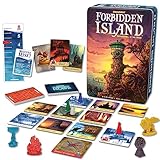
1. Gamewright - Forbidden Island - Cooperative Strategy Survival Board Game, 2-4 Players
Overview:
Forbidden Island, designed by Matt Leacock, is a cooperative adventure where players race against time to retrieve sacred treasures from a sinking island before it vanishes. Aimed at ages 10+, it blends strategy, teamwork, and tension in a compact 30-minute experience perfect for family game nights.
What Makes It Stand Out:
Its innovative “sinking tile” mechanic dynamically alters the board, creating escalating urgency. Rich thematic visuals immerse players in a perilous paradise, while the purely cooperative structure—no winners or losers, only collective success—fosters genuine collaboration and creative problem-solving without player elimination.
Value for Money:
Priced accessibly for its replayability and component quality, it outshines many competitive games in its bracket. The strategic depth justifies the cost, especially compared to simpler family games, offering educational value in decision-making that grows with repeated plays.
Strengths and Weaknesses:
Strengths: Intuitive rules, high replayability with variable setups, promotes teamwork, visually engaging. Weaknesses: Limited player count (max 4), younger children may struggle with strategy, treasure-card randomness can occasionally feel punishing.
Bottom Line:
A near-perfect entry into cooperative gaming; highly recommended for families and beginners seeking meaningful teamwork and strategic thrills without overwhelming complexity.
2. Spin Master Games, SolidRoots Escaping Extinction, Cooperative Strategy Board Game from The Makers of Mind The Gap, Easter Gift, 1-4 Players, for Ages 12 & Up

Overview:
In Escaping Extinction, players become clever dinosaurs racing to build a 3D rocket before a meteor strikes. This cooperative game tasks 1-4 players (ages 12+) with gathering parts across a shifting prehistoric landscape, blending narrative adventure with tactical planning.
What Makes It Stand Out:
The standout 3D rocket assembly and earthquake cards that dynamically reshuffle the tile-based board ensure no two games play alike. The prehistoric theme is cleverly executed, with survival mechanics that demand constant adaptation and group coordination under time pressure.
Value for Money:
Offers solid value with its high replayability from modular boards and varied missions. While slightly pricier than basic card games, the physical rocket components and strategic depth justify the cost for families seeking immersive, non-electronic entertainment.
Strengths and Weaknesses:
Strengths: Highly replayable modular setup, innovative 3D element, engaging theme, scales well for solitaire play. Weaknesses: Rocket assembly can feel fiddly, theme may not resonate with all ages, limited player interaction beyond shared goals.
Bottom Line:
A fresh, inventive cooperative experience ideal for strategy fans; recommended for families wanting dynamic, story-driven gameplay with substantial re-play value.
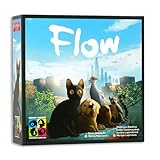
3. Flow: The Official Cooperative Board Game | Strategy Game for 1–4 Players Ages 8+ | Based on The Award-Winning Animated Film | Family & Solo Play | Survive The Flood, Rescue Allies
Overview:
Flow adapts the beloved animated film into a real-time cooperative game where players guide tiny creatures through a flooding world to rescue allies. Designed for 1-6 players (ages 8+), it emphasizes urgency and adaptive strategy on a modular board.
What Makes It Stand Out:
The rising water mechanic creates relentless, cinematic tension as the board physically floods, forcing rapid group decisions. Its seamless transition from film to gameplay, coupled with solo compatibility and 11 unique scenarios, delivers emotional depth and constant novelty.
Value for Money:
Priced competitively for its production quality and scenario variety, it offers exceptional longevity. Beats many narrative-driven games by delivering both thematic richness and strategic challenge without bloated runtime or complexity.
Strengths and Weaknesses:
Strengths: Brilliant real-time tension, stunning thematic integration, superb solo mode, high replayability via scenarios. Weaknesses: Real-time pressure may stress younger players, component storage could be improved, minimal player conflict resolution.
Bottom Line:
A masterful cooperative adaptation that captures the film’s spirit; strongly recommended for families and film fans seeking immersive, emotionally resonant strategy.
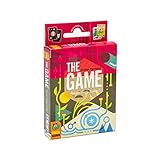
4. Pandasaurus Cooperative Strategy Card Game - Fun Interactive Family Game for Ages 8+, 1-5 Players, 20 Minute Playtime
Overview:
The Game is a minimalist, award-winning cooperative card game where players race against time to empty two number decks under strict communication limits. For 1-5 players (ages 8+), it transforms simple cards into a thrilling test of silent teamwork in just 20 minutes.
What Makes It Stand Out:
Its genius lies in enforced silence—players can’t discuss strategy, relying solely on nonverbal cues to play ascending/descending sequences. This creates intense, intuitive collaboration rarely seen in card games, earning global acclaim with 1.3 million copies sold.
Value for Money:
An exceptional value: tiny footprint, low price, yet immense depth. Outperforms pricier games with near-limitless replayability and pure focus on player interaction, making it ideal for travel or quick game nights.
Strengths and Weaknesses:
Strengths: Incredibly portable, deep social deduction, scales perfectly for solitaire to groups, award-winning simplicity. Weaknesses: Communication restrictions frustrate some, lacks thematic immersion, high difficulty curve for young children.
Bottom Line:
A must-have for card game enthusiasts; highly recommended for its razor-sharp design and unmatched replayability in a pocket-sized package.
5. Ravensburger Horrified Games - Greek Monsters - Strategy Board Game - Boost Critical Thinking & Teamwork - Cooperative Gameplay - Unique Monster Challenges - 1 to 5 Players - Adults & Kids 10+

Overview:
Horrified: Greek Monsters pits 1-5 players against six iconic mythological threats like Medusa and Cerberus in a cooperative strategy challenge. Players must devise unique tactics to banish each monster from Elysium Isle, blending lore with tactical puzzles for ages 10+.
What Makes It Stand Out:
Each monster requires distinct victory conditions (e.g., avoiding Medusa’s gaze), ensuring varied, replayable challenges. The thematic depth—enhanced by striking artwork and miniatures—creates an immersive mythological atmosphere rarely matched in family strategy games.
Value for Money:
Justifies its price with high-quality components, 60-minute sessions, and substantial strategic variety. Offers better longevity than most narrative board games, as mastering all six monsters demands diverse approaches and teamwork.
Strengths and Weaknesses:
Strengths: Rich thematic execution, diverse monster mechanics, excellent critical thinking focus, visually stunning. Weaknesses: Setup time for multiple monsters, younger players may find rules complex, limited player count flexibility in early games.
Bottom Line:
A standout cooperative experience; highly recommended for families craving thematic depth and evolving strategic challenges rooted in Greek mythology.
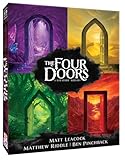
6. Happy Camper - The Four Doors | Cooperative Game by Pandemic and Forbidden Island Creator | Super Portable | Great for Solo Play, Two Players, and Groups
Overview:
Happy Camper: The Four Doors is a compact cooperative adventure from Matt Leacock (Pandemic, Forbidden Island), designed for 1–5 players aged 10+. Players race against time to retrieve four sacred treasures within a mystical light tower before shadows seal the doors forever. Its super-portable design makes it ideal for travel or quick gaming sessions.
What Makes It Stand Out:
Leacock’s signature cooperative tension shines through minimal components and intuitive mechanics. The game excels in seamless scalability, offering balanced challenges for solo play up to five players without rule adjustments. Its ingenious use of a single “shadow track” creates escalating urgency, while the thematic treasure-collecting objective avoids player elimination, keeping everyone engaged until the final turn.
Value for Money:
Priced accessibly for its quality, it outperforms bulkier games with comparable depth. The durable, travel-sized box includes all essentials for repeated play, eliminating the need for expensive expansions. Compared to similar cooperative titles, its replayability through variable setups and difficulty options delivers exceptional bang for buck.
Strengths and Weaknesses:
Strengths: Effortless setup, masterful solo/co-op balance, highly portable, and rules that teach in under five minutes. Weaknesses: Minimal component variety may feel sparse for collectors, and the abstract tower theme lacks the immersive storytelling of Leacock’s Pandemic series. Some may desire more strategic depth in later plays.
Bottom Line:
A near-perfect pocket-sized cooperative experience that proves depth doesn’t require bulk. Highly recommended for travelers, casual gamers, and fans of Leacock’s elegant design—ideal for quick, engaging sessions anywhere.
7. Castle Panic 2nd Edition | Cooperative Board Game for Adults and Family | Ages 8+ | for 1 to 6 Players | Average Playtime 45 Minutes | Made by Fireside Games

Overview:
Castle Panic 2nd Edition is a cooperative tower-defense board game where 1–6 players unite to protect Castle Bravehold from marauding monsters. With vibrant 3D towers, themed tokens, and multiple play modes, it delivers tense, accessible gameplay for ages 8+ in roughly 45 minutes.
What Makes It Stand Out:
The physical 3D towers that crumble under attack create visceral, memorable moments. Four distinct modes—including solo, competitive “Master Slayer,” and “Overlord” (where one player controls monsters)—massively boost replay value. The intuitive color/arc combat system makes it easy to learn but strategically rich, especially with boss monsters and event cards adding chaos.
Value for Money:
Its component durability (thick cardboard tokens, sturdy towers) justifies the price point. Compared to digital tower-defense games, it fosters genuine social interaction and shared triumphs. The 2nd Edition’s refined rules and expanded modes offer more longevity than similar-priced titles like Dragonfire.
Strengths and Weaknesses:
Strengths: Excellent family accessibility, high replayability via modes, satisfying physical components, and seamless teamwork dynamics. Weaknesses: Tower assembly can frustrate younger players, and the competitive mode disrupts the core cooperative spirit some expect. Balance occasionally falters with 5–6 players.
Bottom Line:
A must-have for family game nights seeking collaborative excitement. Its blend of strategy, physical engagement, and adaptable difficulty makes it a standout—highly recommended for mixed-age groups wanting inclusive, edge-of-your-seat fun.
8. The Lord of The Rings: Adventure to Mount Doom | Family Game | Cooperative Game | Strategy Game

Overview:
Adventure to Mount Doom is a cooperative strategy game where 1–4 players guide Frodo across Middle-earth to destroy the One Ring. Using dice rolls and card draws, players evade Ringwraiths while navigating iconic locations, completing the quest in about 50 minutes.
What Makes It Stand Out:
Its deep immersion in Tolkien’s world is unmatched—detailed map art, thematic challenges (e.g., Moria’s darkness), and narrative tension capture the saga’s essence. The shared dice-rolling mechanic forces strategic risk-taking, while event cards mirror pivotal story moments, making each play feel like a unique chapter.
Value for Money:
As a licensed Tolkien game, it offers solid value with evocative artwork and sturdy components. However, lighter strategy compared to heavier co-ops like Gloomhaven may limit replayability for hardcore gamers. It’s ideal for Tolkien fans seeking thematic depth over mechanical complexity.
Strengths and Weaknesses:
Strengths: Exceptional thematic integration, accessible rules for ages 8+, strong solo mode, and emotional resonance for LOTR enthusiasts. Weaknesses: Luck-dependent dice mechanics can override strategy, and limited player interaction beyond shared decisions. Some locations feel underdeveloped.
Bottom Line:
A heartfelt tribute to Tolkien’s epic, perfect for casual fans and families. While not revolutionary mechanically, its immersive storytelling earns a strong recommendation for fans craving a cooperative journey through Middle-earth.
9. Gamewright - Forbidden Jungle - Cooperative Board Game

Overview:
Forbidden Jungle, designed by Matt Leacock, challenges 2–5 players (ages 10+) to cooperate as explorers recovering ancient artifacts from a lush, dangerous jungle. With stunning visuals and 30–45 minute sessions, it’s a family-friendly adventure emphasizing teamwork and tactical planning.
What Makes It Stand Out:
Leacock’s hallmark “shared fate” design ensures constant engagement, while the modular board creates unpredictable layouts. Unique explorer roles (e.g., Climber, Botanist) with special abilities encourage replayability. The game’s lush artwork and thematic hazards—like quicksands and crumbling paths—immerse players without overwhelming complexity.
Value for Money:
Priced competitively, it includes 47 detailed miniatures, terrain tiles, and cards—offering more components than similar co-ops. Its durability and lack of required expansions provide long-term value, outshining pricier games with comparable depth like Forbidden Island.
Strengths and Weaknesses:
Strengths: Beautiful art, scalable difficulty, intuitive role synergy, and quick setup. Weaknesses: Miniature storage is inconvenient, and the “flood” mechanic feels recycled from Leacock’s other games. Limited strategic depth may disappoint veteran gamers.
Bottom Line:
A visually stunning, accessible co-op that excels in family game nights. While not groundbreaking, its polish and portability make it a worthy recommendation—especially for Forbidden Island fans seeking fresh thematic thrills.
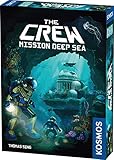
10. The Crew - Mission Deep Sea | Card Game | Cooperative | 2 to 5 Players | Ages 10+ | Trick-Taking | 32 Levels of Difficulty | Endless Replayability
Overview:
The Crew: Mission Deep Sea is a cooperative trick-taking card game for 2–5 players, serving as a sequel to the award-winning The Crew. Players embark on 50+ underwater missions, using limited communication to win specific tricks—a fusion of classic card strategy and innovative teamwork.
What Makes It Stand Out:
Its genius lies in constrained communication: players can’t discuss hands openly but use subtle cues (like passing tokens) to coordinate. The escalating 32-mission campaign adds narrative tension, while new mechanics—like submarine movement and oxygen management—refresh the original’s formula without complicating it.
Value for Money:
At its price, the sheer replayability (50+ missions) dwarfs most card games. Unlike one-off trick-takers like Wizard, its campaign structure encourages repeated plays. The compact box delivers disproportionate depth, making it a steal compared to sprawling board games with less longevity.
Strengths and Weaknesses:
Strengths: Brilliant communication constraints, perfect difficulty curve, highly portable, and exceptional replay value. Weaknesses: Campaign progress isn’t saved physically, forcing manual tracking. Some missions feel overly reliant on luck with small groups.
Bottom Line:
A masterclass in cooperative card design that refines its predecessor’s brilliance. Essential for trick-taking fans and newcomers alike—highly recommended for its innovative teamwork and near-limitless challenge.
Why Cooperative Games Outshine Traditional Team Builders
Breaking Down Social Barriers Naturally
Cooperative games eliminate the “us versus them” dynamic inherent in most party games. When players work toward a unified goal—like defusing a bomb or escaping a collapsing temple—natural conversation flows as strategies are debated and ideas shared. This environment encourages quieter participants to contribute without fear of “losing” for the team, making it ideal for mixed groups where trust is still building.
Fostering Inclusive Participation
Unlike competitive games where dominant personalities can overshadow others, cooperative mechanics often require diverse input to succeed. A puzzle might need one person’s spatial reasoning, another’s memory, and a third’s quick decision-making. This structure ensures everyone feels valued, turning potential social anxieties into opportunities for meaningful engagement.
Building Trust Through Shared Vulnerability
Facing a challenging scenario together creates shared vulnerability—a powerful trust accelerator. When the group narrowly avoids failure because someone spoke up with a crucial idea, it reinforces psychological safety. Participants leave not just having had fun, but with tangible proof that collaboration leads to success.
Key Features to Prioritize for Party Settings
Player Count Flexibility
Games accommodating 3–8 players (or more) prevent exclusion in larger groups. Look for titles with scalable difficulty that adjust seamlessly whether you have four colleagues or twelve friends. Avoid games rigidly designed for exact player numbers, which can force awkward pairings or idle spectators.
Setup and Explanation Speed
Time is precious at parties. Prioritize games with setup under 5 minutes and rules explainable in 3 minutes or less. Complex rulebooks kill momentum—opt for intuitive mechanics where players grasp objectives during the first round through clear visual cues and simple starter scenarios.
Physical Space Requirements
Consider your venue’s constraints. Games needing large tables or sprawling boards frustrate guests in cramped living rooms. Compact designs with centralized components (like a single puzzle board or card deck) minimize space needs while keeping everyone physically engaged without crowding.
Balancing Challenge and Accessibility
Adjustable Difficulty Tiers
The best party games offer “dial-in” difficulty. Beginners shouldn’t feel overwhelmed, while experienced players need stakes to stay invested. Look for systems with modular obstacles—like adding time pressure or extra hurdles—that let hosts tailor tension to the group’s mood without relearning rules.
Clear Win/Loss Conditions
Ambiguous objectives confuse players. Successful cooperative games have unmistakable victory states (e.g., “place the final artifact on the altar”) and obvious failure triggers (like a visible timer running out). This clarity keeps focus on strategy, not rule disputes.
Minimal “Alpha Gamer” Pitfalls
Some cooperative games devolve into one person directing all moves—a major engagement killer. Seek titles with hidden information, simultaneous action selection, or role-specific secrets that prevent monologuing and distribute decision-making power organically.
Thematic Resonance and Emotional Engagement
Relatable Scenarios Over Niche Concepts
Abstract puzzles rarely spark emotional investment. Games rooted in universal experiences—like escaping danger, solving neighborhood mysteries, or rebuilding communities—create instant buy-in. Themes should feel immersive but not overly complex; nobody wants a lore lecture mid-party.
Positive, Uplifting Narratives
Avoid overly grim or stressful themes (e.g., apocalyptic survival) for casual settings. Lighthearted adventures, whimsical quests, or community-focused stories foster joy without triggering real-world anxieties. The goal is energized collaboration, not existential dread.
Sensory and Visual Appeal
Vibrant art, tactile components (like custom dice or 3D structures), and thematic soundtracks (if digital integration exists) heighten immersion. A visually striking game draws people in from across the room, turning setup into an instant conversation starter.
Practical Logistics for Hosts
Storage and Portability
Frequent hosts need games that pack neatly into compact boxes without fragile components. Avoid titles requiring excessive sorting or delicate miniatures that get lost between sessions. Magnetic closures or segmented trays make storage hassle-free for repeat use.
Durability for Repeated Play
Party games take a beating. Prioritize thick cardstock, sturdy boards, and non-slip tokens that withstand enthusiastic shuffling and multiple setups. Games with replaceable component services offer long-term value as pieces inevitably wander off.
Cost Per Play Analysis
While upfront cost matters, calculate value through replayability. Games with variable setups, legacy elements, or scenario expansions deliver more long-term engagement per dollar than one-and-done experiences, especially for offices or recurring events.
Maximizing Team Building Outcomes
Facilitating Post-Game Reflection
The real team-building magic happens after the timer stops. Build in 5 minutes for groups to discuss: “What strategy surprised you?” or “When did someone’s idea change our approach?” This transforms gameplay into actionable communication practice.
Aligning Mechanics with Development Goals
Want to improve active listening? Choose games requiring verbal-only clues. Need better delegation? Opt for titles with distinct, interdependent roles. Match the game’s core challenge to your team’s growth area for subtle, organic skill development.
Managing Energy Levels Strategically
Kick off with a fast-paced 20-minute game to energize guests, then transition to deeper 45-minute experiences as connections form. Avoid starting with marathon sessions that exhaust newcomers before bonds solidify.
Frequently Asked Questions
How do I prevent one person from dominating decisions?
Choose games with hidden roles or simultaneous planning phases. Explicitly state at the start: “Everyone must contribute one idea before we act.” Rotate who reads rulebooks to distribute authority naturally.
Are cooperative games suitable for large corporate events?
Absolutely—but prioritize titles designed for 10+ players with team-based subgroups (e.g., two tables collaborating on parallel objectives). Avoid games requiring constant whole-room discussion, which becomes chaotic beyond 8 players.
What if our group has non-native speakers?
Opt for language-light games relying on symbols, colors, or spatial puzzles. Avoid heavy text dependency. Games with universal themes (like building structures or pattern matching) transcend language barriers most effectively.
How short can a meaningful session be?
Many modern cooperative games deliver complete, satisfying arcs in 15–25 minutes. Look for “micro-cooperative” designs with single-scenario challenges perfect for tight schedules or as icebreakers before longer activities.
Can these games work for virtual team building?
Yes, but select titles with dedicated digital adaptations or apps that sync player actions. Physical co-op games rarely translate well to video calls due to setup complexity and hidden information issues.
Do we need game experts to facilitate?
Not if you choose intuitively designed games. Hosts should play once solo beforehand. During the event, focus on guiding process (“Let’s hear one idea from each person”) rather than rules—most groups self-correct through play.
How do I handle guests who dislike losing?
Emphasize that everyone loses together—making failure a shared joke, not personal blame. Start with lower difficulty to build confidence, and celebrate creative near-wins (“We almost contained the outbreak!”).
Are children appropriate for adult team-building games?
Only if the game has true family-friendly depth. Avoid childish themes for professional settings, but games with adjustable complexity (like simpler puzzle variants) can include teens without patronizing adults.
What’s the biggest setup mistake hosts make?
Overcomplicating the first play. Stick to base rules—ignore expansions until the group masters fundamentals. Announce: “We’re playing the quick-start version tonight; we’ll unlock more next time!”
How soon before an event should I learn the game?
Play solo at least once 48 hours prior. This builds confidence to explain rules fluidly and troubleshoot hiccups. Avoid learning during the event—guests spot uncertainty and disengage.
See Also
- We Tested 50 Cooperative Board Games - Here are the 10 Best for Team Building
- The 10 Ultimate Best Cooperative Board Games for Team Building in 2026
- 2026’s Top 10 Strategy Cooperative Board Games for Deep Gameplay
- 10 Must-Have Cooperative Board Games for Building Teamwork in 2026
- 2026’s Top 10 Strategy Cooperative Board Games for Critical Thinkers