Table of Contents
Ever found yourself in the middle of what was supposed to be a fun game night, only to have the room fill with sighs, eye-rolls, and debates over obscure rule interpretations? You’re not alone. Many of us have experienced the frustration of complex setups, lengthy instruction sessions, and the inevitable tension that arises when competitive games pit friends or family against each other. It turns frustratingly quickly from quality time into a source of stress, leaving everyone wondering why they even bothered dusting off the game shelf. The dream of collaborative fun often gets lost in translation between the box and the table.
What if game night could actually strengthen your bonds instead of testing them? Enter the world of cooperative board games – where players work together against the game itself, not against each other. But here’s the catch: not all cooperative games are created equal, especially when it comes to getting started quickly and avoiding rulebook-induced headaches. The key lies in finding titles designed with true accessibility in mind, where the focus shifts from memorizing convoluted mechanics to simply enjoying the shared challenge. Let’s explore how to cut through the noise and discover cooperative games that prioritize smooth, engaging play right from the first round.
Top 10 Cooperative Board Games
Detailed Product Reviews
1. Gamewright - Forbidden Island - Cooperative Strategy Survival Board Game, 2-4 Players
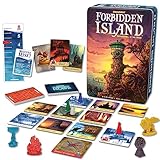
Overview: Forbidden Island, designed by Matt Leacock, is a foundational cooperative board game where players work as a team to retrieve four sacred treasures from a sinking island before it vanishes. Designed for ages 10+ and 2-4 players, it emphasizes teamwork over competition, challenging groups to strategize under pressure as the island tiles progressively flood and sink. Its accessible rules make it ideal for family game nights.
What Makes It Stand Out: The game pioneers accessible cooperative mechanics with its simple yet tense “sinking island” board. Rich, thematic illustrations immerse players in a race against time, while distinct character roles (like the Diver or Pilot) encourage strategic role specialization. Its perfect balance of challenge and approachability makes complex cooperative strategy digestible for younger players.
Value for Money: At its mid-range price point, Forbidden Island offers exceptional longevity. The compact box delivers high replayability through variable island layouts and difficulty levels. It outperforms similarly priced competitive games by fostering genuine collaboration, providing educational value in problem-solving without requiring expansions.
Strengths and Weaknesses: Strengths: Intuitive rules, strong family appeal, promotes critical thinking and communication, durable components. Weaknesses: Replayability can diminish after many plays without variant rules, limited player count (max 4), and some find the difficulty curve steep for very young children despite the age recommendation.
Bottom Line: Forbidden Island remains a must-have cooperative gateway game. Its elegant design, educational benefits, and engaging theme justify its price, making it a highly recommended investment for families and new strategy gamers seeking collaborative fun.
2. Scorpion Masqué Sky Team | Voted Game of The Year 2024 | Best 2 Player Game | Work Together to Land The Plane | Ages 14+ | 20 Minutes

Overview: Sky Team delivers an intense, real-time cooperative experience where two players become pilot and co-pilot frantically working to land a commercial aircraft safely. Voted 2024 Game of the Year, it masterfully translates high-stakes aviation teamwork into a compact 20-minute session, demanding precise coordination and trust as players manage speed, altitude, and runway alignment under dice-driven pressure.
What Makes It Stand Out: The game’s brilliance lies in its asymmetric roles and tactile cockpit components (like the descent tracker and coffee cup “focus” token). Unique dice-assignment mechanics create constant tension: players strategize between rounds but must trust their partner to execute actions blindly once dice are rolled. 20 distinct global airport scenarios and optional modules (e.g., ice, fuel leaks) ensure immense variety.
Value for Money: Sky Team justifies its premium price with unparalleled depth for a 2-player-only game. The high-quality components, scenario diversity, and sheer replayability (dozens of sessions with unique challenges) far exceed expectations for its category, outperforming most dedicated 2-player games that lack its thematic immersion and mechanical innovation.
Strengths and Weaknesses: Strengths: Unmatched 2-player synergy, immersive tension, exceptional replayability via scenarios/modules, top-notch production. Weaknesses: Steep learning curve for non-gamers, high stress may not suit all players, and the 14+ age rating feels restrictive for mature younger teens.
Bottom Line: Sky Team is a masterpiece of cooperative design and a definitive 2-player experience. Its intense teamwork, variability, and award-winning execution make it essential for couples or close gaming partners seeking a thrilling, high-stakes challenge.
3. Pandasaurus Cooperative Strategy Card Game - Fun Interactive Family Game for Ages 8+, 1-5 Players, 20 Minute Playtime
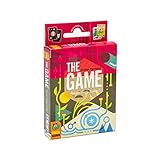
Overview: The Game is a deceptively simple yet deeply strategic cooperative card game where players work together to play descending (30-1) and ascending (1-30) number sequences from two decks. With a goal of emptying both decks, players face strict communication limits, forcing clever deduction and timing. Its 20-minute runtime and 1-5 player flexibility make it a versatile family staple.
What Makes It Stand Out: The Game’s minimalist design (just 2 decks of cards) creates profound strategic depth through its “no-talking” rule and shared hand visibility. Players must infer teammates’ intentions solely through card placements, fostering intense non-verbal teamwork. Its global success (1.3M+ copies sold) stems from this addictive blend of simplicity and cerebral challenge, appealing equally to kids and adults.
Value for Money: Remarkably affordable, The Game delivers extraordinary value. Its near-infinite replayability (no two games play alike) and portability outshine pricier, bulkier alternatives. The lack of setup or complex rules maximizes playtime, making it a budget-friendly powerhouse for building family bonding and strategic thinking skills.
Strengths and Weaknesses: Strengths: Extremely portable, quick to learn/play, highly replayable, exceptional for teaching patience and observation, award-winning (Spiel Des Jahres). Weaknesses: Frustration can arise from strict communication limits, limited physical components, and the abstract theme may not engage younger players initially.
Bottom Line: The Game is a near-perfect cooperative card experience. Its ingenious simplicity, low cost, and potent teamwork focus make it an unreserved recommendation for families and casual gamers seeking quick, brain-teasing fun.
4. Happy Camper - The Four Doors | Cooperative Game by Pandemic and Forbidden Island Creator | Perfect for Solo Play, Two Players, and Small Groups | Portable Adventure Game
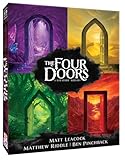
Overview: Created by Matt Leacock (Pandemic) with Matthew Riddle and Ben Pinchback, Happy Camper: The Four Doors is a compact cooperative adventure. Players explore a mystical light tower to retrieve four treasures before sinister shadows seal the doors. Designed for 1-5 players aged 10+, it emphasizes teamwork in a 30-minute session, blending exploration with urgent resource management.
What Makes It Stand Out: Leacock’s signature cooperative clarity shines here, with a unique “door exploration” mechanism where players commit to paths without full information. Its standout feature is exceptional solo-play integration—uncommon for Leacock’s designs—while maintaining deep strategic choices. The ultra-portable box (fits in a pocket) and streamlined rules make it ideal for on-the-go gaming without sacrificing engagement.
Value for Money: Priced accessibly, The Four Doors offers remarkable versatility. It delivers satisfying cooperative and solo experiences in one tiny package, eliminating the need for separate games. Compared to bulkier adventure games, its portability and Leacock pedigree provide excellent bang-for-buck for travelers or casual gamers.
Strengths and Weaknesses: Strengths: Superb portability, seamless solo/co-op integration, quick setup/play, strong theme integration, accessible yet strategic. Weaknesses: Limited component depth (mostly cards/tokens), less thematic immersion than Leacock’s larger games, and minimal player count variability impact.
Bottom Line: Happy Camper: The Four Doors is a brilliantly portable cooperative gem. Its seamless solo mode, ease of play, and Leacock’s reliable design make it an essential pick for travelers and fans of compact, strategic teamwork.
5. Flow: The Official Cooperative Board Game | Strategy Game for 1–4 Players Ages 8+ | Based on The Award-Winning Animated Film | Family & Solo Play | Survive The Flood, Rescue Allies
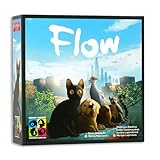
Overview: Flow translates the emotional journey of the acclaimed animated film into a real-time cooperative board game. Players navigate a beautifully illustrated, modular world flooded by rising waters, racing to rescue allies and survive. Designed for 1-6 players aged 8+, it emphasizes quick decision-making and adaptive strategy as the board physically transforms during play.
What Makes It Stand Out: The dynamic “rising water” mechanic—where flood levels visibly increase—is the star, creating urgent, tactile tension. Modular tiles ensure every game layout differs, while scenario cards introduce unique objectives tied to the film’s narrative. Its real-time pressure (using a sand timer) and stunning art capture the film’s poignant atmosphere, making gameplay deeply immersive.
Value for Money: Flow offers premium thematic depth at a mid-range price. The high-quality art, variable setup, and strong solo/co-op flexibility provide lasting value. It surpasses generic cooperative games by delivering a meaningful narrative experience, justifying its cost for fans of the film or atmospheric strategy.
Strengths and Weaknesses: Strengths: Gorgeous film-accurate visuals, innovative rising water system, high replayability via scenarios, excellent solo mode, accessible rules. Weaknesses: Real-time pressure may overwhelm younger players, timer reliance can feel punishing, and component storage is slightly fiddly.
Bottom Line: Flow is a visually stunning, emotionally resonant cooperative game that masterfully adapts its source material. Its dynamic mechanics and replayability make it a highly recommended choice for families and film fans seeking immersive, strategic teamwork.
6. The Night Cage by Smirk and Dagger | Cooperative Candlelit Horror Strategy Game | Tile Laying Labyrinth Escape Adventure | for 1 to 5 Players | Ages 14+

Overview:
The Night Cage immerses 1-5 players in a tense, cooperative horror experience where survival hinges on navigating a dynamically shifting labyrinth illuminated solely by a physical candle. As the candle burns, light reveals new paths while plunging explored areas into darkness, forcing strategic teamwork to collect keys, locate the exit, and evade lurking Wax Eaters before the maze collapses.
What Makes It Stand Out:
Its groundbreaking candlelit mechanic creates unparalleled atmospheric tension, making limited vision a core gameplay driver rather than a theme. The physical candle’s burn rate dictates the game’s pace, while award-winning tile design ensures each session feels uniquely threatening. Adjustable difficulty and advanced modes with new monsters significantly extend its lifespan beyond typical cooperative games.
Value for Money:
Priced competitively for its niche, the premium components and deeply innovative system justify the cost. It surpasses cheaper horror games by delivering a truly sensory experience—few alternatives integrate physical elements so effectively to heighten emotional stakes and strategic depth without relying on apps or complex rules.
Strengths and Weaknesses:
Strengths: Exceptional atmosphere; brilliant candle mechanic; high replayability via difficulty modes; seamless teamwork focus; elegant rules. Weaknesses: Candle replacement needed between plays; limited player count (max 5); setup can be fiddly; intense theme may not suit all groups.
Bottom Line:
A masterclass in thematic integration and cooperative tension, The Night Cage is essential for horror and strategy enthusiasts seeking an unforgettable, candle-flickering adventure. Its unique execution makes it worth every penny for groups craving immersive, high-stakes collaboration.
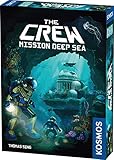
7. The Crew - Mission Deep Sea | Card Game | Cooperative | 2 to 5 Players | Ages 10+ | Trick-Taking | 32 Levels of Difficulty | Endless Replayability
Overview:
Building on its Kennerspiel des Jahres-winning predecessor, Mission Deep Sea reimagines cooperative trick-taking with an underwater rescue theme. Players work together across 50 escalating missions to win specific tricks under strict communication constraints, using a shared goal deck to navigate treacherous depths while managing limited intel.
What Makes It Stand Out:
It brilliantly subverts traditional trick-taking by making cooperation mandatory—players must deduce partners’ hidden cards through minimal signals, mimicking underwater communication challenges. The 50 mission structure provides a compelling campaign-like progression, with difficulty scaling intelligently to teach advanced tactics organically.
Value for Money:
Offering exceptional replayability through its mission-based design, it outshines most trick-taking games that rely solely on random hands. At its price point, the included narrative depth, skill-building trajectory, and sheer volume of unique scenarios deliver far more longevity than comparable card games, even solo.
Strengths and Weaknesses:
Strengths: Ingenious cooperative twist on classic mechanics; perfect mission progression; highly accessible yet deeply strategic; strong solo suitability; compact and portable. Weaknesses: Limited physical components; mission repetition may deter some after completion; communication rules can frustrate new players.
Bottom Line:
Mission Deep Sea is a near-perfect evolution of cooperative card play, ideal for trick-taking veterans and newcomers alike. Its thoughtful mission design and underwater theme create an engaging, endlessly replayable experience that justifies immediate addition to any strategy gamer’s collection.
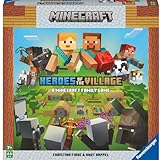
8. Ravensburger Minecraft Heroes of The Village | Cooperative Board Game | Exciting & Unpredictable | Perfect for Families and Minecraft Enthusiasts | Suitable for Kids & Adults
Overview:
This family-friendly cooperative game lets 2-4 players step into the Minecraft universe to defend a village from mobs. Using modular world tiles and wooden blocks, players collaboratively build structures, gather resources, and strategically place defenders to survive increasingly difficult waves, targeting ages 7+.
What Makes It Stand Out:
It authentically captures Minecraft’s creative spirit through tangible building mechanics—physically stacking wooden blocks to construct buildings adds tactile engagement rare in board games. The ever-changing map layout ensures high replayability, while Ravensburger’s quality components (durable tiles, chunky mobs) enhance the immersive village defense.
Value for Money:
Priced accessibly for families, it delivers substantial content: 25 wooden blocks, 18 tiles, and varied mob tokens. Compared to other Minecraft-themed games, it excels in physical component quality and genuine cooperative play, avoiding luck-heavy mechanics. The brand’s reliability ensures durability through countless play sessions.
Strengths and Weaknesses:
Strengths: Excellent component quality; true cooperative gameplay; strong Minecraft aesthetic; highly replayable modular setup; age-appropriate challenge. Weaknesses: Limited strategic depth for older players; setup time increases with expansion; theme may not resonate with non-fans.
Bottom Line:
A standout family game that successfully translates Minecraft’s charm into a cooperative board experience. Ravensburger’s craftsmanship and thoughtful design make it a joyful, replayable choice for kids and parents seeking shared victories without competitive frustration.
9. Peaceable Kingdom Race to the Treasure! Cooperative Path Building Game for 2 to 4 Kids Ages 5+

Overview:
In this award-winning cooperative game, 2-4 children race against a cardboard Ogre to build a path connecting Start to Treasure tiles. Players work together flipping path cards, collecting keys, and placing routes—winning only if the team completes the path before the Ogre reaches the treasure.
What Makes It Stand Out:
Its pure cooperation model eliminates player competition entirely, fostering teamwork from age 5. The no-reading-required design uses intuitive symbols and vibrant art, while the shared goal teaches spatial reasoning and forward planning. The included “frustration-free” packaging reflects its child-centric philosophy.
Value for Money:
As an entry-level cooperative game, it’s exceptionally affordable. The compact box contains high-quality, durable cards and tokens that withstand rough handling. Compared to similar kids’ games, its award-winning mechanics (Oppenheim Platinum, PAL Seal) offer superior educational value in social skills and strategy for the price.
Strengths and Weaknesses:
Strengths: Perfect for young children; zero reading required; promotes teamwork and strategy; quick setup/play (15 mins); award-winning simplicity. Weaknesses: Short playtime limits depth for older kids; minimal replay variability; Ogre mechanic may feel too simplistic for ages 8+.
Bottom Line:
An indispensable first cooperative game that gently introduces strategy and social skills. Its thoughtful design, child-friendly components, and pure team focus make it a must-have for preschoolers and early elementary families seeking positive, collaborative play.
10. The Lord of The Rings: Adventure to Mount Doom | Family Game | Cooperative Game | Strategy Game

Overview:
Players unite as Frodo, Sam, Gandalf, and Aragorn in a cooperative quest to destroy the One Ring. Rolling dice and drawing event cards, the team navigates Middle-earth’s perils—evading Ringwraiths, overcoming obstacles, and managing resources—within a 50-minute race against time to reach Mount Doom.
What Makes It Stand Out:
It masterfully distills Tolkien’s epic into accessible family gameplay, using evocative art and streamlined mechanics to evoke the journey’s tension. Unique “corruption” dice and shared resource pools create meaningful strategic trade-offs, while the solo-play option ensures flexibility. The thematic integration of key lore elements (like Shelob encounters) deepens immersion without complexity.
Value for Money:
Priced moderately for a themed strategy game, it offers robust components and substantial playtime. Compared to other LOTR board games, it strikes an ideal balance for families—simpler than heavy Euros but richer than pure luck games—making it a gateway to deeper cooperative experiences at its cost.
Strengths and Weaknesses:
Strengths: Strong Tolkien atmosphere; accessible yet strategic; excellent solo/co-op flexibility; manageable playtime; beautiful thematic components. Weaknesses: Luck-dependent dice rolling; limited player agency in late-game; artwork may not appeal to all Tolkien purists.
Bottom Line:
A compelling, family-oriented adventure that captures the spirit of Frodo’s quest with smart cooperation mechanics. Highly recommended for Tolkien fans and families seeking a thematic, moderately strategic game that’s easy to learn but engaging to master.
Understanding the Cooperative Game Mindset
What Truly Defines a Cooperative Experience
A genuine cooperative game requires players to pool knowledge, strategize collectively, and share in both the triumphs and setbacks. Unlike semi-cooperative or “traitor mechanic” games, true cooperation means everyone wins together or loses together, eliminating player elimination and direct conflict. This structure fosters communication and teamwork, turning the game mechanics into a shared puzzle rather than a battlefield. The absence of interpersonal competition naturally reduces tension, making it ideal for mixed-age groups or those seeking a more relaxed social dynamic.
Why Simplicity is the Secret Sauce for Engagement
Complex rulebooks are the arch-nemesis of a good time. Games with streamlined mechanics ensure that cognitive energy is spent on collaborative problem-solving, not on deciphering obscure clauses. When setup and core actions are intuitive, players remain immersed in the shared narrative or objective. This accessibility is crucial for maintaining momentum; lengthy explanations kill enthusiasm, while quick starts keep the focus on interaction and fun. Simplicity doesn’t mean shallow gameplay – it means elegant design where the rules serve the experience, not overshadow it.
Essential Features for Effortless Learning
Streamlined Rulebooks and Intuitive Layouts
Look for games where the rulebook prioritizes clarity over comprehensiveness. The best guides use visual examples, step-by-step walkthroughs, and avoid dense paragraphs. Icons and color-coding should make setup and turn structure immediately graspable. A strong indicator is whether a new player can understand the basic flow after a single, concise read-through – ideally under 10 minutes. Rulebooks that anticipate common points of confusion and address them proactively save precious game-night patience.
Minimal Setup Time and Component Clarity
Games requiring intricate board assembly or sorting through hundreds of tiny pieces are instant mood-killers. Prioritize titles with clear component organization (like labeled bags or trays) and setup processes that take 5 minutes or less. Components should have obvious purposes – a token shaped like a key probably opens doors, not tracks weather. When setup feels like part of the fun (e.g., revealing a map tile by tile), rather than a chore, players start engaged and excited.
Clear Turn Structure and Action Choices
Uncertainty about what to do on your turn breeds hesitation and slows play. Ideal cooperative games feature a consistent, predictable turn sequence with a limited number of meaningful choices (typically 2-4 core actions). Visual cues on player mats or reference cards should instantly communicate available options. Games where every player understands not just their own turn but also how their actions contribute to the group’s strategy minimize downtime and keep everyone invested.
Matching Games to Your Group Dynamics
Considering Player Age and Attention Spans
A game perfect for teenagers might overwhelm young children, while one engaging adults could bore older kids. Assess your group’s collective ability to handle abstract concepts and sustained focus. Look for adjustable difficulty levels or modular rules that let you start simple and add complexity later. Games with strong thematic elements (like helping animals or exploring space) often captivate younger players, while narrative-driven challenges resonate more with adults. Honesty about your group’s patience for rules is non-negotiable.
Navigating Group Size Realities
Not all cooperative games scale well. Some lose tension with too few players but become unwieldy with large groups. Pay close attention to the manufacturer’s recommended player count range – it’s usually spot-on for the intended experience. For families or fluctuating groups, prioritize titles flexible between 2-5 players where adding or removing participants doesn’t break the core mechanics. Games requiring constant group discussion become chaotic with 6+ people, while those relying on individual hand management might feel sparse with only two.
Balancing Engagement for Diverse Personalities
Extroverts might dominate strategy talks, while introverts disengage. Seek games with mechanics ensuring everyone has regular, meaningful contributions – like simultaneous action selection or individual hidden information that must be shared. Avoid games where one “alpha player” can dictate all moves; look for designs that distribute decision-making or require diverse skills (e.g., spatial reasoning, memory, deduction). The goal is inclusive participation where quieter voices feel safe to contribute ideas.
Beyond the Rules: The Hidden Factors of Enjoyment
Theme as a Gateway to Immersion
A compelling theme isn’t just window dressing; it provides context that makes rules intuitive. Trying to “defuse bombs” explains time pressure better than abstract tokens. Themes that resonate with your group (adventure, strategy, whimsy) lower the mental barrier to engagement – players grasp why actions matter because the narrative guides them. Avoid overly complex lore dumps; the theme should enhance, not complicate, the learning curve. A strong thematic hook makes rule reminders (“Remember, we’re racing the storm!”) feel natural.
Replayability Through Variable Setups
Replay value in accessible games often comes from modular boards, randomized scenarios, or adjustable difficulty, not rule complexity. A game that feels fresh each time because the map layout or challenge parameters change encourages repeat plays without relearning core mechanics. Look for systems where setup variation directly impacts strategy, offering new puzzles while keeping foundational rules consistent. This prevents the “solved game” syndrome where optimal play becomes predictable after a few rounds.
Physical Component Quality and Table Presence
Flimsy cards or confusing iconography ruin immersion. Sturdy components that withstand shuffling and frequent use signal a game designed for real-world play. Clear, high-contrast visuals on cards and boards are essential for quick reference during play. Consider storage solutions too – games with trays or bags that keep pieces organized encourage more frequent plays. A game that looks inviting and feels substantial on the table sets a positive tone before the first rule is read.
Practical Tips for Smooth Game Nights
Running Your First Play Session Effectively
Appoint a “rules facilitator” who reads the guide beforehand but avoids dominating strategy. Start with a practice round using simplified objectives to let players grasp actions without pressure. Encourage questions with “What would you try here?” instead of just giving answers. Pause after the first few turns to clarify misunderstandings – it’s far less disruptive than mid-crisis corrections. The goal is collaborative learning, not a pop quiz.
Managing Common Learning Curve Pitfalls
New groups often fall into “analysis paralysis” (over-discussing moves) or “groupthink” (ignoring minority viewpoints). Mitigate this by setting gentle time limits for decisions or using round-robin idea sharing (“Everyone suggests one move”). If frustration arises, pause and review only the confusing rule immediately – avoid rehashing the entire session. Remember, the first play is about feeling the game’s flow, not achieving victory.
Knowing When to Adjust or Move On
Not every game clicks immediately, and that’s okay. If confusion persists after two plays despite clear rules, the design might not suit your group. Be honest about whether the issue is the game’s complexity or just an off night. Have a backup plan (like switching to a simpler game) to prevent resentment. Sometimes, shelving a game for a few months allows players to return with fresh perspective – forced persistence rarely ends well.
Frequently Asked Questions
Frequently Asked Questions
How do I explain cooperative rules to someone used to competitive games? Start by emphasizing the shared goal: “We’re all on the same team against the game. Our job is to figure out how to beat this system together.” Use concrete examples from the theme (“We need to build the bridge before the river floods”) rather than abstract mechanics.
Can cooperative games work for families with young children? Absolutely, but choose carefully. Look for games with cooperative mechanics as simple as “match colors” or “move together,” strong visual storytelling, and no reading requirements. Short playtimes (under 20 minutes) and immediate tactile actions (like placing tiles) keep kids engaged.
What’s the biggest mistake new cooperative groups make? Allowing one person to take control of all decisions (“quarterbacking”). Gently encourage轮流 suggesting moves and remind the group that diverse ideas lead to better solutions. The game should feel like a group discussion, not a dictatorship.
How long should it realistically take to learn a truly easy cooperative game? From opening the box to playing the first meaningful turn, aim for 5-15 minutes. The core actions should be graspable in one read-through. If you’re still debating rules after 20 minutes, the game likely isn’t as accessible as advertised.
Do easy-to-learn cooperative games have enough depth for regular players? Yes! Many use simple frameworks with emergent complexity – straightforward actions combined in strategic ways as players gain experience. Look for adjustable difficulty or scenario expansions that add layers without changing core rules.
How can I prevent arguments when we lose? Reframe loss as valuable data: “Great, now we know that strategy doesn’t work – what’s our new plan?” Focus on the fun of the attempt, not just victory. Most accessible games include built-in ways to learn from failure within the mechanics.
Are there cooperative games that don’t require reading? Many rely primarily on icons, symbols, and visual cues. Check for “language-independent” components or games specifically designed for non-readers. Thematic imagery often conveys meaning more effectively than text in well-designed accessible games.
What player count is ideal for beginner cooperative games? Most shine with 3-4 players. This allows for lively discussion without chaos. Games for 2 players often require different mechanics, while groups larger than 5 can lead to disengagement without careful design.
How do I handle players who get frustrated easily? Choose games with lower stakes – no player elimination, forgiving difficulty curves, and clear paths to recovery after mistakes. Set expectations upfront: “This is about trying cool things together; winning is a bonus.” Keep initial plays very short.
Can cooperative games still be challenging without complex rules? Definitely. Challenge comes from meaningful decisions within simple frameworks – limited actions, time pressure, or evolving threats. The best accessible games create tension through the situation, not rulebook minutiae, making victories feel earned through teamwork.
See Also
- Stop Boring Game Nights with the 10 Best Horror Cooperative Board Games This Year
- Stop Frustration with the 10 Best Beginner-Friendly Cooperative Board Games This Year
- Stop Frustration with the 10 Best Survival Cooperative Games This Year
- Stop the Chaos with the 10 Best Cooperative Card Games This Year
- Stop Boredom with the 10 Best Cooperative Card Games This Year