Table of Contents
Watching your children locked in yet another screaming match over who gets the blue cup or whose turn it is to choose the movie can leave even the most patient parent feeling utterly drained. Sibling rivalry isn’t just noisy—it chips away at family harmony, fuels resentment, and sometimes leaves everyone feeling like they’re navigating a constant minefield of hurt feelings and power struggles. You’ve tried timeouts, reward charts, and countless “use your words” reminders, but the underlying tension often lingers, making you wonder if peaceful coexistence is even possible in your home.
What if the key to transforming that rivalry wasn’t another lecture or consequence, but something entirely different: shared laughter, collective problem-solving, and the simple joy of working together towards a common goal? Modern cooperative board games offer a surprisingly powerful, research-backed pathway out of the rivalry cycle. These aren’t just distractions; they’re carefully designed social laboratories where siblings learn to communicate, negotiate, support each other, and experience the tangible rewards of teamwork—all while believing they’re just having fun. Let’s explore how strategically chosen cooperative play can fundamentally shift the dynamic in your household.
Top 10 Cooperative Board Games for Kids
Detailed Product Reviews
1. Peaceable Kingdom Race to the Treasure! Cooperative Path Building Game for 2 to 4 Kids Ages 5+

Overview:
Race to the Treasure! is an award-winning cooperative board game where 2–4 players (ages 5+) race against an Ogre to build a path and claim treasure. Players work together to place path tiles, fostering teamwork without competitive pressure. No reading is required, making it accessible for young children while teaching foundational strategy and social skills.
What Makes It Stand Out:
The game’s cooperative design eliminates winner-takes-all dynamics, encouraging shared problem-solving. Its simplicity—using colorful path tiles to navigate a grid—builds spatial reasoning and planning. Winning the Oppenheim Platinum Award and PAL Seal underscores its educational value in nurturing communication and emotional development through play.
Value for Money:
Priced moderately for its quality, it outshines similarly priced competitive games by promoting inclusivity. The frustration-free packaging and durable components justify the cost, especially compared to single-player toys that lack social engagement. It’s a long-lasting investment in cooperative learning.
Strengths and Weaknesses:
Strengths: Builds teamwork and strategy; no reading needed; award-winning; high replayability with variable setups. Weaknesses: Limited challenge for older kids (7+); path randomness may frustrate perfectionists; small tiles require careful handling.
Bottom Line:
An exceptional starter cooperative game that turns screen time into meaningful social interaction. Highly recommended for families seeking to培养 empathy and strategic thinking in preschoolers and early elementary kids.
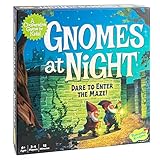
2. Peaceable Kingdom Gnomes at Night A Cooperative Maze Game for 2 to 4 Kids Ages 6+
Overview:
Gnomes at Night challenges 2–4 players (ages 6+) to collaborate in a race against time, recovering the Queen’s stolen treasures from a magnetic maze. Players manipulate magnetic gnome movers through dual-layered boards, communicating to navigate paths invisible to their teammates—a clever test of descriptive language and coordination.
What Makes It Stand Out:
The innovative dual-board system forces players to rely entirely on verbal cues (“left,” “right,” “wall ahead”), directly targeting communication skills. The sand timer adds thrilling urgency, while four difficulty levels (A–D) ensure scalability. Its focus on spatial reasoning through indirect teamwork is unique in children’s games.
Value for Money:
With robust components (magnetic movers, sand timer, multiple boards) and high replay value via adjustable difficulty, it surpasses cheaper memory games. It delivers targeted skill development comparable to pricier educational tools, making it a standout for parents prioritizing communication growth.
Strengths and Weaknesses:
Strengths: Exceptional communication skill-building; adaptable difficulty; magnetic mechanics are engaging; timer creates excitement. Weaknesses: Setup is slightly complex for young kids; magnetic pieces can snag; limited solo-play options.
Bottom Line:
A brilliantly designed game that transforms communication into an adventure. Ideal for families wanting to boost teamwork and descriptive language in a dynamic, replayable format—worth every penny for developmental impact.
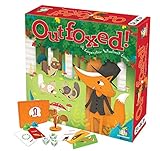
3. OUTFOXED, A CLASSIC WHO DUNNIT GAME FOR PRESCHOOLERS, 4 players
Overview:
Outfoxed! invites 2–4 preschoolers (ages 4+) into a cooperative whodunit where players use an evidence scanner to identify which fox stole Mrs. Plumpert’s pot pie. Moving across a board, kids gather clues about suspects’ attire to narrow down culprits before the thief escapes.
What Makes It Stand Out:
The physical evidence scanner—a translucent device revealing hidden suspect details—is a genius tactile hook that captivates young players. Combining simple deduction (“What is the guilty fox wearing?”) with adorable fox characters creates an accessible entry into logic games, rare for this age group.
Value for Money:
While pricier than basic memory games, the scanner’s novelty and high-quality components justify the cost. It outperforms flashier electronic toys by fostering critical thinking without screens. Comparable cooperative games often lack its thematic charm and hands-on investigation element.
Strengths and Weaknesses:
Strengths: Evidence scanner is highly engaging; simple deduction mechanics; promotes teamwork; charming theme; quick setup. Weaknesses: Scanner can feel gimmicky after repeated plays; limited depth for ages 6+; suspect cards wear quickly.
Bottom Line:
A delightful first deduction game that makes logic feel like play. Perfect for sparking curiosity in preschoolers—highly recommended for parents seeking screen-free problem-solving fun.
4. Peaceable Kingdom Dinosaur Escape Cooperative Memory Game of Logic and Luck for 2 to 4 Kids Ages 4+

Overview:
Dinosaur Escape tasks 2–4 players (ages 4+) with rescuing dinos from a rumbling volcano using memory and strategy. Players flip fern tokens to find matching dinosaurs, moving them to safety before the volcano erupts. Success hinges on shared recall and luck management.
What Makes It Stand Out:
The tension between memory skills (remembering flipped tokens) and luck (die rolls) creates accessible strategy. Reversible fern tokens add replayability, while the cooperative “beat the volcano” premise gently introduces time pressure without stress, fostering emotional resilience.
Value for Money:
At its price point, it’s a steal for a game blending memory development, teamwork, and thematic immersion. It surpasses basic matching games by integrating simple strategy and emotional learning, offering more educational depth than similarly priced alternatives.
Strengths and Weaknesses:
Strengths: Builds memory and collaborative decision-making; volcano mechanic adds excitement; vibrant dino theme; inclusive for shy players. Weaknesses: Luck-heavy (die rolls dominate); tokens may slide easily; limited challenge beyond age 6.
Bottom Line:
An engaging, stress-free memory game that turns recall practice into a shared mission. Highly recommended for families wanting to nurture teamwork and cognitive skills in early learners.
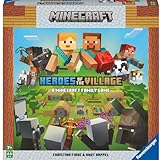
5. Ravensburger Minecraft Heroes of The Village | Cooperative Board Game | Exciting & Unpredictable | Perfect for Families and Minecraft Enthusiasts | Suitable for Kids & Adults
Overview:
Ravensburger’s Minecraft: Heroes of The Village pits 2–4 players (ages 7+) against procedurally generated threats in a cooperative quest to defend a village. Using Minecraft’s iconic blocky aesthetic, players gather resources, craft tools, and battle mobs on a modular board that reshapes each game.
What Makes It Stand Out:
The ever-changing map—built from 18 world tiles—ensures no two games play alike, delivering exceptional replay value. Authentic Minecraft elements (wooden blocks, mob tokens) merge with strategic resource management, creating a uniquely immersive experience that bridges digital and tabletop play.
Value for Money:
Priced higher than entry-level games, its premium wooden components and deep, scalable gameplay justify the cost. It outperforms generic family games by offering authentic Minecraft strategy, making it a superior investment for fans versus superficially themed alternatives.
Strengths and Weaknesses:
Strengths: High replayability with modular boards; authentic Minecraft integration; quality wooden pieces; engaging for kids and adults. Weaknesses: Steeper learning curve for non-fans; setup time increases with complexity; limited solo-play.
Bottom Line:
A masterfully crafted cooperative adventure that captures Minecraft’s spirit while delivering strategic depth. Essential for fans and highly recommended for families seeking replayable, screen-free gaming with genuine challenge.
6. Asmodee Ticket to Ride First Journey Board Game - Fun and Easy for Young Explorers! Train Strategy Game, Family Game for Kids & Adults, Ages 6+, 2-4 Players, 15-30 Min Playtime

Overview: Ticket to Ride: First Journey is a streamlined entry point into the beloved train-adventure franchise, specifically designed for younger players and newcomers. It captures the essence of route-building with accessible mechanics, featuring a simplified U.S. map and shorter gameplay sessions perfect for families.
What Makes It Stand Out: The game excels with its perfectly scaled-down map and ruleset, maintaining the core Ticket to Ride thrill of collecting train cards and claiming routes. The “Golden Ticket Challenge” (completing just six tickets) provides a clear, achievable goal, making victory tangible for children as young as six while preserving strategic depth for adults.
Value for Money: Priced competitively for its quality components and replayability, it offers exceptional value as a dedicated introductory strategy game. It’s a smarter investment than generic kids’ games, effectively bridging the gap to more complex titles like the standard Ticket to Ride without overwhelming beginners.
Strengths and Weaknesses: Strengths: Intuitive rules, quick setup/playtime, durable components, genuine strategic engagement for kids, seamless franchise gateway. Weaknesses: Limited map complexity may feel too simple for experienced gamers quickly; player interaction is minimal compared to the main series.
Bottom Line: An outstanding first strategy board game that successfully distills Ticket to Ride’s magic for young audiences. Highly recommended for families seeking an engaging, educational, and genuinely fun gateway into modern board gaming.
7. Peaceable Kingdom Mermaid Island Award Winning Cooperative Board Game for 2 to 6 Kids Ages 5+

Overview: Mermaid Island is a cooperative board game where players work together to guide three mermaids to safety before the Sea Witch reaches the island. Designed for young children (ages 5+), it emphasizes teamwork over competition using simple spin-and-move mechanics.
What Makes It Stand Out: As a true cooperative game, it eliminates player elimination and fosters shared problem-solving. The non-reading required design, colorful theme, and tangible “wand tokens” to defeat the Sea Witch make abstract cooperation concrete and exciting for preschoolers and early elementary kids.
Value for Money: Excellent value as an early cooperative game. Its educational benefits (social-emotional learning, strategy basics) and high replayability within its niche justify the cost, especially compared to competitive games that often frustrate young children. The Good Housekeeping award underscores its quality.
Strengths and Weaknesses: Strengths: Strong cooperative foundation, no reading needed, quick playtime (15 mins), promotes positive social skills, inclusive for large groups (2-6 players). Weaknesses: Limited strategic depth for older kids; Sea Witch movement can feel overly random; components are functional but not lavish.
Bottom Line: A near-perfect introductory cooperative game that successfully teaches teamwork and shared decision-making to very young children. A must-have for families or classrooms focused on collaborative play.
8. Peaceable Kingdom Hoot Owl Hoot - Cooperative Matching Game For Kids

Overview: Hoot Owl Hoot! is a foundational cooperative color-matching game where players team up to guide baby owls back to their nest before sunrise. Targeted at preschoolers, it uses simple mechanics to introduce young children to strategic thinking and shared goals.
What Makes It Stand Out: Its brilliance lies in extreme accessibility combined with meaningful cooperation. Players draw color cards to move owls, but crucially, can choose which owl to move, fostering early planning and group discussion. The rising sun track creates gentle, shared urgency without player elimination.
Value for Money: Offers superb value as a first strategy game. The durable components and high replayability for its target age group (approx. 4+) make it a cost-effective educational tool. It outperforms many flashier, competitive alternatives in teaching genuine cooperation at this level.
Strengths and Weaknesses: Strengths: Effortless to learn (under 5 mins), perfectly pitched for ages 4-7, genuinely encourages teamwork and color recognition, compact and portable. Weaknesses: Very simplistic for older kids/adults; limited strategic depth beyond matching; theme is pleasant but not highly engaging for repeated plays.
Bottom Line: An essential, beautifully executed cooperative starter game that excels at its core mission: teaching the youngest players the joy of working together to win. Highly recommended for early childhood development.
9. Peaceable Kingdom Space Escape – Cooperative Strategy Space Adventure Game by The Inventor of Pandemic – Use Teamwork to Win! – Great for Families with Kids Ages 7 & up

Overview: Space Escape is a cooperative strategy game where players command Mole Rats navigating a space station invaded by snakes. Working together, they must collect equipment and reach the escape pod before snakes block their path, leveraging mechanics inspired by Pandemic’s designer.
What Makes It Stand Out: The dual-action card system (one action for Mole Rats, one for snakes) creates constant, meaningful teamwork decisions. It effectively scales complexity for ages 7+, introducing strategic planning and risk assessment within a fun, space-themed narrative that avoids overwhelming young players.
Value for Money: Strong value for a cooperative game with strategic depth. The inclusion of a challenge variant and durable components provides longevity. It fills a crucial niche between simple kids’ co-ops (like Mermaid Island) and complex adult games (like Pandemic), justifying its price point.
Strengths and Weaknesses: Strengths: Engaging theme with meaningful choices, excellent cooperative tension, clear progression of difficulty, develops communication and planning skills. Weaknesses: Snake movement can occasionally feel punishingly random; setup is slightly more complex than simpler Peaceable Kingdom titles; limited player count (2-4).
Bottom Line: A standout cooperative game that successfully introduces strategic thinking to elementary-aged kids. Highly recommended for families seeking a substantial, collaborative challenge that grows with players’ skills.
10. Zombie Kidz Evolution #1 Kids Game on BoardGameGeek Work Together to Fight Zombies Cooperative Game for Kids and Families That Grows Everytime You Play Ages 7+ 2-4 Players 15 Minutes
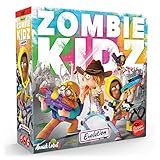
Overview: Zombie Kidz Evolution is a groundbreaking legacy-style cooperative game where players (as kids) defend their school from zombies. Crucially, the game evolves: completing missions unlocks new rules and story elements via stickers and sealed envelopes, changing the experience permanently.
What Makes It Stand Out: It’s the pioneering legacy game designed specifically for children. The “evolution” mechanic—unlocking 13 envelopes through play—is genius, maintaining excitement over multiple sessions. Simple base rules gradually layer complexity, keeping both kids and adults engaged as the narrative unfolds.
Value for Money: Exceptional long-term value. While the initial cost is higher than standard kids’ games, the 15+ play sessions of evolving content (including new rules, characters, and objectives) offer far more replayability and engagement per dollar than static alternatives.
Strengths and Weaknesses: Strengths: Revolutionary legacy format for kids, highly addictive progression, fosters genuine teamwork and strategic adaptation, strong BoardGameGeek ranking validates appeal. Weaknesses: Permanent changes mean you can’t easily reset; initial simplicity might bore older kids initially; envelope management requires adult oversight.
Bottom Line: A genre-defining masterpiece that transforms cooperative play into a captivating, evolving adventure. Essential for families wanting a dynamic, long-lasting game that grows alongside their children.
Understanding the Roots of Sibling Conflict
The Developmental Drivers Behind Rivalry
Sibling competition isn’t merely “bad behavior”; it’s deeply woven into childhood development. From toddlers vying for parental attention to school-aged children establishing individual identities, rivalry often stems from natural developmental needs. Younger children may perceive siblings as direct competitors for limited resources like time, affection, or toys, while older kids might clash over autonomy, fairness perceptions, or social standing within the family hierarchy. Recognizing these underlying motivations helps parents address the cause, not just the symptom.
How Competition Fuels the Fire
Traditional competitive games, while valuable in other contexts, can unintentionally pour gasoline on sibling rivalry flames. When one child consistently wins and the other loses, it reinforces power imbalances and feelings of inadequacy. The loser may feel resentful and demoralized, while the winner might become overly focused on maintaining dominance, leading to gloating or refusal to play fairly. This dynamic reinforces negative patterns where siblings view each other as obstacles to their success, not allies.
The Hidden Costs of Chronic Rivalry
Beyond the immediate stress of daily squabbles, persistent sibling conflict carries significant long-term implications. It can erode the foundation of trust and emotional safety siblings need to develop a supportive lifelong bond. Chronic negativity impacts individual self-esteem, increases anxiety, and models unhealthy conflict resolution strategies that children carry into future friendships and relationships. Addressing rivalry isn’t just about peace now; it’s an investment in their future social and emotional well-being.
Why Cooperative Games Are the Secret Weapon
Shifting from “Me vs. You” to “Us vs. The Problem”
Cooperative games fundamentally reframe the interaction. Instead of players opposing each other, everyone works side-by-side against the game itself. This simple structural shift dissolves the adversarial stance, replacing suspicion with shared purpose. Suddenly, siblings aren’t fighting each other; they’re strategizing together to outwit the game’s challenges, fostering a sense of unity and mutual reliance that competitive play cannot replicate.
Building Essential Social-Emotional Skills Through Play
These games act as dynamic training grounds for critical life skills. Players must practice active listening to understand teammates’ ideas, articulate their own suggestions clearly, negotiate differing strategies, manage frustration when the game throws a curveball, and offer genuine encouragement. Crucially, success or failure is shared, teaching resilience (“We’ll beat it next time!”) and reducing the sting of setbacks because the blame isn’t placed on a sibling.
Creating Positive Shared Memories and Identity
Every time siblings successfully collaborate to overcome a game challenge, they create a positive shared experience. These moments accumulate, gradually replacing negative associations with positive ones. They start to see each other not just as rivals, but as capable teammates they can rely on. This builds a stronger, more resilient sibling identity—“We’re the team that beat the dragon!"—which becomes a powerful counter-narrative to the “rivals” story.
Choosing the Right Cooperative Experience
Matching Complexity to Developmental Stages
Selecting a game appropriate for the youngest player’s cognitive and emotional capacity is non-negotiable. A game too complex for the youngest will lead to frustration, disengagement, and potentially reigniting rivalry as they feel left out or incapable. Look for adjustable difficulty levels or games specifically designed with simple mechanics that allow younger children to contribute meaningfully, even if their role is focused on specific, manageable tasks within the team.
Ensuring Genuine Team Contribution for All
Avoid games where one dominant player (often the oldest or most experienced) can effectively control all decisions, turning others into passive observers. Seek mechanics that distribute agency: games requiring simultaneous action selection, shared decision-making through discussion, or distinct but equally vital roles ensure every participant feels their input is essential to the team’s success. True cooperation requires everyone to be an active agent.
Prioritizing Theme and Engagement Factors
The theme matters significantly for buy-in. A game centered around a topic siblings already love (space exploration, animal rescue, baking magic cookies) lowers resistance and boosts initial engagement. Consider sensory elements too—tactile components like custom dice, colorful tokens, or interactive boards can captivate younger players and maintain focus. The goal is to make the cooperative task inherently appealing, not just a chore for the sake of harmony.
Evaluating Replayability and Scalability
A game that quickly becomes stale loses its therapeutic value. Look for elements that change with each playthrough: variable setup, modular boards, different hidden objectives, or narrative choices that create unique challenges every time. Scalability—how well the game accommodates different player counts or allows difficulty tweaks—is also crucial for long-term use as children grow and family dynamics shift.
Implementing Cooperative Play Successfully
Setting the Stage for Positive Interaction
Before the first card is drawn, frame the session intentionally. Briefly explain the goal: “Tonight, we’re all on the same team trying to save the forest. Our job is to help each other figure it out!” Explicitly state expectations: “We’ll listen to everyone’s ideas,” “We’ll cheer when we make progress,” and “If we lose, we lose together—and figure out how to do better next time.” This sets a collaborative tone from the outset.
Facilitating, Not Directing, the Gameplay
Your role shifts from referee to supportive guide. Resist the urge to solve problems for them or dictate the “best” move. Instead, ask open-ended questions: “What do you think our next step should be?” “How can we help [sibling] succeed with their part?” If conflict arises about the game strategy, gently remind them they’re on the same team: “Remember, you both want to win this for the group. How can you compromise on this move?”
Managing Frustration and Failure Gracefully
Setbacks are inevitable and valuable learning moments. When the team loses, immediately normalize it: “Wow, that was tricky! What part gave us the most trouble?” Guide them to analyze the game’s challenge, not each other’s performance. If frustration spikes, pause the game calmly: “I see this is getting tough. Let’s take three deep breaths together and decide if we need a quick break or to adjust how we’re playing.” Model calm resilience.
Celebrating Effort and Strategy, Not Just Victory
Make the debrief as important as the play. Focus praise on the process: “I loved how you two listened to each other’s ideas about where to explore!” or “That was amazing teamwork when you helped your sister remember the rule!” Highlight specific cooperative behaviors observed. If they win, celebrate the shared triumph enthusiastically—but emphasize how they achieved it together, not just the outcome.
Integrating Play into Your Family Rhythm
Consistency trumps duration. A dedicated 20-minute cooperative game session twice a week is more impactful than a rare marathon. Link it to existing routines—maybe a game after weekend breakfast or before starting homework on Fridays. Keep it predictable so siblings anticipate and look forward to this special “team time,” reinforcing its importance as a valued family ritual.
Troubleshooting Common Hurdles
- “I’m the Boss!”: If one child dominates, introduce a “speaker token” that must be passed around for idea-sharing, or assign specific, rotating roles where others have final say on certain actions.
- Disengagement: For younger players, give them a concrete, recurring task (“You’re in charge of moving the rescue boat!”). For older ones, involve them in choosing the next game or adjusting difficulty.
- Cheating/Rule-Bending: Calmly stop play: “Our team only wins if we follow the rules together. How can we make sure we’re all playing fairly this time?” Focus on the team’s integrity.
Frequently Asked Questions
How young is too young for cooperative board games?
Most children as young as 4 or 5 can engage with very simple cooperative mechanics, like collaborative matching or shared movement games. Look for titles with minimal reading, large components, and roles where the youngest can perform a specific, clear action (e.g., “You flip over the next challenge card!”). The key is ensuring they feel like a vital contributor, not just a bystander.
What if my kids refuse to play cooperatively and demand competitive games?
Start small and frame it positively: “Let’s try this new team adventure for just 15 minutes tonight—it looks super fun!” Choose a highly engaging cooperative game that feels more like an activity than a “game.” You can also compromise: “We’ll play one round of your competitive game, then one round of this team game.” Consistently highlight the fun and connection from the cooperative play.
Can cooperative games help with rivalry between significantly different-aged siblings?
Absolutely, and they’re often ideal. Choose games with scalable roles or difficulty. The older child can take on more complex strategic tasks while the younger focuses on simpler, essential actions (e.g., managing resources, performing specific moves). This allows the younger child to contribute meaningfully without being overwhelmed, and the older child practices leadership and patience.
How do I handle it when my kids argue about the cooperative strategy?
This is common and actually a positive sign—they’re engaged! Gently remind them: “Remember, you’re both on Team [Name]. How can you solve this puzzle together?” Encourage them to explain their reasoning (“Why do you think that move is best?”) and guide them toward compromise or testing both ideas. Your role is to facilitate discussion, not pick a side.
Isn’t losing together just as bad as losing competitively?
Not when framed correctly. In competitive play, losing feels personal (“I lost to you”). In cooperative play, losing is the game beating the team. The focus shifts to analyzing why the team lost (“The storm cards came too fast!”) and strategizing for next time. This shared challenge builds problem-solving bonds rather than resentment.
How long until I see a difference in their real-life interactions?
Changes are often subtle at first. You might notice them spontaneously using cooperative language (“Let’s team up to clean this!”) or showing slightly more patience during minor disputes. Consistent play over several weeks typically yields more noticeable shifts in communication and reduced frequency of major conflicts. It’s a gradual rewiring process.
What if one child consistently tries to “win” by undermining the team?
Address it immediately but calmly: “Our team can only succeed if we all work together. If someone isn’t helping the team, we can’t win the game. Do you want to be on the team?” Often, the desire to keep playing overrides the temptation to sabotage. If it persists, end the session: “We’ll try again when everyone is ready to cooperate.”
Are digital cooperative games as effective as physical board games?
Physical games generally offer stronger benefits for sibling dynamics. The shared physical space, handling of tangible components, and lack of screen isolation foster richer nonverbal communication and genuine joint attention. While some digital co-ops have merit, the embodied interaction of a board game is usually superior for building real-world relational skills.
How do I choose between so many cooperative game options?
Prioritize age-appropriateness and genuine engagement for all players over complexity. Read descriptions focusing on mechanics (does it force real discussion? Can the youngest contribute?) rather than theme alone. Watch short “how to play” videos to see the interaction style. Start with highly rated入门 titles known for accessibility before exploring deeper strategy games.
Can these games replace other conflict resolution strategies?
Cooperative games are a powerful tool within a broader strategy, not a standalone fix. They work best alongside consistent family communication practices, fair parental mediation, individual time with each child, and teaching explicit conflict resolution skills. Think of them as immersive practice sessions that reinforce lessons learned elsewhere through experiential learning.
See Also
- How to Solve Game Night Conflicts with the 10 Best Cooperative Board Games in 2026
- 10 Most Durable Cooperative Board Games Based on Real User Reviews in 2026
- The 10 Most Revolutionary Horror Cooperative Board Games of 2026
- 10 Top-Rated Cooperative Board Games According to Experts in 2026
- The 10 Ultimate Best Adventure Cooperative Board Games for Explorers in 2026